Showing posts with label March 17. Show all posts

Wednesday, 17 March 2021

Are you fasting?

Cyberdesert

Are you fasting?
Give me proof of it by your works.
If you see someone who is poor, take pity on them.
If you see a friend being honored, do not be envious.
Do not let only your mouth fast, but also the eyes, and the feet, and the hands and all the member of our bodies.
Let the hands fast, by being free of greed.
Let the feet fast, by ceasing to run after sin.
Let the eyes fast, by disciplining them not to glare at what is is sinful.
Let the ears fast, by not listening to evil talk and gossip.
Let the mouth fast from foul words and unjust criticism.
For what good is it if we abstain from eating birds and fishes, but bite and devour our brothers and sisters?

— St John Chrysostom

View original post

Sunday, 17 March 2019

Lent II (Gen 15:5-12, Phil 3:17-4:1, Lk 13:31-35)

Prophets have a hard job to do. It’s not fun, it isn’t pleasant, but it needs to be done. Telling people what they do not WANT to hear, but NEED to, is what prophets are all about. We can see this both in Our Lord’s earthly ministry and throughout the history of the Church. It is dangerous, and it can be costly but it is something which must be done. We exist to carry on the exact same proclamation, to call the world to repent and to believe, words they may not want to hear, but they need to, as their salvation depends upon it. Lent is a time for many things, but among them we need to reminded where our loyalties lie, and what we’re about as Christians. It’s a time to focus on what matters, to keep our eyes focussed on the Cross, a place of sacrifice, which gives us hope, and demonstrates God’s love for us.

When we look at salvation history we cannot ignore Abraham, he believes in the Lord, and is reckoned as righteous: he trusts God and his relationship is sealed with a covenant, one which makes the Land of Israel the Promised Land to his descendants. Where is a covenant, there is sacrifice, and this points to the Cross, where God makes a covenant with us in his Son’s death upon the Cross, the final and complete demonstration of God’s love, which assures us of our heavenly homeland, Just as Abraham went from deep sleep and terrifying darkness to life in relationship with God, so we in the church have moved from the darkness of sin and the terror of hell to new life in Christ.

Our citizenship is in heaven, as St Paul writes to the Philippians. Heaven is our true and eternal home, where we can be with God forever. And as Christians we try to live lives which imitate the saints. One of the ways we learn is by copying: we’ve seen it, we’ve done it ourselves: it is normal and natural. We follow the example of others, which is why the choice of whom we should imitate matters. Paul writes this letter from prison, he’s seen people being tortured, and his belief in Christ will lead to his death, and yet he is happy, concerned for others more than himself, a wonderful example for us to follow. We don’t want to be like the enemies of Christ, people opposed to who and what Christ is and what he does. The world around us tends to show its enmity towards Christ more by indifference than violence, we are ignored or patronised, but we can stand against this, together, in Christ, confident in the God who loves us.

In the Gospel we see Herod, a ruler who has killed John the Baptist for speaking against him. John died for standing up for morality which comes from God, and now Herod is turning his attention towards Jesus. In the face of the threat of persecution Jesus stands up for who and what He is, and what He is doing. He is not intimidated, he has a job to do which proclaims God’s healing love. It makes the Kingdom of God a reality in people’s lives. Jesus sees Herod for what he is: a nothing and a nobody, a tyrant, interested in the spectacular He speaks a word over Jerusalem as a place which kills prophets, and in this Christ is looking towards his own death. He has to go away, so that he can come back. He prophesies that he will not return until people say, ‘Blessed is he who comes in the name of the Lord’ he is looking forward to his triumphal entry into Jerusalem on Palm Sunday, the prelude to Christ’s Passion and Death. 

Lent prepares us to celebrate Jesus’ Passion, Death and Resurrection. It is striking that Jesus can face the future in such a calm way, proclaiming the Love of God both in healing the sick and showing that God cares for humanity. He loves us. He wants to be in a covenant relationship with us. Even though we reject God, God does not forsake us. This is true sacrificial love in action, and it is the heart of our faith. Ours is a God who longs to transform us by love. A God who longs for us to enjoy heaven with Him. St Paul tells us that our citizenship is in heaven. We’re not Welsh, British, or European, or anything else. Our primary identity is that we are Christians, and heaven is where we belong. It is our homeland, and the source of our identity as Children of God, our Heavenly Father. 

This should inspire us as we walk the journey of faith. In this our Lenten journey towards the Cross, and beyond, we travel with Christ, nourished by Word and Sacrament, knowing that to follow Christ is to share in His Passion, to take up our cross and follow Him, who is the Way, the Truth , and the Life. It involves standing up for truth, at the risk of persecution and death, and it is something which we do gladly because we can trust in a God who loves us, who heals us, who has made a covenant with us in the blood of His Son, Jesus Christ. We can have confidence that God loves us, and will never leave us, he is with us no matter what may come our way. 

It is a great comfort that we can travel on our pilgrimage of faith with one who will not leave us, or fail us, who knows our pain, who suffers and dies for love of us. So let us travel with Christ through Lent, through Life, knowing that we are living out our faith, and let us share that with others that they may believe and give glory to God the Father, God the Son, and God the Holy Spirit, to whom be ascribed as is most right and just, all might, majesty, glory dominion and power, now and forever.

img_0217.jpg

Lent II (Gen 15:5-12, Phil 3:17-4:1, Lk 13:31-35)

Prophets have a hard job to do. It’s not fun, it isn’t pleasant, but it needs to be done. Telling people what they do not WANT to hear, but NEED to, is what prophets are all about. We can see this both in Our Lord’s earthly ministry and throughout the history of the Church. It is dangerous, and it can be costly but it is something which must be done. We exist to carry on the exact same proclamation, to call the world to repent and to believe, words they may not want to hear, but they need to, as their salvation depends upon it. Lent is a time for many things, but among them we need to reminded where our loyalties lie, and what we’re about as Christians. It’s a time to focus on what matters, to keep our eyes focussed on the Cross, a place of sacrifice, which gives us hope, and demonstrates God’s love for us.

When we look at salvation history we cannot ignore Abraham, he believes in the Lord, and is reckoned as righteous: he trusts God and his relationship is sealed with a covenant, one which makes the Land of Israel the Promised Land to his descendants. Where is a covenant, there is sacrifice, and this points to the Cross, where God makes a covenant with us in his Son’s death upon the Cross, the final and complete demonstration of God’s love, which assures us of our heavenly homeland, Just as Abraham went from deep sleep and terrifying darkness to life in relationship with God, so we in the church have moved from the darkness of sin and the terror of hell to new life in Christ.

Our citizenship is in heaven, as St Paul writes to the Philippians. Heaven is our true and eternal home, where we can be with God forever. And as Christians we try to live lives which imitate the saints. One of the ways we learn is by copying: we’ve seen it, we’ve done it ourselves: it is normal and natural. We follow the example of others, which is why the choice of whom we should imitate matters. Paul writes this letter from prison, he’s seen people being tortured, and his belief in Christ will lead to his death, and yet he is happy, concerned for others more than himself, a wonderful example for us to follow. We don’t want to be like the enemies of Christ, people opposed to who and what Christ is and what he does. The world around us tends to show its enmity towards Christ more by indifference than violence, we are ignored or patronised, but we can stand against this, together, in Christ, confident in the God who loves us.

In the Gospel we see Herod, a ruler who has killed John the Baptist for speaking against him. John died for standing up for morality which comes from God, and now Herod is turning his attention towards Jesus. In the face of the threat of persecution Jesus stands up for who and what He is, and what He is doing. He is not intimidated, he has a job to do which proclaims God’s healing love. It makes the Kingdom of God a reality in people’s lives. Jesus sees Herod for what he is: a nothing and a nobody, a tyrant, interested in the spectacular He speaks a word over Jerusalem as a place which kills prophets, and in this Christ is looking towards his own death. He has to go away, so that he can come back. He prophesies that he will not return until people say, ‘Blessed is he who comes in the name of the Lord’ he is looking forward to his triumphal entry into Jerusalem on Palm Sunday, the prelude to Christ’s Passion and Death. 

Lent prepares us to celebrate Jesus’ Passion, Death and Resurrection. It is striking that Jesus can face the future in such a calm way, proclaiming the Love of God both in healing the sick and showing that God cares for humanity. He loves us. He wants to be in a covenant relationship with us. Even though we reject God, God does not forsake us. This is true sacrificial love in action, and it is the heart of our faith. Ours is a God who longs to transform us by love. A God who longs for us to enjoy heaven with Him. St Paul tells us that our citizenship is in heaven. We’re not Welsh, British, or European, or anything else. Our primary identity is that we are Christians, and heaven is where we belong. It is our homeland, and the source of our identity as Children of God, our Heavenly Father. 

This should inspire us as we walk the journey of faith. In this our Lenten journey towards the Cross, and beyond, we travel with Christ, nourished by Word and Sacrament, knowing that to follow Christ is to share in His Passion, to take up our cross and follow Him, who is the Way, the Truth , and the Life. It involves standing up for truth, at the risk of persecution and death, and it is something which we do gladly because we can trust in a God who loves us, who heals us, who has made a covenant with us in the blood of His Son, Jesus Christ. We can have confidence that God loves us, and will never leave us, he is with us no matter what may come our way. 

It is a great comfort that we can travel on our pilgrimage of faith with one who will not leave us, or fail us, who knows our pain, who suffers and dies for love of us. So let us travel with Christ through Lent, through Life, knowing that we are living out our faith, and let us share that with others that they may believe and give glory to God the Father, God the Son, and God the Holy Spirit, to whom be ascribed as is most right and just, all might, majesty, glory dominion and power, now and forever.

img_0217.jpg

Saturday, 17 March 2018

Lent V (Jn 12:20-33)

Imagine a scene if you will, it’s the Passover – the highlight of the Jewish Year. It is when they celebrate their journey from slavery in Egypt, through the wilderness of Sinai to the Promised Land. It’s a big deal. Some people have come who speak Greek, and are not Jews, to worship at the festival. They’re righteous God-fearing people They approach Philip, a disciple with a Greek name, it means ‘lover of horses’, and they ask him a simple question, ‘Sir, we should like to see Jesus – Syr, fe hoffem weld Iesu’ (Jn 12:21).  They want to see Jesus. It’s understandable – he’s a teacher, a man with a message. They long for an encounter with Him, to hear what He has to say.

Jesus speaks about his coming death upon the Cross, this is glory, not a human idea of glory, quite the opposite – dying the death of common criminal. It doesn’t make sense, in human terms, and it isn’t supposed to. As it says in the prophet Isaiah (55:8), ‘For my thoughts are not your thoughts, neither are your ways my ways, declares the Lord.’ The point is that we need to do things, God’s way, not ours. Christ is the grain of wheat who dies, and who yields a rich harvest, in the Church, saving the souls of countless billions of people over the last two thousand years. The mention of wheat makes think of Bread, because (Jn 6:35), ‘Jesus said to them, “I am the bread of life; whoever comes to me shall not hunger, and whoever believes in me shall never thirst.’ This is why we obey His command to do this in memory of Him – in the Eucharist we will be fed with Jesus, the living Bread. His blood which he sheds for us is ours to drink, so that we can have a foretaste here on earth of the banquet of Heaven. It can transform our souls and bodies, so that we share His risen life.

Jesus calls us to follow Him, and to not care for life in this world – heaven is our home, it is what we prepare for here on earth, and if we want to share His glory, then we need to follow the same path of suffering love which takes Him to His Cross, and will take us to ours. As sales pitches go it isn’t going to win plaudits from an Advertising Agency, and that’s the point, it’s honest, it is the truth, plain and unvarnished, a truth which changes the world, and which sets us free (cf. Jn 8:32). Which sets us free because He hung on a wooden cross and died and rose again for us. That’s God’s glory – dying for love us, to set us free, free to live for Him, and with Him, forever.

Syr, fe hoffem weld Iesu’ (Jn 12:21 BCN) Mae’r rhain yn eiriau sy’n herio ni i gyd. These are words which challenge us all. When people see us, as Christians, do they see Jesus in us?

I have heard of these words being placed on a card in a pulpit so that they are visible on the lectern, for the preacher to see. It is quite an ask, that simple request, and I feel their great responsibility . When people hear me, or read my words, do they see Jesus? Do they see the God who loves them so much that He died for them? It is a burden to great for me, to carry that cross, and follow Jesus – I cannot do it in my own strength — my words and my life aren’t up to the task, and that’s alright, because it is in’t about me, it’s all about Him. As St Paul says (2Cor 12:9), ‘But he said to me, “My grace is sufficient for you, for my power is made perfect in weakness.” Therefore I will boast all the more gladly of my weaknesses, so that the power of Christ may rest upon me’.

It is a great responsibility, that in what we do and say and think, people might see Jesus in us. We need to be living, breathing, walking advertisements for the Good News of Jesus Christ here and now. It is what we signed up to in our baptism, and we can use this time of Lent to consider important matters in out lives. Nothing could be more important than this: that people might see Jesus in who and what WE are, and what WE do.

How do we do this? We do it through the Grace of God, and by trying, by co-operating with that Grace. The simple answer is by trying, by making a conscious effort to live out our faith together, as a Christian community, filled with love, filled with grace, in the knowledge of the forgiving power of His blood which was shed for us. We need to do it together because we cannot just do it alone, we cannot save ourselves, only Christ can do that, nor is salvation solely an individual matter. Christ came to change the world, and He does, one soul at a time, through the Church, and the sacraments of Baptism and the Eucharist, outward and visible signs of the inward and spiritual grace, the free gift of God to his people.

We will fail to practise what we preach, so that people can call us hypocrites, but the point is not failure but that we keep on trying. God will not abandon us, He dies for us, bearing the burden of our sins, so that we might become like Him, that’s why Jesus was born for us, lived, died, and rose again for us.

Because of this we can live no longer for ourselves, but for the God who loves us, and we can offer the world around us an alternative to the  way of selfishness and sin. We need to trust Him, and fashion our lives after His example, together, nourished by Word and Sacrament, carrying our own cross, trusting in His grace and proclaiming His truth, so that the world may believe and follow God the Father, God the Son and God the Holy Spirit to whom be ascribed as is most right and just, all might, majesty, glory, dominion and power, now and forever…
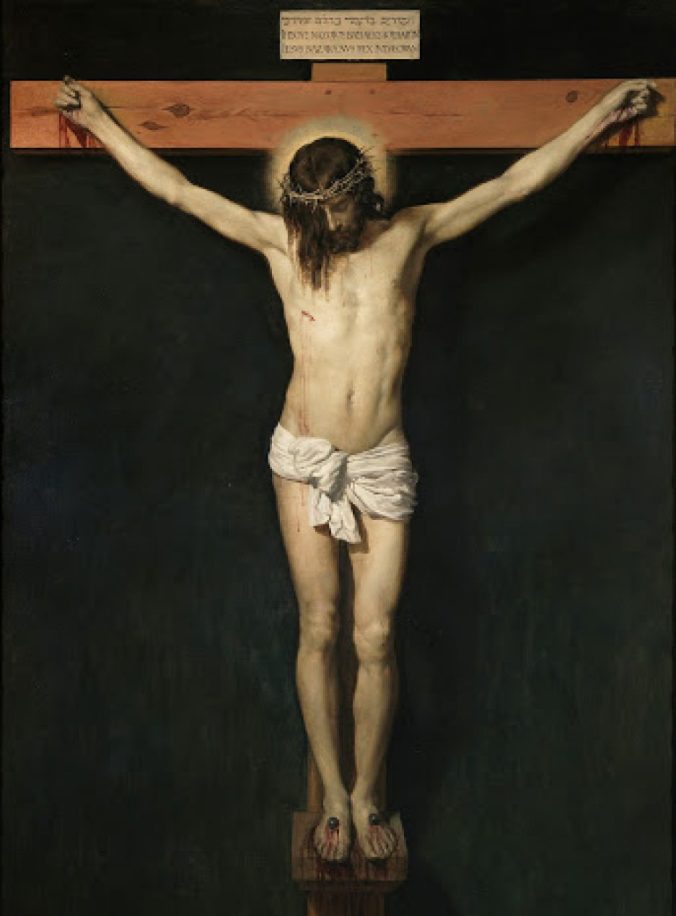
cropped-velazquezcrucifxion.jpg