Showing posts with label July 07. Show all posts

Sunday, 7 July 2019

14th Sunday ofYear C

St Augustine hit the nail on the head when he wrote, ‘You have made us for yourself, O Lord, and our hearts are restless till they find their rest in You’ (Confessions 1:1). We are made for relationship with God and each other, which is why week after week we gather together as Christians. We long for communion with God and each other, and we know instinctively, at the deepest level of our being, that is how we are meant to be. God longs to see humanity flourish, and live as it should. As Jesus says, ‘The thief comes only to steal and kill and destroy; I came that they may have life, and have it abundantly.’ ((Jn 10:10 RSV) Thus at the end of St Paul’s Letter to the Church in Galatia, he sums up the message of his letter, God has given us freedom, let us use it to do good things, and put our faith into practice. Don’t do things so that people will praise you, but do what God wants, sow the Spirit, and reap eternal life. God wants us to be generous and loving people because that’s what life in all its fulness looks like. We can live the life of heaven here and now. You, and me, all of us, together, can, through what God has done in Christ, live this life together. We can make it a reality.

It’s very similar to the hopeful vision we see in this morning’s first reading from the prophet Isaiah. After the mourning, the exile, the destruction, we have a vision of returning home. To Jerusalem, a Jerusalem restored, and renewed, A New Jerusalem. It is a reason to be joyful, and celebrate. And the New Jerusalem Isaiah is looking forward to, is the Church. We see a church which nourishes, which feeds its people, to heal them and give them strength. Truly the Church is our mother, as through her we are brought up in the Christian Faith. The imagery of streams and rivers reminds us that we enter the Church through baptism. We are washed clean, and given new life in Christ. In baptism and the Eucharist we drink deeply with delight from the abundance of Glory. Because in both we are united with Jesus Christ and His Saving Death upon the Cross. His Blood washes us clean. The church as our mother comforts us, like a mother, because she can give us the one thing that brings all comfort and consolation: God himself. God loves us, God dies for us, and is raised to new life, so that we might live in Him. God heals our wounds. The Kingdom of God is a place of healing because of what Christ has done. He has demonstrated one, and for all, how much God loves us. We see Isaiah’s prophecy fulfilled in Luke’s Gospel, where the sick are healed. ‘The kingdom of God has come near to you.’ What wonderful words to hear! They are a reality. Because the church is a place of comfort, and nurture, where God’s love can be experienced, His healing love.

It is freely given and can be rejected. That’s what freedom means. We’re not forced to accept it. God isn’t a tyrant. People are free to reject the good news of the Kingdom, to reject the healing offered by Christ and His Church. It sounds hard, and it is. But the seventy are sent out as lambs among wolves, into a world that is difficult and which is ready to reject Christ, and attack those who follow Him. But we are still supposed to be loving and joyful, and proclaim the nearness of the Kingdom to those who reject it. Thus God never abandons humanity, it is humanity which turns away, and even in that the possibility is left open for repentance. Ours is the hopeful message of a loving and healing God, and we ourselves are testament to the power of God’s love to change people. It’s a powerful thing, knowing that God can take you, and transform you, in ways you might never expect or imagine. But it happens, here and all around the world, so that the saving truth might continue to be proclaimed by word and deed, and when bad times come to that when we experience these we are united to the sufferings of Christ. We share in His Passion, not for our good, but for the love of the world. Christ suffers for love of us, so when we share in His Suffering, we also share in His Love, a love which transforms, which turns Saul into Paul, an enemy of the Church into its greatest evangelist and missionary, a man who signs of a letter to a new Christian community in his own hand writing in LARGE letters to mark out the importance of what he has to say, ‘far be it from me to boast except in the cross of our Lord Jesus Christ …. a new creation’. The only reason Paul, or anyone of us can boast is in Christ, and His Cross, through which we are saved and made free. Such is the power of the Cross, it saves humanity, it frees us from our sins, and gives us new life in Christ. This is the cause of our joy, our rejoicing. This is the fulfilment of Isaiah’s prophecy. This is humanity’s consolation. In this we are comforted. And that same sacrifice will be made present on the altar, so that we can feast on Christ’s Body and Blood, to be healed and restored by Him, and with Him. So let us come and experience God’s healing love, and share it with others that they too may know the power of His love in their lives. Let them experience it, so that they and all creation may give praise to to God the Father, God the Son, and God the Holy Spirit, to whom be ascribed as is most right and just all might, majesty, glory, dominion, and power, now and forever.
Saturday, 7 July 2018

14th Sunday of Yr B Ezek 2:1-5, 2Cor 12:2-10, Mk 6:1-13

Appearances can be deceptive, things are not always what they seem. Much of what we do in church is much more than it seems, what can seem simple and straightforward is, in fact, much more complex. The simple pouring of water in Baptism, or the taking of Bread and Wine in the Eucharist, seem simple enough, and yet through them God is at work in our world, doing wonderful things, pouring out His Grace and His Love on us, to make us Holy. 

Our first reading this morning reminds us that it is not always comfortable or easy listening to a prophet — we have to hear uncomfortable truth. Prophets call us to repent from sin and turn back to God a call which lies at the heart of Christian Baptism It is identical with the message preached by John the Baptist, and Jesus, and the church exists to proclaim the same message, and to call people to be Holy, to live like saints here and now, and encourage others so to do.

In this morning’s epistle we hear the words of the Risen Lord Jesus to Paul, ‘My grace is sufficient for you, for my power is made perfect in weakness.’ (2Cor 12:9 ESV) They are wonderful words of encouragement, because first and foremost they remind us that it’s not about WE can do, but about what God can do in and through us. This is possibly the most important lesson we can learn as a Christian — we cannot earn our way to heaven, God does that for us, through His Son Jesus Christ, who dies on the Cross to give us life in and through Him. What greater demonstration could there be of weakness than in dying the death of a common criminal. God shows the world that power can paradoxically be demonstrated in abject weakness. As Christians we celebrate something shameful in the eyes of the world, because it is in fact the demonstration of God’s LOVE for us. 

God enters the world in the Incarnation as a weak baby, utterly dependant upon the Holy Family, Mary and Joseph, and dies rejected, and abandoned, a laughing stock, a complete failure in the eyes of the world, and yet it sets us free, it gives us life through His death, power made perfect in weakness. God does wonderful things through Paul, who was once an enemy of the church, no-one is beyond the reach of God’s love and he can do wonderful things through us, if we let Him.

The Christian life starts with Baptism, which is how we enter the church and we are filled with the grace of God, and prepared for the life of faith. It is the start of a process which should lead to heaven: by growing in faith, and being fed by Christ, with Christ, in Word and Sacrament; through prayer, and good works, where faith is lived out in our lives.It sounds simple enough, but it is actually difficult, it requires the love and support of a family, and that wider family we call the church, so that we can all support each other in living the Christian life together. 

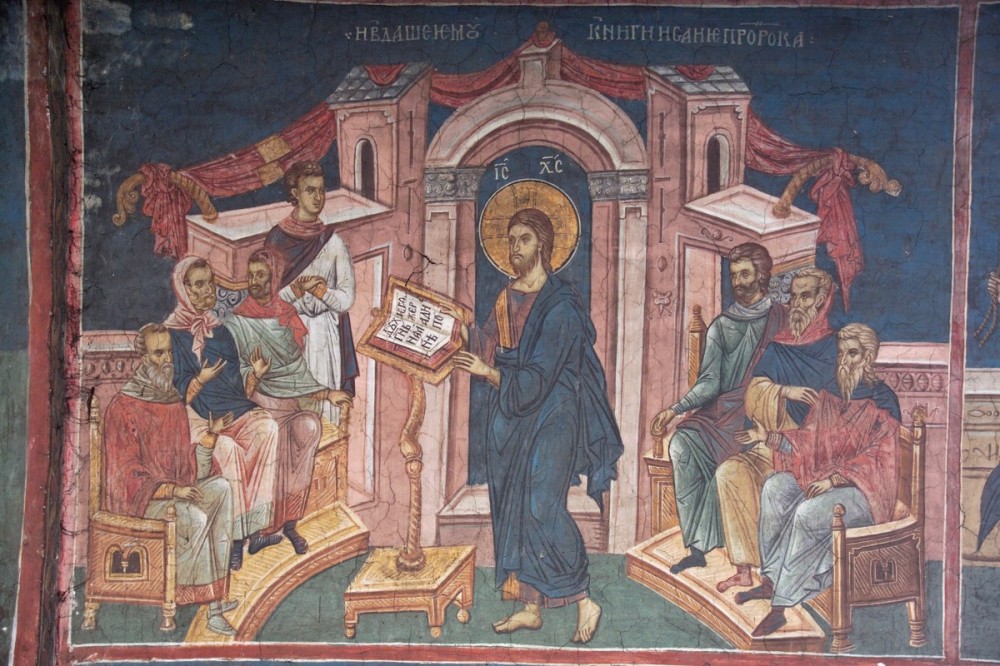
In this morning’s gospel people misread Jesus, they fail to recognize who or what he is, they are amazed and in doubting Jesus they doubt God to be at work in the world. We need to believe that God can and will be at work, in and through us. They can only see Jesus in terms of the members of his earthly family. It’s understandable, I can remember going back to the church where I grew up to preach and celebrate for their patronal festival, I was worried how people who had known me all my life would react, would they see a small boy in shorts and spectacles. I needn’t have worried, they saw a priest and were thrilled to see me at the altar. Therein lies the difference, the people of Nazareth see Jesus and can only think, ‘carpenter’s son’. They cannot recognize the Messiah in their midst. 

We need to know who and what Jesus is. The world around us rejects Jesus, rather like the people of Nazareth, or fail to accept him as true God and true man. They doubt who he was, what he did, and what he said. But we are different, we are here because we do not. We can tell people about him, but unless they WANT to believe then they won’t, no amount of forcing will make them. If, however, they see Christians living out their faith in an attractive way, then all things are possible. 

Jesus sends the disciples out in pairs, not alone: their ministry is rooted in co-operation, working together to build up the Kingdom of God. The twelve travel light, and are utterly dependant upon God and the charity and goodwill of others. It looks radical, and it is. They proclaim the need for repentance, turn away from sin and the ways of the world, and to turn back to God. They display the healing of the Kingdom: ours is a God who longs to heal our wounds, to restore us, and offer us a radical alternative to the ways of the world. The church is a revolutionary organisation, which seeks to change the world one soul at a time, so that humanity is transformed more and more into the likeness of the God who loves them, into the likeness of Jesus Christ, who lived among us and died for us, through the power of the Holy Spirit. It may sound crazy, but that is what we have been doing for nearly two thousand years, and will carry on doing until Jesus comes again. We continue to offer new life in Christ through baptism, and to feed God’s people with the Body and Blood of Christ, so that they may have life in and through Christ, nourished by Christ and fed with Christ, to be transformed more and more into His likeness so that they and all creation may give glory to God the Father, God the Son, and God the Holy Spirit, to whom be ascribed as is most right and just all might, majesty, glory, dominion, and power, now and forever.

christ-preaching-in-the-synagogue-at-nazareth-14th-c-fresco-visoki-decani-monastery-kosovo