Showing posts with label May 21. Show all posts

Thursday, 21 May 2020

Homily for the Ascension (Acts 1:1-11 Eph 1:17-23 Mt 28:16-20)

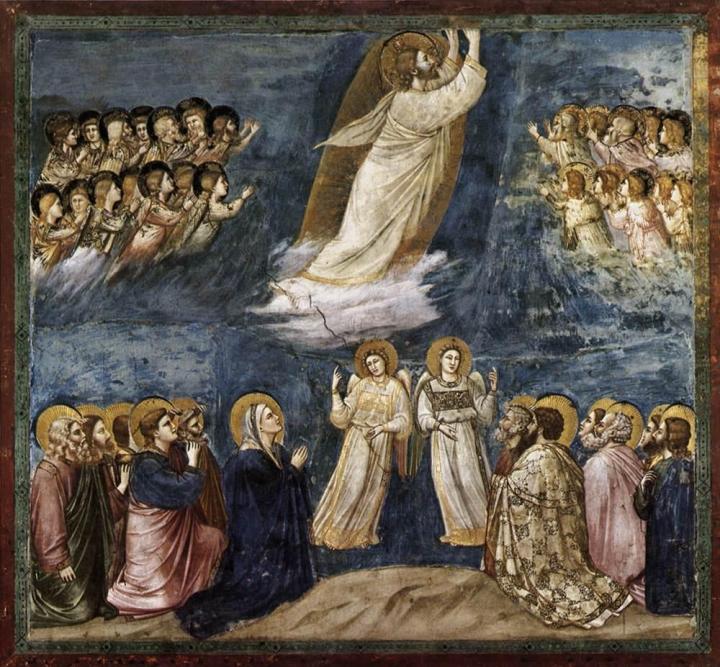
Today can often feel a somewhat strange day, a day of slightly mixed emotions, and this year more than most, when we are not able to be together to pray, to worship Almighty God, and be nourished with Holy Communion. We are not celebrating Jesus’ departure from the earth, but His return to God the Father, Christ’s abiding presence with us, and what He asks of us, and promises to us. It is a day of celebration and expectation, looking forward to the future in love and hope. 

The disciples have had six weeks to used to the fact that Jesus has risen from the dead, having carried the burden of our sins and experienced the pain and estrangement which separates God and humanity. That wound has been healed by His glorious wounds. Before Jesus returns to the Father, He makes the apostles a promise: they will be baptized with the Holy Spirit (Acts 1:4), receive power, and be Christ’s witnesses to the ends of the earth (Acts 1:8). Christ is looking forward to Pentecost, to the church’s future, in which we live now.

In Matthew’s Gospel, before Jesus leaves the apostles, He gives them a commission, they are sent out to do something together. Jesus begins (Mt 28:18) by stating that all authority in heaven and earth has been given to Him. He is God, God is sovereign, and rules over everything, and it reminds us of the moment during Christ’s temptation by the devil, before the start of His public ministry, which we read on the First Sunday of Lent. The devil offers the world to Jesus, but it is not his to give, it belongs to God, who created it. Our worship is rooted in the fact that we have a relationship with a God who made us, redeemed us, and loves us. 

Jesus tells the apostles (28:19) to go and make disciples of all nations, baptizing them in the name of the Father, and of the Son, and of the Holy Spirit. The church exists to be sent out to make disciples. Baptism is what makes us Christians. In it we share in Christ’s life, death, and Resurrection, and through it God gives us the virtues of Faith, Hope, and Love. Through our faith in God: Father, Son, and Holy Spirit, filled with the hope of heaven, our supernatural end, to enjoy the vision of God, who is love. Loving God and our neighbour, this is the very heart of the proclamation of the Good News of the Kingdom, along with the call of Jesus and John the Baptist that we should ‘Repent and believe the Gospel, and be baptised’. For two thousand years our message has been the same. 

Jesus tells the apostles to teach us all that He has commanded them (28:20). The Church is called to hand on what has been delivered to it, this is tradition, and it stops us from making mistakes, by deviating from what Christ teaches us through the Church. Our religion makes demands of us, and calls us to be faithful to the apostles’ teaching, and to live it out in our lives, putting theory into practice and becoming living witnesses of the Kingdom. This is difficult, and it is where Christians fall down most often. But the Good News is that in Christ we have forgiveness of sin. We can repent, and turn away from our mistakes, and turn back to a God who loves us. We are not abandoned or cast aside, but embraced in love. 

Finally Jesus says to the apostles, ‘Behold I am with you always, to the end of the age.’ (28:20) Christ is with us. How? In four ways: first in Scripture, the Word of God, which speaks of Christ, and finds its fulfilment in Him. It is true, and the source of truth. He is with us in the Sacraments, outward visible signs of the inward spiritual grace God pours out upon us, to fill us with His love. He is with us in the Holy Spirit which he pours out upon us, to strengthen us, and fill us with love. And finally He is with us in the Church, which is His Body, where we are united with Christ, in a relationship with Him, and each other. 

Jesus makes promises which are true. We can trust Him, and like the apostles we can prepare for the Coming of the Holy Spirit at Pentecost in prayer, and joyful expectation, knowing that we will never be abandoned, but that we are always united to, and loved by God the Father, God the Son, and God the Holy Spirit, to whom be ascribed as it most right and just, all might, majesty, glory, dominion, and power, now and forever. Amen
giotto_di_bondone_-_no._38_scenes_from_the_life_of_christ_-_22._ascension_-_wga09226

Homily for the Ascension (Acts 1:1-11 Eph 1:17-23 Mt 28:16-20)

Today can often feel a somewhat strange day, a day of slightly mixed emotions, and this year more than most, when we are not able to be together to pray, to worship Almighty God, and be nourished with Holy Communion. We are not celebrating Jesus’ departure from the earth, but His return to God the Father, Christ’s abiding presence with us, and what He asks of us, and promises to us. It is a day of celebration and expectation, looking forward to the future in love and hope. 

The disciples have had six weeks to used to the fact that Jesus has risen from the dead, having carried the burden of our sins and experienced the pain and estrangement which separates God and humanity. That wound has been healed by His glorious wounds. Before Jesus returns to the Father, He makes the apostles a promise: they will be baptized with the Holy Spirit (Acts 1:4), receive power, and be Christ’s witnesses to the ends of the earth (Acts 1:8). Christ is looking forward to Pentecost, to the church’s future, in which we live now.

In Matthew’s Gospel, before Jesus leaves the apostles, He gives them a commission, they are sent out to do something together. Jesus begins (Mt 28:18) by stating that all authority in heaven and earth has been given to Him. He is God, God is sovereign, and rules over everything, and it reminds us of the moment during Christ’s temptation by the devil, before the start of His public ministry, which we read on the First Sunday of Lent. The devil offers the world to Jesus, but it is not his to give, it belongs to God, who created it. Our worship is rooted in the fact that we have a relationship with a God who made us, redeemed us, and loves us. 

Jesus tells the apostles (28:19) to go and make disciples of all nations, baptizing them in the name of the Father, and of the Son, and of the Holy Spirit. The church exists to be sent out to make disciples. Baptism is what makes us Christians. In it we share in Christ’s life, death, and Resurrection, and through it God gives us the virtues of Faith, Hope, and Love. Through our faith in God: Father, Son, and Holy Spirit, filled with the hope of heaven, our supernatural end, to enjoy the vision of God, who is love. Loving God and our neighbour, this is the very heart of the proclamation of the Good News of the Kingdom, along with the call of Jesus and John the Baptist that we should ‘Repent and believe the Gospel, and be baptised’. For two thousand years our message has been the same. 

Jesus tells the apostles to teach us all that He has commanded them (28:20). The Church is called to hand on what has been delivered to it, this is tradition, and it stops us from making mistakes, by deviating from what Christ teaches us through the Church. Our religion makes demands of us, and calls us to be faithful to the apostles’ teaching, and to live it out in our lives, putting theory into practice and becoming living witnesses of the Kingdom. This is difficult, and it is where Christians fall down most often. But the Good News is that in Christ we have forgiveness of sin. We can repent, and turn away from our mistakes, and turn back to a God who loves us. We are not abandoned or cast aside, but embraced in love. 

Finally Jesus says to the apostles, ‘Behold I am with you always, to the end of the age.’ (28:20) Christ is with us. How? In four ways: first in Scripture, the Word of God, which speaks of Christ, and finds its fulfilment in Him. It is true, and the source of truth. He is with us in the Sacraments, outward visible signs of the inward spiritual grace God pours out upon us, to fill us with His love. He is with us in the Holy Spirit which he pours out upon us, to strengthen us, and fill us with love. And finally He is with us in the Church, which is His Body, where we are united with Christ, in a relationship with Him, and each other. 

Jesus makes promises which are true. We can trust Him, and like the apostles we can prepare for the Coming of the Holy Spirit at Pentecost in prayer, and joyful expectation, knowing that we will never be abandoned, but that we are always united to, and loved by God the Father, God the Son, and God the Holy Spirit, to whom be ascribed as it most right and just, all might, majesty, glory, dominion, and power, now and forever. Amen

giotto_di_bondone_-_no._38_scenes_from_the_life_of_christ_-_22._ascension_-_wga09226

Sunday, 21 May 2017

Easter VI – John 14:15-21

I once asked a nun who had been professed many years what she found most difficult about the religious life. The answer I received was a surprising one: ‘Obedience’. She could cope with poverty and chastity, with stability, and the ongoing change of character, but she found it hard to do what she was told, to be obedient.

It is not for nothing that the opening words of the Rule of St Benedict are: ‘Listen my son to the words of the Master’. I, like her, struggle with obedience. In fact, if we are honest with ourselves, all of us do too. We like to have our own way, to do what we want, when we want, and how we want to do it. We are wilful, and proud, we want to have our own way, we don’t want to listen to someone else: a spouse, a parent, a priest, or God. Such is the nature of the human condition. This is the reason why God was born as a man, preached the Good News, and taught a new way to live as citizens of the Kingdom of God. For this he suffered, and died.

And for us as the church, the first thing we need to do is to listen to Jesus, to do what he tells us, to be obedient to him. If we love him we will keep his commandments, we will love God and each other with the same costly self-giving love that Jesus shows on the Cross.It’s quite a big ask, following in his footsteps, dying to self and living for God. It does however lie at the heart of it all. When Jesus says, ‘As the Father has loved me, so have I loved you’ in the Upper Room with His disciples, on the night before he dies, He is looking to the Cross and beyond, as the demonstration of real costly self-giving love. The agony of brutal torture awaits him, a painful death for the love of humanity, to save us and heal us. As St Isaac the Syrian says:

‘The sum of all is that God the Lord of all, out of fervent love for his creation, handed over his own Son to death on the cross. “For God so loved the world that he gave his only-begotten Son for its sake.” This was not because he could not have saved us in another way, but so that he might thereby the better indicate to us his surpassing love, so that, by the death of his only-begotten Son, he might bring us close to himself. Yes, if he had had anything more precious he would have given it to us so that our race might thereby have recovered. Because of his great love, he did not want to use compulsion on our freedom, although he would have been able to do so; but instead he chose that we should draw near to him freely, by our own mind’s love.’

God dies for us, and freely offers us the gift of new life in Him. If we listen to him, then Jesus promises us the Holy Spirit, to strengthen us, to encourage us: a generous gift from a generous God., so that we can experience the fulness of new life in him. A gift so wonderful that Jesus ascends to his Father before giving it to the church, a sign of God’s love and trust, given to strengthen and encourage, to build us up. Such is the power of obedience, where we recognise power greater than ourselves, needs greater than our own, when we turn from love of self to love of God and others The world around will never quite understand this, it simply cannot listen to Jesus or trust him, and so misses out on the fulness of God’s love, which awaits us in heaven. So we pray that we might be obedient, that we might listen to what Jesus says, and do it, and that God would pour out his Holy Spirit upon us, to strengthen and encourage us, to build us up in his love. By listening to what God says we find ourselves becoming more free than we could have been before

This is not some future event, but right here and right now; we thirst for this love, and only it can satisfy our deepest desires, so let us come, and drink of that living water, let us feast on him who is the living bread and the true vine, the shepherd of our souls, who loves us so much that he died for us, and let us love him and one another so that all the world may believe and give glory to God the Father, God the Son, and God the Holy Spirit, to whom be ascribed as is most right and just, all might, majesty, glory, dominion, and power, now and forever

salvador20dali20in20christ20of20st-20john20of20the20cross201951