Showing posts with label Charity. Show all posts

Saturday, 31 October 2020

The Feast of All Saints (Mt 5:1-12)

“God has a plan for your life!” You may well have heard these words before, possibly from someone preaching a sermon, but they contain a truth, and are found in the Bible, in words that God speaks through the prophet Jeremiah:

For I know the plans I have for you, declares the Lord, plans for welfare and not for evil, to give you a future and a hope. (Jer 29:11)

It can be hard to hold onto promises such as these, especially when times are difficult and the outlook is bleak. We need to ask ourselves the question, ‘Can we trust God?’ If the answer is ‘Yes’ then, whatever difficulties or hardships may come our way, we know that our future is in safe hands.

Our Christian life begins with Baptism, where we are washed with water in the Name of the Father, the Son, and the Holy Spirit. Through Baptism we share in Christ’s Death and Resurrection, and are raised to new life in Him. We receive the Holy Spirit, Faith, Hope, and Love, and we are marked with the sign of the Cross to show that we belong to Christ. These are all manifestations of God’s Grace, unmerited kindness and generosity, but they are given for a reason. They are given to us so that we may love God and serve Him in this life, and be with Him in the next. Fundamentally, the point of being a Christian is to reside in Heaven. This is possible because of what Jesus Christ has done for us, out of love. This is the plan God has for our life, and this is why Jesus became man, lived, and died, and rose from the dead. God shows us both how to live, and what He has in store for us. We can have faith, and put our trust in a God who loves us. In the clear hope that, after our earthly life is over, we may enjoy eternity with God in Heaven. Most of all, in this hope, we can live lives of love, love of God and of each other, foreshadowing eternal heavenly joys. 

In our current culture we are not used to hearing this message. It sounds strange. We tend to think that holiness is for other people, certainly not us. But God wants each and every one of us to become a saint. He wants us to live in a world full of people trying to be saints. The Church is ‘a school for saints’, in which Christians try to live out their faith, cooperating with the grace of God. We do this when we let Christ live in us, so that we can say with the Apostle Paul:

‘It is no longer I who live, but Christ who lives in me.’ (Gal 2:20)

There is a paradox at work here, for when we truly let Christ live in us, we do not lose ourselves, but instead we find who we really are. We can then be the people God wants us to be, the people we were created to be. As Jesus says in Matthew’s Gospel:

For whoever would save his life will lose it, but whoever loses his life for my sake will find it. (Mt 16:25)

Today the Church celebrates the Feast of All Saints. On this day, in the eighth century AD, Pope Gregory III dedicated a chapel to All Saints in St Peter’s Basilica in Rome. It is a good thing to celebrate the fact that Heaven is full of saints, the Church Triumphant, who spend eternity praising God and praying for us. Just as we pray for our friends here on earth, it stands to reason that our friends in Heaven pray for us as well. It is reassuring to know that we are not alone in our quest to reach Heaven, and to know that those who are already there long for us to join them. 

If Heaven is our goal, how thenshould we live our lives on earth? Thankfully today’s Gospel gives us a template to follow, an example of what a Christian life looks like. 

The Sermon on the Mount (The Beatitudes) begins with the words which we have just read. It is important to notice that Jesus goes up a mountain to teach people. This brings to mind Moses ascending Mt Sinai and receiving the Ten Commandments of the Law. At one level what we have here is a New Law, a new way to understand how we should relate to God and to each other. It is a radical vision, which turns human expectations on their head. 

We constantly hear how the world around us values success and confidence, and looks up to the rich, and the powerful. In contrast to this, Jesus says to the gathered crowd:

“Blessed are the poor in spirit, for theirs is the kingdom of heaven.” (Mt 5:3)

‘Poor in spirit’ is not a term we are used to using, but it means the exact opposite of pride. It places humility as key to living a Christian life: knowing who we are, and our need for God. Only if we rely upon God, and not ourselves, and ask Him to work through us can we truly live out the Christian life. 

“Blessed are those who mourn, for they shall be comforted.” (Mt 5:4)

We mourn those we love, those whom we see no longer in this life, because we love them, we miss them, we want to see them, and hold them, and talk to them. Our parting, while temporary, is still very painful. Thankfully the Kingdom of God, which Christ comes to bring, is a place of healing and comfort with the promise of eternal life. 

“Blessed are the meek, for they shall inherit the earth.” (Mt 5:5)

Gentle people are not weak: they know how to use their strength, and how not to use it. As Jesus will later say in Matthew’s Gospel: ‘Take my yoke upon you, and learn from me, for I am gentle and lowly in heart, and you will find rest for your souls.’ (Mt 11:29). This is how God wants us to live as human beings. Christ is the example of gentleness we must follow. Once again, God’s vision of the future turns human expectations upside down. 

“Blessed are those who hunger and thirst for righteousness, for they shall be satisfied.” (Mt 5:6)

Should we be devoted to God? Absolutely! Should we pray that His will is done on earth as it is in Heaven? Of course! Jesus taught us to pray this way. Our faith should influence how we live our lives, so that we work for the coming of God’s Kingdom here on earth. Clearly God wants to see our world transformed and has invited us to help in the process; and doing so gives us fulfilment.

“Blessed are the merciful, for they shall receive mercy.” (Mt 5:7)

We see what God’s mercy looks like in Christ’s death for us on the Cross. In following Christ’s example, we ask for forgiveness for our own sins, and forgive those who sin against us. This forgiveness can transform us and the world around us, and it is how the healing and reconciliation of God’s Kingdom functions. 

“Blessed are the pure in heart, for they shall see God.” (Mt 5:8)

To be pure in heart is to want what God wants: to align our will with the will of God. It is to be saintly, and thus have the promise of Heaven, which is less of a place or a time, and much more a relationship. To see God is know Him, and to know His love for us. This is what Christ comes to restore to humanity, and it is our hope. 

“Blessed are the peacemakers, for they shall be called sons of God.” (Mt 5:9)

First and foremost, we know that Christ is the Son of God because He made ‘peace by the blood of his cross’ (Colossians 1:20). We too are called to follow Christ’s example and take up our Cross, and work for peace. Peace in our own hearts and lives, in our families and communities and in our world.

“Blessed are those who are persecuted for righteousness’ sake, for theirs is the kingdom of heaven. Blessed are you when others revile you and persecute you and utter all kinds of evil against you falsely on my account.” (Mt 5:10-11)

Following Jesus will not make us popular, often quite the opposite. If, however, we want to see God’s Kingdom as a reality in this life and the next, then we must be prepared to be shunned, or even ridiculed by others. To follow Christ is to take up the Cross, and to expect persecution, and false accusation. But we are not alone in this, Christ has gone before us, showing us that the story does not end with death on a Cross, but the glory of the Resurrection and Eternal life. 

If we want to become saints, then we have to be like Christ, share in His suffering and death, be prepared to be rejected by the world, and dismissed as irrelevant. We may not face imprisonment, torture and death in this country, but many Christians around the world do. However, we may be scorned and ignored, or patronised. What do we do in such circumstances? We are called to be loving, generous, and forgiving, because that is what Jesus has shown us. We can be different to the world around us because we belong to a new community, the community of faith, built on our relationship with Jesus Christ, who came to save humanity from itself. He came that we might have life and have it to the full, and that is what the Beatitudes mean. By living the life of God’s Kingdom here and now, we can live the life of Heaven here on earth. It may sound foolish, but it is what God wants us to do, what Jesus showed us to do. We are called to be fools for God.

So let us, on this feast of All Saints, be filled with courage, and be ready to conform our lives to God’s will and live out our baptism and our faith in the world. May we  live the life of the Kingdom together, and encourage others in order that all may join the choirs of Heaven to sing the praise of God the Father, God the Son, and God the Holy Spirit, to whom be ascribed, as is most right and just, all might, majesty, glory, dominion, and power, now and forever. Amen.

The Feast of All Saints (Mt 5:1-12)

“God has a plan for your life!” You may well have heard these words before, possibly from someone preaching a sermon, but they contain a truth, and are found in the Bible, in words that God speaks through the prophet Jeremiah:

For I know the plans I have for you, declares the Lord, plans for welfare and not for evil, to give you a future and a hope. (Jer 29:11)

It can be hard to hold onto promises such as these, especially when times are difficult and the outlook is bleak. We need to ask ourselves the question, ‘Can we trust God?’ If the answer is ‘Yes’ then, whatever difficulties or hardships may come our way, we know that our future is in safe hands.

Our Christian life begins with Baptism, where we are washed with water in the Name of the Father, the Son, and the Holy Spirit. Through Baptism we share in Christ’s Death and Resurrection, and are raised to new life in Him. We receive the Holy Spirit, Faith, Hope, and Love, and we are marked with the sign of the Cross to show that we belong to Christ. These are all manifestations of God’s Grace, unmerited kindness and generosity, but they are given for a reason. They are given to us so that we may love God and serve Him in this life, and be with Him in the next. Fundamentally, the point of being a Christian is to reside in Heaven. This is possible because of what Jesus Christ has done for us, out of love. This is the plan God has for our life, and this is why Jesus became man, lived, and died, and rose from the dead. God shows us both how to live, and what He has in store for us. We can have faith, and put our trust in a God who loves us. In the clear hope that, after our earthly life is over, we may enjoy eternity with God in Heaven. Most of all, in this hope, we can live lives of love, love of God and of each other, foreshadowing eternal heavenly joys. 

In our current culture we are not used to hearing this message. It sounds strange. We tend to think that holiness is for other people, certainly not us. But God wants each and every one of us to become a saint. He wants us to live in a world full of people trying to be saints. The Church is ‘a school for saints’, in which Christians try to live out their faith, cooperating with the grace of God. We do this when we let Christ live in us, so that we can say with the Apostle Paul:

‘It is no longer I who live, but Christ who lives in me.’ (Gal 2:20)

There is a paradox at work here, for when we truly let Christ live in us, we do not lose ourselves, but instead we find who we really are. We can then be the people God wants us to be, the people we were created to be. As Jesus says in Matthew’s Gospel:

For whoever would save his life will lose it, but whoever loses his life for my sake will find it. (Mt 16:25)

Today the Church celebrates the Feast of All Saints. On this day, in the eighth century AD, Pope Gregory III dedicated a chapel to All Saints in St Peter’s Basilica in Rome. It is a good thing to celebrate the fact that Heaven is full of saints, the Church Triumphant, who spend eternity praising God and praying for us. Just as we pray for our friends here on earth, it stands to reason that our friends in Heaven pray for us as well. It is reassuring to know that we are not alone in our quest to reach Heaven, and to know that those who are already there long for us to join them. 

If Heaven is our goal, how thenshould we live our lives on earth? Thankfully today’s Gospel gives us a template to follow, an example of what a Christian life looks like. 

The Sermon on the Mount (The Beatitudes) begins with the words which we have just read. It is important to notice that Jesus goes up a mountain to teach people. This brings to mind Moses ascending Mt Sinai and receiving the Ten Commandments of the Law. At one level what we have here is a New Law, a new way to understand how we should relate to God and to each other. It is a radical vision, which turns human expectations on their head. 

We constantly hear how the world around us values success and confidence, and looks up to the rich, and the powerful. In contrast to this, Jesus says to the gathered crowd:

“Blessed are the poor in spirit, for theirs is the kingdom of heaven.” (Mt 5:3)

‘Poor in spirit’ is not a term we are used to using, but it means the exact opposite of pride. It places humility as key to living a Christian life: knowing who we are, and our need for God. Only if we rely upon God, and not ourselves, and ask Him to work through us can we truly live out the Christian life. 

“Blessed are those who mourn, for they shall be comforted.” (Mt 5:4)

We mourn those we love, those whom we see no longer in this life, because we love them, we miss them, we want to see them, and hold them, and talk to them. Our parting, while temporary, is still very painful. Thankfully the Kingdom of God, which Christ comes to bring, is a place of healing and comfort with the promise of eternal life. 

“Blessed are the meek, for they shall inherit the earth.” (Mt 5:5)

Gentle people are not weak: they know how to use their strength, and how not to use it. As Jesus will later say in Matthew’s Gospel: ‘Take my yoke upon you, and learn from me, for I am gentle and lowly in heart, and you will find rest for your souls.’ (Mt 11:29). This is how God wants us to live as human beings. Christ is the example of gentleness we must follow. Once again, God’s vision of the future turns human expectations upside down. 

“Blessed are those who hunger and thirst for righteousness, for they shall be satisfied.” (Mt 5:6)

Should we be devoted to God? Absolutely! Should we pray that His will is done on earth as it is in Heaven? Of course! Jesus taught us to pray this way. Our faith should influence how we live our lives, so that we work for the coming of God’s Kingdom here on earth. Clearly God wants to see our world transformed and has invited us to help in the process; and doing so gives us fulfilment.

“Blessed are the merciful, for they shall receive mercy.” (Mt 5:7)

We see what God’s mercy looks like in Christ’s death for us on the Cross. In following Christ’s example, we ask for forgiveness for our own sins, and forgive those who sin against us. This forgiveness can transform us and the world around us, and it is how the healing and reconciliation of God’s Kingdom functions. 

“Blessed are the pure in heart, for they shall see God.” (Mt 5:8)

To be pure in heart is to want what God wants: to align our will with the will of God. It is to be saintly, and thus have the promise of Heaven, which is less of a place or a time, and much more a relationship. To see God is know Him, and to know His love for us. This is what Christ comes to restore to humanity, and it is our hope. 

“Blessed are the peacemakers, for they shall be called sons of God.” (Mt 5:9)

First and foremost, we know that Christ is the Son of God because He made ‘peace by the blood of his cross’ (Colossians 1:20). We too are called to follow Christ’s example and take up our Cross, and work for peace. Peace in our own hearts and lives, in our families and communities and in our world.

“Blessed are those who are persecuted for righteousness’ sake, for theirs is the kingdom of heaven. Blessed are you when others revile you and persecute you and utter all kinds of evil against you falsely on my account.” (Mt 5:10-11)

Following Jesus will not make us popular, often quite the opposite. If, however, we want to see God’s Kingdom as a reality in this life and the next, then we must be prepared to be shunned, or even ridiculed by others. To follow Christ is to take up the Cross, and to expect persecution, and false accusation. But we are not alone in this, Christ has gone before us, showing us that the story does not end with death on a Cross, but the glory of the Resurrection and Eternal life. 

If we want to become saints, then we have to be like Christ, share in His suffering and death, be prepared to be rejected by the world, and dismissed as irrelevant. We may not face imprisonment, torture and death in this country, but many Christians around the world do. However, we may be scorned and ignored, or patronised. What do we do in such circumstances? We are called to be loving, generous, and forgiving, because that is what Jesus has shown us. We can be different to the world around us because we belong to a new community, the community of faith, built on our relationship with Jesus Christ, who came to save humanity from itself. He came that we might have life and have it to the full, and that is what the Beatitudes mean. By living the life of God’s Kingdom here and now, we can live the life of Heaven here on earth. It may sound foolish, but it is what God wants us to do, what Jesus showed us to do. We are called to be fools for God.

So let us, on this feast of All Saints, be filled with courage, and be ready to conform our lives to God’s will and live out our baptism and our faith in the world. May we  live the life of the Kingdom together, and encourage others in order that all may join the choirs of Heaven to sing the praise of God the Father, God the Son, and God the Holy Spirit, to whom be ascribed, as is most right and just, all might, majesty, glory, dominion, and power, now and forever. Amen.
Thursday, 21 May 2020

Homily for the Ascension (Acts 1:1-11 Eph 1:17-23 Mt 28:16-20)

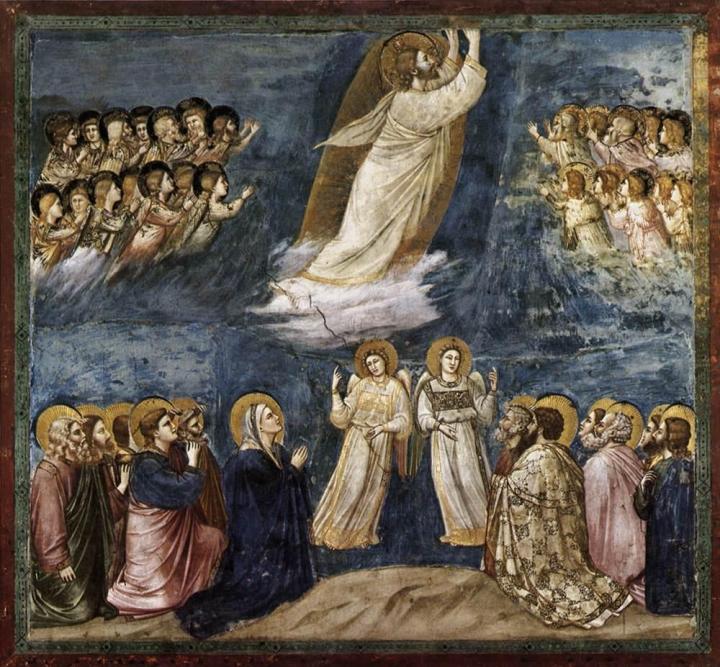
Today can often feel a somewhat strange day, a day of slightly mixed emotions, and this year more than most, when we are not able to be together to pray, to worship Almighty God, and be nourished with Holy Communion. We are not celebrating Jesus’ departure from the earth, but His return to God the Father, Christ’s abiding presence with us, and what He asks of us, and promises to us. It is a day of celebration and expectation, looking forward to the future in love and hope. 

The disciples have had six weeks to used to the fact that Jesus has risen from the dead, having carried the burden of our sins and experienced the pain and estrangement which separates God and humanity. That wound has been healed by His glorious wounds. Before Jesus returns to the Father, He makes the apostles a promise: they will be baptized with the Holy Spirit (Acts 1:4), receive power, and be Christ’s witnesses to the ends of the earth (Acts 1:8). Christ is looking forward to Pentecost, to the church’s future, in which we live now.

In Matthew’s Gospel, before Jesus leaves the apostles, He gives them a commission, they are sent out to do something together. Jesus begins (Mt 28:18) by stating that all authority in heaven and earth has been given to Him. He is God, God is sovereign, and rules over everything, and it reminds us of the moment during Christ’s temptation by the devil, before the start of His public ministry, which we read on the First Sunday of Lent. The devil offers the world to Jesus, but it is not his to give, it belongs to God, who created it. Our worship is rooted in the fact that we have a relationship with a God who made us, redeemed us, and loves us. 

Jesus tells the apostles (28:19) to go and make disciples of all nations, baptizing them in the name of the Father, and of the Son, and of the Holy Spirit. The church exists to be sent out to make disciples. Baptism is what makes us Christians. In it we share in Christ’s life, death, and Resurrection, and through it God gives us the virtues of Faith, Hope, and Love. Through our faith in God: Father, Son, and Holy Spirit, filled with the hope of heaven, our supernatural end, to enjoy the vision of God, who is love. Loving God and our neighbour, this is the very heart of the proclamation of the Good News of the Kingdom, along with the call of Jesus and John the Baptist that we should ‘Repent and believe the Gospel, and be baptised’. For two thousand years our message has been the same. 

Jesus tells the apostles to teach us all that He has commanded them (28:20). The Church is called to hand on what has been delivered to it, this is tradition, and it stops us from making mistakes, by deviating from what Christ teaches us through the Church. Our religion makes demands of us, and calls us to be faithful to the apostles’ teaching, and to live it out in our lives, putting theory into practice and becoming living witnesses of the Kingdom. This is difficult, and it is where Christians fall down most often. But the Good News is that in Christ we have forgiveness of sin. We can repent, and turn away from our mistakes, and turn back to a God who loves us. We are not abandoned or cast aside, but embraced in love. 

Finally Jesus says to the apostles, ‘Behold I am with you always, to the end of the age.’ (28:20) Christ is with us. How? In four ways: first in Scripture, the Word of God, which speaks of Christ, and finds its fulfilment in Him. It is true, and the source of truth. He is with us in the Sacraments, outward visible signs of the inward spiritual grace God pours out upon us, to fill us with His love. He is with us in the Holy Spirit which he pours out upon us, to strengthen us, and fill us with love. And finally He is with us in the Church, which is His Body, where we are united with Christ, in a relationship with Him, and each other. 

Jesus makes promises which are true. We can trust Him, and like the apostles we can prepare for the Coming of the Holy Spirit at Pentecost in prayer, and joyful expectation, knowing that we will never be abandoned, but that we are always united to, and loved by God the Father, God the Son, and God the Holy Spirit, to whom be ascribed as it most right and just, all might, majesty, glory, dominion, and power, now and forever. Amen

giotto_di_bondone_-_no._38_scenes_from_the_life_of_christ_-_22._ascension_-_wga09226

Homily for the Ascension (Acts 1:1-11 Eph 1:17-23 Mt 28:16-20)

Today can often feel a somewhat strange day, a day of slightly mixed emotions, and this year more than most, when we are not able to be together to pray, to worship Almighty God, and be nourished with Holy Communion. We are not celebrating Jesus’ departure from the earth, but His return to God the Father, Christ’s abiding presence with us, and what He asks of us, and promises to us. It is a day of celebration and expectation, looking forward to the future in love and hope. 

The disciples have had six weeks to used to the fact that Jesus has risen from the dead, having carried the burden of our sins and experienced the pain and estrangement which separates God and humanity. That wound has been healed by His glorious wounds. Before Jesus returns to the Father, He makes the apostles a promise: they will be baptized with the Holy Spirit (Acts 1:4), receive power, and be Christ’s witnesses to the ends of the earth (Acts 1:8). Christ is looking forward to Pentecost, to the church’s future, in which we live now.

In Matthew’s Gospel, before Jesus leaves the apostles, He gives them a commission, they are sent out to do something together. Jesus begins (Mt 28:18) by stating that all authority in heaven and earth has been given to Him. He is God, God is sovereign, and rules over everything, and it reminds us of the moment during Christ’s temptation by the devil, before the start of His public ministry, which we read on the First Sunday of Lent. The devil offers the world to Jesus, but it is not his to give, it belongs to God, who created it. Our worship is rooted in the fact that we have a relationship with a God who made us, redeemed us, and loves us. 

Jesus tells the apostles (28:19) to go and make disciples of all nations, baptizing them in the name of the Father, and of the Son, and of the Holy Spirit. The church exists to be sent out to make disciples. Baptism is what makes us Christians. In it we share in Christ’s life, death, and Resurrection, and through it God gives us the virtues of Faith, Hope, and Love. Through our faith in God: Father, Son, and Holy Spirit, filled with the hope of heaven, our supernatural end, to enjoy the vision of God, who is love. Loving God and our neighbour, this is the very heart of the proclamation of the Good News of the Kingdom, along with the call of Jesus and John the Baptist that we should ‘Repent and believe the Gospel, and be baptised’. For two thousand years our message has been the same. 

Jesus tells the apostles to teach us all that He has commanded them (28:20). The Church is called to hand on what has been delivered to it, this is tradition, and it stops us from making mistakes, by deviating from what Christ teaches us through the Church. Our religion makes demands of us, and calls us to be faithful to the apostles’ teaching, and to live it out in our lives, putting theory into practice and becoming living witnesses of the Kingdom. This is difficult, and it is where Christians fall down most often. But the Good News is that in Christ we have forgiveness of sin. We can repent, and turn away from our mistakes, and turn back to a God who loves us. We are not abandoned or cast aside, but embraced in love. 

Finally Jesus says to the apostles, ‘Behold I am with you always, to the end of the age.’ (28:20) Christ is with us. How? In four ways: first in Scripture, the Word of God, which speaks of Christ, and finds its fulfilment in Him. It is true, and the source of truth. He is with us in the Sacraments, outward visible signs of the inward spiritual grace God pours out upon us, to fill us with His love. He is with us in the Holy Spirit which he pours out upon us, to strengthen us, and fill us with love. And finally He is with us in the Church, which is His Body, where we are united with Christ, in a relationship with Him, and each other. 

Jesus makes promises which are true. We can trust Him, and like the apostles we can prepare for the Coming of the Holy Spirit at Pentecost in prayer, and joyful expectation, knowing that we will never be abandoned, but that we are always united to, and loved by God the Father, God the Son, and God the Holy Spirit, to whom be ascribed as it most right and just, all might, majesty, glory, dominion, and power, now and forever. Amen

giotto_di_bondone_-_no._38_scenes_from_the_life_of_christ_-_22._ascension_-_wga09226

Saturday, 28 September 2019

Homily for Trinity XV

At its very heart the Christian Faith is all about generosity: God’s generosity towards us, and our generous response in return. It is shown most fully in the life, death, and resurrection of Jesus Christ. We know this, it is our faith, but it should also lead us to action. We are called to be generous in return, generous towards others, and ourselves. Our response shows that we are living out our faith, that we haven’t simply accepted the tenets of our faith, but are putting them into action, to transform the world. 

Our readings this morning begin with a troubling word from the prophet Amos. The prophet warns those who are comfortable, those who feel secure, and he is speaking to us. Should we be worried? Yes we should, because we should be learning to be generous, sharing what we have, because it is the right and proper thing to do, it is how we flourish. Today is amongst other things the Word Day of Migrants and Refugees, which the Church has celebrated for over a hundred years. In a world like ours, where people are marginalised, persecuted, forced to flee, who long to live in peace and prosperity, how do we react? Do we want to build walls and set up borders to keep people out? They’re not like us! They don’t belong here! We don’t like them! Or do we want to do something else? To welcome people in, and share what we have with them? So that the world may reflect the values of the Kingdom of God. The choice is a clear one.

This morning’s Gospel presents us with a stark contrast. Our Lord is speaking to the Pharisees, the Jewish religious leaders, people who are sure of their position in society. There is a beggar, Lazarus, a man who has nothing, a man who is hungry and who longs to eat the scraps from the rich man’s table. He has sores, which make him unclean in Jewish eyes. He is licked by dogs, which were seen as unclean, so he’s lying there destitute, shown love only by dogs, and not by humans. He’s the lowest of the low. And yet, when he dies, he is taken to heaven. The rich man by contrast dies and goes to Hell where he endures its torments. Why? Because the rich man could have been generous, but instead he was selfish. He could have look after Lazarus, but he did nothing. It’s doubtful that his five brothers would take any notice of Lazarus, even if raised from the dead. They don’t listen to the Law and the Prophets which command them to ‘love your neighbour as yourself’ (Leviticus 9:18), ‘He has told you, O man, what is good; and what does the Lord require of you but to do justice, and to love kindness, and to walk humbly with your God?’ (Micah 6:8). Faith then is something which needs to be put into action, we show our love by loving, caring, and sharing.

It is exactly what St Paul advises Timothy in this morning’s second reading: ‘As for the rich in this present age, charge them not to be haughty, nor to set their hopes on the uncertainty of riches, but on God, who richly provides us with everything to enjoy. They are to do good, to be rich in good works, to be generous and ready to share, thus storing up treasure for themselves as a good foundation for the future, so that they may take hold of that which is truly life.’ (1Tim 6:17-19) The point of wealth is to be generous with it. If we’re honest with ourselves, don’t we long for a world like this? A world where peace, love, and generosity are lived out in a real way, to make the world better, the kind of world God wants, so that we may flourish as human beings. 

It isn’t that simple, because human beings are sinful and selfish. We’re not always generous, but we do not have to be this way. So at a time when we give thanks to God for all the good things of creation which have been harvested, and especially when we are mindful of migrants and refugees, we have to ask ourselves the question: Can we be generous? If we cannot then all we have to look forward to in the future are the eternal torments of Hell. It’s a stark uncompromising message, and a simple choice. It’s the truth of our faith. It doesn’t make us feel warm and cosy. That’s cheap grace. The idea that God doesn’t demand anything more from us than a vague superficial niceness. It will not do! The church cannot stand idly by while people consign their souls to hell because they cannot be bothered. 

We are generous because God was generous first. He gives His only Son to be born for us, and to die on the Cross for us. God is tortured and suffers for us, to bear the burden of our sins. To take what should condemn us to Hell upon Himself, to save us from it. It’s why we are here this morning to celebrate the Eucharist, the sign of God’s generosity to the world made real to us under the forms of bread and wine. We touch and taste God’s generous love for us, to that it may transform us, strengthening us to live the life of the Kingdom of God here and now. 

We are fed and sent out to live lives of radical generosity where we care for people, where we look after the migrants and refugees, welcoming them into our communities, as we are all brothers and sisters in Christ. We belong to each other, and are called to live lives of love in community. It sounds idealistic, and so it should. It reminds us that we are called to be generous, even to the point of being reckless, sitting lightly to the things of this world, and holding no store by wealth, or position, or influence, but instead giving it away, sharing it with others. If we cannot serve God and money, then as Christians we are to serve God. We serve him by being generous, and looking after those on the margins, practising the same generosity which God poured out on us, shedding His Blood to take away our sins. Let us transform the world so that it may turn away from the ways of greed and selfishness and put its trust in the true riches of the Kingdom. 

It is this generous God who comes to us today in Word and Sacrament, to heal us and restore us, to give us life in him. He entrusts to us the true riches of the Kingdom so that we may share them recklessly, generously with the world so that it may believe and sing the praises of God the Father, God the Son, and God the Holy Spirit, to whom be ascribed as is most right and just all might, majesty, glory, dominion, and power, now and forever.

Lazarus-Dives

Homily for Trinity XV

At its very heart the Christian Faith is all about generosity: God’s generosity towards us, and our generous response in return. It is shown most fully in the life, death, and resurrection of Jesus Christ. We know this, it is our faith, but it should also lead us to action. We are called to be generous in return, generous towards others, and ourselves. Our response shows that we are living out our faith, that we haven’t simply accepted the tenets of our faith, but are putting them into action, to transform the world. 

Our readings this morning begin with a troubling word from the prophet Amos. The prophet warns those who are comfortable, those who feel secure, and he is speaking to us. Should we be worried? Yes we should, because we should be learning to be generous, sharing what we have, because it is the right and proper thing to do, it is how we flourish. Today is amongst other things the Word Day of Migrants and Refugees, which the Church has celebrated for over a hundred years. In a world like ours, where people are marginalised, persecuted, forced to flee, who long to live in peace and prosperity, how do we react? Do we want to build walls and set up borders to keep people out? They’re not like us! They don’t belong here! We don’t like them! Or do we want to do something else? To welcome people in, and share what we have with them? So that the world may reflect the values of the Kingdom of God. The choice is a clear one.

This morning’s Gospel presents us with a stark contrast. Our Lord is speaking to the Pharisees, the Jewish religious leaders, people who are sure of their position in society. There is a beggar, Lazarus, a man who has nothing, a man who is hungry and who longs to eat the scraps from the rich man’s table. He has sores, which make him unclean in Jewish eyes. He is licked by dogs, which were seen as unclean, so he’s lying there destitute, shown love only by dogs, and not by humans. He’s the lowest of the low. And yet, when he dies, he is taken to heaven. The rich man by contrast dies and goes to Hell where he endures its torments. Why? Because the rich man could have been generous, but instead he was selfish. He could have look after Lazarus, but he did nothing. It’s doubtful that his five brothers would take any notice of Lazarus, even if raised from the dead. They don’t listen to the Law and the Prophets which command them to ‘love your neighbour as yourself’ (Leviticus 9:18), ‘He has told you, O man, what is good; and what does the Lord require of you but to do justice, and to love kindness, and to walk humbly with your God?’ (Micah 6:8). Faith then is something which needs to be put into action, we show our love by loving, caring, and sharing.

It is exactly what St Paul advises Timothy in this morning’s second reading: ‘As for the rich in this present age, charge them not to be haughty, nor to set their hopes on the uncertainty of riches, but on God, who richly provides us with everything to enjoy. They are to do good, to be rich in good works, to be generous and ready to share, thus storing up treasure for themselves as a good foundation for the future, so that they may take hold of that which is truly life.’ (1Tim 6:17-19) The point of wealth is to be generous with it. If we’re honest with ourselves, don’t we long for a world like this? A world where peace, love, and generosity are lived out in a real way, to make the world better, the kind of world God wants, so that we may flourish as human beings. 

It isn’t that simple, because human beings are sinful and selfish. We’re not always generous, but we do not have to be this way. So at a time when we give thanks to God for all the good things of creation which have been harvested, and especially when we are mindful of migrants and refugees, we have to ask ourselves the question: Can we be generous? If we cannot then all we have to look forward to in the future are the eternal torments of Hell. It’s a stark uncompromising message, and a simple choice. It’s the truth of our faith. It doesn’t make us feel warm and cosy. That’s cheap grace. The idea that God doesn’t demand anything more from us than a vague superficial niceness. It will not do! The church cannot stand idly by while people consign their souls to hell because they cannot be bothered. 

We are generous because God was generous first. He gives His only Son to be born for us, and to die on the Cross for us. God is tortured and suffers for us, to bear the burden of our sins. To take what should condemn us to Hell upon Himself, to save us from it. It’s why we are here this morning to celebrate the Eucharist, the sign of God’s generosity to the world made real to us under the forms of bread and wine. We touch and taste God’s generous love for us, to that it may transform us, strengthening us to live the life of the Kingdom of God here and now. 

We are fed and sent out to live lives of radical generosity where we care for people, where we look after the migrants and refugees, welcoming them into our communities, as we are all brothers and sisters in Christ. We belong to each other, and are called to live lives of love in community. It sounds idealistic, and so it should. It reminds us that we are called to be generous, even to the point of being reckless, sitting lightly to the things of this world, and holding no store by wealth, or position, or influence, but instead giving it away, sharing it with others. If we cannot serve God and money, then as Christians we are to serve God. We serve him by being generous, and looking after those on the margins, practising the same generosity which God poured out on us, shedding His Blood to take away our sins. Let us transform the world so that it may turn away from the ways of greed and selfishness and put its trust in the true riches of the Kingdom. 

It is this generous God who comes to us today in Word and Sacrament, to heal us and restore us, to give us life in him. He entrusts to us the true riches of the Kingdom so that we may share them recklessly, generously with the world so that it may believe and sing the praises of God the Father, God the Son, and God the Holy Spirit, to whom be ascribed as is most right and just all might, majesty, glory, dominion, and power, now and forever.

Lazarus-Dives

Saturday, 3 August 2019

18th Sunday of Year C: True Wealth

The world around us tells us constantly that if you want to be happy, to be fulfilled in life, then what you need is more stuff: a new car, a mobile phone. It’s the latest model –- it’s been improved, you can’t do without it! The world tells us this and we listen, we take it in, and we do what the world says. We all of us do this — I’ve done it myself. Society says you can have what you want TODAY. The credit card companies will lend you the money for the latest gear and charge you an interest rate which is usurious and wrong. Having these possessions, we are told, will make us happy.

Nothing could, in fact, be further from the truth. Salvation by stuff has never, and will never, work. The writer of Ecclesiastes, our first reading this morning, knows this well. ‘Vanity of vanities, says the Preacher,

vanity of vanities! All is vanity.’ (Eccles 1:2)  Stuff simply leaves us empty, craving more and more, never satis๏ฌed. Hence Our Lord’s teaching in this morning’s Gospel: ‘Take care, and be on your guard against all covetousness, for one’s life does not consist in the abundance of possessions.’ (Lk 12:15) Wanting more things is never a good idea; Christ tells us this and warns us against it. Yet we do not listen…

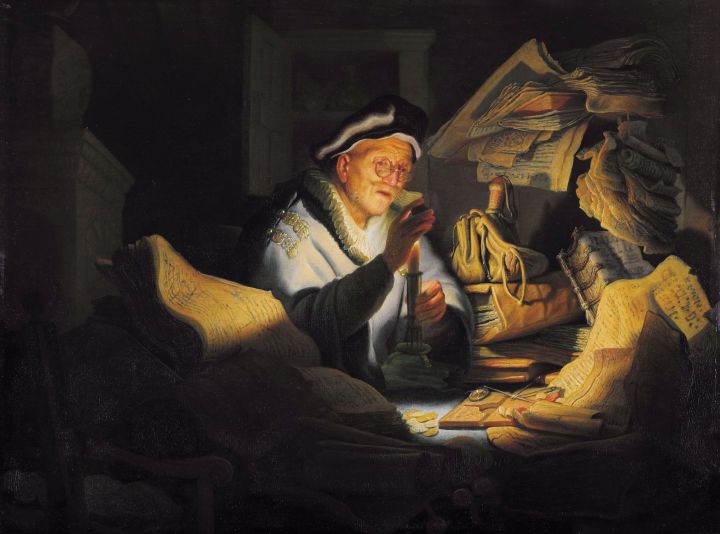
So Jesus tells us a parable – there’s a man who’s got loads of stuff, he’s well-off in worldly terms, he is successful. Yet all he is interested in is keeping hold of his stuff, by building bigger barns to stash things away, so that he can sit back, and relax and take life easy.

Then the man dies, quite suddenly, and learns that important lesson: you can’t take it with you when you go. You can’t put pockets in your shroud. When you are dead your stuff doesn’t help you at all. It may buy you a swankier funeral, a more expensive coffin, a more expensive hearse to transport your dead body – even horses with ostrich plumes on their heads – but basically you are dead. Even if you spend thousands of pounds having your head frozen in liquid nitrogen, you are still dead. Money and stuff can’t help you with that. It has never been able to, nor will it ever. So Our Lord encourages us to turn away from the world and its vanity, and to turn back to the true source of riches: God.

In St Paul’s letter to the Colossians, in the passage just after this morning’s second reading he says:

‘Put on then, as God’s chosen ones, holy and beloved, compassionate hearts, kindness, humility, meekness, and patience, bearing with one another and, if one has a complaint against another, forgiving each other; as the Lord has forgiven you, so you also must forgive. And above all these put on love, which binds everything together in perfect harmony. And let the peace of Christ rule in your hearts, to which indeed you were called in one body. And be thankful.’ (Col 3:12–15)

This is the life which stores up treasure in heaven, which we live when we have ‘Set our minds on things that are above, not on things that are on earth’ (Col 3:2) This is what a Christian life really looks like, when lived out in the world. This is the sort of radically different life which can and does both change and transform the world: offering it a way that is different to the way of possessions. The way of love and forgiveness, of knowing that as Christians we are loved and forgiven, no matter who we are or what we have done. There is another way to live: as a community which embodies radical love and forgiveness in the world and offers it a new way of being, which turns the ways and values of the world on its head. The Christian way of life is that radical, that revolutionary, and that revolution has to start right here and today. We are listening to Our Lord speaking to us through His Scriptures; he calls us to live this life for our own good, for the good of others, and for the glory of the God who made us. God our Father loves us. He saves us: from the tyranny of stuff and sin, so that we can be free.

This then is what the Church is meant to look like. We are called to be like a lamp set upon a lamp stand or a city upon a hill: shining, attractive, a light amidst the darkness of this world; we represent a radical alternative: life in all its fullness. So let us live it, together. Let us set our heart on heavenly things. Let us build on Christ, our sure foundation, knowing that where our treasure is our heart will be also. God is our treasure, and His wealth is self-giving love.

That is why we have come here, today, to be fed in word and sacrament, to be fed by God, with His Body and Blood and His Word. These things nourish us and prepare us for heaven. They transform our human nature and they fill us with the Divine life of love and forgiveness. We can start living out God’s kingdom here and now and change all the world; so that all may believe and be transformed to sing the praise of God the Father, God the Son, and God the Holy Spirit, to whom be ascribed as is most right and just all might, majesty, glory, dominion, and power, now and forever.

Rembrandt_-_The_Parable_of_the_Rich_Fool.jpg

18th Sunday of Year C: True Wealth

The world around us tells us constantly that if you want to be happy, to be fulfilled in life, then what you need is more stuff: a new car, a mobile phone. It’s the latest model –- it’s been improved, you can’t do without it! The world tells us this and we listen, we take it in, and we do what the world says. We all of us do this — I’ve done it myself. Society says you can have what you want TODAY. The credit card companies will lend you the money for the latest gear and charge you an interest rate which is usurious and wrong. Having these possessions, we are told, will make us happy.

Nothing could, in fact, be further from the truth. Salvation by stuff has never, and will never, work. The writer of Ecclesiastes, our first reading this morning, knows this well. ‘Vanity of vanities, says the Preacher,

vanity of vanities! All is vanity.’ (Eccles 1:2)  Stuff simply leaves us empty, craving more and more, never satis๏ฌed. Hence Our Lord’s teaching in this morning’s Gospel: ‘Take care, and be on your guard against all covetousness, for one’s life does not consist in the abundance of possessions.’ (Lk 12:15) Wanting more things is never a good idea; Christ tells us this and warns us against it. Yet we do not listen…

So Jesus tells us a parable – there’s a man who’s got loads of stuff, he’s well-off in worldly terms, he is successful. Yet all he is interested in is keeping hold of his stuff, by building bigger barns to stash things away, so that he can sit back, and relax and take life easy.

Then the man dies, quite suddenly, and learns that important lesson: you can’t take it with you when you go. You can’t put pockets in your shroud. When you are dead your stuff doesn’t help you at all. It may buy you a swankier funeral, a more expensive coffin, a more expensive hearse to transport your dead body – even horses with ostrich plumes on their heads – but basically you are dead. Even if you spend thousands of pounds having your head frozen in liquid nitrogen, you are still dead. Money and stuff can’t help you with that. It has never been able to, nor will it ever. So Our Lord encourages us to turn away from the world and its vanity, and to turn back to the true source of riches: God.

In St Paul’s letter to the Colossians, in the passage just after this morning’s second reading he says:

‘Put on then, as God’s chosen ones, holy and beloved, compassionate hearts, kindness, humility, meekness, and patience, bearing with one another and, if one has a complaint against another, forgiving each other; as the Lord has forgiven you, so you also must forgive. And above all these put on love, which binds everything together in perfect harmony. And let the peace of Christ rule in your hearts, to which indeed you were called in one body. And be thankful.’ (Col 3:12–15)

This is the life which stores up treasure in heaven, which we live when we have ‘Set our minds on things that are above, not on things that are on earth’ (Col 3:2) This is what a Christian life really looks like, when lived out in the world. This is the sort of radically different life which can and does both change and transform the world: offering it a way that is different to the way of possessions. The way of love and forgiveness, of knowing that as Christians we are loved and forgiven, no matter who we are or what we have done. There is another way to live: as a community which embodies radical love and forgiveness in the world and offers it a new way of being, which turns the ways and values of the world on its head. The Christian way of life is that radical, that revolutionary, and that revolution has to start right here and today. We are listening to Our Lord speaking to us through His Scriptures; he calls us to live this life for our own good, for the good of others, and for the glory of the God who made us. God our Father loves us. He saves us: from the tyranny of stuff and sin, so that we can be free.

This then is what the Church is meant to look like. We are called to be like a lamp set upon a lamp stand or a city upon a hill: shining, attractive, a light amidst the darkness of this world; we represent a radical alternative: life in all its fullness. So let us live it, together. Let us set our heart on heavenly things. Let us build on Christ, our sure foundation, knowing that where our treasure is our heart will be also. God is our treasure, and His wealth is self-giving love.

That is why we have come here, today, to be fed in word and sacrament, to be fed by God, with His Body and Blood and His Word. These things nourish us and prepare us for heaven. They transform our human nature and they fill us with the Divine life of love and forgiveness. We can start living out God’s kingdom here and now and change all the world; so that all may believe and be transformed to sing the praise of God the Father, God the Son, and God the Holy Spirit, to whom be ascribed as is most right and just all might, majesty, glory, dominion, and power, now and forever.

Rembrandt_-_The_Parable_of_the_Rich_Fool.jpg

Saturday, 20 July 2019

16th Sunday of Year C – Mary and Martha

It is easy for us in the twenty-first century to forget just how difficult it was to travel in the past. And how important hospitality was. In a world without service stations, hotels, and only few inns, you would depend on the kindness of strangers offering you a place to refresh and recuperate before returning to the road. 

In our first reading this morning, from Genesis, we see visitors arrive outside Abraham’s tent by the oaks of Mamre. It’s the scene pictured in the famous icon of the holy Trinity by Nicholai Rublev.  And these are not just any visitors, but God in embodied form, which is quite surprising, and very uncommon in the Old Testament. Abraham called the three persons Lord, the One God. He offers them water to cleanse themselves, and bread to nourish them. Sarah, Abraham’s wife,  takes three measures of flour. These we understand as representing faith, hope, and love, the virtues of the Christian life, which we receive in our baptism. Abraham takes a calf, which prefigures the sacrifice of Christ, the truly gentle one, who does not refuse the Cross. After the visitors have eaten, they promise that Sarah will have a son. In response to their hospitality, generosity and faithfulness, the patriarch and his wife are rewarded. Their kindness is repaid. 

In this morning’s epistle, we see that for Paul our actions as Christians are firmly rooted in our relationship with God and our understanding of His will. As Abraham’s vision of angels in Genesis gives us the merest glimpse of what God is like, in the Letter to the Colossians we see that the person of Jesus Christ is the image of the Living God, in Him we can see both what God is really like, who God is and what God does.

This morning’s Gospel follows on directly from last week’s Parable of the Good Samaritan. It is another story about making a journey, but a more positive side of travelling is shown by Martha’s welcoming of Jesus and his disciples into her home, continuing the theme of the earlier passage, although this time the travellers have arrived safely and haven’t been attacked by bandits. Martha is a model of hospitality, and looks after her guests: they’re hungry and thirsty after their travels. Martha puts her faith into practice. But she goes too far, and gets distracted by all the serving. She takes her eyes off Jesus. She forgets whom she is serving and why. However, she is not rebuked. Her service is valued. 

Her sister Mary has chosen to sit at Jesus’ feet and listen to Him. Mary has chosen a good part, and is being nourished in her faith. However, the point is not simply to prefer the contemplative to the practical, or the spiritual to the physical. That would be Gnosticism. Instead we need to balance our physical needs with our spiritual ones. It is Mary who will anoint Jesus in Bethany just before His Passion. Thus faith and action need to be lived out together.

We are called to be generous as a church, both in our hospitality and our attentiveness to God. In our proclamation of the Good News, in our making the Word of God known, and inannouncing Christ, the hope of glory, through His Death and Resurrection.

As is so often the case in the Gospels it isn’t a case of ‘either…or’ but rather ‘both…and’. We need to be both active and contemplative, and always keep our eyes on Jesus, the centre of our faith, the great example of how to live a fully human life. Christians need to hospitable and welcoming, as well as prayerful. It’s something which lies at the heart of Rule of St Benedict. This begins by telling us to listen with the ear of the heart, and to welcome guests as we would welcome Christ, so that in all things God might be glorified. Prayer and service, love and contemplation, balancing physical and spiritual needs, is how God wants us to live. It is how we flourish. We are nourished at the Eucharist, so that we can live out our faith in our lives, in a balanced way. Ora et labora, pray and work, the monastic motto 

Jesus’ teaching is that the way to show real hospitality is to pay attention to one’s guest, rather than just fussing to show hospitality. Instead of busyness, God tells us this morning that, like the Good Samaritan, we should be attentive to God and his message for us in the Gospel. In doing this we, like Mary will choose a good part. This choice has a moral dimension: in truly listening attentively to what God says to us, our actions and our character will be formed, helping our growth in holiness. Nourished by Word and Sacrament we progress in living out the virtues of faith, hope, and love0, which we received in our baptism, and prepare for our inheritance with the Saints in glory. We do not achieve this through prayer and contemplation alone, but by making our prayer and our work, all that we do and all that we are, a response to God and our neighbour. We are truly living in love, a love which is the nature of God and which binds together the persons of the Trinity, a love which transforms both us and our world. A love which we share so that all the world may sing the praises of to God the Father, God the Son, and God the Holy Spirit, to whom be ascribed as is most right and just all might, majesty, glory, dominion, and power, now and forever. 

Mary-Martha-Lazarus-icon.jpg

16th Sunday of Year C – Mary and Martha

It is easy for us in the twenty-first century to forget just how difficult it was to travel in the past. And how important hospitality was. In a world without service stations, hotels, and only few inns, you would depend on the kindness of strangers offering you a place to refresh and recuperate before returning to the road. 

In our first reading this morning, from Genesis, we see visitors arrive outside Abraham’s tent by the oaks of Mamre. It’s the scene pictured in the famous icon of the holy Trinity by Nicholai Rublev.  And these are not just any visitors, but God in embodied form, which is quite surprising, and very uncommon in the Old Testament. Abraham called the three persons Lord, the One God. He offers them water to cleanse themselves, and bread to nourish them. Sarah, Abraham’s wife,  takes three measures of flour. These we understand as representing faith, hope, and love, the virtues of the Christian life, which we receive in our baptism. Abraham takes a calf, which prefigures the sacrifice of Christ, the truly gentle one, who does not refuse the Cross. After the visitors have eaten, they promise that Sarah will have a son. In response to their hospitality, generosity and faithfulness, the patriarch and his wife are rewarded. Their kindness is repaid. 

In this morning’s epistle, we see that for Paul our actions as Christians are firmly rooted in our relationship with God and our understanding of His will. As Abraham’s vision of angels in Genesis gives us the merest glimpse of what God is like, in the Letter to the Colossians we see that the person of Jesus Christ is the image of the Living God, in Him we can see both what God is really like, who God is and what God does.

This morning’s Gospel follows on directly from last week’s Parable of the Good Samaritan. It is another story about making a journey, but a more positive side of travelling is shown by Martha’s welcoming of Jesus and his disciples into her home, continuing the theme of the earlier passage, although this time the travellers have arrived safely and haven’t been attacked by bandits. Martha is a model of hospitality, and looks after her guests: they’re hungry and thirsty after their travels. Martha puts her faith into practice. But she goes too far, and gets distracted by all the serving. She takes her eyes off Jesus. She forgets whom she is serving and why. However, she is not rebuked. Her service is valued. 

Her sister Mary has chosen to sit at Jesus’ feet and listen to Him. Mary has chosen a good part, and is being nourished in her faith. However, the point is not simply to prefer the contemplative to the practical, or the spiritual to the physical. That would be Gnosticism. Instead we need to balance our physical needs with our spiritual ones. It is Mary who will anoint Jesus in Bethany just before His Passion. Thus faith and action need to be lived out together.

We are called to be generous as a church, both in our hospitality and our attentiveness to God. In our proclamation of the Good News, in our making the Word of God known, and inannouncing Christ, the hope of glory, through His Death and Resurrection.

As is so often the case in the Gospels it isn’t a case of ‘either…or’ but rather ‘both…and’. We need to be both active and contemplative, and always keep our eyes on Jesus, the centre of our faith, the great example of how to live a fully human life. Christians need to hospitable and welcoming, as well as prayerful. It’s something which lies at the heart of Rule of St Benedict. This begins by telling us to listen with the ear of the heart, and to welcome guests as we would welcome Christ, so that in all things God might be glorified. Prayer and service, love and contemplation, balancing physical and spiritual needs, is how God wants us to live. It is how we flourish. We are nourished at the Eucharist, so that we can live out our faith in our lives, in a balanced way. Ora et labora, pray and work, the monastic motto 

Jesus’ teaching is that the way to show real hospitality is to pay attention to one’s guest, rather than just fussing to show hospitality. Instead of busyness, God tells us this morning that, like the Good Samaritan, we should be attentive to God and his message for us in the Gospel. In doing this we, like Mary will choose a good part. This choice has a moral dimension: in truly listening attentively to what God says to us, our actions and our character will be formed, helping our growth in holiness. Nourished by Word and Sacrament we progress in living out the virtues of faith, hope, and love0, which we received in our baptism, and prepare for our inheritance with the Saints in glory. We do not achieve this through prayer and contemplation alone, but by making our prayer and our work, all that we do and all that we are, a response to God and our neighbour. We are truly living in love, a love which is the nature of God and which binds together the persons of the Trinity, a love which transforms both us and our world. A love which we share so that all the world may sing the praises of to God the Father, God the Son, and God the Holy Spirit, to whom be ascribed as is most right and just all might, majesty, glory, dominion, and power, now and forever. 

Mary-Martha-Lazarus-icon.jpg

Friday, 31 May 2019

The Sunday after Ascension (Jn 17:20-26)

The Sunday after the Ascension, the Seventh Sunday of Easter, is one of those strange in-between times, not quite Pentecost yet. So we wait with the Apostles for the outpouring of the Holy Spirit. We wait, and we pray fervently that God will pour His Spirit into our hearts, and our lives, to fill us with His Love. 

In the Gospel this morning we are in the middle of Jesus’ High Priestly Prayer, which is the summit of His teaching just before His arrest and Passion. It is a moment of profound intimacy where Christ prays to God the Father. He prays not only for His disciples, but for those who will believe in Him through their word. That’s you, and me, and countless Christians down through the ages. Just before Christ’s arrest and Passion He prays for us. Such generosity and love should amaze us. Christ prays that we should be one, that there should be unity in the church. Sadly throughout its history this has not been the case, and it should shock us to the core. Unity is Christ’s will for His Church. It puts our petty human divisions into perspective. They’re bad and wrong; they’re not the will of God. It’s serious, and it matters, and we shouldn’t be making it worse, we should be growing together in love. We should do this because it is Christ’s will, we listen to Him, and do what He tells us. That isn’t the only reason, however. Christ prays that the Church may be one, ‘so that the world may believe that you have sent me.’ (17:21 ESV) In other words the truth of our witness and proclamation of the Gospel is contingent upon our unity. If we’re divided people won’t believe us. Which is the right or the proper bit? How can you tell? It isn’t always easy. 

Christ gives us His glory, which is His Passion and Death. To follow Christ leads to a Cross, and onward to new life. But if we want to follow Christ then we cannot ignore pain and suffering. We’ve signed up for it. All of us have, in our baptism, when we received the water of life without price. We have to bear witness to Christ regardless of the cost. People may well think we are fools for believing what we do. The idea that Christians are simple-minded, or deluded, or weak, has been around for a long time. A religion for women, slaves, and children, said the pagan Celsus around AD 180 (cf. Orig. contra Celsum 344) It’s a silly idea, but plenty of people still believe it, even today. We can convince them otherwise by means of rational argument, but also by the example of our lives, as authentic faith is attractive, real, and convincing. 

Christ speaks to us, and teaches us so that our joy may be complete in Him, filled with His love, and the Holy Spirit. The world’s reaction to this is a negative one: because what we are, what we stand for, and how we live as Christians is to be opposed to what the world around us stands for: selfishness, greed, which it makes into false gods, as though material wealth, or power, or status could save us – such things are transient and fleeting. The world offers us a short-cut, an easy road. Whereas if we are following Christ, then we are walking the way of his Passion, we are walking the Way of the Cross, dying daily to sin, and letting God’s grace be at work in and through us. It is not easy, it is difficult, most of us are unable to manage, we will fail, and we need the love and support of the Christian community to help us, even the first Christians, those who had been with Jesus, needed each other’s help and support, so they can continue what Jesus started.

We need to be together, to meet together to pray for our needs and those of the world, and to be nourished by the word of God, the Bible, and the Sacrament of Our Lord’s Body and Blood, not because they’re something nice to do on a Sunday morning: an add-on, an optional extra that we can opt into and out of as we feel like, but because as Christians they are crucial to who and what we are, if we are to remain in the love of God then we have to live this way. Only then can we o๏ฌ€er the world an alternative to the ways of selfishness and sin. It will hate us for doing this, it will despise us and persecute us, it will call us hypocrites when we fail to live up to the example of Jesus; but as Christians who live in the love of God we forgive each other our trespasses, so that we can live out that same radical love and forgiveness which sees Jesus die upon the Cross for love of us and all the world, this is love which can transform the world. It is a message of such love, such forgiveness that the world cannot or does not want to understand it. We may not understand it, but we know that it can be experienced, and we are living testimony to its power. It turns our lives around and sets us free to live for God and to proclaim his saving truth in our words and actions, calling the world to repentance, to turn to Christ, and to be renewed in and through Him. In his power, with His Truth, filled with His Love we can transform the world, one soul at a time.

So as we wait with the Apostles for the gift of the Holy Spirit let us pray that Christ may come, and send His Holy Spirit, that God may be at work in us, building us up, and giving us strength to live his life and to proclaim his truth, to o๏ฌ€er the world that which it most earnestly desires, a peace, a joy, a freedom which passes human understanding, and the gift of eternal life in Christ. Let us proclaim it so that all the world may come to know and love God the Father, God the Son, and God the Holy Spirit, to whom be ascribed as is most right and just all might, majesty, glory, dominion, and power, now and forever.

dsc_0038.jpg

The Sunday after Ascension (Jn 17:20-26)

The Sunday after the Ascension, the Seventh Sunday of Easter, is one of those strange in-between times, not quite Pentecost yet. So we wait with the Apostles for the outpouring of the Holy Spirit. We wait, and we pray fervently that God will pour His Spirit into our hearts, and our lives, to fill us with His Love. 

In the Gospel this morning we are in the middle of Jesus’ High Priestly Prayer, which is the summit of His teaching just before His arrest and Passion. It is a moment of profound intimacy where Christ prays to God the Father. He prays not only for His disciples, but for those who will believe in Him through their word. That’s you, and me, and countless Christians down through the ages. Just before Christ’s arrest and Passion He prays for us. Such generosity and love should amaze us. Christ prays that we should be one, that there should be unity in the church. Sadly throughout its history this has not been the case, and it should shock us to the core. Unity is Christ’s will for His Church. It puts our petty human divisions into perspective. They’re bad and wrong; they’re not the will of God. It’s serious, and it matters, and we shouldn’t be making it worse, we should be growing together in love. We should do this because it is Christ’s will, we listen to Him, and do what He tells us. That isn’t the only reason, however. Christ prays that the Church may be one, ‘so that the world may believe that you have sent me.’ (17:21 ESV) In other words the truth of our witness and proclamation of the Gospel is contingent upon our unity. If we’re divided people won’t believe us. Which is the right or the proper bit? How can you tell? It isn’t always easy. 

Christ gives us His glory, which is His Passion and Death. To follow Christ leads to a Cross, and onward to new life. But if we want to follow Christ then we cannot ignore pain and suffering. We’ve signed up for it. All of us have, in our baptism, when we received the water of life without price. We have to bear witness to Christ regardless of the cost. People may well think we are fools for believing what we do. The idea that Christians are simple-minded, or deluded, or weak, has been around for a long time. A religion for women, slaves, and children, said the pagan Celsus around AD 180 (cf. Orig. contra Celsum 344) It’s a silly idea, but plenty of people still believe it, even today. We can convince them otherwise by means of rational argument, but also by the example of our lives, as authentic faith is attractive, real, and convincing. 

Christ speaks to us, and teaches us so that our joy may be complete in Him, filled with His love, and the Holy Spirit. The world’s reaction to this is a negative one: because what we are, what we stand for, and how we live as Christians is to be opposed to what the world around us stands for: selfishness, greed, which it makes into false gods, as though material wealth, or power, or status could save us – such things are transient and fleeting. The world offers us a short-cut, an easy road. Whereas if we are following Christ, then we are walking the way of his Passion, we are walking the Way of the Cross, dying daily to sin, and letting God’s grace be at work in and through us. It is not easy, it is difficult, most of us are unable to manage, we will fail, and we need the love and support of the Christian community to help us, even the first Christians, those who had been with Jesus, needed each other’s help and support, so they can continue what Jesus started.

We need to be together, to meet together to pray for our needs and those of the world, and to be nourished by the word of God, the Bible, and the Sacrament of Our Lord’s Body and Blood, not because they’re something nice to do on a Sunday morning: an add-on, an optional extra that we can opt into and out of as we feel like, but because as Christians they are crucial to who and what we are, if we are to remain in the love of God then we have to live this way. Only then can we o๏ฌ€er the world an alternative to the ways of selfishness and sin. It will hate us for doing this, it will despise us and persecute us, it will call us hypocrites when we fail to live up to the example of Jesus; but as Christians who live in the love of God we forgive each other our trespasses, so that we can live out that same radical love and forgiveness which sees Jesus die upon the Cross for love of us and all the world, this is love which can transform the world. It is a message of such love, such forgiveness that the world cannot or does not want to understand it. We may not understand it, but we know that it can be experienced, and we are living testimony to its power. It turns our lives around and sets us free to live for God and to proclaim his saving truth in our words and actions, calling the world to repentance, to turn to Christ, and to be renewed in and through Him. In his power, with His Truth, filled with His Love we can transform the world, one soul at a time.

So as we wait with the Apostles for the gift of the Holy Spirit let us pray that Christ may come, and send His Holy Spirit, that God may be at work in us, building us up, and giving us strength to live his life and to proclaim his truth, to o๏ฌ€er the world that which it most earnestly desires, a peace, a joy, a freedom which passes human understanding, and the gift of eternal life in Christ. Let us proclaim it so that all the world may come to know and love God the Father, God the Son, and God the Holy Spirit, to whom be ascribed as is most right and just all might, majesty, glory, dominion, and power, now and forever.

dsc_0038.jpg

Saturday, 20 October 2018

29th Sunday of Year B: Mark 10:35-45

One day the Pope Gregory the Great decided to teach his brother Bishop, John the Faster of Constantinople, a lesson. John had just been granted the title ‘Ecumenical Patriarch’ by the Emperor of Byzantium, it sounds grand and it was. It makes a claim to be patriarch of the entire inhabited world. So Gregory adopted the title ‘servus servorum Dei — Servant of the Servants of God’ [John the Deacon (PL, LXXV, 87)]. It derives from a Hebrew superlative: God of Gods, Heaven of Heavens, Holy of Holies, Song of Songs, Vanity of Vanities. So it means the most servile, the lowest of the low, the servant of all. It is used of Canaan in Genesis 9:25 when he is cursed by Noah, and also it refers to this morning’s Gospel. It was a way of reminding his brother in Christ that service, not power or titles, lies at the heart of who we are as Christians.

This morning’s gospel reminds us that Christian leadership is not about lording it over people, but being like Christ. It doesn’t matter whether you’re a bishop, a priest, a deacon, or simply a baptised Christian; we all have to live up to the same standard: Jesus Christ, who served us, and call us to the service of others. 

It is a big ask, I grant you, we will all of us fall short, and fail to hit the mark. But we are to try, and keep trying, and we can have confidence that, ‘although he was a Son, he learned obedience through what he suffered; and being made perfect he became the source of eternal salvation to all who obey him’. The author of the letter to the Hebrews encourages to do this, and to hold fast to our confession: we can be sure about both WHO Jesus is, and WHAT he does. He is truly God and man, tempted but without sin, He loves us and makes peace by the blood of the Cross. He gives his life for us, out of Love.

The Cross is at the centre of all this, through the mystery of the Atonement, we can ‘have confidence to draw near to the throne of grace and receive help in time of need’. It is a mystery, not something to be explained, but something both to be experienced and lived out. It is a mystery which we will enter this morning, when Christ, as priest and victim offers himself for us, and we receive Him under the outward forms of bread and wine. It is a mystery prefigured in the prophets, especially Isaiah, which the Church reads in a Christological way, as pointing to, and finding fulfilment in Jesus Christ. In Acts Chapter 8 when Philip meets the Ethiopian eunuch he is reading the passage we have heard this morning and he cannot understand it, or what it means, so Philip tells him about Jesus, and how Isaiah’s prophesy is fulfilled in the person and work of Jesus, and he is baptised. Isaiah’s prophecy is fulfilled in Jesus’ death, which shows us that God loves us, that he inspires the prophets to give comfort and chastisement to God’s people, so that they may love Him and serve Him.

In worldly terms Jesus looks like a failure: he is deserted, denied, and dies the death of a common criminal. But we are NOT to judge by the standards of this world: ‘it shall not be so among you’. We are not being counter-cultural just to be rebellious, to swim against the tide. Instead we are being faithful to Christ, we are holding fast to our confession, because it is TRUE, because it comes from him who is the WAY, who is the TRUTH, and the LIFE, Our Lord and Saviour Jesus Christ, whp loves us, and died for us.

In the verses which precede this morning’s Gospel, Our Lord has foretold his suffering and death for the third time in Mark’s account. He knows the cost, he knows what will happen: ‘to give his life as a ransom for many’. Jesus does it willingly, gladly, for love of us. It is a love made manifest in His birth, life and death. A love made manifest in the grace and mercy of God who creates and redeems the world, and who comes among us not as a king but as a servant. This changes us, and changes the world, it turns it around, and it asks us to do the same.

In the person of James and John we see what it is to be a Christian, to live a Christian life: it is to be conformed to Christ. They start by getting it wrong, then they learn what it is all about. It is to be open to the possibility of suffering and to accept it. In worldly terms it looks like a failure, but in bearing witness to our faith we show how that we too are able to drink the cup offered to us. We are able to become an example which people want to imitate and follow because WE point them to Christ, the restorer of all relationships, the healer of the world, who offers life in all its fullness. It is the most terrific news. People may not want to hear it, but they need to hear it. They prefer to ‘lord it over’ others and to go after the false gods of worldly power, money, and success: things which are empty, things which are of no value or worth compared to the love of God in Christ Jesus, the greatest free gift to humanity.

In Christ all human existence, all life, all death, and all suffering find both meaning and value. This truth is unsettling, it is deeply uncomfortable, and yet it is deeply liberating. In living out the truth in our lives we live a service which is perfect freedom. In conforming ourselves to Christ we find meaning and identity. So let us lay down our lives that we may live fully and give glory to God the Father, God the Son, and God the Holy Ghost, to whom be ascribed as is most right and just, all might, majesty, glory dominion, and power, now and forever.

e726c-christ_washing