Showing posts with label Easter. Show all posts

Saturday, 23 May 2020

Easter VII (The Sunday after Ascension) Acts 1:12-14, 1Peter 4:13-14, John 17:1-11

So that they may be one, as we are one

The ten days between Ascension and Pentecost is something of a strange time, a time of waiting, of anticipation, which speaks very powerfully to our present predicament. It is a time to wait and pray, which feels particularly apposite at this moment in time. Likewise the advice of the First Letter of Peter speaks powerfully when it says, ‘But rejoice insofar as you share Christ’s sufferings, … because the Spirit of glory and of God rests upon you’ (1Peter 4:13-14 ESV) We receive the Spirit in Baptism and Confirmation. He lives in us, and we can unite our sufferings with those of Christ, and be drawn ever closer to Him.

The Gospel this morning has taken us back to the Garden of Gethsemane, where in the seventeenth Chapter of John’s Gospel , after celebrating the Last Supper with His disciples, Jesus goes out to spend time in prayer. It can seem strange to suddenly look back to Maundy Thursday seven weeks after we have celebrated Jesus’ resurrection, but there is a very good reason to do such a thing. The prayer we have just heard is a conversation between God the Son and God the Father. It is a moment of intimacy, a private moment which shows us their relationship, something extraordinary, something wonderful, we don’t often think of prayer in these terms, but currently there is a world-wide initiative, called ‘Thy Kingdom Come’ which calls upon Christians everywhere to do something wonderful together. Between the Ascension and Pentecost we are asked to be like the Apostles in the first chapter of the Book of the Acts of the Apostles, and pray for the gift of the Holy Spirit, just like they did, and for us all to do this together, to pray for unity and the gift of the Holy Spirit. 

Prayer is a funny old thing, and most people probably think of it as asking God for things: please watch over my parents as they travel, please help me pass this examination, hopefully in our language of prayer we can also find time to say thank you for all the good things of this life, and to say sorry for when we’ve not been good enough, and also time to say, ‘I love you’ the prayer of adoration that we may be drawn closer to God. It’s a powerful thing, and a wonderful thing. It is ordinary, yet able to do amazing things:

It can be all to easy in life to think that what God wants is something big and difficult, when actually the opposite is what is required. The key to it all is humility: knowing our need of God. Those who are poor in Spirit, those who are humble can be filled with God’s Spirit, because they rely upon Him, they know their need of him. They know that God can do what we cannot, and they trust Him.

There it is plain and simple: prayer, it can change the world, and for the last two thousand years it has been changing the church and the world, one soul at a time, the wonderful revolution of God’s love at work in the world. In His prayer before his Passion, Jesus prays that we may be one, as He and the Father are one. He prays for unity, it is Jesus’ will for the church, and it is clear that the first apostles did what Jesus wanted them to do, as we can see form the Acts of the Apostles. They listened to Jesus, and did what He told them to do. We have to do the same.

‘And when they had entered, they went up to the upper room, where they were staying, Peter and John and James and Andrew, Philip and Thomas, Bartholomew and Matthew, James the son of Alphaeus and Simon the Zealot and Judas the son of James. All these with one accord were devoting themselves to prayer, together with the women and Mary the mother of Jesus, and his brothers.’ (Acts 1:13-14 ESV)

Here is unity, unity of will and purpose, and we hope to share that here and now. They are devoted to prayer, and we can be too. While the church is not as united as we would like it to be, or as God would like it to be, we can at least say that we are trying to do God’s will. It is something that we can all try and do together. So let us do it. Let us pray for unity, and the outpouring of God’s Holy Spirit, to fill the Church with love, with grace, with forgiveness, with reconciliation, that we can heal the wounds of the past, and be drawn into unity and love, by the power of the Holy Spirit, knowing our need of God, and our reliance upon Him. If we ask, God will both hear our request, and grant it (if it is His will). 

So as we stay put, and wait and pray with the Apostles for the gift of the Holy Spirit let us pray that God may be at work in us, that He will fill us with his love, and transform our lives, building us up, and giving us strength to live His life and to proclaim His truth, to offer the world that which it most earnestly desires, a peace, a joy and a freedom which pass human understanding, and the gift of eternal life in Christ. Let us pray that we are strengthened so that we can proclaim in word and deed what wonderful things God has done through his Son, Our Saviour Jesus Christ. That all that we are and do may confess that Jesus Christ is Lord to the glory of the Father, and that the world may be filled with his love so that all may come to believe and give glory to God the Father, God the Son, and God the Holy Spirit, to whom be ascribed as is most right and just, all might, majesty, glory, dominion, and power, now and forever. Amen. 

3a8ed5baf8ee2d2d1cfd265911689e5b

Easter VII (The Sunday after Ascension) Acts 1:12-14, 1Peter 4:13-14, John 17:1-11

So that they may be one, as we are one

The ten days between Ascension and Pentecost is something of a strange time, a time of waiting, of anticipation, which speaks very powerfully to our present predicament. It is a time to wait and pray, which feels particularly apposite at this moment in time. Likewise the advice of the First Letter of Peter speaks powerfully when it says, ‘But rejoice insofar as you share Christ’s sufferings, … because the Spirit of glory and of God rests upon you’ (1Peter 4:13-14 ESV) We receive the Spirit in Baptism and Confirmation. He lives in us, and we can unite our sufferings with those of Christ, and be drawn ever closer to Him.

The Gospel this morning has taken us back to the Garden of Gethsemane, where in the seventeenth Chapter of John’s Gospel , after celebrating the Last Supper with His disciples, Jesus goes out to spend time in prayer. It can seem strange to suddenly look back to Maundy Thursday seven weeks after we have celebrated Jesus’ resurrection, but there is a very good reason to do such a thing. The prayer we have just heard is a conversation between God the Son and God the Father. It is a moment of intimacy, a private moment which shows us their relationship, something extraordinary, something wonderful, we don’t often think of prayer in these terms, but currently there is a world-wide initiative, called ‘Thy Kingdom Come’ which calls upon Christians everywhere to do something wonderful together. Between the Ascension and Pentecost we are asked to be like the Apostles in the first chapter of the Book of the Acts of the Apostles, and pray for the gift of the Holy Spirit, just like they did, and for us all to do this together, to pray for unity and the gift of the Holy Spirit. 

Prayer is a funny old thing, and most people probably think of it as asking God for things: please watch over my parents as they travel, please help me pass this examination, hopefully in our language of prayer we can also find time to say thank you for all the good things of this life, and to say sorry for when we’ve not been good enough, and also time to say, ‘I love you’ the prayer of adoration that we may be drawn closer to God. It’s a powerful thing, and a wonderful thing. It is ordinary, yet able to do amazing things:

It can be all to easy in life to think that what God wants is something big and difficult, when actually the opposite is what is required. The key to it all is humility: knowing our need of God. Those who are poor in Spirit, those who are humble can be filled with God’s Spirit, because they rely upon Him, they know their need of him. They know that God can do what we cannot, and they trust Him.

There it is plain and simple: prayer, it can change the world, and for the last two thousand years it has been changing the church and the world, one soul at a time, the wonderful revolution of God’s love at work in the world. In His prayer before his Passion, Jesus prays that we may be one, as He and the Father are one. He prays for unity, it is Jesus’ will for the church, and it is clear that the first apostles did what Jesus wanted them to do, as we can see form the Acts of the Apostles. They listened to Jesus, and did what He told them to do. We have to do the same.

‘And when they had entered, they went up to the upper room, where they were staying, Peter and John and James and Andrew, Philip and Thomas, Bartholomew and Matthew, James the son of Alphaeus and Simon the Zealot and Judas the son of James. All these with one accord were devoting themselves to prayer, together with the women and Mary the mother of Jesus, and his brothers.’ (Acts 1:13-14 ESV)

Here is unity, unity of will and purpose, and we hope to share that here and now. They are devoted to prayer, and we can be too. While the church is not as united as we would like it to be, or as God would like it to be, we can at least say that we are trying to do God’s will. It is something that we can all try and do together. So let us do it. Let us pray for unity, and the outpouring of God’s Holy Spirit, to fill the Church with love, with grace, with forgiveness, with reconciliation, that we can heal the wounds of the past, and be drawn into unity and love, by the power of the Holy Spirit, knowing our need of God, and our reliance upon Him. If we ask, God will both hear our request, and grant it (if it is His will). 

So as we stay put, and wait and pray with the Apostles for the gift of the Holy Spirit let us pray that God may be at work in us, that He will fill us with his love, and transform our lives, building us up, and giving us strength to live His life and to proclaim His truth, to offer the world that which it most earnestly desires, a peace, a joy and a freedom which pass human understanding, and the gift of eternal life in Christ. Let us pray that we are strengthened so that we can proclaim in word and deed what wonderful things God has done through his Son, Our Saviour Jesus Christ. That all that we are and do may confess that Jesus Christ is Lord to the glory of the Father, and that the world may be filled with his love so that all may come to believe and give glory to God the Father, God the Son, and God the Holy Spirit, to whom be ascribed as is most right and just, all might, majesty, glory, dominion, and power, now and forever. Amen. 

3a8ed5baf8ee2d2d1cfd265911689e5b

Thursday, 21 May 2020

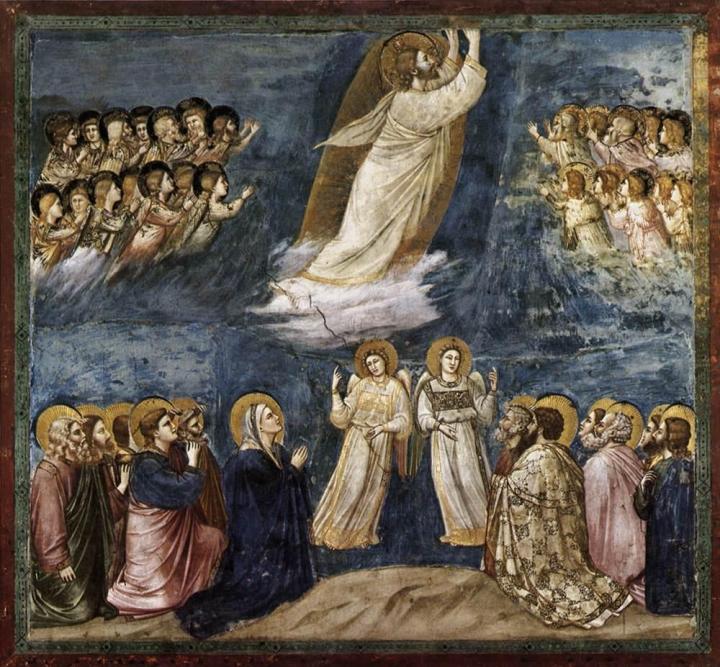
Homily for the Ascension (Acts 1:1-11 Eph 1:17-23 Mt 28:16-20)

Today can often feel a somewhat strange day, a day of slightly mixed emotions, and this year more than most, when we are not able to be together to pray, to worship Almighty God, and be nourished with Holy Communion. We are not celebrating Jesus’ departure from the earth, but His return to God the Father, Christ’s abiding presence with us, and what He asks of us, and promises to us. It is a day of celebration and expectation, looking forward to the future in love and hope. 

The disciples have had six weeks to used to the fact that Jesus has risen from the dead, having carried the burden of our sins and experienced the pain and estrangement which separates God and humanity. That wound has been healed by His glorious wounds. Before Jesus returns to the Father, He makes the apostles a promise: they will be baptized with the Holy Spirit (Acts 1:4), receive power, and be Christ’s witnesses to the ends of the earth (Acts 1:8). Christ is looking forward to Pentecost, to the church’s future, in which we live now.

In Matthew’s Gospel, before Jesus leaves the apostles, He gives them a commission, they are sent out to do something together. Jesus begins (Mt 28:18) by stating that all authority in heaven and earth has been given to Him. He is God, God is sovereign, and rules over everything, and it reminds us of the moment during Christ’s temptation by the devil, before the start of His public ministry, which we read on the First Sunday of Lent. The devil offers the world to Jesus, but it is not his to give, it belongs to God, who created it. Our worship is rooted in the fact that we have a relationship with a God who made us, redeemed us, and loves us. 

Jesus tells the apostles (28:19) to go and make disciples of all nations, baptizing them in the name of the Father, and of the Son, and of the Holy Spirit. The church exists to be sent out to make disciples. Baptism is what makes us Christians. In it we share in Christ’s life, death, and Resurrection, and through it God gives us the virtues of Faith, Hope, and Love. Through our faith in God: Father, Son, and Holy Spirit, filled with the hope of heaven, our supernatural end, to enjoy the vision of God, who is love. Loving God and our neighbour, this is the very heart of the proclamation of the Good News of the Kingdom, along with the call of Jesus and John the Baptist that we should ‘Repent and believe the Gospel, and be baptised’. For two thousand years our message has been the same. 

Jesus tells the apostles to teach us all that He has commanded them (28:20). The Church is called to hand on what has been delivered to it, this is tradition, and it stops us from making mistakes, by deviating from what Christ teaches us through the Church. Our religion makes demands of us, and calls us to be faithful to the apostles’ teaching, and to live it out in our lives, putting theory into practice and becoming living witnesses of the Kingdom. This is difficult, and it is where Christians fall down most often. But the Good News is that in Christ we have forgiveness of sin. We can repent, and turn away from our mistakes, and turn back to a God who loves us. We are not abandoned or cast aside, but embraced in love. 

Finally Jesus says to the apostles, ‘Behold I am with you always, to the end of the age.’ (28:20) Christ is with us. How? In four ways: first in Scripture, the Word of God, which speaks of Christ, and finds its fulfilment in Him. It is true, and the source of truth. He is with us in the Sacraments, outward visible signs of the inward spiritual grace God pours out upon us, to fill us with His love. He is with us in the Holy Spirit which he pours out upon us, to strengthen us, and fill us with love. And finally He is with us in the Church, which is His Body, where we are united with Christ, in a relationship with Him, and each other. 

Jesus makes promises which are true. We can trust Him, and like the apostles we can prepare for the Coming of the Holy Spirit at Pentecost in prayer, and joyful expectation, knowing that we will never be abandoned, but that we are always united to, and loved by God the Father, God the Son, and God the Holy Spirit, to whom be ascribed as it most right and just, all might, majesty, glory, dominion, and power, now and forever. Amen

giotto_di_bondone_-_no._38_scenes_from_the_life_of_christ_-_22._ascension_-_wga09226

Homily for the Ascension (Acts 1:1-11 Eph 1:17-23 Mt 28:16-20)

Today can often feel a somewhat strange day, a day of slightly mixed emotions, and this year more than most, when we are not able to be together to pray, to worship Almighty God, and be nourished with Holy Communion. We are not celebrating Jesus’ departure from the earth, but His return to God the Father, Christ’s abiding presence with us, and what He asks of us, and promises to us. It is a day of celebration and expectation, looking forward to the future in love and hope. 

The disciples have had six weeks to used to the fact that Jesus has risen from the dead, having carried the burden of our sins and experienced the pain and estrangement which separates God and humanity. That wound has been healed by His glorious wounds. Before Jesus returns to the Father, He makes the apostles a promise: they will be baptized with the Holy Spirit (Acts 1:4), receive power, and be Christ’s witnesses to the ends of the earth (Acts 1:8). Christ is looking forward to Pentecost, to the church’s future, in which we live now.

In Matthew’s Gospel, before Jesus leaves the apostles, He gives them a commission, they are sent out to do something together. Jesus begins (Mt 28:18) by stating that all authority in heaven and earth has been given to Him. He is God, God is sovereign, and rules over everything, and it reminds us of the moment during Christ’s temptation by the devil, before the start of His public ministry, which we read on the First Sunday of Lent. The devil offers the world to Jesus, but it is not his to give, it belongs to God, who created it. Our worship is rooted in the fact that we have a relationship with a God who made us, redeemed us, and loves us. 

Jesus tells the apostles (28:19) to go and make disciples of all nations, baptizing them in the name of the Father, and of the Son, and of the Holy Spirit. The church exists to be sent out to make disciples. Baptism is what makes us Christians. In it we share in Christ’s life, death, and Resurrection, and through it God gives us the virtues of Faith, Hope, and Love. Through our faith in God: Father, Son, and Holy Spirit, filled with the hope of heaven, our supernatural end, to enjoy the vision of God, who is love. Loving God and our neighbour, this is the very heart of the proclamation of the Good News of the Kingdom, along with the call of Jesus and John the Baptist that we should ‘Repent and believe the Gospel, and be baptised’. For two thousand years our message has been the same. 

Jesus tells the apostles to teach us all that He has commanded them (28:20). The Church is called to hand on what has been delivered to it, this is tradition, and it stops us from making mistakes, by deviating from what Christ teaches us through the Church. Our religion makes demands of us, and calls us to be faithful to the apostles’ teaching, and to live it out in our lives, putting theory into practice and becoming living witnesses of the Kingdom. This is difficult, and it is where Christians fall down most often. But the Good News is that in Christ we have forgiveness of sin. We can repent, and turn away from our mistakes, and turn back to a God who loves us. We are not abandoned or cast aside, but embraced in love. 

Finally Jesus says to the apostles, ‘Behold I am with you always, to the end of the age.’ (28:20) Christ is with us. How? In four ways: first in Scripture, the Word of God, which speaks of Christ, and finds its fulfilment in Him. It is true, and the source of truth. He is with us in the Sacraments, outward visible signs of the inward spiritual grace God pours out upon us, to fill us with His love. He is with us in the Holy Spirit which he pours out upon us, to strengthen us, and fill us with love. And finally He is with us in the Church, which is His Body, where we are united with Christ, in a relationship with Him, and each other. 

Jesus makes promises which are true. We can trust Him, and like the apostles we can prepare for the Coming of the Holy Spirit at Pentecost in prayer, and joyful expectation, knowing that we will never be abandoned, but that we are always united to, and loved by God the Father, God the Son, and God the Holy Spirit, to whom be ascribed as it most right and just, all might, majesty, glory, dominion, and power, now and forever. Amen

giotto_di_bondone_-_no._38_scenes_from_the_life_of_christ_-_22._ascension_-_wga09226

Saturday, 2 May 2020

Easter IV (The Good Shepherd)

We mark time: day and night, weeks, months, years, and seasons. The Church’s Liturgical Year is a very good thing indeed. It divides up time and it focusses our attention on certain things: allowing us the time to contemplate the mysteries of the Christian Faith. The Resurrection of Jesus Christ from the dead is an event which requires serious contemplation. We need time to let it sink in, and to explore what it means for us and our faith. It is the defining moment of our faith, one which gives Christians the hope that our death is not the end, that this life is not all that there is, and that because of who Christ is, namely God, and what He has done: died for us to take away our sin, and rise again to give us the hope of eternal life in Him.

In John’s Gospel, Jesus says of himself, ‘I am the Good Shepherd’ It discloses something important about Who and What He is — Jesus is one who tends, who looks after His sheep. The Jews in the Temple for the celebration of Hanukkah in the Gospel don’t seem to have been listening. Jesus has told them clearly and they do not believe that He is the Messiah. What Christ does in the Gospels testifies to Who and What He is: the Word made flesh, God with us.

Those of us who are in the Church, through our Baptism belong to Christ, we are His. So we are to listen to what Jesus tells us, in the words of Scripture and through prayer. Jesus knows us and we know him — in word and sacrament, through the outpouring of His grace, and so we follow Christ, we do what He tells us to do: to love, to forgive each other. We are humble, we don’t think of ourselves as better than we are, we know our need of, and our dependance upon God. We put our faith into practice in our lives, so that it becomes a reality in the world.

Christ offers us eternal life, as we share in His death, so we too share in His Resurrection, and are assured of eternal life with Him, something wonderful and freely given, and a reason why we, as the Church, celebrate Easter in an extravagant and exuberant way, because it is a sign that God loves us, and saves us. We are sharing in that Eternal Life here and now, as we are nourished by Him, in Word and Sacrament, strengthened by Him, to live His risen life, here and now. 

In Revelation, as St John experiences heavenly worship he states, ‘For the Lamb in the midst of the throne will be their shepherd, and he will guide them to springs of living water, and God will wipe away every tear from their eyes.’ (Revelation 7:17 ESV). The Lamb will be our shepherd: Christ will care for us, and keep us safe. A Good Shepherd lays down His life for the sheep as Christ has done through His Death and Resurrection. To drink living water is to experience the fulness of life in God, filled with the Holy Spirit. Christ guides us to that in our baptism, when we are filled with the Spirit and made part of the Church. 

So we listen to Christ’s voice, in the Bible. We hear Him speak to us, and through this we listen to Him, and obey Him. That is how we know Christ and follow Him. It affects who we are and how we live, as people of love, loved by God. We are prepared here on earth for the life of heaven, for worship, and closeness to God. We have a foretaste of that closeness in Holy Communion where Christ feeds us with His Body and Blood, so that we may be transformed by it, more and more into His likeness. It changes us, so that we, by the grace of God, in the power of His Holy Spirit, may become what we are: made in the image of God. That image is restored in us by Christ’s death and resurrection. Through it we come to share in the intimacy of the divine life. As Christ says, ‘I and the Father are one.’ (John 10:30 ESV)  As Michael Ramsay said, ‘God is Christlike, and in him is no un-Christlikeness at all’ [God, Christ & the World: A Study in Contemporary Theology, London 1969, 98] When we see Jesus, we see God, when we hear Him speak, we hear the voice of God. We can know who God is, the creator and redeemer of the universe, through His Son, Jesus Christ. God is no longer distant, or an angry man on a cloud, but a loving Father, as in the Parable of the Prodigal Son, and a Son who loves us so much that He suffers and dies for us, to give us life in Him. This is God who goes after lost sheep, who longs to love and heal and reconcile, who can heal our wounds if we let Him.

God loves us; we can say this with the utmost confidence because of the life, death, and resurrection of Jesus Christ, it all proclaims the same truth: God loves us, not because we’re worthy of it, but so that we might become what God is. It is what we celebrate at Easter, it lies at the heart, the very core of our faith as Christians. It’s why we are what we are, and why we do what we do, to proclaim this simple truth to the world.

We can have peace through our relationship with the Trinity, the source of our peace, and joy, and love. Grounded in this relationship we need not be afraid or troubled – we are free to live lives which proclaim God’s love and victory so that the world may believe. Through God loving us, we can truly love him and each other. We experience this most clearly at the Eucharist when Christ feeds us with His Body and Blood, which He as both priest and victim offers on the Altar of the Cross. That self same sacrifice which heals the world through the outpouring of God’s love feeds us here and now. We are fed so that we may be nourished and share in the divine life and the joy of heaven. We receive the free gift of God’s grace so that it may perfect our human nature, so that we may go where Our Lord is going, and share in the joy, and love, and peace of the Triune God, Father, Son, and Holy Spirit, to whom be ascribed, as is most right and just, all might, majesty, glory, dominion, and power, now and forever. Amen. 

06f84c08-66cf-4481-baf0-09d3f1849f7e

Easter IV (The Good Shepherd)

We mark time: day and night, weeks, months, years, and seasons. The Church’s Liturgical Year is a very good thing indeed. It divides up time and it focusses our attention on certain things: allowing us the time to contemplate the mysteries of the Christian Faith. The Resurrection of Jesus Christ from the dead is an event which requires serious contemplation. We need time to let it sink in, and to explore what it means for us and our faith. It is the defining moment of our faith, one which gives Christians the hope that our death is not the end, that this life is not all that there is, and that because of who Christ is, namely God, and what He has done: died for us to take away our sin, and rise again to give us the hope of eternal life in Him.

In John’s Gospel, Jesus says of himself, ‘I am the Good Shepherd’ It discloses something important about Who and What He is — Jesus is one who tends, who looks after His sheep. The Jews in the Temple for the celebration of Hanukkah in the Gospel don’t seem to have been listening. Jesus has told them clearly and they do not believe that He is the Messiah. What Christ does in the Gospels testifies to Who and What He is: the Word made flesh, God with us.

Those of us who are in the Church, through our Baptism belong to Christ, we are His. So we are to listen to what Jesus tells us, in the words of Scripture and through prayer. Jesus knows us and we know him — in word and sacrament, through the outpouring of His grace, and so we follow Christ, we do what He tells us to do: to love, to forgive each other. We are humble, we don’t think of ourselves as better than we are, we know our need of, and our dependance upon God. We put our faith into practice in our lives, so that it becomes a reality in the world.

Christ offers us eternal life, as we share in His death, so we too share in His Resurrection, and are assured of eternal life with Him, something wonderful and freely given, and a reason why we, as the Church, celebrate Easter in an extravagant and exuberant way, because it is a sign that God loves us, and saves us. We are sharing in that Eternal Life here and now, as we are nourished by Him, in Word and Sacrament, strengthened by Him, to live His risen life, here and now. 

In Revelation, as St John experiences heavenly worship he states, ‘For the Lamb in the midst of the throne will be their shepherd, and he will guide them to springs of living water, and God will wipe away every tear from their eyes.’ (Revelation 7:17 ESV). The Lamb will be our shepherd: Christ will care for us, and keep us safe. A Good Shepherd lays down His life for the sheep as Christ has done through His Death and Resurrection. To drink living water is to experience the fulness of life in God, filled with the Holy Spirit. Christ guides us to that in our baptism, when we are filled with the Spirit and made part of the Church. 

So we listen to Christ’s voice, in the Bible. We hear Him speak to us, and through this we listen to Him, and obey Him. That is how we know Christ and follow Him. It affects who we are and how we live, as people of love, loved by God. We are prepared here on earth for the life of heaven, for worship, and closeness to God. We have a foretaste of that closeness in Holy Communion where Christ feeds us with His Body and Blood, so that we may be transformed by it, more and more into His likeness. It changes us, so that we, by the grace of God, in the power of His Holy Spirit, may become what we are: made in the image of God. That image is restored in us by Christ’s death and resurrection. Through it we come to share in the intimacy of the divine life. As Christ says, ‘I and the Father are one.’ (John 10:30 ESV)  As Michael Ramsay said, ‘God is Christlike, and in him is no un-Christlikeness at all’ [God, Christ & the World: A Study in Contemporary Theology, London 1969, 98] When we see Jesus, we see God, when we hear Him speak, we hear the voice of God. We can know who God is, the creator and redeemer of the universe, through His Son, Jesus Christ. God is no longer distant, or an angry man on a cloud, but a loving Father, as in the Parable of the Prodigal Son, and a Son who loves us so much that He suffers and dies for us, to give us life in Him. This is God who goes after lost sheep, who longs to love and heal and reconcile, who can heal our wounds if we let Him.

God loves us; we can say this with the utmost confidence because of the life, death, and resurrection of Jesus Christ, it all proclaims the same truth: God loves us, not because we’re worthy of it, but so that we might become what God is. It is what we celebrate at Easter, it lies at the heart, the very core of our faith as Christians. It’s why we are what we are, and why we do what we do, to proclaim this simple truth to the world.

We can have peace through our relationship with the Trinity, the source of our peace, and joy, and love. Grounded in this relationship we need not be afraid or troubled – we are free to live lives which proclaim God’s love and victory so that the world may believe. Through God loving us, we can truly love him and each other. We experience this most clearly at the Eucharist when Christ feeds us with His Body and Blood, which He as both priest and victim offers on the Altar of the Cross. That self same sacrifice which heals the world through the outpouring of God’s love feeds us here and now. We are fed so that we may be nourished and share in the divine life and the joy of heaven. We receive the free gift of God’s grace so that it may perfect our human nature, so that we may go where Our Lord is going, and share in the joy, and love, and peace of the Triune God, Father, Son, and Holy Spirit, to whom be ascribed, as is most right and just, all might, majesty, glory, dominion, and power, now and forever. Amen. 

06f84c08-66cf-4481-baf0-09d3f1849f7e

Sunday, 12 April 2020

Easter 2020 [John 20:1-9]

Easter is for Christians a time of celebration, a feast which we continue to celebrate for fifty days until Pentecost. We do this because it is the most important day of the year for us, because Jesus Christ not only died for us on the Cross, but rose again from the dead. For Christians Death does not have the last word, it is not the end, quite the opposite, it is the start of New Life.

We are used to hearing the proclamation of the Easter message, to the point that we can run the risk of becoming immune to the strangeness of what we are celebrating. Easter is odd: bodies don’t usually rise from tombs. In today’s Gospel, Mary of Magdala simply cannot understand what is going on. St Peter goes into the tomb and sees the cloths lying there, but only the other disciple, St John, both sees and believes, because he looks with the eyes of faith. John has listened to what Jesus has said, and understands what has happened, and how it has been foretold in the Hebrew Scriptures. He sees and understands because he LOVES.

This Easter we are not able to worship together, as we usually do. Instead, for our own safety and the safety of others, we have to worship on our own. But this does not mean that our worship ceases, not at all. This is a hard and a painful time for all of us, because as Christians we are a family, we worship TOGETHER. But while we are not able to do this together physically, we can still be united spiritually. So what can we do? We can read scripture, and we can pray: for the church, for the world, for each other, for all dealing with the current pandemic, for the sick and suffering, and for the dead and dying. We do this because God hears our prayers, and because prayer changes us. It makes us more loving, more generous, more forgiving, and more keen to seek forgiveness. 

This is how we grow in faith, and we can do it whether we are together, or we are apart. It is difficult in this current isolation, but it is by no means impossible. We are an Easter people, and ‘Alleluia’ is our song. We are called to rejoice, regardless of what is happening, regardless of what we may face in this life, because the source of our joy is God, as the prophet Nehemiah says, ‘Go on your way. Eat the fat and drink sweet wine and send portions to anyone who has nothing ready, for this day is holy to our Lord. And do not be grieved, for the joy of the Lord is your strength.’ (Nehemiah 8:10 ESV) God does not disappoint us, and Christ’s resurrection is as true today as it ever was. Christ has conquered sin and death, and risen victorious from the grave, breaking down the bars of Hell and leading souls to Heaven, so we rejoice. As St Paul writes to the Church in Rome: ‘Who shall separate us from the love of Christ? Shall tribulation, or distress, or persecution, or famine, or nakedness, or danger, or sword? As it is written, “For your sake we are being killed all the day long; we are regarded as sheep to be slaughtered.” No, in all these things we are more than conquerors through him who loved us. For I am sure that neither death nor life, nor angels nor rulers, nor things present nor things to come, nor powers, nor height nor depth, nor anything else in all creation, will be able to separate us from the love of God in Christ Jesus our Lord.’ (Romans 8:35-39 ESV) So, my brothers and sisters in Christ, ‘Pasg hapus i chi gyd!’ ‘A Happy Easter to you all!’ May the joy and peace of the Risen Lord fill your hearts and lives, both now and always. Amen. 

If you wish to, you can make a Spiritual Communion: the means of grace by which someone, prevented from sharing in a celebration of the Eucharist, nonetheless shares in the communion of Jesus Christ. Please pray the prayer below:

My Jesus, I believe that You are present in the Most Holy Sacrament. I love You above all things, and I desire to receive You into my soul. Since I cannot at this moment receive You sacramentally, come at least spiritually into my heart. I embrace You as if You were already there and unite myself wholly to You. Never permit me to be separated from You. Amen.

7a55c-anastasischora

Easter 2020 [John 20:1-9]

Easter is for Christians a time of celebration, a feast which we continue to celebrate for fifty days until Pentecost. We do this because it is the most important day of the year for us, because Jesus Christ not only died for us on the Cross, but rose again from the dead. For Christians Death does not have the last word, it is not the end, quite the opposite, it is the start of New Life.

We are used to hearing the proclamation of the Easter message, to the point that we can run the risk of becoming immune to the strangeness of what we are celebrating. Easter is odd: bodies don’t usually rise from tombs. In today’s Gospel, Mary of Magdala simply cannot understand what is going on. St Peter goes into the tomb and sees the cloths lying there, but only the other disciple, St John, both sees and believes, because he looks with the eyes of faith. John has listened to what Jesus has said, and understands what has happened, and how it has been foretold in the Hebrew Scriptures. He sees and understands because he LOVES.

This Easter we are not able to worship together, as we usually do. Instead, for our own safety and the safety of others, we have to worship on our own. But this does not mean that our worship ceases, not at all. This is a hard and a painful time for all of us, because as Christians we are a family, we worship TOGETHER. But while we are not able to do this together physically, we can still be united spiritually. So what can we do? We can read scripture, and we can pray: for the church, for the world, for each other, for all dealing with the current pandemic, for the sick and suffering, and for the dead and dying. We do this because God hears our prayers, and because prayer changes us. It makes us more loving, more generous, more forgiving, and more keen to seek forgiveness. 

This is how we grow in faith, and we can do it whether we are together, or we are apart. It is difficult in this current isolation, but it is by no means impossible. We are an Easter people, and ‘Alleluia’ is our song. We are called to rejoice, regardless of what is happening, regardless of what we may face in this life, because the source of our joy is God, as the prophet Nehemiah says, ‘Go on your way. Eat the fat and drink sweet wine and send portions to anyone who has nothing ready, for this day is holy to our Lord. And do not be grieved, for the joy of the Lord is your strength.’ (Nehemiah 8:10 ESV) God does not disappoint us, and Christ’s resurrection is as true today as it ever was. Christ has conquered sin and death, and risen victorious from the grave, breaking down the bars of Hell and leading souls to Heaven, so we rejoice. As St Paul writes to the Church in Rome: ‘Who shall separate us from the love of Christ? Shall tribulation, or distress, or persecution, or famine, or nakedness, or danger, or sword? As it is written, “For your sake we are being killed all the day long; we are regarded as sheep to be slaughtered.” No, in all these things we are more than conquerors through him who loved us. For I am sure that neither death nor life, nor angels nor rulers, nor things present nor things to come, nor powers, nor height nor depth, nor anything else in all creation, will be able to separate us from the love of God in Christ Jesus our Lord.’ (Romans 8:35-39 ESV) So, my brothers and sisters in Christ, ‘Pasg hapus i chi gyd!’ ‘A Happy Easter to you all!’ May the joy and peace of the Risen Lord fill your hearts and lives, both now and always. Amen. 

If you wish to, you can make a Spiritual Communion: the means of grace by which someone, prevented from sharing in a celebration of the Eucharist, nonetheless shares in the communion of Jesus Christ. Please pray the prayer below:

My Jesus, I believe that You are present in the Most Holy Sacrament. I love You above all things, and I desire to receive You into my soul. Since I cannot at this moment receive You sacramentally, come at least spiritually into my heart. I embrace You as if You were already there and unite myself wholly to You. Never permit me to be separated from You. Amen.

7a55c-anastasischora

Thursday, 6 June 2019

Pentecost 2019

The world in which we live can be a strange and confusing place, but it is fair to say that for the last fifty or sixty years we have not generally been that keen on having people tell us what to do. Now this makes things difficult for those of us who preach, precisely because moral instruction is our stock in trade. In other words, we tell people what to do, and how to live their lives. We do this because the Bible, as read and interpreted by the Church, shows us how to live in such a way that leads to human flourishing. Hence Jesus’ words in the Gospel, ‘If you love me, you will keep my commandments.’ (Jn 14:15 ESV) If we love God, we will listen to what He tells us, through His Son, and do what He says. We will not be like the world, which cannot receive the Spirit of Truth, because it refuses to listen, or obey.

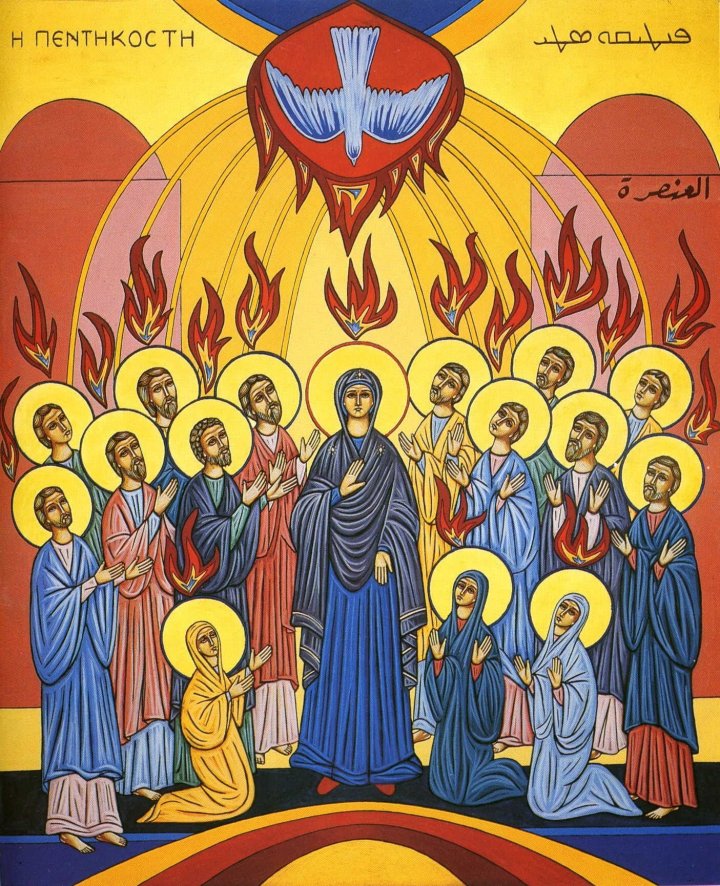
The disciples have been to told to wait and pray. It is the feast of Pentecost, some fifty days after the Passover, Shavuot, the feast of weeks, a week of weeks, or fifty days, celebrating the grain harvest in Israel, and Moses giving the Law to Israel on Mt Sinai. It’s a time when Jews would come to be in Jerusalem. They would come from all over the world, to be there. And what they experience is something like the undoing of the Tower of Babel in Genesis 11:1-9. Instead of division, we see unity, and all the peoples of the world can hear and understand the proclamation of the Good News of Jesus Christ, the promised Messiah, the Son of God, who died for our sins, rose on the third day, ascended into heaven, and has sent His Holy Spirit.

It is this same Holy Spirit which we receive in our Baptism, Confirmation, and Ordination, which makes us children of God and co-heirs with Christ. We are part of God’s family, and through Christ we have an inheritance, the hope of heaven. Good news indeed! The same Holy Spirit, which brought about the Incarnation in the Annunciation to the Blessed Virgin Mary, through which Christ became incarnate in His mother’s womb, to be born for us, has been given to us. We have been filled with the same Spirit: you, me, every one of us here. And because of this God can do wonderful things in and through us. It helps us to be who and what God wants us to be, to have life in all its fulness.

In this morning’s Gospel Jesus says to his disciples, which includes us, ‘If you love me you will keep my commandments’. In other words, we will love God and our neighbour and live lives like Jesus, exhibiting the same costly, sacrificial love that He does. Not for nothing does St Paul say, ‘provided we suffer with him in order that we may also be glorified with him’ (Rom 8: 17 ESV) To follow Christ is to live a cross-shaped life, and we must expect difficulties, hardships, and sacrifice. And we embrace such things with JOY, because they bring us closer to Christ, and His sufferings. We need to love Jesus and keep his word so He and the Father will make their home with us. In St Paul’s Letter to the Romans we see what life in the Spirit is like. It is a turning away from the ways of the world and the flesh: not despising it, since Our Lord and Saviour Jesus Christ came in the flesh in the Incarnation, it was in the flesh that Our Lord ascended into heaven taking our flesh into the life of the Godhead, so that where he has gone we may also go. We are to sit lightly to the world and its ways, and through submitting to God to find perfect freedom in him. In the service of the Triune God we can be truly free, free to live for Him and to proclaim His truth to the world. If we love God this is what we are called to be, how we are called to live. Only in the Spirit can we enter fully into the divine life of love, and live out this love in the world. In the power of this love we can begin to understand the mystery of Our Lord’s Incarnation, His life, death, and resurrection, and we can let these mysteries shape our lives as Christians.

God will make his home with us in His word, Holy Scripture and the sacraments of his Church – outward signs of the inward grace which he lavishes on us in the power of his Spirit. That is why we are here today: to be fed with the Body and Blood of Christ, to see the re-presentation of the sacrifice of Calvary, to stand by the Cross so that we may be washed in the blood and water which flows from his side. In this we see God’s love for us, and we are strengthened to live the life of the Spirit: we can remain close to the God who loves us and saves us. We can be taught by his Spirit to remain in the faith which comes to us from the Apostles who first received the Spirit on this day. Let us live strengthened by Spirit, nourished by word and sacrament, in holiness and joy, proclaiming the truth and love of God, so that the world may believe and give glory to God the Father, God the Son, and God the Holy Spirit, to whom be ascribed as is most right and just all might, majesty, glory, dominion, and power, now and forever.

Pentecost 2019

The world in which we live can be a strange and confusing place, but it is fair to say that for the last fifty or sixty years we have not generally been that keen on having people tell us what to do. Now this makes things difficult for those of us who preach, precisely because moral instruction is our stock in trade. In other words, we tell people what to do, and how to live their lives. We do this because the Bible, as read and interpreted by the Church, shows us how to live in such a way that leads to human flourishing. Hence Jesus’ words in the Gospel, ‘If you love me, you will keep my commandments.’ (Jn 14:15 ESV) If we love God, we will listen to what He tells us, through His Son, and do what He says. We will not be like the world, which cannot receive the Spirit of Truth, because it refuses to listen, or obey.

The disciples have been to told to wait and pray. It is the feast of Pentecost, some fifty days after the Passover, Shavuot, the feast of weeks, a week of weeks, or fifty days, celebrating the grain harvest in Israel, and Moses giving the Law to Israel on Mt Sinai. It’s a time when Jews would come to be in Jerusalem. They would come from all over the world, to be there. And what they experience is something like the undoing of the Tower of Babel in Genesis 11:1-9. Instead of division, we see unity, and all the peoples of the world can hear and understand the proclamation of the Good News of Jesus Christ, the promised Messiah, the Son of God, who died for our sins, rose on the third day, ascended into heaven, and has sent His Holy Spirit.

It is this same Holy Spirit which we receive in our Baptism, Confirmation, and Ordination, which makes us children of God and co-heirs with Christ. We are part of God’s family, and through Christ we have an inheritance, the hope of heaven. Good news indeed! The same Holy Spirit, which brought about the Incarnation in the Annunciation to the Blessed Virgin Mary, through which Christ became incarnate in His mother’s womb, to be born for us, has been given to us. We have been filled with the same Spirit: you, me, every one of us here. And because of this God can do wonderful things in and through us. It helps us to be who and what God wants us to be, to have life in all its fulness.

In this morning’s Gospel Jesus says to his disciples, which includes us, ‘If you love me you will keep my commandments’. In other words, we will love God and our neighbour and live lives like Jesus, exhibiting the same costly, sacrificial love that He does. Not for nothing does St Paul say, ‘provided we suffer with him in order that we may also be glorified with him’ (Rom 8: 17 ESV) To follow Christ is to live a cross-shaped life, and we must expect difficulties, hardships, and sacrifice. And we embrace such things with JOY, because they bring us closer to Christ, and His sufferings. We need to love Jesus and keep his word so He and the Father will make their home with us. In St Paul’s Letter to the Romans we see what life in the Spirit is like. It is a turning away from the ways of the world and the flesh: not despising it, since Our Lord and Saviour Jesus Christ came in the flesh in the Incarnation, it was in the flesh that Our Lord ascended into heaven taking our flesh into the life of the Godhead, so that where he has gone we may also go. We are to sit lightly to the world and its ways, and through submitting to God to find perfect freedom in him. In the service of the Triune God we can be truly free, free to live for Him and to proclaim His truth to the world. If we love God this is what we are called to be, how we are called to live. Only in the Spirit can we enter fully into the divine life of love, and live out this love in the world. In the power of this love we can begin to understand the mystery of Our Lord’s Incarnation, His life, death, and resurrection, and we can let these mysteries shape our lives as Christians.

God will make his home with us in His word, Holy Scripture and the sacraments of his Church – outward signs of the inward grace which he lavishes on us in the power of his Spirit. That is why we are here today: to be fed with the Body and Blood of Christ, to see the re-presentation of the sacrifice of Calvary, to stand by the Cross so that we may be washed in the blood and water which flows from his side. In this we see God’s love for us, and we are strengthened to live the life of the Spirit: we can remain close to the God who loves us and saves us. We can be taught by his Spirit to remain in the faith which comes to us from the Apostles who first received the Spirit on this day. Let us live strengthened by Spirit, nourished by word and sacrament, in holiness and joy, proclaiming the truth and love of God, so that the world may believe and give glory to God the Father, God the Son, and God the Holy Spirit, to whom be ascribed as is most right and just all might, majesty, glory, dominion, and power, now and forever.

Saturday, 25 May 2019

Easter VI: John 14:23-29

Relationships are tricky things. We cannot live without them, we would be lonely to an unbearable degree. As human beings, we are made for relationships: they help make us who we are. But, they both need and require work and effort. You cannot simply take them for granted, and expect everything to be all right. As Christians we believe that our primary relationship is not that with our parents, spouse or children, or our friends, and neighbours; but with God. A God who created us, a God who redeemed us, in His Son, Jesus Christ. A God who loves us. 

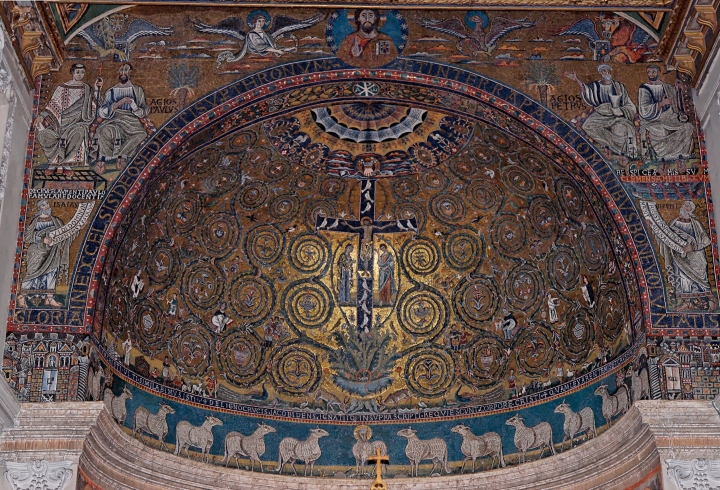
In the Book of Revelation we have a vision of the New Jerusalem, the perfection of God’s Creation, a foretaste of heaven. It is a place where the Glory of God provides illumination, and the lamp which holds the light is the Lamb. In other words, the Lamb, who is Christ, perfectly displays the glory of God. Christ shows us who God is, and what God’s glory is like. On either side of the river of the water of life is the tree of life. The water of life represents our baptism, and the tree of life is both the tree giving eternal life in the Garden of Eden, and the Cross, through which we have eternal life in Christ. And leaves of the tree are for the healing of the nations. The Church, then, is to be a place of healing, and reconciliation, where people may encounter Christ, and His healing love. That’s why we have a cross on our altar, as our central focus, to remind us of what it’s all about, to remind us how God’s glory is made manifest in our world. God’s glory, and God’s love, the two go together. 

And so, in the Gospel, Christ tells us that whoever loves Him keeps His word. If we love God, then we listen to what He says, and act accordingly. Something which is simple in theory and difficult in practice. The point is that we try, and fail, and ask for forgiveness, and reconciliation, and keep trying. It’s a process, and we won’t get better until we try. Think of riding a bicycle. You have to practice and persevere until you are able to do it. The hard bit is to get going in the first place. Once you’re moving, balance becomes easier, and then it’s a matter of steering, braking, and stopping. Our spiritual lives are far more complicated than riding a bike, but the basic analogy holds true. Keeping Christ’s word involves doing it: loving God and neighbour. As a result of this we experience God’s love. We will do that today most fully in the Eucharist, where Christ gives Himself to us, His Body and His Blood. We are fed by Christ, so that we can be transformed by Him. Christ promises us that the Father and the Son will come to us and make their home with us. It’s a relationship fully realised. We are invited into a relationship, and to experience that relationship in its fulness. That’s what being a Christian means. It allows us to love God, and to express that love in worship, to express our beliefs, and honour the God who loves us by meeting together, being nourished by Word and Sacrament, and praying together. Our response to the Love and Glory of God is, of necessity, AWE. God has done what we cannot, and despite our failures and shortcomings, continues to love us. That is true generosity. We cannot give anything back to God, God does not need our worship, but rather, by being thankful, and showing our love for the God who loves us, we become generous, and loving.

In the Gospel, Christ tells us that the Father will send the Holy Spirit in His name. As we prepare to celebrate Christ’s Ascension into Heaven, we look forward to the coming of the Holy Spirit at Pentecost. As our focus changes, we realise that all of this is the unfolding of the mystery of God’s love, for us. Christ gives us his peace. In Welsh there are two words for peace. The first, heddwch means an absence of conflict, worldly peace. The second, tangefedd, is the peace which comes from God. Christ can give us the peace which comes from a relationship with God, bought by His Blood on the Cross. This is the peace we enjoy as Christians, not an absence of conflict, but the deep peace of being loved by God, and loving Him in return. It is the peace of a relationship. Nothing earthly can compare to it, because we are made in the image of God, and filled with His Love. Because of this we can be a church, a community of love, living out our faith, nourished by Word and Sacrament. Christ also promises us His Holy Spirit. Our focus shifts from Easter towards Pentecost, as the fulfilment of the Resurrection. Christ rises and ascends so that we can receive the Spirit, and experience the fulness of new life in Christ. As was prophesied by Joel ‘And it shall come to pass afterwards, that I will pour out my Spirit on all flesh; your sons and your daughters shall prophesy, your old men shall dream dreams, and your young men shall see visions.’ (Joel 2:28 ESV) As Christ, the Word made flesh, is the fulfilment of prophesy, our joy and our peace. All scripture points to Him, and finds its fulfilment in Him. Our life in the Church is to be filled with the Holy Spirit, living the new life of His Kingdom. So let us live it, and share it with others so that all creation may sing the praise of God the Father, God the Son, and God the Holy Spirit, to whom be ascribed as is most right and just, all might, majesty, glory, dominion, and power, now and forever. Amen.

san-clemente2

Easter VI: John 14:23-29

Relationships are tricky things. We cannot live without them, we would be lonely to an unbearable degree. As human beings, we are made for relationships: they help make us who we are. But, they both need and require work and effort. You cannot simply take them for granted, and expect everything to be all right. As Christians we believe that our primary relationship is not that with our parents, spouse or children, or our friends, and neighbours; but with God. A God who created us, a God who redeemed us, in His Son, Jesus Christ. A God who loves us. 

In the Book of Revelation we have a vision of the New Jerusalem, the perfection of God’s Creation, a foretaste of heaven. It is a place where the Glory of God provides illumination, and the lamp which holds the light is the Lamb. In other words, the Lamb, who is Christ, perfectly displays the glory of God. Christ shows us who God is, and what God’s glory is like. On either side of the river of the water of life is the tree of life. The water of life represents our baptism, and the tree of life is both the tree giving eternal life in the Garden of Eden, and the Cross, through which we have eternal life in Christ. And leaves of the tree are for the healing of the nations. The Church, then, is to be a place of healing, and reconciliation, where people may encounter Christ, and His healing love. That’s why we have a cross on our altar, as our central focus, to remind us of what it’s all about, to remind us how God’s glory is made manifest in our world. God’s glory, and God’s love, the two go together. 

And so, in the Gospel, Christ tells us that whoever loves Him keeps His word. If we love God, then we listen to what He says, and act accordingly. Something which is simple in theory and difficult in practice. The point is that we try, and fail, and ask for forgiveness, and reconciliation, and keep trying. It’s a process, and we won’t get better until we try. Think of riding a bicycle. You have to practice and persevere until you are able to do it. The hard bit is to get going in the first place. Once you’re moving, balance becomes easier, and then it’s a matter of steering, braking, and stopping. Our spiritual lives are far more complicated than riding a bike, but the basic analogy holds true. Keeping Christ’s word involves doing it: loving God and neighbour. As a result of this we experience God’s love. We will do that today most fully in the Eucharist, where Christ gives Himself to us, His Body and His Blood. We are fed by Christ, so that we can be transformed by Him. Christ promises us that the Father and the Son will come to us and make their home with us. It’s a relationship fully realised. We are invited into a relationship, and to experience that relationship in its fulness. That’s what being a Christian means. It allows us to love God, and to express that love in worship, to express our beliefs, and honour the God who loves us by meeting together, being nourished by Word and Sacrament, and praying together. Our response to the Love and Glory of God is, of necessity, AWE. God has done what we cannot, and despite our failures and shortcomings, continues to love us. That is true generosity. We cannot give anything back to God, God does not need our worship, but rather, by being thankful, and showing our love for the God who loves us, we become generous, and loving.

In the Gospel, Christ tells us that the Father will send the Holy Spirit in His name. As we prepare to celebrate Christ’s Ascension into Heaven, we look forward to the coming of the Holy Spirit at Pentecost. As our focus changes, we realise that all of this is the unfolding of the mystery of God’s love, for us. Christ gives us his peace. In Welsh there are two words for peace. The first, heddwch means an absence of conflict, worldly peace. The second, tangefedd, is the peace which comes from God. Christ can give us the peace which comes from a relationship with God, bought by His Blood on the Cross. This is the peace we enjoy as Christians, not an absence of conflict, but the deep peace of being loved by God, and loving Him in return. It is the peace of a relationship. Nothing earthly can compare to it, because we are made in the image of God, and filled with His Love. Because of this we can be a church, a community of love, living out our faith, nourished by Word and Sacrament. Christ also promises us His Holy Spirit. Our focus shifts from Easter towards Pentecost, as the fulfilment of the Resurrection. Christ rises and ascends so that we can receive the Spirit, and experience the fulness of new life in Christ. As was prophesied by Joel ‘And it shall come to pass afterwards, that I will pour out my Spirit on all flesh; your sons and your daughters shall prophesy, your old men shall dream dreams, and your young men shall see visions.’ (Joel 2:28 ESV) As Christ, the Word made flesh, is the fulfilment of prophesy, our joy and our peace. All scripture points to Him, and finds its fulfilment in Him. Our life in the Church is to be filled with the Holy Spirit, living the new life of His Kingdom. So let us live it, and share it with others so that all creation may sing the praise of God the Father, God the Son, and God the Holy Spirit, to whom be ascribed as is most right and just, all might, majesty, glory, dominion, and power, now and forever. Amen.
san-clemente2

Saturday, 18 May 2019

Easter V ‘Love one another as I have loved you’

St Thomas Aquinas teaches us that to love is to the will the good of the other (STh I-II, q.26 a.4,[Respondeo dicendum quod, sicut Philosophus dicit in II Rhetoric, amare est velle alicui bonumCCC 1766). To love, then, is not simply an act of passion or emotion: something we feel, but something we choose to do. The commands to love God and our neighbour, found in Deuteronomy and Leviticus, are central to the Christian Faith, as taught and exemplified by Our Lord. To choose someone else’s good reminds us that we do not exist for our own sake, and that our lives are lived in community and relationship with others. We are called to be loving and generous, just as God as been loving and generous towards us in Christ. We seek to cooperate with God in promoting human flourishing. 

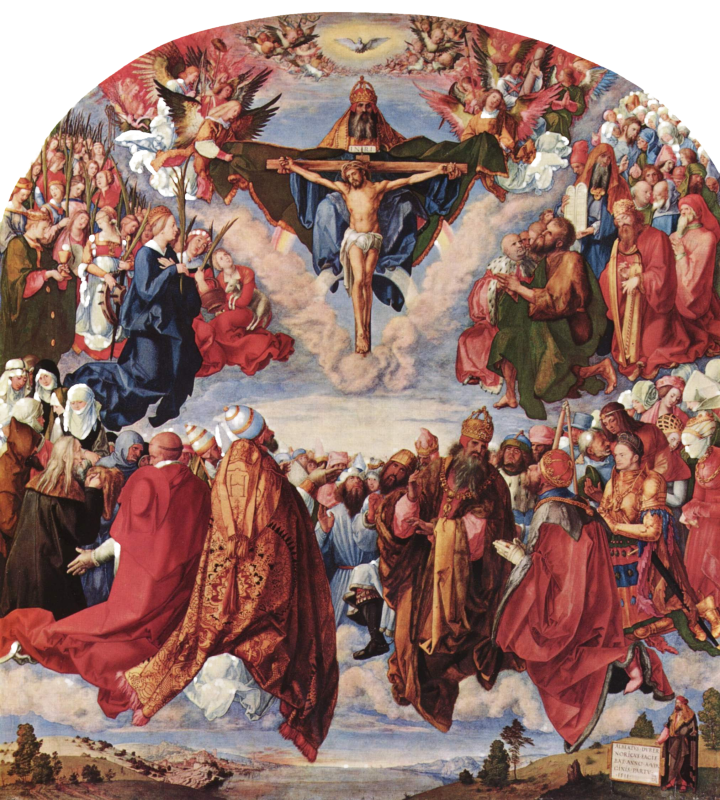
Jesus is quite explicit in this morning’s Gospel, ‘A new commandment I give to you, that you love one another: just as I have loved you, you also are to love one another. By this all people will know that you are my disciples, if you have love for one another.’ (John 13:34-35 ESV) We are to love each other as Jesus has loved us. We are to lay down our lives, as Christ has for us. In this love and service we can truly love each other. This makes who and what we are manifest to the world around us. It makes Christianity something attractive because people can see the difference it makes. We are people of love and a community of love, willing good, and helping to make it a reality. It is a radical and world-changing idea, underpinned by selfless love, which Christ commands of us, His Church, to help transform the world through His Grace that humanity might come to have life, life in all its fullness. 

In the Acts of the Apostles we see St Peter realise that salvation is for Gentiles as well as Jews, that all are called to be baptized into Christ and receive His Holy Spirit. In the Book of Revelation we see God promise, ‘To the thirsty I will give from the spring of the water of life without payment.’ Acts 21:6 ESV) God promises to quench our spiritual thirst, which nothing else can satisfy. John’s vision of the future explains why, in the Gospel, Christ states that He will only be with the disciples on earth a little while, and where He is Going they cannot come. They cannot go to the Cross, to reconcile God and humanity, nor can they yet go to Heaven, because Christ has not yet died, risen, and ascended. Because of what Christ has done, the New Creation is possible. Humanity can be united with God forever. We have a vision of a future without pain or suffering, because what is offered is unity with God, the fullness of human existence. This is the Christian hope of Heaven. Because of what Christ has done, and where He has gone, we can have this hope, through our baptism, by which we are saved. 

These are not idealist pipe-dreams but the reason why we are Christians. Because we have a hope of heaven, we want to see a world transformed more and more into the likeness of Christ, into a place of peace, and joy, and love, to prepare us for the joys of heaven. Christ gives us this commandment so that we may have life and have it to the full, in and through Him, the source of all life and love.

This is what following Christ means in practice: living and dying like Christ, together, so that by this all will know that we are His disciples, through love lived out in our lives we proclaim the reality and the truth of our faith in Him. It’s something which we do together, and while it sounds easy in theory it is much harder in practice. We must try, and fail, and keep on trying. It is why we need to stay close to Christ in Word and Sacrament, to pray together, to support and forgive each other, so that we can live a life of love, not saccharin-sweet as the world sees it, but real, sacrificial love, the sort which has the power to transform the world so that it becomes more Christ-like. We thirst for this love, and only it can satisfy our deepest desires, so let us come, and drink of that living water, let us feast on Him who is the Living Bread and the True Vine, the Shepherd of our souls, who loves us so much that he died for us, and let us love Him and one another so that all the world may believe and give glory to God the Father, God the Son, and God the Holy Spirit, to whom be ascribed as is most right and just, all might, majesty, glory, dominion, and power, now and forever. Amen.

Albrecht_Dürer_003.png

Saturday, 27 April 2019

Easter II [Acts 5:27-32, Revelation 1:4-8, Jn 20:19-31]

In this morning’s first reading Saint Peter and the apostles are told by the authorities not to preach in the name of Jesus. Naturally, it is impossible for them to do this; they simply have to tell the world about Him and His Resurrection. They do this so that the gospel may be proclaimed: the gospel of repentance and forgiveness of sins through Christ. To be a Christian is to turn away from the ways of sin, the ways of the world — we are obedient to God, we hear what he is said in Christ and we obey him. The Church, then, must always be on its guard lest it ceases to be obedient to God and turns instead to the ways of the world, the ways of humanity. As St Paul says in his Letter to the Romans ‘be not conformed to this world’. It is a difficult thing to do. It is hard. It takes strength of character and confidence, and it will not be popular. But just as the apostles rejoiced that they were counted worthy to suffer dishonour for the name, and did not cease teaching and preaching Jesus Christ, so the Church is always called to do the same: to risk persecution, and to speak the uncomfortable truth which the world does not want to hear. This is our calling. 

When the disciples are sat in a locked room, afraid of persecution Christ comes among them and says, ‘Tangnefedd i chwi’ ‘Peace be with you’. Christ comes to give them peace. He gives them a peace which the world cannot give, because it is not of this world. The peace Christ which comes to give us is the peace won on the Cross, which has reconciled God and humanity. This wonderful relationship leads to the disciples being sent, as Christ was, to proclaim the Good News of the Kingdom, and of new life in Christ. Christ empowers His Apostles with the Holy Spirit, to forgive sins, and carry on Christ’s work of reconciliation. The church exists to do just this, to proclaim and reconcile, to carry on Christ’s work in the world in the power of the Holy Spirit.

All of us can, I think, understand Thomas’ frustration at not being there. It isn’t that he doubts, he wants to believe, and to experience the reality of his Risen Lord, and not to be left out. It’s a very human reaction. So when Jesus is with them again on Sunday, He greets them with Peace, and offers his hands and side to Thomas. He gives Thomas what he wants, proof that it is really Jesus, that he has truly risen from the dead. When faced with the reality of the Risen Jesus, Thomas can only say, ‘My Lord and My God’. Thomas confesses that Jesus is Lord and God, the sole supreme authority, above anything of this world. He worships God in Christ. We do the same, and we are blessed because we have not seen and yet believe. We believe because of the witness of Thomas, and others, down through the centuries, who have proclaimed the Good News of Jesus Christ, even at great personal cost. As St Peter and the apostles said, ‘We must obey God rather than men’ (Acts 5:29 ESV) Christians around the world follow their lead, and to this day face imprisonment, torture, and death, for their belief in Christ. They do so gladly, because of who Christ is, and what He has done. We may not face suicide bombers in our churches, thank God. But we are no less resolved to bear witness to Christ. We may be ignored by the world around us, but we carry on bearing witness to the love and reconciliation which Christ brings, and which nothing else can. We continue, ‘so that you may believe that Jesus is the Christ, the Son of God, and that by believing you may have life in his name’ (John 20:31 ESV) Christ comes to bring us life, in His Incarnation, in His Life and Preaching, and in His Death and Resurrection. He gives us His Life, through our Baptism, and through the Eucharist. We are united with Christ, and transformed by Him, to live His life in the world, filled with His Holy Spirit. This is good news, which we long to share with others, so that they may come to know Christ, and experience His Love. The Church exists to deal with the mess we make as human beings, through what Jesus has done for us, in the power of His Holy Spirit. The Church is to be a community of reconciliation, where we are forgiven and we, in turn, forgive. It is to be a place where we are freed from sin, its power and its effects.

The disciples go from being scared and stuck in an upper room to missionaries, evangelists, spreading the Good News around the world, regardless of the cost, even of sacrificing their own lives to bear witness to the fact that Jesus Christ is the Son of God, that he died for our sins, and that he rose again, on this day for us, that God loves us and tells us to love Him and to love one another. It is a simple and effective message which people still want to hear — we need to tell it to them, in our thoughts, our words and our actions.

The heart of our faith and the Gospel is forgiveness — no matter how many times we mess things up, we are forgiven. It is this reckless generosity of spirit which people find hard to believe that they too can be forgiven, by a loving God, and by their fellow Christians. That we can, despite our manifold shortcomings be a people of love, and forgiveness, and reconciliation. That God’s Grace will in the end not abolish our nature, but perfect it, that being fed by Christ, with Christ: so that we too may become what He is. That faced with the sad emptiness of the world, and its selfishness, its greed, we can be filled with joy, and life, and hope. That like the first apostles we too can spread the Gospel: that the world may believe.

So let us be filled with the joy of the Resurrection this Easter, let us share that joy with others, may it fill our lives and those of whom we meet with the joy and love of God, who has triumphed and who offers us all new life in Him, that all that we do, all that we are, all that we say or think may give glory to God the Father, God the Son, and God the Holy Spirit, to whom be ascribed as is most right and just, all might, majesty, dominion and power, now and forever.

7ec0d-the_incredulity_of_saint_thomas-caravaggio_1601-2

Saturday, 22 September 2018

25th Sunday of Year B Mark 9: 30-37

Christianity is apparently ‘a religion for the weak and feeble-minded, attractive to social undesirables, the silly, the mean, the stupid, women, and children.’ (cf. Celsus quoted in Origen Contra Celsum 3:44 & 3:59) You would be forgiven if thought these were the words of Richard Dawkins, or some other New Atheist critic of Christianity. They are in fact a paraphrase of the pagan philosopher Celsus, written around ad 175. This line of argument is something Christians have had to counter for over 1800 years.

It is not true, and it relies upon the idea that the weak are somehow worse than the strong. It’s familiar from the writings of Nietzsche and others. The culture around us despises the weak. You want to be strong. Strength is good. Sadly strength is fleeting: we are not born strong, nor do we die strong. Strength comes and goes. And none of us is as strong as we think we are, or might like to be. The simple fact is that we are weak, and that’s OK. Our human weakness is not something terrible, it is simply how we are, and reminds us that we are relational beings, we exist in relationship with others, and need to rely upon the help and support of others, and primarily God. 

Jesus begins the Gospel this morning by reiterating his teaching which we heard last week. He stresses the importance of His Death and Resurrection as the culmination of His earthly ministry. The disciples are bewildered and afraid. They cannot understand or appreciate what Jesus is saying to them. They love Jesus, and have seen Him do wonderful things: heal the sick, feed the hungry, and even walk on water. They have seen scripture fulfilled, but cannot yet understand where it is all pointing: to Jesus’ Death and Resurrection. Instead they fall back on that very human desire, to form a pecking order, to know who is the greatest of the disciples.

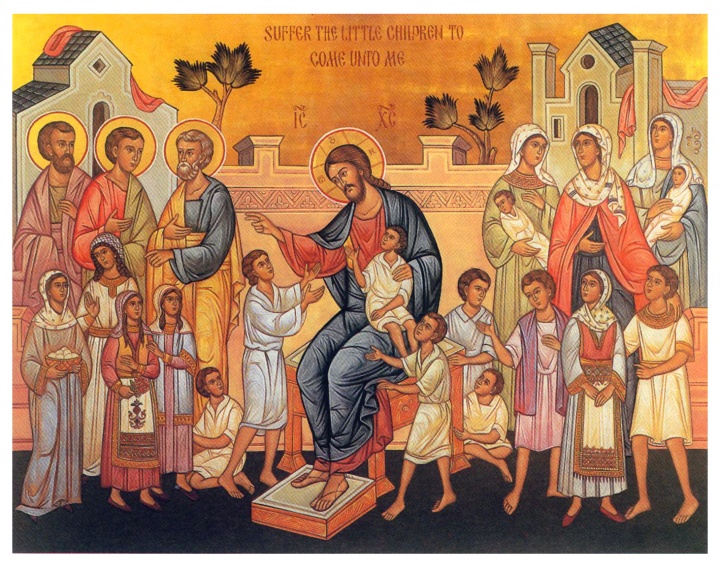
Rather than telling the disciples off for being childish, Jesus teaches them that, ‘If anyone would be first, he must be last of all and servant of all.’ (Mk 9 35 ESV) He then takes a child and says, ‘Whoever receives one such child in my name receives me, and whoever receives me, receives not me but him who sent me.’ (Mk 9 37 ESV) Children aren’t high up in the pecking order, they don’t know everything, and are dependant on their family. Jesus is proposing something of a revolution, turning human values on their head. The Incarnate Word of God will wash His disciples’ feet before the Last Supper. He embodies servant leadership, he doesn’t lord it over people. The ways of the Kingdom of God and this world are opposed to each other. True greatness will often look like weakness and servility in the world’s eyes. It doesn’t matter. What matters is living a life characterised by sacrificial self-giving love. 

As St Paul says in the opening Chapter of the First Letter to the Corinthians, God’s weakness is stronger than our strength. (1Cor 1:25) It is a paradox. This paradox is made apparent on the Cross, where God shows us that sacrificial love can change the world, and heal our wounded souls and restore broken humanity. It is part of the Mystery of the Cross, the mystery of God’s love. In a moment of weakness and powerlessness, where evil and sin appear to have triumphed, this is the supreme demonstration of LOVE, an act of such generosity which has the power to reconcile humanity. It is, with Christ’s Resurrection, the centre of our faith. 

The ways of the world can be found in the first reading this morning, from the Book of Wisdom, they point forward to Christ’s suffering and death. Christ is condemned to a ‘shameful death’ so that through it God might demonstrate His LOVE to the world.

Love can only be offered. It can be accepted or rejected, and it lies at the heart of any relationship. God gives Himself to us so that we might live in Him. He gives Himself today under the outward forms of bread and wine, so that might feast on His Body and Blood, and have life in Him. He offers himself to us, so that we might share in His Death and Risen Life. Love is vulnerable, and its vulnerability is most evident on the Cross, where Christ opens his arms to embrace the world in love.

Christ’s life on earth ends as it begins: He is naked and vulnerable. God’s weakness truly is stronger than human strength because it is the only thing which can truly change the world, heal our wounded souls, and restore broken humanity. Nothing else can. Without it we are condemned to the ways of selfishness and sin, which characterise so much of the world around us. The church is not immune as it is made up of frail, sinful human beings, just like you and me. We need God to be at work in our lives, to transform us more and more into His image. Recognising our own shortcomings is the first step in a process whereby God can be at work in our lives, transforming us more and more into His likeness. We need God’s grace to be at work in us, and recognising this is a sign of humility, that we know our need of God. This is not weakness, quite the opposite. 

We know that we have a problem, which we are unable to solve on our own. In His love and mercy, God sends His only Son to be born for us, to live and die for us, and rise again for us. He gives us His Body and Blood as a pledge and token of our future hope, to heal us and restore us, so that we might become what He is. In this we share in Christ’s suffering, as to follow Christ is to follow the Way of the Cross, a hard road, but one which leads to the joy of Easter, and New Life in Christ. We are transformed through LOVE and SUFFERING, a journey which starts with child-like trust in the God who LOVES us. It starts with humility, knowing our need of God, and trust in a God who loves us, and who can transform us. 

So my brothers and sisters, let us come to Him, trusting Him to be at work in our lives, filling us with His Love, sharing His suffering, pouring out His Grace upon us. Let us stay close to Him: nourished by His Word, the Bible, and the Sacraments, especially the Eucharist, where we receive a foretaste of the Heavenly Banquet, our food for the journey of faith, transforming us into His Divine likeness, strengthening us to live out our faith through acts of loving service, putting our faith into practice so that the world around us may repent of its foolish ways , and come to know and love God the Father, God the Son, and God the Holy Spirit, to whom be ascribed as is most right and just, all might, majesty, glory dominion, and power, now and forever. Amen. christ-children-02