Showing posts with label Heaven. Show all posts

Thursday, 21 May 2020

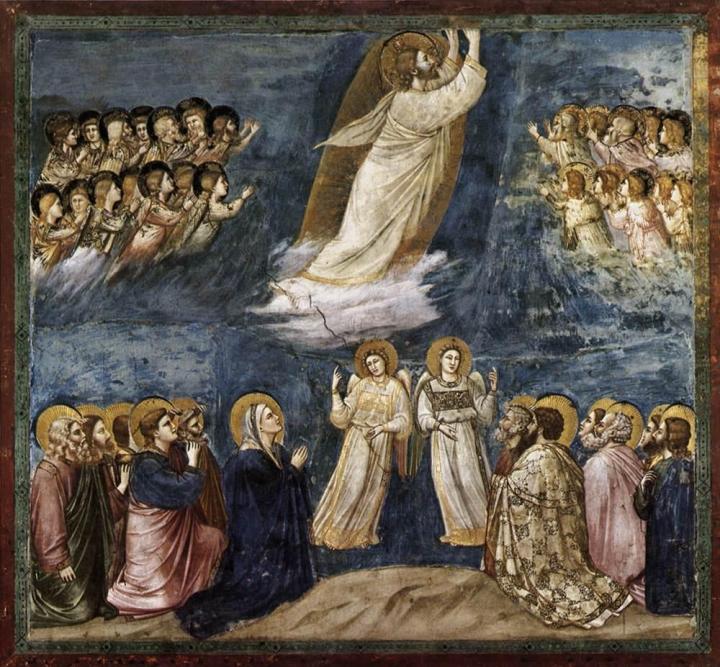
Homily for the Ascension (Acts 1:1-11 Eph 1:17-23 Mt 28:16-20)

Today can often feel a somewhat strange day, a day of slightly mixed emotions, and this year more than most, when we are not able to be together to pray, to worship Almighty God, and be nourished with Holy Communion. We are not celebrating Jesus’ departure from the earth, but His return to God the Father, Christ’s abiding presence with us, and what He asks of us, and promises to us. It is a day of celebration and expectation, looking forward to the future in love and hope. 

The disciples have had six weeks to used to the fact that Jesus has risen from the dead, having carried the burden of our sins and experienced the pain and estrangement which separates God and humanity. That wound has been healed by His glorious wounds. Before Jesus returns to the Father, He makes the apostles a promise: they will be baptized with the Holy Spirit (Acts 1:4), receive power, and be Christ’s witnesses to the ends of the earth (Acts 1:8). Christ is looking forward to Pentecost, to the church’s future, in which we live now.

In Matthew’s Gospel, before Jesus leaves the apostles, He gives them a commission, they are sent out to do something together. Jesus begins (Mt 28:18) by stating that all authority in heaven and earth has been given to Him. He is God, God is sovereign, and rules over everything, and it reminds us of the moment during Christ’s temptation by the devil, before the start of His public ministry, which we read on the First Sunday of Lent. The devil offers the world to Jesus, but it is not his to give, it belongs to God, who created it. Our worship is rooted in the fact that we have a relationship with a God who made us, redeemed us, and loves us. 

Jesus tells the apostles (28:19) to go and make disciples of all nations, baptizing them in the name of the Father, and of the Son, and of the Holy Spirit. The church exists to be sent out to make disciples. Baptism is what makes us Christians. In it we share in Christ’s life, death, and Resurrection, and through it God gives us the virtues of Faith, Hope, and Love. Through our faith in God: Father, Son, and Holy Spirit, filled with the hope of heaven, our supernatural end, to enjoy the vision of God, who is love. Loving God and our neighbour, this is the very heart of the proclamation of the Good News of the Kingdom, along with the call of Jesus and John the Baptist that we should ‘Repent and believe the Gospel, and be baptised’. For two thousand years our message has been the same. 

Jesus tells the apostles to teach us all that He has commanded them (28:20). The Church is called to hand on what has been delivered to it, this is tradition, and it stops us from making mistakes, by deviating from what Christ teaches us through the Church. Our religion makes demands of us, and calls us to be faithful to the apostles’ teaching, and to live it out in our lives, putting theory into practice and becoming living witnesses of the Kingdom. This is difficult, and it is where Christians fall down most often. But the Good News is that in Christ we have forgiveness of sin. We can repent, and turn away from our mistakes, and turn back to a God who loves us. We are not abandoned or cast aside, but embraced in love. 

Finally Jesus says to the apostles, ‘Behold I am with you always, to the end of the age.’ (28:20) Christ is with us. How? In four ways: first in Scripture, the Word of God, which speaks of Christ, and finds its fulfilment in Him. It is true, and the source of truth. He is with us in the Sacraments, outward visible signs of the inward spiritual grace God pours out upon us, to fill us with His love. He is with us in the Holy Spirit which he pours out upon us, to strengthen us, and fill us with love. And finally He is with us in the Church, which is His Body, where we are united with Christ, in a relationship with Him, and each other. 

Jesus makes promises which are true. We can trust Him, and like the apostles we can prepare for the Coming of the Holy Spirit at Pentecost in prayer, and joyful expectation, knowing that we will never be abandoned, but that we are always united to, and loved by God the Father, God the Son, and God the Holy Spirit, to whom be ascribed as it most right and just, all might, majesty, glory, dominion, and power, now and forever. Amen
giotto_di_bondone_-_no._38_scenes_from_the_life_of_christ_-_22._ascension_-_wga09226

Homily for the Ascension (Acts 1:1-11 Eph 1:17-23 Mt 28:16-20)

Today can often feel a somewhat strange day, a day of slightly mixed emotions, and this year more than most, when we are not able to be together to pray, to worship Almighty God, and be nourished with Holy Communion. We are not celebrating Jesus’ departure from the earth, but His return to God the Father, Christ’s abiding presence with us, and what He asks of us, and promises to us. It is a day of celebration and expectation, looking forward to the future in love and hope. 

The disciples have had six weeks to used to the fact that Jesus has risen from the dead, having carried the burden of our sins and experienced the pain and estrangement which separates God and humanity. That wound has been healed by His glorious wounds. Before Jesus returns to the Father, He makes the apostles a promise: they will be baptized with the Holy Spirit (Acts 1:4), receive power, and be Christ’s witnesses to the ends of the earth (Acts 1:8). Christ is looking forward to Pentecost, to the church’s future, in which we live now.

In Matthew’s Gospel, before Jesus leaves the apostles, He gives them a commission, they are sent out to do something together. Jesus begins (Mt 28:18) by stating that all authority in heaven and earth has been given to Him. He is God, God is sovereign, and rules over everything, and it reminds us of the moment during Christ’s temptation by the devil, before the start of His public ministry, which we read on the First Sunday of Lent. The devil offers the world to Jesus, but it is not his to give, it belongs to God, who created it. Our worship is rooted in the fact that we have a relationship with a God who made us, redeemed us, and loves us. 

Jesus tells the apostles (28:19) to go and make disciples of all nations, baptizing them in the name of the Father, and of the Son, and of the Holy Spirit. The church exists to be sent out to make disciples. Baptism is what makes us Christians. In it we share in Christ’s life, death, and Resurrection, and through it God gives us the virtues of Faith, Hope, and Love. Through our faith in God: Father, Son, and Holy Spirit, filled with the hope of heaven, our supernatural end, to enjoy the vision of God, who is love. Loving God and our neighbour, this is the very heart of the proclamation of the Good News of the Kingdom, along with the call of Jesus and John the Baptist that we should ‘Repent and believe the Gospel, and be baptised’. For two thousand years our message has been the same. 

Jesus tells the apostles to teach us all that He has commanded them (28:20). The Church is called to hand on what has been delivered to it, this is tradition, and it stops us from making mistakes, by deviating from what Christ teaches us through the Church. Our religion makes demands of us, and calls us to be faithful to the apostles’ teaching, and to live it out in our lives, putting theory into practice and becoming living witnesses of the Kingdom. This is difficult, and it is where Christians fall down most often. But the Good News is that in Christ we have forgiveness of sin. We can repent, and turn away from our mistakes, and turn back to a God who loves us. We are not abandoned or cast aside, but embraced in love. 

Finally Jesus says to the apostles, ‘Behold I am with you always, to the end of the age.’ (28:20) Christ is with us. How? In four ways: first in Scripture, the Word of God, which speaks of Christ, and finds its fulfilment in Him. It is true, and the source of truth. He is with us in the Sacraments, outward visible signs of the inward spiritual grace God pours out upon us, to fill us with His love. He is with us in the Holy Spirit which he pours out upon us, to strengthen us, and fill us with love. And finally He is with us in the Church, which is His Body, where we are united with Christ, in a relationship with Him, and each other. 

Jesus makes promises which are true. We can trust Him, and like the apostles we can prepare for the Coming of the Holy Spirit at Pentecost in prayer, and joyful expectation, knowing that we will never be abandoned, but that we are always united to, and loved by God the Father, God the Son, and God the Holy Spirit, to whom be ascribed as it most right and just, all might, majesty, glory, dominion, and power, now and forever. Amen
giotto_di_bondone_-_no._38_scenes_from_the_life_of_christ_-_22._ascension_-_wga09226

Saturday, 7 December 2019

Advent II Yr A – REPENT

John the Baptist appears in this morning’s Gospel in stark un-compromising fashion. His message is simple, ‘Repent, for the Kingdom of God is at hand’ (Mt 3:2 ESV). It is a clear message, but to understand it takes some work. To repent means to change ones mind: to turn away from sin, and turn back to God. We are called to think differently, and as a result of this to act differently, to follow Jesus, and thereby to change the world, by co-operating with God to make the Kingdom a lived reality here and now, and to share in it forever. To repent is to turn away from sin, which separates us from God, and each other. Sin makes us selfish, self-absorbed, concerned with pleasure, wealth, power. It’s all about ME, how I feel, what I want. The proclamation of the Kingdom of God tells us that another way is possible, by the grace of God. It sounds exciting, doesn’t it? Freeing, liberating: living for others rather than ourselves. At its heart the Kingdom is a place of generosity and real love, life in all its fullness. The Church exists to proclaim this same message, and to say to the world: Another way is possible.

It is not surprising that in those times people came out into the desert to hear John. He was charismatic, his message was a refreshing antidote to the Religious Establishment of his day. People come, confess their sins, and are baptised, they are washed clean, to serve God, and to love Him. They also come because in John the people of Israel see prophecy fulfilled, and a new Elijah is in their midst. One who points to the Messiah, and has done ever since he leapt in his mother Elizabeth’s womb at the Visitation. Before John was even born he proclaimed that Jesus was the Christ, the Messiah, the One who would save Israel from their sins. We see this Messianic kingdom hoped for in the vision of Isaiah in this morning’s first reading. The branch which comes forth from the stem of Jesse is the Blessed Virgin Mary, who filled with God’s Holy Spirit, conceived and bore Our Saviour, the true King of all that is, or has been, or will be. He will be on the side of the poor and the meek, people who are left behind, and ignored because they are not rich or powerful. It’s a radical vision, which reminds us that we still have some way to go in order to put it into practice in the world around us. Isaiah’s vision of Messianic peace looks impossible, but it signifies a world-changing peace, which alters how things are, how we behave. For with, and through God another way is possible. It is not simple, or easy, but it is possible, if we rely upon God to help us. As St Paul says to the Christians in Rome, ‘May the God of endurance and encouragement grant you to live in such harmony with one another, in accord with Christ Jesus, that together you may with one voice glorify the God and Father of our Lord Jesus Christ. Therefore welcome one another as Christ has welcomed you, for the glory of God.’ (Romans 15:5-7 ESV) and again ‘May the God of hope fill you with all joy and peace in believing, so that by the power of the Holy Spirit you may abound in hope’ (Romans 15:13 ESV). We receive the Holy Spirit in our Baptism and Confirmation to strengthen us to live out our faith in our lives.

Hope can feel in pretty short supply when we look at the world around us, and if we look to humanity we will be disappointed. Our hope comes from God, our hope is God, God with us, whose Birth we are preparing to celebrate at Christmas. Advent is a time of preparation, when we prepare for Christ to come, both as a baby in Bethlehem, and as our saviour and our Judge. As the son of Jesse, and the son of David, Jesus is Israel’s true king, who rules over all. Isaiah has hope in the peace the Messiah will bring. Injustice and affliction, the fruit of sin is dealt with on the Cross, where He ‘shall stand as a signal for the peoples’ (Isa 11:10 ESV). Christ comes to die, out of love for humanity. In Him God can make things put right, and restore Creation, so that the entire Universe may praise the God who created it. 

Our Saviour is also our judge. ‘His winnowing fork is in his hand, and he will clear his threshing floor and gather his wheat into the barn, but the chaff he will burn with unquenchable fire.’ (Matt 3:12 ESV) It’s real, and it should make us stop and think for a moment. Are we living the way God wants us to? If we are not then we need to repent, say sorry, and live the way God wants us to live. This is how we flourish as people. John the Baptist calls us to make a spiritual u- turn, to turn our life around, to turn away from what separates us from God, our sins. He calls us to the waters of baptism, so that we can be healed and restored by God, filled with his grace, and prepared to receive the Holy Spirit: “I baptize you with water for repentance, but he who is coming after me is mightier than I, whose sandals I am not worthy to carry. He will baptize you with the Holy Spirit and fire” (Mt 3:11). The problem with the Pharisees and Sadducees who come to John is that they do not show the repentance necessary, they haven’t made the u-turn, they don’t have the humility to recognise there sinfulness, and the need to be washed in the waters of baptism. They are confident that they are children of Abraham; they don’t have the right attitude for God to be at work in their lives.

As well as seeing Jesus as our Saviour, John the Baptist sees Jesus as Our Judge, he points to the second coming of the Lord when, as St John of the Cross puts it, ‘we will be judged by love alone’.  It is love that matters – in Christ we see what love means it is costly, self-giving and profound. As we are filled with His Spirit, nourished by Word and Sacrament, we need to live out this love in our lives. This is how we prepare to meet him as we prepare to celebrate His Birth and look forward to his Second Coming. So let us be prepared, let us live out God’s love in our lives, let us turn away from everything which separates us from God and each other, let us live out that costly, self-giving love in our lives, as this is what God wants us to do. It is through doing this that the world around us can see what our faith means in practice, how it affects our lives, and why they could and should follow Him, and sing the praises of God the Father, God the Son, and God the Holy Spirit, to whom be ascribed as is most right and just all might, majesty, glory, dominion, and power, now and forever. Amen.  

n-6480-00-000022-hd.jpg

Advent II Yr A – REPENT

John the Baptist appears in this morning’s Gospel in stark un-compromising fashion. His message is simple, ‘Repent, for the Kingdom of God is at hand’ (Mt 3:2 ESV). It is a clear message, but to understand it takes some work. To repent means to change ones mind: to turn away from sin, and turn back to God. We are called to think differently, and as a result of this to act differently, to follow Jesus, and thereby to change the world, by co-operating with God to make the Kingdom a lived reality here and now, and to share in it forever. To repent is to turn away from sin, which separates us from God, and each other. Sin makes us selfish, self-absorbed, concerned with pleasure, wealth, power. It’s all about ME, how I feel, what I want. The proclamation of the Kingdom of God tells us that another way is possible, by the grace of God. It sounds exciting, doesn’t it? Freeing, liberating: living for others rather than ourselves. At its heart the Kingdom is a place of generosity and real love, life in all its fullness. The Church exists to proclaim this same message, and to say to the world: Another way is possible.

It is not surprising that in those times people came out into the desert to hear John. He was charismatic, his message was a refreshing antidote to the Religious Establishment of his day. People come, confess their sins, and are baptised, they are washed clean, to serve God, and to love Him. They also come because in John the people of Israel see prophecy fulfilled, and a new Elijah is in their midst. One who points to the Messiah, and has done ever since he leapt in his mother Elizabeth’s womb at the Visitation. Before John was even born he proclaimed that Jesus was the Christ, the Messiah, the One who would save Israel from their sins. We see this Messianic kingdom hoped for in the vision of Isaiah in this morning’s first reading. The branch which comes forth from the stem of Jesse is the Blessed Virgin Mary, who filled with God’s Holy Spirit, conceived and bore Our Saviour, the true King of all that is, or has been, or will be. He will be on the side of the poor and the meek, people who are left behind, and ignored because they are not rich or powerful. It’s a radical vision, which reminds us that we still have some way to go in order to put it into practice in the world around us. Isaiah’s vision of Messianic peace looks impossible, but it signifies a world-changing peace, which alters how things are, how we behave. For with, and through God another way is possible. It is not simple, or easy, but it is possible, if we rely upon God to help us. As St Paul says to the Christians in Rome, ‘May the God of endurance and encouragement grant you to live in such harmony with one another, in accord with Christ Jesus, that together you may with one voice glorify the God and Father of our Lord Jesus Christ. Therefore welcome one another as Christ has welcomed you, for the glory of God.’ (Romans 15:5-7 ESV) and again ‘May the God of hope fill you with all joy and peace in believing, so that by the power of the Holy Spirit you may abound in hope’ (Romans 15:13 ESV). We receive the Holy Spirit in our Baptism and Confirmation to strengthen us to live out our faith in our lives.

Hope can feel in pretty short supply when we look at the world around us, and if we look to humanity we will be disappointed. Our hope comes from God, our hope is God, God with us, whose Birth we are preparing to celebrate at Christmas. Advent is a time of preparation, when we prepare for Christ to come, both as a baby in Bethlehem, and as our saviour and our Judge. As the son of Jesse, and the son of David, Jesus is Israel’s true king, who rules over all. Isaiah has hope in the peace the Messiah will bring. Injustice and affliction, the fruit of sin is dealt with on the Cross, where He ‘shall stand as a signal for the peoples’ (Isa 11:10 ESV). Christ comes to die, out of love for humanity. In Him God can make things put right, and restore Creation, so that the entire Universe may praise the God who created it. 

Our Saviour is also our judge. ‘His winnowing fork is in his hand, and he will clear his threshing floor and gather his wheat into the barn, but the chaff he will burn with unquenchable fire.’ (Matt 3:12 ESV) It’s real, and it should make us stop and think for a moment. Are we living the way God wants us to? If we are not then we need to repent, say sorry, and live the way God wants us to live. This is how we flourish as people. John the Baptist calls us to make a spiritual u- turn, to turn our life around, to turn away from what separates us from God, our sins. He calls us to the waters of baptism, so that we can be healed and restored by God, filled with his grace, and prepared to receive the Holy Spirit: “I baptize you with water for repentance, but he who is coming after me is mightier than I, whose sandals I am not worthy to carry. He will baptize you with the Holy Spirit and fire” (Mt 3:11). The problem with the Pharisees and Sadducees who come to John is that they do not show the repentance necessary, they haven’t made the u-turn, they don’t have the humility to recognise there sinfulness, and the need to be washed in the waters of baptism. They are confident that they are children of Abraham; they don’t have the right attitude for God to be at work in their lives.

As well as seeing Jesus as our Saviour, John the Baptist sees Jesus as Our Judge, he points to the second coming of the Lord when, as St John of the Cross puts it, ‘we will be judged by love alone’.  It is love that matters – in Christ we see what love means it is costly, self-giving and profound. As we are filled with His Spirit, nourished by Word and Sacrament, we need to live out this love in our lives. This is how we prepare to meet him as we prepare to celebrate His Birth and look forward to his Second Coming. So let us be prepared, let us live out God’s love in our lives, let us turn away from everything which separates us from God and each other, let us live out that costly, self-giving love in our lives, as this is what God wants us to do. It is through doing this that the world around us can see what our faith means in practice, how it affects our lives, and why they could and should follow Him, and sing the praises of God the Father, God the Son, and God the Holy Spirit, to whom be ascribed as is most right and just all might, majesty, glory, dominion, and power, now and forever. Amen.  

n-6480-00-000022-hd.jpg

Saturday, 30 November 2019

Advent I (Year A)

Just over one hundred and one years ago a war ended that was supposed to be ‘the war to end all wars’. Instead the last century has seen very little peace. We are lucky in Western Europe that we have experienced 70 years without conflict, but there have been wars elsewhere. Humanity is still plagued by warfare: the loss of life, the crimes committed, lives blighted. So when we hear the prophecy of Isaiah in this morning’s first reading it is truly joyful. Beating swords into ploughshares and turning spears into pruning hooks sounds wonderful indeed. Growing crops and tending vines provides us with food and drink. It is a sign of peace, joy, and prosperity. And at the time when Christ was born, and we are preparing to celebrate the yearly memorial of his birth at Christmas, this prophecy was fulfilled. There was peace in the Roman World when Christ was born, scripture was fulfilled. And we look forward to such peace coming again, and we work for it, together. The messianic age which we look forward to  shows us what truly following Christ looks like in practice. If we walk in the light of the Lord, we are freed from the darkness of sin and destruction, which threatens to overwhelm us. 

This same message is found in St Paul’s Letter to the Romans, our second reading this morning. It is an encouraging message, that another way is possible. Instead of sleep-walking towards damnation and destruction, we can be awake and ready to follow Christ. Every day is another day closer to Christ’s Second Coming. He will come again, as our Saviour and our Judge. We need to be ready, putting on the armour of light, putting on Christ, through our baptism, and living out the faith of our baptism in our lives. The capital of the Roman Empire was renowned for tolerating some pretty immoral behaviour. It was everywhere, all around the Christian community there. Were they tempted to join in? Of course! But St Paul advises them to resist the pleasures of the flesh, drunkenness, quarrelling, nastiness: all the sorts of things we can get up to if left to our own devices.

St Paul speaks to us, to encourage the church and its members, you and me, not to give into the culture of the world around us, but to stay close to Christ. It is easy in theory, but tricky in practice. It’s easier when you’re part of a community. We can help and support each other, in good times and bad. It’s why people join Slimming World or Weightwatchers. They’re trying to change their lifestyle and eating habits, and find the support of a group a great help. Never think that small groups do not have the power to change the world. We are living proof of it as Christians, and it is why we are HERE today: to support each other, to be built up in love together, to turn away from the ways of the world, and to follow Christ. 

We follow Christ and we are ready. We prepare for Christ to come among us. That’s what Advent means, Christ’s coming. We prepare for three comings: the first our annual commemoration of His birth in Bethlehem, at Christmas, where the Word became flesh and dwelt among us. The second coming of Christ will be at the end of time, when He will be our Saviour and our Judge. The third coming we prepare for is even nearer. It happens day by day, and week when Christ comes to us in the Eucharist, in His Body and Blood, under the outward forms of Bread and Wine, the Banquet of the Kingdom, anticipated by the ploughshares and pruning hooks of Isaiah, tools to help produce Bread and Wine, a prophecy which looks forward to the peace of the Messiah and a banquet of Bread and Wine. Food of the Kingdom, food for our journey of faith, to give us strength and new life in Christ. Christ comes to us in the Eucharist to give us strength and to transform us, into His likeness. This is the reality of God’s love for us, shown to us on the Cross, and in the Resurrection, a pledge, a sure sign of love, love we can touch and taste, love which transforms us.

We need it, and we need it together. It is why we gather together on the day when Christ rose from the dead to celebrate His triumph, and ask for His prayers. Because as St Matthew’s Gospel tells us, we need to be ready. We need to be ready because ‘the Son of Man is coming at an hour you do not expect.’ (Mt 24:44 ESV) It could be that between my writing these words and delivering them, Christ will come. Christ could come today, or in thousands of years’ time. It doesn’t matter when He comes. We need to be ready, prepared to meet Him, freed from sin, and living out our faith in our lives, having heeded the warnings to prepare ourselves. That’s why Advent is a penitential season, we are reminded of how we fall short, and try, with God’s grace, to amend our lives and follow Christ.

That is why in this morning’s Gospel reading Christ says, ‘For as were the days of Noah, so will be the coming of the Son of Man.’ (Mt 24:37 ESV). Before the flood in Genesis we se that humanity was corrupt and violent, and sinful. The point Christ is making is that this is how the world will be; Christians should not be like this, because we have put on Christ, we are walking in the light, supporting each other, as a community of faith, living out the love we have been shown in Christ. At a time we do not expect, Our Lord will return, so we need to be ready, so that whenever He comes Christ may find us ready, and prepared to meet him.  

We need to prepare our hearts, our souls, our minds, all of our life, we need to live and act, to think and speak like the people of God, fully alive in him, having turned away from the ways of the world, to live fully in him, we are to live this way, and invite others so to do, so that the Kingdom of God’s peace and love may truly be found here in earth, where humanity is truly valued, where violence, death, murder, and immorality are no more.

The time is short, the time is now, it really matters; we need to come to the Lord, learn his ways and walk in his paths, living decently, living vigilantly, preferring nothing to Christ, and inviting all the world to come to the fullness of life in Him. This is how we celebrate His coming at Christmas and as Our Saviour and Judge, by following him, fed by Him, restored and healed by Him, and sharing His church’s message with all the world, so that it too may believe and sing the praise of God the Father, God the Son, and God the Holy Spirit, to whom be ascribed as is most right and just all might, majesty, glory, dominion, and power, now and forever.

Last_Judgement_(Michelangelo).jpg

Advent I (Year A)

Just over one hundred and one years ago a war ended that was supposed to be ‘the war to end all wars’. Instead the last century has seen very little peace. We are lucky in Western Europe that we have experienced 70 years without conflict, but there have been wars elsewhere. Humanity is still plagued by warfare: the loss of life, the crimes committed, lives blighted. So when we hear the prophecy of Isaiah in this morning’s first reading it is truly joyful. Beating swords into ploughshares and turning spears into pruning hooks sounds wonderful indeed. Growing crops and tending vines provides us with food and drink. It is a sign of peace, joy, and prosperity. And at the time when Christ was born, and we are preparing to celebrate the yearly memorial of his birth at Christmas, this prophecy was fulfilled. There was peace in the Roman World when Christ was born, scripture was fulfilled. And we look forward to such peace coming again, and we work for it, together. The messianic age which we look forward to  shows us what truly following Christ looks like in practice. If we walk in the light of the Lord, we are freed from the darkness of sin and destruction, which threatens to overwhelm us. 

This same message is found in St Paul’s Letter to the Romans, our second reading this morning. It is an encouraging message, that another way is possible. Instead of sleep-walking towards damnation and destruction, we can be awake and ready to follow Christ. Every day is another day closer to Christ’s Second Coming. He will come again, as our Saviour and our Judge. We need to be ready, putting on the armour of light, putting on Christ, through our baptism, and living out the faith of our baptism in our lives. The capital of the Roman Empire was renowned for tolerating some pretty immoral behaviour. It was everywhere, all around the Christian community there. Were they tempted to join in? Of course! But St Paul advises them to resist the pleasures of the flesh, drunkenness, quarrelling, nastiness: all the sorts of things we can get up to if left to our own devices.

St Paul speaks to us, to encourage the church and its members, you and me, not to give into the culture of the world around us, but to stay close to Christ. It is easy in theory, but tricky in practice. It’s easier when you’re part of a community. We can help and support each other, in good times and bad. It’s why people join Slimming World or Weightwatchers. They’re trying to change their lifestyle and eating habits, and find the support of a group a great help. Never think that small groups do not have the power to change the world. We are living proof of it as Christians, and it is why we are HERE today: to support each other, to be built up in love together, to turn away from the ways of the world, and to follow Christ. 

We follow Christ and we are ready. We prepare for Christ to come among us. That’s what Advent means, Christ’s coming. We prepare for three comings: the first our annual commemoration of His birth in Bethlehem, at Christmas, where the Word became flesh and dwelt among us. The second coming of Christ will be at the end of time, when He will be our Saviour and our Judge. The third coming we prepare for is even nearer. It happens day by day, and week when Christ comes to us in the Eucharist, in His Body and Blood, under the outward forms of Bread and Wine, the Banquet of the Kingdom, anticipated by the ploughshares and pruning hooks of Isaiah, tools to help produce Bread and Wine, a prophecy which looks forward to the peace of the Messiah and a banquet of Bread and Wine. Food of the Kingdom, food for our journey of faith, to give us strength and new life in Christ. Christ comes to us in the Eucharist to give us strength and to transform us, into His likeness. This is the reality of God’s love for us, shown to us on the Cross, and in the Resurrection, a pledge, a sure sign of love, love we can touch and taste, love which transforms us.

We need it, and we need it together. It is why we gather together on the day when Christ rose from the dead to celebrate His triumph, and ask for His prayers. Because as St Matthew’s Gospel tells us, we need to be ready. We need to be ready because ‘the Son of Man is coming at an hour you do not expect.’ (Mt 24:44 ESV) It could be that between my writing these words and delivering them, Christ will come. Christ could come today, or in thousands of years’ time. It doesn’t matter when He comes. We need to be ready, prepared to meet Him, freed from sin, and living out our faith in our lives, having heeded the warnings to prepare ourselves. That’s why Advent is a penitential season, we are reminded of how we fall short, and try, with God’s grace, to amend our lives and follow Christ.

That is why in this morning’s Gospel reading Christ says, ‘For as were the days of Noah, so will be the coming of the Son of Man.’ (Mt 24:37 ESV). Before the flood in Genesis we se that humanity was corrupt and violent, and sinful. The point Christ is making is that this is how the world will be; Christians should not be like this, because we have put on Christ, we are walking in the light, supporting each other, as a community of faith, living out the love we have been shown in Christ. At a time we do not expect, Our Lord will return, so we need to be ready, so that whenever He comes Christ may find us ready, and prepared to meet him.  

We need to prepare our hearts, our souls, our minds, all of our life, we need to live and act, to think and speak like the people of God, fully alive in him, having turned away from the ways of the world, to live fully in him, we are to live this way, and invite others so to do, so that the Kingdom of God’s peace and love may truly be found here in earth, where humanity is truly valued, where violence, death, murder, and immorality are no more.

The time is short, the time is now, it really matters; we need to come to the Lord, learn his ways and walk in his paths, living decently, living vigilantly, preferring nothing to Christ, and inviting all the world to come to the fullness of life in Him. This is how we celebrate His coming at Christmas and as Our Saviour and Judge, by following him, fed by Him, restored and healed by Him, and sharing His church’s message with all the world, so that it too may believe and sing the praise of God the Father, God the Son, and God the Holy Spirit, to whom be ascribed as is most right and just all might, majesty, glory, dominion, and power, now and forever.

Last_Judgement_(Michelangelo).jpg

Sunday, 17 November 2019

Trinity XXII

As Christians are we simply satisfied with the world, with the way things are? No. Do we want things to be different? I hope so, yes. That’s good, as the prophet Malachi in our first reading this morning has a vision of the future, when the arrogant and evil doers will be like stubble in a furnace, ‘But for you who fear my name, the sun of righteousness shall rise with healing in its wings. You shall go out leaping like calves from the stall.’ (Malachi 4:2). This is a vision of a future where God is in control, and things will be put right, and at one level He already has. Christ is risen from the dead, the one who heals God’s people has risen. The time is both not yet, and now, a work in progress, and a reality. 

We have a part to play in it. We cannot just sit back and wait for God to sort everything out, we need to co-operate with God, and help to make the Kingdom a reality. Hence S. Paul’s advice to the Thessalonians, ‘As for you, brothers, do not grow weary in doing good’ (2Thess 3:13). We’ve been trying and failing for nearly two thousand years. That’s what a work in progress is. It isn’t easy, and no one can fail to notice that the world around us is often rather hostile to who we are, and what we stand for. It is not easy to be a Christian, nor has it ever been, for that matter. 

We will be hated by all people for Christ’s name’s sake (Lk 21:17). Hate is a strong word, but as we are directly opposed to many in this world, it is not surprising. With hatred comes persecution, and we only have to look to China, North Korea, the Middle East, India, and Pakistan, to see it. Christians are being killed for believing in God who loves us, who died to save from our sins. To follow Christ is to walk the way of the Cross, to risk imprisonment, torture and death, for the love of His name. But ‘there is salvation in no one else, for there is no other name under heaven given among men by which we must be saved’ (Acts 4:12). Only Jesus can save us, we cannot save ourselves. We are called to bear witness to Him. 

Jews in the first century AD loved the Temple, it was the centre of their world, it was where they could be close to God, it was where sacrifices happened which took away their sins. But less than forty years after Jesus spoke this prophecy a Roman Army destroyed it. But as Christians we know that Jesus Christ is the new Temple, the place to meet God, the place of sacrifice. Destroy it in three days, and I will raise it up. Christ speaks of His body, and that is us: we are the Body of Christ. Churches are not buildings, they are groups of people who love Jesus, and each other. Jesus speaks of false Christs, who will lead people astray, and warns ‘ do not go after them’ (Lk 21:8). It is a temptation, especially when times are hard, when there are war and natural disasters. 

But we know that Our Lord Jesus Christ is victorious, he is the true worship of God. In Him we can have confidence. He gives us Himself, His Body and Blood, to nourish us and to heal us, and give us strength to prepare us for the trials we will face. Here in Britain it is more likely to be indifference than anything else. Indifference speaks of a hardness of heart, being deaf to the Good News of the Kingdom. At its root is Sin, our separation from God by our following our will, and not God’s. We think we know better, and do what we want to do, rather than letting God work through us. The human condition hasn’t actually changed since the Garden of Eden. We continue to make the same mistakes over and over again. There is, however, a way out of this. God in Christ deals with the problem of our sin on the Cross, where He offers himself as a sacrificial victim to atone for all the sins of humanity. It’s what Christ was born for, as the angel says to Joseph, ‘She will bear a son, and you are to name him Jesus, for he will save his people from their sins.’ (Mt 1:21) The name Jesus (Hebrew Yeshua) means ‘God saves’ and He does. This is what we believe as Christians, where we put our trust, our hope, in a God who loves us and saves us, the same God who inspired the prophecies of Malachi, which look forward to Christ. 

That same Christ who heals us and sustains us will be with us in our trials, and whereas our family and friends may prove false to us, we can have confidence that Christ will never let us down. He’s been through this. Through the gift of the Holy Spirit we are strengthened to bear witness to Him. For the same Christ who died for us, and rose again, who ascended into heaven, will come again to judge us and all the world. It sounds scary and intimidating, and at one level it is, and it should be. It matters; hence our urgency in proclaiming the Kingdom of God. But the one who will judge us, is the same one who died to set us free, the God who loves us, who heals us, and restores us. A God of love and mercy, risen with healing in his wings. Let us come to Him, be healed by Him, nourished with His Body and Blood and strengthened to proclaim Him in word and deed, so that the world may come to believe and sing the praises of God the Father, God the Son, and God the Holy Spirit, to whom be ascribed as is most right and just all might, majesty, glory, dominion, and power, now and forever. Amen.Enrique_Simonet_-_Flevit_super_illam_-_1892-1.jpg

Trinity XXII

As Christians are we simply satisfied with the world, with the way things are? No. Do we want things to be different? I hope so, yes. That’s good, as the prophet Malachi in our first reading this morning has a vision of the future, when the arrogant and evil doers will be like stubble in a furnace, ‘But for you who fear my name, the sun of righteousness shall rise with healing in its wings. You shall go out leaping like calves from the stall.’ (Malachi 4:2). This is a vision of a future where God is in control, and things will be put right, and at one level He already has. Christ is risen from the dead, the one who heals God’s people has risen. The time is both not yet, and now, a work in progress, and a reality. 

We have a part to play in it. We cannot just sit back and wait for God to sort everything out, we need to co-operate with God, and help to make the Kingdom a reality. Hence S. Paul’s advice to the Thessalonians, ‘As for you, brothers, do not grow weary in doing good’ (2Thess 3:13). We’ve been trying and failing for nearly two thousand years. That’s what a work in progress is. It isn’t easy, and no one can fail to notice that the world around us is often rather hostile to who we are, and what we stand for. It is not easy to be a Christian, nor has it ever been, for that matter. 

We will be hated by all people for Christ’s name’s sake (Lk 21:17). Hate is a strong word, but as we are directly opposed to many in this world, it is not surprising. With hatred comes persecution, and we only have to look to China, North Korea, the Middle East, India, and Pakistan, to see it. Christians are being killed for believing in God who loves us, who died to save from our sins. To follow Christ is to walk the way of the Cross, to risk imprisonment, torture and death, for the love of His name. But ‘there is salvation in no one else, for there is no other name under heaven given among men by which we must be saved’ (Acts 4:12). Only Jesus can save us, we cannot save ourselves. We are called to bear witness to Him. 

Jews in the first century AD loved the Temple, it was the centre of their world, it was where they could be close to God, it was where sacrifices happened which took away their sins. But less than forty years after Jesus spoke this prophecy a Roman Army destroyed it. But as Christians we know that Jesus Christ is the new Temple, the place to meet God, the place of sacrifice. Destroy it in three days, and I will raise it up. Christ speaks of His body, and that is us: we are the Body of Christ. Churches are not buildings, they are groups of people who love Jesus, and each other. Jesus speaks of false Christs, who will lead people astray, and warns ‘ do not go after them’ (Lk 21:8). It is a temptation, especially when times are hard, when there are war and natural disasters. 

But we know that Our Lord Jesus Christ is victorious, he is the true worship of God. In Him we can have confidence. He gives us Himself, His Body and Blood, to nourish us and to heal us, and give us strength to prepare us for the trials we will face. Here in Britain it is more likely to be indifference than anything else. Indifference speaks of a hardness of heart, being deaf to the Good News of the Kingdom. At its root is Sin, our separation from God by our following our will, and not God’s. We think we know better, and do what we want to do, rather than letting God work through us. The human condition hasn’t actually changed since the Garden of Eden. We continue to make the same mistakes over and over again. There is, however, a way out of this. God in Christ deals with the problem of our sin on the Cross, where He offers himself as a sacrificial victim to atone for all the sins of humanity. It’s what Christ was born for, as the angel says to Joseph, ‘She will bear a son, and you are to name him Jesus, for he will save his people from their sins.’ (Mt 1:21) The name Jesus (Hebrew Yeshua) means ‘God saves’ and He does. This is what we believe as Christians, where we put our trust, our hope, in a God who loves us and saves us, the same God who inspired the prophecies of Malachi, which look forward to Christ. 

That same Christ who heals us and sustains us will be with us in our trials, and whereas our family and friends may prove false to us, we can have confidence that Christ will never let us down. He’s been through this. Through the gift of the Holy Spirit we are strengthened to bear witness to Him. For the same Christ who died for us, and rose again, who ascended into heaven, will come again to judge us and all the world. It sounds scary and intimidating, and at one level it is, and it should be. It matters; hence our urgency in proclaiming the Kingdom of God. But the one who will judge us, is the same one who died to set us free, the God who loves us, who heals us, and restores us. A God of love and mercy, risen with healing in his wings. Let us come to Him, be healed by Him, nourished with His Body and Blood and strengthened to proclaim Him in word and deed, so that the world may come to believe and sing the praises of God the Father, God the Son, and God the Holy Spirit, to whom be ascribed as is most right and just all might, majesty, glory, dominion, and power, now and forever. Amen.Enrique_Simonet_-_Flevit_super_illam_-_1892-1.jpg

Saturday, 28 September 2019

Homily for Trinity XV

At its very heart the Christian Faith is all about generosity: God’s generosity towards us, and our generous response in return. It is shown most fully in the life, death, and resurrection of Jesus Christ. We know this, it is our faith, but it should also lead us to action. We are called to be generous in return, generous towards others, and ourselves. Our response shows that we are living out our faith, that we haven’t simply accepted the tenets of our faith, but are putting them into action, to transform the world. 

Our readings this morning begin with a troubling word from the prophet Amos. The prophet warns those who are comfortable, those who feel secure, and he is speaking to us. Should we be worried? Yes we should, because we should be learning to be generous, sharing what we have, because it is the right and proper thing to do, it is how we flourish. Today is amongst other things the Word Day of Migrants and Refugees, which the Church has celebrated for over a hundred years. In a world like ours, where people are marginalised, persecuted, forced to flee, who long to live in peace and prosperity, how do we react? Do we want to build walls and set up borders to keep people out? They’re not like us! They don’t belong here! We don’t like them! Or do we want to do something else? To welcome people in, and share what we have with them? So that the world may reflect the values of the Kingdom of God. The choice is a clear one.

This morning’s Gospel presents us with a stark contrast. Our Lord is speaking to the Pharisees, the Jewish religious leaders, people who are sure of their position in society. There is a beggar, Lazarus, a man who has nothing, a man who is hungry and who longs to eat the scraps from the rich man’s table. He has sores, which make him unclean in Jewish eyes. He is licked by dogs, which were seen as unclean, so he’s lying there destitute, shown love only by dogs, and not by humans. He’s the lowest of the low. And yet, when he dies, he is taken to heaven. The rich man by contrast dies and goes to Hell where he endures its torments. Why? Because the rich man could have been generous, but instead he was selfish. He could have look after Lazarus, but he did nothing. It’s doubtful that his five brothers would take any notice of Lazarus, even if raised from the dead. They don’t listen to the Law and the Prophets which command them to ‘love your neighbour as yourself’ (Leviticus 9:18), ‘He has told you, O man, what is good; and what does the Lord require of you but to do justice, and to love kindness, and to walk humbly with your God?’ (Micah 6:8). Faith then is something which needs to be put into action, we show our love by loving, caring, and sharing.

It is exactly what St Paul advises Timothy in this morning’s second reading: ‘As for the rich in this present age, charge them not to be haughty, nor to set their hopes on the uncertainty of riches, but on God, who richly provides us with everything to enjoy. They are to do good, to be rich in good works, to be generous and ready to share, thus storing up treasure for themselves as a good foundation for the future, so that they may take hold of that which is truly life.’ (1Tim 6:17-19) The point of wealth is to be generous with it. If we’re honest with ourselves, don’t we long for a world like this? A world where peace, love, and generosity are lived out in a real way, to make the world better, the kind of world God wants, so that we may flourish as human beings. 

It isn’t that simple, because human beings are sinful and selfish. We’re not always generous, but we do not have to be this way. So at a time when we give thanks to God for all the good things of creation which have been harvested, and especially when we are mindful of migrants and refugees, we have to ask ourselves the question: Can we be generous? If we cannot then all we have to look forward to in the future are the eternal torments of Hell. It’s a stark uncompromising message, and a simple choice. It’s the truth of our faith. It doesn’t make us feel warm and cosy. That’s cheap grace. The idea that God doesn’t demand anything more from us than a vague superficial niceness. It will not do! The church cannot stand idly by while people consign their souls to hell because they cannot be bothered. 

We are generous because God was generous first. He gives His only Son to be born for us, and to die on the Cross for us. God is tortured and suffers for us, to bear the burden of our sins. To take what should condemn us to Hell upon Himself, to save us from it. It’s why we are here this morning to celebrate the Eucharist, the sign of God’s generosity to the world made real to us under the forms of bread and wine. We touch and taste God’s generous love for us, to that it may transform us, strengthening us to live the life of the Kingdom of God here and now. 

We are fed and sent out to live lives of radical generosity where we care for people, where we look after the migrants and refugees, welcoming them into our communities, as we are all brothers and sisters in Christ. We belong to each other, and are called to live lives of love in community. It sounds idealistic, and so it should. It reminds us that we are called to be generous, even to the point of being reckless, sitting lightly to the things of this world, and holding no store by wealth, or position, or influence, but instead giving it away, sharing it with others. If we cannot serve God and money, then as Christians we are to serve God. We serve him by being generous, and looking after those on the margins, practising the same generosity which God poured out on us, shedding His Blood to take away our sins. Let us transform the world so that it may turn away from the ways of greed and selfishness and put its trust in the true riches of the Kingdom. 

It is this generous God who comes to us today in Word and Sacrament, to heal us and restore us, to give us life in him. He entrusts to us the true riches of the Kingdom so that we may share them recklessly, generously with the world so that it may believe and sing the praises of God the Father, God the Son, and God the Holy Spirit, to whom be ascribed as is most right and just all might, majesty, glory, dominion, and power, now and forever.

Lazarus-Dives

Homily for Trinity XV

At its very heart the Christian Faith is all about generosity: God’s generosity towards us, and our generous response in return. It is shown most fully in the life, death, and resurrection of Jesus Christ. We know this, it is our faith, but it should also lead us to action. We are called to be generous in return, generous towards others, and ourselves. Our response shows that we are living out our faith, that we haven’t simply accepted the tenets of our faith, but are putting them into action, to transform the world. 

Our readings this morning begin with a troubling word from the prophet Amos. The prophet warns those who are comfortable, those who feel secure, and he is speaking to us. Should we be worried? Yes we should, because we should be learning to be generous, sharing what we have, because it is the right and proper thing to do, it is how we flourish. Today is amongst other things the Word Day of Migrants and Refugees, which the Church has celebrated for over a hundred years. In a world like ours, where people are marginalised, persecuted, forced to flee, who long to live in peace and prosperity, how do we react? Do we want to build walls and set up borders to keep people out? They’re not like us! They don’t belong here! We don’t like them! Or do we want to do something else? To welcome people in, and share what we have with them? So that the world may reflect the values of the Kingdom of God. The choice is a clear one.

This morning’s Gospel presents us with a stark contrast. Our Lord is speaking to the Pharisees, the Jewish religious leaders, people who are sure of their position in society. There is a beggar, Lazarus, a man who has nothing, a man who is hungry and who longs to eat the scraps from the rich man’s table. He has sores, which make him unclean in Jewish eyes. He is licked by dogs, which were seen as unclean, so he’s lying there destitute, shown love only by dogs, and not by humans. He’s the lowest of the low. And yet, when he dies, he is taken to heaven. The rich man by contrast dies and goes to Hell where he endures its torments. Why? Because the rich man could have been generous, but instead he was selfish. He could have look after Lazarus, but he did nothing. It’s doubtful that his five brothers would take any notice of Lazarus, even if raised from the dead. They don’t listen to the Law and the Prophets which command them to ‘love your neighbour as yourself’ (Leviticus 9:18), ‘He has told you, O man, what is good; and what does the Lord require of you but to do justice, and to love kindness, and to walk humbly with your God?’ (Micah 6:8). Faith then is something which needs to be put into action, we show our love by loving, caring, and sharing.

It is exactly what St Paul advises Timothy in this morning’s second reading: ‘As for the rich in this present age, charge them not to be haughty, nor to set their hopes on the uncertainty of riches, but on God, who richly provides us with everything to enjoy. They are to do good, to be rich in good works, to be generous and ready to share, thus storing up treasure for themselves as a good foundation for the future, so that they may take hold of that which is truly life.’ (1Tim 6:17-19) The point of wealth is to be generous with it. If we’re honest with ourselves, don’t we long for a world like this? A world where peace, love, and generosity are lived out in a real way, to make the world better, the kind of world God wants, so that we may flourish as human beings. 

It isn’t that simple, because human beings are sinful and selfish. We’re not always generous, but we do not have to be this way. So at a time when we give thanks to God for all the good things of creation which have been harvested, and especially when we are mindful of migrants and refugees, we have to ask ourselves the question: Can we be generous? If we cannot then all we have to look forward to in the future are the eternal torments of Hell. It’s a stark uncompromising message, and a simple choice. It’s the truth of our faith. It doesn’t make us feel warm and cosy. That’s cheap grace. The idea that God doesn’t demand anything more from us than a vague superficial niceness. It will not do! The church cannot stand idly by while people consign their souls to hell because they cannot be bothered. 

We are generous because God was generous first. He gives His only Son to be born for us, and to die on the Cross for us. God is tortured and suffers for us, to bear the burden of our sins. To take what should condemn us to Hell upon Himself, to save us from it. It’s why we are here this morning to celebrate the Eucharist, the sign of God’s generosity to the world made real to us under the forms of bread and wine. We touch and taste God’s generous love for us, to that it may transform us, strengthening us to live the life of the Kingdom of God here and now. 

We are fed and sent out to live lives of radical generosity where we care for people, where we look after the migrants and refugees, welcoming them into our communities, as we are all brothers and sisters in Christ. We belong to each other, and are called to live lives of love in community. It sounds idealistic, and so it should. It reminds us that we are called to be generous, even to the point of being reckless, sitting lightly to the things of this world, and holding no store by wealth, or position, or influence, but instead giving it away, sharing it with others. If we cannot serve God and money, then as Christians we are to serve God. We serve him by being generous, and looking after those on the margins, practising the same generosity which God poured out on us, shedding His Blood to take away our sins. Let us transform the world so that it may turn away from the ways of greed and selfishness and put its trust in the true riches of the Kingdom. 

It is this generous God who comes to us today in Word and Sacrament, to heal us and restore us, to give us life in him. He entrusts to us the true riches of the Kingdom so that we may share them recklessly, generously with the world so that it may believe and sing the praises of God the Father, God the Son, and God the Holy Spirit, to whom be ascribed as is most right and just all might, majesty, glory, dominion, and power, now and forever.

Lazarus-Dives

Sunday, 25 August 2019

Twenty first Sunday of Year C

There are times when Jesus’ words in the Gospel make us feel uncomfortable and uneasy. But this isn’t necessarily a bad thing. Our faith should challenge us. Challenge us to follow Christ. Challenge us to live out our faith in our lives. This isn’t easy. Quite the opposite. It is hard work, but then anything worthwhile usually is. It takes effort. And yet the effort on our part is as nothing compared to that of God, who sent His Son to be born for us, and to show us how to live. Jesus demonstrates the Love of God in action, to show us how to live lives of radical generosity.

The prophet Isaiah has a vision of a future which sees a God who knows us and loves us. He gathers the people of the world together, so that they may see God’s glory. As Christians, we believe that this points forward to Jesus Christ, who is the Word made flesh, the true demonstration of God’s glory in the world. He will show that glory most fully on the Cross, when He suffers and dies for humanity, to take away our sin. This is the sign God sets among us, so that the Church may declare God’s glory among the nations. 

Declaring God’s glory is the prophetic aspect of the church — sharing the Good News. With it comes a commitment to holiness of life, so that our words and actions are in tune with each other. We cannot succeed in this by our own strength or efforts. Instead we must rely upon God’s grace. We should humbly acknowledge our need for God. Only God can transform us. Only God can forgive our sins, our failures and shortcomings. Through grace God can transform us, more and more into His likeness. 

This recognition of our limitations and failings opens up a space where God can be at work in our lives, transforming us to live the Divine life of Love. This is the narrow door of this morning’s gospel: narrow because if we have a sense of our own self-importance or our worth which is too large then we cannot enter –- our sense of who and what we are gets in the way. It’s not enough to have eaten and drunk in God’s presence, to have been around when he taught in our streets.–It is a question of engagement. We are challenged to ask ourselves, ‘Am I a bystander or have I been fed by God? By the grace of the sacrament am I living out the love of God in my life? Have I been there when the Gospel has been taught? Have I both listened to it and lived it out in my life?’

These are not simple things to do. It is easier to coast along and take the easy options. That is why we meet together to encourage and support each other. That’s after all what the Church is for. We are a collection of sinners trying to live in response to the love of God which has been poured out on each of us. It is something which we need to do together — loving each other, loving our enemies, living out forgiveness as we have been forgiven and loved by God. This is a radically different way of life to that which the world encourages us to practise. It can be really difficult, and we will fail at it, but that’s alright! The point is not that we fail and give up, but that we keep trying, loving and forgiving, together, and become built up as the body of Christ, humble enough to let God be at work in us. He, by His Grace will transform our nature and make us the people of God, able to live out His out his love in our communities.

We have come here today to be fed by Word and Sacrament, to be nourished by God, and with God. In order to ‘recline at table’ as the Gospel puts it, we need to have false ideas of who and what we are stripped away. We need to recognise our dependence upon God, and each other, to help us to live out our faith –- to grow in holiness together as the people of God, loved, healed, and restored by Him. This is the only way that we can transform the world that it reflects more fully the great glory of God. The Gospel really is this radical, it’s not nice, or comfortable, it’s challenging and difficult, and utterly wonderful. It is Good News which releases people from the slavery of this world and all its false ideas, to live in the freedom and love of God.

We just have to look to Jesus and to His Cross to see God’s love for us. What is shameful in the eyes of the world, we can see as glorious — true love which gives regardless of the cost,, which heals and restores broken sinful humanity, which gives us the hope of new life in heaven. This is grace, the free gift of God, who shared our humanity so that we might share His divinity, and be strengthened by Word and Sacrament to live out our faith.

Living out our faith will be hard: the world will mock us and our feeble attempts to follow God. Yet, we believe in a God who loves us, and who would never belittle our feeble efforts to follow Him. So may the fire of God’s love be kindled in our hearts and lives, that we may be ablaze for Him, aflame with love for God and neighbour, love our enemies and our friends, and lets us change the world, not just this village, or this county, but all of God’s creation, all of humanity, that they may know God’s love and that it may rule in their hearts and lives.

So let us hasten to enter through the narrow gate, so that God may continue to transform our human nature, that His saving love and power may be at work in our hearts and our lives, so that we may be transformed with all the world, so that it may believe and sing the praise of God the Father, God the Son, and God the Holy Spirit, to whom be ascribed as is most right and just all might, majesty, glory, dominion, and power, now and forever. Amen. 

cropped-velazquezcrucifxion.jpg

Twenty first Sunday of Year C

There are times when Jesus’ words in the Gospel make us feel uncomfortable and uneasy. But this isn’t necessarily a bad thing. Our faith should challenge us. Challenge us to follow Christ. Challenge us to live out our faith in our lives. This isn’t easy. Quite the opposite. It is hard work, but then anything worthwhile usually is. It takes effort. And yet the effort on our part is as nothing compared to that of God, who sent His Son to be born for us, and to show us how to live. Jesus demonstrates the Love of God in action, to show us how to live lives of radical generosity.

The prophet Isaiah has a vision of a future which sees a God who knows us and loves us. He gathers the people of the world together, so that they may see God’s glory. As Christians, we believe that this points forward to Jesus Christ, who is the Word made flesh, the true demonstration of God’s glory in the world. He will show that glory most fully on the Cross, when He suffers and dies for humanity, to take away our sin. This is the sign God sets among us, so that the Church may declare God’s glory among the nations. 

Declaring God’s glory is the prophetic aspect of the church — sharing the Good News. With it comes a commitment to holiness of life, so that our words and actions are in tune with each other. We cannot succeed in this by our own strength or efforts. Instead we must rely upon God’s grace. We should humbly acknowledge our need for God. Only God can transform us. Only God can forgive our sins, our failures and shortcomings. Through grace God can transform us, more and more into His likeness. 

This recognition of our limitations and failings opens up a space where God can be at work in our lives, transforming us to live the Divine life of Love. This is the narrow door of this morning’s gospel: narrow because if we have a sense of our own self-importance or our worth which is too large then we cannot enter –- our sense of who and what we are gets in the way. It’s not enough to have eaten and drunk in God’s presence, to have been around when he taught in our streets.–It is a question of engagement. We are challenged to ask ourselves, ‘Am I a bystander or have I been fed by God? By the grace of the sacrament am I living out the love of God in my life? Have I been there when the Gospel has been taught? Have I both listened to it and lived it out in my life?’

These are not simple things to do. It is easier to coast along and take the easy options. That is why we meet together to encourage and support each other. That’s after all what the Church is for. We are a collection of sinners trying to live in response to the love of God which has been poured out on each of us. It is something which we need to do together — loving each other, loving our enemies, living out forgiveness as we have been forgiven and loved by God. This is a radically different way of life to that which the world encourages us to practise. It can be really difficult, and we will fail at it, but that’s alright! The point is not that we fail and give up, but that we keep trying, loving and forgiving, together, and become built up as the body of Christ, humble enough to let God be at work in us. He, by His Grace will transform our nature and make us the people of God, able to live out His out his love in our communities.

We have come here today to be fed by Word and Sacrament, to be nourished by God, and with God. In order to ‘recline at table’ as the Gospel puts it, we need to have false ideas of who and what we are stripped away. We need to recognise our dependence upon God, and each other, to help us to live out our faith –- to grow in holiness together as the people of God, loved, healed, and restored by Him. This is the only way that we can transform the world that it reflects more fully the great glory of God. The Gospel really is this radical, it’s not nice, or comfortable, it’s challenging and difficult, and utterly wonderful. It is Good News which releases people from the slavery of this world and all its false ideas, to live in the freedom and love of God.

We just have to look to Jesus and to His Cross to see God’s love for us. What is shameful in the eyes of the world, we can see as glorious — true love which gives regardless of the cost,, which heals and restores broken sinful humanity, which gives us the hope of new life in heaven. This is grace, the free gift of God, who shared our humanity so that we might share His divinity, and be strengthened by Word and Sacrament to live out our faith.

Living out our faith will be hard: the world will mock us and our feeble attempts to follow God. Yet, we believe in a God who loves us, and who would never belittle our feeble efforts to follow Him. So may the fire of God’s love be kindled in our hearts and lives, that we may be ablaze for Him, aflame with love for God and neighbour, love our enemies and our friends, and lets us change the world, not just this village, or this county, but all of God’s creation, all of humanity, that they may know God’s love and that it may rule in their hearts and lives.

So let us hasten to enter through the narrow gate, so that God may continue to transform our human nature, that His saving love and power may be at work in our hearts and our lives, so that we may be transformed with all the world, so that it may believe and sing the praise of God the Father, God the Son, and God the Holy Spirit, to whom be ascribed as is most right and just all might, majesty, glory, dominion, and power, now and forever. Amen. 

cropped-velazquezcrucifxion.jpg

Saturday, 10 August 2019

The Eighth Sunday after Trinity Year C

Ours are certainly interesting times in which to live. But as Our Lord says in this morning’s Gospel, ‘Do not be afraid’ (Lk 12:32) or as the Lord says to Abram ‘Do not be afraid…I am your shield’ (Gen 15:1). We can put our trust in one who will not abandon us, a God who loves us.

In our first reading this morning we see how Abram trusts in God to continue his household. It is an example of faith, of trusting the promises and providence of God, even when the situation looks bleak. 

In our second reading from the Letter to the Hebrews, we hear words addressed to a community of believers facing persecution, who are tempted not to believe in Jesus, and revert to their former Jewish faith. The author has explained that Christ is our great High Priest, and that His Sacrifice has atoned for our sins. In today’s passage we hear an overview of salvation history from the creation of the universe to the time of the patriarchs. Just as the people of Israel sought to return from their exile in Egypt, we too seek our eternal homeland: heaven. We ‘desire a better country, that is a heavenly one’ and we trust that our real homeland is in Heaven with God. This is the end of our journey of faith; a better place where the worries of this world are cast aside.

In this morning’s Gospel Jesus comforts his followers. It reminds us that the Church began small. Two thousand years later it looks huge. We may feel that we are only a tiny part of it, that we are not big enough, and that is ok. When the Church began it was fragile and faithful, a flock uncertain of what the future would hold. But God loved the early Christians, just as He loves us, and longs to see us flourish. God gives us the Kingdom, a realm where where God is in charge, and we live lives of freedom, love, and fulfilment. The kingdom is a place of generosity, where gifts are shared. It looks radically different to the world around us, where wealth, status, power, and possessions matter, and give people value. But these are in Luke’s words ‘purses that wear out.’ In the kingdom of God, on the other hand, all of humanity has infinite value and dignity. This is because we are all made in the image and likeness of God. This is what gives us value, and not any other reason. God pours out His Grace upon the church freely, out of love, so that humanity might flourish, and have life in all its fulness. 

Christians have the hope of heaven, of sharing in the divine nature, together, with the saints. To be united with love itself, the love that created all that is. The love which redeemed us through the Suffering, Death, and Resurrection of Our Lord and Saviour, Jesus Christ. That is why the second part of our Gospel reading this morning tells us to be prepared and ready for Our Lord’s Return.

Jesus, having ascended to the right hand of God the Father in Heaven will return, as our Saviour and as Judge of all. Should we be afraid? Jesus tells us constantly not to be afraid. There is a choice for the hereafter: Heaven or Hell. It is up to us: what we believe and how we live our lives. The central message in the proclamation of the Kingdom is ‘Repent and Believe’. We can choose to turn away from sin, to turn to God, believe in Him, and live our lives accordingly. Or we can choose not to. We have a greater choice to make, which lasts for ever. Do we trust in a God who loves us so much that His Only Son died for us. Do we gather at this altar and receive the Eucharist so that we may be transformed by Him? 

If we do these things, we will open ourselves to living the Christian Life. The faith of our hearts will affect who we are and what we do. We can be filled with joy as we await a judge who comes in mercy and love. One who heals our wounds, and restores in us the image of the God who not only created us but all that exists. Our Christian faith leads us to action, which can transform the world around us, so that God’s kingdom becomes a reality, here and now. For where our treasure is, there our heart will be also. What greater treasure is there than eternal life in heaven with God? This is offered to us freely. Nothing this world proffers comes close. It is all fleeting: wealth, power, privilege, do not last. But we can trust in the eternal promise of a God who loves us, and we can be ready to greet Him, when he comes again. Through the power of Christ’s sacrificial Death we have the hope of heaven and the assurance of sins forgiven. This is GOOD NEWS. It helps us see the vanity of the world for what it is. 

We all need to be ready for Jesus, when He comes. We don’t know when this will be, but we are told it will be late and when we do not expect. Also Jesus will not come as we might expect. Instead of appearing as a judge, as someone powerful, Jesus reconfigures our understanding of power and authority. Rather than being someone who expects to be served, Jesus will come again to continue to serve. God, the creator, redeemer, and sustainer of all creation, will come and put on an apron and care for us. This image defies our expectation and understanding. It gives us a foretaste of the glory that is to come, where we will be transfigured like Our Lord, and experience the fulness of God’s kingdom.

But for this to take place we need to be careful, we need to be vigilant. Just because we don’t know when Jesus will return doesn’t mean that we can take things easy. Nor can we afford to be lax or lazy, and negligent in the way we treat others. That would be to go against the message of the Gospel. We need to both think and act as though Jesus will return NOW, during this very Eucharist to judge and serve us. As we will welcome His Eucharistic presence with open hands and open hearts, so all of our lives should be open and welcoming to Him. We need to prefer Jesus and His Kingdom to anything else, for where our treasure is, there will our heart be also. We can have no excuse for not choosing Jesus and His message of the Kingdom over the cares and concerns of this world. This is, of course, easier said than done, but if we, as a Christian community, support one another, then we can do this together. The Kingdom of God is not something we can bring about in isolation, or as individuals. We need to do it together, as the body of Christ, by building up a community of love, and encouraging one another. 

What we believe and how we act together are a sign and symbol of our relationship with God and one another. So then, let us live lives together which proclaim the Gospel in word and deed, so that when Our Lord comes He may find us ready and doing his will, and singing the praise of God the Father, God the Son, and God the Holy Spirit, to whom be ascribed as is most right and just all might, majesty, glory, dominion, and power, now and forever.