Showing posts with label March 31. Show all posts

Sunday, 31 March 2019

Lent IV Year C: The Prodigal Son

Today is a day for celebration. a day for rejoicing, just like every Sunday, as we rejoice that it was on a Sunday that Jesus rose from the dead. This day of the week is special for Christians. And the time is soon coming when we will remember how Jesus suffered and died for love of us. We get ready to celebrate through fasting and prayer, through giving things up, and today we don’t have to. The rules are relaxed, we can have a day off. We mark this in a variety of ways: since Ash Wednesday I’ve worn purple vestments in Church on Sundays, but today I’m wearing something different. They’re rose-coloured, it’s a lighter, more joyful colour. There are flowers in church, some of which will be blessed and distributed later. Today was a day when servants had the day off, and could go home, to see their family, and visit the church where they were baptized, and as they went there they would pick flowers. It’s Spring, and there are many signs of joy and new life around us. 

So we give thanks to God for our mothers, who gave us life and showed us love, and for Mother Church, in which we were baptized, and given new life in Christ. As we give thanks for them, we are mindful of the love they have shown us, and the life they have given us, which leads us God, who while we tend to address Him as ‘Father’ loves us like a mother. In the Gospel this morning Jesus tells the story of the Prodigal Son, who runs away, and does what he wants to, wastes his inheritance and comes back penniless and sorry. It’s how we are with God. But God, like the Father in the parable loves his children, and longs to welcome us back, and embrace us in love. God loves us, and will do anything to see us back where we belong, back home, embraced, restored, and made whole again. It is the central message of the Christian Faith: GOD LOVES US! We don’t deserve to be loved, we have turned away from God’s love, but God doesn’t abandon us, or reject us, but welcomes us back, so that we may be transformed by that love. Love and forgiveness have the power to change us like nothing else. We see this throughout the Bible, think of Joseph and his brothers in Egypt. We see this most of all in Jesus, who loves us so much that He dies on the Cross for us. This love transforms the world. God then, is generous, extravagant, and loves us more than we can know or fully understand. But we can experience that love, in the Church, when we read the Bible, in our Baptism, in the forgiveness of sin, and in the Eucharist, where God’s love is made real, and we receive that generosity. We receive it and are transformed by it. It changes us, makes us more generous and loving, and builds up a community transformed by love, which can change the world. 

0824d8dbffcf13bdc31bb56746e99abf

Lent IV Year C: The Prodigal Son

Today is a day for celebration. a day for rejoicing, just like every Sunday, as we rejoice that it was on a Sunday that Jesus rose from the dead. This day of the week is special for Christians. And the time is soon coming when we will remember how Jesus suffered and died for love of us. We get ready to celebrate through fasting and prayer, through giving things up, and today we don’t have to. The rules are relaxed, we can have a day off. We mark this in a variety of ways: since Ash Wednesday I’ve worn purple vestments in Church on Sundays, but today I’m wearing something different. They’re rose-coloured, it’s a lighter, more joyful colour. There are flowers in church, some of which will be blessed and distributed later. Today was a day when servants had the day off, and could go home, to see their family, and visit the church where they were baptized, and as they went there they would pick flowers. It’s Spring, and there are many signs of joy and new life around us. 

So we give thanks to God for our mothers, who gave us life and showed us love, and for Mother Church, in which we were baptized, and given new life in Christ. As we give thanks for them, we are mindful of the love they have shown us, and the life they have given us, which leads us God, who while we tend to address Him as ‘Father’ loves us like a mother. In the Gospel this morning Jesus tells the story of the Prodigal Son, who runs away, and does what he wants to, wastes his inheritance and comes back penniless and sorry. It’s how we are with God. But God, like the Father in the parable loves his children, and longs to welcome us back, and embrace us in love. God loves us, and will do anything to see us back where we belong, back home, embraced, restored, and made whole again. It is the central message of the Christian Faith: GOD LOVES US! We don’t deserve to be loved, we have turned away from God’s love, but God doesn’t abandon us, or reject us, but welcomes us back, so that we may be transformed by that love. Love and forgiveness have the power to change us like nothing else. We see this throughout the Bible, think of Joseph and his brothers in Egypt. We see this most of all in Jesus, who loves us so much that He dies on the Cross for us. This love transforms the world. God then, is generous, extravagant, and loves us more than we can know or fully understand. But we can experience that love, in the Church, when we read the Bible, in our Baptism, in the forgiveness of sin, and in the Eucharist, where God’s love is made real, and we receive that generosity. We receive it and are transformed by it. It changes us, makes us more generous and loving, and builds up a community transformed by love, which can change the world. 

0824d8dbffcf13bdc31bb56746e99abf

Saturday, 31 March 2018

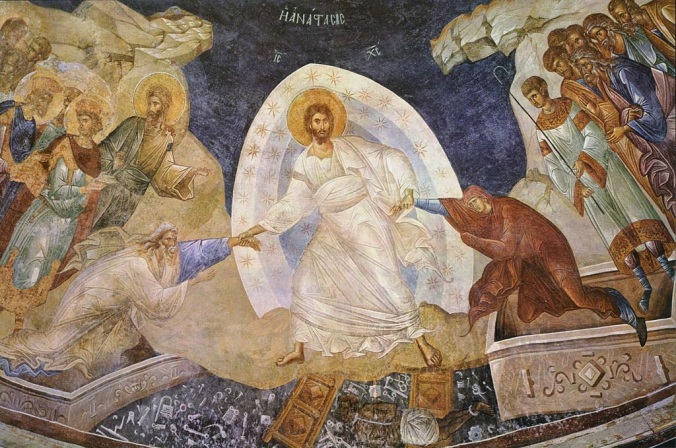
An Easter Homily ascribed to John Chrysostom [PG 59:721-4]

7a55c-anastasischora

Εἴ τις εὐσεβὴς καὶ φιλόθεος, ἀπολαυέτω τῆς καλῆς ταύτης πανηγύρεως· εἴ τις δοῦλος εὐγνώμων, εἰσελθέτω χαίρων εἰς τὴν χαρὰν τοῦ Κυρίου αὐτοῦ· εἴ τις ἔκαμενηστεύων, ἀπολαβέτω νῦν τὸ δηνάριον· εἴ τις ἀπὸ πρώτης ὥρας εἰργάσατο, δεχέσθω σήμερον τὸ δίκαιον ὄφλημα· εἴ τις μετὰ τὴν τρίτην ἦλθεν, εὐχαριστῶν ἑορτάσῃ· εἴ τις μετὰ τὴν ἕκτην ἔφθασε, μηδὲν ἀμφιβαλλέτω· καὶ γὰρ οὐδὲν ζημιοῦται· εἴ τις ὑστέρησεν εἰς τὴν ἐννάτην, προσελθέτω μηδὲν ἐνδοιάζων· εἴ τις εἰς μόνην ἔφθασε τὴν ἑνδεκάτην, μὴ φοβηθῇ τὴν βραδυτῆτα. Φιλότιμος γὰρ ὢν ὁ Δεσπότης δέχεται τὸν ἔσχατον, καθάπερ καὶ τὸν πρῶτον· ἀναπαύει τὸν τῆς ἑνδεκάτης,ὡς τὸν ἐργασάμενον ἀπὸ τῆς πρώτης· καὶ τὸν ὕστερον ἐλεεῖ, καὶ τὸν πρῶτον θεραπεύει· κἀκείνῳ δίδωσι, καὶ τούτῳ χαρίζεται. Καὶ τὴν πρᾶξιν τιμᾷ, καὶ τὴν πρόθεσιν ἐπαινεῖ. Οὐκοῦν εἰσέλθητε πάντες εἰς τὴν χαρὰν τοῦ Κυρίου ἡμῶν, καὶ πρῶτοι καὶ δεύτεροι τὸν μισθὸν ἀπολάβετε, πλούσιοι καὶ πένητες μετὰ ἀλλήλων χορεύσατε, ἐγκρατεῖς καὶ ῥᾴθυμοι τὴν ἡμέραν τιμήσατε, νηστεύσαντες καὶ μὴ νηστεύσαντες εὐφράνθητε σήμερον. Ἡ τράπεζα γέμει, τρυφήσατε πάντες· ὁ μόσχος πολὺς, μηδεὶς ἐξέλθοι πεινῶν. Πάντες ἀπολαύσατε τοῦ πλούτου τῆς χρηστότητος. Μηδεὶς θρηνείτω πενίαν· ἐφάνη γὰρ ἡ κοινὴ βασιλεία· μηδεὶς ὀδυρέσθω τὰ πταίσματα· συγγνώμη γὰρ ἐκ τοῦ τάφου ἀνέτειλε· μηδεὶς φοβείσθω τὸν θάνατον· ἠλευθέρωσε γὰρ ἡμᾶς ὁ τοῦ Σωτῆρος θάνατος· ἔσβεσεν αὐτὸν ὑπ’ αὐτοῦ κατεχόμενος· ἐκόλασε τὸν ᾅδην κατελθὼν εἰς τὸν ᾅδην· ἐπίκρανεν αὐτὸν γευσάμενον τῆς σαρκὸς αὐτοῦ. Καὶ τοῦτο προλαβὼν Ἡσαΐας ἐβόησεν· Ὁ ᾅδης, φησὶν, ἐπικράνθη. Συναντήσας σοι κάτω ἐπικράνθη· καὶ γὰρ καθῃρέθη· ἐπικράνθη· καὶ γὰρ ἐνεπαίχθη. Ἔλαβε σῶμα, καὶ Θεῷ περιέτυχεν· ἔλαβε γῆν, καὶ συνήντησεν οὐρανῷ· ἔλαβεν ὅπερ ἔβλεπε, καὶ πέπτωκεν ὅθεν οὐκ ἔβλεπε. Ποῦ σου, θάνατε, τὸ κέντρον; ποῦ σου, ᾅδη, τὸ νῖκος; Ἀνέστη Χριστὸς, καὶ σὺ καταβέβλησαι· ἀνέστη Χριστὸς, καὶ πεπτώκασι δαίμονες· ἀνέστη Χριστὸς, καὶ χαίρουσιν ἄγγελοι· ἀνέστη Χριστὸς, καὶ νεκρὸς οὐδεὶς ἐπὶ μνήματος. Χριστὸς γὰρ ἐγερθεὶς ἐκ νεκρῶν, ἀπαρχὴ τῶν κεκοιμημένων ἐγένετο· αὐτῷ ἡ δόξα καὶ τὸ κράτος εἰς τοὺς αἰῶνας τῶν αἰώνων. Ἀμήν.  
If anyone is a devout lover of God, let them rejoice in this beautiful radiant feast. If anyone is a faithful servant, let them gladly enter into the joy of their Lord. If any are wearied with fasting, let them now reap their reward. If any have laboured since the first hour, let them receive today their just reward. If any have come after the third hour, let them celebrate the feast with thankfulness. If any have arrived after the sixth hour, let them not doubt, for they will sustain no loss. If any have delayed until the ninth hour, let them not hesitate but draw near. If any have arrived at the eleventh hour, let them not fear their lateness. For the Master is gracious and welcomes the last no less than the first. He gives rest to those who come at the eleventh hour just as kindly as those who have laboured since the first hour. The first he fills to overflowing: on the last he has compassion. To the one he grants his favour, to the other pardon. He does not look only at the work: he looks into the intention of the heart. Enter then, all of you, into the joy of your Master. First and Last, receive alike your reward. Rich and poor dance together. You who have fasted and you who have not, rejoice today. The table is fully laden: let all enjoy it. The fatted calf is served: let no-one go away hungry. Come all of you, share in the banquet of faith: draw on the wealth of his mercy. Let no-one lament their poverty; for the universal kingdom has been revealed. Let no-one weep for their sins; for the light of the forgiveness has risen from the grave. Let no-one fear death; for the death of the Saviour has set us free. He has destroyed death by undergoing hell. He has despoiled hell by descending into hell. Hell was filled with bitterness when it tasted his flesh, as Isaiah foretold: ‘Hell was filled with bitterness when it met you face-to-face below’ – filled with bitterness, for it was brought to nothing; filled with bitterness, for it was mocked; filled with bitterness, for it was overthrown; filled with bitterness, for it was destroyed; filled with bitterness, for it was put in chains. It received a body, and encountered God. It received earth, and confronted heaven. It received what it saw, and was overpowered by what it did not see. O death, where is your sting? O hell, where is your victory? Christ is risen, and the demons are fallen. Christ is risen, and the angels rejoice. Christ is risen, and life reigns in freedom. Christ is risen, and the grave is emptied of the dead. For Christ being raised from the dead has become the first-fruits of those who sleep. To him be glory and dominion to the ages of ages. Amen.