Showing posts with label Repentance. Show all posts

Saturday, 25 September 2021

Trinity XVII

The Book of Numbers tells the story of the journey of the people of Israel through the desert of Sinai towards the Promised Land. In Chapter 11, the people are complaining about their lack of food which leads God to send first manna, and then quail, to feed the people. While this is happening, God promises Moses that He will share his Spirit with seventy others. This is so that Moses may have some helpers to aid with leadership, to deal with complaints, and to settle disputes.

Seventy men go to the Tent of Meeting, and two men stay behind in the camp: Eldad and Medad. They are both filled with the Holy Spirit and begin to prophesy. Moses is told about this, at which point something of a dispute arises:

‘And Joshua the son of Nun, the assistant of Moses from his youth, said, “My lord Moses, stop them.” But Moses said to him, “Are you jealous for my sake? Would that all the Lord’s people were prophets, that the Lord would put his Spirit on them!”’ (Numbers 11:28-29)

Moses is not as concerned as Joshua about observing proprieties, and he recognises that there is a freedom to the Spirit: it blows where it wills (cf. Jn 3:8). God is free to work through whomsoever He chooses. Moses wishes are granted on the Day of Pentecost, when the Apostles were filled with the Holy Spirit. We too, as Christians, are dwelling-places of the Holy Spirit, which works in us and through us. 

Just as Moses is able to see the bigger picture, likewise in today’s Gospel reading we see Jesus being rather generous. The disciples have noticed some exorcisms taking place, which have not been sanctioned. However, Jesus does not want His disciples put a stop to this, so He tells them:

“Do not stop him, for no one who does a mighty work in my name will be able soon afterwards to speak evil of me. For the one who is not against us is for us. For truly, I say to you, whoever gives you a cup of water to drink because you belong to Christ will by no means lose his reward” (Mk 9:39-41)

If the point of exorcism is to heal people, then as the Kingdom is a place of healing, the more the better. Evil spirits are cast out in Jesus’ Name, because it is powerful. The point is that faith is not just a matter of belief, but rather of belief put into practice, an act of loving generosity. Putting faith into practice helps to make the Kingdom a reality in our and other people’s lives. It is easy to be exclusive, and small-minded, but thankfully God is more generous than that, and we should try to be like Him.

Then Jesus’ teaching turns to matters of wrongdoing, moral failures, and how they are viewed. It is important to state in the strongest possible terms that Jesus is not encouraging Christians to drown people, or mutilate themselves, but rather teaching His disciples about the serious nature of sin.

Jesus begins by explaining that whoever puts a stumbling block in the path of another has hindered their discipleship. This is a serious charge.

“Whoever causes one of these little ones who believe in me to sin, it would be better for him if a great millstone were hung round his neck and he were thrown into the sea.” (Mk 9:42)

In this passage Jesus is engaging in hyperbole, exaggeration for rhetorical effect, to underline the point that our actions affect others. Using exaggeration, Jesus is pointing out that living a Christian life is a serious business: His followers are called to perfection. People who are new to the Christian faith, who are learning the Way, are particularly vulnerable. If they are led astray by the wrong kind of example, by the wrong sort of teaching, then it is a serious thing. Those of us who are Christians have a great responsibility to nurture others in their faith. The disciples, however, have been petty and small-minded. They have been concerned more with their own power and prestige rather than judging the actions of those helping otherscorrectly, and seeing the situation for what it really is. 

There follows a difficult passage, which, if we were to take it literally, would see all of us blind, lame, and without hands. Clearly this cannot be God’s plan of salvation for humanity. So if we are not supposed to take Jesus literally we have to interpret His words allegorically.This means uncovering the spiritual meaning of Christ’s words. Jesus may be referring to sins committed by hand, foot, or eye, i.e., what we do, where we go, and what we look at. The cutting off may be metaphorical, referring to excommunication. This means temporarily excluding people to give them an opportunity to repent and ask for God’s forgiveness. Our sins lead to estrangement from God, characterised by Hell and unquenchable fire. This is what rejecting God means. By doing so, we confine ourselves to darkness and misery. Jesus has come to save humanity from the Hell we create. He will die to give us life. 

Only Jesus can do this for us, and we have to let Him. We need to follow Him. Only then can we be salt, flavouring and preserving the world around us. Only then can we truly be at peace with one another, and understand things properly, and act accordingly. 

Living as a Christian community means owning up to our shortcomings, and being humble enough to let God transform us, bit by bit, day by day, more and more into His likeness. We learn by carrying our Cross, a burden much lighter than our sin, a burden which can and will transform us. Pride, that great human sin, makes us think that we are important. The disciples think they are important, and lose sight of the fact that what really matters is who Jesus Christ is. We must focus on what He has done for us, dying on the Cross, and rising to new life, so that we can live in Him. This is why we come together on the first day of the week, the day Jesus rose from the dead, so that we can share His risen life, and be nourished by Him.

Today’s other text, the Letter of James has some strong words for the wealthy, and in particular those who acquire their wealth by defrauding others. Christianity is a religion of generosity, given to us by a generous God, who expects us to be generous in turn. Just like the moral shortcomings outlined in the Gospel, here we see that we are called to live in a just and loving way. As Christians we are to stand for fairness and justice for all. The temptation is always there to seek to be important, to pursue power and prestige. What matters is that we glorify God, that we advance His kingdom. This is a kingdom of love, and forgiveness and healing, where people come to know who they truly are in Christ. If we listen to what Jesus tells us, and try to live like Him, then we can help to bring about the day when God will be all in all. Then everyone will sing the praise of God the Father, God the Son, and God the Holy Spirit. To whom be ascribed, as is most right and just, all might, majesty, glory, dominion and power, now and forever. Amen.

James Tissot – Jesus teaches his disciples

Saturday, 5 December 2020

Advent II

Our first reading this morning from the prophet Isaiah is joyful and optimistic. It speaks of a future for Israel after exile in Babylon, and a return home. Through the prophet, God speaks words of comfort to His people. These are words we always need to hear, but especially during this time of lockdowns when many of us are exiled from our families and friends. We can be assured that God is working wonders and even though it might not feel currently like it. We can trust that all will be well in the end. The words of Isaiah are quoted in Mark’s Gospel because they look forward to the coming of the Messiah, Jesus Christ, the fulfilment of all prophecy in the Bible: in Him the glory of the Lord is revealed.

Mark’s Gospel begins with the words:

The beginning of the Good News of Jesus the Messiah, Son of God (Mk 1:1)

Followed by quotations from Malachi and Isaiah:

“Behold, I send my messenger, and he will prepare the way before me. And the Lord whom you seek will suddenly come to his temple; and the messenger of the covenant in whom you delight, behold, he is coming, says the Lord of hosts. (Malachi 3:1)

A voice cries: “In the wilderness prepare the way of the Lord; make straight in the desert a highway for our God. (Isaiah 40:3)

Mark includes these texts this to show us that, from the beginning, prophecy is being fulfilled in Jesus. John is the messenger, preparing the community for the coming of the Messiah: Jesus, who is God.

First appearing in the wilderness, John proclaims a baptism of repentance for the forgiveness of sins. He then chooses a point where the busy road from Jerusalem crosses the River Jordan and challenges all those he meets to change their ways. The Baptist calls people to repentance, to turn away from sin and to turn back to God. It is good to be reminded that God’s love and mercy are available to all of us, when we fall short of what God wants us to be. This is why the story of Jesus’ public ministry begins with His Baptism in the Jordan, and points to Golgotha, where Christ will die taking our sins, and those of all humanity upon Himself. Christ’s Death demonstrates God’s love for us and His mercy towards us. It is hard to comprehend how God could love us that much. And yet Christ gives us Himself in the Eucharist, so that His Body and Blood can transform us, so that we can share in His life on Earth and in Heaven.

John the Baptist is the last of the prophets and the voice crying in the wilderness of which the prophet Isaiah spoke. He has a challenging and uncompromising message: repent for the Kingdom of God is close at hand. It may not be what many people want to hear nowadays, but it is, however, what people need to hear. Those who flock to him are aware of their sin, and aware of their need of God’s love, mercy, and forgiveness. John the Baptist’s message may not be an easy one, but it is actually Good News. Our prayers are answered: that for which we hope, for which our soul deeply longs can be ours. Through our baptism, we share in Christ’s Death and Resurrection, and we are washed from sin and given the gift of the Holy Spirit. It is difficult to make a similar proclamation to John to today’s society, where the Church is increasingly marginalised. Yet our message must still be ‘Repent!’ because the world needs to repent, to turn away from sin and selfishness, and back to a God of love, who longs for us to have life in all its fullness. 

Words can only go so far, they need to be lived out in action, and made concrete in people’s lives and communities. When we live out the love and reconciliation we have received from Jesus Christ, we are helping to make the Kingdom of God a reality. We are showing the world that there is an alternative to the path of greed and selfishness, anger and bitterness, which blights so many lives. The world can be freed from these shackles by Christ by who He is, and what He has done. 

Advent is a penitential season, so we use the colour purple, which is dark and sombre. We do not say the Gloria (Glory be to God on high) because it is a song of celebration. We fast from it now so that we may celebrate with greater joy at Christmas. Advent is a season of repentance when we turn away from our sins, and turn back to the God who comes among us as a baby in Bethlehem and who will come as our Judge and Saviour. 

This what repentance means: turning to God so that He can transform our life and the lives of those around us. It is both an event and a process, something  we need to keep on doing, together. This is the life of faith which Christ calls us to live.So let us in this Advent season live together:

in lives of holiness and godliness, waiting for and hastening the coming of the day of God, (2Peter 3: 11-12)

Let us prepare to meet Christ filled with His love, so that we may join in the song of praise to God the Father, God the Son, and God the Holy Spirit, to whom be ascribed, as is most right and just, all might, majesty, glory, dominion and power, now and forever. Amen.

Saturday, 5 September 2020

Twenty Third Sunday of Year A

The emergency services were not well-developed in the Ancient World. However, cities did have a night watch who functioned as a combination of a police force and fire brigade. It is to such an office that God appoints the prophet Ezekiel in this morning’s first reading. He is to be a night watchman, someone who is vigilant against fire and crime, someone concerned with safety and people’s well-being. Prophets exist to speak warnings to God’s people, to show them where they are going wrong and to show them how to get back on the right path. The role of a prophet is to call sinners to repent from their evil ways. Through the prophet God calls His people back to Him. Though people are, then as now, wayward they are given a chance to repent, to return to the ways of human flourishing. The choice is a stark one: life or death. It is important, and a lot depends upon the choices we make. This is why the central proclamation of the Church is to call God’s people to repentance: to turn away from sin, and to turn back to God. 

This week’s second reading from Paul’s Letter to the Romans continues the Apostle’s advice on how Christians should live out their faith in their lives. Living a Christian life  is a difficult thing to do, and for two thousand years Christians have struggled to do it well. As followers of Christ we are called to love God and to love one another. Paul quotes from the Ten Commandments to make the point that the basis for the moral code found in the Mosaic Law is Love. If you love someone then you will not do such things to them. To love is to will the good of another, to make the right choice, one which leads to human flourishing.

Having shown the Church how to live, Paul widens his focus, to reinforce something we heard last week: 

Do not be conformed to this world, but be transformed by the renewal of your mind, that by testing you may discern what is the will of God, what is good and acceptable and perfect. (Romans 12:2)

Paul can see the wider significance of what he is encouraging people to do. The Church knows that Jesus will come to judge the world, so Paul is encouraging Christians to live moral lives. The first Christians were surrounded by a decadent and morally corrupt society, justas we are today, and have been for two thousand years. Human nature is surprisingly consistent. We, however, are called to live differently. In our baptism, we put on Christ, and we were clothed with Him, sharing His Death, but we were also raised to new life in Him. We pray for the strength to live that new life, here and now! This is how we should prepare to meet our Redeemer, when He comes again.

How do we deal with problems as a church? This is an important and difficult question. This morning’s Gospel shows us how, in a number of clear simple steps. First we should approach the person in private. If they listen, and presumably admit their mistake and ask for forgiveness, or try to put things right, then that is an end to the matter. They are reconciled, and the matter is forgiven and forgotten. If this does not work, Paul instructs us to take one or two people, so that there are witnesses, and if this does not work, it becomes a matter for the church as a whole. If the person at fault still refuses to listen, they are excluded, not as a punishment, but so that they may have another opportunity to think things over, to admit that they are wrong, and to seek forgiveness and reconciliation. The point is not to cast people out, but to try and keep them in, and give them all possible opportunities to repent and be reconciled. In worldly terms this provision is generous. The church, which Christ founded, is meant to do things differently, as Jesus says:

The thief comes only to steal and kill and destroy. I came that they may have life and have it abundantly. (Jn 10:10)

God wants us all to have life in all its fulness, which includes healing and reconciliation. The world, however, often sees things in terms of punishment and retribution, whereas the church views things in terms of restoration. Our God is a God of justice and mercy. This is why Jesus goes to the Cross willingly, to bear our sins, and to heal our wounds. We cannot sort out the problem of our sin and woundedness on our own; if we could we would not need a Saviour. 

This is why Jesus reiterates His teaching about sin:

Truly, I say to you, whatever you bind on earth shall be bound in heaven, and whatever you loose on earth shall be loosed in heaven. (Mt 18: 18) 

This is a reality because of all that God has done for us in Christ. The Church exists to continue the redemptive work of God within the world. Through God’s forgiveness we can be truly reconciled and the healing, which can become a reality in our lives. Jesus says in the words which follow:

Again I say to you, if two of you agree on earth about anything they ask, it will be done for them by my Father in heaven. (Mt 18:19)

Through God’s reconciliation we can make requests in prayer, and those requests will be answered. In addition, as a Christian community we can be encouraged by Christ’s presence in our midst:

For where two or three are gathered in my name, there am I among them. (Mt 18:20)

Christ is among us, here and now! And we receive His Sacramental Presence in the Eucharist, His Very Flesh and Blood, so that He may transform us; so that we may have a foretaste of the Heavenly Banquet and be built up and strengthened in love, both here and now. We have the medicine for which our souls cry out. This is the healing which Christ accomplishes on the Cross, He longs to pour out His Love on us, so that we can know true freedom, true joy, and true love, in Him. So let us come to Him and let His Grace transform our lives, so that we, and all creation, may give glory to God the Father, God the Son, and God the Holy Spirit, to who whom be ascribed as is most right and just, all might, majesty, glory, dominion and power, now and forever. Amen. 
Twenty Third Sunday of Year A

The emergency services were not well-developed in the Ancient World. However, cities did have a night watch who functioned as a combination of a police force and fire brigade. It is to such an office that God appoints the prophet Ezekiel in this morning’s first reading. He is to be a night watchman, someone who is vigilant against fire and crime, someone concerned with safety and people’s well-being. Prophets exist to speak warnings to God’s people, to show them where they are going wrong and to show them how to get back on the right path. The role of a prophet is to call sinners to repent from their evil ways. Through the prophet God calls His people back to Him. Though people are, then as now, wayward they are given a chance to repent, to return to the ways of human flourishing. The choice is a stark one: life or death. It is important, and a lot depends upon the choices we make. This is why the central proclamation of the Church is to call God’s people to repentance: to turn away from sin, and to turn back to God. 

This week’s second reading from Paul’s Letter to the Romans continues the Apostle’s advice on how Christians should live out their faith in their lives. Living a Christian life  is a difficult thing to do, and for two thousand years Christians have struggled to do it well. As followers of Christ we are called to love God and to love one another. Paul quotes from the Ten Commandments to make the point that the basis for the moral code found in the Mosaic Law is Love. If you love someone then you will not do such things to them. To love is to will the good of another, to make the right choice, one which leads to human flourishing.

Having shown the Church how to live, Paul widens his focus, to reinforce something we heard last week: 

Do not be conformed to this world, but be transformed by the renewal of your mind, that by testing you may discern what is the will of God, what is good and acceptable and perfect. (Romans 12:2)

Paul can see the wider significance of what he is encouraging people to do. The Church knows that Jesus will come to judge the world, so Paul is encouraging Christians to live moral lives. The first Christians were surrounded by a decadent and morally corrupt society, justas we are today, and have been for two thousand years. Human nature is surprisingly consistent. We, however, are called to live differently. In our baptism, we put on Christ, and we were clothed with Him, sharing His Death, but we were also raised to new life in Him. We pray for the strength to live that new life, here and now! This is how we should prepare to meet our Redeemer, when He comes again.

How do we deal with problems as a church? This is an important and difficult question. This morning’s Gospel shows us how, in a number of clear simple steps. First we should approach the person in private. If they listen, and presumably admit their mistake and ask for forgiveness, or try to put things right, then that is an end to the matter. They are reconciled, and the matter is forgiven and forgotten. If this does not work, Paul instructs us to take one or two people, so that there are witnesses, and if this does not work, it becomes a matter for the church as a whole. If the person at fault still refuses to listen, they are excluded, not as a punishment, but so that they may have another opportunity to think things over, to admit that they are wrong, and to seek forgiveness and reconciliation. The point is not to cast people out, but to try and keep them in, and give them all possible opportunities to repent and be reconciled. In worldly terms this provision is generous. The church, which Christ founded, is meant to do things differently, as Jesus says:

The thief comes only to steal and kill and destroy. I came that they may have life and have it abundantly. (Jn 10:10)

God wants us all to have life in all its fulness, which includes healing and reconciliation. The world, however, often sees things in terms of punishment and retribution, whereas the church views things in terms of restoration. Our God is a God of justice and mercy. This is why Jesus goes to the Cross willingly, to bear our sins, and to heal our wounds. We cannot sort out the problem of our sin and woundedness on our own; if we could we would not need a Saviour. 

This is why Jesus reiterates His teaching about sin:

Truly, I say to you, whatever you bind on earth shall be bound in heaven, and whatever you loose on earth shall be loosed in heaven. (Mt 18: 18) 

This is a reality because of all that God has done for us in Christ. The Church exists to continue the redemptive work of God within the world. Through God’s forgiveness we can be truly reconciled and the healing, which can become a reality in our lives. Jesus says in the words which follow:

Again I say to you, if two of you agree on earth about anything they ask, it will be done for them by my Father in heaven. (Mt 18:19)

Through God’s reconciliation we can make requests in prayer, and those requests will be answered. In addition, as a Christian community we can be encouraged by Christ’s presence in our midst:

For where two or three are gathered in my name, there am I among them. (Mt 18:20)

Christ is among us, here and now! And we receive His Sacramental Presence in the Eucharist, His Very Flesh and Blood, so that He may transform us; so that we may have a foretaste of the Heavenly Banquet and be built up and strengthened in love, both here and now. We have the medicine for which our souls cry out. This is the healing which Christ accomplishes on the Cross, He longs to pour out His Love on us, so that we can know true freedom, true joy, and true love, in Him. So let us come to Him and let His Grace transform our lives, so that we, and all creation, may give glory to God the Father, God the Son, and God the Holy Spirit, to who whom be ascribed as is most right and just, all might, majesty, glory, dominion and power, now and forever. Amen. 

Saturday, 8 February 2020

Septuagesima (5th Sunday of Yr A)

The traditional name for this Sunday, Septuagesima, means seventieth, approximately seventy days before Easter, and it marked the beginning of a three-week period which looks forward to the beginning of Lent. It had a penitential character: purple or violet vestments were worn, and in the Eucharist and the Daily Office the church fasted from hymns of praise, to prepare for the Great Fast. It reminds us that what we Do affects who we ARE. Such discipline helps to form us as more loving and generous people.

Such concerns lie at the heart of our first reading this morning from the prophet Isaiah. In verse 6 the prophet cries, ‘Is not this the fast that I choose: to loose the bonds of wickedness, to undo the straps of the yoke, to let the oppressed go free, and to break every yoke?’ What God desires is to say sorry for the wrongs we have done that we show that contrition by doing the right thing: being loving and generous, the way God wants us to be. 

Thus, the prophet advises us to share our bread with the hungry, to give shelter to the homeless in our own homes, to clothe the naked. We also need to take away the yoke which is a burden to others, the pointing finger of accusation, and speaking wickedness: being harsh, not telling the truth, or telling it in a way that is designed to cause pain. We all need to hear this, and be reminded of how we can, each and every one of us, fall short. I know I do, and I ask for your forgiveness. 

The point is that we can ask the forgiveness, of a God who loves, which is why St Paul simply proclaims, ‘Jesus Christ and him crucified’. On the Cross Christ bears the yoke, the burden of our sins, and demonstrates the LOVE God has for us: real costly love, which sees Him die for us. This is love put into practice to heal and to restore the world, a simple act, seen by many as the execution of a common criminal, dying a slave’s death. Yet THIS brings about the greatest freedom humanity has ever known.

In the Gospel this morning Jesus begins by using metaphors to describe His disciples, They are salt. Nowadays we are used to salt as a bad thing, something of which we eat too much. Salt helps to give food flavour, it preserves food, keeping it edible, and without it we would die. Salt was expensive, a luxury, but if it is no longer good needs to be thrown out. You cannot use it. Jesus’ disciples need to be salty, there should be something about how we live out and proclaim the Gospel in word and deed that makes people go, ‘Mmm!’ Otherwise there is not much point. 

As well as being salt the disciples are light. Light illuminates, it scatters darkness, it helps us to see and keeps us safe. None of us would drive a car at night without the lights on, obviously. It would cause an accident, it might get us killed. Lampposts are high up in the air, so that they can illuminate the street below. We have lights which hang from our ceilings for the same reason. A covered light does not give out light, a light on the floor cannot light up a room. Our Lord encourages His disciples to ‘let your light shine before others, so that they may see your good works and give glory to your Father who is in heaven.’ Our faith then is not simply something that we believe, but rather it is something that we DO. Our actions and our words proclaim the truth of the Gospel to the world around us.

Just as a city on a hill cannot be hidden, so it is with Christians. We are visible, and for our many failings people will call us hypocrites, and while they have a point, our failings should always lead us to ask forgiveness, and repent. Because of what Christ has done for us on the Cross we have access to God’s forgiveness. The point is that while we fail, we repent and keep on trying to live out our faith in our lives. It is simple and clear, like St Paul’s proclamation to the church in Corinth. Our faith does not ‘rest in the wisdom of men but in the power of God.’ It looks foolish and weak, and so it should, in worldly terms. God’s weakness is greater than human strength, that is its power. 

Christ shows us how to live in the Beatitudes, and encourages us to put it into practice in our lives, and to follow His example of going to the Cross to proclaim the fact that God loves us, a God who is Love. Love forgives, so that it can transform us. We that transformation in Isaiah, put into practice to help transform the world. Paul is transformed from a persecutor of the Church into its greatest evangelist, who spends the rest of his life telling people about Jesus, and how He has transformed lives, and continues to do so. For two thousand years the Church has lived the truth of this transformation, and continues to do so, and invites men and women to come and have their lives transformed by the God who loves them.

So we begin to prepare for Lent, the great season of repentance, when we acknowledge our sins, and turn back to God, and prepare to celebrate the Passion, Death, and Resurrection of Jesus Christ. 

As we look towards the Cross, our only hope, our only salvation, may we live generous and loving lives. May we be salt and light in the world, giving it taste and illumination, offering it the chance for conversion, to turn back to the Lord who loves them, who shows them that love on the Cross, that they may have life in and through Him, that they may give glory to God the Father, God the Son, and God the Holy Spirit, to whom be ascribed as is most right and just, all might, majesty, glory, dominion, and power, now, and forever. Amen.

Fra_Angelico_-_Die_Bergpredigt.jpeg

Sunday, 26 January 2020

3rd Sunday of Year A

There are divisions in the Church. Sadly, there have been divisions since the earliest days of Christianity, as is made clear by the opening of St Paul’s First Letter to the Corinthians. But just because something has gone on for a long time doesn’t make it right. Quite the opposite! For the last seven days Christians around the world have been praying for unity, to heal the divisions which so mar the Body of Christ, the Church. And while it is good to focus our prayers on unity for a week, I would venture to suggest that the unity of Christians is something which we should all be praying for all the time. It is shocking that the tribalism which St Paul condemns in the first century, is still alive and well today. People are still defining themselves as one sort of Christian as opposed to another, or by the place where they worship. Our culpability in this is something for which we need to repent. We need to turn away from division, and to turn back to the God of love, who longs to heal our wounds and divisions; fostering unity is following the will of God. 

This morning’s Gospel begins with the news that John the Baptist has been arrested. His criticism of the immorality of the ruling family had upset the powers that be. Calling out Herod Antipas for divorcing his wife, and then breaking Jewish law by marrying his brother Philip’s wife, seems the right thing to do. We expect our rulers to set an example. It’s only right and proper. The church continues this prophetic vocation, calling out what is evil and wrong. This may, and will, indeed make people uncomfortable: That’s the point! No one likes having their wrongdoing pointed out, I know I don’t! But unless someone does, then we’re unlikely to change our ways. 

In the Gospel, Jesus has just been in the desert for forty days, praying, fasting, being tempted by the Devil. He begins his public ministry by leaving Nazareth, the town where He grew up, and walking to Capernaum by the shore of the Sea of Galilee. It is a day’s journey. This is an important place for Jesus to start His public ministry, because it fulfils a prophecy in Isaiah, which St Matthew quotes, ‘The land of Zebulun and the land of Naphtali, the way of the sea, beyond the Jordan, Galilee of the Gentiles— the people dwelling in darkness have seen a great light, and for those dwelling in the region and shadow of death, on them a light has dawned.’ (Mt 4:15-16 ESV) This part of Israel is where people were first taken off into captivity by the Assyrians, seven hundred years before. So Our Lord’s restoration of Israel starts in the place where the Northern Kingdom first began to fall apart. 

Strikingly, Jesus begins His proclamation of the Good news of the Kingdom by repeating the exact words of His Cousin, John the Baptist: ‘Repent, for the kingdom of heaven is at hand’. Their message is the same: turn away from your sins and turn back to God, turn back to the God who loves you, and who longs to heal you. These are words of hope for the future, for restoration. This is a message which we all long to hear. 

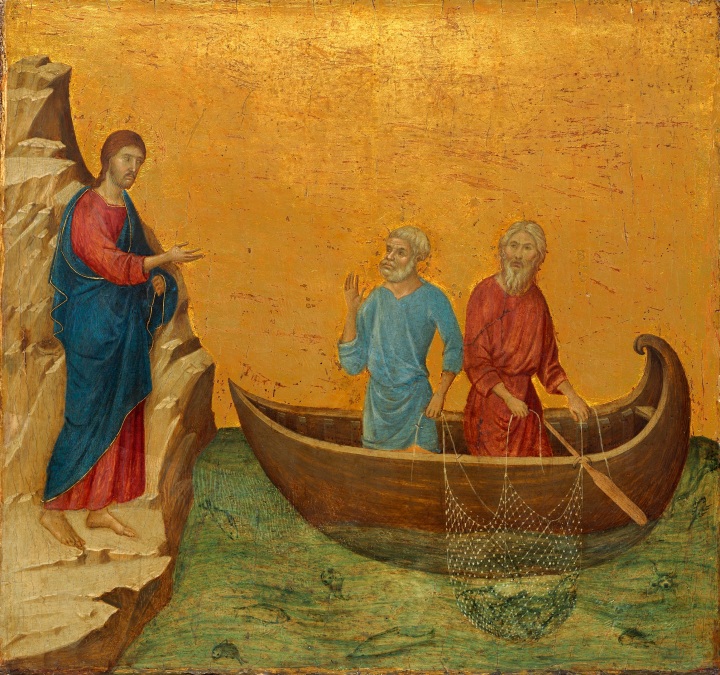
When Jesus sees two fishermen, Simon Peter and his brother, Andrew casting their nets,  and invites them to ‘Follow me, and I will make you fishers of men.’ It is quite a simple and straightforward invitation. On hearing Jesus’ words they drop everything and follow Him. Immediately! They don’t stop to put their affairs in order, or to say goodbye. A little later, James and John do the same, leaving Zebedee, their father, behind in the boat. Nothing is more important than following Jesus, but these early disciples show us that following God has a cost. It transforms our lives, totally, but not without cost. 

So what does Jesus do with this band of disciples? He takes them into synagogues, where He teaches and interprets the Jewish Scriptures, the Old Testament. Jesus proclaims the Good News of the Kingdom, that we are loved by God. He demonstrates this love in practice by healing the sick. God’s kingdom is a place where wounds are healed, where people are restored to wholeness, in mind, body and soul. There is a cost to following God, but here we see the reward of the Kingdom. Each and every one of us needs that healing and wholeness, which only God can provide. The Church continues to proclaim repentance from sin, belief in the Kingdom of God, and participates in the healing power of God. 

These things begin with us, here, today. We hear the Kingdom proclaimed, we confess our faith together, we pray for the Church and the World, and we join in the banquet of the Kingdom. The source and summit of the Christian life is the Eucharist, where Christ feeds and heals us with His Body and Blood. God’s love is a reality, with the power to transform us and our world, if we have the humility to let God be at work in our lives. He does not force Himself upon us like a tyrant, but rather gives us the free will to choose to turn to Him. 

God also wills that the Church be united, as Jesus prays in Gethsemane, ‘I do not pray for these only, but also for those who believe in me through their word, that they may all be one; even as thou, Father, art in me, and I in thee, that they also may be in us, so that the world may believe that thou hast sent me.’ (Jn 17:20-21 RSVCE) May we pray and work so that Our Lord’s will is a reality and that the world may believe and give glory to God the Father, God the Son, and God the Holy Spirit, to whom be ascribed as is most right and just, all might, majesty, glory, dominion, and power, now, and forever. Amen.

Duccio_di_Buoninsegna_036.jpg

Saturday, 7 December 2019

Advent II Yr A – REPENT

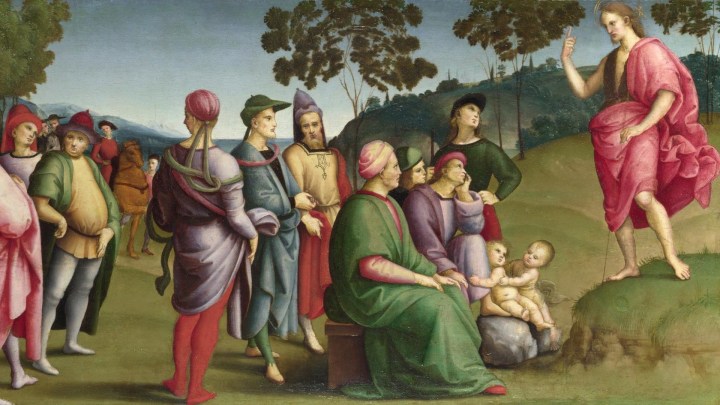
John the Baptist appears in this morning’s Gospel in stark un-compromising fashion. His message is simple, ‘Repent, for the Kingdom of God is at hand’ (Mt 3:2 ESV). It is a clear message, but to understand it takes some work. To repent means to change ones mind: to turn away from sin, and turn back to God. We are called to think differently, and as a result of this to act differently, to follow Jesus, and thereby to change the world, by co-operating with God to make the Kingdom a lived reality here and now, and to share in it forever. To repent is to turn away from sin, which separates us from God, and each other. Sin makes us selfish, self-absorbed, concerned with pleasure, wealth, power. It’s all about ME, how I feel, what I want. The proclamation of the Kingdom of God tells us that another way is possible, by the grace of God. It sounds exciting, doesn’t it? Freeing, liberating: living for others rather than ourselves. At its heart the Kingdom is a place of generosity and real love, life in all its fullness. The Church exists to proclaim this same message, and to say to the world: Another way is possible.

It is not surprising that in those times people came out into the desert to hear John. He was charismatic, his message was a refreshing antidote to the Religious Establishment of his day. People come, confess their sins, and are baptised, they are washed clean, to serve God, and to love Him. They also come because in John the people of Israel see prophecy fulfilled, and a new Elijah is in their midst. One who points to the Messiah, and has done ever since he leapt in his mother Elizabeth’s womb at the Visitation. Before John was even born he proclaimed that Jesus was the Christ, the Messiah, the One who would save Israel from their sins. We see this Messianic kingdom hoped for in the vision of Isaiah in this morning’s first reading. The branch which comes forth from the stem of Jesse is the Blessed Virgin Mary, who filled with God’s Holy Spirit, conceived and bore Our Saviour, the true King of all that is, or has been, or will be. He will be on the side of the poor and the meek, people who are left behind, and ignored because they are not rich or powerful. It’s a radical vision, which reminds us that we still have some way to go in order to put it into practice in the world around us. Isaiah’s vision of Messianic peace looks impossible, but it signifies a world-changing peace, which alters how things are, how we behave. For with, and through God another way is possible. It is not simple, or easy, but it is possible, if we rely upon God to help us. As St Paul says to the Christians in Rome, ‘May the God of endurance and encouragement grant you to live in such harmony with one another, in accord with Christ Jesus, that together you may with one voice glorify the God and Father of our Lord Jesus Christ. Therefore welcome one another as Christ has welcomed you, for the glory of God.’ (Romans 15:5-7 ESV) and again ‘May the God of hope fill you with all joy and peace in believing, so that by the power of the Holy Spirit you may abound in hope’ (Romans 15:13 ESV). We receive the Holy Spirit in our Baptism and Confirmation to strengthen us to live out our faith in our lives.

Hope can feel in pretty short supply when we look at the world around us, and if we look to humanity we will be disappointed. Our hope comes from God, our hope is God, God with us, whose Birth we are preparing to celebrate at Christmas. Advent is a time of preparation, when we prepare for Christ to come, both as a baby in Bethlehem, and as our saviour and our Judge. As the son of Jesse, and the son of David, Jesus is Israel’s true king, who rules over all. Isaiah has hope in the peace the Messiah will bring. Injustice and affliction, the fruit of sin is dealt with on the Cross, where He ‘shall stand as a signal for the peoples’ (Isa 11:10 ESV). Christ comes to die, out of love for humanity. In Him God can make things put right, and restore Creation, so that the entire Universe may praise the God who created it. 

Our Saviour is also our judge. ‘His winnowing fork is in his hand, and he will clear his threshing floor and gather his wheat into the barn, but the chaff he will burn with unquenchable fire.’ (Matt 3:12 ESV) It’s real, and it should make us stop and think for a moment. Are we living the way God wants us to? If we are not then we need to repent, say sorry, and live the way God wants us to live. This is how we flourish as people. John the Baptist calls us to make a spiritual u- turn, to turn our life around, to turn away from what separates us from God, our sins. He calls us to the waters of baptism, so that we can be healed and restored by God, filled with his grace, and prepared to receive the Holy Spirit: “I baptize you with water for repentance, but he who is coming after me is mightier than I, whose sandals I am not worthy to carry. He will baptize you with the Holy Spirit and fire” (Mt 3:11). The problem with the Pharisees and Sadducees who come to John is that they do not show the repentance necessary, they haven’t made the u-turn, they don’t have the humility to recognise there sinfulness, and the need to be washed in the waters of baptism. They are confident that they are children of Abraham; they don’t have the right attitude for God to be at work in their lives.

As well as seeing Jesus as our Saviour, John the Baptist sees Jesus as Our Judge, he points to the second coming of the Lord when, as St John of the Cross puts it, ‘we will be judged by love alone’.  It is love that matters – in Christ we see what love means it is costly, self-giving and profound. As we are filled with His Spirit, nourished by Word and Sacrament, we need to live out this love in our lives. This is how we prepare to meet him as we prepare to celebrate His Birth and look forward to his Second Coming. So let us be prepared, let us live out God’s love in our lives, let us turn away from everything which separates us from God and each other, let us live out that costly, self-giving love in our lives, as this is what God wants us to do. It is through doing this that the world around us can see what our faith means in practice, how it affects our lives, and why they could and should follow Him, and sing the praises of God the Father, God the Son, and God the Holy Spirit, to whom be ascribed as is most right and just all might, majesty, glory, dominion, and power, now and forever. Amen.  
n-6480-00-000022-hd.jpg

Advent II Yr A – REPENT

John the Baptist appears in this morning’s Gospel in stark un-compromising fashion. His message is simple, ‘Repent, for the Kingdom of God is at hand’ (Mt 3:2 ESV). It is a clear message, but to understand it takes some work. To repent means to change ones mind: to turn away from sin, and turn back to God. We are called to think differently, and as a result of this to act differently, to follow Jesus, and thereby to change the world, by co-operating with God to make the Kingdom a lived reality here and now, and to share in it forever. To repent is to turn away from sin, which separates us from God, and each other. Sin makes us selfish, self-absorbed, concerned with pleasure, wealth, power. It’s all about ME, how I feel, what I want. The proclamation of the Kingdom of God tells us that another way is possible, by the grace of God. It sounds exciting, doesn’t it? Freeing, liberating: living for others rather than ourselves. At its heart the Kingdom is a place of generosity and real love, life in all its fullness. The Church exists to proclaim this same message, and to say to the world: Another way is possible.

It is not surprising that in those times people came out into the desert to hear John. He was charismatic, his message was a refreshing antidote to the Religious Establishment of his day. People come, confess their sins, and are baptised, they are washed clean, to serve God, and to love Him. They also come because in John the people of Israel see prophecy fulfilled, and a new Elijah is in their midst. One who points to the Messiah, and has done ever since he leapt in his mother Elizabeth’s womb at the Visitation. Before John was even born he proclaimed that Jesus was the Christ, the Messiah, the One who would save Israel from their sins. We see this Messianic kingdom hoped for in the vision of Isaiah in this morning’s first reading. The branch which comes forth from the stem of Jesse is the Blessed Virgin Mary, who filled with God’s Holy Spirit, conceived and bore Our Saviour, the true King of all that is, or has been, or will be. He will be on the side of the poor and the meek, people who are left behind, and ignored because they are not rich or powerful. It’s a radical vision, which reminds us that we still have some way to go in order to put it into practice in the world around us. Isaiah’s vision of Messianic peace looks impossible, but it signifies a world-changing peace, which alters how things are, how we behave. For with, and through God another way is possible. It is not simple, or easy, but it is possible, if we rely upon God to help us. As St Paul says to the Christians in Rome, ‘May the God of endurance and encouragement grant you to live in such harmony with one another, in accord with Christ Jesus, that together you may with one voice glorify the God and Father of our Lord Jesus Christ. Therefore welcome one another as Christ has welcomed you, for the glory of God.’ (Romans 15:5-7 ESV) and again ‘May the God of hope fill you with all joy and peace in believing, so that by the power of the Holy Spirit you may abound in hope’ (Romans 15:13 ESV). We receive the Holy Spirit in our Baptism and Confirmation to strengthen us to live out our faith in our lives.

Hope can feel in pretty short supply when we look at the world around us, and if we look to humanity we will be disappointed. Our hope comes from God, our hope is God, God with us, whose Birth we are preparing to celebrate at Christmas. Advent is a time of preparation, when we prepare for Christ to come, both as a baby in Bethlehem, and as our saviour and our Judge. As the son of Jesse, and the son of David, Jesus is Israel’s true king, who rules over all. Isaiah has hope in the peace the Messiah will bring. Injustice and affliction, the fruit of sin is dealt with on the Cross, where He ‘shall stand as a signal for the peoples’ (Isa 11:10 ESV). Christ comes to die, out of love for humanity. In Him God can make things put right, and restore Creation, so that the entire Universe may praise the God who created it. 

Our Saviour is also our judge. ‘His winnowing fork is in his hand, and he will clear his threshing floor and gather his wheat into the barn, but the chaff he will burn with unquenchable fire.’ (Matt 3:12 ESV) It’s real, and it should make us stop and think for a moment. Are we living the way God wants us to? If we are not then we need to repent, say sorry, and live the way God wants us to live. This is how we flourish as people. John the Baptist calls us to make a spiritual u- turn, to turn our life around, to turn away from what separates us from God, our sins. He calls us to the waters of baptism, so that we can be healed and restored by God, filled with his grace, and prepared to receive the Holy Spirit: “I baptize you with water for repentance, but he who is coming after me is mightier than I, whose sandals I am not worthy to carry. He will baptize you with the Holy Spirit and fire” (Mt 3:11). The problem with the Pharisees and Sadducees who come to John is that they do not show the repentance necessary, they haven’t made the u-turn, they don’t have the humility to recognise there sinfulness, and the need to be washed in the waters of baptism. They are confident that they are children of Abraham; they don’t have the right attitude for God to be at work in their lives.

As well as seeing Jesus as our Saviour, John the Baptist sees Jesus as Our Judge, he points to the second coming of the Lord when, as St John of the Cross puts it, ‘we will be judged by love alone’.  It is love that matters – in Christ we see what love means it is costly, self-giving and profound. As we are filled with His Spirit, nourished by Word and Sacrament, we need to live out this love in our lives. This is how we prepare to meet him as we prepare to celebrate His Birth and look forward to his Second Coming. So let us be prepared, let us live out God’s love in our lives, let us turn away from everything which separates us from God and each other, let us live out that costly, self-giving love in our lives, as this is what God wants us to do. It is through doing this that the world around us can see what our faith means in practice, how it affects our lives, and why they could and should follow Him, and sing the praises of God the Father, God the Son, and God the Holy Spirit, to whom be ascribed as is most right and just all might, majesty, glory, dominion, and power, now and forever. Amen.  
n-6480-00-000022-hd.jpg

Saturday, 30 November 2019

Advent I (Year A)

Just over one hundred and one years ago a war ended that was supposed to be ‘the war to end all wars’. Instead the last century has seen very little peace. We are lucky in Western Europe that we have experienced 70 years without conflict, but there have been wars elsewhere. Humanity is still plagued by warfare: the loss of life, the crimes committed, lives blighted. So when we hear the prophecy of Isaiah in this morning’s first reading it is truly joyful. Beating swords into ploughshares and turning spears into pruning hooks sounds wonderful indeed. Growing crops and tending vines provides us with food and drink. It is a sign of peace, joy, and prosperity. And at the time when Christ was born, and we are preparing to celebrate the yearly memorial of his birth at Christmas, this prophecy was fulfilled. There was peace in the Roman World when Christ was born, scripture was fulfilled. And we look forward to such peace coming again, and we work for it, together. The messianic age which we look forward to  shows us what truly following Christ looks like in practice. If we walk in the light of the Lord, we are freed from the darkness of sin and destruction, which threatens to overwhelm us. 

This same message is found in St Paul’s Letter to the Romans, our second reading this morning. It is an encouraging message, that another way is possible. Instead of sleep-walking towards damnation and destruction, we can be awake and ready to follow Christ. Every day is another day closer to Christ’s Second Coming. He will come again, as our Saviour and our Judge. We need to be ready, putting on the armour of light, putting on Christ, through our baptism, and living out the faith of our baptism in our lives. The capital of the Roman Empire was renowned for tolerating some pretty immoral behaviour. It was everywhere, all around the Christian community there. Were they tempted to join in? Of course! But St Paul advises them to resist the pleasures of the flesh, drunkenness, quarrelling, nastiness: all the sorts of things we can get up to if left to our own devices.

St Paul speaks to us, to encourage the church and its members, you and me, not to give into the culture of the world around us, but to stay close to Christ. It is easy in theory, but tricky in practice. It’s easier when you’re part of a community. We can help and support each other, in good times and bad. It’s why people join Slimming World or Weightwatchers. They’re trying to change their lifestyle and eating habits, and find the support of a group a great help. Never think that small groups do not have the power to change the world. We are living proof of it as Christians, and it is why we are HERE today: to support each other, to be built up in love together, to turn away from the ways of the world, and to follow Christ. 

We follow Christ and we are ready. We prepare for Christ to come among us. That’s what Advent means, Christ’s coming. We prepare for three comings: the first our annual commemoration of His birth in Bethlehem, at Christmas, where the Word became flesh and dwelt among us. The second coming of Christ will be at the end of time, when He will be our Saviour and our Judge. The third coming we prepare for is even nearer. It happens day by day, and week when Christ comes to us in the Eucharist, in His Body and Blood, under the outward forms of Bread and Wine, the Banquet of the Kingdom, anticipated by the ploughshares and pruning hooks of Isaiah, tools to help produce Bread and Wine, a prophecy which looks forward to the peace of the Messiah and a banquet of Bread and Wine. Food of the Kingdom, food for our journey of faith, to give us strength and new life in Christ. Christ comes to us in the Eucharist to give us strength and to transform us, into His likeness. This is the reality of God’s love for us, shown to us on the Cross, and in the Resurrection, a pledge, a sure sign of love, love we can touch and taste, love which transforms us.

We need it, and we need it together. It is why we gather together on the day when Christ rose from the dead to celebrate His triumph, and ask for His prayers. Because as St Matthew’s Gospel tells us, we need to be ready. We need to be ready because ‘the Son of Man is coming at an hour you do not expect.’ (Mt 24:44 ESV) It could be that between my writing these words and delivering them, Christ will come. Christ could come today, or in thousands of years’ time. It doesn’t matter when He comes. We need to be ready, prepared to meet Him, freed from sin, and living out our faith in our lives, having heeded the warnings to prepare ourselves. That’s why Advent is a penitential season, we are reminded of how we fall short, and try, with God’s grace, to amend our lives and follow Christ.

That is why in this morning’s Gospel reading Christ says, ‘For as were the days of Noah, so will be the coming of the Son of Man.’ (Mt 24:37 ESV). Before the flood in Genesis we se that humanity was corrupt and violent, and sinful. The point Christ is making is that this is how the world will be; Christians should not be like this, because we have put on Christ, we are walking in the light, supporting each other, as a community of faith, living out the love we have been shown in Christ. At a time we do not expect, Our Lord will return, so we need to be ready, so that whenever He comes Christ may find us ready, and prepared to meet him.  

We need to prepare our hearts, our souls, our minds, all of our life, we need to live and act, to think and speak like the people of God, fully alive in him, having turned away from the ways of the world, to live fully in him, we are to live this way, and invite others so to do, so that the Kingdom of God’s peace and love may truly be found here in earth, where humanity is truly valued, where violence, death, murder, and immorality are no more.

The time is short, the time is now, it really matters; we need to come to the Lord, learn his ways and walk in his paths, living decently, living vigilantly, preferring nothing to Christ, and inviting all the world to come to the fullness of life in Him. This is how we celebrate His coming at Christmas and as Our Saviour and Judge, by following him, fed by Him, restored and healed by Him, and sharing His church’s message with all the world, so that it too may believe and sing the praise of God the Father, God the Son, and God the Holy Spirit, to whom be ascribed as is most right and just all might, majesty, glory, dominion, and power, now and forever.

Last_Judgement_(Michelangelo).jpg

Sunday, 10 November 2019

Remembrance 2019

We are gathered here on this special day to do a number of things together. First and foremost we give thanks for the safe deliverance of these islands from the World Wars of the previous century. These were wars on a scale never before seen. The first was supposed to be the ‘war to end all wars’, yet within twenty years a greater conflict began which brought even more death and suffering to millions across the world. Hardly a day has gone by in the past century when there has not been a conflict somewhere in our world. 

It is now one hundred years since we first marked the anniversary of the Armistice by stopping in silence for two minutes, and praying: in remembrance of all those who gave their lives for our country, and for all who suffer as a result of war. For one hundred years we have engaged in a public act of remembrance. 

In 1919 the Prime Minister, David Lloyd George, commissioned a cenotaph (which means empty tomb) to stand in Whitehall, London, as a focus for an act of remembrance, when most of the war dead lay buried overseas. The original wood and plaster structure, designed by Sir Edward Lutyens, was only intended to stand for one week, but it proved so popular that a permanent one was created in Portland Stone ready for the 1920 Armistice Day.

Since 1919, the Cenotaph has become the central focus for national commemoration especially during the National Service of Remembrance held on Remembrance Sunday, the Sunday nearest to 11th November. Its meaning has developed and the Cenotaph now memorialises those who have given their lives in all conflicts since the First World War.

Throughout the country, local memorials were erected to remember the dead of the First and then the Second World War. Like the Cenotaph in London, these became the focus for local Remembrance ceremonies and we keep this tradition here in Maenclochog today, starting our Remembrance Service outside at our Village War Memorial. 

Our act of remembrance is not simply to recall a past event, or to bring the dead to mind, but something more. By remembering today, the sacrifice of countless men and women, we continue to show our thanks for the peace and prosperity which we now enjoy. 

We give thanks for to all those who have served, and continue to serve this country, both at home and abroad, and for the continuing work of the Royal British Legion in supporting veterans and their families. As a country we have asked much of our sons and daughters, and we continue so to do. ‘Cariad mwy na hwn nid oes gan neb; sef, bod i un roi ei einioes dros ei gyfeillion.’ ‘Greater love has no one than this, that someone lay down his life for his friends’ (Jn 15:13). They died that we might live. 

Their sacrifice calls to mind another sacrifice, made on a hill outside Jerusalem, ‘ble bu farw ein Harglwydd Iesu Grist drosom ni’. We remember this sacrifice too, as Jesus died for us. It is the heart of the Christian Faith, and the greatest demonstration possible of the saving power of love.

Love is at the heart of remembrance. Our human love comes from God, the source of all love. This love has the power to heal wounds, to comfort grief and loss. One hundred years on from the end of the First World War, the world still needs healing. This is beyond our capabilities as human beings. We need God’s help. Our God loves us, and longs to heal our wounds. He gave His Son to die for us, on the Cross, a painful death at the hands of enemy soldiers. Three days later, Jesus rose from the dead. His tomb was empty, and just as with the empty Cenotaph in London we are reminded that death is not the end. The Christian belief in the Resurrection of the dead and the life to come gives us all hope.

On the first Remembrance Day, one hundred years ago, two minutes silence was introduced. At 11 o’clock, as well as remembering the fallen, we take time to pray for peace. There are two words for peace in Welsh, ‘heddwch’, and ‘tangnefedd’. The first, ‘heddwch’ means an end to hostilities, the Armistice ceasefire which we celebrate today. But ‘tangnefedd’, the other kind of peace, is something far deeper and richer. It is the peace of God, the shalom of the Hebrew Old Testament. This is the gift of God, a feeling of wholeness, which brings about healing. So when Jesus says, ‘Blessed are the peacemakers, for they shall be called sons of God.’ ‘Gwyn eu byd y tangnefeddwyr: canys hwy a elwir yn blant i Dduw’ (Mt 5:9) He is envisaging something both radical and world-changing: something which heals, which forgives, and which loves. Today we commit ourselves to making peace a reality: here and now — in our community, in our families, in our relationships, in what we are, in what we say, and in what we do. We can never be too busy to do this. When we take the path of peace we honour the memory of those who gave their lives so that we might live. 

So let us therefore commit ourselves to help create the peace which Christ came to bring, for the glory of God, and the good of all human kind. Our Lord Jesus Christ has shown us another way to live — the way of love and gentleness. In memory of what Christ did here on earth, and continues to do, we can experience the peace of the Kingdom of God, where wounds are healed and divisions are reconciled. Today we give our thanks for those who sacrificed themselves for us, and we honour their memory by treasuring the peace won at so great a cost. 

Almighty God, hear our prayers and thanksgivings for all whom we remember this day. In the name of the Father, and of the Son, and of the Holy Spirit, Amen. 

Walter Kleinfeldt’s album showing the aftermath of a skirmish during the Battle of Somme, 1916 (7).jpg