Showing posts with label Patristic. Show all posts

Saturday, 20 July 2019

16th Sunday of Year C – Mary and Martha

It is easy for us in the twenty-first century to forget just how difficult it was to travel in the past. And how important hospitality was. In a world without service stations, hotels, and only few inns, you would depend on the kindness of strangers offering you a place to refresh and recuperate before returning to the road. 

In our first reading this morning, from Genesis, we see visitors arrive outside Abraham’s tent by the oaks of Mamre. It’s the scene pictured in the famous icon of the holy Trinity by Nicholai Rublev.  And these are not just any visitors, but God in embodied form, which is quite surprising, and very uncommon in the Old Testament. Abraham called the three persons Lord, the One God. He offers them water to cleanse themselves, and bread to nourish them. Sarah, Abraham’s wife,  takes three measures of flour. These we understand as representing faith, hope, and love, the virtues of the Christian life, which we receive in our baptism. Abraham takes a calf, which prefigures the sacrifice of Christ, the truly gentle one, who does not refuse the Cross. After the visitors have eaten, they promise that Sarah will have a son. In response to their hospitality, generosity and faithfulness, the patriarch and his wife are rewarded. Their kindness is repaid. 

In this morning’s epistle, we see that for Paul our actions as Christians are firmly rooted in our relationship with God and our understanding of His will. As Abraham’s vision of angels in Genesis gives us the merest glimpse of what God is like, in the Letter to the Colossians we see that the person of Jesus Christ is the image of the Living God, in Him we can see both what God is really like, who God is and what God does.

This morning’s Gospel follows on directly from last week’s Parable of the Good Samaritan. It is another story about making a journey, but a more positive side of travelling is shown by Martha’s welcoming of Jesus and his disciples into her home, continuing the theme of the earlier passage, although this time the travellers have arrived safely and haven’t been attacked by bandits. Martha is a model of hospitality, and looks after her guests: they’re hungry and thirsty after their travels. Martha puts her faith into practice. But she goes too far, and gets distracted by all the serving. She takes her eyes off Jesus. She forgets whom she is serving and why. However, she is not rebuked. Her service is valued. 

Her sister Mary has chosen to sit at Jesus’ feet and listen to Him. Mary has chosen a good part, and is being nourished in her faith. However, the point is not simply to prefer the contemplative to the practical, or the spiritual to the physical. That would be Gnosticism. Instead we need to balance our physical needs with our spiritual ones. It is Mary who will anoint Jesus in Bethany just before His Passion. Thus faith and action need to be lived out together.

We are called to be generous as a church, both in our hospitality and our attentiveness to God. In our proclamation of the Good News, in our making the Word of God known, and inannouncing Christ, the hope of glory, through His Death and Resurrection.

As is so often the case in the Gospels it isn’t a case of ‘either…or’ but rather ‘both…and’. We need to be both active and contemplative, and always keep our eyes on Jesus, the centre of our faith, the great example of how to live a fully human life. Christians need to hospitable and welcoming, as well as prayerful. It’s something which lies at the heart of Rule of St Benedict. This begins by telling us to listen with the ear of the heart, and to welcome guests as we would welcome Christ, so that in all things God might be glorified. Prayer and service, love and contemplation, balancing physical and spiritual needs, is how God wants us to live. It is how we flourish. We are nourished at the Eucharist, so that we can live out our faith in our lives, in a balanced way. Ora et labora, pray and work, the monastic motto 

Jesus’ teaching is that the way to show real hospitality is to pay attention to one’s guest, rather than just fussing to show hospitality. Instead of busyness, God tells us this morning that, like the Good Samaritan, we should be attentive to God and his message for us in the Gospel. In doing this we, like Mary will choose a good part. This choice has a moral dimension: in truly listening attentively to what God says to us, our actions and our character will be formed, helping our growth in holiness. Nourished by Word and Sacrament we progress in living out the virtues of faith, hope, and love0, which we received in our baptism, and prepare for our inheritance with the Saints in glory. We do not achieve this through prayer and contemplation alone, but by making our prayer and our work, all that we do and all that we are, a response to God and our neighbour. We are truly living in love, a love which is the nature of God and which binds together the persons of the Trinity, a love which transforms both us and our world. A love which we share so that all the world may sing the praises of to God the Father, God the Son, and God the Holy Spirit, to whom be ascribed as is most right and just all might, majesty, glory, dominion, and power, now and forever. 

Mary-Martha-Lazarus-icon.jpg

16th Sunday of Year C – Mary and Martha

It is easy for us in the twenty-first century to forget just how difficult it was to travel in the past. And how important hospitality was. In a world without service stations, hotels, and only few inns, you would depend on the kindness of strangers offering you a place to refresh and recuperate before returning to the road. 

In our first reading this morning, from Genesis, we see visitors arrive outside Abraham’s tent by the oaks of Mamre. It’s the scene pictured in the famous icon of the holy Trinity by Nicholai Rublev.  And these are not just any visitors, but God in embodied form, which is quite surprising, and very uncommon in the Old Testament. Abraham called the three persons Lord, the One God. He offers them water to cleanse themselves, and bread to nourish them. Sarah, Abraham’s wife,  takes three measures of flour. These we understand as representing faith, hope, and love, the virtues of the Christian life, which we receive in our baptism. Abraham takes a calf, which prefigures the sacrifice of Christ, the truly gentle one, who does not refuse the Cross. After the visitors have eaten, they promise that Sarah will have a son. In response to their hospitality, generosity and faithfulness, the patriarch and his wife are rewarded. Their kindness is repaid. 

In this morning’s epistle, we see that for Paul our actions as Christians are firmly rooted in our relationship with God and our understanding of His will. As Abraham’s vision of angels in Genesis gives us the merest glimpse of what God is like, in the Letter to the Colossians we see that the person of Jesus Christ is the image of the Living God, in Him we can see both what God is really like, who God is and what God does.

This morning’s Gospel follows on directly from last week’s Parable of the Good Samaritan. It is another story about making a journey, but a more positive side of travelling is shown by Martha’s welcoming of Jesus and his disciples into her home, continuing the theme of the earlier passage, although this time the travellers have arrived safely and haven’t been attacked by bandits. Martha is a model of hospitality, and looks after her guests: they’re hungry and thirsty after their travels. Martha puts her faith into practice. But she goes too far, and gets distracted by all the serving. She takes her eyes off Jesus. She forgets whom she is serving and why. However, she is not rebuked. Her service is valued. 

Her sister Mary has chosen to sit at Jesus’ feet and listen to Him. Mary has chosen a good part, and is being nourished in her faith. However, the point is not simply to prefer the contemplative to the practical, or the spiritual to the physical. That would be Gnosticism. Instead we need to balance our physical needs with our spiritual ones. It is Mary who will anoint Jesus in Bethany just before His Passion. Thus faith and action need to be lived out together.

We are called to be generous as a church, both in our hospitality and our attentiveness to God. In our proclamation of the Good News, in our making the Word of God known, and inannouncing Christ, the hope of glory, through His Death and Resurrection.

As is so often the case in the Gospels it isn’t a case of ‘either…or’ but rather ‘both…and’. We need to be both active and contemplative, and always keep our eyes on Jesus, the centre of our faith, the great example of how to live a fully human life. Christians need to hospitable and welcoming, as well as prayerful. It’s something which lies at the heart of Rule of St Benedict. This begins by telling us to listen with the ear of the heart, and to welcome guests as we would welcome Christ, so that in all things God might be glorified. Prayer and service, love and contemplation, balancing physical and spiritual needs, is how God wants us to live. It is how we flourish. We are nourished at the Eucharist, so that we can live out our faith in our lives, in a balanced way. Ora et labora, pray and work, the monastic motto 

Jesus’ teaching is that the way to show real hospitality is to pay attention to one’s guest, rather than just fussing to show hospitality. Instead of busyness, God tells us this morning that, like the Good Samaritan, we should be attentive to God and his message for us in the Gospel. In doing this we, like Mary will choose a good part. This choice has a moral dimension: in truly listening attentively to what God says to us, our actions and our character will be formed, helping our growth in holiness. Nourished by Word and Sacrament we progress in living out the virtues of faith, hope, and love0, which we received in our baptism, and prepare for our inheritance with the Saints in glory. We do not achieve this through prayer and contemplation alone, but by making our prayer and our work, all that we do and all that we are, a response to God and our neighbour. We are truly living in love, a love which is the nature of God and which binds together the persons of the Trinity, a love which transforms both us and our world. A love which we share so that all the world may sing the praises of to God the Father, God the Son, and God the Holy Spirit, to whom be ascribed as is most right and just all might, majesty, glory, dominion, and power, now and forever. 

Mary-Martha-Lazarus-icon.jpg

Friday, 19 April 2019

Good Friday

Today something amazing happens: Christ dies for us. He who became incarnate in the womb of the Virgin Mary, suffers and dies for us. We come to contemplate the Word made Flesh, God incarnate, suffer and die for us. In this we may truly know God, and His Love for us, who took flesh for our sake, and now dies that we might live. 

In today’s first reading from the prophet Isaiah we see all of Christ’s suffering and death foretold, and interpreted:

 ‘He was despised and rejected by men; a man of sorrows, and acquainted with grief; and as one from whom men hide their faces he was despised, and we esteemed him not. Surely he has borne our griefs and carried our sorrows; yet we esteemed him stricken, smitten by God, and afflicted. But he was wounded for our transgressions; he was crushed for our iniquities; upon him was the chastisement that brought us peace, and with his stripes we are healed.’ (Isa 53:3-5 ESV) 

Because of what happens today we are healed. The wounds of sin, which cry out for healing, can be healed in Christ. Such is God’s love for us. What sin has destroyed, love restores. This is the heart of our faith as Christians: God loves us so much that His Son becomes incarnate and suffers and dies for love of us. Words cannot fully express the mystery of God’s love. Instead, we come to gaze upon our Crucified Lord, to behold His love for us and prepare to eat His Body, broken for us.

Christ is our great High Priest, who as both priest and victim offers Himself upon the altar of the Cross to bleed and die for us, to bear our sins, and to reconcile us with God the Father. He dies that we might live. People find this idea difficult, they are not comfortable with it. That’s the point. Christ’s death should make us feel uncomfortable because it reminds us that OUR sins have put Him there. He bears our burden, and that of all humanity, past, present, and future, and through His wounds we are healed. 

Sin is a serious business. It is the human refusal to listen to God, and to cooperate with the Divine will for our flourishing. We are made in the image of God, but sin marrs that image in us. It is a serious problem, and one which we cannot put right ourselves. We cannot earn our way to heaven, through faith or good works. That is why Christ dies for us. Instead we have to rely upon grace, the unmerited love and mercy of God. We have to accept it, so that we can be transformed by it. God saves us because of His love and mercy. Today we see that love and mercy enacted in Our Lord’s Passion and Death. 

At the heart of our faith is the idea that God became what we are, so that we might become what He is. It’s the truth of the Incarnation, and it underpins what happens today. Christ dies for us, so  that we might share His Risen life. But, before we can, Christ experiences the physical torture caused by our sins. He experiences the desolated of being forsaken by God, the effect of sin, and cries out the opening words of Psalm 22: ‘My God my God why hast thou forsaken me: and art so far from my cry and from the words of my distress?’ And yet in the midst of this we, as Christians, can have hope and even joy. What the world sees as disaster and failure, we recognise as a triumph. Christ is executed for sedition and blasphemy, for claiming to be the King of the Jews and the Messiah, the Son of God. What in the eyes of the world is shameful: dying alone, naked and vulnerable, is in fact the greatest demonstration of God’s love. Love freely given, from His Incarnation, to His Death and beyond, this is the Good News, the proclamation of the Christian Faith: ‘we preach Christ crucified, a stumbling block to Jews and folly to Gentiles,’ (1Cor1:23 ESV). A stumbling block to Jews because following Deuteronomy 21:22-23 (ESV) ‘And if a man has committed a crime punishable by death and he is put to death, and you hang him on a tree, his body shall not remain all night on the tree, but you shall bury him the same day, for a hanged man is cursed by God. ’ The messiah cannot be crucified, but He is. Greeks love wisdom, logic, and Philosophy. The idea that God would die for humanity doesn’t make sense. Gods are vengeful or indifferent at best. The idea that God loves us enough to die for us is crazy. And so it is, and we rejoice in the absurdity of it. God reconciles humanity through degradation, torture, and suffering, to show us the reconciling power of His Love, stronger than death, or sin. What looks like failure is in fact VICTORY. Today, Christ conquers sin and death, all that separates God and humanity, and by His stripes we are healed. 

We don’t deserve it and we haven’t earned it, that’s the point, that’s what grace is, unmerited kindness, reckless generosity. It is there to help us become the people God wants us to be: to be strengthened, fed, healed, and restored by him: to die to sin and be raised to new life, and to share that life and love with others, that the world might believe and be saved through him. Christ pays the debt which we cannot to reconcile humanity to His loving and merciful Father. Christ shows us the meaning of true love: that we might live it out in our lives, forgiving one another, bearing our own cross, and living lives of love for love of Him who died for love of us.

We should glory in the Cross of our Lord Jesus Christ, for he is our salvation, our life, and our resurrection, through him we are saved and made free. Amen.

cropped-velazquezcrucifxion.jpg

Good Friday

Today something amazing happens: Christ dies for us. He who became incarnate in the womb of the Virgin Mary, suffers and dies for us. We come to contemplate the Word made Flesh, God incarnate, suffer and die for us. In this we may truly know God, and His Love for us, who took flesh for our sake, and now dies that we might live. 

In today’s first reading from the prophet Isaiah we see all of Christ’s suffering and death foretold, and interpreted:

 ‘He was despised and rejected by men; a man of sorrows, and acquainted with grief; and as one from whom men hide their faces he was despised, and we esteemed him not. Surely he has borne our griefs and carried our sorrows; yet we esteemed him stricken, smitten by God, and afflicted. But he was wounded for our transgressions; he was crushed for our iniquities; upon him was the chastisement that brought us peace, and with his stripes we are healed.’ (Isa 53:3-5 ESV) 

Because of what happens today we are healed. The wounds of sin, which cry out for healing, can be healed in Christ. Such is God’s love for us. What sin has destroyed, love restores. This is the heart of our faith as Christians: God loves us so much that His Son becomes incarnate and suffers and dies for love of us. Words cannot fully express the mystery of God’s love. Instead, we come to gaze upon our Crucified Lord, to behold His love for us and prepare to eat His Body, broken for us.

Christ is our great High Priest, who as both priest and victim offers Himself upon the altar of the Cross to bleed and die for us, to bear our sins, and to reconcile us with God the Father. He dies that we might live. People find this idea difficult, they are not comfortable with it. That’s the point. Christ’s death should make us feel uncomfortable because it reminds us that OUR sins have put Him there. He bears our burden, and that of all humanity, past, present, and future, and through His wounds we are healed. 

Sin is a serious business. It is the human refusal to listen to God, and to cooperate with the Divine will for our flourishing. We are made in the image of God, but sin marrs that image in us. It is a serious problem, and one which we cannot put right ourselves. We cannot earn our way to heaven, through faith or good works. That is why Christ dies for us. Instead we have to rely upon grace, the unmerited love and mercy of God. We have to accept it, so that we can be transformed by it. God saves us because of His love and mercy. Today we see that love and mercy enacted in Our Lord’s Passion and Death. 

At the heart of our faith is the idea that God became what we are, so that we might become what He is. It’s the truth of the Incarnation, and it underpins what happens today. Christ dies for us, so  that we might share His Risen life. But, before we can, Christ experiences the physical torture caused by our sins. He experiences the desolated of being forsaken by God, the effect of sin, and cries out the opening words of Psalm 22: ‘My God my God why hast thou forsaken me: and art so far from my cry and from the words of my distress?’ And yet in the midst of this we, as Christians, can have hope and even joy. What the world sees as disaster and failure, we recognise as a triumph. Christ is executed for sedition and blasphemy, for claiming to be the King of the Jews and the Messiah, the Son of God. What in the eyes of the world is shameful: dying alone, naked and vulnerable, is in fact the greatest demonstration of God’s love. Love freely given, from His Incarnation, to His Death and beyond, this is the Good News, the proclamation of the Christian Faith: ‘we preach Christ crucified, a stumbling block to Jews and folly to Gentiles,’ (1Cor1:23 ESV). A stumbling block to Jews because following Deuteronomy 21:22-23 (ESV) ‘And if a man has committed a crime punishable by death and he is put to death, and you hang him on a tree, his body shall not remain all night on the tree, but you shall bury him the same day, for a hanged man is cursed by God. ’ The messiah cannot be crucified, but He is. Greeks love wisdom, logic, and Philosophy. The idea that God would die for humanity doesn’t make sense. Gods are vengeful or indifferent at best. The idea that God loves us enough to die for us is crazy. And so it is, and we rejoice in the absurdity of it. God reconciles humanity through degradation, torture, and suffering, to show us the reconciling power of His Love, stronger than death, or sin. What looks like failure is in fact VICTORY. Today, Christ conquers sin and death, all that separates God and humanity, and by His stripes we are healed. 

We don’t deserve it and we haven’t earned it, that’s the point, that’s what grace is, unmerited kindness, reckless generosity. It is there to help us become the people God wants us to be: to be strengthened, fed, healed, and restored by him: to die to sin and be raised to new life, and to share that life and love with others, that the world might believe and be saved through him. Christ pays the debt which we cannot to reconcile humanity to His loving and merciful Father. Christ shows us the meaning of true love: that we might live it out in our lives, forgiving one another, bearing our own cross, and living lives of love for love of Him who died for love of us.

We should glory in the Cross of our Lord Jesus Christ, for he is our salvation, our life, and our resurrection, through him we are saved and made free. Amen.

cropped-velazquezcrucifxion.jpg

Saturday, 31 March 2018

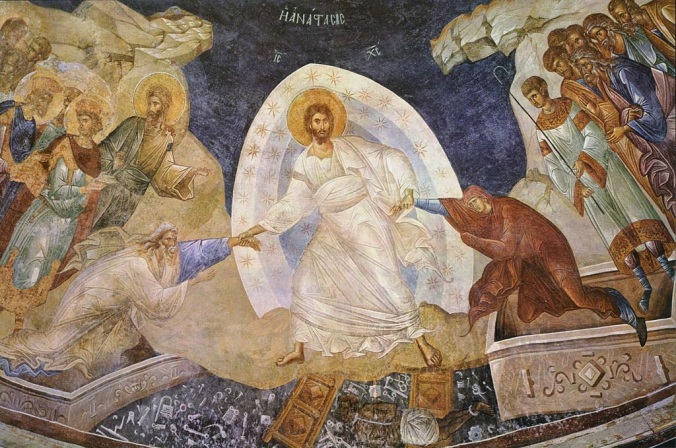
An Easter Homily ascribed to John Chrysostom [PG 59:721-4]

7a55c-anastasischora

ฮ•แผด ฯ„ฮนฯ‚ ฮตแฝฯƒฮตฮฒแฝดฯ‚ ฮบฮฑแฝถ ฯ†ฮนฮปฯŒฮธฮตฮฟฯ‚, แผ€ฯ€ฮฟฮปฮฑฯ…ฮญฯ„ฯ‰ ฯ„แฟ†ฯ‚ ฮบฮฑฮปแฟ†ฯ‚ ฯ„ฮฑฯฯ„ฮทฯ‚ ฯ€ฮฑฮฝฮทฮณฯฯฮตฯ‰ฯ‚· ฮตแผด ฯ„ฮนฯ‚ ฮดฮฟแฟฆฮปฮฟฯ‚ ฮตแฝฮณฮฝฯŽฮผฯ‰ฮฝ, ฮตแผฐฯƒฮตฮปฮธฮญฯ„ฯ‰ ฯ‡ฮฑฮฏฯฯ‰ฮฝ ฮตแผฐฯ‚ ฯ„แฝดฮฝ ฯ‡ฮฑฯแฝฐฮฝ ฯ„ฮฟแฟฆ ฮšฯ…ฯฮฏฮฟฯ… ฮฑแฝฯ„ฮฟแฟฆ· ฮตแผด ฯ„ฮนฯ‚ แผ”ฮบฮฑฮผฮตฮฝฮทฯƒฯ„ฮตฯฯ‰ฮฝ, แผ€ฯ€ฮฟฮปฮฑฮฒฮญฯ„ฯ‰ ฮฝแฟฆฮฝ ฯ„แฝธ ฮดฮทฮฝฮฌฯฮนฮฟฮฝ· ฮตแผด ฯ„ฮนฯ‚ แผ€ฯ€แฝธ ฯ€ฯฯŽฯ„ฮทฯ‚ แฝฅฯฮฑฯ‚ ฮตแผฐฯฮณฮฌฯƒฮฑฯ„ฮฟ, ฮดฮตฯ‡ฮญฯƒฮธฯ‰ ฯƒฮฎฮผฮตฯฮฟฮฝ ฯ„แฝธ ฮดฮฏฮบฮฑฮนฮฟฮฝ แฝ„ฯ†ฮปฮทฮผฮฑ· ฮตแผด ฯ„ฮนฯ‚ ฮผฮตฯ„แฝฐ ฯ„แฝดฮฝ ฯ„ฯฮฏฯ„ฮทฮฝ แผฆฮปฮธฮตฮฝ, ฮตแฝฯ‡ฮฑฯฮนฯƒฯ„แฟถฮฝ แผ‘ฮฟฯฯ„ฮฌฯƒแฟƒ· ฮตแผด ฯ„ฮนฯ‚ ฮผฮตฯ„แฝฐ ฯ„แฝดฮฝ แผ•ฮบฯ„ฮทฮฝ แผ”ฯ†ฮธฮฑฯƒฮต, ฮผฮทฮดแฝฒฮฝ แผ€ฮผฯ†ฮนฮฒฮฑฮปฮปฮญฯ„ฯ‰· ฮบฮฑแฝถ ฮณแฝฐฯ ฮฟแฝฮดแฝฒฮฝ ฮถฮทฮผฮนฮฟแฟฆฯ„ฮฑฮน· ฮตแผด ฯ„ฮนฯ‚ แฝ‘ฯƒฯ„ฮญฯฮทฯƒฮตฮฝ ฮตแผฐฯ‚ ฯ„แฝดฮฝ แผฮฝฮฝฮฌฯ„ฮทฮฝ, ฯ€ฯฮฟฯƒฮตฮปฮธฮญฯ„ฯ‰ ฮผฮทฮดแฝฒฮฝ แผฮฝฮดฮฟฮนฮฌฮถฯ‰ฮฝ· ฮตแผด ฯ„ฮนฯ‚ ฮตแผฐฯ‚ ฮผฯŒฮฝฮทฮฝ แผ”ฯ†ฮธฮฑฯƒฮต ฯ„แฝดฮฝ แผ‘ฮฝฮดฮตฮบฮฌฯ„ฮทฮฝ, ฮผแฝด ฯ†ฮฟฮฒฮทฮธแฟ‡ ฯ„แฝดฮฝ ฮฒฯฮฑฮดฯ…ฯ„แฟ†ฯ„ฮฑ. ฮฆฮนฮปฯŒฯ„ฮนฮผฮฟฯ‚ ฮณแฝฐฯ แฝขฮฝ แฝ ฮ”ฮตฯƒฯ€ฯŒฯ„ฮทฯ‚ ฮดฮญฯ‡ฮตฯ„ฮฑฮน ฯ„แฝธฮฝ แผ”ฯƒฯ‡ฮฑฯ„ฮฟฮฝ, ฮบฮฑฮธฮฌฯ€ฮตฯ ฮบฮฑแฝถ ฯ„แฝธฮฝ ฯ€ฯแฟถฯ„ฮฟฮฝ· แผ€ฮฝฮฑฯ€ฮฑฯฮตฮน ฯ„แฝธฮฝ ฯ„แฟ†ฯ‚ แผ‘ฮฝฮดฮตฮบฮฌฯ„ฮทฯ‚,แฝกฯ‚ ฯ„แฝธฮฝ แผฯฮณฮฑฯƒฮฌฮผฮตฮฝฮฟฮฝ แผ€ฯ€แฝธ ฯ„แฟ†ฯ‚ ฯ€ฯฯŽฯ„ฮทฯ‚· ฮบฮฑแฝถ ฯ„แฝธฮฝ แฝ•ฯƒฯ„ฮตฯฮฟฮฝ แผฮปฮตฮตแฟ–, ฮบฮฑแฝถ ฯ„แฝธฮฝ ฯ€ฯแฟถฯ„ฮฟฮฝ ฮธฮตฯฮฑฯ€ฮตฯฮตฮน· ฮบแผ€ฮบฮตฮฏฮฝแฟณ ฮดฮฏฮดฯ‰ฯƒฮน, ฮบฮฑแฝถ ฯ„ฮฟฯฯ„แฟณ ฯ‡ฮฑฯฮฏฮถฮตฯ„ฮฑฮน. ฮšฮฑแฝถ ฯ„แฝดฮฝ ฯ€ฯแพถฮพฮนฮฝ ฯ„ฮนฮผแพท, ฮบฮฑแฝถ ฯ„แฝดฮฝ ฯ€ฯฯŒฮธฮตฯƒฮนฮฝ แผฯ€ฮฑฮนฮฝฮตแฟ–. ฮŸแฝฮบฮฟแฟฆฮฝ ฮตแผฐฯƒฮญฮปฮธฮทฯ„ฮต ฯ€ฮฌฮฝฯ„ฮตฯ‚ ฮตแผฐฯ‚ ฯ„แฝดฮฝ ฯ‡ฮฑฯแฝฐฮฝ ฯ„ฮฟแฟฆ ฮšฯ…ฯฮฏฮฟฯ… แผกฮผแฟถฮฝ, ฮบฮฑแฝถ ฯ€ฯแฟถฯ„ฮฟฮน ฮบฮฑแฝถ ฮดฮตฯฯ„ฮตฯฮฟฮน ฯ„แฝธฮฝ ฮผฮนฯƒฮธแฝธฮฝ แผ€ฯ€ฮฟฮปฮฌฮฒฮตฯ„ฮต, ฯ€ฮปฮฟฯฯƒฮนฮฟฮน ฮบฮฑแฝถ ฯ€ฮญฮฝฮทฯ„ฮตฯ‚ ฮผฮตฯ„แฝฐ แผ€ฮปฮปฮฎฮปฯ‰ฮฝ ฯ‡ฮฟฯฮตฯฯƒฮฑฯ„ฮต, แผฮณฮบฯฮฑฯ„ฮตแฟ–ฯ‚ ฮบฮฑแฝถ แฟฅแพดฮธฯ…ฮผฮฟฮน ฯ„แฝดฮฝ แผกฮผฮญฯฮฑฮฝ ฯ„ฮนฮผฮฎฯƒฮฑฯ„ฮต, ฮฝฮทฯƒฯ„ฮตฯฯƒฮฑฮฝฯ„ฮตฯ‚ ฮบฮฑแฝถ ฮผแฝด ฮฝฮทฯƒฯ„ฮตฯฯƒฮฑฮฝฯ„ฮตฯ‚ ฮตแฝฯ†ฯฮฌฮฝฮธฮทฯ„ฮต ฯƒฮฎฮผฮตฯฮฟฮฝ. แผฉ ฯ„ฯฮฌฯ€ฮตฮถฮฑ ฮณฮญฮผฮตฮน, ฯ„ฯฯ…ฯ†ฮฎฯƒฮฑฯ„ฮต ฯ€ฮฌฮฝฯ„ฮตฯ‚· แฝ ฮผฯŒฯƒฯ‡ฮฟฯ‚ ฯ€ฮฟฮปแฝบฯ‚, ฮผฮทฮดฮตแฝถฯ‚ แผฮพฮญฮปฮธฮฟฮน ฯ€ฮตฮนฮฝแฟถฮฝ. ฮ ฮฌฮฝฯ„ฮตฯ‚ แผ€ฯ€ฮฟฮปฮฑฯฯƒฮฑฯ„ฮต ฯ„ฮฟแฟฆ ฯ€ฮปฮฟฯฯ„ฮฟฯ… ฯ„แฟ†ฯ‚ ฯ‡ฯฮทฯƒฯ„ฯŒฯ„ฮทฯ„ฮฟฯ‚. ฮœฮทฮดฮตแฝถฯ‚ ฮธฯฮทฮฝฮตฮฏฯ„ฯ‰ ฯ€ฮตฮฝฮฏฮฑฮฝ· แผฯ†ฮฌฮฝฮท ฮณแฝฐฯ แผก ฮบฮฟฮนฮฝแฝด ฮฒฮฑฯƒฮนฮปฮตฮฏฮฑ· ฮผฮทฮดฮตแฝถฯ‚ แฝ€ฮดฯ…ฯฮญฯƒฮธฯ‰ ฯ„แฝฐ ฯ€ฯ„ฮฑฮฏฯƒฮผฮฑฯ„ฮฑ· ฯƒฯ…ฮณฮณฮฝฯŽฮผฮท ฮณแฝฐฯ แผฮบ ฯ„ฮฟแฟฆ ฯ„ฮฌฯ†ฮฟฯ… แผ€ฮฝฮญฯ„ฮตฮนฮปฮต· ฮผฮทฮดฮตแฝถฯ‚ ฯ†ฮฟฮฒฮตฮฏฯƒฮธฯ‰ ฯ„แฝธฮฝ ฮธฮฌฮฝฮฑฯ„ฮฟฮฝ· แผ ฮปฮตฯ…ฮธฮญฯฯ‰ฯƒฮต ฮณแฝฐฯ แผกฮผแพถฯ‚ แฝ ฯ„ฮฟแฟฆ ฮฃฯ‰ฯ„แฟ†ฯฮฟฯ‚ ฮธฮฌฮฝฮฑฯ„ฮฟฯ‚· แผ”ฯƒฮฒฮตฯƒฮตฮฝ ฮฑแฝฯ„แฝธฮฝ แฝ‘ฯ€’ ฮฑแฝฯ„ฮฟแฟฆ ฮบฮฑฯ„ฮตฯ‡ฯŒฮผฮตฮฝฮฟฯ‚· แผฮบฯŒฮปฮฑฯƒฮต ฯ„แฝธฮฝ แพ…ฮดฮทฮฝ ฮบฮฑฯ„ฮตฮปฮธแฝผฮฝ ฮตแผฐฯ‚ ฯ„แฝธฮฝ แพ…ฮดฮทฮฝ· แผฯ€ฮฏฮบฯฮฑฮฝฮตฮฝ ฮฑแฝฯ„แฝธฮฝ ฮณฮตฯ…ฯƒฮฌฮผฮตฮฝฮฟฮฝ ฯ„แฟ†ฯ‚ ฯƒฮฑฯฮบแฝธฯ‚ ฮฑแฝฯ„ฮฟแฟฆ. ฮšฮฑแฝถ ฯ„ฮฟแฟฆฯ„ฮฟ ฯ€ฯฮฟฮปฮฑฮฒแฝผฮฝ แผฉฯƒฮฑฮฮฑฯ‚ แผฮฒฯŒฮทฯƒฮตฮฝ· แฝ‰ แพ…ฮดฮทฯ‚, ฯ†ฮทฯƒแฝถฮฝ, แผฯ€ฮนฮบฯฮฌฮฝฮธฮท. ฮฃฯ…ฮฝฮฑฮฝฯ„ฮฎฯƒฮฑฯ‚ ฯƒฮฟฮน ฮบฮฌฯ„ฯ‰ แผฯ€ฮนฮบฯฮฌฮฝฮธฮท· ฮบฮฑแฝถ ฮณแฝฐฯ ฮบฮฑฮธแฟƒฯฮญฮธฮท· แผฯ€ฮนฮบฯฮฌฮฝฮธฮท· ฮบฮฑแฝถ ฮณแฝฐฯ แผฮฝฮตฯ€ฮฑฮฏฯ‡ฮธฮท. แผœฮปฮฑฮฒฮต ฯƒแฟถฮผฮฑ, ฮบฮฑแฝถ ฮ˜ฮตแฟท ฯ€ฮตฯฮนฮญฯ„ฯ…ฯ‡ฮตฮฝ· แผ”ฮปฮฑฮฒฮต ฮณแฟ†ฮฝ, ฮบฮฑแฝถ ฯƒฯ…ฮฝฮฎฮฝฯ„ฮทฯƒฮตฮฝ ฮฟแฝฯฮฑฮฝแฟท· แผ”ฮปฮฑฮฒฮตฮฝ แฝ…ฯ€ฮตฯ แผ”ฮฒฮปฮตฯ€ฮต, ฮบฮฑแฝถ ฯ€ฮญฯ€ฯ„ฯ‰ฮบฮตฮฝ แฝ…ฮธฮตฮฝ ฮฟแฝฮบ แผ”ฮฒฮปฮตฯ€ฮต. ฮ ฮฟแฟฆ ฯƒฮฟฯ…, ฮธฮฌฮฝฮฑฯ„ฮต, ฯ„แฝธ ฮบฮญฮฝฯ„ฯฮฟฮฝ; ฯ€ฮฟแฟฆ ฯƒฮฟฯ…, แพ…ฮดฮท, ฯ„แฝธ ฮฝแฟ–ฮบฮฟฯ‚; แผˆฮฝฮญฯƒฯ„ฮท ฮงฯฮนฯƒฯ„แฝธฯ‚, ฮบฮฑแฝถ ฯƒแฝบ ฮบฮฑฯ„ฮฑฮฒฮญฮฒฮปฮทฯƒฮฑฮน· แผ€ฮฝฮญฯƒฯ„ฮท ฮงฯฮนฯƒฯ„แฝธฯ‚, ฮบฮฑแฝถ ฯ€ฮตฯ€ฯ„ฯŽฮบฮฑฯƒฮน ฮดฮฑฮฏฮผฮฟฮฝฮตฯ‚· แผ€ฮฝฮญฯƒฯ„ฮท ฮงฯฮนฯƒฯ„แฝธฯ‚, ฮบฮฑแฝถ ฯ‡ฮฑฮฏฯฮฟฯ…ฯƒฮนฮฝ แผ„ฮณฮณฮตฮปฮฟฮน· แผ€ฮฝฮญฯƒฯ„ฮท ฮงฯฮนฯƒฯ„แฝธฯ‚, ฮบฮฑแฝถ ฮฝฮตฮบฯแฝธฯ‚ ฮฟแฝฮดฮตแฝถฯ‚ แผฯ€แฝถ ฮผฮฝฮฎฮผฮฑฯ„ฮฟฯ‚. ฮงฯฮนฯƒฯ„แฝธฯ‚ ฮณแฝฐฯ แผฮณฮตฯฮธฮตแฝถฯ‚ แผฮบ ฮฝฮตฮบฯแฟถฮฝ, แผ€ฯ€ฮฑฯฯ‡แฝด ฯ„แฟถฮฝ ฮบฮตฮบฮฟฮนฮผฮทฮผฮญฮฝฯ‰ฮฝ แผฮณฮญฮฝฮตฯ„ฮฟ· ฮฑแฝฯ„แฟท แผก ฮดฯŒฮพฮฑ ฮบฮฑแฝถ ฯ„แฝธ ฮบฯฮฌฯ„ฮฟฯ‚ ฮตแผฐฯ‚ ฯ„ฮฟแฝบฯ‚ ฮฑแผฐแฟถฮฝฮฑฯ‚ ฯ„แฟถฮฝ ฮฑแผฐฯŽฮฝฯ‰ฮฝ. แผˆฮผฮฎฮฝ.  
If anyone is a devout lover of God, let them rejoice in this beautiful radiant feast. If anyone is a faithful servant, let them gladly enter into the joy of their Lord. If any are wearied with fasting, let them now reap their reward. If any have laboured since the ๏ฌrst hour, let them receive today their just reward. If any have come after the third hour, let them celebrate the feast with thankfulness. If any have arrived after the sixth hour, let them not doubt, for they will sustain no loss. If any have delayed until the ninth hour, let them not hesitate but draw near. If any have arrived at the eleventh hour, let them not fear their lateness. For the Master is gracious and welcomes the last no less than the ๏ฌrst. He gives rest to those who come at the eleventh hour just as kindly as those who have laboured since the ๏ฌrst hour. The ๏ฌrst he ๏ฌlls to over๏ฌ‚owing: on the last he has compassion. To the one he grants his favour, to the other pardon. He does not look only at the work: he looks into the intention of the heart. Enter then, all of you, into the joy of your Master. First and Last, receive alike your reward. Rich and poor dance together. You who have fasted and you who have not, rejoice today. The table is fully laden: let all enjoy it. The fatted calf is served: let no-one go away hungry. Come all of you, share in the banquet of faith: draw on the wealth of his mercy. Let no-one lament their poverty; for the universal kingdom has been revealed. Let no-one weep for their sins; for the light of the forgiveness has risen from the grave. Let no-one fear death; for the death of the Saviour has set us free. He has destroyed death by undergoing hell. He has despoiled hell by descending into hell. Hell was ๏ฌlled with bitterness when it tasted his ๏ฌ‚esh, as Isaiah foretold: ‘Hell was ๏ฌlled with bitterness when it met you face-to-face below’ – ๏ฌlled with bitterness, for it was brought to nothing; ๏ฌlled with bitterness, for it was mocked; ๏ฌlled with bitterness, for it was overthrown; ๏ฌlled with bitterness, for it was destroyed; ๏ฌlled with bitterness, for it was put in chains. It received a body, and encountered God. It received earth, and confronted heaven. It received what it saw, and was overpowered by what it did not see. O death, where is your sting? O hell, where is your victory? Christ is risen, and the demons are fallen. Christ is risen, and the angels rejoice. Christ is risen, and life reigns in freedom. Christ is risen, and the grave is emptied of the dead. For Christ being raised from the dead has become the ๏ฌrst-fruits of those who sleep. To him be glory and dominion to the ages of ages. Amen.

Wednesday, 16 November 2016

Augustine on the works of mercy

Two works of mercy set a man free: forgive and you will be forgiven, and give and you will receive.

When you pray we are all beggars before God: we stand before the great householder bowed down and weeping, hoping to be given something, and that something is God himself.

What does a poor man beg of you? Bread. What do you beg from God? – Christ, who said, ‘I am the living bread which came down from heaven’.

Do you you really want to be forgiven? Then forgive. Do you want to receive something? Then give to another. And if you want your prayer to fly up to God, give it two wings, fasting and almsgiving.

But look carefully at what you do: don’t think it is enough to fast if  it is only  a penance for sin, and does not benefit someone else. You deprive yourself of something, but to whom do you give what you do without?

Fast in such a way that you rejoice to see that dinner is eaten by another; not grumbling and looking gloomy, giving rather because the beggar wearies you than because you are feeding the hungry.

If you are sad when you give alms, you lose both bread and merit, because ‘God loves a cheerful giver’.

hyla-blue-largposter-copy


Monday, 14 November 2016

St Augustine on Ps. 19:9

The Pharisee

Shall a Christian go and live apart from the world, so that he may not be tried by false brethren? Shall he who has progressed in a righteous life separate himself so that he need not suffer from anyone? Perhaps people have suffered from before he was converted. Has no one anything to put up with from you? It would surprise me – but if it is so, then you are stronger and thus able to endure other people’s failings.

Do you propose to shut out bad men from good men’s company? if that is what you say, see if you can shut out all evil thoughts from your own heart. Every day we fight with out own heart.

You say you will go apart with a few good men and admit no wicked brother to your society. How do you recognise the man you wish to exclude? Do all come to you with their hearts bare? Those who wish to come do not know themselves, they cannot be proved unless they are tried.

Nowhere in this life are we secure, except in God’s promise – only when we have attained to it, when the gates of Jerusalem are shut behind us, shall we be perfectly safe.

Beloved, mark the apostle’s words: ‘Support one another in charity.’ You forsake the world of men and separate yourself from it. Whom will you profit? Would you have got so far if no one had profited you?

5445613926_49f4d3ed25_o-1


Sunday, 9 August 2015

'I am the Bread of Life' Trinity X (19th of Year B)


I was somewhat troubled when I first read this morning’s Gospel. I find it all too easy to moan about all sorts of things, it is a very human failing, one to which we all, from time to time, succumb. But it’s something which Our Lord tells us not to do, and so I pray that through God’s grace I may live a life which more closely imitates Jesus, and follows His commands. It reminds me of a passage in the sermons of St Augustine, Bishop of Hippo and Doctor of the Church: ‘“You all say, ‘The times are troubled, the times are hard, the times are wretched.’ Live good lives and you will change the times. By living good lives you will change the times and have nothing to grumble about.”’ (Sermo 311.8) It reminds us that the work of the Gospel is at one level up to us, the Body of Christ, His Church. We have to live our faith out in our lives (as fine words butter no parsnips) and we have to live the change we want to see in the world. Christianity is a way of life, a way mocked and scorned by the world around us, written off as irrelevant, and yet close to the God who loves us and saves us.
       In the Old Testament reading this morning we see the prophet Elijah being fed, we see God providing food which gives strength, strength for the journey. It prefigures the Eucharist, it looks forward to the reason why we are here today: to be fed by God. We can have the strength for our journey of faith, and the hope of eternal life.
       In the letter to the Ephesians we see that as children of God, loved by God, we are to imitate him, after the pattern of Christ, who offered himself, who was a sacrifice who has restored our relationship with God. It is this sacrifice, the sacrifice of Calvary, which has restored our relationship with God, which will be re-presented, made present here today, that you can touch and taste, that you can know how much God loves you; that you can be strengthened and given the hope of eternal life in Christ – that God’s grace can transform your human nature so that you come to share in the Divine Nature forever. Paul’s hope for the church in Ephesus should be ours to. This is how are supposed to live together as a Christian community, living in love, fed with love itself, here in the Eucharist, where we thank God for His love of us.
       In this morning’s Gospel we see Jews complaining, ‘how can he be from Heaven, from God, we know his Mum and Dad’. It is a difficult thing to understand, especially before Jesus suffers and dies, and rises again. It can be hard to understand who and what Jesus is. The Jews can see him only in purely human terms, they cannot see beyond this, the Messiah whom they long for is in their midst and they fail to recognise him. The notion of consuming human flesh and blood is so abhorrent to Jews that it would represent something sinful and polluting. Jesus’ answer is simple and challenging: stop complaining. We are to accept, we are not to moan, to complain, but instead to trust him who is the Way, the Truth, and the Life.
       Jesus is the Bread of Life, the true nourishment of our souls. It is through him that we can have life as Christians. He came down from heaven and became incarnate by the Holy Spirit of the Virgin Mary. He was born as a human being, and in him our human flesh has been raised to eternal life, to glory with God. Jesus speaks of the Eucharist, the sacrament of his body and blood as providing us with eternal life, of opening the way to heaven. So we come to be fed by God, to be fed with God, to have a pledge and foretaste of the joy of heaven, of eternal life with God, to experience true love in the source of love – the Triune God, Father, Son and Holy Spirit.
       We can have such a hope because Jesus gives himself, to suffer and die, and rose again, for love of us. It is this life of love and sacrifice which we are to imitate. Jesus gives himself to us for the life of the world – it is through being fed by him that the world can truly live. It is in experiencing God’s self-giving love that the world can find true meaning. Life in Christ is what true life means. Fed by him, strengthened by him, to imitate him and live out lives of self-giving love, to draw others closer to Christ so that the world may believe and give glory to God the Father, God the Son, and God the Holy Spirit, to whom be ascribed as is most right and just, all might, majesty, glory, dominion, and power, now and forever.

Sunday, 12 April 2015

Sermon for Evensong of the First Sunday after Easter

An old man said, ‘Joseph of Arimathea took the body of Jesus and placed it in a clean garment within a new tomb, which signi๏ฌes a new humanity. Therefore let each one strive attentively not to sin so that they do not mistreat the God who dwells within themselves and drive him away from their soul.’

It is a good thing that we have time at Easter to take in and make sense of what we have commemorated: Our Lord’s Passion, Death, & Resurrection. They are linked and form part of a larger whole of the history which stretches back through the Incarnation, of the Word made ๏ฌ‚esh for our sake, to the Creation of the World.
 In the 8th Chapter of the Acts of the Apostles we see the meeting of Philip and an Ethiopian eunuch, who is reading the very passage which we have just heard  as our first lesson this evening– the Suffering Servant. Philip asks him if he can understand what he is reading. He replies that he cannot, unless someone shows him the way. ‘Then Philip opened his mouth, and beginning with this Scripture he told him the good news about Jesus.’ (Acts 8:35 ESV). Isaiah’s prophesy is fulfilled in Jesus and this is the proclamation of the Church: we proclaim Jesus Christ and him crucified.
We read scripture so that we can understand it, and see in its words how it discloses the truth of the Word made flesh, who suffered and died for our sake. Isaiah prophesies Our Lord’s Passion and Death, it, like the rest of Scripture points to Christ and finds its true meaning in Him, and thus it makes sense, it can be understood, and the more we come to understand, the more we come to know just how much God loves us.
Thus for Paul in the Letter to the Romans he needs to show them how Abraham, the father of our faith is rewarded by God not through his observance of the Law, as the Pharisees would argue,  but rather by the obedience of his faith in God which can lead to his righteousness.
As Christians we believe that we are saved by grace through faith – by grace, by the unmerited free gift of God who gives his own Son to be born, to suffer and die and to rise again for us, so that we might have life in Him, through our faith, through believing in the God who does this.  We can put our trust in a God who loves us, who dies this for us, to heal us and restore us, and thus we can have new life and eternal life in Him. It is unmerited: we do not deserve it, but it is a free gift rather than a reward, something earned.
In Christ the promise made to Abraham comes true in that through the proclamation of the Gospel, the Good News of Jesus Christ to the whole world Abraham can become the father of many nations, the word for the non-Jewish peoples of the world – he becomes a spiritual parent to Christians because of Abraham’s faith in God, he trusts God, even to the point of being ready to sacrifice his only son, which itself points to Christ, who as the Lamb of God who takes  away the sins  of the world is a type of the lamb caught in the thicket at Bethel. Abraham trusts in God, puts his faith in Him, and is rewarded for that faith. We put our faith in Him, and are fed by Him, fed with Him, so that we may share in his Divine life, strengthened and nourished by God, so that his grace may perfect our nature.
Thus we are to follow Abraham’s example and put our faith in the God who loves us and saves us by His Son, who suffered and died and rose again for our sake. It’s all about faith: faith in Jesus Christ, who died and rose again for us, who was delivered up for our sins and raised for our justification, this is what we believe, we have to be like Philip and share it with others, so that they too may believe and give glory to God the Father, God the Son, and God the Holy Spirit, to whom ….


Saturday, 4 April 2015

A Thought for Holy Saturday

ฮคแฟท แผฮณฮฏแฟณ ฮบฮฑแฝถ ฮผฮตฮณฮฌฮปแฟณ ฮฃฮฑฮฒฮฒฮฌฯ„แฟณ.

ฮคฮฏ ฯ„ฮฟแฟฆฯ„ฮฟ; ฯƒฮฎฮผฮตฯฮฟฮฝ ฯƒฮนฮณแฝด ฯ€ฮฟฮปฮปแฝด แผฮฝ ฯ„แฟ‡ ฮณแฟ‡· ฯƒฮนฮณแฝด ฯ€ฮฟฮปฮปแฝด ฮบฮฑแฝถ แผ ฯฮตฮผฮฏฮฑ ฮปฮฟฮนฯ€ฯŒฮฝ· ฯƒฮนฮณแฝด ฯ€ฮฟฮปฮปแฝด, แฝ…ฯ„ฮน แฝ ฮ’ฮฑฯƒฮนฮปฮตแฝบฯ‚ แฝ‘ฯ€ฮฝฮฟแฟ–· ฮณแฟ† แผฯ†ฮฟฮฒฮฎฮธฮท ฮบฮฑแฝถ แผกฯƒฯฯ‡ฮฑฯƒฮตฮฝ, แฝ…ฯ„ฮน แฝ ฮ˜ฮตแฝธฯ‚ ฯƒฮฑฯฮบแฝถ แฝ•ฯ€ฮฝฯ‰ฯƒฮต, ฮบฮฑแฝถ ฯ„ฮฟแฝบฯ‚ แผ€ฯ€' ฮฑแผฐแฟถฮฝฮฟฯ‚ แฝ‘ฯ€ฮฝฮฟแฟฆฮฝฯ„ฮฑฯ‚ แผ€ฮฝฮญฯƒฯ„ฮทฯƒฮตฮฝ. แฝ‰ ฮ˜ฮตแฝธฯ‚ แผฮฝ ฯƒฮฑฯฮบแฝถ ฯ„ฮญฮธฮฝฮทฮบฮต, ฮบฮฑแฝถ แฝ แพ…ฮดฮทฯ‚ แผฯ„ฯฯŒฮผฮฑฮพฮตฮฝ. แฝ‰ ฮ˜ฮตแฝธฯ‚ ฯ€ฯแฝธฯ‚ ฮฒฯฮฑฯ‡แฝบ แฝ•ฯ€ฮฝฯ‰ฯƒฮต, ฮบฮฑแฝถ ฯ„ฮฟแฝบฯ‚ แผฮฝ ฯ„แฟท แพ…ฮดแฟƒ แผฮพฮฎฮณฮตฮนฯฮต.

The Lord's descent into the underworld
Something strange is happening – there is a great silence on earth today, a great silence and stillness. The whole earth keeps silence because the King is asleep. The earth trembled and is still because God has fallen asleep in the flesh and he has raised up all who have slept ever since the world began. God has died in the flesh and hell trembles with fear.


Monday, 12 January 2015

A thought for the day from St Athanasius

Like many people I have found the images in CharlieHebdo which mock religion, and in particular Christianity, somewhat difficult and troubling. The following words of St Athanasius are, however, both a help and a comfort:

Come now, blessed one and true lover of Christ, let us, with the faith of our religion relate things concerning the Incarnation of the Word and expound his divine manifestation to us which the Jews slander and the Greeks mock, but which we ourselves venerate, so that all the more from his apparent degradation, you may have even greater and fuller piety towards him, for the more he is mocked by unbelievers by so much he provides a greater witness of his divinity, because what human beings cannot understand as impossible, these he shows to be possible (cf. Mt 19:26), and what human beings mock as unseemly, these he renders fitting by his own goodness,  and what human beings through sophistry laugh at as merely human,  these by his power he shows to be divine, overturning the illusion of idols by his own apparent degradation through the cross,  invisibly persuading those who mock and disbelieve to recognise his divinity and his power.

Athanasius de Incarnatione Dei Verbi 1
tr. J. Behr (St Vladimir's Seminary Press : 2011)

Saturday, 2 August 2014

The Multiplication of the Loaves

Picture the scene: Jesus has just been told that his cousin, John the Baptist, has been put in prison and killed, he himself has just been to Nazareth, where he was rejected, by the very people who should have accepted him. The atmosphere is tense, is he safe, will he too be arrested and killed? It is not for nothing that this morning’s Gospel passage begins with Jesus withdrawing to the desert – to be alone, to pray, to be close to God.
          When the people hear where he has gone they follow him, they walk out from the towns into the desert, they can’t just cross the lake, they want to see him, and to hear him teach them. When he gets out of the boat he sees a great mass of people and he has compassion on them, he is moved by the sight of them, and their need. He heals the sick to show that the Kingdom of God is a place of healing, where humanity can be restored through an encounter with the divine. His actions as well as his words proclaim the power of God to heal and restore humanity. Despite the danger, his concern is for others.
          It is getting late, the sun is fast moving towards the West, and the disciples tell him to send the crowds away so that they can buy food, instead Jesus says that they do not need to go away, and tells the disciples to give them something to eat. The disciples obey him, but cannot see how five loaves and two fish can possibly feed the thousands of people who are out there to be close to Jesus.
          The five loaves are the five books of Moses, the Pentateuch, Genesis, Exodus, Leviticus, Numbers, Deuteronomy, the Books of the Law, the Torah, which show Israel how to live, and how to love God. The two fish are the Law and the Prophets, so that man shall not live by bread alone, but by every word that proceeds from the mouth of God. The law and the Prophets point to Jesus, the Word made flesh: they find their fulfilment and true meaning in Him. The hopes of Israel, for the future, for a Messiah, are fulfilled in Him. Just like Israel after crossing the Red Sea here the People of God are fed by God in the desert. There is so much food left over at the end that there is enough to fill twelve baskets, one for each of the disciples. What in human terms – five loaves and two fish – isn’t enough, is more than sufficient in divine terms, just like at the Wedding feast in Cana, here we see that the Kingdom of God is a place of joy and abundance, of generosity, which isn’t concerned with scrimping or with the ‘good enough’, it is a place of lavish excess. This is what the church is supposed to be like – this is meant to be the model for our lives as Christians.
          The multiplication of the loaves is then not some conjuring trick, meant to amaze us, or to show us how powerful God is, but a sign of God’s generous love for humanity – it is what God does for us, so that we can respond to it in a profound and radical way and thereby change the world. Jesus has been rejected by the people of Nazareth and he responds by feeding people until they are satisfied, they’ve had enough, and there’s still loads left over. Likewise God’s love and mercy are inexhaustible, and are shown to the world, and poured out upon the world in Jesus Christ and in his death upon the Cross for our salvation. 
ฮบฮฑแฝถ ฮบฮฑฮธแฝผฯ‚ ฮœฯ‰ฯ‹ฯƒแฟ†ฯ‚ แฝ•ฯˆฯ‰ฯƒฮตฮฝ ฯ„แฝธฮฝ แฝ„ฯ†ฮนฮฝ แผฮฝ ฯ„แฟ‡ แผฯฮฎฮผแฟณ, ฮฟแฝ•ฯ„ฯ‰ฯ‚ แฝ‘ฯˆฯ‰ฮธแฟ†ฮฝฮฑฮน ฮดฮตแฟ– ฯ„แฝธฮฝ ฯ…แผฑแฝธฮฝ ฯ„ฮฟแฟฆ แผ€ฮฝฮธฯฯŽฯ€ฮฟฯ…, แผตฮฝฮฑ ฯ€แพถฯ‚ แฝ ฯ€ฮนฯƒฯ„ฮตฯฯ‰ฮฝ แผฮฝ ฮฑแฝฯ„แฟท แผ”ฯ‡แฟƒ ฮถฯ‰แฝดฮฝ ฮฑแผฐฯŽฮฝฮนฮฟฮฝ.
ฮŸแฝ•ฯ„ฯ‰ฯ‚ ฮณแฝฐฯ แผ ฮณฮฌฯ€ฮทฯƒฮตฮฝ แฝ ฮธฮตแฝธฯ‚ ฯ„แฝธฮฝ ฮบฯŒฯƒฮผฮฟฮฝ แฝฅฯƒฯ„ฮต ฯ„แฝธฮฝ ฯ…แผฑแฝธฮฝ ฯ„แฝธฮฝ ฮผฮฟฮฝฮฟฮณฮตฮฝแฟ† แผ”ฮดฯ‰ฮบฮตฮฝ, แผตฮฝฮฑ ฯ€แพถฯ‚ แฝ ฯ€ฮนฯƒฯ„ฮตฯฯ‰ฮฝ ฮตแผฐฯ‚ ฮฑแฝฯ„แฝธฮฝ ฮผแฝด แผ€ฯ€ฯŒฮปฮทฯ„ฮฑฮน แผ€ฮปฮปแฝฐ แผ”ฯ‡แฟƒ ฮถฯ‰แฝดฮฝ ฮฑแผฐฯŽฮฝฮนฮฟฮฝ. ฮฟแฝ ฮณแฝฐฯ แผ€ฯ€ฮญฯƒฯ„ฮตฮนฮปฮตฮฝ แฝ ฮธฮตแฝธฯ‚ ฯ„แฝธฮฝ ฯ…แผฑแฝธฮฝ ฮตแผฐฯ‚ ฯ„แฝธฮฝ ฮบฯŒฯƒฮผฮฟฮฝ แผตฮฝฮฑ ฮบฯฮฏฮฝแฟƒ ฯ„แฝธฮฝ ฮบฯŒฯƒฮผฮฟฮฝ, แผ€ฮปฮป’ แผตฮฝฮฑ ฯƒฯ‰ฮธแฟ‡ แฝ ฮบฯŒฯƒฮผฮฟฯ‚ ฮดฮน’ ฮฑแฝฯ„ฮฟแฟฆ.
And as Moses lifted up the serpent in the wilderness, so must the Son of Man be lifted up, that whoever believes in him may have eternal life.
For God so loved the world, that he gave his only Son, that whoever believes in him should not perish but have eternal life. For God did not send his Son into the world to condemn the world, but in order that the world might be saved through him.
Jn 3:14-17
It is this self same sacrifice which Jesus, on the night before he died told his disciples to carry on doing in remembrance of him, so that the Church could continue to be fed by him and fed with him, as a sign of his love for us, so that we might have life and forgiveness in him. This then is our soul’s true food, our foretaste of heaven, our pledge of future glory, given to us so that we might have life in Him and have it to the full.
          Let us come to be fed with the living bread, the bread which came down from heaven, so that it may feed our souls, so that we can be healed and restored by him. Let us be moved by the lavish generosity of God, and encouraged to live it out in our lives, in our thoughts, our words, and our actions, so that all that we are, all that we say or think or do, will proclaim the truth of God’s saving love to the world, so that it too may enter into the joy of the Lord and come to the banquet of the Kingdom, where all are welcomed, and healed.
          The invitation is there, and as the baptised, those who are in Christ, we are to welcome others. God takes us, like the bread and the fish, and blesses us, so that we can can fulfil his will in our lives. Filled with his grace, we encourage others to share in it, so that they may believe and give glory to God the Father, God the Son, and God the Holy Spirit, to who whom be ascribed as is most right and just, all might, majesty, glory, dominion and power, now and forever.