Showing posts with label Sacrifice. Show all posts

Saturday, 6 March 2021

Lent III: The Cleansing of the Temple

It is hard for us to imagine just how important the Temple in Jerusalem was. It was, quite literally, the centre of the world, the most important place on earth. At its centre was the Holy of Holies which contained the Ark of the Covenant. Inside the Ark were the two tablets containing the Ten Commandments, some of the manna from the desert, and Aaron’s staff. That is why, to this day, Jews continue to pray at the Western Wall in Jerusalem. This is all that remains of the Temple after its destruction by the Romans in ad 70. At the time of Jesus, Passover was the busiest time of year in Jerusalem. As the central festival of Judaism, Passover marks the journey from slavery in Egypt to the freedom of the Promised Land, Israel. Likewise, for Christians it is the time when we celebrate our freedom from the slavery of sin through the Death and Resurrection of Jesus Christ.

In our first reading this morning from the Book of Exodus, God gives the law to Moses on Mount Sinai in the desert. It describes both how to honour God, and how humanity should live. Our duty towards God and our neighbour is clearly shown. When Moses receives the Ten Commandments from God, the first is:

‘I am the Lord your God, who brought you out of the land of Egypt, out of the house of slavery; you shall have no other gods before me.’ (Exod 20:2-3)

The temple traders, in their desire to profit from people’s religious observance, have broken this first and most important commandment. Their desire for making money and profit has got in the way of what the Temple is supposed to be about: namely, worshipping God. It has become a racket, a money-making scheme to fleece pilgrims who have come from far away and who do not have the right money or the correct sacrificial animals with them. This is no way to worship God, a God who loves us, and who showed that love by delivering Israel from slavery in Egypt, and who will deliver humanity by His Son.

Jesus is angry when He sees this and drives out both the money-changers and the sellers of sacrificial animals. Those who sell sheep, oxen, and pigeons, represent the status quo, a sacrificial system where animals and their blood are used to honour God. Jesus has come to do away with this system by offering Himself, as the true sacrifice. When John the Baptist first sees Jesus in John’s Gospel, he says:

“Behold, the Lamb of God, who takes away the sin of the world!.” (Jn 1:29)

Jesus is the true Lamb, foreshadowed in the story of Abraham and Isaac. He will be the true Passover sacrifice, as He will be crucified and die at the time when the Passover lambs are being slaughtered in the Temple. This is a sacrifice which will not need to be repeated, as Jesus will die once, for the sins of the whole world. 

The Jews ask Jesus, 

“What sign do you show us for doing these things?” (Jn 2:18)

Jesus makes a cryptic reply:

“Destroy this temple, and in three days I will raise it up.” (Jn 2:19)

His audience cannot understand what Jesus means. It took almost fifty years to build the Temple. The idea of destroying it and rebuilding it in three days is crazy. However, Jesus is talking about His own Death and Resurrection. His Body is the true Temple, the True Sacrifice, and He is both Priest and Victim. God will, in the person of His Son, bring about true worship. Likewise, the Temple is supposed to be a house of prayer for all the nations (Isaiah 56:7 & Mark 11:7), but the Court of the Gentiles has been filled with stalls for money-changers and animal-sellers. By clearing them out Jesus has made room for the old Temple to be used for prayer, while prophesying that a newer, greater Temple is here, in Him.

The Jews demand a sign, and Christ prophesies that if they destroy this temple then he will raise it up in three days. He looks to His death and resurrection to show them where true worship lies — in the person of Jesus Christ. Jesus said, ‘I have come not to abolish the law and the prophets but to fulfil them’ (Matthew 5:17). The Ten Commandments are not abolished by Christ, or set aside, but rather His proclamation of the Kingdom and Repentance show us that we still need to live the Law of Moses out in our lives: to show that we honour God and live our lives accordingly. In His cleansing of the Temple, Christ looks to the Cross and to the Resurrection, as the way that God will restore our relationship with Him. The Cross is a stumbling-block to Jews, who are obsessed with the worship of the Temple, and it is foolishness to Gentiles who cannot believe that God could display such weakness, such powerlessness. Instead the Cross, the supreme demonstration of God’s love for us, shocking and scandalous though it is, is a demonstration of the utter, complete, self-giving love of God. Here, love and mercy are offered to heal each and every one of us. Here we are restored. 

It is a shock to learn that God loves us enough to do this, to suffer dreadfully and die for us, to save us from our sins. We do not deserve this, and that is the point. Through Christ we are offered the opportunity to become something other and greater than we are. By putting away the ways of the world, of power and money, selfishness and sin, we can have new life in and through Him.

Lent is the opportunity for a spiritual spring clean. It is a time to ask God to drive out all that should not be there, and for preparing for the joy of Easter. In our baptism we died with Christ and were raised to new life in the Spirit. Let us prepare to live that life, holding fast to Our Lord and Saviour, clinging to the teachings of his body, the Church. Let us turn away from the folly of this world with all its hot air, and focus on the true and everlasting joy of heaven, which awaits us. Let us proclaim God’s love in our lives, so that others may believe, and that all may praise the Father, the Son and the Holy Spirit. To whom be ascribed, as is most right and just, all might, majesty, glory, dominion, and power, now and forever. Amen.

El Greco: The Purification of the Temple

Saturday, 29 February 2020

The Church has entered the season of Lent, and she goes, with her Lord, into the desert for forty days, to pray, to turn away from sin, to turn back to God, to fast, to be generous in almsgiving. We do this to prepare to celebrate Jesus’ passion, Death and Resurrection in Holy Week and Easter. We get ready to celebrate the holiest week of the Church’s year by having something of a spiritual spring clean. This is a very good thing indeed. We need to do it, so that we can be reminded where we need to put some work in.

Our first reading this morning take us right back to the start of the problem of human sin: Adam & Eve in the Garden of Eden. They are tempted by the serpent to do what God has told them not to do. Thinking that you know better than God, and choosing to do what you want to do is where the sin of pride comes from. Adam and Eve prefer to trust the serpent, who promises that they will become like God. They are disobedient: they do not listen to what God says, and act in accordance with it. But rather than knowing good and evil, all they know is that they are naked, and cover their nakedness. The serpent makes empty promises, and they are taken in by them. Such is the power of lies. 

But while we have heard how sin and death came into the world, we also hear in our second reading from Paul’s Letter to the Romans how disobedience is countered by the obedience of Jesus Christ. It is obedience which will see Our Lord die on the Cross for us. Christ will bear the burden of our sin, to pay the debt which we cannot. This is what we are preparing to celebrate: one act of righteousness which ‘leads to justification and life for all men’ (Rom 5:18 ESV). To be justified is to be declared righteous in the sight of God. We are guilty, yet God declares us innocent. We deserve punishment, and yet are rewarded. It is remarkable. Such is God’s love for us that our slate is wiped clean. Each and every one of us deserves to be cast aside, for our sins, like those of Adam & Eve separate us from God and each other. Yet God did not leave us in slavery to sin, but sent His Son, so that we might have life in and through Him. This is the Good News of the Gospel. 

In the Gospel this morning we see Jesus at a crucial point, between His Baptism and the calling of the first disciples: Peter and Andrew, James and John. Christ goes into the desert for forty days, to be alone, to pray and to fast, and the church keen to imitate our Saviour likewise goes into the desert so that we may grow closer to God, that we may be purged and prepared to celebrate the mystery of the Lord’s Passion, Death, and Resurrection. 

Jesus is led by the Holy Spirit into the wilderness, a place traditionally associated with the prophets and with encounter with God. After fasting for forty days and forty nights He is hungry. This is no surprise at all. He has been fasting for forty days, Our Lord is starving – he is fully human not some superhero who is immune to human feelings and needs. So the devil tempts Him by saying, ‘If you are the Son of God, command these stones to become loaves of bread.’ (Mt 4:3 ESV). The temptation works on several levels. By doubting that Jesus is God and asking Him to prove it the devil is continuing to mock the God he refuses to serve. It is a temptation to be relevant: Jesus is hungry and needs to eat, but is being tempted to use the creative power of God simply to serve an appetite. The world tempts us to be relevant, and to conform ourselves to it, rather than let the world be conformed to the will of God. Jesus’ reply to the devil, that man does not live by bread alone but by every word which proceeds from the mouth of God, reminds us that as Christians we are fed by Word and Sacrament, nourished by God so that we may grow in faith, and hope, and love. 

Christ is taken to the pinnacle of the Temple in Jerusalem and told to throw Himself down. This is the temptation to be spectacular, to do something for show, again something which the contemporary church seems rather keen on. But nothing should be done for show; we are called to follow Christ simply and humbly, trusting in Him. The devil wants to put God to the test, it is an act of disobedience, contrary to the humble obedience which sees us live trusting in God, relying upon Him, formed by Him.

Christ is finally tempted to turn away from God the Father, to worship a false god. He is offered much in material terms –- all the world and its splendour -– wealth and power –- a huge temptation for humanity, and one into which many people give. The Church too has given in, and continues so to do. We have to be weak, powerless and vulnerable, utterly reliant upon God so that God can be at work in us, as we humbly worship and serve Him. It may look foolish in worldly terms, but that is the point –- we are not meant to be conformed to the world, but as we seek to grow in faith, in humility, and obedience, we allow God to be at work in us –- taking us and transforming us into His likeness.

The temptation to worship a false God: money, power, or success is always there, and many in the church give in to feelings of ambition, and if they are not ‘successful’ end up bitter, cynical, and miserable. But success is itself empty, popular favour can disappear like a puff of smoke. It is fleeting, it does not last. Whereas in Christ we are offered something that will last: eternal life with God in heaven. 

So as we undertake to follow Christ in our Lenten pilgrimage we do so in our weakness, so that we may rely upon God, and Him alone. We do so joyfully, knowing that Christ’s victory which we will celebrate at Easter is total and complete – it is justification and life for all.

Let us pray that we may receive grace to follow Christ so that we may prepare to celebrate His Death and Resurrection and sing the praises of God the Father, God the Son, and God the Holy Spirit, to whom be ascribed as is most right and just, all might, majesty, glory, dominion, and power, now and forever. Amen.

00.159.51

Saturday, 1 February 2020

The Presentation of Christ in the Temple

Once upon a time it was not uncommon to hear of the Churching of Women, sometimes called Thanksgiving after Childbirth, as it was a dangerous and risky business. We are perhaps now not quite so used to ideas of ritual purity inherent in the Thanksgiving for a woman after Childbirth, or her re-admission into society after a period of confinement. But the Law of Moses required that forty days after giving birth the mother was purified in a mikvah, a ritual bath. The law also required that her son, as a first-born male, was presented to the Lord, and sacrifices were made. Today the Church celebrates the Presentation of Christ in the Temple, also known as the Purification of the Blessed Virgin Mary, and commonly called Candlemas. The name is derived from the ceremonies which saw the candles for the coming year blessed at this service, so that they may burn as lights which proclaim Christ, the true Light, the light to lighten the Gentiles. They are different titles, but one feast, which make us think about who and what Jesus Christ is, and what he does.

This feast then is the fulfilment of the prophecy spoken by Malachi in our first reading, which also looks to our purification in and through the death of Christ and His atoning sacrifice of Himself, which will be be re-presented here, made present so that we can share in it, so that we can be healed and restored by the very Body and Blood of Our Lord and Saviour Jesus Christ. As the Letter to the Hebrews puts it:

‘Therefore he had to become like his brothers and sisters in every respect, so that he might be a merciful and faithful high priest in the service of God, to make a sacrifice of atonement for the sins of the people. Because he himself was tested by what he suffered, he is able to help those who are being tested.’ 

It is hard to see how it could be any clearer. Just as Abraham was willing to sacrifice Isaac on Mt Moriah, so now God will gladly give His only Son, Jesus Christ, on the altar of the Cross, to restore our relationship with Him.

The Holy Family go to the Temple to give thanks to God and to comply with the Law, just as they had in circumcising their baby on the eighth day: and in so doing they demonstrate obedience, they listen to what God says and do it and as such they are a model for all Christian families to follow — we need to be like them, listening to what God tells us and doing it, regardless of the cost.

When the Holy Family go to the Temple they encounter Simeon, a man of faith and holiness. A man devoted to God, who is looking for the consolation of Israel. He knows that he will not die until he sees the Messiah, the Lord’s Anointed, and the Saviour of the World. As he takes the child Jesus in his arms he prays: ‘Lord, now lettest thou thy servant depart in peace : according to thy word. For mine eyes have seen : thy salvation, Which thou hast prepared : before the face of all people; To be a light to lighten the Gentiles : and to be the glory of thy people Israel.’

The promise made to him by God, revealed through the Holy Spirit, has been fulfilled in the six-week-old infant in his arms. Simeon can prepare to meet his God happy in the knowledge that Salvation has dawned in this little child. As Christ was made manifest to the Gentiles at Epiphany, so now His saving message is proclaimed, so that the world may know that its salvation has come in the person of Jesus Christ. Simeon speaks to the Blessed Virgin Mary of her Son’s future, and the pain she will endure at the foot of the Cross. Before he dies Simeon is looking to the Cross, the means by which our salvation is wrought, the Cross at which Mary will stand to see humanity freed from its sin through the love and mercy of God, through grace, the free gift of God in Christ. So as Candlemas concludes our celebration of Christmas, and the mystery of the Incarnation, so to it points to that which gives it its true meaning: the Death and Resurrection of Jesus Christ. Candlemas prepares for the coming season of Lent by changing our focus and attention from Jesus’ birth to His death, for our sins.

That is why we are here this morning, to be fed by Christ, to be fed with Christ, truly present in His Body and Blood, Soul and Divinity. A God whom we can touch and taste. A God who shares His Divine Life with us, so that we can be transformed by Him, built up as living stones as a temple to His Glory, and given a foretaste of Heaven here on Earth. This is our soul’s true food, the bread for the journey of faith, which sets us free to live for Him, to live with Him, through Him and in Him.

The significance of what is happening is not just recognised by Simeon, but also by Anna, a holy woman, a woman of prayer, a woman who is close to God, she recognises what God is doing in Christ, and she proclaims it, so that God’s redemption of His people may be known. Let us be like her, and let all of our lives, everything which we say, or think, or do, proclaim the saving truth of God’s love to the world.

And finally the Holy Family go back to Nazareth, and Jesus begins to grow up, in the favour of God, obedient to God and His parents in the Gospel we see all of human life: birth, death, work, normality hallowed by the God who loves us, who gives His Son for us. God shares our human life, as He will share our death, to restore us, to heal us,

So let us burn, like the candles which God has blessed, let our faith be active to give light and warmth and hope to the world, so that it may feel that love and warmth, and come to believe and give glory to God the Father, God the Son, and God the Holy Spirit, to whom be ascribed as is most right and just all might, majesty, glory, dominion, and power, now and forever, Amen.

Giotto_di_Bondone_-_No._19_Scenes_from_the_Life_of_Christ_-_3._Presentation_of_Christ_at_the_Temple_-_WGA09197.jpg

Sunday, 19 January 2020

2nd Sunday of Year A – ‘Behold the Lamb of God!’

John the Baptist looked at Jesus as he walked by and said, ‘Behold the Lamb of God!’ Lambs were a central part of the Jewish festival of Passover. In order to avert the tenth plague in Egypt, the people of Israel were instructed to take a young lamb without any blemish and slaughter it. They were then to anoint the doorposts of their house with it, so that their firstborn would be saved, not killed by the Angel of Death. The lamb was to be roasted over the fire and eaten standing up whilst dressed for a journey. This festival of Passover is the high point of the Jewish religious calendar, and marks the start of their journey from slavery in Egypt to the Promised Land of Israel. It is also the time of Jesus’ Passion, Death, and Resurrection.

In order to meet the needs the large number of people celebrating the passover festival in the early 1st century AD, there needed to be a lot of shepherds raising flocks of animals for slaughter. In the Christmas story we see that the first visitors to the Holy Family in Bethlehem were shepherds. As Bethlehem is only six miles from Jerusalem, these shepherds were raising the lambs that would be consumed at Passover in nearby Jerusalem in their thousands. Jesus, like these lambs was also without blemish and would be killed at Passover. So from the very moment of Christ’s birth, His Death is foreshadowed. 

Traditionally Jesus’ death is understood to have happened at the ninth hour, 3pm, which is the same time that the passover lambs began to be slaughtered in the Temple in Jerusalem for the feast of Passover. This is not mere coincidence, but rather signal proof that Christ’s death is sacrificial, and represents the new Passover, and the freedom of the people of God. In this morning’s Gospel Jesus’s cousin, John the Baptist, greets Him, saying, ‘Behold the Lamb of God, who takes away the sins of the world’. John understands that Jesus is the passover Lamb.

The image of a lamb brings to mind a passage in the prophet Isaiah, where the Suffering Servant is compared to, ‘a lamb that is led to the slaughter, and like a sheep that before its shearers is dumb’ (Isa 53:7). This prophecy will be fulfilled in Holy Week on Good Friday. Here, at the start of John’s Gospel, just after the Baptism of Jesus in the Jordan, when John the Baptist saw the Spirit descend on Him, (before the first sign of turning water into wine at the marriage of Cana), John’s description of Jesus is a prophetic utterance which points forward to Jesus’ death on the Cross. So then, from the very start of Our lord’s life, as with the gift of myrrh at Bethlehem, the beginning points to the end: to Calvary (and beyond). 

In Genesis, we read of Abraham’s sacrifice of Isaac, who is saved when at the last moment a ram appears in a thorn bush. Isaac carrying wood for the sacrificial fire, prefigures Christ carrying the wood of the Cross. The ram in the thorns foreshadows Christ, the Lamb of God, crowned with thorns. Mt Moriah, where these events take place, is the mountain on which Jerusalem was built, and whose highest point is Golgotha, which is where Our Lord was crucified. The old foretells the new, and is completed by it.Prophecy is fulfilled. In Christ, God is glorified, and of Him the prophet Isaiah says, ‘I will make you as a light for the nations, that my salvation may reach to the end of the earth’ (Isa 49:5 ESV). 

In the Eucharist, just before we receive Communion I will repeat the words of John the Baptist, ‘Behold the Lamb of God…’ so that we may recognise Christ in our midst; we respond with the words of the Centurion, in Luke 7:6-7, ’Lord I am not worthy…’ It is this sense of unworthiness which keeps us both humble and reliant upon God to transform us. We hear John the Baptist’s words so that we may join in his confession that this is the Son of God. Christ is truly present in the Eucharist in a way which we cannot understand, which words and language cannot express, because that is how God is. As a result of the Word becoming flesh and dwelling amongst us, God incarnate makes himself known so that we might worship God, and that God might be at work in us. Unlike the sacrifices of Passover and the Day of Atonement which needed to be repeated annually, the Sacrifice of Christ on the Cross happens once, to deal with all sin, past, present, and future, to reconcile humanity to God and to each other. It is this reality which we celebrate today: we have been set free. 

This is the Good News of the Kingdom. We are loved by God, who flings His arms wide on the Cross to embrace the world with love. A God who embraces the shame of a slave’s death, the most brutal demonstration of Roman power, the most degrading way to die, to show the world love. It isn’t what you’d expect, and that’s the point. God does not want to compel us to love Him or worship Him, but rather makes a relationship possible, so that we might come to know Him, and love Him. As we approach the altar, this is what we are to receive, the Body and Blood of Christ, the self same body and blood which were nailed to the Cross for our sins and the sins of the whole world. Our hands will hold and our lips will touch him who created the entire universe. How can we not fail to be shocked by the generosity of a God who gives himself to us in such a personal way, in a way that we do not deserve? Yet, we can never deserve such a gift, that is why God takes the initiative and gives himself to us, freely and gladly. Like the Father of the Prodigal Son, God rushes to meet us, to embrace us and to celebrate with us, to show his love for us. God became a human being at Christmas so that we might become divine, through our baptism and our participation at the altar, in the feast of the Lamb.

The Eucharist is the sacrament of unity, uniting heaven and earth through the sacrifice of Calvary, allowing all humanity to share the body and blood of Our Saviour Jesus Christ, feeding on him so that we may become what he is; enabling us to share eternity with him, and to live lives of faith and hope, and love. So then, let us join the Wedding Banquet of the Lamb and enter into the mystery of God’s self-giving love, so that we may believe and give glory to God the Father, God the Son, and God the Holy Spirit, to whom be ascribed as is most right and just, all might, majesty, glory dominion and power, now, and forever.

img_0215

Wednesday, 25 December 2019

Christmas 2019

We have come here this morning because something wonderful happened two thousand years ago in Bethlehem. It is the single most important event in human history, summed up in St John’s memorable phrase, ‘And the Word became flesh and dwelt among us’ (Jn 1:14 ESV). The Word, through which God spoke all creation into being, the Son eternally begotten of the Father, who, through the power of the Holy Spirit, took flesh in the womb of His mother, the Blessed Virgin Mary, is born for us, and lives among us. The verb translated as ‘dwelt’ means to live in a tent, and thus to settle, which conveys something both temporary and permanent at the same time. This is the paradoxical quality of the Incarnation, which looks back to the Exodus when the people of Israel spent forty years in tents before they got to the Promised Land, and that God’s presence was with them, as then so now. God is with us, Emmanuel, He is with us now in the words of Holy Scripture and will be with us in the Eucharist.

Today is a day to be encouraged, and the message of Isaiah is one of joy. The birth of the Messiah, Jesus Christ, is good news, He comes to bring true peace to humanity. Our God reigns as a little baby, lying in a manger. Christ’s gift to us is peace and goodwill to all humanity. He can give us these gifts because He who is born for us today will die for us. The one wrapped in swaddling clothes will be wrapped in linen cloths in a tomb once He has died for us on the Cross. The beginning of His earthly life points to its end to remind us of the love of God for humanity. With joy the prophet can proclaim, ‘and all the ends of the earth shall see the salvation of our God.’ (Isa 52:10 ESV) Today salvation has indeed come to the whole world, for in His Birth and Death we are saved. 

The author of the Letter to the Hebrews understands that God speaks through his prophets, who look forward to the birth of the Son of God as the defining event, the turning point of human history. Prophets tell us both how things are and how they WILL BE, thus we have a vision of God’s future, we have the hope of glory in the one who is born today. We glimpse true glory in the vulnerability of the baby lying in the manger, dependant upon others for love, and food, and warmth. God’s glory confounds our expectations, and that’s the point. God’s ways are not our ways, nor his thoughts ours. In the same way that God saves us not because we ARE lovable, but so that we might become so. Humanity is saved in order to be transformed, and the Church exists to extend that transformation across space and time. 

Such is the mystery of God’s love, something so wonderful that we cannot fully understand it, but we can experience it, and through experiencing it, be transformed by it. As Austin Farrer wrote: 

‘God does not give us explanations; we do not comprehend the world, and we are not going to. It is and it remains for us a confused mystery of bright and dark. God does not give us explanations; he gives us a Son. Such is the spirit of the angel’s message to the shepherds: “Peace upon earth, good will to men … and this shall be the sign unto you: ye shall find a babe wrapped in swaddling clothes, and lying in a manger.” A Son is better than an explanation. The explanation of our death leaves us no less dead than we were; but a Son gives us a life, in which to live.’ [Austin Farrer Said or Sung pp. 27, 28]

As St John says, ‘ In him was life, and the life was the light of men.’ (Jn 1:4 ESV) Just as the star gives light to Bethlehem and guides the wise men on their way, so Christ gives light to a world filled with Darkness. Christ is the true light, and comes to give us true life in Him. ‘But to all who did receive him, who believed in his name, he gave the right to become children of God, who were born, not of blood nor of the will of the flesh nor of the will of man, but of God.’ (Jn 1:12-13 ESV) In the Church we are born again by water and the Holy Spirit, sharing in Christ’s Death and Resurrection, to have new life IN HIM. We are IN CHRIST, and are fed with HIS BODY AND BLOOD so that we may continue to be transformed by Him. Christ comes to give us life, new life, eternal life in Him, so that cleansed from our sins and transformed by the love of God we may live the life of the Kingdom, the life of heaven here and now. This is ‘glory as of the only Son from the Father, full of grace and truth.’ (Jn 1:14 ESV) given to humanity so that we may live as God intended us to. To us is offered through Christ the chance to return to Eden, to see Creation restored, and all things set right through Him. This is no pipe dream, but the reality of God’s love freely given to restore our fallen state. So let us live it and encourage others to so that all humanity may sing the praise of God the Father, God the Son, and God the Holy Spirit, to whom be ascribed as is most right and just all might, majesty, glory, dominion, and power, now and forever.

Saturday, 21 December 2019

Advent IV ‘He will save his people from their sins’

The story of salvation history, of humanity’s relationship with God can be characterised by one phrase: , ‘Paid ag ofni, Do not be afraid!’ Again and again God speaks to His people to tell them to be of good heart, to reassure and encourage them. This morning’s readings are a case in point. Joseph is afraid at the fact that his intended wife, Mary is with child. Rather than take her to court and divorce her publicly for infidelity, he intends to deal with the matter privately. Joseph is a just man, one who walks in the Law of the Lord. Joseph is someone close to God, so it is no surprise that God speaks to him in a dream. The angel is clear: the child that will be born is of the Holy Spirit, He will be the Son of God, and His name will be Jesus, because He will save His people from their sins. 

St Matthew clearly understands the Birth of Jesus as fulfilling the prophecy of Isaiah, which we heard as our first reading this morning. You ‘shall call his name Immanuel.’ (Isa 7:14 ESV) Jesus: God saves, Immanuel, God is with us. Names matter. What does is mean to say that God is with us? Is it an expression of solidarity? Or something more? In Jesus God is with us, and shares our human life, from birth to death. This is not some remote divine figure, but one intimately acquainted with all of human existence. This changes the dynamics of our relationship somewhat. God is not external, but someone who understands us, and loves us, whose entire existence is about communicating Divine Love and Reconciliation. This is all the Church has been about at its core for the past two thousand years, proclaiming the same message of hope and salvation.

He will save his people from their sins: the angel’s words to Joseph could not be clearer. Jesus is God’s rescue mission, to save humanity from their sins. It leads to the Cross, and so as we prepare to celebrate His Birth, we know that His life will end here, on Cross, where He who was without sin, became sin, experiencing all the alienation and estrangement which it produces. As we prepare the most joyous of feasts, we are mindful of the cost of God’s love. This is a love which will see the bonds of love which unite Father, Son, and Holy Spirit, ruptured, as the Son experiences death and desolation, so that we no longer have to. This is the Good News of the Kingdom of God, which the Church exists to proclaim and live out, to continue God’s work of love and reconciliation. 

Jesus will be born so that Scripture might be fulfilled, or as St Paul puts it in the beginning of his Letter to the Romans: ‘which he promised beforehand through his prophets in the holy Scriptures’ (Rom 1:2 ESV). The Church has always proclaimed this truth, because it is true. On the road to Emmaus, before He reveals Himself to them in the Eucharist,  Jesus explains the Hebrew Scriptures to them: ‘And beginning with Moses and all the Prophets, he interpreted to them in all the Scriptures the things concerning himself’ (Lk 24:27 ESV) The Church interprets Scripture as pointing to Jesus Christ because that is what Our Lord Himself does. We follow His example. It is how the Apostle Philip explains Scripture to the Ethiopian eunuch in Acts 8:35. Scripture, the Word of God, points to the Word made flesh who dwelt among us. He is its author, its focus, and the interpretative key, who unlocks its meaning. 

The final words Jesus says to His disciples before His Ascension are ‘And behold, I am with you always, to the end of the age.’ (Matt 28:20 ESV) The one who is God with us, as he departs this earth, promises to remain with us. And through His Holy Spirit, he does. He is with us in Scripture, and especially in the Eucharist, when we feast on His Body and Blood, given for us, so that we might have life in Him. God gives Himself for us, so that we might become what He is, so that we might share the Divine life of love forever. This is what salvation looks like, and tastes like. The act of love which we are preparing to celebrate in Our Lord’s Nativity should draw us to love God and our neighbour, to live out the love which becomes flesh in the womb of the Virgin Mary, which will become flesh and blood that we can touch and taste, here, this morning, to feed us, so that we might share His divine life. So let us imitate the mystery we celebrate, let us be filled with and transformed by the divine life of love, let us like Mary and Joseph wait on the Lord, and be transformed by him, to live out our faith in our lives so that the world might believe and sing the praise of God the Father, God the Son, and God the Holy Spirit, to whom be ascribed as is most right and just all might, majesty, glory, dominion, and power, now and forever. Amen.

T'oros_Roslin_-_Joseph's_Dream_-_Walters_W53917R_-_Detail_A.jpg

Saturday, 14 December 2019

Advent III – He that will come

The prophet Isaiah provides our first readings during Advent this year, and he is particular strong on the idea that the Messiah will come to deliver Israel. As Christians we use the period of Advent to reflect upon the fact that Christ is coming, He is coming as a baby born in Bethlehem, He is coming to us here today in the Eucharist, and He is coming with vengeance to judge the world. Should we be afraid? On the contrary, as the prophet says, ‘Strengthen the weak hands, and make firm the feeble knees. Say to those who have an anxious heart,“Be strong; fear not! Behold, your God will come with vengeance, with the recompense of God. He will come and save you’ (Isa 35:3-4 ESV). 

Isaiah has a vision where the desert, a dry wilderness is carpeted with flowers, a sign of new life, of hope. This is the flourishing which the Messiah will bring, ‘the glory of the Lord, the majesty of our God’ (Isa 35:2 ESV). As Christ Himself says ‘I came that they may have life and have it abundantly’ (Jn 10:10 ESV) This is good news, a reason to rejoice and be glad, and to mark this the Church instead of penitential purple wears rose today, to mark the joyful character of this day, and to remind us that Christ is coming. As Isaiah says, ‘the ransomed of the Lord shall return and come to Zion with singing; everlasting joy shall be upon their heads; they shall obtain gladness and joy, and sorrow and sighing shall flee away’ (Isa 35:10 ESV).

The time is both now, and not yet. As St James writes, ‘You also, be patient. Establish your hearts, for the coming of the Lord is at hand’ (Jas 5:8 ESV). Patience is a hard thing to master. We are naturally impatient, we don’t want to wait, but we have to. The question is how we wait: in joyful expectation, preparing ourselves for what is to come? 

John the Baptist has been waiting for the Messiah, and while he leapt in his mother’s womb at the Visitation, in this morning’s Gospel he appears to be having doubts. He is expecting a Messiah of judgement, and he is isn’t sure what is going on. John has been imprisoned for criticising Herod’s marriage to his brother’s wife. He is hoping for a messiah to sweep away an unjust and corrupt regime, hence his doubts about Jesus, who doesn’t seem to be a political messiah. Jesus tells John’s disciples, ‘Go and tell John what you hear and see:  the blind receive their sight and the lame walk, lepers are cleansed and the deaf hear, and the dead are raised up, and the poor have good news preached to them’ (Mt 11:4-5 ESV). 

The vision of a messianic future envisaged by Isaiah in this morning’s first reading has become a reality: prophecy has been fulfilled, God keeps his promises. The Kingdom of God is a place of healing, and Christ is the great physician, who has come to heal our souls. Jesus is the one who is to come, He has come, and will come again. The establishment of God’s kingdom can look strange in human terms: going to those on the margins, the sick, the poor, and the oppressed and marginalised is not a grand gesture. That is the point! The greatest grand gesture Jesus will make will be in handing Himself over to be crucified and die the death of a common criminal. This is how the messiah will reign as the true King of Israel. 

It defies human expectations, which is the point: God’s ways are not our ways, nor His thoughts ours. That’s the core message of this morning’s Gospel, if we expect God’s rule to look like human kingship, then we will be disappointed. God has something else in store, something far more wonderful than we could ever imagine, and at its heart is the transformation of humanity by love. God heals His people, because God is a God of love. God loves us not because we are loveable, we are sinners, who don’t deserve to be loved, and cannot earn that love. But rather than what we are, God loves us for WHO we are, His sons and daughters, created in His image. 

This is grace: loving sinful humanity so that we may be transformed by love. Hence the focus on healing, something which only God can do, to heal our souls with His love. This is the cause of our joy, what the prophet Isaiah hoped for has been fulfilled, and continues to be fulfilled. The Church exists to carry on God’s healing in the world, to take humanity, and heal it with God’s love. This is what we are about to celebrate in the Eucharist where we thank God for loving us, and prepare to experience that healing love, so that it may transform us. We do so with reverence, because we are not simply consuming human food and drink, but the very Body and Blood of Christ, given for us, to heal us. The greatest medicine our souls could ever wish for. Soon we ‘shall see the glory of the Lord, the majesty of our God’ (Isa 35:2 ESV) God’s glory and majesty is to die on a Cross for us, and to feed us with Himself. Come to the banquet my brothers and sisters, and experience the love of God, and let it heal and transform you, so that you and all creation may sing the praises of God the Father, God the Son, and God the Holy Spirit, to whom be ascribed as is most right and just all might, majesty, glory, dominion, and power, now and forever. Amen.

Raphael_-_Madonna_in_the_Meadow_-_Google_Art_Project.jpg

Advent III – He that will come

The prophet Isaiah provides our first readings during Advent this year, and he is particular strong on the idea that the Messiah will come to deliver Israel. As Christians we use the period of Advent to reflect upon the fact that Christ is coming, He is coming as a baby born in Bethlehem, He is coming to us here today in the Eucharist, and He is coming with vengeance to judge the world. Should we be afraid? On the contrary, as the prophet says, ‘Strengthen the weak hands, and make firm the feeble knees. Say to those who have an anxious heart,“Be strong; fear not! Behold, your God will come with vengeance, with the recompense of God. He will come and save you’ (Isa 35:3-4 ESV). 

Isaiah has a vision where the desert, a dry wilderness is carpeted with flowers, a sign of new life, of hope. This is the flourishing which the Messiah will bring, ‘the glory of the Lord, the majesty of our God’ (Isa 35:2 ESV). As Christ Himself says ‘I came that they may have life and have it abundantly’ (Jn 10:10 ESV) This is good news, a reason to rejoice and be glad, and to mark this the Church instead of penitential purple wears rose today, to mark the joyful character of this day, and to remind us that Christ is coming. As Isaiah says, ‘the ransomed of the Lord shall return and come to Zion with singing; everlasting joy shall be upon their heads; they shall obtain gladness and joy, and sorrow and sighing shall flee away’ (Isa 35:10 ESV).

The time is both now, and not yet. As St James writes, ‘You also, be patient. Establish your hearts, for the coming of the Lord is at hand’ (Jas 5:8 ESV). Patience is a hard thing to master. We are naturally impatient, we don’t want to wait, but we have to. The question is how we wait: in joyful expectation, preparing ourselves for what is to come? 

John the Baptist has been waiting for the Messiah, and while he leapt in his mother’s womb at the Visitation, in this morning’s Gospel he appears to be having doubts. He is expecting a Messiah of judgement, and he is isn’t sure what is going on. John has been imprisoned for criticising Herod’s marriage to his brother’s wife. He is hoping for a messiah to sweep away an unjust and corrupt regime, hence his doubts about Jesus, who doesn’t seem to be a political messiah. Jesus tells John’s disciples, ‘Go and tell John what you hear and see:  the blind receive their sight and the lame walk, lepers are cleansed and the deaf hear, and the dead are raised up, and the poor have good news preached to them’ (Mt 11:4-5 ESV). 

The vision of a messianic future envisaged by Isaiah in this morning’s first reading has become a reality: prophecy has been fulfilled, God keeps his promises. The Kingdom of God is a place of healing, and Christ is the great physician, who has come to heal our souls. Jesus is the one who is to come, He has come, and will come again. The establishment of God’s kingdom can look strange in human terms: going to those on the margins, the sick, the poor, and the oppressed and marginalised is not a grand gesture. That is the point! The greatest grand gesture Jesus will make will be in handing Himself over to be crucified and die the death of a common criminal. This is how the messiah will reign as the true King of Israel. 

It defies human expectations, which is the point: God’s ways are not our ways, nor His thoughts ours. That’s the core message of this morning’s Gospel, if we expect God’s rule to look like human kingship, then we will be disappointed. God has something else in store, something far more wonderful than we could ever imagine, and at its heart is the transformation of humanity by love. God heals His people, because God is a God of love. God loves us not because we are loveable, we are sinners, who don’t deserve to be loved, and cannot earn that love. But rather than what we are, God loves us for WHO we are, His sons and daughters, created in His image. 

This is grace: loving sinful humanity so that we may be transformed by love. Hence the focus on healing, something which only God can do, to heal our souls with His love. This is the cause of our joy, what the prophet Isaiah hoped for has been fulfilled, and continues to be fulfilled. The Church exists to carry on God’s healing in the world, to take humanity, and heal it with God’s love. This is what we are about to celebrate in the Eucharist where we thank God for loving us, and prepare to experience that healing love, so that it may transform us. We do so with reverence, because we are not simply consuming human food and drink, but the very Body and Blood of Christ, given for us, to heal us. The greatest medicine our souls could ever wish for. Soon we ‘shall see the glory of the Lord, the majesty of our God’ (Isa 35:2 ESV) God’s glory and majesty is to die on a Cross for us, and to feed us with Himself. Come to the banquet my brothers and sisters, and experience the love of God, and let it heal and transform you, so that you and all creation may sing the praises of God the Father, God the Son, and God the Holy Spirit, to whom be ascribed as is most right and just all might, majesty, glory, dominion, and power, now and forever. Amen.
Raphael_-_Madonna_in_the_Meadow_-_Google_Art_Project.jpg

Sunday, 10 November 2019

Remembrance 2019

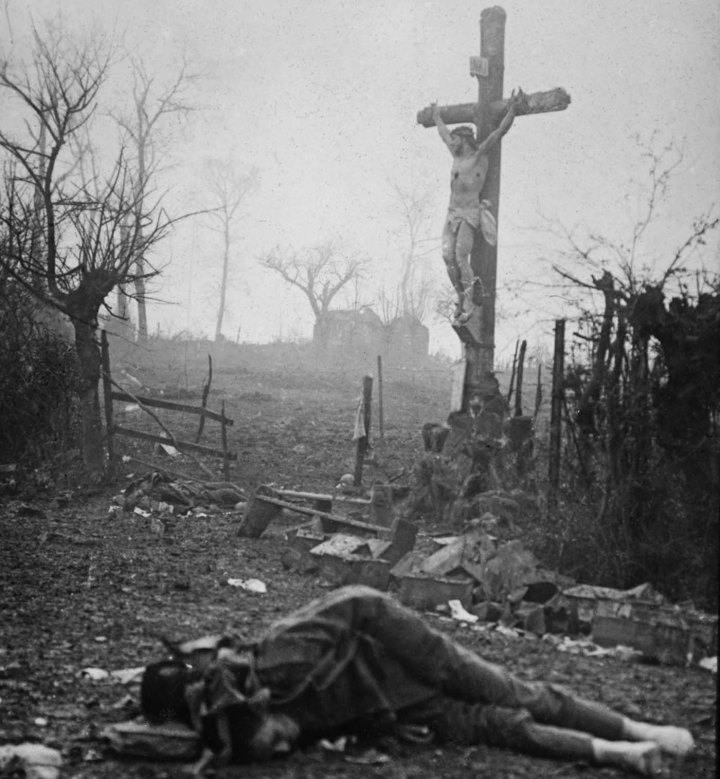
We are gathered here on this special day to do a number of things together. First and foremost we give thanks for the safe deliverance of these islands from the World Wars of the previous century. These were wars on a scale never before seen. The first was supposed to be the ‘war to end all wars’, yet within twenty years a greater conflict began which brought even more death and suffering to millions across the world. Hardly a day has gone by in the past century when there has not been a conflict somewhere in our world. 

It is now one hundred years since we first marked the anniversary of the Armistice by stopping in silence for two minutes, and praying: in remembrance of all those who gave their lives for our country, and for all who suffer as a result of war. For one hundred years we have engaged in a public act of remembrance. 

In 1919 the Prime Minister, David Lloyd George, commissioned a cenotaph (which means empty tomb) to stand in Whitehall, London, as a focus for an act of remembrance, when most of the war dead lay buried overseas. The original wood and plaster structure, designed by Sir Edward Lutyens, was only intended to stand for one week, but it proved so popular that a permanent one was created in Portland Stone ready for the 1920 Armistice Day.

Since 1919, the Cenotaph has become the central focus for national commemoration especially during the National Service of Remembrance held on Remembrance Sunday, the Sunday nearest to 11th November. Its meaning has developed and the Cenotaph now memorialises those who have given their lives in all conflicts since the First World War.

Throughout the country, local memorials were erected to remember the dead of the First and then the Second World War. Like the Cenotaph in London, these became the focus for local Remembrance ceremonies and we keep this tradition here in Maenclochog today, starting our Remembrance Service outside at our Village War Memorial. 

Our act of remembrance is not simply to recall a past event, or to bring the dead to mind, but something more. By remembering today, the sacrifice of countless men and women, we continue to show our thanks for the peace and prosperity which we now enjoy. 

We give thanks for to all those who have served, and continue to serve this country, both at home and abroad, and for the continuing work of the Royal British Legion in supporting veterans and their families. As a country we have asked much of our sons and daughters, and we continue so to do. ‘Cariad mwy na hwn nid oes gan neb; sef, bod i un roi ei einioes dros ei gyfeillion.’ ‘Greater love has no one than this, that someone lay down his life for his friends’ (Jn 15:13). They died that we might live. 

Their sacrifice calls to mind another sacrifice, made on a hill outside Jerusalem, ‘ble bu farw ein Harglwydd Iesu Grist drosom ni’. We remember this sacrifice too, as Jesus died for us. It is the heart of the Christian Faith, and the greatest demonstration possible of the saving power of love.

Love is at the heart of remembrance. Our human love comes from God, the source of all love. This love has the power to heal wounds, to comfort grief and loss. One hundred years on from the end of the First World War, the world still needs healing. This is beyond our capabilities as human beings. We need God’s help. Our God loves us, and longs to heal our wounds. He gave His Son to die for us, on the Cross, a painful death at the hands of enemy soldiers. Three days later, Jesus rose from the dead. His tomb was empty, and just as with the empty Cenotaph in London we are reminded that death is not the end. The Christian belief in the Resurrection of the dead and the life to come gives us all hope.

On the first Remembrance Day, one hundred years ago, two minutes silence was introduced. At 11 o’clock, as well as remembering the fallen, we take time to pray for peace. There are two words for peace in Welsh, ‘heddwch’, and ‘tangnefedd’. The first, ‘heddwch’ means an end to hostilities, the Armistice ceasefire which we celebrate today. But ‘tangnefedd’, the other kind of peace, is something far deeper and richer. It is the peace of God, the shalom of the Hebrew Old Testament. This is the gift of God, a feeling of wholeness, which brings about healing. So when Jesus says, ‘Blessed are the peacemakers, for they shall be called sons of God.’ ‘Gwyn eu byd y tangnefeddwyr: canys hwy a elwir yn blant i Dduw’ (Mt 5:9) He is envisaging something both radical and world-changing: something which heals, which forgives, and which loves. Today we commit ourselves to making peace a reality: here and now — in our community, in our families, in our relationships, in what we are, in what we say, and in what we do. We can never be too busy to do this. When we take the path of peace we honour the memory of those who gave their lives so that we might live. 

So let us therefore commit ourselves to help create the peace which Christ came to bring, for the glory of God, and the good of all human kind. Our Lord Jesus Christ has shown us another way to live — the way of love and gentleness. In memory of what Christ did here on earth, and continues to do, we can experience the peace of the Kingdom of God, where wounds are healed and divisions are reconciled. Today we give our thanks for those who sacrificed themselves for us, and we honour their memory by treasuring the peace won at so great a cost. 

Almighty God, hear our prayers and thanksgivings for all whom we remember this day. In the name of the Father, and of the Son, and of the Holy Spirit, Amen. 

Walter Kleinfeldt’s album showing the aftermath of a skirmish during the Battle of Somme, 1916 (7).jpg