Showing posts with label February 24. Show all posts

Sunday, 24 February 2019

The Seventh Sunday of Year C

All of Salvation History, the entirety of the Bible, and the history of the Christian Church is at a profound level the story of God’s Generosity. The creation of the universe out of nothing, and the salvation of humanity though the Incarnation, Death and Resurrection of Jesus Christ are demonstrations of the scale of that Generosity. It’s hard to get your head around the extent to which God’s love is poured out on the world.We don’t deserve it, we cannot earn it, nonetheless we continue to receive it through the Church, through prayer, the sacraments, Holy Scripture, in the power of the Holy Spirit. 

In our first reading this morning we see an encounter between David and Saul. David could kill Saul. Abishai wants to. David, however, will not put forth his hand against the Lord’s anointed. Saul is the anointed King of Israel, and despite their differences, David shows generosity of spirit, because ‘The Lord rewards every man for his righteousness and his faithfulness’ (1Sam 26:23). We have received generously from God, and we should thus be generous as a result. 

In the Epistle we see the difference between the first Adam, and the Second one, who is Christ. The first brought death and sin, the second brings life and reconciliation. Christians are to follow the example of Christ, who transforms our humanity, and manifests the loving and generous nature of God to us.

There is at the heart of Christianity a radical idea, love your enemies. It seems counter-intuitive. Our enemies want to harm us, we should resist them, we should crush them. No we are to love them, because love is the heart of the Gospel. God is loving towards us, being born as one of us to transform us, by His Grace. He gives himself to die, for love of us, that we might be healed and reconciled. Love can end conflict. This is what Christ shows us. He ends the enmity between God and humanity by dying for us. As Christians we are to follow Christ’s example and put love into practice in our lives. Jesus asks us to follow His example, living it out in a way which is radically different to the ways of the world.

The world around us isn’t good at forgiveness, or turning the other cheek. It prefers to write people off: that’s how they are, and how they’re going to stay. Well, they will, unless we do something about it. In showing forgiveness and generosity we recognise the fact that we are human, flawed, and we make mistakes, and that change is possible: things don’t have to stay the same. Everyone loves those who love them. The point is in loving those who do not love us, that they become lovely to us, and loveable in themselves. Only love can transform what is filled with hate and anger. 

As St John writes, ‘Beloved, let us love one another; for love is of God, and he who loves is born of God and knows God. He who does not love does not know God; for God is love. In this the love of God was made manifest among us, that God sent his only Son into the world, so that we might live through him. In this is love, not that we loved God but that he loved us and sent his Son to be the expiation for our sins. Beloved, if God so loved us, we also ought to love one another. No man has ever seen God; if we love one another, God abides in us and his love is perfected in us.’ (1John 4:7-12) At the heart of it all is the Cross, the great demonstration of God’s love. All that Christ teaches us in this morning’s gospel is made manifest on the Cross. We see God die for us, and in the Eucharist, Christ gives us His Body and Blood so that we can be transformed to do His Will, and live His Risen life, preparing us for Heaven, here and now. 

God gives Himself for us: ‘for he is kind to the ungrateful and the selfish. Be merciful, even as your Father is merciful.’ (Lk 6:35-36) We can be merciful because God has shown us mercy, and continues so to do. The transforming power of God’s love and mercy is shown fully in the Mystery of the Eucharist, where we are fed by God, fed with God, so that His Love might transform us. This is generosity, shown to us so that we might be generous in return. Through God’s generosity we have the opportunity to live in a different way, and encourage others so to do. It offers the world a way out of selfishness and sin, a chance to be God’s people living life in all its fulness. Is it easy? By no means! What Jesus proposes is something costly and difficult, which requires us to go against the human instincts which lead us to be selfish, judgmental and unkind. But if we all try to do this together then we will be built up as a community of loving generosity, which makes it possible for people to be transformed into the people God wants us to be. It’s what the world wants, and longs for. 

So how do we live the life God wants us to live? The simple answer is by trying, failing, and keeping on trying. The Christian faith has at its centre Love and Forgiveness. God shows these to us in Jesus Christ, and we have to show them to one another. The Church, you and I, all of us, are called to love and forgive each other, as we will fail. And we will fail often. We can’t earn our way to Heaven through what we do, Jesus has paved the way for us through His Death and Resurrection. We can, however, try to live out our faith in our lives, loving and forgiving each other when we fall short.Not being judgemental and overcritical. Then we can be built up in love, together, as a community reconciled to God and each other. It sounds simple and straightforward, but in practice it is really difficult. This is why we have to keep trying, allowing God transform us more and more into his likeness, through His Grace.

Through the love of God being poured into our hearts, and through that love forming who we are and what we do, that self-giving sacrificial love shown to us by Our Lord and Saviour Jesus Christ, in his dying for us, so that we might live in Him, let us be attentive to the Word of God, the Word made flesh, and not simply listen but also act –- relying not upon our own strength but upon the love and mercy of God, seeking His forgiveness, to do His Will.

When we are formed by God together then we can be built up in love, as living stones, a temple to God’s glory. We proclaim God’s love and truth to the world, through forgiveness and sacrificial love. Clothed in the humility of our knowledge of our need of God’s love and mercy, let us come to Him, to be fed by Him, to be fed with Him, to be healed and restored by him, so that we can live lives which speak of the power of his kingdom so that the world may believe and give glory to God the Father, God the Son, and God the Holy Spirit, to whom be ascribed as is most right and just, all might, majesty, glory, dominion, and power, now and forever. Amen

hyla-blue-largposter-copy

The Seventh Sunday of Year C

All of Salvation History, the entirety of the Bible, and the history of the Christian Church is at a profound level the story of God’s Generosity. The creation of the universe out of nothing, and the salvation of humanity though the Incarnation, Death and Resurrection of Jesus Christ are demonstrations of the scale of that Generosity. It’s hard to get your head around the extent to which God’s love is poured out on the world.We don’t deserve it, we cannot earn it, nonetheless we continue to receive it through the Church, through prayer, the sacraments, Holy Scripture, in the power of the Holy Spirit. 

In our first reading this morning we see an encounter between David and Saul. David could kill Saul. Abishai wants to. David, however, will not put forth his hand against the Lord’s anointed. Saul is the anointed King of Israel, and despite their differences, David shows generosity of spirit, because ‘The Lord rewards every man for his righteousness and his faithfulness’ (1Sam 26:23). We have received generously from God, and we should thus be generous as a result. 

In the Epistle we see the difference between the first Adam, and the Second one, who is Christ. The first brought death and sin, the second brings life and reconciliation. Christians are to follow the example of Christ, who transforms our humanity, and manifests the loving and generous nature of God to us.

There is at the heart of Christianity a radical idea, love your enemies. It seems counter-intuitive. Our enemies want to harm us, we should resist them, we should crush them. No we are to love them, because love is the heart of the Gospel. God is loving towards us, being born as one of us to transform us, by His Grace. He gives himself to die, for love of us, that we might be healed and reconciled. Love can end conflict. This is what Christ shows us. He ends the enmity between God and humanity by dying for us. As Christians we are to follow Christ’s example and put love into practice in our lives. Jesus asks us to follow His example, living it out in a way which is radically different to the ways of the world.

The world around us isn’t good at forgiveness, or turning the other cheek. It prefers to write people off: that’s how they are, and how they’re going to stay. Well, they will, unless we do something about it. In showing forgiveness and generosity we recognise the fact that we are human, flawed, and we make mistakes, and that change is possible: things don’t have to stay the same. Everyone loves those who love them. The point is in loving those who do not love us, that they become lovely to us, and loveable in themselves. Only love can transform what is filled with hate and anger. 

As St John writes, ‘Beloved, let us love one another; for love is of God, and he who loves is born of God and knows God. He who does not love does not know God; for God is love. In this the love of God was made manifest among us, that God sent his only Son into the world, so that we might live through him. In this is love, not that we loved God but that he loved us and sent his Son to be the expiation for our sins. Beloved, if God so loved us, we also ought to love one another. No man has ever seen God; if we love one another, God abides in us and his love is perfected in us.’ (1John 4:7-12) At the heart of it all is the Cross, the great demonstration of God’s love. All that Christ teaches us in this morning’s gospel is made manifest on the Cross. We see God die for us, and in the Eucharist, Christ gives us His Body and Blood so that we can be transformed to do His Will, and live His Risen life, preparing us for Heaven, here and now. 

God gives Himself for us: ‘for he is kind to the ungrateful and the selfish. Be merciful, even as your Father is merciful.’ (Lk 6:35-36) We can be merciful because God has shown us mercy, and continues so to do. The transforming power of God’s love and mercy is shown fully in the Mystery of the Eucharist, where we are fed by God, fed with God, so that His Love might transform us. This is generosity, shown to us so that we might be generous in return. Through God’s generosity we have the opportunity to live in a different way, and encourage others so to do. It offers the world a way out of selfishness and sin, a chance to be God’s people living life in all its fulness. Is it easy? By no means! What Jesus proposes is something costly and difficult, which requires us to go against the human instincts which lead us to be selfish, judgmental and unkind. But if we all try to do this together then we will be built up as a community of loving generosity, which makes it possible for people to be transformed into the people God wants us to be. It’s what the world wants, and longs for. 

So how do we live the life God wants us to live? The simple answer is by trying, failing, and keeping on trying. The Christian faith has at its centre Love and Forgiveness. God shows these to us in Jesus Christ, and we have to show them to one another. The Church, you and I, all of us, are called to love and forgive each other, as we will fail. And we will fail often. We can’t earn our way to Heaven through what we do, Jesus has paved the way for us through His Death and Resurrection. We can, however, try to live out our faith in our lives, loving and forgiving each other when we fall short.Not being judgemental and overcritical. Then we can be built up in love, together, as a community reconciled to God and each other. It sounds simple and straightforward, but in practice it is really difficult. This is why we have to keep trying, allowing God transform us more and more into his likeness, through His Grace.

Through the love of God being poured into our hearts, and through that love forming who we are and what we do, that self-giving sacrificial love shown to us by Our Lord and Saviour Jesus Christ, in his dying for us, so that we might live in Him, let us be attentive to the Word of God, the Word made flesh, and not simply listen but also act –- relying not upon our own strength but upon the love and mercy of God, seeking His forgiveness, to do His Will.

When we are formed by God together then we can be built up in love, as living stones, a temple to God’s glory. We proclaim God’s love and truth to the world, through forgiveness and sacrificial love. Clothed in the humility of our knowledge of our need of God’s love and mercy, let us come to Him, to be fed by Him, to be fed with Him, to be healed and restored by him, so that we can live lives which speak of the power of his kingdom so that the world may believe and give glory to God the Father, God the Son, and God the Holy Spirit, to whom be ascribed as is most right and just, all might, majesty, glory, dominion, and power, now and forever. Amen
hyla-blue-largposter-copy

Saturday, 24 February 2018

Lent II Year B

In Mark’s Gospel, just before the passage we have heard Jesus asks his disciples, ‘Who do people say that I am?’ After he hears the answers Jesus asks, ‘But who do YOU say that I am?’ (Mk 8:29) Peter answers that He is the Messiah, and Jesus told them sternly not to tell anyone about this.

He asks the same question of each and every one of us this morning, ‘Who do you say that I am?’ It is worth taking a few moments to consider just what our answer would be. A very nice man? An inspiring teacher? Yes, all those things, and more; as Christians we can only echo the words of St Thomas after the Resurrection and simply say, ‘My Lord and My God!’

That’s who and what He is, and nothing less. True God, and True Man, who comes among us to proclaim that God’s Kingdom is near, and that we need to repent. We need to turn away from sin, and turn back to God, a God who loves us, and who sent His Only-Begotten Son to show us just who much He loves us.

Jesus teaches that the He must undergo great suffering, like the servant in the prophecy of Isaiah, be rejected by the Jewish  religious authorities, be killed and after three days rise again. It is quite a lot to take in. Peter, who only a few moments earlier has acknowledged Jesus as the Messiah, the Lord’s Anointed, just can’t take this. It isn’t part of the plan. It isn’t supposed to happen. Peter cannot bear the thought of Jesus suffering and dying, he loves Him. Peter just cannot understand that it needs to happen, that it is Who and What Jesus is.

Fundamentally, ours is a God who makes promises, and keeps them. He makes a promise to Abraham, and keeps it. God makes promises because He loves us. We don’t deserve to be loved because we sin, we alienate ourselves from God, and each other. But because God loves each and every one of us, then Jesus goes to die upon the Cross to demonstrate this love to the world.

Jesus says to us, that we have to deny ourselves, take up our cross, and follow Him. It sounds pretty straightforward, doesn’t it! But like many things Jesus says it is fine in theory, but in practice it is a lot harder. For two thousand years we’ve been struggling with it, and that’s the point. It isn’t easy, I wish I could say that it was, but quite frankly it isn’t. I know that I struggle, that I’m not a good Christian, that I need to trust God more, but also I know that I am not alone in this, there are several billion Christians alive today, and countless billions through the last hundred thousand successive Sundays who have felt just like this. Rather like Peter, I don’t want Jesus to die for me, I don’t deserve to be saved, such are my many sins, that I should be cast away from God’s presence for all eternity. And yet, Jesus died for me, to save me, and for each and every one of you.

God loves us: frail, weak, sinful humanity. He gives us this time of Lent to prepare to celebrate Jesus’ Passion, Death, and Resurrection. He gives us a chance to enter the desert of repentance, and, with renewed vigour, to follow Him. It really is good news. And we need to lose our lives for Christ’s sake: living out our faith in all that we say, or think or do — to follow Him, whose service is perfect freedom. We live, not for ourselves, but for the God who loves us, who died for us.

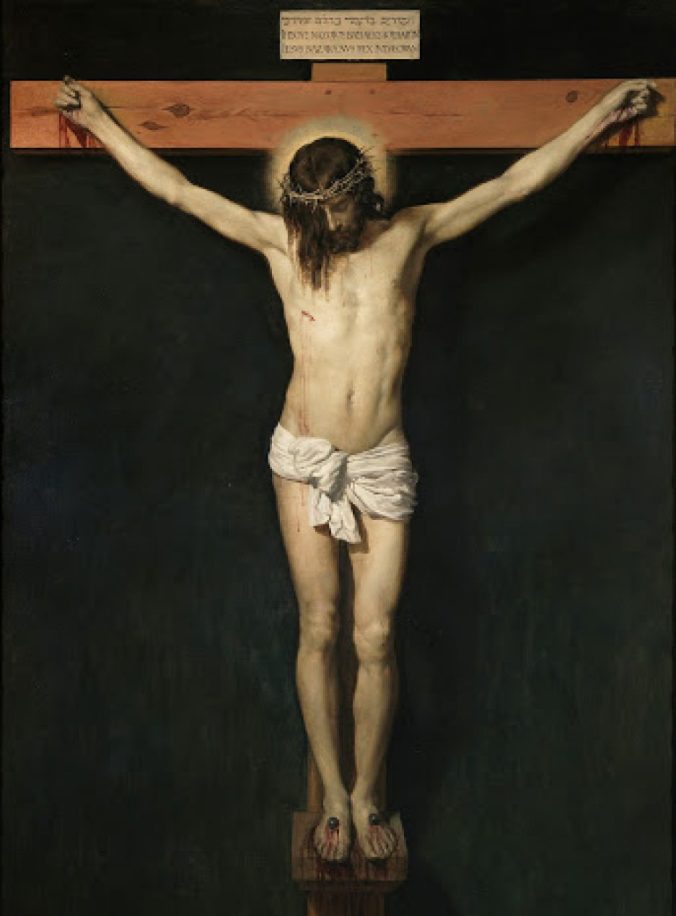
So now the Cross is our only hope — the sacrifice of God for humanity, not something we can give God, but something he gives us — a free gift of infinite value. God gives it to us and to all the world for one simple reason — love, for love of us — weak, poor, sinful humanity, so that we might be more lovely, more like Him. God sends His Son into the world not to condemn it, but so that the world might be saved through Him — an unselfish act of generosity, of grace, so that we might be saved from sin and death, from ourselves, so that we can share new life in Him.

It is that same sacrifice which we see here this morning at the altar, which we can taste and touch, which we can eat and drink, so that our lives and our souls can be transformed more and more into God’s likeness. It is something which we treat with the uttermost reverence because it is God, given for us, because it can transform us to live as children of the Holy Spirit, freed from the shackles of this world, free to live for Him, to live as He wants us to, His new creation, of water and the Spirit. This is what the Church has done on a hundred thousand successive Sundays, in memory of Him, to make the holy people of God. To make us holy: so that everything which we say, or think, or do, may be for His praise and glory, living out the faith which we believe in our hearts, as a sign to the world that the ways of selfishness and sin are as nothing compared with the generous love of God.

So great is this gift, that we prepare to celebrate it with this solemn season of prayer, and fasting, and abstinence, to focus our minds and our lives on the God who loves us and who saves us. We prepare our hearts and minds and lives to celebrate the mystery of our redemption, so that our lives may reflect His glory, so that we may live for Him, fed by Him, fed with Him, with our lives and souls transformed by Him. We are transformed so that we can transform the world so that it may live for Him, living life in all its fullness: living for others, living as God wants us to live. Living the selfless love which saves us and all the world, living out our faith, and encouraging others so to do, can and will conform us to Christ, so that we may be like Him, and become ever more like Him, prepared for eternal life with Him, so that we may sing the praises of God the Father, God the Son, and God the Holy Spirit, to whom be ascribed, as is most right and just, all might, majesty, glory, dominion, and power, now and forever.

cropped-velazquezcrucifxion.jpg