Showing posts with label Christ. Show all posts

Saturday, 16 January 2021

The Second Sunday of Year B

There is a common misconception that when the Church talks about vocation, being called, it is referring to the call to ordained ministry, to be a deacon or a priest. Nothing could be further from the truth. While this call is an important one, there remains a fundamental call which comes to us all in our baptism: the call to follow Christ. Each and every one of us is called to be a disciple of Jesus, to listen to what He says, and to let this call affect our lives. It is both a daunting prospect, and the most normal and natural thing in the world. 

Our first reading this morning tells the story of the call of Samuel, a young boy serving at the sanctuary in Shiloh with the high priest Eli. After his mother, Hannah, had prayed to God for a child whom she would dedicate to God as a Nazirite, she became pregnant and Samuel was born. Nazirites were not allowed to cut their hair, drink wine, or touch a dead body. Eli’s predecessor, Samson, the last of the Judges in the Book of Judges, was also a  Nazirite. Samuel is called three times. Each time he goes to Eli, whom he assumes is calling him. Eventually Eli tells Samuel to reply, ‘Speak, Lord, for your servant hears.’ (1Sam 3:9). So Samuel responds to God’s invitation, and it totally changes his life. Are we willing to take that risk, and answer God’s call?

Ancient Corinth was something like a cross between London and Las Vegas. It was a rich trading centre with a reputation for sexual immorality. This morning’s second reading from St Paul’s First Letter to the Corinthians, is an attempt to argue that our embodied existence, that is how we live our lives , matters. Often, we become what we do. It is therefore important to do the right thing, and not the wrong. Paul’s argument leads to his conclusion:

You are not your own, for you were bought with a price. So glorify God in your body. (1Cor 6:19-20) 

We are not our own, we belong to God, who bought us with the price of His Son, Jesus Christ. The world likes to tell us that we are autonomous, that we can do whatever we want to, but at a fundamental level we are God’s people, and belong to the God who made us, and who redeemed us out of love for us. God sets us free to love Him and serve Him, so how we live our lives is our response to that love and an act of loving service. We can choose to glorify God, not that God needs our glory, but because it is how we should live our lives, in love and service. Our faith affects our lived existence.

In today’s Gospel we move beyond the Baptism of Christ to the events of the following day. John has testified that Jesus is the Lamb of God, who takes away the sins of the world, and that He is the Son of God. When John sees Jesus walking by he again exclaims ‘Behold the Lamb of God’ (Jn 1:36). The phrase looks back to the Suffering Servant in Isaiah 52-53 who is led like a lamb to the slaughter. The beginning of Jesus public ministry points to its end on the Cross. Jesus is the Messiah and He will die to take away our sins. Two of John’s disciples hear him saying these words and follow Jesus. When Jesus asks them what they are looking for, the disciples answer ‘Rabbi’. They acknowledge Jesus as a teacher, and ask Him where He is staying. Jesus replies, “Come and you will see.” (Jn 1:39). Jesus invites them to follow Him, to see where He is staying and to spend time with Him. These two disciples of John become followers of Jesus, literally and metaphorically. The Church continues to make the same invitation to the world, to come and see, to follow Jesus. These two disciples stay with Jesus, they listen to Him, they eat with Him, and begin to have a relationship with Him. We then discover that one of the men is Andrew, and that he has a brother, called Simon. Andrew is convinced that he has found the Messiah and brings his brother to Jesus. When Jesus meets Simon he says,

“So you are Simon the son of John? You shall be called Cephas” (which means Peter) (Jn 1:42)

Jesus gives Simon a new name. He calls him Cephas, which means ‘rock’ in Aramaic, Petros in Greek, from which our name Peter comes. Peter will be the rock upon which Christ will build His Church (Mt 16:18). The name Jesus gives points to Peter’s future role as the leader of the Apostles. Jesus takes the initiative and begins to sketch out a future for the disciples who are following Him. It is quick, and matter of fact, and yet momentous. Jesus is gathering people to help Him with this ministry.

The Church therefore begins with a few Galilean fishermen following a rabbi whom they recognise as the Messiah. Thanks to them, and their faith in Jesus, we are in the Church today. Faith, where we put our trust, is an important thing. It affects both who we are, and how we live our lives. Faith turned Peter from a fisherman into a leader of the early Christians, and it has continued to transform lives for the past two thousand years. 

In our baptism, God in Christ invites each and every one of us to follow Him, to ‘come and see’, as the first disciples did, and to invite others, as Andrew invited Simon Peter. To come and see who Jesus is, to get to know Him, and start a relationship with Him. This begins with our sharing in His Death and Resurrection, and ends in the glory of Heaven. Where we, and all the Church, give glory to God the Father, God the Son, and God the Holy Spirit, to whom be ascribed, as is most right and just, all might, majesty, glory, dominion, and power, now and forever. Amen. 

Saturday, 9 January 2021

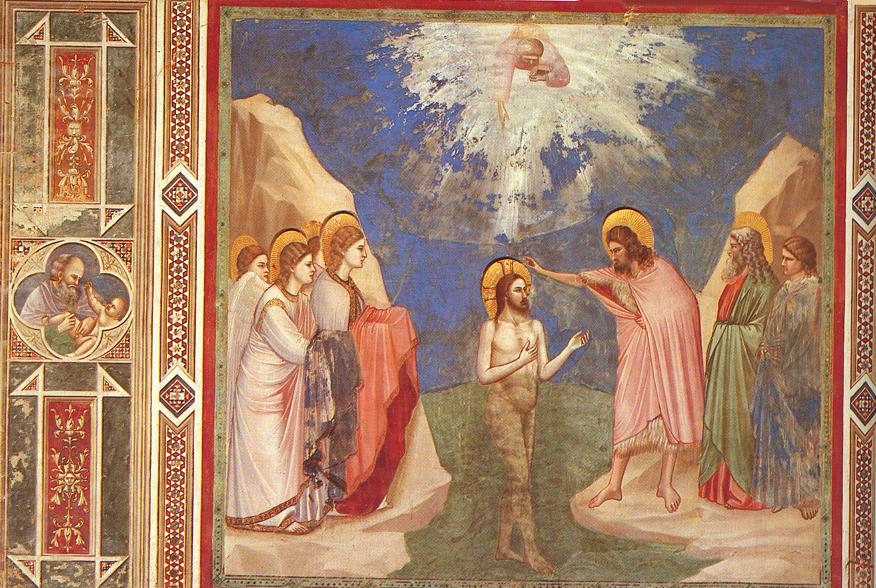
Baptism of Christ

The Baptism of Christ by John the Baptist in the River Jordan at the start of His public ministry is one of the events found in all four Gospels (the others are the Feeding of the Five Thousand, and the account of the Lord’s Passion, Death, and Resurrection, from Palm Sunday to Easter Day). Each gospel contains accounts of the beginning and end of Jesus’ public ministry, as well as a miraculous feeding. If we take a moment to consider both what baptism is, and what it is for, we may come to understand why all four  gospel writers included it in their account of the life and teachings of Jesus. 

Baptism is symbolic washing with water for the forgiveness of sins. If Jesus was baptized does that mean that He sinned? The answer is, No. So, given the fact that Jesus committed no sins, did He need to be baptised by John? Again, the answer is. No. You may begin to wonder what is going on here? Why would Jesus begins His Public ministry in Galilee with a redundant action? If Jesus does not need to be baptised, what is the point of it? What is Jesus doing and why is it important for us?

Unlike all human beings, who commit sin, and become estranged from their relationship with God, Jesus is God become man. He is perfect, sinless, and united with God the Father, and the Holy Spirit, a Trinity of love. There is no need to restore the relationship, because it is one of perfect love. Mark’s account of the Baptism is prefaced by the words of John the Baptist:

After me comes he who is mightier than I, the strap of whose sandals I am not worthy to stoop down and untie. I have baptized you with water, but he will baptize you with the Holy Spirit.” (Mk 1:7-8)

John the Baptist is linking Christ’s baptism with the redemption of humanity in His death. The very beginning of Jesus’ public ministry points to the Cross, where salvation and freedom will be offered to all who turn to Christ. John baptises with water, but he looks forward to Jesus, who will baptise with the Holy Spirit. This is the baptism of the Church, to save and redeem humanity, by sharing in Christ’s Death and Resurrection.

Once Jesus has been baptised by John, extraordinary things happen:

And when he came up out of the water, immediately he saw the heavens being torn open and the Spirit descending on him like a dove. And a voice came from heaven, “You are my beloved Son; with you I am well pleased.” (Mk 1:10-11)

At the moment of Jesus’ baptism we hear God the Father, and see God the Son and God the Holy Spirit. The fulness of God is manifest to humanity in the Trinity. We can see and hear God’s saving work. Jesus does not need to be baptised, but does so for three reasons. Firstly to demonstrate His humility, and obedience to the will of the Father; secondly to sanctify the waters of baptism, and finally to act as an example for us to follow. Thus, God sends the Holy Spirit to demonstrate the bond of love between the Father and the Son. The Father speaks to demonstrate that Jesus is the Son of God. He is beloved of the Father, and His obedience and humility is pleasing in the sight of God. Jesus shows us the way back to the Father. By our own obedience and humility, by our repentance, and turning away from the ways of sin and the world, we return to the God who loves us. This is the message of the church: that God’s grace is available to us, to everybody, even though we haven’t worked for or earned it, even though we have done nothing to deserve it, God’s love and mercy is there for us. In Baptism we receive adoption, and become part of the family of God. Through Baptism we are born again, of water and the Spirit, we are ‘in Christ’, clothed with Him.

The unnecessary nature of the act of Jesus’ Baptism discloses something profound about the nature of God and His love for us. God gives us more than we ask for, because it is in God’s nature to be generous in a way which astounds us. There is something reckless, extravagant, utterly over the top, about the love of God, which should prompt us to love and care for others in a similar way.

John’s baptism of water prepares the way for the baptism of the Holy Spirit in Christ, through which we enter the Church. It shows us a new way of living. Life in the Spirit, life with God, has a profound effect on us, who we are and what we do. It opens up the possibility of living in a new way, a way of love, which mirrors the generosity shown to us by God. This way of life shows us in the Church what it is to be truly alive and how to live in a new way. It points to another act of God’s extravagant love: when Christ dies on the Cross, to take away our sin, to carry our burden, which separates us from God and each other. Our wounds are healed, the relationship is restored so that we can live the life of the Kingdom of God here and now: living out that self-giving, reckless, extravagant love and forgiveness in our own lives, and in the world around us.

Back in our first reading this morning the prophet Isaiah looks forward to the coming of the Messiah with a proclamation of extravagant generosity:

Come, everyone who thirsts, come to the waters” (Isa 55:1)

This invitation is also the invitation of the Church, for people to enter it by baptism and share in the unsearchable riches of Christ. Today we remember that salvation is offered to the world through baptism. We give thanks for the rebirth of our own baptism, and hope to share it with others. Baptism reminds us of the hope which we have in Jesus Christ, hope of new life, and eternal life with Him. Whatever is happening in the world, or in our own lives we can trust in who God is, and what He has done for us. In this trust we can live out our faith so that the world may be transformed and believe and give glory to God the Father, God the Son, and God the Holy Spirit, to whom be ascribed, as is most right and just, all might, majesty, glory, dominion, and power, now and forever. Amen. 

Sunday, 8 November 2020

32nd Sunday of Year A: The Parable of the Wise and Foolish Virgins

There is a tradition of writing about Wisdom which can be found in the Bible, and across the Ancient Near East. Wisdom Literature seeks to explore the perennial questions of who God is and how humanity should live. The term ‘wisdom’ means much more than knowledge. It refers to how knowledge is used with judgement, something which comes with maturity and experience, and leads to our flourishing. In our first reading this morning we see Wisdom personified as a beautiful woman . If we love Wisdom, then we will recognise her easily. It stands to reason. Wisdom is an attractive quality. 

To fix one’s thought on her is perfect understanding, and one who is vigilant on her account will soon be free from care, because she goes about seeking those worthy of her, and she graciously appears to them in their paths, and meets them in every thought. (Wisdom 6:15-16)

To be wise is to be freed from care or anxiety. Nothing in life or death can trouble us because we have fixed our thoughts on Wisdom. Such wisdom comes from God, it is divine, and not human. In fixing our minds on Wisdom, we have fixed them upon God, the source of all wisdom, or as a prayer in the Prayerbook puts it:

Almighty God, the fountain of all wisdom, which knowest our necessities before we ask, and our ignorance in asking: We beseech thee to have compassion on our infirmities; and those things which for our unworthiness we dare not, and for our blindness we cannot ask, vouchsafe to give us for the worthiness of thy Son Jesus Christ our Lord. Amen 

Our second reading, from Paul’s First Letter to the Thessalonians, deals directly with questions of death and resurrection. Clearly some people have died, and there are members of the church community who are worried by this, so Paul is trying to allay their fears. He encourages them:

‘that you may not grieve as others do who have no hope. For since we believe that Jesus died and rose again, even so, through Jesus, God will bring with him those who have fallen asleep’. (1Thess 4:13-14)

This is our hope as Christians. Because Jesus died and rose again, and we share in His Resurrection, we know that our earthly life is not all that there is, that something greater awaits us. Paul has hope for the future, which is why our passage ends: 

‘Therefore encourage one another with these words’ (1 Thess 4:18)

Paul speaks of the future and Christ’s Second Coming to encourage the Church, to give it hope, and to remind us that God keeps His promises. We can have hope, because its source is God. Our ultimate aim is to be with God forever. Through what Christ has done we can have this hope. And on this Remembrance Sunday , we remember and give thanks for those who have gone before us and we encourage each other as a community.

In today’s Gospel Jesus continues His teaching about the Kingdom. Normally He says that, ‘The Kingdom of Heaven IS like…’ whereas in this passage He says, ‘the Kingdom of Heaven will be like…’ Jesus is teaching about the future, a future reality which will come to be, rather than something which is already the case. This future reality is His return. Christians believe that Jesus will come again to judge the world. 

The parable pictures this as the return of the bridegroom. The problem is that half of the virgins were not prepared and did not have spare oil to keep their lamps lit. The bridegroom has been  delayed and the virgins have become drowsy, and have fallen asleep. When the bridegroom eventually arrives half of them are not ready, and have to go to buy oil. They therefore miss meeting the Bridegroom and so are shut out of the marriage feast. This may sound harsh, but Jesus tells the parable to warn us to be prepared, to be vigilant. 

The point of the Parable of the Wise and Foolish Virgins, is that we will not know when Jesus will return, so we need to be ready to greet Him when He comes. This is not just to be ready in practical terms, but also in spiritual ones. How are we ready to meet Jesus? Are we living out our faith in our lives? Have we got things ‘in order’? Just as wisdom comes with age, so we can use our lives to prepare. Such preparations are wise, and a joint effort: we can prepare together. That is what the Church exists for: to help us to get ready to meet Jesus. 

There are two inescapable facts in our readings this morning: first that our earthly lives are finite, they will come to an end, and secondly that Jesus has promised that He will return. Death and Judgement may not be something that we like to think about, but they will happen, and we cannot, if we are serious, simply live our lives as though neither will take place. Many in the world around us live this way. Is it wise? Not at all, it is the opposite of wisdom.At this time ofRemembrance we, therefore, also reflect on our own mortality and the way in which we are living our lives and what we are doing for those in need.

To be prepared means to know what we are facing and to be ready for it. It is a mark of spiritual maturity that we can contemplate such things without fear. If we are prepared then we have lived out our faith, and we know that the God who will judge us is a God of love and mercy. God died for love of us, and to give us the hope of eternal life with Him. This is the Heavenly Marriage Feast which we, as Christians, look forward to.

If our lives are characterised by Faith, Hope, and Love, there is no need for fear. The world around us is scared of Death and Judgement, because it has no hope of eternal life. The promises of the world are empty, whereas what Jesus promises us is real, and is for everyone who turns to Him. This is Good News, in fact it is the best news possible! Our life on earth is meant to be a prelude to an eternity with God. This is what we believe and hope for as followers of Christ.

If what we believe in our hearts and how we live our lives are in perfect synchronisation with each other, then we need have no fear, as the promise of sharing in Christ’s Resurrection is there for us. We do not need to be anxious, and we can get on with the business of living our lives secure in our faith. This is what it means to be a wise virgin with a lit lamp and a flask of oil, ready to meet our Lord . This is the purpose of the parable: to warn us in advance so that we can be prepared and not be surprised, so that we can be wise. We can therefore be lamps of faith in a dark world, ready to shine love, and hope on those around us.

May our lamps of faith be filled with oil so that they may burn brightly to the honour of God the Father, God the Son, and God the Holy Spirit, to whom be ascribed, as is most right and just, all might, majesty, glory, dominion, and power, now and forever. Amen.

32nd Sunday of Year A: The Parable of the Wise and Foolish Virgins

There is a tradition of writing about Wisdom which can be found in the Bible, and across the Ancient Near East. Wisdom Literature seeks to explore the perennial questions of who God is and how humanity should live. The term ‘wisdom’ means much more than knowledge. It refers to how knowledge is used with judgement, something which comes with maturity and experience, and leads to our flourishing. In our first reading this morning we see Wisdom personified as a beautiful woman . If we love Wisdom, then we will recognise her easily. It stands to reason. Wisdom is an attractive quality. 

To fix one’s thought on her is perfect understanding, and one who is vigilant on her account will soon be free from care, because she goes about seeking those worthy of her, and she graciously appears to them in their paths, and meets them in every thought. (Wisdom 6:15-16)

To be wise is to be freed from care or anxiety. Nothing in life or death can trouble us because we have fixed our thoughts on Wisdom. Such wisdom comes from God, it is divine, and not human. In fixing our minds on Wisdom, we have fixed them upon God, the source of all wisdom, or as a prayer in the Prayerbook puts it:

Almighty God, the fountain of all wisdom, which knowest our necessities before we ask, and our ignorance in asking: We beseech thee to have compassion on our infirmities; and those things which for our unworthiness we dare not, and for our blindness we cannot ask, vouchsafe to give us for the worthiness of thy Son Jesus Christ our Lord. Amen 

Our second reading, from Paul’s First Letter to the Thessalonians, deals directly with questions of death and resurrection. Clearly some people have died, and there are members of the church community who are worried by this, so Paul is trying to allay their fears. He encourages them:

‘that you may not grieve as others do who have no hope. For since we believe that Jesus died and rose again, even so, through Jesus, God will bring with him those who have fallen asleep’. (1Thess 4:13-14)

This is our hope as Christians. Because Jesus died and rose again, and we share in His Resurrection, we know that our earthly life is not all that there is, that something greater awaits us. Paul has hope for the future, which is why our passage ends: 

‘Therefore encourage one another with these words’ (1 Thess 4:18)

Paul speaks of the future and Christ’s Second Coming to encourage the Church, to give it hope, and to remind us that God keeps His promises. We can have hope, because its source is God. Our ultimate aim is to be with God forever. Through what Christ has done we can have this hope. And on this Remembrance Sunday , we remember and give thanks for those who have gone before us and we encourage each other as a community.

In today’s Gospel Jesus continues His teaching about the Kingdom. Normally He says that, ‘The Kingdom of Heaven IS like…’ whereas in this passage He says, ‘the Kingdom of Heaven will be like…’ Jesus is teaching about the future, a future reality which will come to be, rather than something which is already the case. This future reality is His return. Christians believe that Jesus will come again to judge the world. 

The parable pictures this as the return of the bridegroom. The problem is that half of the virgins were not prepared and did not have spare oil to keep their lamps lit. The bridegroom has been  delayed and the virgins have become drowsy, and have fallen asleep. When the bridegroom eventually arrives half of them are not ready, and have to go to buy oil. They therefore miss meeting the Bridegroom and so are shut out of the marriage feast. This may sound harsh, but Jesus tells the parable to warn us to be prepared, to be vigilant. 

The point of the Parable of the Wise and Foolish Virgins, is that we will not know when Jesus will return, so we need to be ready to greet Him when He comes. This is not just to be ready in practical terms, but also in spiritual ones. How are we ready to meet Jesus? Are we living out our faith in our lives? Have we got things ‘in order’? Just as wisdom comes with age, so we can use our lives to prepare. Such preparations are wise, and a joint effort: we can prepare together. That is what the Church exists for: to help us to get ready to meet Jesus. 

There are two inescapable facts in our readings this morning: first that our earthly lives are finite, they will come to an end, and secondly that Jesus has promised that He will return. Death and Judgement may not be something that we like to think about, but they will happen, and we cannot, if we are serious, simply live our lives as though neither will take place. Many in the world around us live this way. Is it wise? Not at all, it is the opposite of wisdom.At this time ofRemembrance we, therefore, also reflect on our own mortality and the way in which we are living our lives and what we are doing for those in need.

To be prepared means to know what we are facing and to be ready for it. It is a mark of spiritual maturity that we can contemplate such things without fear. If we are prepared then we have lived out our faith, and we know that the God who will judge us is a God of love and mercy. God died for love of us, and to give us the hope of eternal life with Him. This is the Heavenly Marriage Feast which we, as Christians, look forward to.

If our lives are characterised by Faith, Hope, and Love, there is no need for fear. The world around us is scared of Death and Judgement, because it has no hope of eternal life. The promises of the world are empty, whereas what Jesus promises us is real, and is for everyone who turns to Him. This is Good News, in fact it is the best news possible! Our life on earth is meant to be a prelude to an eternity with God. This is what we believe and hope for as followers of Christ.

If what we believe in our hearts and how we live our lives are in perfect synchronisation with each other, then we need have no fear, as the promise of sharing in Christ’s Resurrection is there for us. We do not need to be anxious, and we can get on with the business of living our lives secure in our faith. This is what it means to be a wise virgin with a lit lamp and a flask of oil, ready to meet our Lord . This is the purpose of the parable: to warn us in advance so that we can be prepared and not be surprised, so that we can be wise. We can therefore be lamps of faith in a dark world, ready to shine love, and hope on those around us.

May our lamps of faith be filled with oil so that they may burn brightly to the honour of God the Father, God the Son, and God the Holy Spirit, to whom be ascribed, as is most right and just, all might, majesty, glory, dominion, and power, now and forever. Amen.
Wednesday, 25 December 2019

Christmas 2019

We have come here this morning because something wonderful happened two thousand years ago in Bethlehem. It is the single most important event in human history, summed up in St John’s memorable phrase, ‘And the Word became flesh and dwelt among us’ (Jn 1:14 ESV). The Word, through which God spoke all creation into being, the Son eternally begotten of the Father, who, through the power of the Holy Spirit, took flesh in the womb of His mother, the Blessed Virgin Mary, is born for us, and lives among us. The verb translated as ‘dwelt’ means to live in a tent, and thus to settle, which conveys something both temporary and permanent at the same time. This is the paradoxical quality of the Incarnation, which looks back to the Exodus when the people of Israel spent forty years in tents before they got to the Promised Land, and that God’s presence was with them, as then so now. God is with us, Emmanuel, He is with us now in the words of Holy Scripture and will be with us in the Eucharist.

Today is a day to be encouraged, and the message of Isaiah is one of joy. The birth of the Messiah, Jesus Christ, is good news, He comes to bring true peace to humanity. Our God reigns as a little baby, lying in a manger. Christ’s gift to us is peace and goodwill to all humanity. He can give us these gifts because He who is born for us today will die for us. The one wrapped in swaddling clothes will be wrapped in linen cloths in a tomb once He has died for us on the Cross. The beginning of His earthly life points to its end to remind us of the love of God for humanity. With joy the prophet can proclaim, ‘and all the ends of the earth shall see the salvation of our God.’ (Isa 52:10 ESV) Today salvation has indeed come to the whole world, for in His Birth and Death we are saved. 

The author of the Letter to the Hebrews understands that God speaks through his prophets, who look forward to the birth of the Son of God as the defining event, the turning point of human history. Prophets tell us both how things are and how they WILL BE, thus we have a vision of God’s future, we have the hope of glory in the one who is born today. We glimpse true glory in the vulnerability of the baby lying in the manger, dependant upon others for love, and food, and warmth. God’s glory confounds our expectations, and that’s the point. God’s ways are not our ways, nor his thoughts ours. In the same way that God saves us not because we ARE lovable, but so that we might become so. Humanity is saved in order to be transformed, and the Church exists to extend that transformation across space and time. 

Such is the mystery of God’s love, something so wonderful that we cannot fully understand it, but we can experience it, and through experiencing it, be transformed by it. As Austin Farrer wrote: 

God does not give us explanations; we do not comprehend the world, and we are not going to. It is and it remains for us a confused mystery of bright and dark. God does not give us explanations; he gives us a Son. Such is the spirit of the angel’s message to the shepherds: “Peace upon earth, good will to men … and this shall be the sign unto you: ye shall find a babe wrapped in swaddling clothes, and lying in a manger.” A Son is better than an explanation. The explanation of our death leaves us no less dead than we were; but a Son gives us a life, in which to live.’ [Austin Farrer Said or Sung pp. 27, 28]

As St John says, ‘ In him was life, and the life was the light of men.’ (Jn 1:4 ESV) Just as the star gives light to Bethlehem and guides the wise men on their way, so Christ gives light to a world filled with Darkness. Christ is the true light, and comes to give us true life in Him. ‘But to all who did receive him, who believed in his name, he gave the right to become children of God, who were born, not of blood nor of the will of the flesh nor of the will of man, but of God.’ (Jn 1:12-13 ESV) In the Church we are born again by water and the Holy Spirit, sharing in Christ’s Death and Resurrection, to have new life IN HIM. We are IN CHRIST, and are fed with HIS BODY AND BLOOD so that we may continue to be transformed by Him. Christ comes to give us life, new life, eternal life in Him, so that cleansed from our sins and transformed by the love of God we may live the life of the Kingdom, the life of heaven here and now. This is ‘glory as of the only Son from the Father, full of grace and truth.’ (Jn 1:14 ESV) given to humanity so that we may live as God intended us to. To us is offered through Christ the chance to return to Eden, to see Creation restored, and all things set right through Him. This is no pipe dream, but the reality of God’s love freely given to restore our fallen state. So let us live it and encourage others to so that all humanity may sing the praise of God the Father, God the Son, and God the Holy Spirit, to whom be ascribed as is most right and just all might, majesty, glory, dominion, and power, now and forever.

Christmas 2019

We have come here this morning because something wonderful happened two thousand years ago in Bethlehem. It is the single most important event in human history, summed up in St John’s memorable phrase, ‘And the Word became flesh and dwelt among us’ (Jn 1:14 ESV). The Word, through which God spoke all creation into being, the Son eternally begotten of the Father, who, through the power of the Holy Spirit, took flesh in the womb of His mother, the Blessed Virgin Mary, is born for us, and lives among us. The verb translated as ‘dwelt’ means to live in a tent, and thus to settle, which conveys something both temporary and permanent at the same time. This is the paradoxical quality of the Incarnation, which looks back to the Exodus when the people of Israel spent forty years in tents before they got to the Promised Land, and that God’s presence was with them, as then so now. God is with us, Emmanuel, He is with us now in the words of Holy Scripture and will be with us in the Eucharist.

Today is a day to be encouraged, and the message of Isaiah is one of joy. The birth of the Messiah, Jesus Christ, is good news, He comes to bring true peace to humanity. Our God reigns as a little baby, lying in a manger. Christ’s gift to us is peace and goodwill to all humanity. He can give us these gifts because He who is born for us today will die for us. The one wrapped in swaddling clothes will be wrapped in linen cloths in a tomb once He has died for us on the Cross. The beginning of His earthly life points to its end to remind us of the love of God for humanity. With joy the prophet can proclaim, ‘and all the ends of the earth shall see the salvation of our God.’ (Isa 52:10 ESV) Today salvation has indeed come to the whole world, for in His Birth and Death we are saved. 

The author of the Letter to the Hebrews understands that God speaks through his prophets, who look forward to the birth of the Son of God as the defining event, the turning point of human history. Prophets tell us both how things are and how they WILL BE, thus we have a vision of God’s future, we have the hope of glory in the one who is born today. We glimpse true glory in the vulnerability of the baby lying in the manger, dependant upon others for love, and food, and warmth. God’s glory confounds our expectations, and that’s the point. God’s ways are not our ways, nor his thoughts ours. In the same way that God saves us not because we ARE lovable, but so that we might become so. Humanity is saved in order to be transformed, and the Church exists to extend that transformation across space and time. 

Such is the mystery of God’s love, something so wonderful that we cannot fully understand it, but we can experience it, and through experiencing it, be transformed by it. As Austin Farrer wrote: 

God does not give us explanations; we do not comprehend the world, and we are not going to. It is and it remains for us a confused mystery of bright and dark. God does not give us explanations; he gives us a Son. Such is the spirit of the angel’s message to the shepherds: “Peace upon earth, good will to men … and this shall be the sign unto you: ye shall find a babe wrapped in swaddling clothes, and lying in a manger.” A Son is better than an explanation. The explanation of our death leaves us no less dead than we were; but a Son gives us a life, in which to live.’ [Austin Farrer Said or Sung pp. 27, 28]

As St John says, ‘ In him was life, and the life was the light of men.’ (Jn 1:4 ESV) Just as the star gives light to Bethlehem and guides the wise men on their way, so Christ gives light to a world filled with Darkness. Christ is the true light, and comes to give us true life in Him. ‘But to all who did receive him, who believed in his name, he gave the right to become children of God, who were born, not of blood nor of the will of the flesh nor of the will of man, but of God.’ (Jn 1:12-13 ESV) In the Church we are born again by water and the Holy Spirit, sharing in Christ’s Death and Resurrection, to have new life IN HIM. We are IN CHRIST, and are fed with HIS BODY AND BLOOD so that we may continue to be transformed by Him. Christ comes to give us life, new life, eternal life in Him, so that cleansed from our sins and transformed by the love of God we may live the life of the Kingdom, the life of heaven here and now. This is ‘glory as of the only Son from the Father, full of grace and truth.’ (Jn 1:14 ESV) given to humanity so that we may live as God intended us to. To us is offered through Christ the chance to return to Eden, to see Creation restored, and all things set right through Him. This is no pipe dream, but the reality of God’s love freely given to restore our fallen state. So let us live it and encourage others to so that all humanity may sing the praise of God the Father, God the Son, and God the Holy Spirit, to whom be ascribed as is most right and just all might, majesty, glory, dominion, and power, now and forever.

Saturday, 21 December 2019

Advent IV ‘He will save his people from their sins’

The story of salvation history, of humanity’s relationship with God can be characterised by one phrase: , ‘Paid ag ofni, Do not be afraid!’ Again and again God speaks to His people to tell them to be of good heart, to reassure and encourage them. This morning’s readings are a case in point. Joseph is afraid at the fact that his intended wife, Mary is with child. Rather than take her to court and divorce her publicly for infidelity, he intends to deal with the matter privately. Joseph is a just man, one who walks in the Law of the Lord. Joseph is someone close to God, so it is no surprise that God speaks to him in a dream. The angel is clear: the child that will be born is of the Holy Spirit, He will be the Son of God, and His name will be Jesus, because He will save His people from their sins. 

St Matthew clearly understands the Birth of Jesus as fulfilling the prophecy of Isaiah, which we heard as our first reading this morning. You ‘shall call his name Immanuel.’ (Isa 7:14 ESV) Jesus: God saves, Immanuel, God is with us. Names matter. What does is mean to say that God is with us? Is it an expression of solidarity? Or something more? In Jesus God is with us, and shares our human life, from birth to death. This is not some remote divine figure, but one intimately acquainted with all of human existence. This changes the dynamics of our relationship somewhat. God is not external, but someone who understands us, and loves us, whose entire existence is about communicating Divine Love and Reconciliation. This is all the Church has been about at its core for the past two thousand years, proclaiming the same message of hope and salvation.

He will save his people from their sins: the angel’s words to Joseph could not be clearer. Jesus is God’s rescue mission, to save humanity from their sins. It leads to the Cross, and so as we prepare to celebrate His Birth, we know that His life will end here, on Cross, where He who was without sin, became sin, experiencing all the alienation and estrangement which it produces. As we prepare the most joyous of feasts, we are mindful of the cost of God’s love. This is a love which will see the bonds of love which unite Father, Son, and Holy Spirit, ruptured, as the Son experiences death and desolation, so that we no longer have to. This is the Good News of the Kingdom of God, which the Church exists to proclaim and live out, to continue God’s work of love and reconciliation. 

Jesus will be born so that Scripture might be fulfilled, or as St Paul puts it in the beginning of his Letter to the Romans: ‘which he promised beforehand through his prophets in the holy Scriptures’ (Rom 1:2 ESV). The Church has always proclaimed this truth, because it is true. On the road to Emmaus, before He reveals Himself to them in the Eucharist,  Jesus explains the Hebrew Scriptures to them: ‘And beginning with Moses and all the Prophets, he interpreted to them in all the Scriptures the things concerning himself’ (Lk 24:27 ESV) The Church interprets Scripture as pointing to Jesus Christ because that is what Our Lord Himself does. We follow His example. It is how the Apostle Philip explains Scripture to the Ethiopian eunuch in Acts 8:35. Scripture, the Word of God, points to the Word made flesh who dwelt among us. He is its author, its focus, and the interpretative key, who unlocks its meaning. 

The final words Jesus says to His disciples before His Ascension are ‘And behold, I am with you always, to the end of the age.’ (Matt 28:20 ESV) The one who is God with us, as he departs this earth, promises to remain with us. And through His Holy Spirit, he does. He is with us in Scripture, and especially in the Eucharist, when we feast on His Body and Blood, given for us, so that we might have life in Him. God gives Himself for us, so that we might become what He is, so that we might share the Divine life of love forever. This is what salvation looks like, and tastes like. The act of love which we are preparing to celebrate in Our Lord’s Nativity should draw us to love God and our neighbour, to live out the love which becomes flesh in the womb of the Virgin Mary, which will become flesh and blood that we can touch and taste, here, this morning, to feed us, so that we might share His divine life. So let us imitate the mystery we celebrate, let us be filled with and transformed by the divine life of love, let us like Mary and Joseph wait on the Lord, and be transformed by him, to live out our faith in our lives so that the world might believe and sing the praise of God the Father, God the Son, and God the Holy Spirit, to whom be ascribed as is most right and just all might, majesty, glory, dominion, and power, now and forever. Amen.

T'oros_Roslin_-_Joseph's_Dream_-_Walters_W53917R_-_Detail_A.jpg

Advent IV ‘He will save his people from their sins’

The story of salvation history, of humanity’s relationship with God can be characterised by one phrase: , ‘Paid ag ofni, Do not be afraid!’ Again and again God speaks to His people to tell them to be of good heart, to reassure and encourage them. This morning’s readings are a case in point. Joseph is afraid at the fact that his intended wife, Mary is with child. Rather than take her to court and divorce her publicly for infidelity, he intends to deal with the matter privately. Joseph is a just man, one who walks in the Law of the Lord. Joseph is someone close to God, so it is no surprise that God speaks to him in a dream. The angel is clear: the child that will be born is of the Holy Spirit, He will be the Son of God, and His name will be Jesus, because He will save His people from their sins. 

St Matthew clearly understands the Birth of Jesus as fulfilling the prophecy of Isaiah, which we heard as our first reading this morning. You ‘shall call his name Immanuel.’ (Isa 7:14 ESV) Jesus: God saves, Immanuel, God is with us. Names matter. What does is mean to say that God is with us? Is it an expression of solidarity? Or something more? In Jesus God is with us, and shares our human life, from birth to death. This is not some remote divine figure, but one intimately acquainted with all of human existence. This changes the dynamics of our relationship somewhat. God is not external, but someone who understands us, and loves us, whose entire existence is about communicating Divine Love and Reconciliation. This is all the Church has been about at its core for the past two thousand years, proclaiming the same message of hope and salvation.

He will save his people from their sins: the angel’s words to Joseph could not be clearer. Jesus is God’s rescue mission, to save humanity from their sins. It leads to the Cross, and so as we prepare to celebrate His Birth, we know that His life will end here, on Cross, where He who was without sin, became sin, experiencing all the alienation and estrangement which it produces. As we prepare the most joyous of feasts, we are mindful of the cost of God’s love. This is a love which will see the bonds of love which unite Father, Son, and Holy Spirit, ruptured, as the Son experiences death and desolation, so that we no longer have to. This is the Good News of the Kingdom of God, which the Church exists to proclaim and live out, to continue God’s work of love and reconciliation. 

Jesus will be born so that Scripture might be fulfilled, or as St Paul puts it in the beginning of his Letter to the Romans: ‘which he promised beforehand through his prophets in the holy Scriptures’ (Rom 1:2 ESV). The Church has always proclaimed this truth, because it is true. On the road to Emmaus, before He reveals Himself to them in the Eucharist,  Jesus explains the Hebrew Scriptures to them: ‘And beginning with Moses and all the Prophets, he interpreted to them in all the Scriptures the things concerning himself’ (Lk 24:27 ESV) The Church interprets Scripture as pointing to Jesus Christ because that is what Our Lord Himself does. We follow His example. It is how the Apostle Philip explains Scripture to the Ethiopian eunuch in Acts 8:35. Scripture, the Word of God, points to the Word made flesh who dwelt among us. He is its author, its focus, and the interpretative key, who unlocks its meaning. 

The final words Jesus says to His disciples before His Ascension are ‘And behold, I am with you always, to the end of the age.’ (Matt 28:20 ESV) The one who is God with us, as he departs this earth, promises to remain with us. And through His Holy Spirit, he does. He is with us in Scripture, and especially in the Eucharist, when we feast on His Body and Blood, given for us, so that we might have life in Him. God gives Himself for us, so that we might become what He is, so that we might share the Divine life of love forever. This is what salvation looks like, and tastes like. The act of love which we are preparing to celebrate in Our Lord’s Nativity should draw us to love God and our neighbour, to live out the love which becomes flesh in the womb of the Virgin Mary, which will become flesh and blood that we can touch and taste, here, this morning, to feed us, so that we might share His divine life. So let us imitate the mystery we celebrate, let us be filled with and transformed by the divine life of love, let us like Mary and Joseph wait on the Lord, and be transformed by him, to live out our faith in our lives so that the world might believe and sing the praise of God the Father, God the Son, and God the Holy Spirit, to whom be ascribed as is most right and just all might, majesty, glory, dominion, and power, now and forever. Amen.

T'oros_Roslin_-_Joseph's_Dream_-_Walters_W53917R_-_Detail_A.jpg

Saturday, 7 December 2019

Advent II Yr A – REPENT

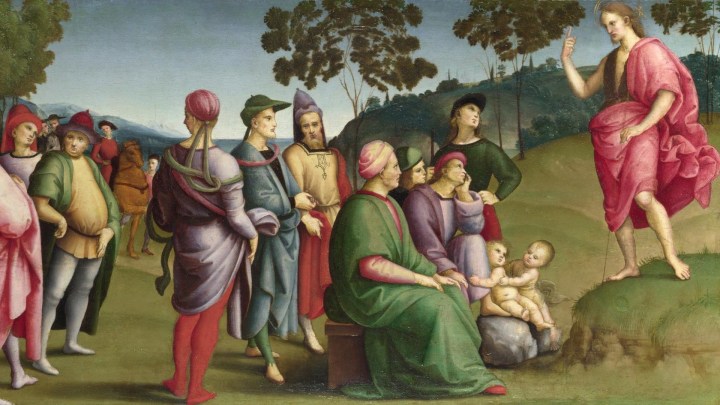
John the Baptist appears in this morning’s Gospel in stark un-compromising fashion. His message is simple, ‘Repent, for the Kingdom of God is at hand’ (Mt 3:2 ESV). It is a clear message, but to understand it takes some work. To repent means to change ones mind: to turn away from sin, and turn back to God. We are called to think differently, and as a result of this to act differently, to follow Jesus, and thereby to change the world, by co-operating with God to make the Kingdom a lived reality here and now, and to share in it forever. To repent is to turn away from sin, which separates us from God, and each other. Sin makes us selfish, self-absorbed, concerned with pleasure, wealth, power. It’s all about ME, how I feel, what I want. The proclamation of the Kingdom of God tells us that another way is possible, by the grace of God. It sounds exciting, doesn’t it? Freeing, liberating: living for others rather than ourselves. At its heart the Kingdom is a place of generosity and real love, life in all its fullness. The Church exists to proclaim this same message, and to say to the world: Another way is possible.

It is not surprising that in those times people came out into the desert to hear John. He was charismatic, his message was a refreshing antidote to the Religious Establishment of his day. People come, confess their sins, and are baptised, they are washed clean, to serve God, and to love Him. They also come because in John the people of Israel see prophecy fulfilled, and a new Elijah is in their midst. One who points to the Messiah, and has done ever since he leapt in his mother Elizabeth’s womb at the Visitation. Before John was even born he proclaimed that Jesus was the Christ, the Messiah, the One who would save Israel from their sins. We see this Messianic kingdom hoped for in the vision of Isaiah in this morning’s first reading. The branch which comes forth from the stem of Jesse is the Blessed Virgin Mary, who filled with God’s Holy Spirit, conceived and bore Our Saviour, the true King of all that is, or has been, or will be. He will be on the side of the poor and the meek, people who are left behind, and ignored because they are not rich or powerful. It’s a radical vision, which reminds us that we still have some way to go in order to put it into practice in the world around us. Isaiah’s vision of Messianic peace looks impossible, but it signifies a world-changing peace, which alters how things are, how we behave. For with, and through God another way is possible. It is not simple, or easy, but it is possible, if we rely upon God to help us. As St Paul says to the Christians in Rome, ‘May the God of endurance and encouragement grant you to live in such harmony with one another, in accord with Christ Jesus, that together you may with one voice glorify the God and Father of our Lord Jesus Christ. Therefore welcome one another as Christ has welcomed you, for the glory of God.’ (Romans 15:5-7 ESV) and again ‘May the God of hope fill you with all joy and peace in believing, so that by the power of the Holy Spirit you may abound in hope’ (Romans 15:13 ESV). We receive the Holy Spirit in our Baptism and Confirmation to strengthen us to live out our faith in our lives.

Hope can feel in pretty short supply when we look at the world around us, and if we look to humanity we will be disappointed. Our hope comes from God, our hope is God, God with us, whose Birth we are preparing to celebrate at Christmas. Advent is a time of preparation, when we prepare for Christ to come, both as a baby in Bethlehem, and as our saviour and our Judge. As the son of Jesse, and the son of David, Jesus is Israel’s true king, who rules over all. Isaiah has hope in the peace the Messiah will bring. Injustice and affliction, the fruit of sin is dealt with on the Cross, where He ‘shall stand as a signal for the peoples’ (Isa 11:10 ESV). Christ comes to die, out of love for humanity. In Him God can make things put right, and restore Creation, so that the entire Universe may praise the God who created it. 

Our Saviour is also our judge. ‘His winnowing fork is in his hand, and he will clear his threshing floor and gather his wheat into the barn, but the chaff he will burn with unquenchable fire.’ (Matt 3:12 ESV) It’s real, and it should make us stop and think for a moment. Are we living the way God wants us to? If we are not then we need to repent, say sorry, and live the way God wants us to live. This is how we flourish as people. John the Baptist calls us to make a spiritual u- turn, to turn our life around, to turn away from what separates us from God, our sins. He calls us to the waters of baptism, so that we can be healed and restored by God, filled with his grace, and prepared to receive the Holy Spirit: “I baptize you with water for repentance, but he who is coming after me is mightier than I, whose sandals I am not worthy to carry. He will baptize you with the Holy Spirit and fire” (Mt 3:11). The problem with the Pharisees and Sadducees who come to John is that they do not show the repentance necessary, they haven’t made the u-turn, they don’t have the humility to recognise there sinfulness, and the need to be washed in the waters of baptism. They are confident that they are children of Abraham; they don’t have the right attitude for God to be at work in their lives.

As well as seeing Jesus as our Saviour, John the Baptist sees Jesus as Our Judge, he points to the second coming of the Lord when, as St John of the Cross puts it, ‘we will be judged by love alone’.  It is love that matters – in Christ we see what love means it is costly, self-giving and profound. As we are filled with His Spirit, nourished by Word and Sacrament, we need to live out this love in our lives. This is how we prepare to meet him as we prepare to celebrate His Birth and look forward to his Second Coming. So let us be prepared, let us live out God’s love in our lives, let us turn away from everything which separates us from God and each other, let us live out that costly, self-giving love in our lives, as this is what God wants us to do. It is through doing this that the world around us can see what our faith means in practice, how it affects our lives, and why they could and should follow Him, and sing the praises of God the Father, God the Son, and God the Holy Spirit, to whom be ascribed as is most right and just all might, majesty, glory, dominion, and power, now and forever. Amen.  
n-6480-00-000022-hd.jpg

Advent II Yr A – REPENT

John the Baptist appears in this morning’s Gospel in stark un-compromising fashion. His message is simple, ‘Repent, for the Kingdom of God is at hand’ (Mt 3:2 ESV). It is a clear message, but to understand it takes some work. To repent means to change ones mind: to turn away from sin, and turn back to God. We are called to think differently, and as a result of this to act differently, to follow Jesus, and thereby to change the world, by co-operating with God to make the Kingdom a lived reality here and now, and to share in it forever. To repent is to turn away from sin, which separates us from God, and each other. Sin makes us selfish, self-absorbed, concerned with pleasure, wealth, power. It’s all about ME, how I feel, what I want. The proclamation of the Kingdom of God tells us that another way is possible, by the grace of God. It sounds exciting, doesn’t it? Freeing, liberating: living for others rather than ourselves. At its heart the Kingdom is a place of generosity and real love, life in all its fullness. The Church exists to proclaim this same message, and to say to the world: Another way is possible.

It is not surprising that in those times people came out into the desert to hear John. He was charismatic, his message was a refreshing antidote to the Religious Establishment of his day. People come, confess their sins, and are baptised, they are washed clean, to serve God, and to love Him. They also come because in John the people of Israel see prophecy fulfilled, and a new Elijah is in their midst. One who points to the Messiah, and has done ever since he leapt in his mother Elizabeth’s womb at the Visitation. Before John was even born he proclaimed that Jesus was the Christ, the Messiah, the One who would save Israel from their sins. We see this Messianic kingdom hoped for in the vision of Isaiah in this morning’s first reading. The branch which comes forth from the stem of Jesse is the Blessed Virgin Mary, who filled with God’s Holy Spirit, conceived and bore Our Saviour, the true King of all that is, or has been, or will be. He will be on the side of the poor and the meek, people who are left behind, and ignored because they are not rich or powerful. It’s a radical vision, which reminds us that we still have some way to go in order to put it into practice in the world around us. Isaiah’s vision of Messianic peace looks impossible, but it signifies a world-changing peace, which alters how things are, how we behave. For with, and through God another way is possible. It is not simple, or easy, but it is possible, if we rely upon God to help us. As St Paul says to the Christians in Rome, ‘May the God of endurance and encouragement grant you to live in such harmony with one another, in accord with Christ Jesus, that together you may with one voice glorify the God and Father of our Lord Jesus Christ. Therefore welcome one another as Christ has welcomed you, for the glory of God.’ (Romans 15:5-7 ESV) and again ‘May the God of hope fill you with all joy and peace in believing, so that by the power of the Holy Spirit you may abound in hope’ (Romans 15:13 ESV). We receive the Holy Spirit in our Baptism and Confirmation to strengthen us to live out our faith in our lives.

Hope can feel in pretty short supply when we look at the world around us, and if we look to humanity we will be disappointed. Our hope comes from God, our hope is God, God with us, whose Birth we are preparing to celebrate at Christmas. Advent is a time of preparation, when we prepare for Christ to come, both as a baby in Bethlehem, and as our saviour and our Judge. As the son of Jesse, and the son of David, Jesus is Israel’s true king, who rules over all. Isaiah has hope in the peace the Messiah will bring. Injustice and affliction, the fruit of sin is dealt with on the Cross, where He ‘shall stand as a signal for the peoples’ (Isa 11:10 ESV). Christ comes to die, out of love for humanity. In Him God can make things put right, and restore Creation, so that the entire Universe may praise the God who created it. 

Our Saviour is also our judge. ‘His winnowing fork is in his hand, and he will clear his threshing floor and gather his wheat into the barn, but the chaff he will burn with unquenchable fire.’ (Matt 3:12 ESV) It’s real, and it should make us stop and think for a moment. Are we living the way God wants us to? If we are not then we need to repent, say sorry, and live the way God wants us to live. This is how we flourish as people. John the Baptist calls us to make a spiritual u- turn, to turn our life around, to turn away from what separates us from God, our sins. He calls us to the waters of baptism, so that we can be healed and restored by God, filled with his grace, and prepared to receive the Holy Spirit: “I baptize you with water for repentance, but he who is coming after me is mightier than I, whose sandals I am not worthy to carry. He will baptize you with the Holy Spirit and fire” (Mt 3:11). The problem with the Pharisees and Sadducees who come to John is that they do not show the repentance necessary, they haven’t made the u-turn, they don’t have the humility to recognise there sinfulness, and the need to be washed in the waters of baptism. They are confident that they are children of Abraham; they don’t have the right attitude for God to be at work in their lives.

As well as seeing Jesus as our Saviour, John the Baptist sees Jesus as Our Judge, he points to the second coming of the Lord when, as St John of the Cross puts it, ‘we will be judged by love alone’.  It is love that matters – in Christ we see what love means it is costly, self-giving and profound. As we are filled with His Spirit, nourished by Word and Sacrament, we need to live out this love in our lives. This is how we prepare to meet him as we prepare to celebrate His Birth and look forward to his Second Coming. So let us be prepared, let us live out God’s love in our lives, let us turn away from everything which separates us from God and each other, let us live out that costly, self-giving love in our lives, as this is what God wants us to do. It is through doing this that the world around us can see what our faith means in practice, how it affects our lives, and why they could and should follow Him, and sing the praises of God the Father, God the Son, and God the Holy Spirit, to whom be ascribed as is most right and just all might, majesty, glory, dominion, and power, now and forever. Amen.  

n-6480-00-000022-hd.jpg

Saturday, 30 November 2019

Advent I (Year A)

Just over one hundred and one years ago a war ended that was supposed to be ‘the war to end all wars’. Instead the last century has seen very little peace. We are lucky in Western Europe that we have experienced 70 years without conflict, but there have been wars elsewhere. Humanity is still plagued by warfare: the loss of life, the crimes committed, lives blighted. So when we hear the prophecy of Isaiah in this morning’s first reading it is truly joyful. Beating swords into ploughshares and turning spears into pruning hooks sounds wonderful indeed. Growing crops and tending vines provides us with food and drink. It is a sign of peace, joy, and prosperity. And at the time when Christ was born, and we are preparing to celebrate the yearly memorial of his birth at Christmas, this prophecy was fulfilled. There was peace in the Roman World when Christ was born, scripture was fulfilled. And we look forward to such peace coming again, and we work for it, together. The messianic age which we look forward to  shows us what truly following Christ looks like in practice. If we walk in the light of the Lord, we are freed from the darkness of sin and destruction, which threatens to overwhelm us. 

This same message is found in St Paul’s Letter to the Romans, our second reading this morning. It is an encouraging message, that another way is possible. Instead of sleep-walking towards damnation and destruction, we can be awake and ready to follow Christ. Every day is another day closer to Christ’s Second Coming. He will come again, as our Saviour and our Judge. We need to be ready, putting on the armour of light, putting on Christ, through our baptism, and living out the faith of our baptism in our lives. The capital of the Roman Empire was renowned for tolerating some pretty immoral behaviour. It was everywhere, all around the Christian community there. Were they tempted to join in? Of course! But St Paul advises them to resist the pleasures of the flesh, drunkenness, quarrelling, nastiness: all the sorts of things we can get up to if left to our own devices.

St Paul speaks to us, to encourage the church and its members, you and me, not to give into the culture of the world around us, but to stay close to Christ. It is easy in theory, but tricky in practice. It’s easier when you’re part of a community. We can help and support each other, in good times and bad. It’s why people join Slimming World or Weightwatchers. They’re trying to change their lifestyle and eating habits, and find the support of a group a great help. Never think that small groups do not have the power to change the world. We are living proof of it as Christians, and it is why we are HERE today: to support each other, to be built up in love together, to turn away from the ways of the world, and to follow Christ. 

We follow Christ and we are ready. We prepare for Christ to come among us. That’s what Advent means, Christ’s coming. We prepare for three comings: the first our annual commemoration of His birth in Bethlehem, at Christmas, where the Word became flesh and dwelt among us. The second coming of Christ will be at the end of time, when He will be our Saviour and our Judge. The third coming we prepare for is even nearer. It happens day by day, and week when Christ comes to us in the Eucharist, in His Body and Blood, under the outward forms of Bread and Wine, the Banquet of the Kingdom, anticipated by the ploughshares and pruning hooks of Isaiah, tools to help produce Bread and Wine, a prophecy which looks forward to the peace of the Messiah and a banquet of Bread and Wine. Food of the Kingdom, food for our journey of faith, to give us strength and new life in Christ. Christ comes to us in the Eucharist to give us strength and to transform us, into His likeness. This is the reality of God’s love for us, shown to us on the Cross, and in the Resurrection, a pledge, a sure sign of love, love we can touch and taste, love which transforms us.

We need it, and we need it together. It is why we gather together on the day when Christ rose from the dead to celebrate His triumph, and ask for His prayers. Because as St Matthew’s Gospel tells us, we need to be ready. We need to be ready because ‘the Son of Man is coming at an hour you do not expect.’ (Mt 24:44 ESV) It could be that between my writing these words and delivering them, Christ will come. Christ could come today, or in thousands of years’ time. It doesn’t matter when He comes. We need to be ready, prepared to meet Him, freed from sin, and living out our faith in our lives, having heeded the warnings to prepare ourselves. That’s why Advent is a penitential season, we are reminded of how we fall short, and try, with God’s grace, to amend our lives and follow Christ.

That is why in this morning’s Gospel reading Christ says, ‘For as were the days of Noah, so will be the coming of the Son of Man.’ (Mt 24:37 ESV). Before the flood in Genesis we se that humanity was corrupt and violent, and sinful. The point Christ is making is that this is how the world will be; Christians should not be like this, because we have put on Christ, we are walking in the light, supporting each other, as a community of faith, living out the love we have been shown in Christ. At a time we do not expect, Our Lord will return, so we need to be ready, so that whenever He comes Christ may find us ready, and prepared to meet him.  

We need to prepare our hearts, our souls, our minds, all of our life, we need to live and act, to think and speak like the people of God, fully alive in him, having turned away from the ways of the world, to live fully in him, we are to live this way, and invite others so to do, so that the Kingdom of God’s peace and love may truly be found here in earth, where humanity is truly valued, where violence, death, murder, and immorality are no more.

The time is short, the time is now, it really matters; we need to come to the Lord, learn his ways and walk in his paths, living decently, living vigilantly, preferring nothing to Christ, and inviting all the world to come to the fullness of life in Him. This is how we celebrate His coming at Christmas and as Our Saviour and Judge, by following him, fed by Him, restored and healed by Him, and sharing His church’s message with all the world, so that it too may believe and sing the praise of God the Father, God the Son, and God the Holy Spirit, to whom be ascribed as is most right and just all might, majesty, glory, dominion, and power, now and forever.

Last_Judgement_(Michelangelo).jpg

Advent I (Year A)

Just over one hundred and one years ago a war ended that was supposed to be ‘the war to end all wars’. Instead the last century has seen very little peace. We are lucky in Western Europe that we have experienced 70 years without conflict, but there have been wars elsewhere. Humanity is still plagued by warfare: the loss of life, the crimes committed, lives blighted. So when we hear the prophecy of Isaiah in this morning’s first reading it is truly joyful. Beating swords into ploughshares and turning spears into pruning hooks sounds wonderful indeed. Growing crops and tending vines provides us with food and drink. It is a sign of peace, joy, and prosperity. And at the time when Christ was born, and we are preparing to celebrate the yearly memorial of his birth at Christmas, this prophecy was fulfilled. There was peace in the Roman World when Christ was born, scripture was fulfilled. And we look forward to such peace coming again, and we work for it, together. The messianic age which we look forward to  shows us what truly following Christ looks like in practice. If we walk in the light of the Lord, we are freed from the darkness of sin and destruction, which threatens to overwhelm us. 

This same message is found in St Paul’s Letter to the Romans, our second reading this morning. It is an encouraging message, that another way is possible. Instead of sleep-walking towards damnation and destruction, we can be awake and ready to follow Christ. Every day is another day closer to Christ’s Second Coming. He will come again, as our Saviour and our Judge. We need to be ready, putting on the armour of light, putting on Christ, through our baptism, and living out the faith of our baptism in our lives. The capital of the Roman Empire was renowned for tolerating some pretty immoral behaviour. It was everywhere, all around the Christian community there. Were they tempted to join in? Of course! But St Paul advises them to resist the pleasures of the flesh, drunkenness, quarrelling, nastiness: all the sorts of things we can get up to if left to our own devices.

St Paul speaks to us, to encourage the church and its members, you and me, not to give into the culture of the world around us, but to stay close to Christ. It is easy in theory, but tricky in practice. It’s easier when you’re part of a community. We can help and support each other, in good times and bad. It’s why people join Slimming World or Weightwatchers. They’re trying to change their lifestyle and eating habits, and find the support of a group a great help. Never think that small groups do not have the power to change the world. We are living proof of it as Christians, and it is why we are HERE today: to support each other, to be built up in love together, to turn away from the ways of the world, and to follow Christ. 

We follow Christ and we are ready. We prepare for Christ to come among us. That’s what Advent means, Christ’s coming. We prepare for three comings: the first our annual commemoration of His birth in Bethlehem, at Christmas, where the Word became flesh and dwelt among us. The second coming of Christ will be at the end of time, when He will be our Saviour and our Judge. The third coming we prepare for is even nearer. It happens day by day, and week when Christ comes to us in the Eucharist, in His Body and Blood, under the outward forms of Bread and Wine, the Banquet of the Kingdom, anticipated by the ploughshares and pruning hooks of Isaiah, tools to help produce Bread and Wine, a prophecy which looks forward to the peace of the Messiah and a banquet of Bread and Wine. Food of the Kingdom, food for our journey of faith, to give us strength and new life in Christ. Christ comes to us in the Eucharist to give us strength and to transform us, into His likeness. This is the reality of God’s love for us, shown to us on the Cross, and in the Resurrection, a pledge, a sure sign of love, love we can touch and taste, love which transforms us.

We need it, and we need it together. It is why we gather together on the day when Christ rose from the dead to celebrate His triumph, and ask for His prayers. Because as St Matthew’s Gospel tells us, we need to be ready. We need to be ready because ‘the Son of Man is coming at an hour you do not expect.’ (Mt 24:44 ESV) It could be that between my writing these words and delivering them, Christ will come. Christ could come today, or in thousands of years’ time. It doesn’t matter when He comes. We need to be ready, prepared to meet Him, freed from sin, and living out our faith in our lives, having heeded the warnings to prepare ourselves. That’s why Advent is a penitential season, we are reminded of how we fall short, and try, with God’s grace, to amend our lives and follow Christ.

That is why in this morning’s Gospel reading Christ says, ‘For as were the days of Noah, so will be the coming of the Son of Man.’ (Mt 24:37 ESV). Before the flood in Genesis we se that humanity was corrupt and violent, and sinful. The point Christ is making is that this is how the world will be; Christians should not be like this, because we have put on Christ, we are walking in the light, supporting each other, as a community of faith, living out the love we have been shown in Christ. At a time we do not expect, Our Lord will return, so we need to be ready, so that whenever He comes Christ may find us ready, and prepared to meet him.  

We need to prepare our hearts, our souls, our minds, all of our life, we need to live and act, to think and speak like the people of God, fully alive in him, having turned away from the ways of the world, to live fully in him, we are to live this way, and invite others so to do, so that the Kingdom of God’s peace and love may truly be found here in earth, where humanity is truly valued, where violence, death, murder, and immorality are no more.

The time is short, the time is now, it really matters; we need to come to the Lord, learn his ways and walk in his paths, living decently, living vigilantly, preferring nothing to Christ, and inviting all the world to come to the fullness of life in Him. This is how we celebrate His coming at Christmas and as Our Saviour and Judge, by following him, fed by Him, restored and healed by Him, and sharing His church’s message with all the world, so that it too may believe and sing the praise of God the Father, God the Son, and God the Holy Spirit, to whom be ascribed as is most right and just all might, majesty, glory, dominion, and power, now and forever.

Last_Judgement_(Michelangelo).jpg

Sunday, 24 February 2019

The Seventh Sunday of Year C

All of Salvation History, the entirety of the Bible, and the history of the Christian Church is at a profound level the story of God’s Generosity. The creation of the universe out of nothing, and the salvation of humanity though the Incarnation, Death and Resurrection of Jesus Christ are demonstrations of the scale of that Generosity. It’s hard to get your head around the extent to which God’s love is poured out on the world.We don’t deserve it, we cannot earn it, nonetheless we continue to receive it through the Church, through prayer, the sacraments, Holy Scripture, in the power of the Holy Spirit. 

In our first reading this morning we see an encounter between David and Saul. David could kill Saul. Abishai wants to. David, however, will not put forth his hand against the Lord’s anointed. Saul is the anointed King of Israel, and despite their differences, David shows generosity of spirit, because ‘The Lord rewards every man for his righteousness and his faithfulness’ (1Sam 26:23). We have received generously from God, and we should thus be generous as a result. 

In the Epistle we see the difference between the first Adam, and the Second one, who is Christ. The first brought death and sin, the second brings life and reconciliation. Christians are to follow the example of Christ, who transforms our humanity, and manifests the loving and generous nature of God to us.

There is at the heart of Christianity a radical idea, love your enemies. It seems counter-intuitive. Our enemies want to harm us, we should resist them, we should crush them. No we are to love them, because love is the heart of the Gospel. God is loving towards us, being born as one of us to transform us, by His Grace. He gives himself to die, for love of us, that we might be healed and reconciled. Love can end conflict. This is what Christ shows us. He ends the enmity between God and humanity by dying for us. As Christians we are to follow Christ’s example and put love into practice in our lives. Jesus asks us to follow His example, living it out in a way which is radically different to the ways of the world.

The world around us isn’t good at forgiveness, or turning the other cheek. It prefers to write people off: that’s how they are, and how they’re going to stay. Well, they will, unless we do something about it. In showing forgiveness and generosity we recognise the fact that we are human, flawed, and we make mistakes, and that change is possible: things don’t have to stay the same. Everyone loves those who love them. The point is in loving those who do not love us, that they become lovely to us, and loveable in themselves. Only love can transform what is filled with hate and anger. 

As St John writes, ‘Beloved, let us love one another; for love is of God, and he who loves is born of God and knows God. He who does not love does not know God; for God is love. In this the love of God was made manifest among us, that God sent his only Son into the world, so that we might live through him. In this is love, not that we loved God but that he loved us and sent his Son to be the expiation for our sins. Beloved, if God so loved us, we also ought to love one another. No man has ever seen God; if we love one another, God abides in us and his love is perfected in us.’ (1John 4:7-12) At the heart of it all is the Cross, the great demonstration of God’s love. All that Christ teaches us in this morning’s gospel is made manifest on the Cross. We see God die for us, and in the Eucharist, Christ gives us His Body and Blood so that we can be transformed to do His Will, and live His Risen life, preparing us for Heaven, here and now. 

God gives Himself for us: ‘for he is kind to the ungrateful and the selfish. Be merciful, even as your Father is merciful.’ (Lk 6:35-36) We can be merciful because God has shown us mercy, and continues so to do. The transforming power of God’s love and mercy is shown fully in the Mystery of the Eucharist, where we are fed by God, fed with God, so that His Love might transform us. This is generosity, shown to us so that we might be generous in return. Through God’s generosity we have the opportunity to live in a different way, and encourage others so to do. It offers the world a way out of selfishness and sin, a chance to be God’s people living life in all its fulness. Is it easy? By no means! What Jesus proposes is something costly and difficult, which requires us to go against the human instincts which lead us to be selfish, judgmental and unkind. But if we all try to do this together then we will be built up as a community of loving generosity, which makes it possible for people to be transformed into the people God wants us to be. It’s what the world wants, and longs for. 

So how do we live the life God wants us to live? The simple answer is by trying, failing, and keeping on trying. The Christian faith has at its centre Love and Forgiveness. God shows these to us in Jesus Christ, and we have to show them to one another. The Church, you and I, all of us, are called to love and forgive each other, as we will fail. And we will fail often. We can’t earn our way to Heaven through what we do, Jesus has paved the way for us through His Death and Resurrection. We can, however, try to live out our faith in our lives, loving and forgiving each other when we fall short.Not being judgemental and overcritical. Then we can be built up in love, together, as a community reconciled to God and each other. It sounds simple and straightforward, but in practice it is really difficult. This is why we have to keep trying, allowing God transform us more and more into his likeness, through His Grace.

Through the love of God being poured into our hearts, and through that love forming who we are and what we do, that self-giving sacrificial love shown to us by Our Lord and Saviour Jesus Christ, in his dying for us, so that we might live in Him, let us be attentive to the Word of God, the Word made flesh, and not simply listen but also act –- relying not upon our own strength but upon the love and mercy of God, seeking His forgiveness, to do His Will.

When we are formed by God together then we can be built up in love, as living stones, a temple to God’s glory. We proclaim God’s love and truth to the world, through forgiveness and sacrificial love. Clothed in the humility of our knowledge of our need of God’s love and mercy, let us come to Him, to be fed by Him, to be fed with Him, to be healed and restored by him, so that we can live lives which speak of the power of his kingdom so that the world may believe and give glory to God the Father, God the Son, and God the Holy Spirit, to whom be ascribed as is most right and just, all might, majesty, glory, dominion, and power, now and forever. Amen

hyla-blue-largposter-copy