Showing posts with label August 18. Show all posts

Sunday, 18 August 2019

Homily for the Ninth Sunday after Trinity

Fire is a powerful thing. It gives us heat and light. It cooks our food. When fire is controlled is a source of great joy. But when it is unchecked it is destructive and deadly. 

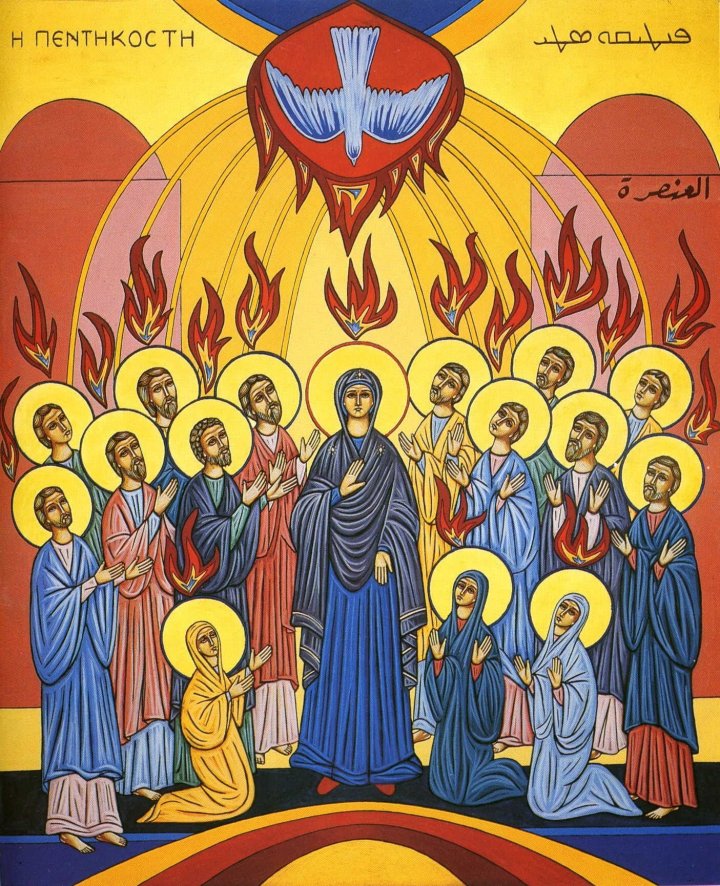
In the Church we are most used to the imagery of fire at Pentecost, when flames appear on the heads of the disciples as they are filled with the Holy Spirit. That same Spirit is given to us, in our Baptism, at ourConfirmation, and in the Sacraments of the Church. It is in the Spirit that we are be built up, and made holy, so that the image of God may be restored in us. It inspires us, and equips us to proclaim the Good News of the Kingdom of God.

In our first reading this morning from the prophet Jeremiah we hear the continuation of the argument against false shepherds and prophets who have been leading Israel astray. God reminds us that He is near, and has not abandoned us, even though falsehood is uttered in His Name. Thanks to the faithfulness of men like Jeremiah the truth will out in the end. As He says, ‘let him who has my word speak it faithfully’ (Jer 23:28 ESV). The faithful proclamation of the Word of God, first in Israel, and now in the Church, is truly Good News. ‘Is not my word like fire, declares the Lord’ (Jer 23:29 ESV). As Christians we follow the Word made flesh, who sends the Holy Spirit, which came like fire, so that we might be united with the God who loves us and saves us. 

In our reading from the Letter to the Hebrews, which continues where last week’s reading finished, we hear more of salvation history. The Exodus, and Israel’s entry into the Promised Land, are presented as examples of living by faith. The writer develops this to explain that through who Christ is, and what He has done for us, we have a greater Passover, from death and sin, to eternal life. We are surrounded by ‘a great cloud of witnesses’ by the providence of God, and His love for humanity. First and foremost we look to Jesus Christ, ‘the founder and perfecter of our faith, who for the joy that was set before him endured the cross, despising the shame, and is seated at the right hand of the throne of God.’ (Heb 12:2 ESV).

At the heart of it all is the Cross, which has reconciled us to God, and to each other. By the power of the Holy Spirit He took flesh in the womb of His mother, the Blessed Virgin Mary, and was born for us, so that he might be offered as a lamb without blemish, a perfect offering of love to God the Father. 

In the Gospel, Our Lord says that He came to cast fire on the earth, and looks towards His Passion. The fire speaks of a choice to be made, a decision on our part, whether we will follow Him, or not. It also anticipates to the sending of the Holy Spirit at Pentecost. This is a fire of renewal and inspiration, to fill His Church with life and power. From the Incarnation, Christ comes to infuse us with the love of God. The outpouring of the Holy Spirit is nothing more than humanity being completely filled with God’s love. 

We have been imbued with the same Spirit as the first apostles. The same love should burn in our hearts. Has God abandoned us? Surely not! Then we must pray that God will kindle that fire in our hearts. 

Holy Spirit, Divine Consoler, We adore You as our true God, with God the Father and God the Son. Amen. 

We pray that God pours out His Holy Spirit upon us so that we are built up in love, together. We pray that we are inspired to continue the work of God’s kingdom, here and now. So that we and all creation will sing the praise of God the Father, God the Son, and God the Holy Spirit, to whom be ascribed as is most right and just all might, majesty, glory, dominion, and power, now and forever. Amen. 
pentecost_maronite_icon

Homily for the Ninth Sunday after Trinity

Fire is a powerful thing. It gives us heat and light. It cooks our food. When fire is controlled is a source of great joy. But when it is unchecked it is destructive and deadly. 

In the Church we are most used to the imagery of fire at Pentecost, when flames appear on the heads of the disciples as they are filled with the Holy Spirit. That same Spirit is given to us, in our Baptism, at ourConfirmation, and in the Sacraments of the Church. It is in the Spirit that we are be built up, and made holy, so that the image of God may be restored in us. It inspires us, and equips us to proclaim the Good News of the Kingdom of God.

In our first reading this morning from the prophet Jeremiah we hear the continuation of the argument against false shepherds and prophets who have been leading Israel astray. God reminds us that He is near, and has not abandoned us, even though falsehood is uttered in His Name. Thanks to the faithfulness of men like Jeremiah the truth will out in the end. As He says, ‘let him who has my word speak it faithfully’ (Jer 23:28 ESV). The faithful proclamation of the Word of God, first in Israel, and now in the Church, is truly Good News. ‘Is not my word like fire, declares the Lord’ (Jer 23:29 ESV). As Christians we follow the Word made flesh, who sends the Holy Spirit, which came like fire, so that we might be united with the God who loves us and saves us. 

In our reading from the Letter to the Hebrews, which continues where last week’s reading finished, we hear more of salvation history. The Exodus, and Israel’s entry into the Promised Land, are presented as examples of living by faith. The writer develops this to explain that through who Christ is, and what He has done for us, we have a greater Passover, from death and sin, to eternal life. We are surrounded by ‘a great cloud of witnesses’ by the providence of God, and His love for humanity. First and foremost we look to Jesus Christ, ‘the founder and perfecter of our faith, who for the joy that was set before him endured the cross, despising the shame, and is seated at the right hand of the throne of God.’ (Heb 12:2 ESV).

At the heart of it all is the Cross, which has reconciled us to God, and to each other. By the power of the Holy Spirit He took flesh in the womb of His mother, the Blessed Virgin Mary, and was born for us, so that he might be offered as a lamb without blemish, a perfect offering of love to God the Father. 

In the Gospel, Our Lord says that He came to cast fire on the earth, and looks towards His Passion. The fire speaks of a choice to be made, a decision on our part, whether we will follow Him, or not. It also anticipates to the sending of the Holy Spirit at Pentecost. This is a fire of renewal and inspiration, to fill His Church with life and power. From the Incarnation, Christ comes to infuse us with the love of God. The outpouring of the Holy Spirit is nothing more than humanity being completely filled with God’s love. 

We have been imbued with the same Spirit as the first apostles. The same love should burn in our hearts. Has God abandoned us? Surely not! Then we must pray that God will kindle that fire in our hearts. 

Holy Spirit, Divine Consoler, We adore You as our true God, with God the Father and God the Son. Amen. 

We pray that God pours out His Holy Spirit upon us so that we are built up in love, together. We pray that we are inspired to continue the work of God’s kingdom, here and now. So that we and all creation will sing the praise of God the Father, God the Son, and God the Holy Spirit, to whom be ascribed as is most right and just all might, majesty, glory, dominion, and power, now and forever. Amen. 

pentecost_maronite_icon

Saturday, 18 August 2018

Twentieth Sunday of Yr B (Prov 9:1-6, Eph 5:15-20, Jn 6:51-58)

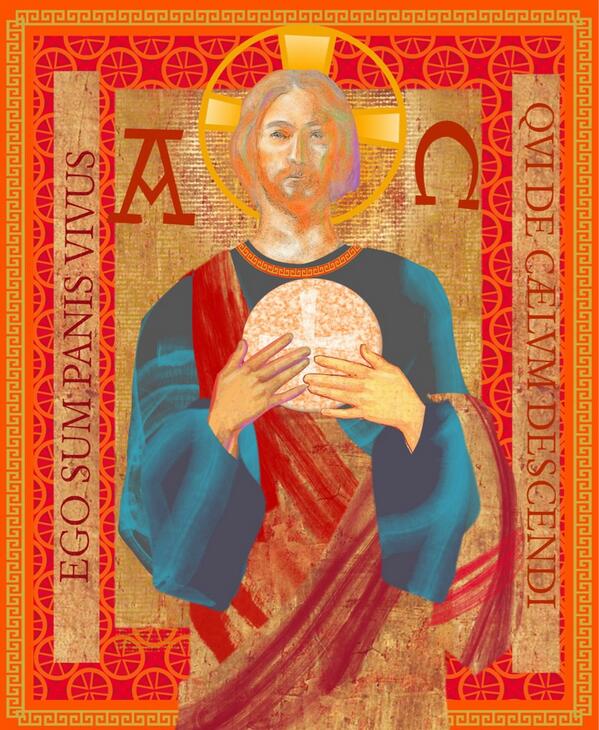
Over the past few weeks our readings from St John’s Gospel have focussed on Jesus’ teaching about the Bread of Life. After the Feeding of the Five Thousand Jesus teaches people at great length, beginning with His statement, ‘I am the bread of life’ (Jn 6:35) It is an extended meditation on what the Eucharist, the central and primary act of Christian worship, is. It is where we follow Jesus’ command to ‘to this in memory of Him’. At one level it is strange: the bread and wine do not look or taste any different after prayers have been said, but what we are eating and drinking IS different, because Jesus says that it is, because God is active in the world, and we have a relationship with Him. The way in which God acts is mysterious, we struggle to UNDERSTAND it, but we can EXPERIENCE it, through Holy Communion, where Christ feeds us with His Body and Blood. 

In our first reading this morning from the Book of Proverbs we see Wisdom. In the Christian tradition she is identified with Jesus Christ, the Word made Flesh. She is issuing an invitation: she has built a house, the Church. She has hewn seven pillars, the sacraments, the means of God’s grace to be active in our lives. The people of God are called to eat and drink, to live, and to walk in the way of insight, that is in following Jesus Christ. The New is prefigured in the Old. The Hebrew Scriptures point to, and find their fulfilment in Jesus Christ, who is the Wisdom of God, and the Word made Flesh. We are invited to His banquet, so let us come to be fed at the table of the Lord. 

Likewise St Paul advises the church in Ephesus not to behave in a worldly manner, but to put God at the centre of our lives. He ends by invoking the names of the three persons of the Godhead, Father, Son, and Holy Spirit, in a context of right worship, of praise of Almighty God, as that is what we as Christians are supposed to do: to love God and to serve him, through prayer and worship, through entering into the mystery of the Three in One. To be caught up in the outpouring of divine love, and to have a foretaste of it here on earth.

After feeding the Five Thousand in John’s Gospel, a sign of the generous nature of God’s love for humanity, Jesus embarks upon an extended discourse upon himself as the Bread of Life. John’s account of the Last Supper focuses on Christ washing the disciples’ feet, and their obeying Christ’s example and commands. There is no institution narrative, instead the Eucharistic teaching in John’s Gospel is centred around Jesus’ explanation in Chapter 6, so that a long time before Jesus’ suffering and death we can see what it is all about. It’s a process which starts with John the Baptist at the start of the Gospel, where he sees Jesus and says, ‘Behold the Lamb of God, who takes away the sin of the world’ (Jn 1:29) The Lamb points to Passover and the freedom of the people of God, freedom from sin and its effects.

Jesus begins the last section of his teaching with the bold claim that, ‘I am the living bread that came down from heaven. Whoever eats this bread will live for ever; and the bread that I will give for the life of the world is my flesh.’ These are some extraordinary claims to make, they would have sounded shocking to a first century Jew, and some two thousand years later they still sound shocking, and yet the offering of Christ’s body for the sins of the world as a sacrifice which is re-presented, made present again and offered to God the Father upon the altars of the church, is what the church is for, it is what we are for. It is why we come together to worship on the day when Christ rose from the dead, a sign of the new life we share in Christ, through baptism and the Eucharist.

It is done so that we may have life in us, and have it for eternity, so that we may share in the pledge of eternal life given to us in Christ, who will raise us up forever with Him. Such is the nature of God’s love for us: it is freely given, we do not earn it, we do not deserve it. It is something given to us, so that by it, and through it, we may become something greater, something better than we are.

Such is the power of God’s sacrificial love at work in our lives; such is the treasure which we have come here today to receive. If it were ordinary food then we would eat it, and it would become what we are, our flesh and blood; but instead we, who eat it, become what it is: the Body and Blood, Soul and Divinity of Our Lord and Saviour Jesus Christ. We share in His divine life, we are healed by His divine love, by his sacrifice the wounds of sin and division are healed so that humanity, made in the image of God might be ransomed, healed, restored, and forgiven by God, to live to his praise and glory.

God loves us. God dies for us, and rises again for us. As a sign, a pledge and a token of His love, He gives Himself to us in the Eucharist, so that we might come to share that divine life and love. The process of transformation which will end in Heaven is begun here and now, so that we can live the life of the Kingdom of God here and now, and transform the world around us into what God wants it to be. This is the revolution which God seeks to accomplish through us, through His Church, that fed by Christ and with Christ we transform the world around us, living lives of love and forgiveness which can and will change the world. 

Such wonderful news is truly worth pondering and considering in detail given its potential effects in our lives, so that bit by bit we are slowly and sure becoming more Christ-like, fed by Him, fed with Him, and encouraging others so to do so that the world may believe and give glory to God the Father, God the Son, and God the Holy Spirit, to whom be ascribed as is most right and just, all might, majesty, glory, dominion, and power, now and forever, Amen. 

blgsv4ncyaat655