Showing posts with label Jesus. Show all posts

Saturday, 28 September 2019

Homily for Trinity XV

At its very heart the Christian Faith is all about generosity: God’s generosity towards us, and our generous response in return. It is shown most fully in the life, death, and resurrection of Jesus Christ. We know this, it is our faith, but it should also lead us to action. We are called to be generous in return, generous towards others, and ourselves. Our response shows that we are living out our faith, that we haven’t simply accepted the tenets of our faith, but are putting them into action, to transform the world. 

Our readings this morning begin with a troubling word from the prophet Amos. The prophet warns those who are comfortable, those who feel secure, and he is speaking to us. Should we be worried? Yes we should, because we should be learning to be generous, sharing what we have, because it is the right and proper thing to do, it is how we flourish. Today is amongst other things the Word Day of Migrants and Refugees, which the Church has celebrated for over a hundred years. In a world like ours, where people are marginalised, persecuted, forced to flee, who long to live in peace and prosperity, how do we react? Do we want to build walls and set up borders to keep people out? They’re not like us! They don’t belong here! We don’t like them! Or do we want to do something else? To welcome people in, and share what we have with them? So that the world may reflect the values of the Kingdom of God. The choice is a clear one.

This morning’s Gospel presents us with a stark contrast. Our Lord is speaking to the Pharisees, the Jewish religious leaders, people who are sure of their position in society. There is a beggar, Lazarus, a man who has nothing, a man who is hungry and who longs to eat the scraps from the rich man’s table. He has sores, which make him unclean in Jewish eyes. He is licked by dogs, which were seen as unclean, so he’s lying there destitute, shown love only by dogs, and not by humans. He’s the lowest of the low. And yet, when he dies, he is taken to heaven. The rich man by contrast dies and goes to Hell where he endures its torments. Why? Because the rich man could have been generous, but instead he was selfish. He could have look after Lazarus, but he did nothing. It’s doubtful that his five brothers would take any notice of Lazarus, even if raised from the dead. They don’t listen to the Law and the Prophets which command them to ‘love your neighbour as yourself’ (Leviticus 9:18), ‘He has told you, O man, what is good; and what does the Lord require of you but to do justice, and to love kindness, and to walk humbly with your God?’ (Micah 6:8). Faith then is something which needs to be put into action, we show our love by loving, caring, and sharing.

It is exactly what St Paul advises Timothy in this morning’s second reading: ‘As for the rich in this present age, charge them not to be haughty, nor to set their hopes on the uncertainty of riches, but on God, who richly provides us with everything to enjoy. They are to do good, to be rich in good works, to be generous and ready to share, thus storing up treasure for themselves as a good foundation for the future, so that they may take hold of that which is truly life.’ (1Tim 6:17-19) The point of wealth is to be generous with it. If we’re honest with ourselves, don’t we long for a world like this? A world where peace, love, and generosity are lived out in a real way, to make the world better, the kind of world God wants, so that we may flourish as human beings. 

It isn’t that simple, because human beings are sinful and selfish. We’re not always generous, but we do not have to be this way. So at a time when we give thanks to God for all the good things of creation which have been harvested, and especially when we are mindful of migrants and refugees, we have to ask ourselves the question: Can we be generous? If we cannot then all we have to look forward to in the future are the eternal torments of Hell. It’s a stark uncompromising message, and a simple choice. It’s the truth of our faith. It doesn’t make us feel warm and cosy. That’s cheap grace. The idea that God doesn’t demand anything more from us than a vague superficial niceness. It will not do! The church cannot stand idly by while people consign their souls to hell because they cannot be bothered. 

We are generous because God was generous first. He gives His only Son to be born for us, and to die on the Cross for us. God is tortured and suffers for us, to bear the burden of our sins. To take what should condemn us to Hell upon Himself, to save us from it. It’s why we are here this morning to celebrate the Eucharist, the sign of God’s generosity to the world made real to us under the forms of bread and wine. We touch and taste God’s generous love for us, to that it may transform us, strengthening us to live the life of the Kingdom of God here and now. 

We are fed and sent out to live lives of radical generosity where we care for people, where we look after the migrants and refugees, welcoming them into our communities, as we are all brothers and sisters in Christ. We belong to each other, and are called to live lives of love in community. It sounds idealistic, and so it should. It reminds us that we are called to be generous, even to the point of being reckless, sitting lightly to the things of this world, and holding no store by wealth, or position, or influence, but instead giving it away, sharing it with others. If we cannot serve God and money, then as Christians we are to serve God. We serve him by being generous, and looking after those on the margins, practising the same generosity which God poured out on us, shedding His Blood to take away our sins. Let us transform the world so that it may turn away from the ways of greed and selfishness and put its trust in the true riches of the Kingdom. 

It is this generous God who comes to us today in Word and Sacrament, to heal us and restore us, to give us life in him. He entrusts to us the true riches of the Kingdom so that we may share them recklessly, generously with the world so that it may believe and sing the praises of God the Father, God the Son, and God the Holy Spirit, to whom be ascribed as is most right and just all might, majesty, glory, dominion, and power, now and forever.

Lazarus-Dives

Homily for Trinity XV

At its very heart the Christian Faith is all about generosity: God’s generosity towards us, and our generous response in return. It is shown most fully in the life, death, and resurrection of Jesus Christ. We know this, it is our faith, but it should also lead us to action. We are called to be generous in return, generous towards others, and ourselves. Our response shows that we are living out our faith, that we haven’t simply accepted the tenets of our faith, but are putting them into action, to transform the world. 

Our readings this morning begin with a troubling word from the prophet Amos. The prophet warns those who are comfortable, those who feel secure, and he is speaking to us. Should we be worried? Yes we should, because we should be learning to be generous, sharing what we have, because it is the right and proper thing to do, it is how we flourish. Today is amongst other things the Word Day of Migrants and Refugees, which the Church has celebrated for over a hundred years. In a world like ours, where people are marginalised, persecuted, forced to flee, who long to live in peace and prosperity, how do we react? Do we want to build walls and set up borders to keep people out? They’re not like us! They don’t belong here! We don’t like them! Or do we want to do something else? To welcome people in, and share what we have with them? So that the world may reflect the values of the Kingdom of God. The choice is a clear one.

This morning’s Gospel presents us with a stark contrast. Our Lord is speaking to the Pharisees, the Jewish religious leaders, people who are sure of their position in society. There is a beggar, Lazarus, a man who has nothing, a man who is hungry and who longs to eat the scraps from the rich man’s table. He has sores, which make him unclean in Jewish eyes. He is licked by dogs, which were seen as unclean, so he’s lying there destitute, shown love only by dogs, and not by humans. He’s the lowest of the low. And yet, when he dies, he is taken to heaven. The rich man by contrast dies and goes to Hell where he endures its torments. Why? Because the rich man could have been generous, but instead he was selfish. He could have look after Lazarus, but he did nothing. It’s doubtful that his five brothers would take any notice of Lazarus, even if raised from the dead. They don’t listen to the Law and the Prophets which command them to ‘love your neighbour as yourself’ (Leviticus 9:18), ‘He has told you, O man, what is good; and what does the Lord require of you but to do justice, and to love kindness, and to walk humbly with your God?’ (Micah 6:8). Faith then is something which needs to be put into action, we show our love by loving, caring, and sharing.

It is exactly what St Paul advises Timothy in this morning’s second reading: ‘As for the rich in this present age, charge them not to be haughty, nor to set their hopes on the uncertainty of riches, but on God, who richly provides us with everything to enjoy. They are to do good, to be rich in good works, to be generous and ready to share, thus storing up treasure for themselves as a good foundation for the future, so that they may take hold of that which is truly life.’ (1Tim 6:17-19) The point of wealth is to be generous with it. If we’re honest with ourselves, don’t we long for a world like this? A world where peace, love, and generosity are lived out in a real way, to make the world better, the kind of world God wants, so that we may flourish as human beings. 

It isn’t that simple, because human beings are sinful and selfish. We’re not always generous, but we do not have to be this way. So at a time when we give thanks to God for all the good things of creation which have been harvested, and especially when we are mindful of migrants and refugees, we have to ask ourselves the question: Can we be generous? If we cannot then all we have to look forward to in the future are the eternal torments of Hell. It’s a stark uncompromising message, and a simple choice. It’s the truth of our faith. It doesn’t make us feel warm and cosy. That’s cheap grace. The idea that God doesn’t demand anything more from us than a vague superficial niceness. It will not do! The church cannot stand idly by while people consign their souls to hell because they cannot be bothered. 

We are generous because God was generous first. He gives His only Son to be born for us, and to die on the Cross for us. God is tortured and suffers for us, to bear the burden of our sins. To take what should condemn us to Hell upon Himself, to save us from it. It’s why we are here this morning to celebrate the Eucharist, the sign of God’s generosity to the world made real to us under the forms of bread and wine. We touch and taste God’s generous love for us, to that it may transform us, strengthening us to live the life of the Kingdom of God here and now. 

We are fed and sent out to live lives of radical generosity where we care for people, where we look after the migrants and refugees, welcoming them into our communities, as we are all brothers and sisters in Christ. We belong to each other, and are called to live lives of love in community. It sounds idealistic, and so it should. It reminds us that we are called to be generous, even to the point of being reckless, sitting lightly to the things of this world, and holding no store by wealth, or position, or influence, but instead giving it away, sharing it with others. If we cannot serve God and money, then as Christians we are to serve God. We serve him by being generous, and looking after those on the margins, practising the same generosity which God poured out on us, shedding His Blood to take away our sins. Let us transform the world so that it may turn away from the ways of greed and selfishness and put its trust in the true riches of the Kingdom. 

It is this generous God who comes to us today in Word and Sacrament, to heal us and restore us, to give us life in him. He entrusts to us the true riches of the Kingdom so that we may share them recklessly, generously with the world so that it may believe and sing the praises of God the Father, God the Son, and God the Holy Spirit, to whom be ascribed as is most right and just all might, majesty, glory, dominion, and power, now and forever.
Lazarus-Dives

Saturday, 6 April 2019

Lent V Year C

The world around us loves to be judgemental, to judge people when they do wrong, and to take delight in their fall from grace, especially if they are famous or powerful. We put people on pedestals, and we are surprised when they fall off. More than that, the media encourages us to be critical of others. It’s gossip on a grand scale, and it is deeply corrosive, because it sets us up to think that WE are somehow BETTER. It isn’t that we do no not do the same things, but only that we haven’t yet been caught, or had our misdeeds paraded in public. We all, each and every one of us, myself included, say and do things which we should not, which hurt others, and for which we need forgiveness. We can ask God for forgiveness, because of what Christ did for us, taking our sins upon himself, on the Cross. It’s taken away, dealt with forgiven, all of it. God loves us, and in turning to God for forgiveness we are turning away from sin, and trying to live our lives in a new way. The Christian life is a constant repetition of this process, failing and trying again, and keeping on so that bit by bit, gradually we let God be at work in us, to transform us, making us less judgemental, less prone to the cult of celebrity, more loving, more forgiving, and building up a community that is filled with a radical transforming love, a force for good, a beacon of hope, which clings to the Cross as our only hope, and shares that love with the world around us.

In the prophet Isaiah we that God is doing a new thing, a way in the wilderness, streams in the desert. It’s the hope that the Messiah will bring a new way of living, which refreshes people, which satisfies that deep inner thirst, which nothing of this world can. Only Christ can give us living water, so that we can live in, and for, and through Him.

St Paul, in his letter to the Philippians, is writing to a church experiencing persecution, while he is under house arrest in Rome, and yet Paul’s message is one of hope for the future, because of what God has done for him, Paul. He has been forgiven, and made righteous, through Christ’s Death and Resurrection. He is called to share in that suffering and death, and he’s a work in progress. He hasn’t got there yet. He’s on the way, but he trusts God to be at work in him, through Christ.

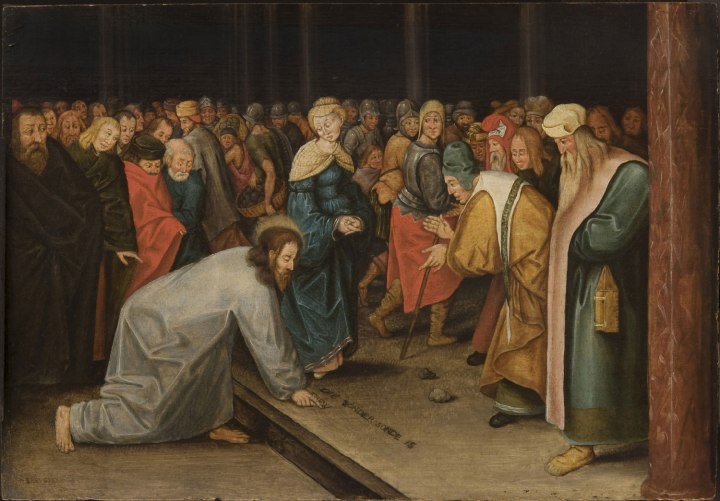
In this morning’s Gospel we see a woman caught in the act of adultery. By the law of Moses she should be stoned to death. But Jesus shows the world another way –- it is the way of love and not of judgement. Every single one of us sins: we say, and think, and do things which we should not, which separate us from God and our neighbour. But instead of condemning humanity, God in Christ loves us and gives himself for us. He suffers and dies and rises again to show us the way of LOVE. He gives us His Word and feeds us with His Body and Blood so that we can share in his divine life, so that we can have a hope of heaven.

Rather than condemning the woman, Jesus challenges those around him: ‘Let him who is without sin among you be the first to throw a stone at her’. Rather than judging others we need to look at ourselves and recognise that we too are sinners. It should force us to take a long, hard look at ourselves — at our lives, and recognise that we need to conform ourselves to Christ — to live, and think, and speak like him. We need to be nourished by him, healed and restored by him, to live lives which proclaim his love and his truth to the world, living out our faith in our lives so that the world may believe.

Once the people had gone ‘Jesus stood up and said to her, “Woman, where are they? Has no one condemned you?” She said, “No one, Lord.” And Jesus said, “Neither do I condemn you; go, and from now on sin no more.”’ We are loved, healed and restored by God, but with that comes a challenge: as Christians we are to turn away from sin. We are challenged to turn away from the ways of sin, the ways of the world, to find life in Him. The perfection that comes through faith in Christ, and is from God, is based on faith. We need to ‘know him and the power of his resurrection, and … share his sufferings, becoming like him in his death’.

This is what we are trying to do in Lent, preparing our souls and our lives so that we celebrate His Death and Resurrection and our reconciliation with God. It is done so that God’s grace may perfect our nature and fit us for heaven, sharing the divine life of love, through a conscious turning away from the ways of the world, of sin, and of death: losing our lives to find them in him. It’s difficult. St Paul in his Letter to the Philippians didn’t find it easy, nor should we. Just because living the life of faith is something difficult doesn’t mean that we shouldn’t try. We will fail, but our failure is not necessarily a problem. What matters is that we keep trying, together: supporting, loving and forgiving each other to live a life of love, so that the world may believe. Let us then recognise our human sin and weakness and through God’s help turn away from it. We are called to transform the whole world and everyone in it, so that they may have live and life in all its fullness. We are fed by the word of God and by the sacrament of His Body and Blood to be strengthened, to share in His divine life, to fit us for Heaven, and to transform all of creation that it may resound his praise and share in his life of the Resurrection, washed in His Blood and the saving waters of Baptism: forgiven and forgiving so that all that we say, or think, or do, all that we are may be for the praise of God the Father, God the Son, and God the Holy Spirit, to whom be ascribed as is most right and just, all might, majesty, glory dominion and power, now and forever

brueghel_ii2c_pieter_-_christ_and_the_woman_taken_in_adultery_1600

Lent V Year C

The world around us loves to be judgemental, to judge people when they do wrong, and to take delight in their fall from grace, especially if they are famous or powerful. We put people on pedestals, and we are surprised when they fall off. More than that, the media encourages us to be critical of others. It’s gossip on a grand scale, and it is deeply corrosive, because it sets us up to think that WE are somehow BETTER. It isn’t that we do no not do the same things, but only that we haven’t yet been caught, or had our misdeeds paraded in public. We all, each and every one of us, myself included, say and do things which we should not, which hurt others, and for which we need forgiveness. We can ask God for forgiveness, because of what Christ did for us, taking our sins upon himself, on the Cross. It’s taken away, dealt with forgiven, all of it. God loves us, and in turning to God for forgiveness we are turning away from sin, and trying to live our lives in a new way. The Christian life is a constant repetition of this process, failing and trying again, and keeping on so that bit by bit, gradually we let God be at work in us, to transform us, making us less judgemental, less prone to the cult of celebrity, more loving, more forgiving, and building up a community that is filled with a radical transforming love, a force for good, a beacon of hope, which clings to the Cross as our only hope, and shares that love with the world around us.

In the prophet Isaiah we that God is doing a new thing, a way in the wilderness, streams in the desert. It’s the hope that the Messiah will bring a new way of living, which refreshes people, which satisfies that deep inner thirst, which nothing of this world can. Only Christ can give us living water, so that we can live in, and for, and through Him.

St Paul, in his letter to the Philippians, is writing to a church experiencing persecution, while he is under house arrest in Rome, and yet Paul’s message is one of hope for the future, because of what God has done for him, Paul. He has been forgiven, and made righteous, through Christ’s Death and Resurrection. He is called to share in that suffering and death, and he’s a work in progress. He hasn’t got there yet. He’s on the way, but he trusts God to be at work in him, through Christ.

In this morning’s Gospel we see a woman caught in the act of adultery. By the law of Moses she should be stoned to death. But Jesus shows the world another way –- it is the way of love and not of judgement. Every single one of us sins: we say, and think, and do things which we should not, which separate us from God and our neighbour. But instead of condemning humanity, God in Christ loves us and gives himself for us. He suffers and dies and rises again to show us the way of LOVE. He gives us His Word and feeds us with His Body and Blood so that we can share in his divine life, so that we can have a hope of heaven.

Rather than condemning the woman, Jesus challenges those around him: ‘Let him who is without sin among you be the first to throw a stone at her’. Rather than judging others we need to look at ourselves and recognise that we too are sinners. It should force us to take a long, hard look at ourselves — at our lives, and recognise that we need to conform ourselves to Christ — to live, and think, and speak like him. We need to be nourished by him, healed and restored by him, to live lives which proclaim his love and his truth to the world, living out our faith in our lives so that the world may believe.

Once the people had gone ‘Jesus stood up and said to her, “Woman, where are they? Has no one condemned you?” She said, “No one, Lord.” And Jesus said, “Neither do I condemn you; go, and from now on sin no more.”’ We are loved, healed and restored by God, but with that comes a challenge: as Christians we are to turn away from sin. We are challenged to turn away from the ways of sin, the ways of the world, to find life in Him. The perfection that comes through faith in Christ, and is from God, is based on faith. We need to ‘know him and the power of his resurrection, and … share his sufferings, becoming like him in his death’.

This is what we are trying to do in Lent, preparing our souls and our lives so that we celebrate His Death and Resurrection and our reconciliation with God. It is done so that God’s grace may perfect our nature and fit us for heaven, sharing the divine life of love, through a conscious turning away from the ways of the world, of sin, and of death: losing our lives to find them in him. It’s difficult. St Paul in his Letter to the Philippians didn’t find it easy, nor should we. Just because living the life of faith is something difficult doesn’t mean that we shouldn’t try. We will fail, but our failure is not necessarily a problem. What matters is that we keep trying, together: supporting, loving and forgiving each other to live a life of love, so that the world may believe. Let us then recognise our human sin and weakness and through God’s help turn away from it. We are called to transform the whole world and everyone in it, so that they may have live and life in all its fullness. We are fed by the word of God and by the sacrament of His Body and Blood to be strengthened, to share in His divine life, to fit us for Heaven, and to transform all of creation that it may resound his praise and share in his life of the Resurrection, washed in His Blood and the saving waters of Baptism: forgiven and forgiving so that all that we say, or think, or do, all that we are may be for the praise of God the Father, God the Son, and God the Holy Spirit, to whom be ascribed as is most right and just, all might, majesty, glory dominion and power, now and forever

brueghel_ii2c_pieter_-_christ_and_the_woman_taken_in_adultery_1600

Saturday, 18 August 2018

Twentieth Sunday of Yr B (Prov 9:1-6, Eph 5:15-20, Jn 6:51-58)

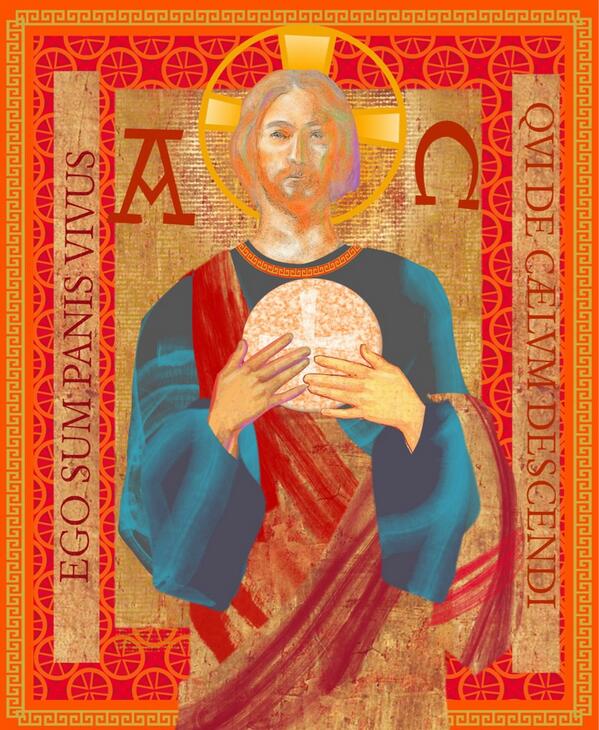
Over the past few weeks our readings from St John’s Gospel have focussed on Jesus’ teaching about the Bread of Life. After the Feeding of the Five Thousand Jesus teaches people at great length, beginning with His statement, ‘I am the bread of life’ (Jn 6:35) It is an extended meditation on what the Eucharist, the central and primary act of Christian worship, is. It is where we follow Jesus’ command to ‘to this in memory of Him’. At one level it is strange: the bread and wine do not look or taste any different after prayers have been said, but what we are eating and drinking IS different, because Jesus says that it is, because God is active in the world, and we have a relationship with Him. The way in which God acts is mysterious, we struggle to UNDERSTAND it, but we can EXPERIENCE it, through Holy Communion, where Christ feeds us with His Body and Blood. 

In our first reading this morning from the Book of Proverbs we see Wisdom. In the Christian tradition she is identified with Jesus Christ, the Word made Flesh. She is issuing an invitation: she has built a house, the Church. She has hewn seven pillars, the sacraments, the means of God’s grace to be active in our lives. The people of God are called to eat and drink, to live, and to walk in the way of insight, that is in following Jesus Christ. The New is prefigured in the Old. The Hebrew Scriptures point to, and find their fulfilment in Jesus Christ, who is the Wisdom of God, and the Word made Flesh. We are invited to His banquet, so let us come to be fed at the table of the Lord. 

Likewise St Paul advises the church in Ephesus not to behave in a worldly manner, but to put God at the centre of our lives. He ends by invoking the names of the three persons of the Godhead, Father, Son, and Holy Spirit, in a context of right worship, of praise of Almighty God, as that is what we as Christians are supposed to do: to love God and to serve him, through prayer and worship, through entering into the mystery of the Three in One. To be caught up in the outpouring of divine love, and to have a foretaste of it here on earth.

After feeding the Five Thousand in John’s Gospel, a sign of the generous nature of God’s love for humanity, Jesus embarks upon an extended discourse upon himself as the Bread of Life. John’s account of the Last Supper focuses on Christ washing the disciples’ feet, and their obeying Christ’s example and commands. There is no institution narrative, instead the Eucharistic teaching in John’s Gospel is centred around Jesus’ explanation in Chapter 6, so that a long time before Jesus’ suffering and death we can see what it is all about. It’s a process which starts with John the Baptist at the start of the Gospel, where he sees Jesus and says, ‘Behold the Lamb of God, who takes away the sin of the world’ (Jn 1:29) The Lamb points to Passover and the freedom of the people of God, freedom from sin and its effects.

Jesus begins the last section of his teaching with the bold claim that, ‘I am the living bread that came down from heaven. Whoever eats this bread will live for ever; and the bread that I will give for the life of the world is my flesh.’ These are some extraordinary claims to make, they would have sounded shocking to a first century Jew, and some two thousand years later they still sound shocking, and yet the offering of Christ’s body for the sins of the world as a sacrifice which is re-presented, made present again and offered to God the Father upon the altars of the church, is what the church is for, it is what we are for. It is why we come together to worship on the day when Christ rose from the dead, a sign of the new life we share in Christ, through baptism and the Eucharist.

It is done so that we may have life in us, and have it for eternity, so that we may share in the pledge of eternal life given to us in Christ, who will raise us up forever with Him. Such is the nature of God’s love for us: it is freely given, we do not earn it, we do not deserve it. It is something given to us, so that by it, and through it, we may become something greater, something better than we are.

Such is the power of God’s sacrificial love at work in our lives; such is the treasure which we have come here today to receive. If it were ordinary food then we would eat it, and it would become what we are, our flesh and blood; but instead we, who eat it, become what it is: the Body and Blood, Soul and Divinity of Our Lord and Saviour Jesus Christ. We share in His divine life, we are healed by His divine love, by his sacrifice the wounds of sin and division are healed so that humanity, made in the image of God might be ransomed, healed, restored, and forgiven by God, to live to his praise and glory.

God loves us. God dies for us, and rises again for us. As a sign, a pledge and a token of His love, He gives Himself to us in the Eucharist, so that we might come to share that divine life and love. The process of transformation which will end in Heaven is begun here and now, so that we can live the life of the Kingdom of God here and now, and transform the world around us into what God wants it to be. This is the revolution which God seeks to accomplish through us, through His Church, that fed by Christ and with Christ we transform the world around us, living lives of love and forgiveness which can and will change the world. 

Such wonderful news is truly worth pondering and considering in detail given its potential effects in our lives, so that bit by bit we are slowly and sure becoming more Christ-like, fed by Him, fed with Him, and encouraging others so to do so that the world may believe and give glory to God the Father, God the Son, and God the Holy Spirit, to whom be ascribed as is most right and just, all might, majesty, glory, dominion, and power, now and forever, Amen. 

blgsv4ncyaat655

Saturday, 11 August 2018

Nineteenth Sunday of Year B (1Kgs 19:4-8, Eph 4:2-5:2, Jn 6:35 & 41-51)

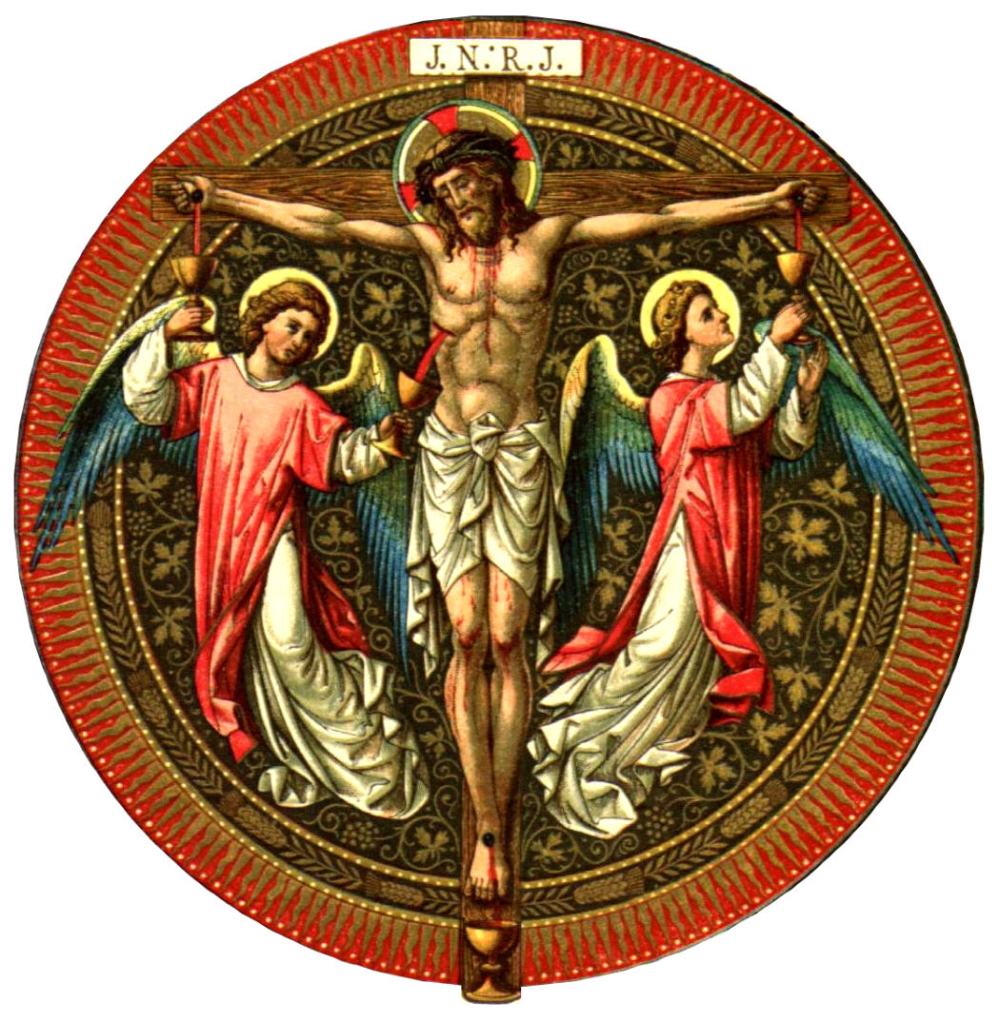
If you were going on a long journey one of the things you would take with you would be food and drink to refresh you as you travel. Without it we would be hungry and thirsty, we would struggle, and eventually we would die. In our first reading this morning the prophet Elijah is fleeing for his life as the evil queen Jezebel wants to kill him. He’s desperate and afraid, but God feeds him with bread from heaven so that he might have strength for the journey. It prefigures the Eucharist, the reason why we are here today, to be fed by God. We can have the strength for our journey of faith, and the hope of eternal life. We need the Bread of Heaven, the Body of Christ, to nourish us on our journey of faith. 

Jesus is the Bread of Heaven who alone can satisfy us. When we sing the Hymn ‘Guide me O thou great Redeemer’ and we say the words ‘Bread of Heaven, feed me till I want no more’ it is plea for the Eucharist, which alone can satisfy our every need. The Jews in this morning’s Gospel are not happy to hear Jesus describing Himself as the Bread which came down from Heaven. They cannot understand that he is the Bread of Life, they only see Him in human terms. He is not just a man, he is God, who was born among us, who preaches the Good News of the Kingdom of God and who dies and rises again for us. 

He offers people eternal life: ‘And I will raise him up on the last day’ (Jn 6:44), ‘Truly, truly, I say to you, whoever believes has eternal life’ (Jn 6:47) Through our participation in Baptism and the Eucharist we share in Jesus’ Death and Resurrection, and we have a pledge of eternal life in and through Him. ‘Myfi yw’r bara bywiol, yr hwn a ddaeth i waered o’r nef. Os bwyty neb o’r bara hwn, efe a fydd byw yn dragywydd. A’r bara a roddaf fi, yw fy nghnawd i, yr hwn a roddaf fi dros fywyd y byd..’ (Jn 6:51). Jesus is the living bread and if we eat Him then we will live forever. We need the Eucharist. It isn’t an occasional treat or a reward for good behaviour, like some heavenly lollipop. It is necessary and vital, we cannot truly live without it. It is what the Church is for, to feed the people of Christ with Christ. ‘And the bread that I will give for the life of the world is my flesh.’ (Jn 6:51) Jesus dies on the Cross at Calvary for us. He gives his body to suffer and die for us, for YOU and ME, to save us and heal us. We don’t deserve it, we cannot earn it. It is the free gift of God, an act of radical generosity, so that we might be radical and generous in return. Jesus institutes the Eucharist on the night before He dies so that the Church might DO THIS in memory of Him, so that he might be ever present with us, to fill us with His love. Sacraments such as Baptism and the Eucharist are outward and visible signs of inward spiritual grace. They point us to a God who is generous, who wants us to have life in Him. 

So does this mean that we can just carry on regardless? BY NO MEANS! Christ gives us life, so that we may live in Him. As S. Paul says in his letter to the Ephesians, ‘Therefore be imitators of God, as beloved children. And walk in love, as Christ loved us and gave himself up for us, a fragrant offering and sacrifice to God.’ (Eph 5:1-2) There is something quite extraordinary and radical about this. It isn’t how most people in the world around us live. Christians are supposed to different, to live different lives in a different way, because we follow Jesus, and live like Him. We operate according to different rules and standards, those of Christ, and not of the world around us. 

All of us here this morning are Christians: we have responded to the call to follow Christ, to imitate Him, and His way of life. We practise forgiveness, whereas the world around us is judgemental and unkind — it writes people off. God never does that. We are all sinners, in need of God’s mercy, and that is why Jesus died for us, to heal us and restore us, so that we can be like Him. We will fail in this endeavour, every single day, because our own strength is not enough. We have to rely upon the God who loves and forgives us, who gives His Son to die so that we might live. So we live in a way which is different from the world around us: we are loving and forgiving, because we have been shown love and forgiveness. It is in experiencing God’s self-giving love that the world can find true meaning. Life in Christ is what true life means. Fed by him, strengthened by him, to imitate him and live out lives of self-giving love. It is hard and challenging, we need to do it together, so that we can support each other as we try and fail, and keep trying, together. The Christian life is not a glamorous thing, it doesn’t have the razzmatazz of a television show, it isn’t about celebrity or fame, or wealth, or power. It is about a slow gentle trudge, day by day, trying to be more like Jesus. It doesn’t sound very exciting, does it? 

The world around us can come up with far more enticing options, which might be fun for a while. But, eventually, we will see them for what they are — vain, empty, and silly. They offer nothing of value or worth. No, being a Christian isn’t glamorous, it won’t make you rich or famous, but it can save your soul and change the world. We want the world to become more Christ-like, where people are loving, forgiving, and compassionate. Where the hungry are fed, where people are comforted, and instead of being selfish, people become more selfless. It is a work in progress — we have been trying and failing for two thousand years, but we keep trying, knowing that God’s love and mercy are inexhaustible. Not glamorous, but worthwhile. Amen. 

crucifixion-precious-blood

Friday, 10 August 2018

Henri Nouwen on Ministry

“More and more, the desire grows in me simply to walk around, greet people, enter their homes, sit on their doorsteps, play ball, throw water, and be known as someone who wants to live with them. It is a privilege to have the time to practice this simple ministry of presence. Still, it is not as simple as it seems. My own desire to be useful, to do something significant, or to be part of some impressive project is so strong that soon my time is taken up by meetings, conferences, study groups, and workshops that prevent me from walking the streets. It is difficult not to have plans, not to organize people around an urgent cause, and not to feel that you are working directly for social progress. But I wonder more and more if the first thing shouldn’t be to know people by name, to eat and drink with them, to listen to their stories and tell your own, and to let them know with words, handshakes, and hugs that you do not simply like them, but truly love them.”

¡Gracias! pp 147-148

Sunday, 29 July 2018

17th Sunday of Year B [2Kings 4:42-44, Eph 3:14-21, John 6:1-21]

When I was 17, I went to Rome on a study trip, during the last week of July and the first week of August, a bit like the weather has been here for the past few weeks, it was 28℃ (82℉) when we landed at 10pm. When we arrived at  our accommodation a friend of mine went to the bathroom to wash his face and brush his teeth before going to bed. He got a terrible shock. When he turned on the tap marked ‘C’ and out came boiling hot water. C in Italian stands for Caldo or Hot. He needed to turn on the tap maked ‘F’ for Fredo, or Cold. But he was so used to cold water coming out of a tap marked ‘C’ that he misread the signs.

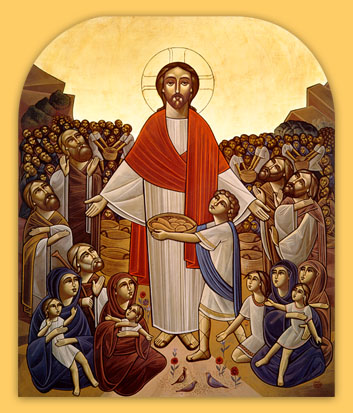
This mistake is easily made, especially since we are so used to seeing the letter ‘C’ on cold taps back home. It shows us how things can go wrong when we misread the signs. In today’s Gospel we have several examples of people misreading signs. First, we have the Apostle Philip. He is asked by Jesus where they can buy bread for the crowd to eat. He replies that 200 denarii would only buy them a mouthful each. Six months wages just for a mouthful! So Philip says that there is no way that the people can be fed. He cannot believe that such a thing is possible.

The Apostle Andrew fares a bit better. He shows Jesus a boy with two fish and five barley loaves, the bread of the poor. But he cannot see the point and asks ‘what is that between so many?’ The disciples give the wrong answers to Jesus’ questions, because they cannot read the signs.

The crowd are also a bit of a mixed bag. They have followed Jesus because they are impressed by his wondrous healing of the sick. Once they have miraculously been fed, they recognise the sign as a declaration of Jesus’ identity, but they misinterpret it. They are about to take Jesus by force and make him king. But this is not what Jesus’ kingship is about, he isn’t a political ruler. His kingship is not of this world. All have expectations which are met, but not necessarily in the way they were expecting. Our God is a God of Surprises.

The context of the Gospel story is important. It was just before the Passover, the festival commemorating Israel’s journey from slavery in Egypt, across the Red Sea towards the Promised Land. It is a festival of Hope and Freedom, of Liberation, of a God who will feed them with manna from heaven.

It is also the same time that Jesus will celebrate the Last Supper with his disciples, instituting the Eucharist, which Christians have faithfully celebrated ever since and which is the reason why WE are here today. The blessing, breaking and sharing of bread is a serious matter. A time for remembering and looking forward.

The fact that it is a serious matter explains why Jesus will devote so much time and effort to teaching the people about this in the Gospel passages we will read over the next few weeks. It matters because the Eucharist is how we encounter Jesus and how we are fed by him. 

In the Gospel, it is Jesus who takes the initiative. He recognises that people are hungry, and that they need to be fed. He is a good shepherd who looks after his flock. So He takes the basic foodstuff, bread, to show us how God works with simple things. These may be, like the barley loaves, poor, the kind that the world despises and looks down its nose at. But for God, nothing or indeed nobody, is scorned or cast aside. Ours then is a God who takes what is available and uses it. Jesus takes what he is given and thanks God for it, in recognition that all that we have, our lives and all of creation, is a gift, for which we should thank God.

It is through prayer and blessing that bread can be broken and distributed and provide sustenance, on a scale and in a way that defies our expectation and understanding. Not only are a huge number of people fed, but as a sign of the super-abundance of God’s love and mercy, there is more left over at the end than there was to begin with. Thus, in giving thanks to God and sharing his love, the kingdom of God, of which the bread is a sign, grows, when it is shared. It satisfies people’s deepest needs. The more you share it, the more there is.

Jesus takes, blesses, breaks and distributes bread to demonstrate what the Kingdom of God and the message of the Gospel is. This looks forward to the Institution of the Eucharist, just before Passover. It points to that great Passover, when the world is freed from the slavery of sin, washed in the Red Sea that flows from Calvary, and given the Law of love of God and neighbour.

This miraculous feeding by the shore of the Sea of Galilee will happen here today, when we, the people of God, united in love and faith offer ourselves and like the little boy, give the bread that we have, so that it may be taken, blessed, broken and given so that we may be partakers in the mystical supper of the Kingdom of God. We eat the Body of Christ not as ordinary food — that it may become what we are — but that WE may become what HE is. THIS is our bread for the journey of faith. THIS is the sign and token of God’s love. THIS is the means by which we too may enjoy forever the closer presence of God.

So then, as the five thousand received and were satisfied, let US prepare to eat that same bread, the body of Christ, which satisfies our every need and fills us with a foretaste of the Kingdom of God the Father, God the Son, and God the Holy Spirit, to whom be ascribed as is most right and just, all might, majesty, glory dominion, and power, now, and for ever. Amen.

christ_feeding_the_multitude

Saturday, 23 June 2018

The Nativity of St John the Baptist

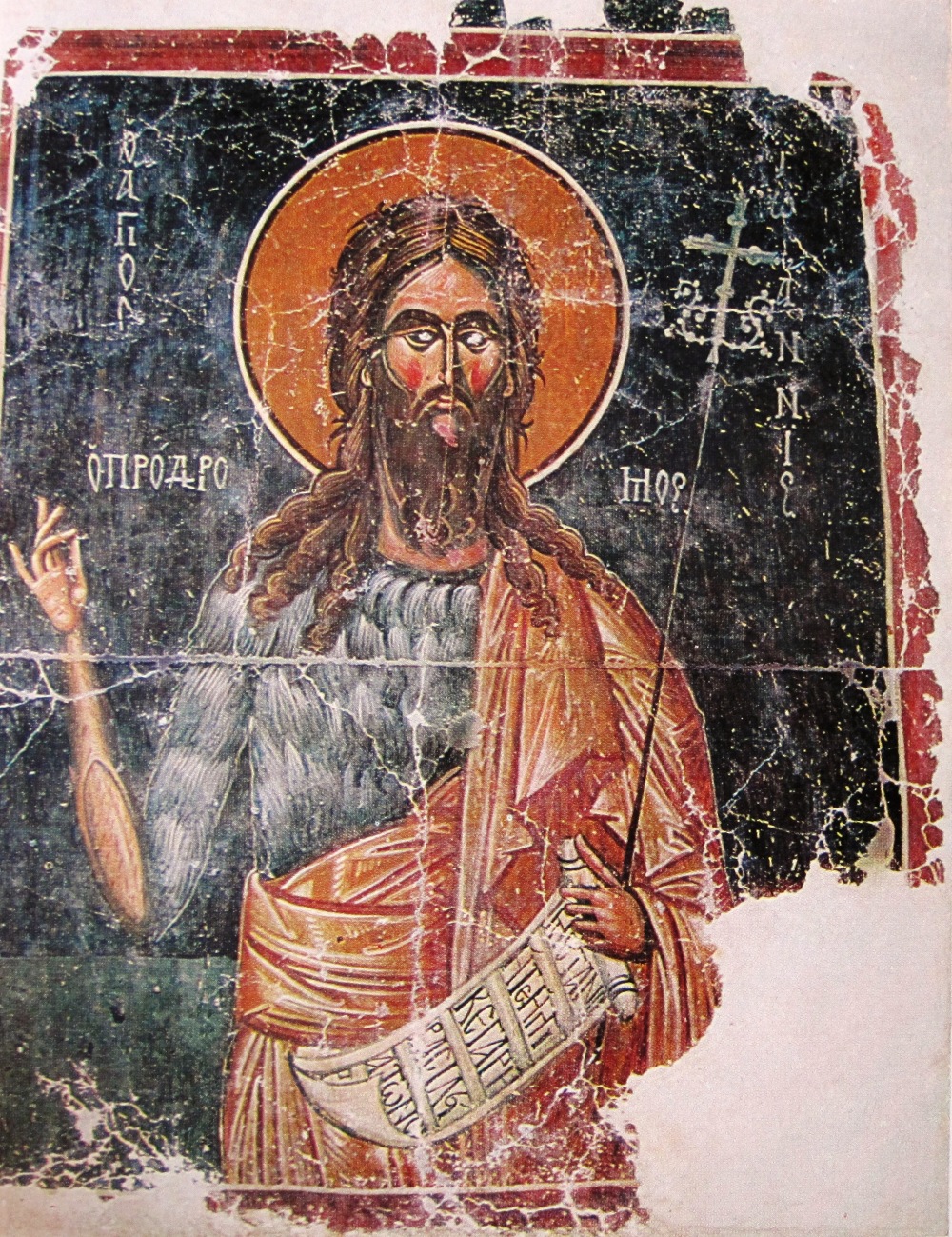
Prophets have a difficult job to do: they tell people uncomfortable truths. People don’t like hearing such things: it makes them feel uncomfortable. Being told that you need to repent from your sinful ways and return to the Lord your God isn’t exactly going to make you popular. People prefer to feel comfortable, nice and warm and fuzzy, God loves you, everything is fine, no need to worry! It isn’t surprising that prophets are often ignored, mistreated and killed. They tell people not what they want to hear, but what they NEED to hear. 

This morning’s reading from the prophet Isaiah looks forward to a Messianic future — it points to Jesus, who He is and what He does, and that is exactly what John the Baptist, His cousin will do. He will be the Voice crying in the wilderness, who will prepare the way of the Lord who by his preaching of the Kingdom, and calling people to repent and be baptised ushers in the public ministry of Jesus, who will tend his flock like a shepherd, because He is the Good Shepherd. 

John is not interested in glory, or riches, or drawing attention to himself. All he wants to do is to point to Jesus, the Messiah. He speaks to a Jewish world which has a corrupt religious establishment, which is so bound up with following the Letter of the Law of Moses, that it has forgotten about the Spirit, that needs to come back to God, and repent of its sinful and foolish ways, which has made following the teaching of rabbis an idol in itself. He will bear witness to the truth, even at the risk of his own life: he will be killed to satisfy the whim of corrupt and sinful rulers. He has a vocation, to call people back to God, to point out where people are going wrong, and show them the right path.  Not only is he a prophet, but also the fulfilment of prophecy: In Malachi 4:4:5-6 we find the following, ‘“Behold, I will send you Elijah the prophet before the great and awesome day of the Lord comes. And he will turn the hearts of fathers to their children and the hearts of children to their fathers, lest I come and strike the land with a decree of utter destruction.”

John comes from a priestly family, his father Zechariah is a temple priest, his mother Elizabeth, the Blessed Virgin Mary’s cousin, also comes from a priestly family. They’ve tried to have children for years, and finally their prayers have been answered. When Elizabeth meets Mary, the child in her womb leaps for joy. Even before John is born he announces  that God is with us, he is a prophet from his conception. His father cannot believe that they’re going to have a baby, and when the Archangel Gabriel tells him, he fails to trust God, and is struck dumb as a result. But in this morning’s Gospel Elizabeth announces that her son’s name is John, meaning ‘God is gracious’ not Zechariah, after his father. “‘What then will this child be?’ For the hand of the Lord was with him” (Lk 1:66 ESV). He will be the last of the prophets, the forerunner, the one who points to Christ, who baptises Him, and who through his proclamation of Baptism and Repentance helps to bring about the movement which Jesus started, which we now call the Church. He recognises that Jesus is the Lamb of God, pointing to His Death, for our sins. 

He is the only saint — with the exception of the Virgin Mary — whose birth the liturgy celebrates and it does so because it is closely connected with the mystery of the Incarnation of the Son of God. In fact, from the time when he was in his mother’s womb John was the precursor of Jesus: the Angel announced to Mary his miraculous conception as a sign that “nothing is impossible to God” (Lk 1:37), six months before the great miracle that brings us salvation, God’s union with man brought about by the Holy Spirit.

(Pope Benedict XVI Angelus 24.vi.12 http://w2.vatican.va/content/benedict-xvi/en/angelus/2012/documents/hf_ben-xvi_ang_20120624.html)

John recognises Jesus, that in Him, through the power of the Holy Spirit, God has become human, like us. It is this wonderful mystery which lies at the heart of our faith as Christians. 

John the Baptist was the forerunner, the ‘voice’ sent to proclaim the Incarnate Word. Thus, commemorating his birth actually means celebrating Christ, the fulfilment of the promises of all the prophets, among whom the greatest was the Baptist, called to ‘prepare the way’ for the Messiah (cf. Mt 11: 9-10)

(Pope Benedict XVI  Angelus 24.vi.07 http://w2.vatican.va/content/benedict-xvi/en/angelus/2007/documents/hf_ben-xvi_ang_20070624.html)

We honour John because he points to Jesus, because he proclaims Him, Jesus the Messiah, the fulfilment of all prophecy, the Word made flesh, and the Lamb of God, who dies that we might live. He points the way for us to follow as Christians, so that we can be close to Jesus in Word and Sacrament, and so that we might proclaim Him in our lives. We need to have the same level of commitment as John, and the same depth of love for God. 

That is how we live out our faith in our lives, and that is how we can become saints:

Perhaps the chief mark of sanctity is an utter simplicity in the face of the divine will, and of divine promises. Such was the attitude of Christ himself.

We think of seriousness as something which needs to be forced, or put on. Whereas to genuine faith, seriousness is just naked simplicity; it is non-hypocrisy, non-evasiveness, non-sophistication, in the face of the normal environment of the believing soul, which is the ever-present will of God. To be serious, you have only to open your eyes; a man driving on a mountain road does not relax attention to the hairpin bends, and a Christian finding his way in the will of God does not lose sight of the way-marks.

Sanctity is never out of date; and sanctity is nothing but entire simplicity towards God.  

 Austin Farrer, The Brink of Mystery, London 1976: 153-4

So let us be inspired by the example of St John the Baptist, and love and follow God with simplicity, and encourage others so to do, so that all the world may give glory to God the Father, God the Son, and God the Holy Spirit, to whom be ascribed as is most right and just all might, majesty, glory, dominion, and power, now and forever.
icon_of_john_the_baptist_28georgia2c_15th_century29

Saturday, 19 May 2018

Pentecost

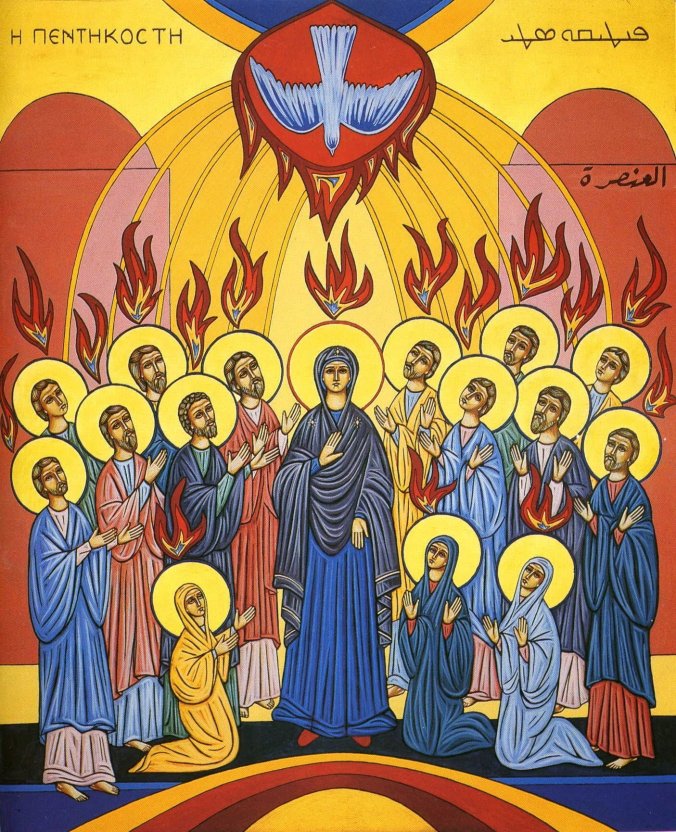
For most people up to 1965, Pentecost, or Whitsunday, was probably associated with gifts: new clothes, a Bank Holiday on Whitmonday, and trips, picnics, and ice-cream. The bank holiday was moved to the last Monday in May, and there it has stayed. While Pentecost is with Christmas and Easter one of the three major feasts of the Christian Year, its roots are older.

Fifty days after the Passover, the Jews celebrated Shavuot, the Feast of Weeks, a week of weeks, the grain harvest in Ancient Israel, and the giving of the law to Moses on Mt Sinai, it was an important festival, and Jews would gather in Jerusalem to celebrate the Law, which defined them as Jews, and regulated how they lived their lives. They would offer their first fruits in the Temple, rather like our harvest festival, and read the Book of Ruth, whose story is centred around harvest time.

The disciples have gathered in the Upper Room, with the Blessed Virgin Mary, where Christ instituted the Eucharist, and washed his disciples’ feet. They have gathered together because Jesus told them to be together and to pray, for ‘you shall receive power when the Holy Spirit has come upon you; and you shall be my witnesses … to the end of the earth’ (Acts 1:8). They are filled with the Holy Spirit, tongues of fire rest upon them, and they speak in a variety of languages. People from all over the world, who have come to Jerusalem for the feast hear the mighty works of God, they hear a proclamation of who Jesus is, and what he has done. People think they are drunk, but it is nine o’ clock in the morning. The prophecy of Joel is fulfilled. God can and does do wonderful things. And he will still, if we let him. 

Jesus promised his disciples that he will send ‘the Spirit of truth, who proceeds from the Father, he will bear witness about me. And you will bear witness, because you have been with me from the beginning.’ (Jn 15:26-27 ESV) He also promises that, ‘When the Spirit of truth comes, he will guide you into all the truth, for he will not speak on his own authority, but whatever he hears he will speak, and he will declare to you the things that are to come. He will glorify me, for he will take what is mine and declare it to you. All that the Father has is mine; therefore I said that he will take what is mine and declare it to you.’ (Jn 16:13-15 ESV) 

We know that Jesus speaks the truth, that his promises can be trusted, that he pours his Holy Spirit upon the Church on the day of Pentecost, and continues so to do until he comes in glory as our Saviour and our Judge. He wants us to tell people about Him, and how he came to show the world LOVE.

The Apostles have obeyed Jesus’ command, they have waited and prayed, and they are filled with the Holy Spirit, so that they can proclaim the good news of the Kingdom, so that they can make Jesus known, so that people can come to know him and be filled with his love. People are amazed and perplexed, they simply cannot understand what is going on, some people assume that the disciples are drunk. Just as once people called Jesus a drunkard and a glutton because he used to hang around with the wrong sort of people. 

Instead St Peter can show that what is happening has been prophesied by the prophet Joel, whom he quotes (Acts 2:16-21) to show that Christ, the Word made flesh is the fulfilment of Scripture, it finds its true meaning in and through Him. He can preach Christ crucified and risen, for our salvation: ‘This Jesus God raised up, and of that we all are witnesses’ they have seen and can testify that Jesus is alive. “Let all the house of Israel therefore know for certain that God has made him both Lord and Christ, this Jesus whom you crucified.” (Acts 2:36) Peter and the apostles can confess their faith in Christ and bear witness to him. It has an immediate effect: (Acts 2:37) ‘Now when they heard this they were cut to the heart, and said to Peter and the rest of the apostles, “Brothers, what shall we do?”’ To which Peter replies, ‘Repent and be baptized every one of you in the name of Jesus Christ for the forgiveness of your sins, and you will receive the gift of the Holy Spirit. For the promise is for you and for your children and for all who are far off, everyone whom the Lord our God calls to himself.’ (Acts 2:38-39) 

This is what the church is called to proclaim, so that people can come and have new life in Christ. You and I are to tell people about Jesus, so that they can repent and believe. Then, later in the Acts of the Apostles we see them all living a recognisable Christian life: ‘And they devoted themselves to the apostles’ teaching and the fellowship, to the breaking of bread and the prayers.’ (Acts 2:42) 

This is what we are called to be and to do as Christians, to a life where we are close to Christ, in Word and Sacrament, so that we may be strengthened to live the life of faith, and to proclaim the Good News of Jesus Christ so that the world may believe. It is just as true here and now as it was there and then: Jesus promises his spirit to transform and empower people to tell the Good News of the Kingdom. ‘And when he comes, he will convict the world concerning sin and righteousness and judgement: concerning sin, because they do not believe in me; concerning righteousness, because I go to the Father, and you will see me no longer; concerning judgement, because the ruler of this world is judged.’ (Jn 16:8-11) Sin, that which separates us from God, and each other is tied in with not believing in Jesus, who he is, what he does. He is God, and he dies for love of us, to reconcile us, to heal our wounds. He is the true Balm of Gilead which heals sin-sick souls, and He gives himself here, under the outward forms of bread and wine, to heal us, to restore us, Righteousness: having been obedient to the will of the Father, dying and rising again, He returns from whence he came, so that He can send the Holy Spirit. Judgement: the ruler of this world has been judged, the world, the flesh and the devil can have no power over us as Christ has overcome them. They offer us death, whereas Christ has brought us life, eternal life in Heaven. God’s judgement on the world was to offer His Only Son to die, to heal its wounds, and reconcile its differences. God’s judgement is LOVE, and he calls us to live as people of love. To live out the same sacrificial redemptive love in the world, to transform it, into the world God wants it to be, where people are filled with love, and live lives of love, where they are generous and peaceful, loving and forgiving. Fed by Christ and fed with Christ we can be transformed more and more into His likeness, inviting others to share in His LOVE, so that they and all the world may know the love and sing the praise of God the Father, God the Son, and God the Holy Spirit, to whom be ascribed as is most right and just, all might, majesty, glory, dominion, and power, now and forever.
pentecost_maronite_icon

Saturday, 12 May 2018

Easter VII [Acts 1:15-17, 20-26; 1 Jn 5:9-13; Jn 17:6-19]

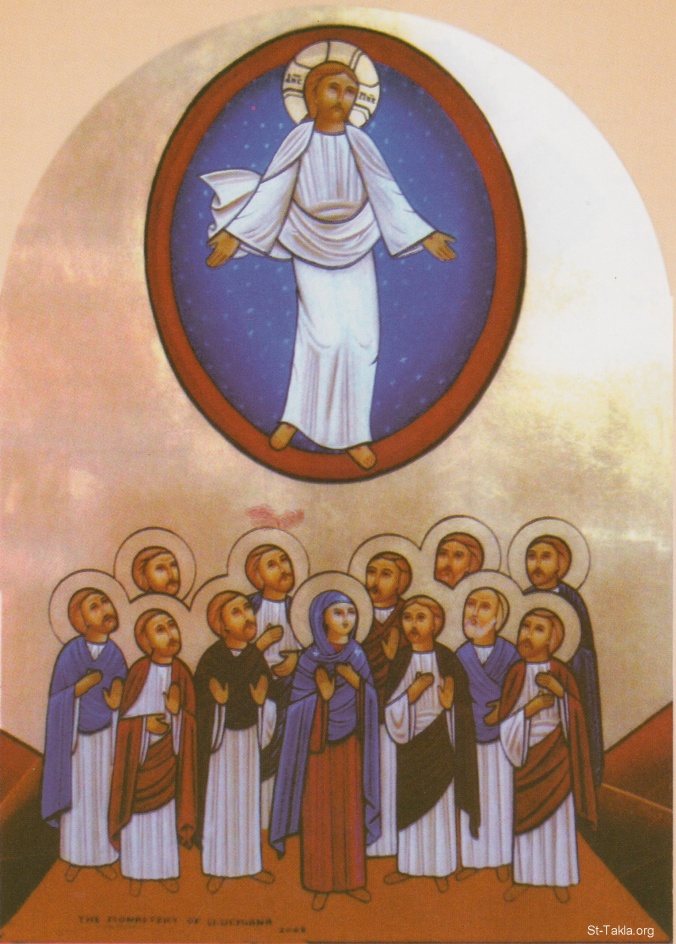
On Thursday the Church celebrated the Ascension, when the Risen Christ returns to his Father’s side in Heaven. The Apostles haven’t been left or abandoned, instead Jesus tells them to wait ten days, until the feast of Pentecost. To wait and to pray for the outpouring of God’s Holy Spirit. Jesus shows us that we are made for heaven, 

For all those of us who live after the moment of Jesus’ Ascension into Heaven, we too are called to wait, to wait for His Holy Spirit, and to wait for Him to come again as our Saviour and our Judge. But if we are honest, none of us likes waiting, let’s be honest! There’s an old joke that if you put three Scotsmen together for long enough they will form a bank, three Welshman, and they will form a male-voice choir, and three Englishmen will form a queue. While it may be a characteristic which has come to define us, as British people, we do it rather grudgingly, and with a sense of resigned reluctance. And yet, our vocations as Christians is JOY, the joy of the Lord is our strength. We wait in eager expectation, and filled with the joy of Easter, of the Risen Christ, who promises us His Holy Spirit. We wait that God might continue to be generous towards us, and all who believe in Him. 

God will give us a new heart and put his Spirit within us, just as he did on the day of Pentecost. So we in the Church are to wait to prepare to live as the people of God, filled with his love, and forgiveness, and proclaiming his Truth to the world. That’s what this time between the Ascension and Whitsun is for: to pray to God, for Him to be at work in us, and in people all around the world. Indeed there is now an initiative called ‘Thy Kingdom Come’ which encourages people to pray in this time between the Ascension and Pentecost. To pray for the outpouring of God’s Holy Spirit, that people may come to know Christ, and that we may all be one — for the unity of Christians everywhere. If heaven is our home, which it is, as we are made for relationship with God, and each other, then we should prepare, here and now, for what awaits us. We should pray that, through the outpouring of God’s Holy Spirit, we are built up in LOVE.

This Sunday in the Gospel we are in the middle of Jesus’ High Priestly Prayer, which is the summit of his teaching just before his arrest and Passion. Christ has made God’s name known to us, we know God in a different way, we pray to him as ‘Father’ and we are His, we are not our own, despite the Western Liberal infatuation with personal freedom, we are God’s, which affects both who we are, and what we do.We belong to God, and we do what He tells us to do, so that we may flourish, that we may have life and have it to the full.

We are to be one, as Jesus and His Father are one — one in mind, heart, and soul, filled with LOVE, sanctified with the truth which comes from the Holy Spirit. This is Christs’s will, it isn’t a pipe-dream, or an optional extra. We have to do it. If we really love Jesus then how can we be other than wishes us to be. The pain and division will not be healed in a moment, there is no magic wand to be waved, life is not like that. We have to start by praying, and working for unity, doing what we can to make Christ’s will for the Church a reality. 

Christ speaks to us, and teaches us so that our joy may be complete in him, filled with his love, and the Holy Spirit. The world’s reaction to this is a negative one: because what we are, what we stand for, and how we live as Christians is to be opposed to what the world around us stands for — selfishness, greed, which it makes into false gods, as though material wealth, or power, or status could save us — such things are transient and fleeting. The world seeks to offer us a short-cut, an easy road; whereas if we are following Christ, then we are walking the way of his Passion, we are walking the Way of the Cross, dying daily to sin, and letting God’s grace be at work in and through us. It is certainly not easy, it is difficult, most of us are unable to manage on our own, we need the grace of God. We need the Eucharist to strengthen us on our journey of faith, and we need the love and support of the Christian community to help us, even the first Christians, those who had been with Jesus, needed each other’s help and support, so they can continue what Jesus started.

We need to be together, to meet together to pray for our needs and those of the world, and to be nourished by the word of God, the Bible, and the Sacrament of Our Lord’s Body and Blood, not because they’re something nice to do on a Sunday morning: a sort of add-on, an optional extra that we can opt into and out of as we feel like, but because as Christians they are crucial to who and what we are, if we are to remain in the love of God then we have to live this way. Only then can we offer the world an alternative to the ways of selfishness and sin. It will certainly hate us for doing this, it will despise us, it will call us hypocrites when we fail to live up to the example of Jesus, but as Christians who live in the love of God we forgive each other our trespasses, so that we can live out that same radical love and forgiveness which sees Jesus die upon the Cross for love of us and all the world.

It is a message of such love, such forgiveness that the world cannot or does not want to understand it, we may not understand it, but we know that it can be experienced, in encounter with Jesus, and we are living testimony to its power to change lives. It turns our lives around and sets us free to live for God and to proclaim his saving truth in our words and actions, calling the world to repentance, to turn to Christ, and to be renewed in and through Him.

So as we wait with the Apostles for the gift of the Holy Spirit let us pray that God may be at work in us, building us up, and giving us strength to live his life and to proclaim his truth, to offer the world that which it most earnestly desires, a peace, a joy and a freedom which pass human understanding, and the gift of eternal life in Christ. And let us share these gifts with others, so that they may come to believe and give glory to the Father, the Son and the Holy Spirit, to whom be ascribed as is most right and just, all might, majesty, glory, dominion, and power, now and forever…

www-St-Takla-org--Damiana-Monastery-icon-Ascension

Saturday, 7 April 2018

Easter II

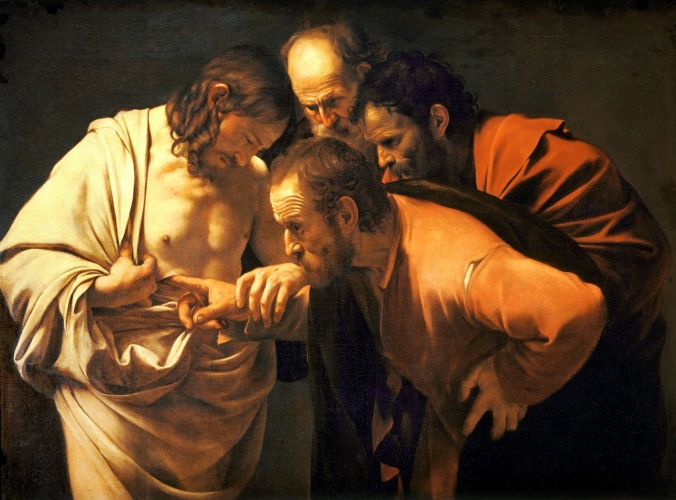
I have something of a confession to make: I’m a bit of a fan of St Thomas the Apostle, probably because it is my middle name, but I’ve always felt something of an affinity towards him. He is somewhat hard done by, and on the basis of this morning’s Gospel reading he is generally known as ‘Doubting Thomas’ which is something of a misnomer. If anything he should really be understood as ‘Believing Thomas’ but more about that in a minute.

None of us likes to feel left out, it crushes the soul. We’ve all experienced it at some point in our lives, and it is painful. Imagine the joy the disciples felt when Jesus appears to them on that first Easter Day. He gives them peace, and commissions them, sends them out, to be apostles, to proclaim the Good News to the world. When Jesus begins his public ministry He calls on people to repent from their sins, to turn away from them. Now that He has died for us and been raised from the dead, He commissions his apostles to forgive or retain sin. The Church exists to deal with the mess we make as human beings, through what Jesus has done for us, in the power of His Holy Spirit.

Thomas feels somewhat left out of it all. He wants to believe, but he needs to see with his own eyes, he doesn’t yet have Faith. So, a week later Jesus comes again and shows Thomas His hands and His side, the wounds of love, which take away our sin. He commands ‘Do not doubt, but believe’ and Thomas does. He says, ‘My Lord and my God!’ He confesses his belief in Jesus as Lord and God. He makes a radical statement of belief in WHO and WHAT Jesus is. He is our Lord and our God, our allegiance to Him is more important than anything else. It was this fact which caused the death of thousands of Christians over the next few hundred years. We are all used to seeing pictures of Queen Elizabeth, in homes, schools, and public buildings. Imagine for a second that had to kneel down in front of them and worship the Head of State as a god, offering prayer and incense. To us as Christians it is unthinkable — worship is something we give to God alone ‘I am the Lord your God, who brought you up out of the land of Egypt, out of the house of bondage. You shall have no other gods beside me.’ (Exodus 20:1-2). We worship Jesus because He is God. Like St Thomas we kneel before him, and confess that He is Our Lord and our God, our Saviour, who LOVES us. The world around us may find this strange, that we make such a declaration, and we are not going to compromise over it.

The Cross had asked the questions; the Resurrection had answered them…. The Cross had asked ‘Why does God permit evil and sin to nail Justice to a tree?’ The Resurrection answered: ‘That sin, having done its worst, might exhaust itself and thus be overcome by Love that is stronger than either sin or death.’

Thus there emerges the Easter lesson that the power of evil and the chaos of the moment can be defied and conquered, for the basis of our hope is not in any construct of human power but in the power of God, who has given to the evil of this earth its one mortal wound—an open tomb, a gaping sepulchre, an empty grave.

Fulton J. Sheen Cross-Ways

This morning as we rejoice in the joy of the Risen Lord, as we are filled with joy, with hope and with love, we can reflect on what the Resurrection does: when Jesus comes and stands among the disciples he says ‘Peace be with you’ Christ’s gift to the world in His Death and Resurrection is Peace, the Peace ‘which passes all understanding’. He shows the disciples His hands and side so that they can see the wounds of love, through which God’s Mercy is poured out on the world to heal it and restore it. In this peace Christ can say to them ‘As the Father sent me, so I send you’ as the baptised people of God, filled with the Holy Spirit, the Church is to be a missionary community — one sent to proclaim the Good News of Jesus Christ to the world, that it may share the joy and life of the Risen Lord.

As well as giving the Apostles the Holy Spirit, ordaining them as the first bishops of the Church, we see that the power of the Cross to bring peace to the world is also the power to absolve sins — priests and bishops can absolve the people of God in God’s name, and by God’s power — this is what the Cross achieves — reconciling us to God and each other. The Church, then, is to be a community of reconciliation, where we are forgiven and we, in turn, forgive, where we are freed from sin, its power and its effects.

When Christ breathes on the disciples and says ‘Receive the Holy Spirit’ it is this gift of God’s Holy Spirit which transforms them from frightened people sat in a locked room in fear into the confident, joyous proclaimers of the Gospel, such as Peter in his sermon to the people of Jerusalem. In Peter’s sermon we see that all that Christ is and does is confirmed by Scripture — it is the fulfilment of prophesy, such as we find in Isaiah 25:6-9:

On this mountain the Lord of hosts will make for all peoples a feast of rich food, a feast of well-aged wine, of rich food full of marrow, of aged wine well refined. And he will swallow up on this mountain the covering that is cast over all peoples, the veil that is spread over all nations. He will swallow up death for ever; and the Lord God will wipe away tears from all faces, and the reproach of his people he will take away from all the earth, for the Lord has spoken. It will be said on that day, ‘Behold, this is our God; we have waited for him, that he might save us. This is the Lord; we have waited for him; let us be glad and rejoice in his salvation.’

As the Church we know that Jesus is the Messiah, the one who gives freedom to Israel, a freedom from sin — a bringing to completion of what God started in the Exodus, in the crossing of the Red Sea — we too are free, freed by the waters of baptism, sharing in Christ’s Death and Resurrection.

Thomas was not present with the disciples, he cannot believe in the reality of Jesus’ Resurrection unless he sees with his own eyes, and feels with his own hands — such is his grief, such is his love for Jesus. Our Lord says to him, ‘Doubt no longer but believe’ which leads to his confession, ‘My Lord and my God’. Blessed are we who have not seen and yet have come to believe, and through this belief we have live in Christ’s name, we have the hope of eternal life and joy with him forever.

The disciples go from being scared and stuck in an upper room to missionaries, evangelists, spreading the Good News around the world, regardless of the cost, even of sacrificing their own lives to bear witness to the fact that Jesus Christ is the Son of God, that he died for our sins, and that he rose again, on this day for us, that God loves us and tells us to love Him and to love one another. It is a simple and effective message which people still want to hear — we need to tell it to them, in our thoughts, our words and our actions.

The heart of our faith and the Gospel is forgiveness — no matter how many times we mess things up, we are forgiven. It is this reckless generosity of spirit which people find hard to believe that they too can be forgiven, by a loving God, and by their fellow Christians. That we can, despite our manifold shortcomings be a people of love, and forgiveness, and reconciliation. That God’s Grace will in the end not abolish our nature, but perfect it, that being fed by Christ, with Christ: so that we too may become what He is. That faced with the sad emptiness of the world, and its selfishness, its greed, we can be filled with joy, and life, and hope. That like the first apostles we too can spread the Gospel: that the world may believe.

It’s a tall order, perhaps, but one which God promises us. That is what the reality of the Resurrection is all about, it’s either nothing, in which case we are the most pitiable of deluded fools — idiots who are more to be pitied than blamed, or it is the single most important thing in the world. It should affect all of us, every part of our life, every minute of every day, all that we do, all that we say, all that we are. This may not fit in with a reserved British mentality, we think we’re supposed to be polite and not force our views on others. But this simply will not do. We are, after all, dealing with people’s souls, their eternal salvation, it’s a serious matter. And what we offer people is entirely free, can change their lives for the better, and make life worth living.

So let us be filled with the joy of the Resurrection this Easter, let us share that joy with others, may it fill our lives and those of whom we meet with the joy and love of God, who has triumphed and who offers us all new life in Him, that all that we do, all that we are, all that we say or think may give glory to God the Father, God the Son, and God the Holy Spirit, to whom be ascribed as is most right and just, all might, majesty, dominion and power, now and forever.

7ec0d-the_incredulity_of_saint_thomas-caravaggio_1601-2

Thursday, 1 October 2015

A thought from St Therese

Our Vocation is Love


I saw that love alone imparts life to all the members, so that should love ever fail, apostles would no longer preach the gospel and martyrs would refuse to shed their blood. Finally, I realised that love includes every vocation, that love is all things, that love is eternal, reaching down through the ages and stretching to the uttermost limits of the earth.

Beside myself with joy, I cried out: 'Jesus, my love, my vocation is found at last - my vocation is love!' I have found my place in the Church, and this place, Jesus, you have given me yourself; in the heart of the Church I will be love. In this way I will be all things and my wish will be fulfilled.

But why do I say 'beside myself with joy'? It is, rather, peace which has claimed me, the calm, quiet peace of the sailor as he catches sight of the beacon which lights him to port. The beacon is love.

I am only a weak and helpless child, but my very weakness makes me dare to offer myself, Jesus, as a victim to your love. In the old days, only pure and spotless victims would be accepted by God, and his justice was appeased by only the most perfect sacrifices. Now the law of fear has given way to the law of love, and I have been chosen, though weak and imperfect, as love's victim.


Sunday, 6 September 2015

Trinity XIV Evensong


From the Sayings of the Desert Fathers: an instruction sent by Abba Moses to Abba Poemen:
A brother asked the old man, ‘Here is a man who beats his servant because of the fault he has committed; what will the servant say?’ The old man said, ‘If the servant is good, he should say, “Forgive me, I have sinned.”’ The brother said to him, ‘Nothing else?’ The old man said, ‘No for the moment he takes upon himself the responsibility for the affair and says “I have sinned,” immediately the Lord will have mercy on him. The aim in all these things is not to judge one’s neighbour. For truly, when the hand of the Lord caused all the first-born of Egypt to die, no house was without its dead.’ The brother said, ‘What does this mean?’ The old man said, ‘If we are on the watch to see our own faults, we shall not see those of our neighbour. It is folly for a man who has a dead person in his house to leave him there and go to weep over his neighbour’s dead. To die to one’s neighbour is this: To bear your own faults and not pay attention to anyone else’s wondering whether they are good or bad. Do no harm to anyone, do not think anything bad in your heart towards anyone, do not scorn the man who does evil, do not put confidence in him who does wrong to his neighbour, do not rejoice with him who injures his neighbour. This is what dying to one’s neighbour means. Do not rail against anyone, but rather say, “God knows each one.” Do not agree with him who slanders, do not rejoice at his slander and do not hate him who slanders his neighbour. This is what it means not to judge. Do not have hostile feelings towards anyone and do not let dislike dominate your heart; do not hate him who hates his neighbour. This is what peace is: Encourage yourself with this thought, “Affliction lasts but a short time, while peace is for ever, by the grace of God the Word. Amen.”’ [1]
There is something very human and recognisable about the prophet Jonah: God speaks to him, and tells him to go to Nineveh to proclaim the Word of the Lord, he tries to escape, and do what he wants to do, it all goes horribly wrong until Jonah prays to God and goes to Nineveh, and issues a call to repentance, which the people of Nineveh, from the king downwards take to heart, they fast and pray, and are spared. So far so good: all is well, or so we might think. This is not, however, the end of the matter: Jonah is angry that God has forgiven the people of Nineveh. This is quite understandable, as the people of Assyria, who live in Nineveh are enemies of Israel, these are people who will conquer Israel, and lead its people off into captivity and exile. Job’s dilemma is a simple one, how can the God of Israel be loving and forgiving towards the enemies of his people?
      Jonah’s fundamental problem is that his conception of God is far too small, too nationalistic, and he forgets that God, is first and foremost a God of love, mercy, and forgiveness. There is a tendency to argue that in the Old Testament God is a God of judgement, retribution, who rains down fire from heaven, whereas in the New Testament we see in Jesus Christ a God of Love.  This is a false dichotomy, a trap into which Christians have been falling, and continue to fall, from which they need help. From Marcion in the second century ad to the liberal German protestantism of Adolf von Harnack and others, and the Jesus Seminar of late twentieth century America, we see people who, when faced with a difficult and complex picture of God, have preferred to make the complex simple, and to refashion the Divine into what they want it to be, rather than live with the fact that at one level God is ‘beyond our ken’ that the love and mercy of God are beyond our human comprehension.
      This is for a perfectly good reason, namely that intellectual comprehension is not the point, but rather the love, mercy and forgiveness of God is something which is to be experienced rather than understood. It is something demonstrated to the world when Our Lord Saviour, who took our flesh for our sake was scourged, and nailed to a Cross to die for us, to bear the burden of our sins, to pay the debt which we cannot, to heal us and restore us. The world did not understand this two thousand years ago, nor does it today. What looked like failure was in fact a great victory, the King of Heaven and Earth reigns nailed to the wood of a Cross. His flesh bears forever the mark of nails and spear as they are the wounds of love: God’s love of us, frail, sinful humanity, and through these wounds we are healed and restored, in them we find the inexhaustible store of God’s mercy poured out for and upon us.
      God does not need to do this, but as a God of love and mercy, who longs to heal and restore humanity made in His image what else can he do? As those healed and restored by him we are to live lives of radical love and forgiveness like those Christians in the Egyptian Desert who practised what they preached, and through their faith and humility inspired others to come to Christ and to follow Him, turning away from the ways of the world, and to Christ, who alone can heal and restore us, the God of love and mercy. Let us be healed and restored by him, and share that love and mercy with others so that they too may praise God the Father, God the Son, and God the Holy Spirit, to whom be ascribed as is most right and just, all might, majesty, glory dominion, and power, now and forever.  

[1] Sr Benedicta Ward(tr.) The Sayings of the Desert Fathers: The Alphabetical Collection, London: A. R. Mowbray 1975: 120-121