Showing posts with label 2018 at 06:00PM. Show all posts

Saturday, 24 November 2018

Christ the King Year B [Dan 7:9-10 & 13-14, Rev 1:4b-8, Jn 18:33-37]

The Feast of Christ the King is a fairly recent addition to the liturgical calendar. It was instituted by Pope Pius XI in 1925, but the ideas which lie behind it are much older. To stress the idea that Christ is the King of Heaven and Earth is to acknowledge the fact that there is an authority which is higher than any human authority. Christ, as king, unites humanity and points to the Peace of the Kingdom of God rather than the divisions of class and nationalism which lie at the root of the traumatic events of the last one hundred years. 

‘For Jesus Christ reigns over the minds of individuals by His teachings, in their hearts by His love, in each one’s life by the living according to His law and the imitating of His example.’

Pope Pius XI Ubi Arcana Dei Consilio 48 (23.xi.1923) [http://w2.vatican.va/content/pius-xi/en/encyclicals/documents/hf_p-xi_enc_19221223_ubi-arcano-dei-consilio.html] 

This is a great claim to make, and a necessary one for Christians: to acknowledge Christ before all things, even before our family and friends. More than being Welsh, or British, or anything else, we belong to Christ, and acknowledge Him as our Lord and God. Our faith affects who we are and what we do. Nowhere is this more clear than in understanding where our primary allegiance lies. To say that, ‘Jesus is Lord’ is at one level to say that, ‘Caesar is not’. When faced with a religious cult where the Roman Emperor was worshipped as divine, our forebears made a choice. While they would pray for the Emperor as a temporal ruler they would not honour him as a god. They bore witness to their faith at the cost of their lives, because some things are more important, namely our relationship with the God who loves us and saves us.

In our readings this morning we hear in the prophecy of Daniel, that God will come to be our judge, and that the Son of Man — who is Jesus — is given dominion, glory, and a kingdom. All peoples, nations, and languages should serve Him, His dominion is everlasting and will not pass away. Christ the Word made Flesh is the fulfilment of Scripture, in Him, prophecy is fulfilled, and made real. 

We see Christ’s kingship most strikingly in the interaction between Jesus and Pontius Pilate in this morning’s Gospel. Picture the scene: Jesus has been arrested and is being questioned. His disciples have deserted him, and He stands alone in the governor’s palace. Pilate says to Him, ‘You are the King of the Jews?’ Pilate doesn’t understand, it doesn’t make sense. The Jews have handed Jesus over to be crucified under Roman Law, rather than the usual punishment of being stoned as a blasphemer. To claim to be a king is to stand in opposition to the authority of the Emperor, but how does this man do this? He doesn’t look like a king, or act like one. 

Pilate explains that Jesus has been handed over by the Jews and their chief priests, and asks Him, ‘What have you done?’(18:35) Jesus does not answer, instead He states, ‘My kingship is not of this world; if my kingship were of this world, my servants would fight, that I might not be handed over to the Jews; but my kingship is not from the world.’ (Jn 18:36) Jesus’ kingship is not of this world. Then from where is it? The answer is surely the heavenly realm. Christ is a Divine King, and whereas the emperor may claim to be DIVI FILIVS, son of a god, Jesus Christ is King because He is the Son of God. 

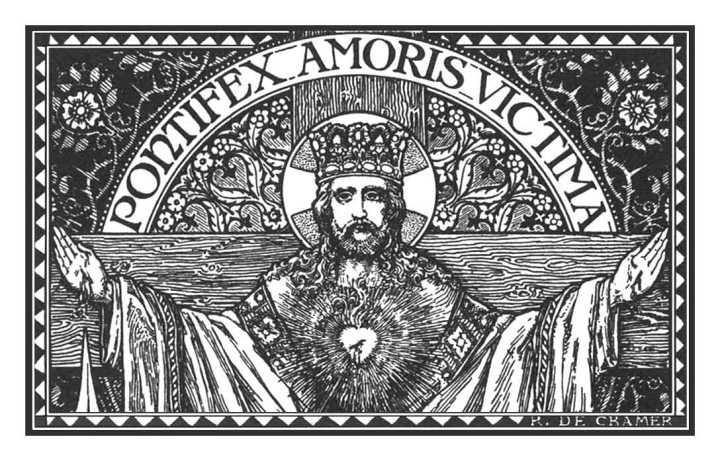
Jesus goes on to say, ‘For this I was born, and for this I have come into the world, to bear witness to the truth. Every one who is of the truth hears my voice.’ (Jn 18:37) This is what Christ was born to do, to bear witness to the truth. He is ‘the Way, the Truth, and the Life’ (Jn 14:6). In His Passion, Christ bears witness to the truth, namely that, ‘God so loved the world that he gave his only Son, that whoever believes in him should not perish but have eternal life. For God sent the Son into the world, not to condemn the world, but that the world might be saved through him.’ (Jn 3:16-17) This is what real kingship looks like, selfless love and sacrifice. It is not about acquiring and displaying wealth, power, or privilege. To add insult to injury, after Jesus has been flogged, the Roman soldiers put a purple robe on Him and place a crown of thorns on His head, to mock him (Jn 19:2-3) with the trappings of a king. Their mockery is self-defeating, as it proclaims Christ’s kingship. The true King of the Jews is the Suffering Servant, bruised for our iniquities. Christ displays His royal power when he reigns, not on a throne, but from the Cross. God’s kingdom is about healing, forgiveness of sins, and the restoration of humanity, to give us the hope of Heaven. 

Christ, risen, ascended, and glorified, will come to be our judge. Images of the Risen Christ still bear the marks of nails in His Hands and Feet, and the mark of the spear in His Side, because they are the wounds of LOVE. This is the love God has for each and every one of us. We may not deserve it, we cannot earn it, but God gives it to us, who believe in His Son, Our Saviour Jesus Christ. We are challenged to live lives which proclaim that love to the whole world.

Before they were martyred in Mexico and Spain, by regimes opposed to our faith, Christians would cry ‘¡Viva Christo Rey!’ ‘Long live Christ the King!’ just before they faced a firing squad or the hangman’s noose. To acknowledge Christ’s kingship is to do something radical. It is to say to those with worldly power, ‘We acknowledge something greater and more powerful than you!’ It is a radical political act, which terrifies those who are insecure. As Christians we are different. We have built the house of our faith on the rock which is Christ, and not the shifting sands of this world. 

The world around us may look dangerous and uncertain. Whatever we face, we can be assured of the simple fact that God loves us, and that we are part of a kingdom of love. Let us live this out in our lives, so that others may come to believe and give glory to God the Father, God the Son, and God the Holy Ghost, to whom be ascribed as is most right and just, all might, majesty, glory dominion, and power, now and forever. Amen. 
9b5d6-christtheking


Saturday, 27 October 2018

30th Sunday of Year B: Mark 10:46-52

Ours is a world which is characterised by FEAR: it is everywhere. We are afraid concerning Britain’s exit from the European Union, how our climate will change in the future, at the state of global politics and whether there will be another World War, a nuclear cataclysm, or a global pandemic. In short we know that all is not right with the world. We’re not entirely sure what to do about it, but we know that something is wrong. 

This situation is not unlike that faced by the people of Israel in exile, as addressed by the prophet Jeremiah. They have turned away from the Lord, and worshipped false gods and seen their land destroyed and captured, and been driven into exile in Babylon. And yet there is hope. God has not abandoned his people, but gives them a promise of healing, and of a bright future. The people will return weeping, sorry for their sins, and looking for God’s compassion and forgiveness. As then, so now. At this time of year we give thanks to God for another harvest being safely gathered in, we give thanks for all those who work, so that we might have food to eat, and things to drink. We also need to say sorry for the way in which we treat God’s Creation, the world in which we live: that we are not always good stewards, that we pollute the world, that we live in a world which produces enough food and yet people are hungry. We need to share what we have, so that all may be fed. This is how God wants us to live, and the greatest harvest we can offer is the harvest of our souls living lives of love, kindness and generosity. 

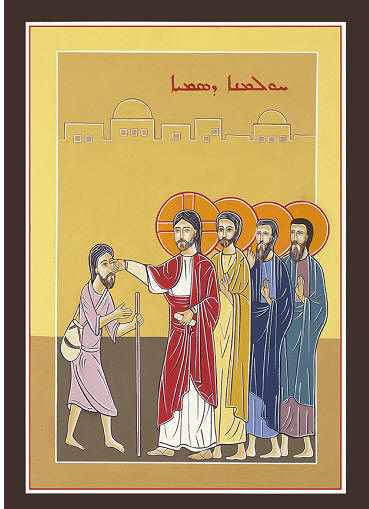
On the way out of Jericho in the Gospel this morning we have a deeply instructive picture. Bartimaeus is sitting by the roadside, a blind beggar, unable to work, a man who has to rely upon the charity of others to live. He hears a commotion, and asks who is coming by. He is told that it is Jesus of Nazareth, so he cries out, ‘Jesus, Son of David, have mercy on me!’ In his words he does two things: he recognises who Jesus is, that Jesus is the Messiah, the one who will save Israel, the one spoken of by the prophets; and he asks for mercy, for God’s forgiveness and compassion. The people around him tell him to be quiet, he’s an embarrassment, he’s making a fuss! But he cries out all the more, he won’t be silent, he is not afraid to make a scene. Jesus asks them to call him. At which point the attitude of the crowd changes, and they tell Bartimaeus, ‘Cheer up, Get up, he’s calling you.’ Jesus asks Bartimaeus, ‘What do you want me to do for you?’ He asks to recover his sight, so Jesus says, ‘Go on your way, your faith has made you well.’ His sight is restored, and Bartimaeus follows Jesus along the road.

The first followers of Jesus were known as followers of the Way, (Acts 9:2) and this is what Bartimaeus becomes: he follows him on the way, both literally and metaphorically. He trusts Jesus, he has faith in Him, and he follows Him. In Mark’s Gospel the story of Bartimaeus acts as a bridge between the teaching and miracles of Jesus’ ministry in Galilee and his time in Jerusalem which leads up to His death. He will enter Jerusalem on a donkey, as the Messiah, and will teach the people of Jerusalem how to follow God, fulfilling the hope and expectation of the prophets. Bartimaeus has faith which allows him to see, whereas the people of Jerusalem cannot see that Jesus is the Messiah, they are blind, whereas Bartimaeus can see, and follows Jesus on the Way. 

It is a way which will lead to Jesus’ death on the Cross, where He offers Himself as a sacrifice for the sins of the whole world. It is through this that God’s promise of healing first made through the prophets can be put into effect. Because God has done this we can be healed and restored, and we are able to say, ‘sorry’ and ‘thank you’. We are able to celebrate a harvest, knowing that the greatest harvest we can offer God is the harvest of souls, like Bartimaeus, who have faith, and who follow Jesus on the Way. 

We all long to be on the path that leads to God, a God who saves us, who loves us, who heals and restores us. As it says in John’s Gospel ‘I am the light of the world, whoever follows me will not walk in darkness but will have the light of life.’ If we walk with the eyes of faith we will be on a straight path, to the one who heals and restores humanity.

All the world needs to cry, ‘Jesus, son of God have mercy on me’. We need to know our need of God, we need to be healed and restored by him, like Bartimaeus. The world needs this to be fully alive in God, to turn away from sin and the ways of the world: living for others rather than ourselves, loving God and our neighbour. We should remember what Jesus said earlier in Mark’s Gospel (Mk 2:17) ‘Those who are well have no need of a physician, but those who are sick. I came not to call the righteous, but sinners.’ Christ came on our behalf, to bind up our wounds, to call us to follow Him.

The sin which mars God’s image in us, which separates us from God, which stops us from being what we can be, is borne by Jesus on the Cross. He binds our wounds by bearing the mark of nails, he heals us with the stream of his blood which flows on Calvary. By his stripes we are healed. We are healed by him so that we may see clearly and travel along the path of faith. It is a straight path on which we should not stumble, journeying with our wounded healer, to live out our faith in our lives as those healed and called by Christ and made part of his body, the church, healed by his sacraments, fed by his word and his Body and Blood, to be strengthened on our journey of faith, it is why we are here today, to be fed by him and with him, that our wounds may be healed.

We are all of us sinners in need of the love and mercy of him who bled for us on Calvary and who rose again for us, that we might share new life in him. Let us be fed by him, restored and healed by him, to have life in all its fullness. For we follow the one who heals us not out of blind obedience or fear but through joy, the joy of being free and truly alive in Christ. So let us live that life and give glory to God the Father, God the Son, and God the Holy Ghost, to whom be ascribed as is most right and just, all might, majesty, glory dominion, and power, now and forever.

fr-abdo_badwi25

Saturday, 20 October 2018

29th Sunday of Year B: Mark 10:35-45

One day the Pope Gregory the Great decided to teach his brother Bishop, John the Faster of Constantinople, a lesson. John had just been granted the title ‘Ecumenical Patriarch’ by the Emperor of Byzantium, it sounds grand and it was. It makes a claim to be patriarch of the entire inhabited world. So Gregory adopted the title ‘servus servorum Dei — Servant of the Servants of God’ [John the Deacon (PL, LXXV, 87)]. It derives from a Hebrew superlative: God of Gods, Heaven of Heavens, Holy of Holies, Song of Songs, Vanity of Vanities. So it means the most servile, the lowest of the low, the servant of all. It is used of Canaan in Genesis 9:25 when he is cursed by Noah, and also it refers to this morning’s Gospel. It was a way of reminding his brother in Christ that service, not power or titles, lies at the heart of who we are as Christians.

This morning’s gospel reminds us that Christian leadership is not about lording it over people, but being like Christ. It doesn’t matter whether you’re a bishop, a priest, a deacon, or simply a baptised Christian; we all have to live up to the same standard: Jesus Christ, who served us, and call us to the service of others. 

It is a big ask, I grant you, we will all of us fall short, and fail to hit the mark. But we are to try, and keep trying, and we can have confidence that, ‘although he was a Son, he learned obedience through what he suffered; and being made perfect he became the source of eternal salvation to all who obey him’. The author of the letter to the Hebrews encourages to do this, and to hold fast to our confession: we can be sure about both WHO Jesus is, and WHAT he does. He is truly God and man, tempted but without sin, He loves us and makes peace by the blood of the Cross. He gives his life for us, out of Love.

The Cross is at the centre of all this, through the mystery of the Atonement, we can ‘have confidence to draw near to the throne of grace and receive help in time of need’. It is a mystery, not something to be explained, but something both to be experienced and lived out. It is a mystery which we will enter this morning, when Christ, as priest and victim offers himself for us, and we receive Him under the outward forms of bread and wine. It is a mystery prefigured in the prophets, especially Isaiah, which the Church reads in a Christological way, as pointing to, and finding fulfilment in Jesus Christ. In Acts Chapter 8 when Philip meets the Ethiopian eunuch he is reading the passage we have heard this morning and he cannot understand it, or what it means, so Philip tells him about Jesus, and how Isaiah’s prophesy is fulfilled in the person and work of Jesus, and he is baptised. Isaiah’s prophecy is fulfilled in Jesus’ death, which shows us that God loves us, that he inspires the prophets to give comfort and chastisement to God’s people, so that they may love Him and serve Him.

In worldly terms Jesus looks like a failure: he is deserted, denied, and dies the death of a common criminal. But we are NOT to judge by the standards of this world: ‘it shall not be so among you’. We are not being counter-cultural just to be rebellious, to swim against the tide. Instead we are being faithful to Christ, we are holding fast to our confession, because it is TRUE, because it comes from him who is the WAY, who is the TRUTH, and the LIFE, Our Lord and Saviour Jesus Christ, whp loves us, and died for us.

In the verses which precede this morning’s Gospel, Our Lord has foretold his suffering and death for the third time in Mark’s account. He knows the cost, he knows what will happen: ‘to give his life as a ransom for many’. Jesus does it willingly, gladly, for love of us. It is a love made manifest in His birth, life and death. A love made manifest in the grace and mercy of God who creates and redeems the world, and who comes among us not as a king but as a servant. This changes us, and changes the world, it turns it around, and it asks us to do the same.

In the person of James and John we see what it is to be a Christian, to live a Christian life: it is to be conformed to Christ. They start by getting it wrong, then they learn what it is all about. It is to be open to the possibility of suffering and to accept it. In worldly terms it looks like a failure, but in bearing witness to our faith we show how that we too are able to drink the cup offered to us. We are able to become an example which people want to imitate and follow because WE point them to Christ, the restorer of all relationships, the healer of the world, who offers life in all its fullness. It is the most terrific news. People may not want to hear it, but they need to hear it. They prefer to ‘lord it over’ others and to go after the false gods of worldly power, money, and success: things which are empty, things which are of no value or worth compared to the love of God in Christ Jesus, the greatest free gift to humanity.

In Christ all human existence, all life, all death, and all suffering find both meaning and value. This truth is unsettling, it is deeply uncomfortable, and yet it is deeply liberating. In living out the truth in our lives we live a service which is perfect freedom. In conforming ourselves to Christ we find meaning and identity. So let us lay down our lives that we may live fully and give glory to God the Father, God the Son, and God the Holy Ghost, to whom be ascribed as is most right and just, all might, majesty, glory dominion, and power, now and forever.

e726c-christ_washing

Saturday, 15 September 2018

Twenty-fourth Sunday of Year B – Who do you say Jesus is?

In the Gospel this morning we see the importance of Questions and Answers. Jesus first asks the question, ‘Who do people say that I am?’ The disciples answer, saying what they’ve heard people say, ‘some say John the Baptist, others Elijah or one of the prophets’ J. Jesus then asks the question, “But who do you say that I am?” (Mk 8:29 ESV) He asks that question to His disciples, and he asks it to us: Who do we say Jesus is? Just a man? A Holy Man? A spiritual teacher? Or something more? Are we happy to say that he’s a prophet, but just a man, to deny His Divinity, or can we say that He is the Christ, the Son of the living God. If we are happy to say this is this simply the end of the matter or is more asked of us? We have to say that He is the Christ, the Messiah, the Son of the Living God. Nothing else will do! Mormons, Jehovah’s Witnesses and Muslims, Unitarians, and many other people will say many things about Jesus, but not that he was the Messiah, the Anointed One, who would save people from their sins. He is truly God, and truly man, born of the Blessed Virgin Mary by the power of the Holy Spirit. 

Peter confesses who Jesus is, but then Jesus goes on to teach His disciples ‘that the Son of Man must suffer many things and be rejected by the elders and the chief priests and the scribes and be killed, and after three days rise again.’ (Mk 8:31 ESV) Because Jesus is who He is, the Messiah, the Son of God, then He has to die. In our first reading from the prophecy of Isaiah it is clearly foretold that the servant, that is Jesus, will be rejected and mistreated, and killed. Now Peter clearly doesn’t like it, he doesn’t understand how people could treat Jesus this way. Peter can only see things in human terms, and despite confessing that Jesus is the Messiah, Peter doesn’t want Jesus to suffer and die. He doesn’t fully understand what this means. It has to happen, so that Scripture might be fulfilled, and to show the world how much God loves us. God loves us SO MUCH that he gives his own Son to suffer and die, so that we might live. 

So Jesus says to the assembled crowd, including His disciples, “If anyone would come after me, let him deny himself and take up his cross and follow me. For whoever would save his life will lose it, but whoever loses his life for my sake and the gospel’s will save it.” (Mk 8:34-5 ESV) We are Christians, through our common baptism, we follow Christ, we do what He says. So this applies to each and every one of us. We have to deny ourselves, take up OUR cross, and follow Jesus. 

We have to deny ourselves — Now I know that I’m not good at saying, ‘No’. But I have to, I try to, and that’s the point. Denying ourselves means that we don’t put ourselves, or thoughts and desires at the centre of our lives — we put God there, where He belongs. God gives us GRACE to do this: through prayer, through reading the Bible, through the Sacraments of the Church, to help us.

We have to take up our Cross. The Cross is an instrument of torture and death, and it means pain and suffering. That is not pleasant or easy. We can understand why Peter says what he does, but the Christian life is not easy or without suffering. Mother Teresa, St Teresa of Calcutta once said that, “Suffering is a sign that we have come so close to Jesus on the cross that he can kiss us and that he can show that he is in love with us by giving us an opportunity to share in his passion.” (My Life for the Poor, 77) When we suffer, we are close to Christ, we share in His Passion, and are conformed to His image. It is part of the mystery of God’s love, that it can transform us, but that transformation is not pleasant or easy, but in it we experience God’s LOVE. 

We have to follow Jesus, we have to do what He says, which sounds easy in theory, but in practice is rather difficult. It is something which we do together, as a Church. Love and forgiveness sound easy, but they aren’t.  They make demands on us, and force us to do things that we might not like to do. But we can support each other, and rely upon the grace of God to help us as we try to do this.  

Our Faith is first and foremost about our relationship with Jesus Christ, someone who loves us so much that He dies for us. He takes away our sins, and restores our relationship with God and each other. And he gives himself here to us today, under the outward forms of bread and wine, in His Body and His Blood, to heal us, and restore us.

What Jesus does for us and for humanity is wonderful. It is an amazing demonstration of God’s love for us. He calls us to follow Him and bear our own Cross. To follow Christ in living out that same suffering love, to show the same compassion to the world, the same forgiveness. To follow Christ is to experience pain and anguish, heartache and loss, there is no magic wand to make things disappear. But rather, as we try to live out our faith, stumbling and failing as we go, we are drawn ever more into the mystery of God’s love and forgiveness. We become people of compassion, of reconciliation, who can see beyond petty human trifles, squabbles, and arguments, to the Kingdom of God where restored humanity can be enfolded for ever in the love of God. 

Opposed to this are the ways of the world: the ways of money, and of power. Yet none of us can be saved by who we are or our possessions. Once we die they are of no use to us, and what then? All the wealth and power in the world cannot save our soul. They cannot make us truly happy in the way that following Christ, and entering into his suffering can. God’s love is shown most fully when Christ dies for love of us, when he bears the weight of human sin, wounded for our transgressions and bruised for our iniquities. This is how the Messiah reigns, not on a throne, but on a Cross. And when he comes at the end of time to judge the world, as he surely will, a judgement of which the Apostle James is all too well aware, let us not be among the adulterous and sinful generation of those who are ashamed of Christ, but let us instead be in Him, fed with Him, living His life, so that the world may come to believe and give Glory to God the Father, God the Son, and God the Holy Spirit, to whom be ascribed as is most right and just, all might, majesty, glory dominion, and power, now and forever.

cropped-velazquezcrucifxion.jpg

Saturday, 18 August 2018

Twentieth Sunday of Yr B (Prov 9:1-6, Eph 5:15-20, Jn 6:51-58)

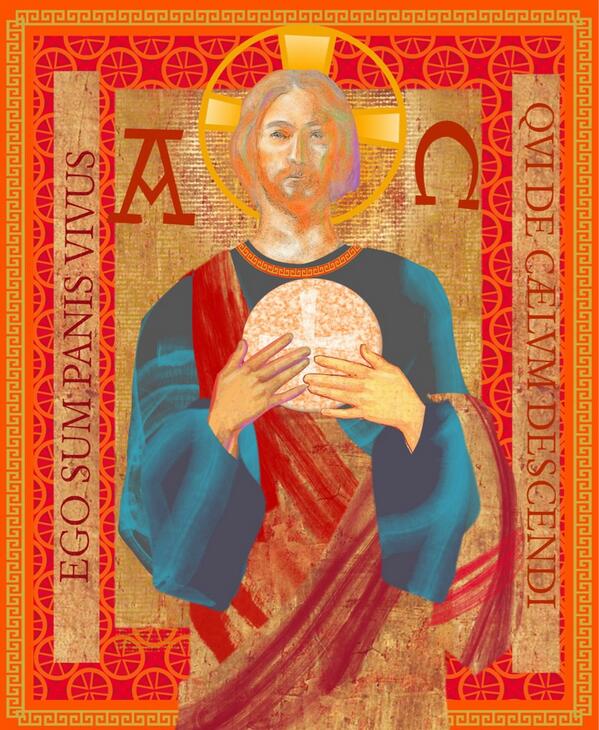
Over the past few weeks our readings from St John’s Gospel have focussed on Jesus’ teaching about the Bread of Life. After the Feeding of the Five Thousand Jesus teaches people at great length, beginning with His statement, ‘I am the bread of life’ (Jn 6:35) It is an extended meditation on what the Eucharist, the central and primary act of Christian worship, is. It is where we follow Jesus’ command to ‘to this in memory of Him’. At one level it is strange: the bread and wine do not look or taste any different after prayers have been said, but what we are eating and drinking IS different, because Jesus says that it is, because God is active in the world, and we have a relationship with Him. The way in which God acts is mysterious, we struggle to UNDERSTAND it, but we can EXPERIENCE it, through Holy Communion, where Christ feeds us with His Body and Blood. 

In our first reading this morning from the Book of Proverbs we see Wisdom. In the Christian tradition she is identified with Jesus Christ, the Word made Flesh. She is issuing an invitation: she has built a house, the Church. She has hewn seven pillars, the sacraments, the means of God’s grace to be active in our lives. The people of God are called to eat and drink, to live, and to walk in the way of insight, that is in following Jesus Christ. The New is prefigured in the Old. The Hebrew Scriptures point to, and find their fulfilment in Jesus Christ, who is the Wisdom of God, and the Word made Flesh. We are invited to His banquet, so let us come to be fed at the table of the Lord. 

Likewise St Paul advises the church in Ephesus not to behave in a worldly manner, but to put God at the centre of our lives. He ends by invoking the names of the three persons of the Godhead, Father, Son, and Holy Spirit, in a context of right worship, of praise of Almighty God, as that is what we as Christians are supposed to do: to love God and to serve him, through prayer and worship, through entering into the mystery of the Three in One. To be caught up in the outpouring of divine love, and to have a foretaste of it here on earth.

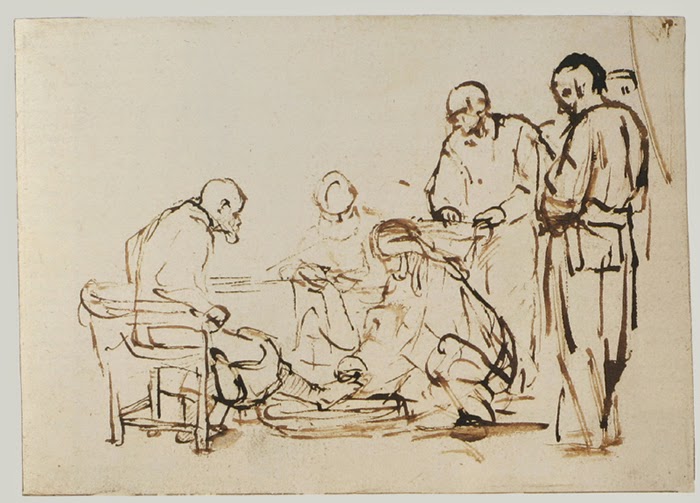
After feeding the Five Thousand in John’s Gospel, a sign of the generous nature of God’s love for humanity, Jesus embarks upon an extended discourse upon himself as the Bread of Life. John’s account of the Last Supper focuses on Christ washing the disciples’ feet, and their obeying Christ’s example and commands. There is no institution narrative, instead the Eucharistic teaching in John’s Gospel is centred around Jesus’ explanation in Chapter 6, so that a long time before Jesus’ suffering and death we can see what it is all about. It’s a process which starts with John the Baptist at the start of the Gospel, where he sees Jesus and says, ‘Behold the Lamb of God, who takes away the sin of the world’ (Jn 1:29) The Lamb points to Passover and the freedom of the people of God, freedom from sin and its effects.

Jesus begins the last section of his teaching with the bold claim that, ‘I am the living bread that came down from heaven. Whoever eats this bread will live for ever; and the bread that I will give for the life of the world is my flesh.’ These are some extraordinary claims to make, they would have sounded shocking to a first century Jew, and some two thousand years later they still sound shocking, and yet the offering of Christ’s body for the sins of the world as a sacrifice which is re-presented, made present again and offered to God the Father upon the altars of the church, is what the church is for, it is what we are for. It is why we come together to worship on the day when Christ rose from the dead, a sign of the new life we share in Christ, through baptism and the Eucharist.

It is done so that we may have life in us, and have it for eternity, so that we may share in the pledge of eternal life given to us in Christ, who will raise us up forever with Him. Such is the nature of God’s love for us: it is freely given, we do not earn it, we do not deserve it. It is something given to us, so that by it, and through it, we may become something greater, something better than we are.

Such is the power of God’s sacrificial love at work in our lives; such is the treasure which we have come here today to receive. If it were ordinary food then we would eat it, and it would become what we are, our flesh and blood; but instead we, who eat it, become what it is: the Body and Blood, Soul and Divinity of Our Lord and Saviour Jesus Christ. We share in His divine life, we are healed by His divine love, by his sacrifice the wounds of sin and division are healed so that humanity, made in the image of God might be ransomed, healed, restored, and forgiven by God, to live to his praise and glory.

God loves us. God dies for us, and rises again for us. As a sign, a pledge and a token of His love, He gives Himself to us in the Eucharist, so that we might come to share that divine life and love. The process of transformation which will end in Heaven is begun here and now, so that we can live the life of the Kingdom of God here and now, and transform the world around us into what God wants it to be. This is the revolution which God seeks to accomplish through us, through His Church, that fed by Christ and with Christ we transform the world around us, living lives of love and forgiveness which can and will change the world. 

Such wonderful news is truly worth pondering and considering in detail given its potential effects in our lives, so that bit by bit we are slowly and sure becoming more Christ-like, fed by Him, fed with Him, and encouraging others so to do so that the world may believe and give glory to God the Father, God the Son, and God the Holy Spirit, to whom be ascribed as is most right and just, all might, majesty, glory, dominion, and power, now and forever, Amen. 

blgsv4ncyaat655