Saturday, 27 March 2021

Palm Sunday

If anyone asks you why you are untying it [the ass the disciples were sent to find], this must be your answer, ‘The Lord has need of it’ (Lk 19:31). Perhaps no greater paradox was ever written than this: on the one hand the sovereignty of the Lord, and on the other hand his ‘need’. His combination of Divinity and dependence, of possession and poverty was a consequence of the Word becoming flesh. Truly, he who was rich became poor for our sakes, that we might become rich. Our Lord borrowed a boat from a fisherman from which to preach; he borrowed barley loaves and fishes from a boy to feed a multitude; he borrowed a grave from which he would rise; and now he borrows an ass on which to enter Jerusalem. Sometimes God pre-empts and requisitions the things of man, as if to remind him that everything is a gift from him.

Fulton Sheen, The Life of Jesus

The scene depicted in today’s Gospel seems like a triumph. Jerusalem is celebrating: those gathered treat Jesus’ entry into Jerusalem as the triumphal entry of the Messiah. People lay down their clothes and wave palm branches. The crowd cry out for God to save them, and that is exactly what he will do in a few days time, upon the Cross. This is a God who keeps his promises and who also defies human expectations. The masses in Jerusalem are expecting a king of the Davidic line. One who would be seen as a challenge to the ruling élite, the status quo. But in, Christ, God gives Israel something else: a King of the line of David, yes, but one who rules with love, who has no desire for power, or honour. Leaders and those in authority are threatened by him: Jesus turns their world on its head. He is an awkward inconvenience. Jesus does not want their power. He has come to be and do something completely different. What is seen as a potential political coup is in fact a renewal of religion, the fulfilment of prophecy, and a new hope for Israel.

In riding into Jerusalem Jesus is fulfilling the prophecies of Zechariah: 

Rejoice greatly, O daughter of Zion! Shout aloud, O daughter of Jerusalem! Behold, your king is coming to you; righteous and having salvation is he, humble and mounted on a donkey, on a colt, the foal of a donkey. (Zech 9:9)

The King of Israel comes riding on a donkey: a humble beast of burden, which carried his Mother to Bethlehem for his birth, and carried the Holy Family into exile in Egypt. It is an act of humble leadership which fulfils what was foreseen by the prophets. It shows us that Jesus Christ is truly the one who fulfils the hopes of Israel. The Hebrew Scriptures look forward to the deliverance of Israel, which is enacted in front of their very eyes. God is saving His people, but they cannot see it. In a few days time all will have changed, love will turn to hatred; joy to sadness. 

This is why today, and throughout Holy Week, we will have readings from the prophet Isaiah, which are known as the Songs of the Suffering Servant. This morning we see the servant being mistreated. He is struck on the back, his beard is torn out, he is spat at and insulted. This will all come to pass as Our Lord goes to the Cross on Good Friday. It is the fulfilment of prophecy. God will show us how much he loves us by enduring such treatment.The events of Holy Week demonstrate what humanity is capable of: anger, hatred, bitterness, mob rule, and the desire to have a scapegoat, someone to blame. This is fallen, sinful humanity at its worst, and we will see more of it over the coming days. It should shock us, we should feel sick to the pits of our stomachs, because it shows us why Christ had to die — to overcome human sin, the world, and the Devil with the redemptive power of God’s Love. 

And so it begins: Our Lord and Saviour makes a triumphal entry into Jerusalem. He is hailed as the Messiah, and it is a cause for celebration and joy. But, this is a week which will see Jesus betrayed by a close friend, arrested, abandoned, tried and killed as a common criminal. Strangely enough, the world around us can still be just as fickle, just as quick to turn someone from hero into persona non grata. Lest we think that somehow we are better, more advanced, more civilised people, the plain unvarnished truth is that we are not. We need the annual reminder which the Church gives through its liturgical year — a chance to be confronted by stark realities, and to be brought up short by them. What Christ says and does in this coming week, He says to us, He does all this for us — to Heal us, to Restore us. Jesus says and does these things so that we can live His risen life here and now, as the people of God, sharing in His Death and Resurrection though our baptism, trusting in Him.

In our pilgrimage through Lent, through our prayer, and our fasting, we hope to increase our closeness to Christ. By following Him, and meditating upon His Passion, we are transformed by His love, we follow in His footsteps, and enter into the mystery of God’s love poured out on the world. In the next few days we will go to the Upper Room, we will watch and wait with Christ, we will walk the way of the Cross, and we will gaze upon Christ crucified. Doing so, we will see just how much God loves us — the lengths to which God will go to demonstrate that love, and make it a reality in our lives. This is how we prepare to celebrate Easter: Our Lord’s rising from the tomb, His conquering death, so that we may have new life in Him. 

In his Letter to the Christians in Philippi, written in prison in Rome in ad62, St Paul lays great stress upon the Humility of Jesus Christ. Humility is not a popular virtue these days, in fact the world around us would have us be quite the opposite: full of ourselves, with a high opinion of ourselves. Ours is a world which is more and more characterised by the sin of selfishness. The individual is all that matters: me and what I want, that is all that counts. At the root of it all is pride, thinking that we are more important than we are, making ourselves the centre of things, whereas we need to put God at the centre of things, and learn to be thankful. 

Gratitude is characteristic only of the humble. The egotistic are so impressed by their own importance that they take everything given them as if it were their due. They have no room in their hearts for recollection of the undeserved favours they have received.

Fulton Sheen, On Being Human, 1982: 325

We need to have the mind of Christ, a mind devoted to love and service of God. Christ doesn’t just do what He wants to, but everything He says and does is the will of God the Father. Jesus prays in the Garden of Gethsemane for the strength to do God’s will. He demonstrates humility and obedience in action: embracing the most shameful death possible, for love of us. Thus we should love Jesus, we should worship Him, because He is God, and He loves us. The Saviour of the World scorns majesty. He embraces shame and sin, total utter degradation to save us. Jesus does this to heal the wounds of sin and division, so that we might have life, and life in all its fulness, with Him, for ever. This is why Jesus is willing to suffer, to be vulnerable, to take our human frailty and to redeem it through His suffering. Through His vulnerability, He shows the World that God’s ways are different from ours. This is the example for us to follow — the way of suffering love and humility

Today, and in the coming week, we will see what God’s Love and Glory are really like. It is not what people expect. It is power shown in humility, strength in weakness. As we continue our Lenten journey in the triumph of this day and looking towards the Holy and Life-giving Cross and beyond to the new life of Easter, let us trust in the Lord. Let us be like him, and may He transform our hearts, our minds and our lives, so that they may have live and life in all its fullness. We are fed by the word of God and by the Sacrament of His Body and Blood to be strengthened, to share in His divine life, to fit us for Heaven. Forgiven and forgiving, may all that we say, or think, or do, may all that we are be for the praise of God the Father, God the Son, and God the Holy Spirit, to whom be ascribed, as is most right and just, all might, majesty, glory dominion and power, now and forever. Amen. 

James Tissot The Procession in the Streets of Jerusalem

Saturday, 20 March 2021

Lent V

Our readings this week continue our journey towards the Cross. The Cross is important because it is first and foremost a demonstration of God’s love for humanity. God loves us enough to die for us, to wipe away our sin, and to restore our relationship, with Him and each other. It is central to who and what we are as Christians, people transformed by the love of God. 

In our first reading this week, from the prophet Jeremiah, we see something truly amazing. Through the prophet, God promises to make a new covenant with His people. Israel broke the first covenant through disobedience and sin, and yet God offers a fresh start, a clean slate, a new beginning. God promises that:

But this is the covenant that I will make with the house of Israel after those days, declares the Lord: I will put my law within them, and I will write it on their hearts. And I will be their God, and they shall be my people.’ (Jer 31:33)

Rather than being something external, something done to comply with the letter of the Law, this new covenant will be written on our hearts through faith, and lived out in our lives. It is a promise which finds its fulfilment in Jesus Christ, who teaches love of God and love of neighbour. This He lives out in His life, and He encourages us to follow His example. It is a hopeful message, as God promises: 

For I will forgive their iniquity, and I will remember their sin no more.” (Jer 31:34)

The Law of Love, which God makes real in Jesus Christ has genuine transformative power, because it is rooted in forgiveness and healing, something which only God can provide. Our loving Father does this on the Cross, where He gives His Son to die for us, to heal our wounds, and to offer eternal salvation to all who believe in Him. 

In our Gospel today we have reached the events just before the Passover. Passover is the central feast of Israel, commemorating the journey from slavery in Egypt to the Promised Land. There are some Greeks, who may or may not be Jewish converts, that approach Philip, who has a Greek name. He, along with Simon Peter and Andrew, was first a disciple of John the Baptist, before following Jesus. These Greeks ask Philip a simple question:

Sir, we wish to see Jesus.”(Jn 12:21)

This is the longing of the human heart, a desire to see Jesus, to have an encounter with the divine. Philip tells Andrew, and they both go to see Jesus, who says this in reply:

The hour has come for the Son of Man to be glorified. Truly, truly, I say to you, unless a grain of wheat falls into the earth and dies, it remains alone; but if it dies, it bears much fruit. Whoever loves his life loses it, and whoever hates his life in this world will keep it for eternal life. If anyone serves me, he must follow me; and where I am, there will my servant be also. If anyone serves me, the Father will honour him.” (Jn 12:23-26)

Jesus’ reply should strike us as strange. He doesn’t say, ‘Of course, bring them here’, or ‘I’d be delighted to meet them’. Instead He starts talking about His forthcoming Death. This is glory. It is not the human idea of glory, but quite the opposite – dying the death of common criminal. This doesn’t make sense, in human terms, and it isn’t supposed to. As it says in the prophet Isaiah (55:8), ‘For my thoughts are not your thoughts, neither are your ways my ways, declares the Lord.’ The point is that we need to do things, God’s way, and not ours. Christ is the grain of wheat who dies, and who yields a rich harvest, in the Church, saving the souls of countless billions of people over the last two thousand years. 

Jesus calls us to follow Him, and not to care for life in this world — Heaven is our home, it is what we prepare for here on earth. If we want to share in Christ’s glory, then we need to follow the same path of suffering love which takes Him to His Cross, and will take us to ours. As sales pitches go it isn’t going to win plaudits from any Advertising Agency! That’s the point. It is honest, and it is the truth, plain and unvarnished. This truth changes the world, and sets us free (cf. Jn 8:32). We are free because He hung on a wooden cross and died and rose again for us. That is God’s glory — dying for love of us, to set us free, free to live for Him, and with Him, forever.

Our responsibility as Christians is that people might see Jesus in all we do, say and think. We need to be living, breathing, walking advertisements for the Good News of Jesus Christ here and now. We can use this time of Lent to consider significant aspects of our lives. Being under lockdown has made us realise what is important, what really matters. It is vital that we live in such a way that people might see Jesus in who and what we are, and what we do.

How do we do this? We do it through the Grace of God, and by trying, by co-operating with that Grace. We do it by making a conscious effort to live out our faith together, as a Christian community. We do it by being filled with love, and filled with grace, in the knowledge of the forgiving power of Christ’s blood which was shed for us. We cannot save ourselves, only Christ can do that. Salvation is not just an individual matter. Christ came to change the world. This He doe, one soul at a time, through the Church, and the sacraments of Baptism and the Eucharist,. These outward and visible signs of inward and spiritual grace, are the free gift of God to his people.

We will often fail to practise what we preach, and people may call us hypocrites, but the point is that we keep on trying. God will not abandon us. He dies for us, bearing the burden of our sins, so that we might become like Him. That is why Jesus was born for us, lived, died, and rose again for us.

As Christians we live no longer for ourselves, but for the God who loves us. We can offer the world around us an alternative to the way of selfishness and sin. We need to trust Jesus’ words, and fashion our lives after His example. Together, nourished by Word and Sacrament, and carrying our own cross, we trust in His grace and proclaim His truth. We do this so that the world may believe and follow God the Father, God the Son and God the Holy Spirit. To whom be ascribed, as is most right and just, all might, majesty, glory, dominion, and power, now and forever. Amen.

James Tissot The Gentiles Ask to See Jesus (Les gentils demandent à voir Jésus)

Wednesday, 17 March 2021

Are you fasting?

Cyberdesert

Are you fasting?
Give me proof of it by your works.
If you see someone who is poor, take pity on them.
If you see a friend being honored, do not be envious.
Do not let only your mouth fast, but also the eyes, and the feet, and the hands and all the member of our bodies.
Let the hands fast, by being free of greed.
Let the feet fast, by ceasing to run after sin.
Let the eyes fast, by disciplining them not to glare at what is is sinful.
Let the ears fast, by not listening to evil talk and gossip.
Let the mouth fast from foul words and unjust criticism.
For what good is it if we abstain from eating birds and fishes, but bite and devour our brothers and sisters?

— St John Chrysostom

View original post

Saturday, 13 March 2021

Lent IV

Last week, in the Gospel, Jesus talked about the destruction of the Temple. This happened a few decades later when the Romans sacked Jerusalem in AD70. Today, our first reading takes us back to the first destruction of the Temple, by Nebuchadnezzar in 587BC. The people of Israel have not been faithful to God, they have broken the First Commandment by adopting the religious practices of their neighbours. But God sent prophets to remind Israel of its obligations to worship God, and God alone. This message is not heeded, and disaster ensues. Israel is led away to captivity in Babylon for seventy years, until Cyrus, the king of Persia allows the Israelites to return. Captivity represents the most terrible thing that could happen to the people of Israel: a loss of everything, being deprived of freedom, and the destruction of their religious life, focused on the Temple in Jerusalem. We should, however, remember that God was patient ‘until there was no remedy’ (2Chron 36:16), and the destruction and exile are not permanent, only temporary, and after seventy years Israel would return. 

While Israel is not faithful to God, God is faithful to Israel, and does not desert her. Thus, in the Gospel, Jesus explains His forthcoming Crucifixion with a reference to Israel’s wanderings after the Exodus:

And the Lord said to Moses, “Make a fiery serpent and set it on a pole, and everyone who is bitten, when he sees it, shall live.” So Moses made a bronze serpent and set it on a pole. And if a serpent bit anyone, he would look at the bronze serpent and live.’ (Numbers 21:8-9)

The people of Israel were moaning about the journey, the lack of food and water, and that God has led them out into the desert to die, so God sends fiery serpents which killed them. The people then relented, and asked Moses to pray to God to take the serpents away. God listened to Moses, and provided a means for Israel to be saved. Jesus uses this example to explain why the Son of Man must be lifted up. Just as the bronze serpent saved people long ago, Jesus’ being lifted up on the Cross will save those who believe in Him. The mention of being bitten by serpents reminds us of the expulsion of Adam and Eve from the Garden of Eden, where the Lord God says to the serpent:

I will put enmity between you and the woman, and between your offspring and her offspring; he shall bruise your head, and you shall bruise his heel.” (Genesis 3:15)

Being bitten by snakes is understood as a consequence of sin, which Christ will deal with by taking our sins and those of all humanity upon himself, bearing our burden, and reconciling us to the Father once and for all. Thus, whoever believes in Jesus, and the redemption He brings about, has the promise of eternal life.

There then follows one of the most well-known verses in the Bible:

For God so loved the world, that he gave his only Son, that whoever believes in him should not perish but have eternal life. For God did not send his Son into the world to condemn the world, but in order that the world might be saved through him.” (Jn 3:16-17) 

This is the heart of our faith as Christians. Christ was born for us, lived and died for us, and was raised to new life, so that we might have the promise of eternal life in Him. This is why we follow Christ into the desert of Lent for forty days, so that through prayer, fasting and charity we may be prepared in body and soul to celebrate the mystery of Christ’s Passion, Death, and Resurrection. Maundy Thursday, Good Friday and Easter are the ultimate embodiment of God’s generous Love towards humanity. God loves us, you and me, each one of us, so much that He gave His only Son to die for us, on the Cross.

God, in Christ, does not condemn us, but rather saves us, out of Love. God is a God of love and generosity, who offers Himself to reconcile us to Him, and to each other. This generosity is at the heart of our faith as Christians, we worship a generous, loving God, and invite others to receive the free gift of God’s grace, and enter a relationship with the God who loves us. 

This relationship explains the joyful hope which St Paul has when he writes to the Church in Ephesus in our second reading this morning. Paul’s central message is that:

For by grace you have been saved through faith. And this is not your own doing; it is the gift of God,’ (Eph 2:8)

Grace is unmerited kindness, something which we do not deserve, or earn. It is by the grace of God that we are saved, through faith, believing and trusting in Jesus Christ, who was born for us, died and rose again for us. We can put our trust in the God who loves us, and who shows us that love in His Son. It is not about what we can do, but about what God can do for us. Our relationship with God is the result of a gift, which we can receive and which can transform our lives, if we only let go, and let God transform us, more and more into the likeness of His Son. 

God cares so much about the world and its people that he takes flesh, and lives a life of love, amidst the messiness of humanity, to show us how to live lives filled with love, life in all its fullness. God, in Christ, comes among us not to condemn the world but to offer it a way of being, of being truly alive in Him. God has made us for himself, and our hearts are restless until they find their rest in him. The spiritual needs and searching which characterise people in the world around us can be satisfied in God and in God alone, through the church.

We continue our Lenten journey towards the Cross, where God shows his love for us most fully and completely, giving his body to be broken and his blood be shed for us, to strengthen us to live the risen life of Easter. So may we join the Angels in our song of love and praise to God the Father, the Son and the Holy Spirit. To whom be ascribed, as is most right and just, all might, majesty, glory, dominion, and power, now and forever. Amen.

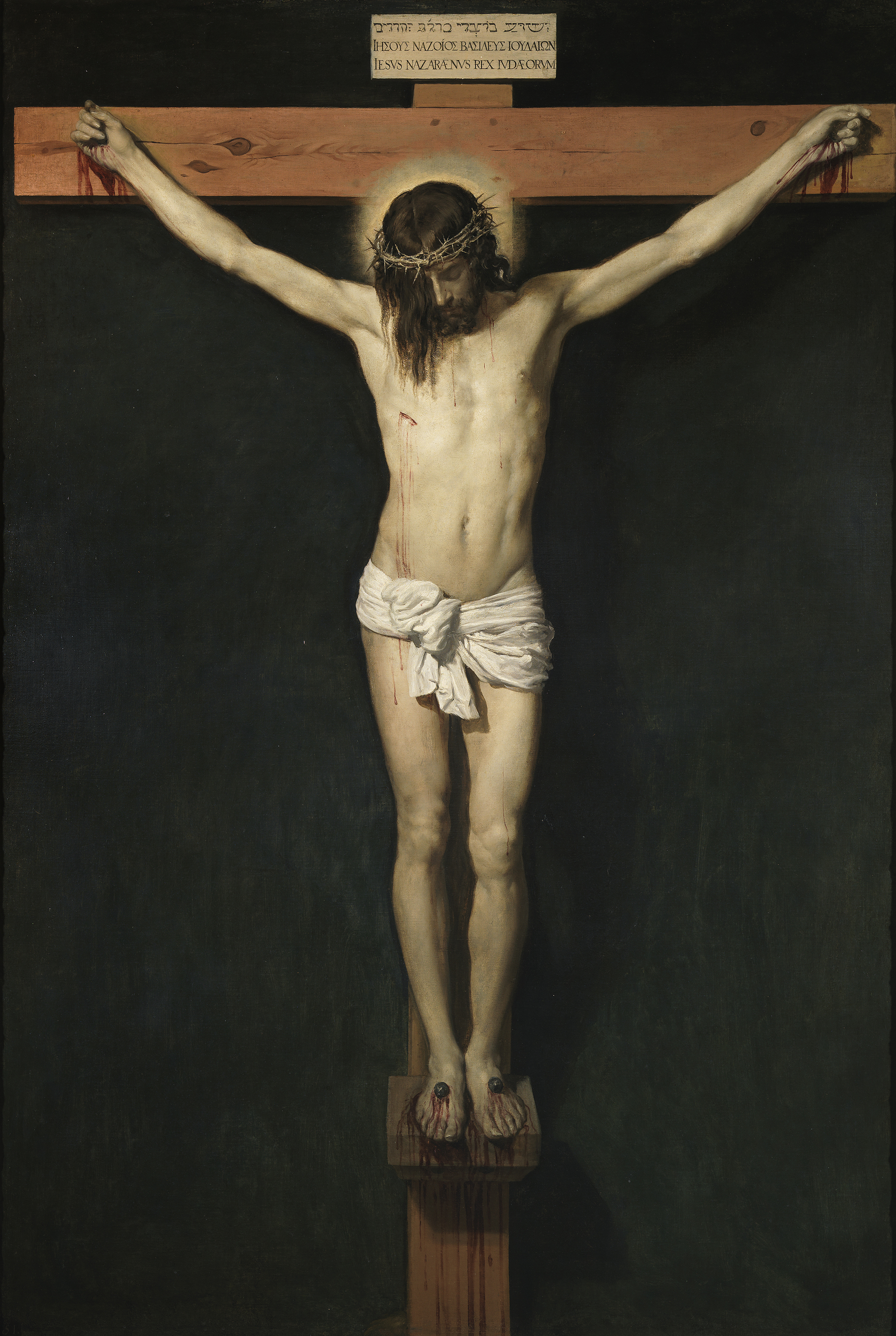
Christ Crucified, Diego Velázquez, (1632) Museo del Prado, Madrid.

Saturday, 6 March 2021

Lent III: The Cleansing of the Temple

It is hard for us to imagine just how important the Temple in Jerusalem was. It was, quite literally, the centre of the world, the most important place on earth. At its centre was the Holy of Holies which contained the Ark of the Covenant. Inside the Ark were the two tablets containing the Ten Commandments, some of the manna from the desert, and Aaron’s staff. That is why, to this day, Jews continue to pray at the Western Wall in Jerusalem. This is all that remains of the Temple after its destruction by the Romans in ad 70. At the time of Jesus, Passover was the busiest time of year in Jerusalem. As the central festival of Judaism, Passover marks the journey from slavery in Egypt to the freedom of the Promised Land, Israel. Likewise, for Christians it is the time when we celebrate our freedom from the slavery of sin through the Death and Resurrection of Jesus Christ.

In our first reading this morning from the Book of Exodus, God gives the law to Moses on Mount Sinai in the desert. It describes both how to honour God, and how humanity should live. Our duty towards God and our neighbour is clearly shown. When Moses receives the Ten Commandments from God, the first is:

I am the Lord your God, who brought you out of the land of Egypt, out of the house of slavery; you shall have no other gods before me.’ (Exod 20:2-3)

The temple traders, in their desire to profit from people’s religious observance, have broken this first and most important commandment. Their desire for making money and profit has got in the way of what the Temple is supposed to be about: namely, worshipping God. It has become a racket, a money-making scheme to fleece pilgrims who have come from far away and who do not have the right money or the correct sacrificial animals with them. This is no way to worship God, a God who loves us, and who showed that love by delivering Israel from slavery in Egypt, and who will deliver humanity by His Son.

Jesus is angry when He sees this and drives out both the money-changers and the sellers of sacrificial animals. Those who sell sheep, oxen, and pigeons, represent the status quo, a sacrificial system where animals and their blood are used to honour God. Jesus has come to do away with this system by offering Himself, as the true sacrifice. When John the Baptist first sees Jesus in John’s Gospel, he says:

Behold, the Lamb of God, who takes away the sin of the world!.” (Jn 1:29)

Jesus is the true Lamb, foreshadowed in the story of Abraham and Isaac. He will be the true Passover sacrifice, as He will be crucified and die at the time when the Passover lambs are being slaughtered in the Temple. This is a sacrifice which will not need to be repeated, as Jesus will die once, for the sins of the whole world. 

The Jews ask Jesus, 

What sign do you show us for doing these things?” (Jn 2:18)

Jesus makes a cryptic reply:

Destroy this temple, and in three days I will raise it up.” (Jn 2:19)

His audience cannot understand what Jesus means. It took almost fifty years to build the Temple. The idea of destroying it and rebuilding it in three days is crazy. However, Jesus is talking about His own Death and Resurrection. His Body is the true Temple, the True Sacrifice, and He is both Priest and Victim. God will, in the person of His Son, bring about true worship. Likewise, the Temple is supposed to be a house of prayer for all the nations (Isaiah 56:7 & Mark 11:7), but the Court of the Gentiles has been filled with stalls for money-changers and animal-sellers. By clearing them out Jesus has made room for the old Temple to be used for prayer, while prophesying that a newer, greater Temple is here, in Him.

The Jews demand a sign, and Christ prophesies that if they destroy this temple then he will raise it up in three days. He looks to His death and resurrection to show them where true worship lies — in the person of Jesus Christ. Jesus said, ‘I have come not to abolish the law and the prophets but to fulfil them’ (Matthew 5:17). The Ten Commandments are not abolished by Christ, or set aside, but rather His proclamation of the Kingdom and Repentance show us that we still need to live the Law of Moses out in our lives: to show that we honour God and live our lives accordingly. In His cleansing of the Temple, Christ looks to the Cross and to the Resurrection, as the way that God will restore our relationship with Him. The Cross is a stumbling-block to Jews, who are obsessed with the worship of the Temple, and it is foolishness to Gentiles who cannot believe that God could display such weakness, such powerlessness. Instead the Cross, the supreme demonstration of God’s love for us, shocking and scandalous though it is, is a demonstration of the utter, complete, self-giving love of God. Here, love and mercy are offered to heal each and every one of us. Here we are restored. 

It is a shock to learn that God loves us enough to do this, to suffer dreadfully and die for us, to save us from our sins. We do not deserve this, and that is the point. Through Christ we are offered the opportunity to become something other and greater than we are. By putting away the ways of the world, of power and money, selfishness and sin, we can have new life in and through Him.

Lent is the opportunity for a spiritual spring clean. It is a time to ask God to drive out all that should not be there, and for preparing for the joy of Easter. In our baptism we died with Christ and were raised to new life in the Spirit. Let us prepare to live that life, holding fast to Our Lord and Saviour, clinging to the teachings of his body, the Church. Let us turn away from the folly of this world with all its hot air, and focus on the true and everlasting joy of heaven, which awaits us. Let us proclaim God’s love in our lives, so that others may believe, and that all may praise the Father, the Son and the Holy Spirit. To whom be ascribed, as is most right and just, all might, majesty, glory, dominion, and power, now and forever. Amen.

El Greco: The Purification of the Temple

Saturday, 20 February 2021

Lent I (Year B)

The Bible can be read as an account of salvation history, beginning with the Creation of the Universe and culminating in our redemption in the Birth, Life, Passion, Death, and Resurrection of Jesus Christ. As such it is a series of covenants, promises between God and humanity. These begin with God’s promise to Noah after the flood, our first reading this morning. God promises not to destroy humanity. This is welcome news in a time of both pandemic and heavy rainfall. The rainbow is given as a sign of God’s love and faithfulness. This sets the tone for all the other covenants in the Bible.

Our second reading this morning, from the First Letter of Peter, draws a link between Noah and the ark as a sign of salvation, and baptism, by which humanity is saved. It is a timely connection to make since Lent is traditionally a time for preparation for Baptism at Easter. The wider account of salvation history and the life of Jesus in particular become our life as Christians in our baptism: we share in them, they become part of us, and form both who and what we are. We enter into the drama of salvation. We die to sin, and are raised to new life in our baptism. Through our new life in Christ, we follow His example, and prepare for our annual celebration of Holy Week and Easter by going into the desert with Him for the forty days of Lent, a time of fasting, prayer, and charity.

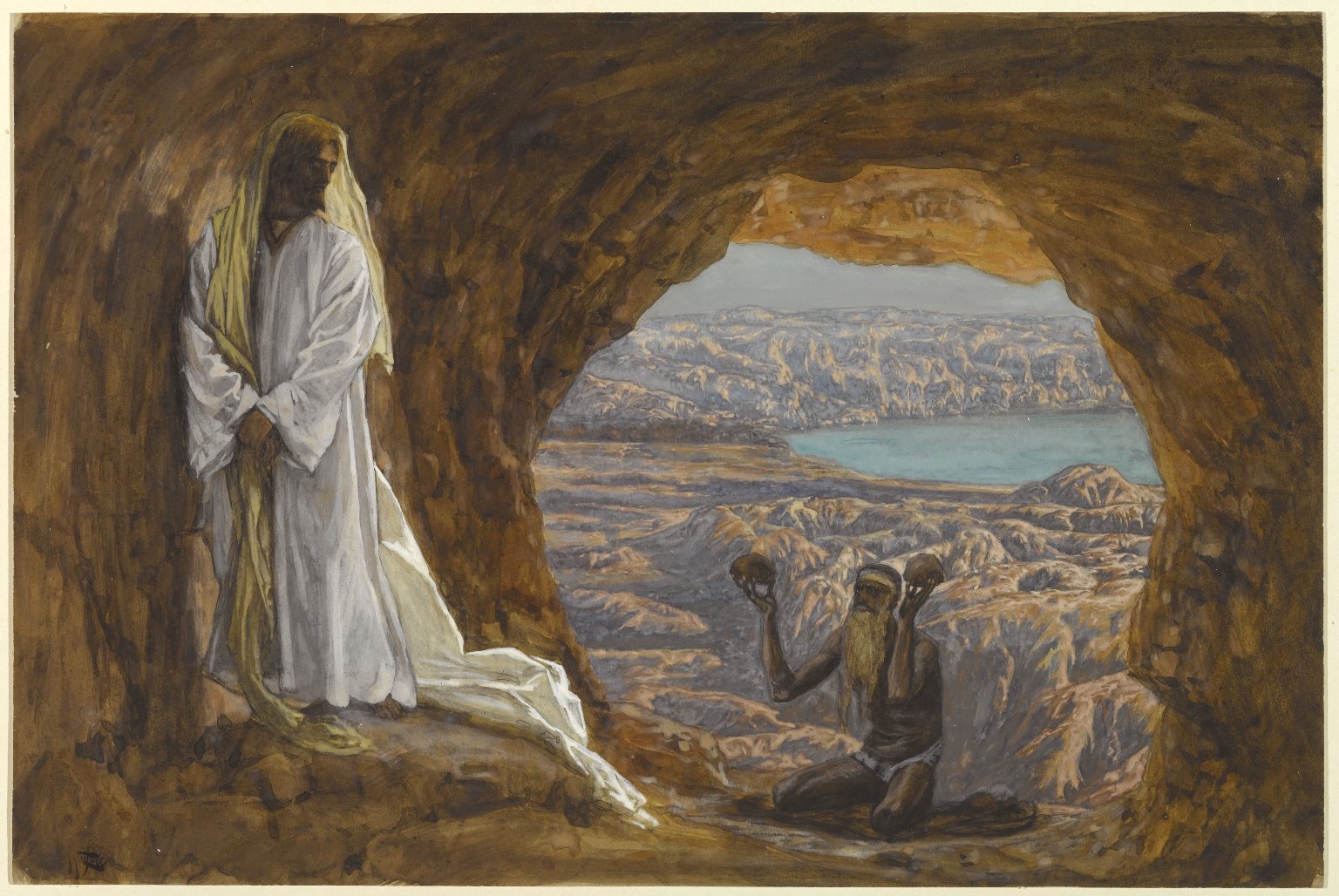
This morning’s Gospel reading takes us from Jesus’ baptism by John to the beginning of Christ’s public ministry, via forty days in the desert. There is so much packed into a few verses of Scripture, that we need to take a moment to examine what is going on, and how it can speak to us over the next few weeks.

Jesus is baptised, by John, not because needs to repent of His Sins, as He is without sin. Instead, He does so out of humility to the will of God the Father, and to show us the way to salvation: through His Suffering, Crucifixion, and Rising again to New Life. In the account of the Baptism we see and hear the Three Persons of the Trinity, present, connected, and united in Love: the voice of God the Father and the dove representing the Spirit, descending on the Son. It is a glimpse of Divine Glory, which awaits us in Heaven, the end and purpose of salvation history.

Immediately afterwards the Spirit drives Jesus out into the desert, to be alone with God. He prays and fasts in order to prepare Himself for the public ministry of the Proclamation of the Good News, the Gospel. Deserts are not places one would choose to spend six weeks. They are places that can be unbearably hot by day yet freezing cold at night, wild places, lacking water, dangerous, and on the margins. 

The symbolism of the number forty is rich in the Bible. It signifies a time of trial or testing, and recalls significant biblical events. Firstly, In Genesis 7:12, earlier in the story of Noah, God floods the earth with water for 40 days. Secondly, in the story of the Exodus, the people of Israel spend forty years in the desert before they reach the Promised Land. Thirdly, Moses spends forty days with God on Mount Sinai before giving the people of Israel the law, the Ten Commandments. And fourthly, in 1Kings 19:8, Elijah fasts for forty days on the way to Mount Horeb, before talking to God and finding Elisha. All of these examples point to Christ and foreshadow His saving work.

While Jesus is in the desert, He is tempted by Satan. Unlike Matthew’s Gospel, which lists the temptations, Mark simply states that Jesus was tempted. Because Jesus does not sin, He is able to withstand temptation, His victory in the desert points to His great victory on the Cross. Christ then preaches to ‘the spirits in prison’ (1Peter 3: 19) saving humanity from sin and death, and restoring the hope of heaven. In the desert, Jesus is with wild animals, traditionally a sign of the Evil One. However, He is not harmed by them, as the creatures recognise their Creator, who is preparing to make a new Creation in Himself.

Jesus is ministered to by angels. He is the Beloved Son, in whom the Father is well-pleased, humble and obedient. After the trial of the temptations He is tired, and hungry. Temptation is a trying business, both physically and spiritually. This reminds us of the need for care, especially self-care, in our Lenten observances. Rest and nourishment are an important part of our spiritual and physical wellbeing, now more than ever. 

After forty days, Jesus returns to Galilee and starts to proclaim the Gospel, the Good News of the Kingdom of God:

“The time is fulfilled, and the kingdom of God is at hand; repent and believe in the gospel.” (Mk 1:15)

This message is the same as that of John the Baptist (cf. Acts 19:4): Repent, turn away from your sins, turn back to God, and Believe the Gospel, proclaimed by Jesus Christ. As Christians, nearly two thousand years later, we believe and proclaim that same message. Jesus calls us to turn away from sin, to turn back to God, to trust Him, and to know that He longs for our healing and reconciliation.

Jesus is able to resist Satan’s temptations because He is humble, because He has faith, and because he trusts in God. It certainly isn’t easy to do the same, but it is possible. It is far easier when we do this together, as a community, which is why Lent matters for all of us. These weeks are a chance to become more obedient, and through that obedience to discover true freedom in God. It is an obedience which is made manifest on the Cross — in laying down his life Jesus can give new life to the whole world. He isn’t being spectacular — he dies like a common criminal. He has no power, he does not try to be relevant, he is loving and obedient and that is good enough.

It was enough for him, and it should be for us. As Christians we have Scripture and the teaching of the Church, filled with His Spirit, to guide us. We can use this time of prayer and fasting to deepen our faith, our trust, our understanding, and our obedience. We can use this time to become more like Jesus, to be fed by His Word and by the Sacraments to become more humble, and more loving, living lives of service of God and each other. We can use this time to support each other, so that we might grow in holiness as the people of God, and to sing the praises of God the Father, God the Son, and God the Holy Spirit. To whom be ascribed as is most right and just, all might, majesty, glory, dominion, and power, now, and forever. Amen.

Tissot Jesus tempted in the Wilderness

Wednesday, 17 February 2021

Ash Wednesday

Today the Church celebrates Ash Wednesday, the beginning of her Lenten journey towards the great festival of Easter. The entire Christian community is invited to live this period of forty days as a pilgrimage of repentance, conversion and renewal. In the Bible, the number forty is rich in symbolism. It recalls Israel’s journey in the desert: a time of expectation, purification and closeness to the Lord, but also a time of temptation and testing. It also evokes Jesus’ own sojourn in the desert at the beginning of His public ministry. This was a time of profound closeness to the Father in prayer, but also of confrontation with the mystery of evil. The Church’s Lenten discipline is meant to help deepen our life of faith and our imitation of Christ in his paschal mystery. In these forty days may we strive to draw nearer to the Lord by meditating on his word and example. We seek to conquer the desert of our spiritual aridity, selfishness and materialism. For the whole Church may this Lent be a time of grace in which God leads us, in union with the crucified and risen Lord, through the experience of the desert to the joy and hope brought by Easter.

Pope Benedict XVI Catechesis at the General Audience 22.ii.12: http://www.news.va/en/news/pope-conquering-our-spiritual-desert

Today we go with Christ into the desert for forty days. Deserts are places of lack and isolation, something which we are all experiencing at the present time. We are all currently cut off from people, places, and things we are accustomed to do. In many ways the last year has felt like a continual Lent. Despite this, as Christians, we thoughtfully prepare to celebrate the Passion, Death and Resurrection of Jesus Christ, who began his public ministry after His Baptism by going into the desert.

To go into the desert is to go to a place to be alone with God, in prayer, to face temptation, and to grow spiritually. It is something which Christians do together over the next six weeks or so, to draw closer to Jesus Christ. By imitating Him, and listening to what He says to us, we prepare ourselves to enter into and share the mystery of His Passion, Death, and Resurrection, so that we may celebrate with joy Christ’s triumph over sin and death, and His victory at Easter. 

In our Gospel reading today, Jesus teaches His disciples how to fast. The point is not about making an outward show of what we are doing, but rather about how the practice affects our interior disposition. This is clear from our first reading, from the prophet Joel, who gives this advice:

“Yet even now,” declares the Lord, “return to me with all your heart, with fasting, with weeping, and with mourning; and rend your hearts and not your garments.” Return to the Lord your God, for he is gracious and merciful, slow to anger, and abiding in steadfast love; and relents over disaster. (Joel 2: 12-13)

Through the prophet, God is calling His people back to Himself, in love and mercy, and rather than the outward show of mourning through the tearing of one’s clothing, to instead to open our hearts to God, so that He can heal us. We can only find healing if we first recognise our need for healing, and that it is something that God can do for us, we cannot do it for ourselves.

Human beings, by nature like to show off, to engage in display, and to tell people about things. Yet in the Gospel today, Christ tells us to do the exact opposite. We are told not to show what we are doing, to keep it hidden. This is completely in line with the advice of the prophet Joel that fasting, like mourning, has an interior quality which is important.

By giving up something we love and enjoy, and regulating our diet we are not engaging in a holy weight-loss plan. What we are doing is training our bodies and our minds, becoming disciplined. Through this we express physically the radical purification and conversion which lies at the heart of the Christian life: we follow Christ.

We follow Christ into the desert, we follow Christ to the Cross, and beyond, to be united with Him, in love and in suffering. In this we should bear in mind St Paul’s words to the Church in Corinth that we are called to suffer with and for Christ, to bear witness to our faith, and to encourage people, as ‘ambassadors for Christ’. This starts with our reconciliation of each other, and God’s reconciliation and healing of us. Just as for any other role we undertake in life, it requires preparation. 

The Gospel talks of three ways to prepare ourselves: Firstly, Fasting — disciplining the body. Secondly, Prayer — drawing closer to God and deepening our relationship with Him, and listening to what He says to us. Thirdly, by Charity, or Almsgiving — being generous to those in need, as God is generous towards us, we follow Christ’s example. Matthew’s Gospel clearly states that we do not do these things in order to be seen to be doing them, in order to gain a reward in human terms, of power or prestige, but to be rewarded by God.

We should always remember that as Christians we cannot earn our forgiveness through our works. God forgives us in Christ, who died and rose again for us. We plead His Cross as our only hope, through which we are saved and set free. 

Being humble, and conscious of our total reliance upon God, allows us to be transformed by God, into what God wants us to be. God’s grace transforms our nature, and we come to know and live life in all its fulness, the joy of the Kingdom, and a foretaste of Heaven. Through this we are united with God, know and experience His love and forgiveness, and are transformed by Him, into His likeness, sharing His life and His love. 

Let us use this Lent, where we are in an imposed wilderness, to draw ever closer to God and to each other, (spiritually, if not physically). Through our fasting, prayer, and charity, may we be built up in love, and faith, and hope, and prepare to celebrate with joy the Passion, Death, and Resurrection of Our Lord Jesus Christ. To whom, with God the Father, and God the Holy Spirit, be ascribed as is most right and just, all might, majesty, glory, dominion, and power, now, and forever. Amen.

Picture 006

Sunday, 14 February 2021

Homily for Quinquagesima

Sometimes when we read the Bible, passages can seem strange and harsh, and completely opposed to how we live nowadays. This morning’s first reading from Leviticus is one such example. It refers to how people with leprosy and other skin conditions are to be treated. They are forced to endure a living death, public humiliation and disgrace, to be excluded from society, cut off and shunned. This is made most clear in the final verse:

‘He is unclean. He shall live alone. His dwelling shall be outside the camp.’ (Lev 13:46)

This verse is interesting insofar as it is used by the author of the Letter to the Hebrews at the climax of the letter to describe Christ’s crucifixion and death:

‘So Jesus also suffered outside the gate in order to sanctify the people through his own blood. Therefore let us go to him outside the camp and bear the reproach he endured. For here we have no lasting city, but we seek the city that is to come.’ (Heb 13:12-14)

The writer of the Letter to the Hebrews encourages us to follow Christ’s example and to become outcasts, unclean in terms of Jewish ritual purity, to share in Christ’s suffering and to be united with Him. Something shameful has now become glorious: a demonstration of God’s love and healing, where once there was condemnation there is now reconciliation. We learn by copying, and so St Paul writes at the end of this morning’s second reading:

Be imitators of me, as I am of Christ’ (1Cor 11:1)

Paul encourages the Corinthian church to imitate him, as he imitates Christ, so that they all might live out the love of God in their lives, for the glory of God, and to proclaim the truth of the Gospel to the world. This is our calling as Christians, to follow the same example and live out the same faith, to proclaim the same truth in our lives. 

Our gospel reading this morning continues the accounts of miraculous healings which we have encountered over the past few weeks. This morning Jesus is met by a man suffering from leprosy, who begs to be healed. Given the purity code in our first reading this morning, we can understand why the leper longs to be healed, and restored to his place in the community. The leper kneels before Jesus, performing an act of submission, putting himself entirely at Jesus’ mercy, and says:

“If you will, you can make me clean.” (Mk 1:40)

Jesus is filled with emotion and touches him. Rather than simply saying, ‘Be healed’, or ‘Be clean’, Jesus stretches out His hand and touches the man with leprosy. In Jewish ritual terms Jesus makes Himself unclean. He breaks the rules. He does what no-one would do. Instead of casting the man out, or ignoring him, Jesus touches the man and heals him. Here we see God’s healing love in action, the proclamation of the Kingdom of God, is the proclamation of love and healing, to restore humanity. Then having broken the rules, Jesus says to the healed leper:

“See that you say nothing to anyone, but go, show yourself to the priest and offer for your cleansing what Moses commanded, for a proof to them.” (Mk 1:44)

Jesus tells the man to comply with the Law, to show himself to a priest. This is so that he can undergo a ritual bath, and be restored to his rightful place in society. It is also as a proof to the religious authorities that a miraculous healing has taken place. God is announcing His Kingdom and the fulfilment of messianic prophecy. God is healing His people. 

Despite the fact that Jesus has told the man not to tell anyone other than the priest, the healed man does the exact opposite, and tells everyone he meets about what has happened. He has, after all, been miraculously healed, and experienced the wonderful reality of the Kingdom of God. So he feels he simply has to tell everyone he meets how wonderful God is, and what miraculous healing has taken place in his life. He cannot not tell people. It is just too wonderful, and he does proclaims the reality of the Kingdom of God to all and sundry. His life has changed, and he is filled with joy and gratitude. At one level this is a metaphor for the Christian life. Each and every one of us has been touched by Jesus, and so we can follow this man’s example and proclaim the wonders of the Kingdom in all that we do and all that we are.

The joyful proclamation of the Kingdom does, however, pose a practical difficulty – Jesus cannot go anywhere without being mobbed: 

so that Jesus could no longer openly enter a town, but was out in desolate places, and people were coming to him from every quarter (Mk 1:45)

Clearly this makes life very difficult for Jesus. It speaks of the deep and widespread need for healing in Galilee. As it was there then, so it is here, now. We long for God to heal us, to take away our fears, and fill us with His love. At a practical level this is bound to be exhausting for Our Lord, so He goes out to desolate deserted places, in other words, the desert. Jesus goes to be alone with God, to rest and to pray. This reminds us that in the Church’s calendar we are about to enter the season of Lent. We prepare for Easter by going out into the desert with Jesus to be close to God, through prayer, fasting, and deeds of charity. We follow Jesus’ example, we imitate Him, so that we may draw closer to Him and experience His healing love. We go with Him, so that we can prepare to enter into the mystery of His Passion, Death, and Resurrection, so that we may rise with Him at Easter. To Him with God the Father, and God the Holy Spirit, be ascribed as is most right and just, all glory, might, majesty, glory, dominion, and power, now, and forever. Amen.

Saturday, 6 February 2021

Homily for Sexagesima

It is hard for us nowadays to imagine our country without the National Health Service. Since 1948 we have been blessed with medical care funded through general taxation. For most of human history medical care was only available to those who could afford it, and only a limited amount of ailments could be treated. It is hard to imagine how precarious life was, and how great was the desire for healing. 

Our Gospel reading this week focuses on Jesus’ pastoral ministry. It has three distinct elements: healing, prayer, and preaching. As soon as Jesus and the four disciples leave the synagogue in Capernaum, they go to Simon and Andrew’s house, where they find Simon Peter’s mother-in-law sick with a fever. It is serious, and life-threatening. Jesus takes her by the hand, lifts her up, and she is immediately restored to full health. In fact, she gets up and looks after them! Mark’s account is simple and straightforward, and goes along at a tremendous breathless pace. The healing is miraculous and instantaneous — it takes your breath away. It is a powerful demonstration of the reality of God’s love for us: if we let God be at work in our lives then wonderful things are possible, but we have to trust Him.

Suddenly all the sick of Capernaum are at the door. These are people who long for healing, and in their midst is the one who heals. It is wonderful. Jesus proclaims the Kingdom of God by His deeds, as a place of healing, where humanity is restored by God. It must have been quite busy, as St Mark states that,

the whole city was gathered together at the door.’ (Mk 1:33)

As wonderful as it is, to see an entire community transformed, it should be recognised that it comes at a cost: physical, emotional, and spiritual. We think of the great emotional, physical, and spiritual cost to those working in the NHS and as carers (both paid and unpaid), many struggling to cope and becoming overwhelmed. Many of whom desperately need some time out to recharge their batteries and find the strength to carry on. They need our prayers. This is why we learn:

And rising very early in the morning, while it was still dark, he departed and went out to a desolate place, and there he prayed.’ (Mk 1:35)

Jesus gets up early to pray to God, to spend time with Him. Prayer is not an optional extra, it is absolutely necessary. Jesus is only able to heal because he spends time with God in prayer, deepening His relationship, and finding strength, the strength to heal and to preach the Good news of the Kingdom. It reminds us of the need for prayer and quiet in our own lives — we need time to be with God, to talk to Him, and to listen to what He has to say to us. Even during lockdown we can be distracted by the business of life. If we want to be close to God and let His power be at work in us we need to find time to be silent and find our own deserted place, if only for a few minutes, to let a healing encounter take place. God meets us when we are alone, when we are silent, when we are vulnerable, when we no longer rely on our own strength but hand ourselves over completely to Him. This is not an easy thing to do, but it is the only way for God to be at work in us: we need to make space for Him. Just as often happens in our own lives, Jesus does not have long to be close to God, as people come looking for Him:

And Simon and those who were with him searched for him, and they found him and said to him, “Everyone is looking for you.”.’ (Mk 1:36-7)

Jesus is the person everyone is looking for. So many people are longing for healing, for the Good News of the Kingdom of God, and for Jesus. There is a deep-seated emptiness which only God can fill. The healing which Christ offers is the fullness of life, how life should be lived. 

And he said to them, “Let us go on to the next towns, that I may preach there also, for that is what I came for.” And he went throughout all Galilee, preaching in their synagogues and casting out demons.’ (Mk 1:38-9)

Jesus moves His disciples on. They need to proclaim the Good News of the Kingdom of God in word and deed, by preaching and healing, to the people in the other towns. This is Jesus’ mission: ‘for that is what I came for.’ (Mk 1:38). Jesus came to announce the Good News of the Kingdom of God and to make His words real by healing the sick, fulfilling the messianic prophecies of Isaiah 61. His message is clear: 

The time is fulfilled, and the kingdom of God is at hand; repent and believe in the gospel.” (Mk 1:15)

Repent and believe the Good news: turn from sin, love God and your neighbour, and experience the healing which God longs to give you. Which of us can say that we don’t need Christ’s healing in our lives? I know that I do. The truth is that we ALL do. If we are close to Him in prayer, if we listen to Him, if we have the humility which says, ‘I need God’s help’, then we can be open to the transforming power of His Love: so that the healing work begun in Galilee might be continued here, now, among us.

Let us listen to His words. Let us be close to Him in prayer. Let us come to Him, to the One who loves us, who heals us, who gives Himself upon the Cross to die for us. To the One who rises again to give us the promise of eternal life in Him. Let us come to be healed, and restored, so that we might have life, and life to the full in and through Christ. Let us live out our faith, and proclaim Him, so that the world may believe, and give glory to God the Father, God the Son, and God the Holy Spirit, to whom be ascribed, as is most right and just all might, majesty, glory, dominion, and power, now, and forever. Amen. 

Jesus Heals Peter’s Mother-in-Law

Saturday, 30 January 2021

Homily for Septuagesima [Deut 18:15-20; ICor 7:32-35; Mk 1:21-28]

Our experience over the last twelve months has shown us how the world we live in is broken and wounded. As people who live in this broken world, we long for wholeness and healing. The global pandemic is terrible and terrifying, and yet it is a symptom of a wider malaise, of sin and selfishness, which characterises our modern existence. We fall short and look to God for forgiveness and healing. The world more than ever, needs to hear Christ’s call to repent and believe, as He states in Mark’s Gospel:

The time is fulfilled, and the kingdom of God is at hand; repent and believe in the gospel.” (Mk 1:15)

Repent and believe the Good news: turn from sin, and love God and your neighbour. The message is simple and straightforward, and lies at the heart of our Gospel reading this morning. Jesus has been baptised by John. He has called disciples, and now they go to Capernaum where Jesus teaches and heals. Worship in a synagogue involved singing the Psalms, reading from Scripture, and teaching, rather like a sermon. Jesus explains Scripture to the synagogue, and they are amazed: His teaching is fresh and revolutionary, and unlike what they are used to hear coming from their religious leaders.

for he taught them as one who had authority, and not as the scribes.” (Mk 1:22)

Jesus teaches like someone with authority. He isn’t a scribe or a Pharisee, He hasn’t spent years in theological training. He stands outside traditional religious power structures. Jesus’ teaching has authority not just because it is spoken with conviction, because it is real and embodied in Him, lived out in His life, but because he is God: the Son of God, beloved of the Father (cf. Mk 1:11), filled with the Holy Spirit, proclaiming the Good News of the Kingdom. No sooner has Jesus done this, then there is a practical demonstration of what His teaching looks like in real life:

And immediately there was in their synagogue a man with an unclean spirit. And he cried out, ‘What have you to do with us, Jesus of Nazareth? Have you come to destroy us? I know who you are—the Holy One of God.’” (Mk 1:23-24)

There is a man who needs healing, understood as possessed by an evil spirit, though nowadays we would probably prefer to describe him as suffering from mental illness. He is not a well man, he wants to be healed. This weak, broken man recognises who and what Jesus is: He is the Holy One of God, the Messiah. The point of the Kingdom which Jesus proclaims, which he explains in his teaching, is that it is a place of healing. Ours is a God who can heal our wounds, who can take broken humanity and restore it in love. This is why Jesus’ teaching and the healing have to go together; they are both part of a larger whole, the coming Kingdom of God. Jesus proclaims our need to love God and each other, and puts it into practice, making the healing power of God’s love a reality in the world.

Jesus’ teaching and healing amaze the synagogue. His words become actions which heal the afflicted man. He has the authority to teach and heal because Jesus is God, and His teaching and healing proclaim in word and deed the reality of the Kingdom of God, there in the synagogue in Capernaum. Jesus is the fulfilment of Moses’ prophecy in our first reading this morning, where he says:

The Lord your God will raise up for you a prophet like me from among you, from your brothers—it is to him you shall listen” (Deut 18:15)

And I will put my words in his mouth, and he shall speak to them all that I command him.”(Deut 18:18)

These verses are quoted by St Peter in Acts 3:22 and St Stephen in Acts 7:37 to refer to Jesus, so for nearly two thousand years the Church has had a consistent interpretation of this passage as pointing to, and finding its fulfilment in, Jesus Christ. 

The message Jesus proclaims in His teaching is reinforced by His actions. He shows that the Kingdom of God is where humanity can be healed and freed from sin. Christ demonstrates this most fully when He suffers and dies for us on the Cross. From the very beginning, Jesus looks to the Cross, not as a place of torture, of humiliation, nor defeat, but as the place of victory, and healing. It is the supreme demonstration of God’s love for humanity. Through the Cross we learn how much God loves us. This is why God sends His Son to heal our wounds, to restore us, and to give us the hope of Heaven. Confident in His promises we can turn to God and pray for the healing for which we all so desperately long for, and which the world needs We can pray that His Divine nature might transform our human nature, and give us a foretaste of heaven. We pray that our wounds: physical and mental, will be healed, so that we might have life in Him, in this world and the next.

The possessed man asks ‘Have you come to destroy us?’ All that Christ has come to destroy is the power of evil which separates man from God. We know that Jesus has come not to destroy but to restore humanity, so that we may have life and have it to the full. This is the Good News of the Kingdom, which is still a reality here and now. We, in our brokenness, can come to the source of all healing, to the God who loves us and gives himself for us, so that we can be restored by Him. God can take our lives and heal us in His love. So let us come to Him, so that our lives too may be transformed, and let us proclaim to a world, which longs for healing and wholeness, the love of God in Christ. So that all creation may sing the praise of God the Father, God the Son, and God the Holy Spirit, to whom be ascribed, as is most right and just, all might, majesty, glory, dominion and power, now and forever. Amen. 

Saturday, 16 January 2021

The Second Sunday of Year B

There is a common misconception that when the Church talks about vocation, being called, it is referring to the call to ordained ministry, to be a deacon or a priest. Nothing could be further from the truth. While this call is an important one, there remains a fundamental call which comes to us all in our baptism: the call to follow Christ. Each and every one of us is called to be a disciple of Jesus, to listen to what He says, and to let this call affect our lives. It is both a daunting prospect, and the most normal and natural thing in the world. 

Our first reading this morning tells the story of the call of Samuel, a young boy serving at the sanctuary in Shiloh with the high priest Eli. After his mother, Hannah, had prayed to God for a child whom she would dedicate to God as a Nazirite, she became pregnant and Samuel was born. Nazirites were not allowed to cut their hair, drink wine, or touch a dead body. Eli’s predecessor, Samson, the last of the Judges in the Book of Judges, was also a  Nazirite. Samuel is called three times. Each time he goes to Eli, whom he assumes is calling him. Eventually Eli tells Samuel to reply, ‘Speak, Lord, for your servant hears.’ (1Sam 3:9). So Samuel responds to God’s invitation, and it totally changes his life. Are we willing to take that risk, and answer God’s call?

Ancient Corinth was something like a cross between London and Las Vegas. It was a rich trading centre with a reputation for sexual immorality. This morning’s second reading from St Paul’s First Letter to the Corinthians, is an attempt to argue that our embodied existence, that is how we live our lives , matters. Often, we become what we do. It is therefore important to do the right thing, and not the wrong. Paul’s argument leads to his conclusion:

You are not your own, for you were bought with a price. So glorify God in your body. (1Cor 6:19-20) 

We are not our own, we belong to God, who bought us with the price of His Son, Jesus Christ. The world likes to tell us that we are autonomous, that we can do whatever we want to, but at a fundamental level we are God’s people, and belong to the God who made us, and who redeemed us out of love for us. God sets us free to love Him and serve Him, so how we live our lives is our response to that love and an act of loving service. We can choose to glorify God, not that God needs our glory, but because it is how we should live our lives, in love and service. Our faith affects our lived existence.

In today’s Gospel we move beyond the Baptism of Christ to the events of the following day. John has testified that Jesus is the Lamb of God, who takes away the sins of the world, and that He is the Son of God. When John sees Jesus walking by he again exclaims ‘Behold the Lamb of God’ (Jn 1:36). The phrase looks back to the Suffering Servant in Isaiah 52-53 who is led like a lamb to the slaughter. The beginning of Jesus public ministry points to its end on the Cross. Jesus is the Messiah and He will die to take away our sins. Two of John’s disciples hear him saying these words and follow Jesus. When Jesus asks them what they are looking for, the disciples answer ‘Rabbi’. They acknowledge Jesus as a teacher, and ask Him where He is staying. Jesus replies, “Come and you will see.” (Jn 1:39). Jesus invites them to follow Him, to see where He is staying and to spend time with Him. These two disciples of John become followers of Jesus, literally and metaphorically. The Church continues to make the same invitation to the world, to come and see, to follow Jesus. These two disciples stay with Jesus, they listen to Him, they eat with Him, and begin to have a relationship with Him. We then discover that one of the men is Andrew, and that he has a brother, called Simon. Andrew is convinced that he has found the Messiah and brings his brother to Jesus. When Jesus meets Simon he says,

“So you are Simon the son of John? You shall be called Cephas” (which means Peter) (Jn 1:42)

Jesus gives Simon a new name. He calls him Cephas, which means ‘rock’ in Aramaic, Petros in Greek, from which our name Peter comes. Peter will be the rock upon which Christ will build His Church (Mt 16:18). The name Jesus gives points to Peter’s future role as the leader of the Apostles. Jesus takes the initiative and begins to sketch out a future for the disciples who are following Him. It is quick, and matter of fact, and yet momentous. Jesus is gathering people to help Him with this ministry.

The Church therefore begins with a few Galilean fishermen following a rabbi whom they recognise as the Messiah. Thanks to them, and their faith in Jesus, we are in the Church today. Faith, where we put our trust, is an important thing. It affects both who we are, and how we live our lives. Faith turned Peter from a fisherman into a leader of the early Christians, and it has continued to transform lives for the past two thousand years. 

In our baptism, God in Christ invites each and every one of us to follow Him, to ‘come and see’, as the first disciples did, and to invite others, as Andrew invited Simon Peter. To come and see who Jesus is, to get to know Him, and start a relationship with Him. This begins with our sharing in His Death and Resurrection, and ends in the glory of Heaven. Where we, and all the Church, give glory to God the Father, God the Son, and God the Holy Spirit, to whom be ascribed, as is most right and just, all might, majesty, glory, dominion, and power, now and forever. Amen. 

Saturday, 9 January 2021

Baptism of Christ

The Baptism of Christ by John the Baptist in the River Jordan at the start of His public ministry is one of the events found in all four Gospels (the others are the Feeding of the Five Thousand, and the account of the Lord’s Passion, Death, and Resurrection, from Palm Sunday to Easter Day). Each gospel contains accounts of the beginning and end of Jesus’ public ministry, as well as a miraculous feeding. If we take a moment to consider both what baptism is, and what it is for, we may come to understand why all four  gospel writers included it in their account of the life and teachings of Jesus. 

Baptism is symbolic washing with water for the forgiveness of sins. If Jesus was baptized does that mean that He sinned? The answer is, No. So, given the fact that Jesus committed no sins, did He need to be baptised by John? Again, the answer is. No. You may begin to wonder what is going on here? Why would Jesus begins His Public ministry in Galilee with a redundant action? If Jesus does not need to be baptised, what is the point of it? What is Jesus doing and why is it important for us?

Unlike all human beings, who commit sin, and become estranged from their relationship with God, Jesus is God become man. He is perfect, sinless, and united with God the Father, and the Holy Spirit, a Trinity of love. There is no need to restore the relationship, because it is one of perfect love. Mark’s account of the Baptism is prefaced by the words of John the Baptist:

After me comes he who is mightier than I, the strap of whose sandals I am not worthy to stoop down and untie. I have baptized you with water, but he will baptize you with the Holy Spirit.” (Mk 1:7-8)

John the Baptist is linking Christ’s baptism with the redemption of humanity in His death. The very beginning of Jesus’ public ministry points to the Cross, where salvation and freedom will be offered to all who turn to Christ. John baptises with water, but he looks forward to Jesus, who will baptise with the Holy Spirit. This is the baptism of the Church, to save and redeem humanity, by sharing in Christ’s Death and Resurrection.

Once Jesus has been baptised by John, extraordinary things happen:

And when he came up out of the water, immediately he saw the heavens being torn open and the Spirit descending on him like a dove. And a voice came from heaven, “You are my beloved Son; with you I am well pleased.” (Mk 1:10-11)

At the moment of Jesus’ baptism we hear God the Father, and see God the Son and God the Holy Spirit. The fulness of God is manifest to humanity in the Trinity. We can see and hear God’s saving work. Jesus does not need to be baptised, but does so for three reasons. Firstly to demonstrate His humility, and obedience to the will of the Father; secondly to sanctify the waters of baptism, and finally to act as an example for us to follow. Thus, God sends the Holy Spirit to demonstrate the bond of love between the Father and the Son. The Father speaks to demonstrate that Jesus is the Son of God. He is beloved of the Father, and His obedience and humility is pleasing in the sight of God. Jesus shows us the way back to the Father. By our own obedience and humility, by our repentance, and turning away from the ways of sin and the world, we return to the God who loves us. This is the message of the church: that God’s grace is available to us, to everybody, even though we haven’t worked for or earned it, even though we have done nothing to deserve it, God’s love and mercy is there for us. In Baptism we receive adoption, and become part of the family of God. Through Baptism we are born again, of water and the Spirit, we are ‘in Christ’, clothed with Him.

The unnecessary nature of the act of Jesus’ Baptism discloses something profound about the nature of God and His love for us. God gives us more than we ask for, because it is in God’s nature to be generous in a way which astounds us. There is something reckless, extravagant, utterly over the top, about the love of God, which should prompt us to love and care for others in a similar way.

John’s baptism of water prepares the way for the baptism of the Holy Spirit in Christ, through which we enter the Church. It shows us a new way of living. Life in the Spirit, life with God, has a profound effect on us, who we are and what we do. It opens up the possibility of living in a new way, a way of love, which mirrors the generosity shown to us by God. This way of life shows us in the Church what it is to be truly alive and how to live in a new way. It points to another act of God’s extravagant love: when Christ dies on the Cross, to take away our sin, to carry our burden, which separates us from God and each other. Our wounds are healed, the relationship is restored so that we can live the life of the Kingdom of God here and now: living out that self-giving, reckless, extravagant love and forgiveness in our own lives, and in the world around us.

Back in our first reading this morning the prophet Isaiah looks forward to the coming of the Messiah with a proclamation of extravagant generosity:

Come, everyone who thirsts, come to the waters” (Isa 55:1)

This invitation is also the invitation of the Church, for people to enter it by baptism and share in the unsearchable riches of Christ. Today we remember that salvation is offered to the world through baptism. We give thanks for the rebirth of our own baptism, and hope to share it with others. Baptism reminds us of the hope which we have in Jesus Christ, hope of new life, and eternal life with Him. Whatever is happening in the world, or in our own lives we can trust in who God is, and what He has done for us. In this trust we can live out our faith so that the world may be transformed and believe and give glory to God the Father, God the Son, and God the Holy Spirit, to whom be ascribed, as is most right and just, all might, majesty, glory, dominion, and power, now and forever. Amen. 
Sunday, 3 January 2021

Epiphany 2021

We start this new year of 2021 in a Tier 4 lockdown, with our movements and our freedom to associate severely curtailed by law. Government control of people, their movements and whereabouts, is, however, nothing new. Mary and Joseph were forced to travel about 90 miles from their home in Nazareth up to Bethlehem in order to comply with the census regulations. It was a hard journey, at the end of which Mary gave birth in what were far from ideal circumstances as the guest houses were full. One cannot help but compare with those being treated in hospital corridors as there are no beds available.

Some time later the Holy Family receive some unexpected visitors. The wise men travelled over 500 miles because they observed a celestial phenomenon, a star, which they interpreted as signifying a royal birth in Israel. They travel to Jerusalem, the capital city, and see the king, and explain why they have come. Their news, rather than being a cause for joyous celebration, is interpreted by the Jewish king as a threat. So, Herod consults the religious experts who explain, following the prophecy of Micah, that the Messiah will be born in Bethlehem. Herod sends the wise men off to do some reconnaissance, before reporting back to him, claiming that he wishes to come and worship the child. However, the wise men are warned not to return to Herod, but to take a different route back home.

Matthew’s Gospel presents a story characterised by fear, rather than celebration. King Herod is worried that he will be removed from power. Fear is everywhere: fear of the Roman overlords, of threats to the ruling dynasty, or of popular uprising. It is a tense world, far removed from familiar domesticated images of Christmas and Epiphany, and yet such is God’s coming into our world. God comes into a world of fear to bring hope and love to people who long for healing and reconciliation. 

The wise men bring Jesus presents. Indeed, it is because of them that we give each other gifts at this time. We follow their example, and try to manifest something of the love and generosity which characterises this season. Unlike the wise men, we have not been able to travel this year, and we may have presents which we have not been able to deliver or send. It doesn’t matter. The wise men were not concerned about when they would arrive with their gifts. What mattered was that would see the King of the Jews, worship Him as God, and give Him treasures. They offer Jesus gold, a sign of His Kingship. They give incense, because Jesus is God become man, to whom worship is due. And they offer myrrh, used to anoint the dead. Even at Christ’s birth it is recognised that He will die for us, reconciling God and humanity. At the beginning of Jesus’ earthly life we see signs of how it will end: in Jerusalem, on a Cross, with a crown of thorns and a mocking inscription which proclaims the truth of God’s love for humanity.

God comes into a world of fear to bring hope, and joy, and love. In taking our flesh, Jesus shares our experience of human life and all that that entails. God can not only empathise but also sympathise. God, in Christ, experiences our fears and frailties. This wonderful news is declared to the world at the Epiphany, Our Lord’s Manifestation to the whole world. Epiphany fulfils the prophecies of Scripture: our first reading this morning from Isaiah Chapter 60 is full of details which are picked up in the account of the visit of the Magi. This is important in that it shows us that Jesus is the one who fulfils prophecy, He is the Messiah, the King of the Jews, God with us, Emmanuel. The fact that His birth is recognised by both local shepherds and wise men from outside the Jewish world shows that God’s salvation is for all, for everyone who turns to Him. This is Good News. God loves us and makes this manifest to the whole world in the birth of Jesus. 

To a world filled with fear we can proclaim a message of hope, and joy, the good news that salvation has come to humanity in Jesus, born in Bethlehem, recognised and worshipped by the wise men because He is God. We can rejoice with them because we share their joy and wonder that God is born to save us. We can trust His promises, and know that whatever difficulties we face, whatever fears assail us, that God is with us, with a message of salvation for all people. 

So let us be filled with hope and peace, may we live lives of joy, and love, and service of God and one another, which proclaim in word and deed the love of God to the world. May the whole of creation resound with the praise of God the Father, God the Son, and God the Holy Spirit, to whom be ascribed, as is most right and just, all might, majesty, glory, dominion, and power, now and forever. Amen. 

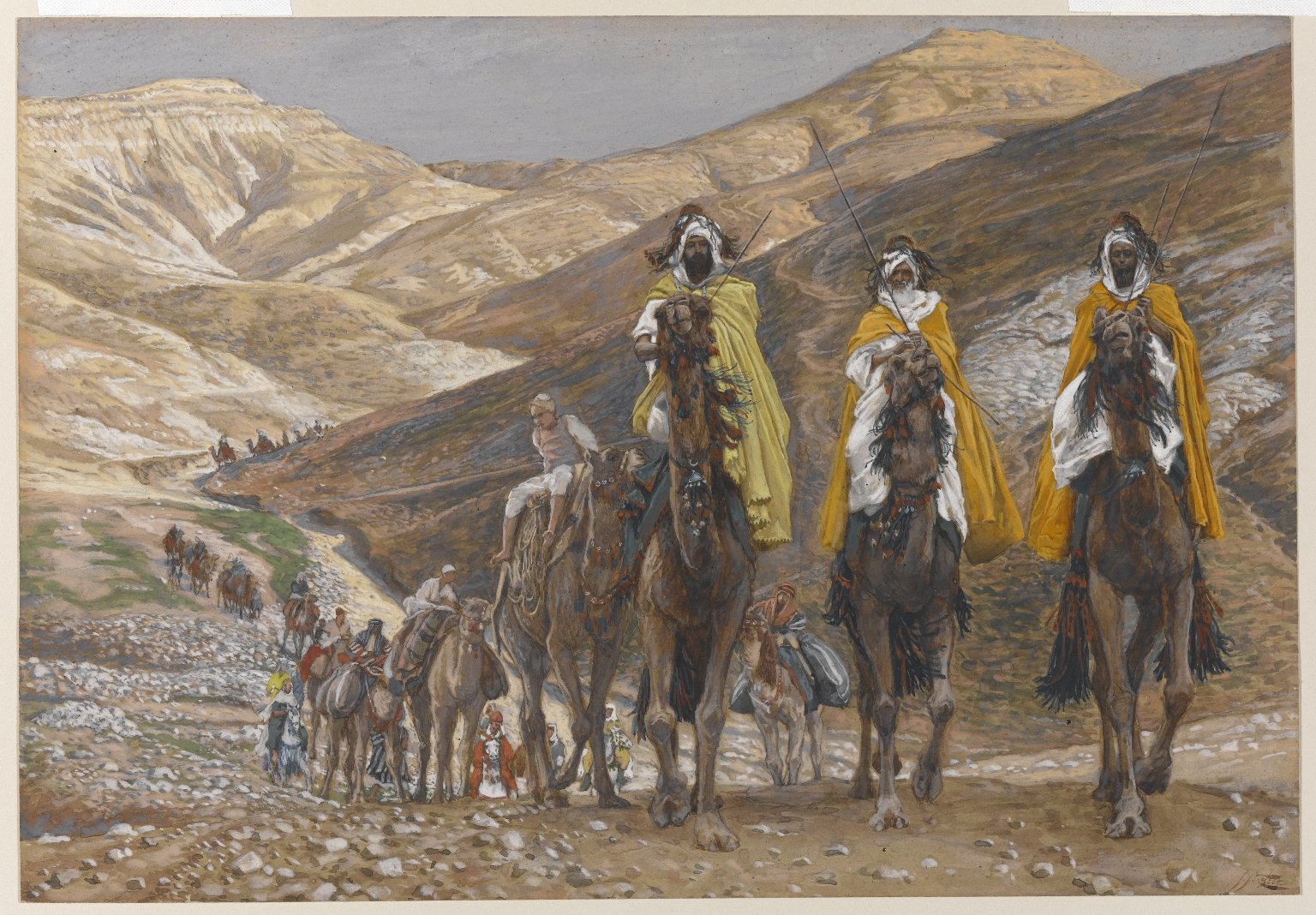
James Tissot, The Magi travelling

Friday, 25 December 2020

Christmas 2020

We have come here this morning because something wonderful happened two thousand years ago in Bethlehem. It is the single most important event in human history, summed up in St John’s memorable phrase, ‘And the Word became flesh and dwelt among us’ (Jn 1:14 ESV). The Word, through which God spoke all creation into being, is the Son eternally begotten of the Father, who, through the power of the Holy Spirit, took flesh in the womb of His mother, the Blessed Virgin Mary. Jesus is born for us, and lives among us.

Today is a day to feel encouraged. The message of Isaiah is one of joy. The birth of the Messiah, Jesus Christ, is Good News. This is because He comes to bring true peace to humanity. Our God reigns as a little baby, lying in a manger. Christ’s gift to us is peace and goodwill to all humanity, including those of us gathered here this morning. He can give us these gifts because He, who is born for us today, will die for us. The one wrapped in swaddling clothes now, will be wrapped in linen cloths in a tomb once He has died for us on the Cross. The beginning of Christ’s earthly life points to its end to remind us of the love of God for humanity. With joy the prophet proclaims, ‘and all the ends of the earth shall see the salvation of our God.’ (Isa 52:10 ESV). Today salvation has indeed come to the whole world, for in Jesus’ Birth and Death we are saved. 

The author of the Letter to the Hebrews understands that God speaks through his prophets, who look forward to the birth of the Son of God as the defining event, the turning point of human history. Prophets tell us both how things are and how they will be. We therefore have a vision of God’s future, and the hope of glory in the one who is born today. We can glimpse true glory in the vulnerable baby lying in the manger, dependant upon others for love, and food, and warmth. God’s glory confounds our expectations, and that’s the point. God’s ways are not our ways, nor are his thoughts ours. In the same way that God saves us: not because we are lovable, but so that we might become so. Humanity is saved in order to be transformed, and the Church exists to extend that transformation across space and time, through you and me, and the whole family of believers. 

Such is the mystery of God’s love. It is something so wonderful that we are not able to fully understand it, but we can experience it, and through experiencing it, we are transformed by it. As the 20th century Anglican theologian, Austin Farrer wrote: 

God does not give us explanations; we do not comprehend the world, and we are not going to. It is and it remains for us a confused mystery of bright and dark. God does not give us explanations; he gives us a Son. Such is the spirit of the angel’s message to the shepherds: “Peace upon earth, good will to men … and this shall be the sign unto you: ye shall find a babe wrapped in swaddling clothes, and lying in a manger.” A Son is better than an explanation. The explanation of our death leaves us no less dead than we were; but a Son gives us a life, in which to live.’ [Austin Farrer Said or Sung, pp. 27, 28]

St John proclaims, ‘In him was life, and the life was the light of men.’ (Jn 1:4 ESV). You may be aware that a couple of days ago the planets Saturn and Jupiter crossed paths and appeared to align, creating a bright light in the heavens. It is possible that this event may be the star described in Matthew’s Gospel. Just as the star gives light to Bethlehem and guides the wise men on their way, so Christ gives light to a world filled with Darkness. Christ is the true light, and comes to give us true life in Him: 

But to all who did receive him, who believed in his name, he gave the right to become children of God,who were born, not of blood nor of the will of the flesh nor of the will of man, but of God.’ (Jn 1:12-13 ESV) 

As Christians we are born again in our baptism, by water and the Holy Spirit. We share in Christ’s Death and Resurrection, to have new life in Him. We are in Christ, and are fed with His Body and Blood so that we may continue to be transformed by Him. Christ comes to give us life, new life, eternal life in Him.  Freed from our sins and transformed by the love of God, we can live the life of the Kingdom, the life of Heaven here and now. This is ‘glory as of the only Son from the Father, full of grace and truth.’ (Jn 1:14 ESV) given to humanity so that we may live as God intended us to. To us is offered through Christ the chance to return to Eden, to see Creation restored, and all things set right through Him. This is not wishful thinking, but the reality of God’s love freely given to restore us to the fullness of life.

So let us embrace God’s love and encourage others to experience the true joy of Christmas, so that all humanity may join with the angels to sing the praise of God the Father, God the Son, and God the Holy Spirit, to whom be ascribed as is most right and just all might, majesty, glory, dominion, and power, now and forever. Amen. 

Thursday, 24 December 2020

Midnight Mass – Christmas 2020

It might seem strange to be celebrating tonight, with everything that is currently happening in the world. We keep our yearly memorial of the Birth of Jesus Christ with a variety of emotions this year: fear, anxiety, but also joy and hope. It is important for us to recognise, and to realise that it is perfectly normal and natural to feel this way. This is a Christmas like no other, when we cannot visit loved ones, or hold our normal celebrations such as the Village Nativity, which would normal have preceded this service. All due to a global pandemic which has claimed many lives, and sadly, will claim many more before it is over.

But, despite rising rates of infection, we can still be filled with joy and hope: not just because we have developed vaccines, but because Christ is born! No matter what difficulties we have to face together, what fears and privations may assail us, the birth of Our Saviour in Bethlehem is a cause for hope and joy in this world, and the next. God comes among us, as a baby, into a world of pain, fear, and misery, just as He did two thousand years ago. The God who made all that exists enters our world weak and helpless, dependent on others for food, warmth, shelter, and security. God takes a huge risk to save humanity and to give us hope for the future.

Tonight we see God’s healing and reconciling love made manifest: to save us from ourselves, from sin, selfishness, and greed, by this act of generosity and weakness, which does not appear to make everything better, and yet does. God doesn’t do magic, but He does do transformation, sometimes quickly, and sometimes slowly. Humanity isn’t always good at listening or paying attention. It is easy to become so wrapped up in our own anxieties and yearnings that we close ourselves off from God’s transformative power.

Perhaps surprisingly, there is fear in the Christmas story. When the shepherds saw the angels, the angel said to them ‘Paid ag ofni’ ‘’Fear not, for behold I bring you good news of great joy that will be for all people’ (Lk 2:10). That good news is as true today as it was two thousand years ago. The love and peace which Christ comes to bring can still be made real and visible in our hearts and lives, and it still has the power to change the world, God’s kingdom can be even more of a reality, here and now. Jesus taught us to pray for God’s kingdom to come on earth as in heaven, ‘deled dy deyrnas, gwneler dy ewyllys; megis yn y nef, felly ar y ddaear hefyd’.  

The true gift of Christmas is the Good News that Christ is born, that God becomes one of us. Our humanity is reconciled to God in and through Jesus. God saves us, and sets us free to worship Him, to love Him, and to serve Him. A fourth-century bishop, Theodotus of Ancyra, said in a Christmas homily: ‘He whose godhead made him rich became poor for our sake, so as to put salvation within the reach of everyone’ [Theodotus of Ancyra (Homily 1 on Christmas: PG 77: 1360-1361) ]. Such is the mystery of God’s love for us. It is a love made perfect in weakness, yet with the strength to transform lives. 

The most important event in human history happens tonight, and for two thousand years Christians have proclaimed its truth: God is with us, Jesus is born for us, to set us free from sin, to give us eternal life, and to pour out God’s love and reconciliation upon a world longing for healing and wholeness. Tonight, as the mystery of God’s love is made manifest, may we be filled with that love, and may our voices echo the song of the angels to the shepherds in giving praise to God the Father, God the Son, and God the Holy Spirit, to whom be ascribed, as is most right and just, all might, majesty, glory, dominion, and power, now and forever. Amen.