Showing posts with label Judgement. Show all posts

Saturday, 14 November 2020

The 33rd Sunday of Year A (Prov 31:10-13, 19-20, 30-31, 1 Thess 5:1-11, Mt 25:14-30)

In the ancient world, as in today’s world, the domestic life of women was difficult. Without modern labour-saving devices, household chores were even more laborious and time-consuming. A wife would be expected to run a household, and it was hard and difficult work. Such a demanding role means that paragons in the domestic sphere were to be praised and prized. And, in the Book of Proverbs, we see such an example of industry, of hard work. Throughout Ancient Wisdom Literature, wisdom and industry go hand in hand, they are beautiful and good, as they come from the source of all beauty and goodness, namely God. An excellent wife is more valuable than jewels, because while precious stones possess beauty and value, they are not capable of doing good. 

The heart of her husband trusts in her, and he will have no lack of gain. (Proverbs 31:11)

As a result of the relationship between a loving husband and wife, their mutual prosperity is assured. This then leads to generosity:

She opens her hand to the poor and reaches out her hands to the needy. (Proverbs 31:20)

The point of wealth is not for it to be acquired for its own sake, but so that it may be a blessing to others. God wants humanity to flourish by being loving and generous. This theme runs through all our readings this morning.

St Paul’s First Letter to the Thessalonians is written to a community that is afraid of two things: death and the return of Jesus in Judgement. These are understandable emotions. However, while death and judgement are inescapable, they do not need to be feared. They are compared with the labour pains of a pregnant woman, which are often sudden and sharp. But if we live lives characterised by love, and we have faith in Jesus Christ who died and rose again for us, we have the hope of salvation. This is good news, and leads St Paul to write:

For God has not destined us for wrath, but to obtain salvation through our Lord Jesus Christ (1Thess 5:9)

Paul’s letter is written to encourage his fellow Christians, to allay their fears and to build up their faith, hope, and love, as a community:

Therefore encourage one another and build one another up, just as you are doing (1Thess 5:11)

We all of us need encouragement, especially when times are difficult, and when we are as afraid or unsure, as we are at the moment. It is good to be reminded that, in trying to lift each others spirits, we are behaving as a Christian community should.

In today’s Gospel, Jesus continues to talk about the future using parables. Just as with the Parable of the Wise and Foolish Virgins, Jesus begins by showing that he is talking about a future reality: how things WILL BE, not how they are now. This future reality is Christ’s return. Christians believe that Jesus will come again to judge the world. The theme of today’s parable, the Parable of the Talents is judgement. These days, we are not comfortable with ideas of judgement. Many of us remember preachers using ideas of hell-fire and damnation to fill people with fear. But the heart of the Gospel is love not fear, and perfect love casts out fear. 

In the parable the master goes on a journey and entrusts his property to his servants. He puts his possessions into their care because he trusts them to look after it. The servants who are assigned five and two talents are both praised for being ‘good and faithful’. They have acted morally and demonstrated their faith, and they will be rewarded. The problem is with the servant who was given just one talent and hid it in the ground. He explains his actions, saying:

‘Master, I knew you to be a hard man, reaping where you did not sow, and gathering where you scattered no seed, so I was afraid, and I went and hid your talent in the ground. Here you have what is yours.’ (Mt 25:24-25)

This servant does not love his master, he fears him. He does not take care of what has been entrusted to him, because he simply sees it as a possession, a thing. The servant loves neither his master nor what was entrusted to him. By hiding the talent in the ground, he squanders the opportunity his master has given him, because he is jealous and resentful. As all gardeners know, seeds produce different results, just as in the Parable of the Sower, but they all need to be sown in the first place. What we learn here is that bitterness and resentment have no place in the Kingdom, they are not compatible with a Gospel of Love. The tragedy is that the fearful servant condemns himself to being outside the Kingdom, by failing to recognise both generosity, and the value of a relationship. 

The Parable of the Talents, just like the Parable of the Wise and Foolish Virgins, is a commentary on the life of the Kingdom. These are stories of servants who are prepared and continue to work, until their master returns. They are parables which teach us how to be a Church of loving generous service, not one of fear.

It may sound pedestrian, or even humdrum, but living the Christian life, living the life of the Kingdom, is, at a day to day level, boring, difficult and repetitive. It is about ‘keeping on keeping on’ — loving, forgiving, praying –- nourished by the Body and Blood of Christ, fed by Him, and with Him, freed from the fear which is the antithesis of the Kingdom, rejoicing in the gifts which God gives us, being thankful for them, and using them for God’s glory. None of us fully deserve the gift of God’s love and forgiveness in Jesus Christ: we have not earned it. It is not a reward, but rather the gift of a loving God. It is a gift which we are called to receive, and it transforms our lives. The God who will come to judge us, and all humanity, is a God of love and mercy, whose hands bear the mark of nails, wounded for love of us. Judgement and mercy go hand in hand, and if we love God and love our neighbour, we are living the life of the Kingdom, here and now, free from fear. 

So let us live out that life together, encouraging one another, so that we may all be built up in faith, hope, and love, and together share in the joy of the Kingdom, so that all may know and love God the Father, God the Son, and God the Holy Spirit, to whom be ascribed, as is most right and just, all might, majesty, glory, dominion, and power, now and forever. Amen. 

Rembrandt The Parable of the Talents

The 33rd Sunday of Year A (Prov 31:10-13, 19-20, 30-31, 1 Thess 5:1-11, Mt 25:14-30)

In the ancient world, as in today’s world, the domestic life of women was difficult. Without modern labour-saving devices, household chores were even more laborious and time-consuming. A wife would be expected to run a household, and it was hard and difficult work. Such a demanding role means that paragons in the domestic sphere were to be praised and prized. And, in the Book of Proverbs, we see such an example of industry, of hard work. Throughout Ancient Wisdom Literature, wisdom and industry go hand in hand, they are beautiful and good, as they come from the source of all beauty and goodness, namely God. An excellent wife is more valuable than jewels, because while precious stones possess beauty and value, they are not capable of doing good. 

The heart of her husband trusts in her, and he will have no lack of gain. (Proverbs 31:11)

As a result of the relationship between a loving husband and wife, their mutual prosperity is assured. This then leads to generosity:

She opens her hand to the poor and reaches out her hands to the needy. (Proverbs 31:20)

The point of wealth is not for it to be acquired for its own sake, but so that it may be a blessing to others. God wants humanity to flourish by being loving and generous. This theme runs through all our readings this morning.

St Paul’s First Letter to the Thessalonians is written to a community that is afraid of two things: death and the return of Jesus in Judgement. These are understandable emotions. However, while death and judgement are inescapable, they do not need to be feared. They are compared with the labour pains of a pregnant woman, which are often sudden and sharp. But if we live lives characterised by love, and we have faith in Jesus Christ who died and rose again for us, we have the hope of salvation. This is good news, and leads St Paul to write:

For God has not destined us for wrath, but to obtain salvation through our Lord Jesus Christ (1Thess 5:9)

Paul’s letter is written to encourage his fellow Christians, to allay their fears and to build up their faith, hope, and love, as a community:

Therefore encourage one another and build one another up, just as you are doing (1Thess 5:11)

We all of us need encouragement, especially when times are difficult, and when we are as afraid or unsure, as we are at the moment. It is good to be reminded that, in trying to lift each others spirits, we are behaving as a Christian community should.

In today’s Gospel, Jesus continues to talk about the future using parables. Just as with the Parable of the Wise and Foolish Virgins, Jesus begins by showing that he is talking about a future reality: how things WILL BE, not how they are now. This future reality is Christ’s return. Christians believe that Jesus will come again to judge the world. The theme of today’s parable, the Parable of the Talents is judgement. These days, we are not comfortable with ideas of judgement. Many of us remember preachers using ideas of hell-fire and damnation to fill people with fear. But the heart of the Gospel is love not fear, and perfect love casts out fear. 

In the parable the master goes on a journey and entrusts his property to his servants. He puts his possessions into their care because he trusts them to look after it. The servants who are assigned five and two talents are both praised for being ‘good and faithful’. They have acted morally and demonstrated their faith, and they will be rewarded. The problem is with the servant who was given just one talent and hid it in the ground. He explains his actions, saying:

‘Master, I knew you to be a hard man, reaping where you did not sow, and gathering where you scattered no seed, so I was afraid, and I went and hid your talent in the ground. Here you have what is yours.’ (Mt 25:24-25)

This servant does not love his master, he fears him. He does not take care of what has been entrusted to him, because he simply sees it as a possession, a thing. The servant loves neither his master nor what was entrusted to him. By hiding the talent in the ground, he squanders the opportunity his master has given him, because he is jealous and resentful. As all gardeners know, seeds produce different results, just as in the Parable of the Sower, but they all need to be sown in the first place. What we learn here is that bitterness and resentment have no place in the Kingdom, they are not compatible with a Gospel of Love. The tragedy is that the fearful servant condemns himself to being outside the Kingdom, by failing to recognise both generosity, and the value of a relationship. 

The Parable of the Talents, just like the Parable of the Wise and Foolish Virgins, is a commentary on the life of the Kingdom. These are stories of servants who are prepared and continue to work, until their master returns. They are parables which teach us how to be a Church of loving generous service, not one of fear.

It may sound pedestrian, or even humdrum, but living the Christian life, living the life of the Kingdom, is, at a day to day level, boring, difficult and repetitive. It is about ‘keeping on keeping on’ — loving, forgiving, praying –- nourished by the Body and Blood of Christ, fed by Him, and with Him, freed from the fear which is the antithesis of the Kingdom, rejoicing in the gifts which God gives us, being thankful for them, and using them for God’s glory. None of us fully deserve the gift of God’s love and forgiveness in Jesus Christ: we have not earned it. It is not a reward, but rather the gift of a loving God. It is a gift which we are called to receive, and it transforms our lives. The God who will come to judge us, and all humanity, is a God of love and mercy, whose hands bear the mark of nails, wounded for love of us. Judgement and mercy go hand in hand, and if we love God and love our neighbour, we are living the life of the Kingdom, here and now, free from fear. 

So let us live out that life together, encouraging one another, so that we may all be built up in faith, hope, and love, and together share in the joy of the Kingdom, so that all may know and love God the Father, God the Son, and God the Holy Spirit, to whom be ascribed, as is most right and just, all might, majesty, glory, dominion, and power, now and forever. Amen. 

Rembrandt The Parable of the Talents

Sunday, 8 November 2020

32nd Sunday of Year A: The Parable of the Wise and Foolish Virgins

There is a tradition of writing about Wisdom which can be found in the Bible, and across the Ancient Near East. Wisdom Literature seeks to explore the perennial questions of who God is and how humanity should live. The term ‘wisdom’ means much more than knowledge. It refers to how knowledge is used with judgement, something which comes with maturity and experience, and leads to our flourishing. In our first reading this morning we see Wisdom personified as a beautiful woman . If we love Wisdom, then we will recognise her easily. It stands to reason. Wisdom is an attractive quality. 

To fix one’s thought on her is perfect understanding, and one who is vigilant on her account will soon be free from care, because she goes about seeking those worthy of her, and she graciously appears to them in their paths, and meets them in every thought. (Wisdom 6:15-16)

To be wise is to be freed from care or anxiety. Nothing in life or death can trouble us because we have fixed our thoughts on Wisdom. Such wisdom comes from God, it is divine, and not human. In fixing our minds on Wisdom, we have fixed them upon God, the source of all wisdom, or as a prayer in the Prayerbook puts it:

Almighty God, the fountain of all wisdom, which knowest our necessities before we ask, and our ignorance in asking: We beseech thee to have compassion on our infirmities; and those things which for our unworthiness we dare not, and for our blindness we cannot ask, vouchsafe to give us for the worthiness of thy Son Jesus Christ our Lord. Amen 

Our second reading, from Paul’s First Letter to the Thessalonians, deals directly with questions of death and resurrection. Clearly some people have died, and there are members of the church community who are worried by this, so Paul is trying to allay their fears. He encourages them:

‘that you may not grieve as others do who have no hope. For since we believe that Jesus died and rose again, even so, through Jesus, God will bring with him those who have fallen asleep’. (1Thess 4:13-14)

This is our hope as Christians. Because Jesus died and rose again, and we share in His Resurrection, we know that our earthly life is not all that there is, that something greater awaits us. Paul has hope for the future, which is why our passage ends: 

‘Therefore encourage one another with these words’ (1 Thess 4:18)

Paul speaks of the future and Christ’s Second Coming to encourage the Church, to give it hope, and to remind us that God keeps His promises. We can have hope, because its source is God. Our ultimate aim is to be with God forever. Through what Christ has done we can have this hope. And on this Remembrance Sunday , we remember and give thanks for those who have gone before us and we encourage each other as a community.

In today’s Gospel Jesus continues His teaching about the Kingdom. Normally He says that, ‘The Kingdom of Heaven IS like…’ whereas in this passage He says, ‘the Kingdom of Heaven will be like…’ Jesus is teaching about the future, a future reality which will come to be, rather than something which is already the case. This future reality is His return. Christians believe that Jesus will come again to judge the world. 

The parable pictures this as the return of the bridegroom. The problem is that half of the virgins were not prepared and did not have spare oil to keep their lamps lit. The bridegroom has been  delayed and the virgins have become drowsy, and have fallen asleep. When the bridegroom eventually arrives half of them are not ready, and have to go to buy oil. They therefore miss meeting the Bridegroom and so are shut out of the marriage feast. This may sound harsh, but Jesus tells the parable to warn us to be prepared, to be vigilant. 

The point of the Parable of the Wise and Foolish Virgins, is that we will not know when Jesus will return, so we need to be ready to greet Him when He comes. This is not just to be ready in practical terms, but also in spiritual ones. How are we ready to meet Jesus? Are we living out our faith in our lives? Have we got things ‘in order’? Just as wisdom comes with age, so we can use our lives to prepare. Such preparations are wise, and a joint effort: we can prepare together. That is what the Church exists for: to help us to get ready to meet Jesus. 

There are two inescapable facts in our readings this morning: first that our earthly lives are finite, they will come to an end, and secondly that Jesus has promised that He will return. Death and Judgement may not be something that we like to think about, but they will happen, and we cannot, if we are serious, simply live our lives as though neither will take place. Many in the world around us live this way. Is it wise? Not at all, it is the opposite of wisdom.At this time ofRemembrance we, therefore, also reflect on our own mortality and the way in which we are living our lives and what we are doing for those in need.

To be prepared means to know what we are facing and to be ready for it. It is a mark of spiritual maturity that we can contemplate such things without fear. If we are prepared then we have lived out our faith, and we know that the God who will judge us is a God of love and mercy. God died for love of us, and to give us the hope of eternal life with Him. This is the Heavenly Marriage Feast which we, as Christians, look forward to.

If our lives are characterised by Faith, Hope, and Love, there is no need for fear. The world around us is scared of Death and Judgement, because it has no hope of eternal life. The promises of the world are empty, whereas what Jesus promises us is real, and is for everyone who turns to Him. This is Good News, in fact it is the best news possible! Our life on earth is meant to be a prelude to an eternity with God. This is what we believe and hope for as followers of Christ.

If what we believe in our hearts and how we live our lives are in perfect synchronisation with each other, then we need have no fear, as the promise of sharing in Christ’s Resurrection is there for us. We do not need to be anxious, and we can get on with the business of living our lives secure in our faith. This is what it means to be a wise virgin with a lit lamp and a flask of oil, ready to meet our Lord . This is the purpose of the parable: to warn us in advance so that we can be prepared and not be surprised, so that we can be wise. We can therefore be lamps of faith in a dark world, ready to shine love, and hope on those around us.

May our lamps of faith be filled with oil so that they may burn brightly to the honour of God the Father, God the Son, and God the Holy Spirit, to whom be ascribed, as is most right and just, all might, majesty, glory, dominion, and power, now and forever. Amen.

32nd Sunday of Year A: The Parable of the Wise and Foolish Virgins

There is a tradition of writing about Wisdom which can be found in the Bible, and across the Ancient Near East. Wisdom Literature seeks to explore the perennial questions of who God is and how humanity should live. The term ‘wisdom’ means much more than knowledge. It refers to how knowledge is used with judgement, something which comes with maturity and experience, and leads to our flourishing. In our first reading this morning we see Wisdom personified as a beautiful woman . If we love Wisdom, then we will recognise her easily. It stands to reason. Wisdom is an attractive quality. 

To fix one’s thought on her is perfect understanding, and one who is vigilant on her account will soon be free from care, because she goes about seeking those worthy of her, and she graciously appears to them in their paths, and meets them in every thought. (Wisdom 6:15-16)

To be wise is to be freed from care or anxiety. Nothing in life or death can trouble us because we have fixed our thoughts on Wisdom. Such wisdom comes from God, it is divine, and not human. In fixing our minds on Wisdom, we have fixed them upon God, the source of all wisdom, or as a prayer in the Prayerbook puts it:

Almighty God, the fountain of all wisdom, which knowest our necessities before we ask, and our ignorance in asking: We beseech thee to have compassion on our infirmities; and those things which for our unworthiness we dare not, and for our blindness we cannot ask, vouchsafe to give us for the worthiness of thy Son Jesus Christ our Lord. Amen 

Our second reading, from Paul’s First Letter to the Thessalonians, deals directly with questions of death and resurrection. Clearly some people have died, and there are members of the church community who are worried by this, so Paul is trying to allay their fears. He encourages them:

‘that you may not grieve as others do who have no hope. For since we believe that Jesus died and rose again, even so, through Jesus, God will bring with him those who have fallen asleep’. (1Thess 4:13-14)

This is our hope as Christians. Because Jesus died and rose again, and we share in His Resurrection, we know that our earthly life is not all that there is, that something greater awaits us. Paul has hope for the future, which is why our passage ends: 

‘Therefore encourage one another with these words’ (1 Thess 4:18)

Paul speaks of the future and Christ’s Second Coming to encourage the Church, to give it hope, and to remind us that God keeps His promises. We can have hope, because its source is God. Our ultimate aim is to be with God forever. Through what Christ has done we can have this hope. And on this Remembrance Sunday , we remember and give thanks for those who have gone before us and we encourage each other as a community.

In today’s Gospel Jesus continues His teaching about the Kingdom. Normally He says that, ‘The Kingdom of Heaven IS like…’ whereas in this passage He says, ‘the Kingdom of Heaven will be like…’ Jesus is teaching about the future, a future reality which will come to be, rather than something which is already the case. This future reality is His return. Christians believe that Jesus will come again to judge the world. 

The parable pictures this as the return of the bridegroom. The problem is that half of the virgins were not prepared and did not have spare oil to keep their lamps lit. The bridegroom has been  delayed and the virgins have become drowsy, and have fallen asleep. When the bridegroom eventually arrives half of them are not ready, and have to go to buy oil. They therefore miss meeting the Bridegroom and so are shut out of the marriage feast. This may sound harsh, but Jesus tells the parable to warn us to be prepared, to be vigilant. 

The point of the Parable of the Wise and Foolish Virgins, is that we will not know when Jesus will return, so we need to be ready to greet Him when He comes. This is not just to be ready in practical terms, but also in spiritual ones. How are we ready to meet Jesus? Are we living out our faith in our lives? Have we got things ‘in order’? Just as wisdom comes with age, so we can use our lives to prepare. Such preparations are wise, and a joint effort: we can prepare together. That is what the Church exists for: to help us to get ready to meet Jesus. 

There are two inescapable facts in our readings this morning: first that our earthly lives are finite, they will come to an end, and secondly that Jesus has promised that He will return. Death and Judgement may not be something that we like to think about, but they will happen, and we cannot, if we are serious, simply live our lives as though neither will take place. Many in the world around us live this way. Is it wise? Not at all, it is the opposite of wisdom.At this time ofRemembrance we, therefore, also reflect on our own mortality and the way in which we are living our lives and what we are doing for those in need.

To be prepared means to know what we are facing and to be ready for it. It is a mark of spiritual maturity that we can contemplate such things without fear. If we are prepared then we have lived out our faith, and we know that the God who will judge us is a God of love and mercy. God died for love of us, and to give us the hope of eternal life with Him. This is the Heavenly Marriage Feast which we, as Christians, look forward to.

If our lives are characterised by Faith, Hope, and Love, there is no need for fear. The world around us is scared of Death and Judgement, because it has no hope of eternal life. The promises of the world are empty, whereas what Jesus promises us is real, and is for everyone who turns to Him. This is Good News, in fact it is the best news possible! Our life on earth is meant to be a prelude to an eternity with God. This is what we believe and hope for as followers of Christ.

If what we believe in our hearts and how we live our lives are in perfect synchronisation with each other, then we need have no fear, as the promise of sharing in Christ’s Resurrection is there for us. We do not need to be anxious, and we can get on with the business of living our lives secure in our faith. This is what it means to be a wise virgin with a lit lamp and a flask of oil, ready to meet our Lord . This is the purpose of the parable: to warn us in advance so that we can be prepared and not be surprised, so that we can be wise. We can therefore be lamps of faith in a dark world, ready to shine love, and hope on those around us.

May our lamps of faith be filled with oil so that they may burn brightly to the honour of God the Father, God the Son, and God the Holy Spirit, to whom be ascribed, as is most right and just, all might, majesty, glory, dominion, and power, now and forever. Amen.

Saturday, 29 February 2020

The Church has entered the season of Lent, and she goes, with her Lord, into the desert for forty days, to pray, to turn away from sin, to turn back to God, to fast, to be generous in almsgiving. We do this to prepare to celebrate Jesus’ passion, Death and Resurrection in Holy Week and Easter. We get ready to celebrate the holiest week of the Church’s year by having something of a spiritual spring clean. This is a very good thing indeed. We need to do it, so that we can be reminded where we need to put some work in.

Our first reading this morning take us right back to the start of the problem of human sin: Adam & Eve in the Garden of Eden. They are tempted by the serpent to do what God has told them not to do. Thinking that you know better than God, and choosing to do what you want to do is where the sin of pride comes from. Adam and Eve prefer to trust the serpent, who promises that they will become like God. They are disobedient: they do not listen to what God says, and act in accordance with it. But rather than knowing good and evil, all they know is that they are naked, and cover their nakedness. The serpent makes empty promises, and they are taken in by them. Such is the power of lies. 

But while we have heard how sin and death came into the world, we also hear in our second reading from Paul’s Letter to the Romans how disobedience is countered by the obedience of Jesus Christ. It is obedience which will see Our Lord die on the Cross for us. Christ will bear the burden of our sin, to pay the debt which we cannot. This is what we are preparing to celebrate: one act of righteousness which ‘leads to justification and life for all men’ (Rom 5:18 ESV). To be justified is to be declared righteous in the sight of God. We are guilty, yet God declares us innocent. We deserve punishment, and yet are rewarded. It is remarkable. Such is God’s love for us that our slate is wiped clean. Each and every one of us deserves to be cast aside, for our sins, like those of Adam & Eve separate us from God and each other. Yet God did not leave us in slavery to sin, but sent His Son, so that we might have life in and through Him. This is the Good News of the Gospel. 

In the Gospel this morning we see Jesus at a crucial point, between His Baptism and the calling of the first disciples: Peter and Andrew, James and John. Christ goes into the desert for forty days, to be alone, to pray and to fast, and the church keen to imitate our Saviour likewise goes into the desert so that we may grow closer to God, that we may be purged and prepared to celebrate the mystery of the Lord’s Passion, Death, and Resurrection. 

Jesus is led by the Holy Spirit into the wilderness, a place traditionally associated with the prophets and with encounter with God. After fasting for forty days and forty nights He is hungry. This is no surprise at all. He has been fasting for forty days, Our Lord is starving – he is fully human not some superhero who is immune to human feelings and needs. So the devil tempts Him by saying, ‘If you are the Son of God, command these stones to become loaves of bread.’ (Mt 4:3 ESV). The temptation works on several levels. By doubting that Jesus is God and asking Him to prove it the devil is continuing to mock the God he refuses to serve. It is a temptation to be relevant: Jesus is hungry and needs to eat, but is being tempted to use the creative power of God simply to serve an appetite. The world tempts us to be relevant, and to conform ourselves to it, rather than let the world be conformed to the will of God. Jesus’ reply to the devil, that man does not live by bread alone but by every word which proceeds from the mouth of God, reminds us that as Christians we are fed by Word and Sacrament, nourished by God so that we may grow in faith, and hope, and love. 

Christ is taken to the pinnacle of the Temple in Jerusalem and told to throw Himself down. This is the temptation to be spectacular, to do something for show, again something which the contemporary church seems rather keen on. But nothing should be done for show; we are called to follow Christ simply and humbly, trusting in Him. The devil wants to put God to the test, it is an act of disobedience, contrary to the humble obedience which sees us live trusting in God, relying upon Him, formed by Him.

Christ is finally tempted to turn away from God the Father, to worship a false god. He is offered much in material terms –- all the world and its splendour -– wealth and power –- a huge temptation for humanity, and one into which many people give. The Church too has given in, and continues so to do. We have to be weak, powerless and vulnerable, utterly reliant upon God so that God can be at work in us, as we humbly worship and serve Him. It may look foolish in worldly terms, but that is the point –- we are not meant to be conformed to the world, but as we seek to grow in faith, in humility, and obedience, we allow God to be at work in us –- taking us and transforming us into His likeness.

The temptation to worship a false God: money, power, or success is always there, and many in the church give in to feelings of ambition, and if they are not ‘successful’ end up bitter, cynical, and miserable. But success is itself empty, popular favour can disappear like a puff of smoke. It is fleeting, it does not last. Whereas in Christ we are offered something that will last: eternal life with God in heaven. 

So as we undertake to follow Christ in our Lenten pilgrimage we do so in our weakness, so that we may rely upon God, and Him alone. We do so joyfully, knowing that Christ’s victory which we will celebrate at Easter is total and complete – it is justification and life for all.

Let us pray that we may receive grace to follow Christ so that we may prepare to celebrate His Death and Resurrection and sing the praises of God the Father, God the Son, and God the Holy Spirit, to whom be ascribed as is most right and just, all might, majesty, glory, dominion, and power, now and forever. Amen.

00.159.51

The Church has entered the season of Lent, and she goes, with her Lord, into the desert for forty days, to pray, to turn away from sin, to turn back to God, to fast, to be generous in almsgiving. We do this to prepare to celebrate Jesus’ passion, Death and Resurrection in Holy Week and Easter. We get ready to celebrate the holiest week of the Church’s year by having something of a spiritual spring clean. This is a very good thing indeed. We need to do it, so that we can be reminded where we need to put some work in.

Our first reading this morning take us right back to the start of the problem of human sin: Adam & Eve in the Garden of Eden. They are tempted by the serpent to do what God has told them not to do. Thinking that you know better than God, and choosing to do what you want to do is where the sin of pride comes from. Adam and Eve prefer to trust the serpent, who promises that they will become like God. They are disobedient: they do not listen to what God says, and act in accordance with it. But rather than knowing good and evil, all they know is that they are naked, and cover their nakedness. The serpent makes empty promises, and they are taken in by them. Such is the power of lies. 

But while we have heard how sin and death came into the world, we also hear in our second reading from Paul’s Letter to the Romans how disobedience is countered by the obedience of Jesus Christ. It is obedience which will see Our Lord die on the Cross for us. Christ will bear the burden of our sin, to pay the debt which we cannot. This is what we are preparing to celebrate: one act of righteousness which ‘leads to justification and life for all men’ (Rom 5:18 ESV). To be justified is to be declared righteous in the sight of God. We are guilty, yet God declares us innocent. We deserve punishment, and yet are rewarded. It is remarkable. Such is God’s love for us that our slate is wiped clean. Each and every one of us deserves to be cast aside, for our sins, like those of Adam & Eve separate us from God and each other. Yet God did not leave us in slavery to sin, but sent His Son, so that we might have life in and through Him. This is the Good News of the Gospel. 

In the Gospel this morning we see Jesus at a crucial point, between His Baptism and the calling of the first disciples: Peter and Andrew, James and John. Christ goes into the desert for forty days, to be alone, to pray and to fast, and the church keen to imitate our Saviour likewise goes into the desert so that we may grow closer to God, that we may be purged and prepared to celebrate the mystery of the Lord’s Passion, Death, and Resurrection. 

Jesus is led by the Holy Spirit into the wilderness, a place traditionally associated with the prophets and with encounter with God. After fasting for forty days and forty nights He is hungry. This is no surprise at all. He has been fasting for forty days, Our Lord is starving – he is fully human not some superhero who is immune to human feelings and needs. So the devil tempts Him by saying, ‘If you are the Son of God, command these stones to become loaves of bread.’ (Mt 4:3 ESV). The temptation works on several levels. By doubting that Jesus is God and asking Him to prove it the devil is continuing to mock the God he refuses to serve. It is a temptation to be relevant: Jesus is hungry and needs to eat, but is being tempted to use the creative power of God simply to serve an appetite. The world tempts us to be relevant, and to conform ourselves to it, rather than let the world be conformed to the will of God. Jesus’ reply to the devil, that man does not live by bread alone but by every word which proceeds from the mouth of God, reminds us that as Christians we are fed by Word and Sacrament, nourished by God so that we may grow in faith, and hope, and love. 

Christ is taken to the pinnacle of the Temple in Jerusalem and told to throw Himself down. This is the temptation to be spectacular, to do something for show, again something which the contemporary church seems rather keen on. But nothing should be done for show; we are called to follow Christ simply and humbly, trusting in Him. The devil wants to put God to the test, it is an act of disobedience, contrary to the humble obedience which sees us live trusting in God, relying upon Him, formed by Him.

Christ is finally tempted to turn away from God the Father, to worship a false god. He is offered much in material terms –- all the world and its splendour -– wealth and power –- a huge temptation for humanity, and one into which many people give. The Church too has given in, and continues so to do. We have to be weak, powerless and vulnerable, utterly reliant upon God so that God can be at work in us, as we humbly worship and serve Him. It may look foolish in worldly terms, but that is the point –- we are not meant to be conformed to the world, but as we seek to grow in faith, in humility, and obedience, we allow God to be at work in us –- taking us and transforming us into His likeness.

The temptation to worship a false God: money, power, or success is always there, and many in the church give in to feelings of ambition, and if they are not ‘successful’ end up bitter, cynical, and miserable. But success is itself empty, popular favour can disappear like a puff of smoke. It is fleeting, it does not last. Whereas in Christ we are offered something that will last: eternal life with God in heaven. 

So as we undertake to follow Christ in our Lenten pilgrimage we do so in our weakness, so that we may rely upon God, and Him alone. We do so joyfully, knowing that Christ’s victory which we will celebrate at Easter is total and complete – it is justification and life for all.

Let us pray that we may receive grace to follow Christ so that we may prepare to celebrate His Death and Resurrection and sing the praises of God the Father, God the Son, and God the Holy Spirit, to whom be ascribed as is most right and just, all might, majesty, glory, dominion, and power, now and forever. Amen.
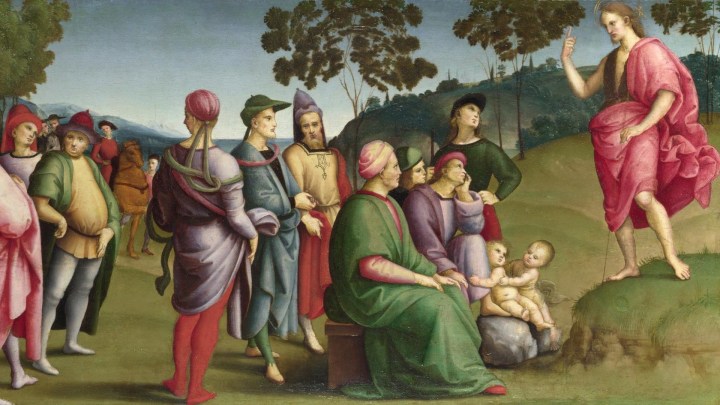
00.159.51

Saturday, 7 December 2019

Advent II Yr A – REPENT

John the Baptist appears in this morning’s Gospel in stark un-compromising fashion. His message is simple, ‘Repent, for the Kingdom of God is at hand’ (Mt 3:2 ESV). It is a clear message, but to understand it takes some work. To repent means to change ones mind: to turn away from sin, and turn back to God. We are called to think differently, and as a result of this to act differently, to follow Jesus, and thereby to change the world, by co-operating with God to make the Kingdom a lived reality here and now, and to share in it forever. To repent is to turn away from sin, which separates us from God, and each other. Sin makes us selfish, self-absorbed, concerned with pleasure, wealth, power. It’s all about ME, how I feel, what I want. The proclamation of the Kingdom of God tells us that another way is possible, by the grace of God. It sounds exciting, doesn’t it? Freeing, liberating: living for others rather than ourselves. At its heart the Kingdom is a place of generosity and real love, life in all its fullness. The Church exists to proclaim this same message, and to say to the world: Another way is possible.

It is not surprising that in those times people came out into the desert to hear John. He was charismatic, his message was a refreshing antidote to the Religious Establishment of his day. People come, confess their sins, and are baptised, they are washed clean, to serve God, and to love Him. They also come because in John the people of Israel see prophecy fulfilled, and a new Elijah is in their midst. One who points to the Messiah, and has done ever since he leapt in his mother Elizabeth’s womb at the Visitation. Before John was even born he proclaimed that Jesus was the Christ, the Messiah, the One who would save Israel from their sins. We see this Messianic kingdom hoped for in the vision of Isaiah in this morning’s first reading. The branch which comes forth from the stem of Jesse is the Blessed Virgin Mary, who filled with God’s Holy Spirit, conceived and bore Our Saviour, the true King of all that is, or has been, or will be. He will be on the side of the poor and the meek, people who are left behind, and ignored because they are not rich or powerful. It’s a radical vision, which reminds us that we still have some way to go in order to put it into practice in the world around us. Isaiah’s vision of Messianic peace looks impossible, but it signifies a world-changing peace, which alters how things are, how we behave. For with, and through God another way is possible. It is not simple, or easy, but it is possible, if we rely upon God to help us. As St Paul says to the Christians in Rome, ‘May the God of endurance and encouragement grant you to live in such harmony with one another, in accord with Christ Jesus, that together you may with one voice glorify the God and Father of our Lord Jesus Christ. Therefore welcome one another as Christ has welcomed you, for the glory of God.’ (Romans 15:5-7 ESV) and again ‘May the God of hope fill you with all joy and peace in believing, so that by the power of the Holy Spirit you may abound in hope’ (Romans 15:13 ESV). We receive the Holy Spirit in our Baptism and Confirmation to strengthen us to live out our faith in our lives.

Hope can feel in pretty short supply when we look at the world around us, and if we look to humanity we will be disappointed. Our hope comes from God, our hope is God, God with us, whose Birth we are preparing to celebrate at Christmas. Advent is a time of preparation, when we prepare for Christ to come, both as a baby in Bethlehem, and as our saviour and our Judge. As the son of Jesse, and the son of David, Jesus is Israel’s true king, who rules over all. Isaiah has hope in the peace the Messiah will bring. Injustice and affliction, the fruit of sin is dealt with on the Cross, where He ‘shall stand as a signal for the peoples’ (Isa 11:10 ESV). Christ comes to die, out of love for humanity. In Him God can make things put right, and restore Creation, so that the entire Universe may praise the God who created it. 

Our Saviour is also our judge. ‘His winnowing fork is in his hand, and he will clear his threshing floor and gather his wheat into the barn, but the chaff he will burn with unquenchable fire.’ (Matt 3:12 ESV) It’s real, and it should make us stop and think for a moment. Are we living the way God wants us to? If we are not then we need to repent, say sorry, and live the way God wants us to live. This is how we flourish as people. John the Baptist calls us to make a spiritual u- turn, to turn our life around, to turn away from what separates us from God, our sins. He calls us to the waters of baptism, so that we can be healed and restored by God, filled with his grace, and prepared to receive the Holy Spirit: “I baptize you with water for repentance, but he who is coming after me is mightier than I, whose sandals I am not worthy to carry. He will baptize you with the Holy Spirit and fire” (Mt 3:11). The problem with the Pharisees and Sadducees who come to John is that they do not show the repentance necessary, they haven’t made the u-turn, they don’t have the humility to recognise there sinfulness, and the need to be washed in the waters of baptism. They are confident that they are children of Abraham; they don’t have the right attitude for God to be at work in their lives.

As well as seeing Jesus as our Saviour, John the Baptist sees Jesus as Our Judge, he points to the second coming of the Lord when, as St John of the Cross puts it, ‘we will be judged by love alone’.  It is love that matters – in Christ we see what love means it is costly, self-giving and profound. As we are filled with His Spirit, nourished by Word and Sacrament, we need to live out this love in our lives. This is how we prepare to meet him as we prepare to celebrate His Birth and look forward to his Second Coming. So let us be prepared, let us live out God’s love in our lives, let us turn away from everything which separates us from God and each other, let us live out that costly, self-giving love in our lives, as this is what God wants us to do. It is through doing this that the world around us can see what our faith means in practice, how it affects our lives, and why they could and should follow Him, and sing the praises of God the Father, God the Son, and God the Holy Spirit, to whom be ascribed as is most right and just all might, majesty, glory, dominion, and power, now and forever. Amen.  

n-6480-00-000022-hd.jpg

Advent II Yr A – REPENT

John the Baptist appears in this morning’s Gospel in stark un-compromising fashion. His message is simple, ‘Repent, for the Kingdom of God is at hand’ (Mt 3:2 ESV). It is a clear message, but to understand it takes some work. To repent means to change ones mind: to turn away from sin, and turn back to God. We are called to think differently, and as a result of this to act differently, to follow Jesus, and thereby to change the world, by co-operating with God to make the Kingdom a lived reality here and now, and to share in it forever. To repent is to turn away from sin, which separates us from God, and each other. Sin makes us selfish, self-absorbed, concerned with pleasure, wealth, power. It’s all about ME, how I feel, what I want. The proclamation of the Kingdom of God tells us that another way is possible, by the grace of God. It sounds exciting, doesn’t it? Freeing, liberating: living for others rather than ourselves. At its heart the Kingdom is a place of generosity and real love, life in all its fullness. The Church exists to proclaim this same message, and to say to the world: Another way is possible.

It is not surprising that in those times people came out into the desert to hear John. He was charismatic, his message was a refreshing antidote to the Religious Establishment of his day. People come, confess their sins, and are baptised, they are washed clean, to serve God, and to love Him. They also come because in John the people of Israel see prophecy fulfilled, and a new Elijah is in their midst. One who points to the Messiah, and has done ever since he leapt in his mother Elizabeth’s womb at the Visitation. Before John was even born he proclaimed that Jesus was the Christ, the Messiah, the One who would save Israel from their sins. We see this Messianic kingdom hoped for in the vision of Isaiah in this morning’s first reading. The branch which comes forth from the stem of Jesse is the Blessed Virgin Mary, who filled with God’s Holy Spirit, conceived and bore Our Saviour, the true King of all that is, or has been, or will be. He will be on the side of the poor and the meek, people who are left behind, and ignored because they are not rich or powerful. It’s a radical vision, which reminds us that we still have some way to go in order to put it into practice in the world around us. Isaiah’s vision of Messianic peace looks impossible, but it signifies a world-changing peace, which alters how things are, how we behave. For with, and through God another way is possible. It is not simple, or easy, but it is possible, if we rely upon God to help us. As St Paul says to the Christians in Rome, ‘May the God of endurance and encouragement grant you to live in such harmony with one another, in accord with Christ Jesus, that together you may with one voice glorify the God and Father of our Lord Jesus Christ. Therefore welcome one another as Christ has welcomed you, for the glory of God.’ (Romans 15:5-7 ESV) and again ‘May the God of hope fill you with all joy and peace in believing, so that by the power of the Holy Spirit you may abound in hope’ (Romans 15:13 ESV). We receive the Holy Spirit in our Baptism and Confirmation to strengthen us to live out our faith in our lives.

Hope can feel in pretty short supply when we look at the world around us, and if we look to humanity we will be disappointed. Our hope comes from God, our hope is God, God with us, whose Birth we are preparing to celebrate at Christmas. Advent is a time of preparation, when we prepare for Christ to come, both as a baby in Bethlehem, and as our saviour and our Judge. As the son of Jesse, and the son of David, Jesus is Israel’s true king, who rules over all. Isaiah has hope in the peace the Messiah will bring. Injustice and affliction, the fruit of sin is dealt with on the Cross, where He ‘shall stand as a signal for the peoples’ (Isa 11:10 ESV). Christ comes to die, out of love for humanity. In Him God can make things put right, and restore Creation, so that the entire Universe may praise the God who created it. 

Our Saviour is also our judge. ‘His winnowing fork is in his hand, and he will clear his threshing floor and gather his wheat into the barn, but the chaff he will burn with unquenchable fire.’ (Matt 3:12 ESV) It’s real, and it should make us stop and think for a moment. Are we living the way God wants us to? If we are not then we need to repent, say sorry, and live the way God wants us to live. This is how we flourish as people. John the Baptist calls us to make a spiritual u- turn, to turn our life around, to turn away from what separates us from God, our sins. He calls us to the waters of baptism, so that we can be healed and restored by God, filled with his grace, and prepared to receive the Holy Spirit: “I baptize you with water for repentance, but he who is coming after me is mightier than I, whose sandals I am not worthy to carry. He will baptize you with the Holy Spirit and fire” (Mt 3:11). The problem with the Pharisees and Sadducees who come to John is that they do not show the repentance necessary, they haven’t made the u-turn, they don’t have the humility to recognise there sinfulness, and the need to be washed in the waters of baptism. They are confident that they are children of Abraham; they don’t have the right attitude for God to be at work in their lives.

As well as seeing Jesus as our Saviour, John the Baptist sees Jesus as Our Judge, he points to the second coming of the Lord when, as St John of the Cross puts it, ‘we will be judged by love alone’.  It is love that matters – in Christ we see what love means it is costly, self-giving and profound. As we are filled with His Spirit, nourished by Word and Sacrament, we need to live out this love in our lives. This is how we prepare to meet him as we prepare to celebrate His Birth and look forward to his Second Coming. So let us be prepared, let us live out God’s love in our lives, let us turn away from everything which separates us from God and each other, let us live out that costly, self-giving love in our lives, as this is what God wants us to do. It is through doing this that the world around us can see what our faith means in practice, how it affects our lives, and why they could and should follow Him, and sing the praises of God the Father, God the Son, and God the Holy Spirit, to whom be ascribed as is most right and just all might, majesty, glory, dominion, and power, now and forever. Amen.  
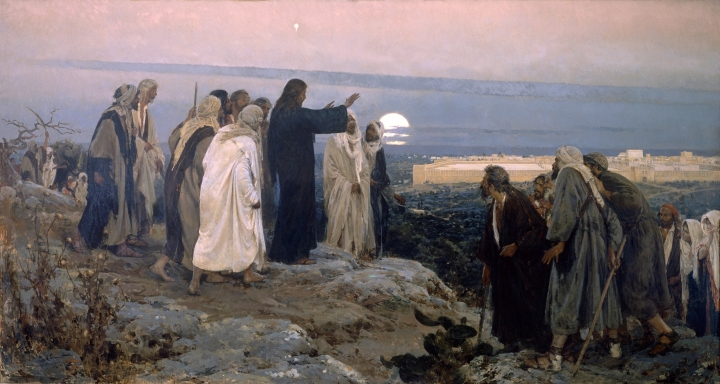
n-6480-00-000022-hd.jpg

Saturday, 30 November 2019

Advent I (Year A)

Just over one hundred and one years ago a war ended that was supposed to be ‘the war to end all wars’. Instead the last century has seen very little peace. We are lucky in Western Europe that we have experienced 70 years without conflict, but there have been wars elsewhere. Humanity is still plagued by warfare: the loss of life, the crimes committed, lives blighted. So when we hear the prophecy of Isaiah in this morning’s first reading it is truly joyful. Beating swords into ploughshares and turning spears into pruning hooks sounds wonderful indeed. Growing crops and tending vines provides us with food and drink. It is a sign of peace, joy, and prosperity. And at the time when Christ was born, and we are preparing to celebrate the yearly memorial of his birth at Christmas, this prophecy was fulfilled. There was peace in the Roman World when Christ was born, scripture was fulfilled. And we look forward to such peace coming again, and we work for it, together. The messianic age which we look forward to  shows us what truly following Christ looks like in practice. If we walk in the light of the Lord, we are freed from the darkness of sin and destruction, which threatens to overwhelm us. 

This same message is found in St Paul’s Letter to the Romans, our second reading this morning. It is an encouraging message, that another way is possible. Instead of sleep-walking towards damnation and destruction, we can be awake and ready to follow Christ. Every day is another day closer to Christ’s Second Coming. He will come again, as our Saviour and our Judge. We need to be ready, putting on the armour of light, putting on Christ, through our baptism, and living out the faith of our baptism in our lives. The capital of the Roman Empire was renowned for tolerating some pretty immoral behaviour. It was everywhere, all around the Christian community there. Were they tempted to join in? Of course! But St Paul advises them to resist the pleasures of the flesh, drunkenness, quarrelling, nastiness: all the sorts of things we can get up to if left to our own devices.

St Paul speaks to us, to encourage the church and its members, you and me, not to give into the culture of the world around us, but to stay close to Christ. It is easy in theory, but tricky in practice. It’s easier when you’re part of a community. We can help and support each other, in good times and bad. It’s why people join Slimming World or Weightwatchers. They’re trying to change their lifestyle and eating habits, and find the support of a group a great help. Never think that small groups do not have the power to change the world. We are living proof of it as Christians, and it is why we are HERE today: to support each other, to be built up in love together, to turn away from the ways of the world, and to follow Christ. 

We follow Christ and we are ready. We prepare for Christ to come among us. That’s what Advent means, Christ’s coming. We prepare for three comings: the first our annual commemoration of His birth in Bethlehem, at Christmas, where the Word became flesh and dwelt among us. The second coming of Christ will be at the end of time, when He will be our Saviour and our Judge. The third coming we prepare for is even nearer. It happens day by day, and week when Christ comes to us in the Eucharist, in His Body and Blood, under the outward forms of Bread and Wine, the Banquet of the Kingdom, anticipated by the ploughshares and pruning hooks of Isaiah, tools to help produce Bread and Wine, a prophecy which looks forward to the peace of the Messiah and a banquet of Bread and Wine. Food of the Kingdom, food for our journey of faith, to give us strength and new life in Christ. Christ comes to us in the Eucharist to give us strength and to transform us, into His likeness. This is the reality of God’s love for us, shown to us on the Cross, and in the Resurrection, a pledge, a sure sign of love, love we can touch and taste, love which transforms us.

We need it, and we need it together. It is why we gather together on the day when Christ rose from the dead to celebrate His triumph, and ask for His prayers. Because as St Matthew’s Gospel tells us, we need to be ready. We need to be ready because ‘the Son of Man is coming at an hour you do not expect.’ (Mt 24:44 ESV) It could be that between my writing these words and delivering them, Christ will come. Christ could come today, or in thousands of years’ time. It doesn’t matter when He comes. We need to be ready, prepared to meet Him, freed from sin, and living out our faith in our lives, having heeded the warnings to prepare ourselves. That’s why Advent is a penitential season, we are reminded of how we fall short, and try, with God’s grace, to amend our lives and follow Christ.

That is why in this morning’s Gospel reading Christ says, ‘For as were the days of Noah, so will be the coming of the Son of Man.’ (Mt 24:37 ESV). Before the flood in Genesis we se that humanity was corrupt and violent, and sinful. The point Christ is making is that this is how the world will be; Christians should not be like this, because we have put on Christ, we are walking in the light, supporting each other, as a community of faith, living out the love we have been shown in Christ. At a time we do not expect, Our Lord will return, so we need to be ready, so that whenever He comes Christ may find us ready, and prepared to meet him.  

We need to prepare our hearts, our souls, our minds, all of our life, we need to live and act, to think and speak like the people of God, fully alive in him, having turned away from the ways of the world, to live fully in him, we are to live this way, and invite others so to do, so that the Kingdom of God’s peace and love may truly be found here in earth, where humanity is truly valued, where violence, death, murder, and immorality are no more.

The time is short, the time is now, it really matters; we need to come to the Lord, learn his ways and walk in his paths, living decently, living vigilantly, preferring nothing to Christ, and inviting all the world to come to the fullness of life in Him. This is how we celebrate His coming at Christmas and as Our Saviour and Judge, by following him, fed by Him, restored and healed by Him, and sharing His church’s message with all the world, so that it too may believe and sing the praise of God the Father, God the Son, and God the Holy Spirit, to whom be ascribed as is most right and just all might, majesty, glory, dominion, and power, now and forever.

Last_Judgement_(Michelangelo).jpg

Advent I (Year A)

Just over one hundred and one years ago a war ended that was supposed to be ‘the war to end all wars’. Instead the last century has seen very little peace. We are lucky in Western Europe that we have experienced 70 years without conflict, but there have been wars elsewhere. Humanity is still plagued by warfare: the loss of life, the crimes committed, lives blighted. So when we hear the prophecy of Isaiah in this morning’s first reading it is truly joyful. Beating swords into ploughshares and turning spears into pruning hooks sounds wonderful indeed. Growing crops and tending vines provides us with food and drink. It is a sign of peace, joy, and prosperity. And at the time when Christ was born, and we are preparing to celebrate the yearly memorial of his birth at Christmas, this prophecy was fulfilled. There was peace in the Roman World when Christ was born, scripture was fulfilled. And we look forward to such peace coming again, and we work for it, together. The messianic age which we look forward to  shows us what truly following Christ looks like in practice. If we walk in the light of the Lord, we are freed from the darkness of sin and destruction, which threatens to overwhelm us. 

This same message is found in St Paul’s Letter to the Romans, our second reading this morning. It is an encouraging message, that another way is possible. Instead of sleep-walking towards damnation and destruction, we can be awake and ready to follow Christ. Every day is another day closer to Christ’s Second Coming. He will come again, as our Saviour and our Judge. We need to be ready, putting on the armour of light, putting on Christ, through our baptism, and living out the faith of our baptism in our lives. The capital of the Roman Empire was renowned for tolerating some pretty immoral behaviour. It was everywhere, all around the Christian community there. Were they tempted to join in? Of course! But St Paul advises them to resist the pleasures of the flesh, drunkenness, quarrelling, nastiness: all the sorts of things we can get up to if left to our own devices.

St Paul speaks to us, to encourage the church and its members, you and me, not to give into the culture of the world around us, but to stay close to Christ. It is easy in theory, but tricky in practice. It’s easier when you’re part of a community. We can help and support each other, in good times and bad. It’s why people join Slimming World or Weightwatchers. They’re trying to change their lifestyle and eating habits, and find the support of a group a great help. Never think that small groups do not have the power to change the world. We are living proof of it as Christians, and it is why we are HERE today: to support each other, to be built up in love together, to turn away from the ways of the world, and to follow Christ. 

We follow Christ and we are ready. We prepare for Christ to come among us. That’s what Advent means, Christ’s coming. We prepare for three comings: the first our annual commemoration of His birth in Bethlehem, at Christmas, where the Word became flesh and dwelt among us. The second coming of Christ will be at the end of time, when He will be our Saviour and our Judge. The third coming we prepare for is even nearer. It happens day by day, and week when Christ comes to us in the Eucharist, in His Body and Blood, under the outward forms of Bread and Wine, the Banquet of the Kingdom, anticipated by the ploughshares and pruning hooks of Isaiah, tools to help produce Bread and Wine, a prophecy which looks forward to the peace of the Messiah and a banquet of Bread and Wine. Food of the Kingdom, food for our journey of faith, to give us strength and new life in Christ. Christ comes to us in the Eucharist to give us strength and to transform us, into His likeness. This is the reality of God’s love for us, shown to us on the Cross, and in the Resurrection, a pledge, a sure sign of love, love we can touch and taste, love which transforms us.

We need it, and we need it together. It is why we gather together on the day when Christ rose from the dead to celebrate His triumph, and ask for His prayers. Because as St Matthew’s Gospel tells us, we need to be ready. We need to be ready because ‘the Son of Man is coming at an hour you do not expect.’ (Mt 24:44 ESV) It could be that between my writing these words and delivering them, Christ will come. Christ could come today, or in thousands of years’ time. It doesn’t matter when He comes. We need to be ready, prepared to meet Him, freed from sin, and living out our faith in our lives, having heeded the warnings to prepare ourselves. That’s why Advent is a penitential season, we are reminded of how we fall short, and try, with God’s grace, to amend our lives and follow Christ.

That is why in this morning’s Gospel reading Christ says, ‘For as were the days of Noah, so will be the coming of the Son of Man.’ (Mt 24:37 ESV). Before the flood in Genesis we se that humanity was corrupt and violent, and sinful. The point Christ is making is that this is how the world will be; Christians should not be like this, because we have put on Christ, we are walking in the light, supporting each other, as a community of faith, living out the love we have been shown in Christ. At a time we do not expect, Our Lord will return, so we need to be ready, so that whenever He comes Christ may find us ready, and prepared to meet him.  

We need to prepare our hearts, our souls, our minds, all of our life, we need to live and act, to think and speak like the people of God, fully alive in him, having turned away from the ways of the world, to live fully in him, we are to live this way, and invite others so to do, so that the Kingdom of God’s peace and love may truly be found here in earth, where humanity is truly valued, where violence, death, murder, and immorality are no more.

The time is short, the time is now, it really matters; we need to come to the Lord, learn his ways and walk in his paths, living decently, living vigilantly, preferring nothing to Christ, and inviting all the world to come to the fullness of life in Him. This is how we celebrate His coming at Christmas and as Our Saviour and Judge, by following him, fed by Him, restored and healed by Him, and sharing His church’s message with all the world, so that it too may believe and sing the praise of God the Father, God the Son, and God the Holy Spirit, to whom be ascribed as is most right and just all might, majesty, glory, dominion, and power, now and forever.

Last_Judgement_(Michelangelo).jpg

Sunday, 17 November 2019

Trinity XXII

As Christians are we simply satisfied with the world, with the way things are? No. Do we want things to be different? I hope so, yes. That’s good, as the prophet Malachi in our first reading this morning has a vision of the future, when the arrogant and evil doers will be like stubble in a furnace, ‘But for you who fear my name, the sun of righteousness shall rise with healing in its wings. You shall go out leaping like calves from the stall.’ (Malachi 4:2). This is a vision of a future where God is in control, and things will be put right, and at one level He already has. Christ is risen from the dead, the one who heals God’s people has risen. The time is both not yet, and now, a work in progress, and a reality. 

We have a part to play in it. We cannot just sit back and wait for God to sort everything out, we need to co-operate with God, and help to make the Kingdom a reality. Hence S. Paul’s advice to the Thessalonians, ‘As for you, brothers, do not grow weary in doing good’ (2Thess 3:13). We’ve been trying and failing for nearly two thousand years. That’s what a work in progress is. It isn’t easy, and no one can fail to notice that the world around us is often rather hostile to who we are, and what we stand for. It is not easy to be a Christian, nor has it ever been, for that matter. 

We will be hated by all people for Christ’s name’s sake (Lk 21:17). Hate is a strong word, but as we are directly opposed to many in this world, it is not surprising. With hatred comes persecution, and we only have to look to China, North Korea, the Middle East, India, and Pakistan, to see it. Christians are being killed for believing in God who loves us, who died to save from our sins. To follow Christ is to walk the way of the Cross, to risk imprisonment, torture and death, for the love of His name. But ‘there is salvation in no one else, for there is no other name under heaven given among men by which we must be saved’ (Acts 4:12). Only Jesus can save us, we cannot save ourselves. We are called to bear witness to Him. 

Jews in the first century AD loved the Temple, it was the centre of their world, it was where they could be close to God, it was where sacrifices happened which took away their sins. But less than forty years after Jesus spoke this prophecy a Roman Army destroyed it. But as Christians we know that Jesus Christ is the new Temple, the place to meet God, the place of sacrifice. Destroy it in three days, and I will raise it up. Christ speaks of His body, and that is us: we are the Body of Christ. Churches are not buildings, they are groups of people who love Jesus, and each other. Jesus speaks of false Christs, who will lead people astray, and warns ‘ do not go after them’ (Lk 21:8). It is a temptation, especially when times are hard, when there are war and natural disasters. 

But we know that Our Lord Jesus Christ is victorious, he is the true worship of God. In Him we can have confidence. He gives us Himself, His Body and Blood, to nourish us and to heal us, and give us strength to prepare us for the trials we will face. Here in Britain it is more likely to be indifference than anything else. Indifference speaks of a hardness of heart, being deaf to the Good News of the Kingdom. At its root is Sin, our separation from God by our following our will, and not God’s. We think we know better, and do what we want to do, rather than letting God work through us. The human condition hasn’t actually changed since the Garden of Eden. We continue to make the same mistakes over and over again. There is, however, a way out of this. God in Christ deals with the problem of our sin on the Cross, where He offers himself as a sacrificial victim to atone for all the sins of humanity. It’s what Christ was born for, as the angel says to Joseph, ‘She will bear a son, and you are to name him Jesus, for he will save his people from their sins.’ (Mt 1:21) The name Jesus (Hebrew Yeshua) means ‘God saves’ and He does. This is what we believe as Christians, where we put our trust, our hope, in a God who loves us and saves us, the same God who inspired the prophecies of Malachi, which look forward to Christ. 

That same Christ who heals us and sustains us will be with us in our trials, and whereas our family and friends may prove false to us, we can have confidence that Christ will never let us down. He’s been through this. Through the gift of the Holy Spirit we are strengthened to bear witness to Him. For the same Christ who died for us, and rose again, who ascended into heaven, will come again to judge us and all the world. It sounds scary and intimidating, and at one level it is, and it should be. It matters; hence our urgency in proclaiming the Kingdom of God. But the one who will judge us, is the same one who died to set us free, the God who loves us, who heals us, and restores us. A God of love and mercy, risen with healing in his wings. Let us come to Him, be healed by Him, nourished with His Body and Blood and strengthened to proclaim Him in word and deed, so that the world may come to believe and sing the praises of God the Father, God the Son, and God the Holy Spirit, to whom be ascribed as is most right and just all might, majesty, glory, dominion, and power, now and forever. Amen.Enrique_Simonet_-_Flevit_super_illam_-_1892-1.jpg

Trinity XXII

As Christians are we simply satisfied with the world, with the way things are? No. Do we want things to be different? I hope so, yes. That’s good, as the prophet Malachi in our first reading this morning has a vision of the future, when the arrogant and evil doers will be like stubble in a furnace, ‘But for you who fear my name, the sun of righteousness shall rise with healing in its wings. You shall go out leaping like calves from the stall.’ (Malachi 4:2). This is a vision of a future where God is in control, and things will be put right, and at one level He already has. Christ is risen from the dead, the one who heals God’s people has risen. The time is both not yet, and now, a work in progress, and a reality. 

We have a part to play in it. We cannot just sit back and wait for God to sort everything out, we need to co-operate with God, and help to make the Kingdom a reality. Hence S. Paul’s advice to the Thessalonians, ‘As for you, brothers, do not grow weary in doing good’ (2Thess 3:13). We’ve been trying and failing for nearly two thousand years. That’s what a work in progress is. It isn’t easy, and no one can fail to notice that the world around us is often rather hostile to who we are, and what we stand for. It is not easy to be a Christian, nor has it ever been, for that matter. 

We will be hated by all people for Christ’s name’s sake (Lk 21:17). Hate is a strong word, but as we are directly opposed to many in this world, it is not surprising. With hatred comes persecution, and we only have to look to China, North Korea, the Middle East, India, and Pakistan, to see it. Christians are being killed for believing in God who loves us, who died to save from our sins. To follow Christ is to walk the way of the Cross, to risk imprisonment, torture and death, for the love of His name. But ‘there is salvation in no one else, for there is no other name under heaven given among men by which we must be saved’ (Acts 4:12). Only Jesus can save us, we cannot save ourselves. We are called to bear witness to Him. 

Jews in the first century AD loved the Temple, it was the centre of their world, it was where they could be close to God, it was where sacrifices happened which took away their sins. But less than forty years after Jesus spoke this prophecy a Roman Army destroyed it. But as Christians we know that Jesus Christ is the new Temple, the place to meet God, the place of sacrifice. Destroy it in three days, and I will raise it up. Christ speaks of His body, and that is us: we are the Body of Christ. Churches are not buildings, they are groups of people who love Jesus, and each other. Jesus speaks of false Christs, who will lead people astray, and warns ‘ do not go after them’ (Lk 21:8). It is a temptation, especially when times are hard, when there are war and natural disasters. 

But we know that Our Lord Jesus Christ is victorious, he is the true worship of God. In Him we can have confidence. He gives us Himself, His Body and Blood, to nourish us and to heal us, and give us strength to prepare us for the trials we will face. Here in Britain it is more likely to be indifference than anything else. Indifference speaks of a hardness of heart, being deaf to the Good News of the Kingdom. At its root is Sin, our separation from God by our following our will, and not God’s. We think we know better, and do what we want to do, rather than letting God work through us. The human condition hasn’t actually changed since the Garden of Eden. We continue to make the same mistakes over and over again. There is, however, a way out of this. God in Christ deals with the problem of our sin on the Cross, where He offers himself as a sacrificial victim to atone for all the sins of humanity. It’s what Christ was born for, as the angel says to Joseph, ‘She will bear a son, and you are to name him Jesus, for he will save his people from their sins.’ (Mt 1:21) The name Jesus (Hebrew Yeshua) means ‘God saves’ and He does. This is what we believe as Christians, where we put our trust, our hope, in a God who loves us and saves us, the same God who inspired the prophecies of Malachi, which look forward to Christ. 

That same Christ who heals us and sustains us will be with us in our trials, and whereas our family and friends may prove false to us, we can have confidence that Christ will never let us down. He’s been through this. Through the gift of the Holy Spirit we are strengthened to bear witness to Him. For the same Christ who died for us, and rose again, who ascended into heaven, will come again to judge us and all the world. It sounds scary and intimidating, and at one level it is, and it should be. It matters; hence our urgency in proclaiming the Kingdom of God. But the one who will judge us, is the same one who died to set us free, the God who loves us, who heals us, and restores us. A God of love and mercy, risen with healing in his wings. Let us come to Him, be healed by Him, nourished with His Body and Blood and strengthened to proclaim Him in word and deed, so that the world may come to believe and sing the praises of God the Father, God the Son, and God the Holy Spirit, to whom be ascribed as is most right and just all might, majesty, glory, dominion, and power, now and forever. Amen.Enrique_Simonet_-_Flevit_super_illam_-_1892-1.jpg