Showing posts with label Our Lady. Show all posts

Saturday, 1 February 2020

The Presentation of Christ in the Temple

Once upon a time it was not uncommon to hear of the Churching of Women, sometimes called Thanksgiving after Childbirth, as it was a dangerous and risky business. We are perhaps now not quite so used to ideas of ritual purity inherent in the Thanksgiving for a woman after Childbirth, or her re-admission into society after a period of confinement. But the Law of Moses required that forty days after giving birth the mother was purified in a mikvah, a ritual bath. The law also required that her son, as a first-born male, was presented to the Lord, and sacrifices were made. Today the Church celebrates the Presentation of Christ in the Temple, also known as the Purification of the Blessed Virgin Mary, and commonly called Candlemas. The name is derived from the ceremonies which saw the candles for the coming year blessed at this service, so that they may burn as lights which proclaim Christ, the true Light, the light to lighten the Gentiles. They are different titles, but one feast, which make us think about who and what Jesus Christ is, and what he does.

This feast then is the fulfilment of the prophecy spoken by Malachi in our first reading, which also looks to our purification in and through the death of Christ and His atoning sacrifice of Himself, which will be be re-presented here, made present so that we can share in it, so that we can be healed and restored by the very Body and Blood of Our Lord and Saviour Jesus Christ. As the Letter to the Hebrews puts it:

Therefore he had to become like his brothers and sisters in every respect, so that he might be a merciful and faithful high priest in the service of God, to make a sacrifice of atonement for the sins of the people. Because he himself was tested by what he suffered, he is able to help those who are being tested. 

It is hard to see how it could be any clearer. Just as Abraham was willing to sacrifice Isaac on Mt Moriah, so now God will gladly give His only Son, Jesus Christ, on the altar of the Cross, to restore our relationship with Him.

The Holy Family go to the Temple to give thanks to God and to comply with the Law, just as they had in circumcising their baby on the eighth day: and in so doing they demonstrate obedience, they listen to what God says and do it and as such they are a model for all Christian families to follow — we need to be like them, listening to what God tells us and doing it, regardless of the cost.

When the Holy Family go to the Temple they encounter Simeon, a man of faith and holiness. A man devoted to God, who is looking for the consolation of Israel. He knows that he will not die until he sees the Messiah, the Lord’s Anointed, and the Saviour of the World. As he takes the child Jesus in his arms he prays: ‘Lord, now lettest thou thy servant depart in peace : according to thy word. For mine eyes have seen : thy salvation, Which thou hast prepared : before the face of all people; To be a light to lighten the Gentiles : and to be the glory of thy people Israel.

The promise made to him by God, revealed through the Holy Spirit, has been fulfilled in the six-week-old infant in his arms. Simeon can prepare to meet his God happy in the knowledge that Salvation has dawned in this little child. As Christ was made manifest to the Gentiles at Epiphany, so now His saving message is proclaimed, so that the world may know that its salvation has come in the person of Jesus Christ. Simeon speaks to the Blessed Virgin Mary of her Son’s future, and the pain she will endure at the foot of the Cross. Before he dies Simeon is looking to the Cross, the means by which our salvation is wrought, the Cross at which Mary will stand to see humanity freed from its sin through the love and mercy of God, through grace, the free gift of God in Christ. So as Candlemas concludes our celebration of Christmas, and the mystery of the Incarnation, so to it points to that which gives it its true meaning: the Death and Resurrection of Jesus Christ. Candlemas prepares for the coming season of Lent by changing our focus and attention from Jesus’ birth to His death, for our sins.

That is why we are here this morning, to be fed by Christ, to be fed with Christ, truly present in His Body and Blood, Soul and Divinity. A God whom we can touch and taste. A God who shares His Divine Life with us, so that we can be transformed by Him, built up as living stones as a temple to His Glory, and given a foretaste of Heaven here on Earth. This is our soul’s true food, the bread for the journey of faith, which sets us free to live for Him, to live with Him, through Him and in Him.

The significance of what is happening is not just recognised by Simeon, but also by Anna, a holy woman, a woman of prayer, a woman who is close to God, she recognises what God is doing in Christ, and she proclaims it, so that God’s redemption of His people may be known. Let us be like her, and let all of our lives, everything which we say, or think, or do, proclaim the saving truth of God’s love to the world.

And finally the Holy Family go back to Nazareth, and Jesus begins to grow up, in the favour of God, obedient to God and His parents in the Gospel we see all of human life: birth, death, work, normality hallowed by the God who loves us, who gives His Son for us. God shares our human life, as He will share our death, to restore us, to heal us,

So let us burn, like the candles which God has blessed, let our faith be active to give light and warmth and hope to the world, so that it may feel that love and warmth, and come to believe and give glory to God the Father, God the Son, and God the Holy Spirit, to whom be ascribed as is most right and just all might, majesty, glory, dominion, and power, now and forever, Amen.

Giotto_di_Bondone_-_No._19_Scenes_from_the_Life_of_Christ_-_3._Presentation_of_Christ_at_the_Temple_-_WGA09197.jpg

The Presentation of Christ in the Temple

Once upon a time it was not uncommon to hear of the Churching of Women, sometimes called Thanksgiving after Childbirth, as it was a dangerous and risky business. We are perhaps now not quite so used to ideas of ritual purity inherent in the Thanksgiving for a woman after Childbirth, or her re-admission into society after a period of confinement. But the Law of Moses required that forty days after giving birth the mother was purified in a mikvah, a ritual bath. The law also required that her son, as a first-born male, was presented to the Lord, and sacrifices were made. Today the Church celebrates the Presentation of Christ in the Temple, also known as the Purification of the Blessed Virgin Mary, and commonly called Candlemas. The name is derived from the ceremonies which saw the candles for the coming year blessed at this service, so that they may burn as lights which proclaim Christ, the true Light, the light to lighten the Gentiles. They are different titles, but one feast, which make us think about who and what Jesus Christ is, and what he does.

This feast then is the fulfilment of the prophecy spoken by Malachi in our first reading, which also looks to our purification in and through the death of Christ and His atoning sacrifice of Himself, which will be be re-presented here, made present so that we can share in it, so that we can be healed and restored by the very Body and Blood of Our Lord and Saviour Jesus Christ. As the Letter to the Hebrews puts it:

Therefore he had to become like his brothers and sisters in every respect, so that he might be a merciful and faithful high priest in the service of God, to make a sacrifice of atonement for the sins of the people. Because he himself was tested by what he suffered, he is able to help those who are being tested. 

It is hard to see how it could be any clearer. Just as Abraham was willing to sacrifice Isaac on Mt Moriah, so now God will gladly give His only Son, Jesus Christ, on the altar of the Cross, to restore our relationship with Him.

The Holy Family go to the Temple to give thanks to God and to comply with the Law, just as they had in circumcising their baby on the eighth day: and in so doing they demonstrate obedience, they listen to what God says and do it and as such they are a model for all Christian families to follow — we need to be like them, listening to what God tells us and doing it, regardless of the cost.

When the Holy Family go to the Temple they encounter Simeon, a man of faith and holiness. A man devoted to God, who is looking for the consolation of Israel. He knows that he will not die until he sees the Messiah, the Lord’s Anointed, and the Saviour of the World. As he takes the child Jesus in his arms he prays: ‘Lord, now lettest thou thy servant depart in peace : according to thy word. For mine eyes have seen : thy salvation, Which thou hast prepared : before the face of all people; To be a light to lighten the Gentiles : and to be the glory of thy people Israel.

The promise made to him by God, revealed through the Holy Spirit, has been fulfilled in the six-week-old infant in his arms. Simeon can prepare to meet his God happy in the knowledge that Salvation has dawned in this little child. As Christ was made manifest to the Gentiles at Epiphany, so now His saving message is proclaimed, so that the world may know that its salvation has come in the person of Jesus Christ. Simeon speaks to the Blessed Virgin Mary of her Son’s future, and the pain she will endure at the foot of the Cross. Before he dies Simeon is looking to the Cross, the means by which our salvation is wrought, the Cross at which Mary will stand to see humanity freed from its sin through the love and mercy of God, through grace, the free gift of God in Christ. So as Candlemas concludes our celebration of Christmas, and the mystery of the Incarnation, so to it points to that which gives it its true meaning: the Death and Resurrection of Jesus Christ. Candlemas prepares for the coming season of Lent by changing our focus and attention from Jesus’ birth to His death, for our sins.

That is why we are here this morning, to be fed by Christ, to be fed with Christ, truly present in His Body and Blood, Soul and Divinity. A God whom we can touch and taste. A God who shares His Divine Life with us, so that we can be transformed by Him, built up as living stones as a temple to His Glory, and given a foretaste of Heaven here on Earth. This is our soul’s true food, the bread for the journey of faith, which sets us free to live for Him, to live with Him, through Him and in Him.

The significance of what is happening is not just recognised by Simeon, but also by Anna, a holy woman, a woman of prayer, a woman who is close to God, she recognises what God is doing in Christ, and she proclaims it, so that God’s redemption of His people may be known. Let us be like her, and let all of our lives, everything which we say, or think, or do, proclaim the saving truth of God’s love to the world.

And finally the Holy Family go back to Nazareth, and Jesus begins to grow up, in the favour of God, obedient to God and His parents in the Gospel we see all of human life: birth, death, work, normality hallowed by the God who loves us, who gives His Son for us. God shares our human life, as He will share our death, to restore us, to heal us,

So let us burn, like the candles which God has blessed, let our faith be active to give light and warmth and hope to the world, so that it may feel that love and warmth, and come to believe and give glory to God the Father, God the Son, and God the Holy Spirit, to whom be ascribed as is most right and just all might, majesty, glory, dominion, and power, now and forever, Amen.

Giotto_di_Bondone_-_No._19_Scenes_from_the_Life_of_Christ_-_3._Presentation_of_Christ_at_the_Temple_-_WGA09197.jpg

Sunday, 3 February 2019

Candlemas

Not all that long ago it was not uncommon to hear of the Churching of Women, sometimes called Thanksgiving after Childbirth, as it was after all a dangerous and risky business. We are perhaps now not quite so used to ideas of ritual purity inherent in the Thanksgiving for a Woman after Childbirth, or her re-admission into society after a period of confinement. But the Law of Moses required that forty days after giving birth the mother was purified in a mikvah, a ritual bath and that her son, as a first-born male was presented to the Lord. This week the Church celebrates the Presentation of Christ in the Temple, also known as the Purification of the Blessed Virgin Mary and commonly called Candlemas, from the ceremonies which saw the candles for the coming year blessed at this service, so that they may burn as lights which proclaim Christ, the true Light, the light to lighten the Gentiles. They are different titles, but one feast, which make us think about who and what Jesus Christ is, and what he does.

This feast then is the fulfilment of the prophecy spoken by Malachi, which also looks to our purification in and through the death of Christ and his atoning sacrifice of himself, which will be be re-presented here, made present so that we can share in it, so that we can be healed and restored by the very Body and Blood of Our Lord and Saviour Jesus Christ. As the Letter to the Hebrews puts it:

Therefore he had to become like his brothers and sisters in every respect, so that he might be a merciful and faithful high priest in the service of God, to make a sacrifice of atonement for the sins of the people. Because he himself was tested by what he suffered, he is able to help those who are being tested. 

It is hard to see how it could be any clearer. Just as Abraham was willing to sacrifice Isaac on Mt Moriah, so now God will gladly give His only Son, Jesus Christ, on the altar of the Cross, to restore our relationship with Him.

The Holy Family go to the Temple to give thanks to God and to comply with the Law, just as they had in circumcising their baby on the eighth day: and in so doing they demonstrate obedience, they listen to what God says and do it and as such they are a model for all Christian families to follow – we need to be like them, listening to what God tells us and doing it, regardless of the cost.

When the Holy Family go to the Temple they encounter Simeon, a man of faith and holiness. A man devoted to God, who is looking for the consolation of Israel. He knows that he will not die until he sees the Messiah, the Lord’s Anointed, and the Saviour of the World. As he takes the child Jesus in his arms he prays: ‘Lord, now lettest thou thy servant depart in peace : according to thy word. For mine eyes have seen : thy salvation, Which thou hast prepared : before the face of all people; To be a light to lighten the Gentiles : and to be the glory of thy people Israel.

The promise made to him by God, revealed through the Holy Spirit, has been fulfilled in the six-week-old infant in his arms. Simeon can prepare to meet his God happy in the knowledge that Salvation has dawned in this little child. As Christ was made manifest to the Gentiles at Epiphany, so now His saving message is proclaimed, so that the world may know that its salvation has come in the person of Jesus Christ. Simeon speaks to Our Lord’s Mother of her Son’s future, and the pain she will endure at the foot of the Cross. Before he dies Simeon is looking to the Cross, the means by which our salvation is wrought, the Cross at which Mary will stand to see humanity freed from its sin through the love and mercy of God, through grace, the free gift of God in Christ. So as Candlemas concludes our celebration of Christmas, and the mystery of the Incarnation, so to it points to that which gives it its true meaning: the Death and Resurrection of Jesus Christ. The Feast prepares for the coming season of Lent by changing our focus and attention from Jesus’ birth to His death, for our sins, upon the Cross.

That is why we are here this morning, to be fed by Christ, to be fed with Christ, truly present in His Body and Blood, Soul and Divinity. A God whom we can touch and taste. A God who shares His Divine Life with us, so that we can be transformed by Him, built up as living stones as a temple to His Glory, and given a foretaste of Heaven here on Earth. This is our soul’s true food, the bread for the journey of faith, a re-presentation of the sacrifice which sets us free to live for Him, to live with Him, through Him and in Him.

The significance of what is happening is not just recognised by Simeon, but also by Anna, a holy woman, a woman of prayer, a woman who is close to God, she recognises what God is doing in Christ, and she proclaims it, so that God’s redemption of His people may be known. Let us be like her, and let all of our lives, everything which we say, or think, or do, proclaim the saving truth of God’s love to the world.

And finally the Holy Family go back to Nazareth, and Jesus begins to grow up, in the favour of God, obedient to God and His parents in the Gospel we see all of human life: birth, death, work, normality hallowed by the God who loves us, who gives His Son for us. God shares our human life, as He will share our death, to restore us, to heal us,

So let us burn, like the candles which God has blessed, let our faith be active to give light and warmth and hope to the world, so that it may feel that love and warmth, and come to believe and give glory to God the Father, God the Son, and God the Holy Spirit, to whom be ascribed as is most right and just all might, majesty, glory, dominion, and power, now and forever.

6567

Candlemas

Not all that long ago it was not uncommon to hear of the Churching of Women, sometimes called Thanksgiving after Childbirth, as it was after all a dangerous and risky business. We are perhaps now not quite so used to ideas of ritual purity inherent in the Thanksgiving for a Woman after Childbirth, or her re-admission into society after a period of confinement. But the Law of Moses required that forty days after giving birth the mother was purified in a mikvah, a ritual bath and that her son, as a first-born male was presented to the Lord. This week the Church celebrates the Presentation of Christ in the Temple, also known as the Purification of the Blessed Virgin Mary and commonly called Candlemas, from the ceremonies which saw the candles for the coming year blessed at this service, so that they may burn as lights which proclaim Christ, the true Light, the light to lighten the Gentiles. They are different titles, but one feast, which make us think about who and what Jesus Christ is, and what he does.

This feast then is the fulfilment of the prophecy spoken by Malachi, which also looks to our purification in and through the death of Christ and his atoning sacrifice of himself, which will be be re-presented here, made present so that we can share in it, so that we can be healed and restored by the very Body and Blood of Our Lord and Saviour Jesus Christ. As the Letter to the Hebrews puts it:

Therefore he had to become like his brothers and sisters in every respect, so that he might be a merciful and faithful high priest in the service of God, to make a sacrifice of atonement for the sins of the people. Because he himself was tested by what he suffered, he is able to help those who are being tested. 

It is hard to see how it could be any clearer. Just as Abraham was willing to sacrifice Isaac on Mt Moriah, so now God will gladly give His only Son, Jesus Christ, on the altar of the Cross, to restore our relationship with Him.

The Holy Family go to the Temple to give thanks to God and to comply with the Law, just as they had in circumcising their baby on the eighth day: and in so doing they demonstrate obedience, they listen to what God says and do it and as such they are a model for all Christian families to follow – we need to be like them, listening to what God tells us and doing it, regardless of the cost.

When the Holy Family go to the Temple they encounter Simeon, a man of faith and holiness. A man devoted to God, who is looking for the consolation of Israel. He knows that he will not die until he sees the Messiah, the Lord’s Anointed, and the Saviour of the World. As he takes the child Jesus in his arms he prays: ‘Lord, now lettest thou thy servant depart in peace : according to thy word. For mine eyes have seen : thy salvation, Which thou hast prepared : before the face of all people; To be a light to lighten the Gentiles : and to be the glory of thy people Israel.

The promise made to him by God, revealed through the Holy Spirit, has been fulfilled in the six-week-old infant in his arms. Simeon can prepare to meet his God happy in the knowledge that Salvation has dawned in this little child. As Christ was made manifest to the Gentiles at Epiphany, so now His saving message is proclaimed, so that the world may know that its salvation has come in the person of Jesus Christ. Simeon speaks to Our Lord’s Mother of her Son’s future, and the pain she will endure at the foot of the Cross. Before he dies Simeon is looking to the Cross, the means by which our salvation is wrought, the Cross at which Mary will stand to see humanity freed from its sin through the love and mercy of God, through grace, the free gift of God in Christ. So as Candlemas concludes our celebration of Christmas, and the mystery of the Incarnation, so to it points to that which gives it its true meaning: the Death and Resurrection of Jesus Christ. The Feast prepares for the coming season of Lent by changing our focus and attention from Jesus’ birth to His death, for our sins, upon the Cross.

That is why we are here this morning, to be fed by Christ, to be fed with Christ, truly present in His Body and Blood, Soul and Divinity. A God whom we can touch and taste. A God who shares His Divine Life with us, so that we can be transformed by Him, built up as living stones as a temple to His Glory, and given a foretaste of Heaven here on Earth. This is our soul’s true food, the bread for the journey of faith, a re-presentation of the sacrifice which sets us free to live for Him, to live with Him, through Him and in Him.

The significance of what is happening is not just recognised by Simeon, but also by Anna, a holy woman, a woman of prayer, a woman who is close to God, she recognises what God is doing in Christ, and she proclaims it, so that God’s redemption of His people may be known. Let us be like her, and let all of our lives, everything which we say, or think, or do, proclaim the saving truth of God’s love to the world.

And finally the Holy Family go back to Nazareth, and Jesus begins to grow up, in the favour of God, obedient to God and His parents in the Gospel we see all of human life: birth, death, work, normality hallowed by the God who loves us, who gives His Son for us. God shares our human life, as He will share our death, to restore us, to heal us,

So let us burn, like the candles which God has blessed, let our faith be active to give light and warmth and hope to the world, so that it may feel that love and warmth, and come to believe and give glory to God the Father, God the Son, and God the Holy Spirit, to whom be ascribed as is most right and just all might, majesty, glory, dominion, and power, now and forever.

6567

Saturday, 22 December 2018

Advent IV Year C

The journey from Nazareth to Bethlehem would have taken Mary and Joseph about a week on foot, it’s hard work, and uphill all the way. Bethlehem was associated with two figures in the Bible: David, Israel’s second king, and his ancestor Ruth, the Moabitess, whose love and devotion to her mother in law Naomi are inspiring. It is a hill town, and source of water about five miles south of Jerusalem, where shepherds would raise sheep for the Passover sacrifice in the Temple, first-born males, holy to the Lord. A fertile, fruitful place, a place of promise. It is a place with the prophet Micah sees as the starting place for a future for Israel. One ‘whose coming forth is from of old, from ancient days’ (Micah 5:2 ESV) The Incarnate Word of God, who has always been, and will always be: Our Lord and Saviour Jesus Christ. The Good Shepherd, who will ‘shepherd his flock in the strength of the Lord, in the majesty of the name of the Lord his God. And they shall dwell secure, for now he shall be great to the ends of the earth. And he shall be their peace.’ (Micah 5:4-5a ESV) He will be our peace, because He makes peace, ‘For in him all the fullness of God was pleased to dwell, and through him to reconcile to himself all things, whether on earth or in heaven, making peace by the blood of his cross.’ (Colossians 1:19-20 ESV) What is prophesied by Micah is fulfilled in Jesus. All scripture points to Him, and finds its fulfilment in Him, the Word made Flesh. 

In the letter to the Hebrews we see the prophecy of Psalm 40:6-8 fulfilled in Christ. The sacrifices of the old covenant are replaced in the new covenant with the sacrifice of God for humanity. Sacrifice is fulfilled and completed, once and for all. It is this sacrifice, which the church pleads and re-presents. The eternal offering of a sinless victim, to free humanity of its sins, to restore our relationship with God and one another. It is an act of perfect obedience: the body prepared by God for Christ to do His will and sanctify humanity, to heal us and restore us.

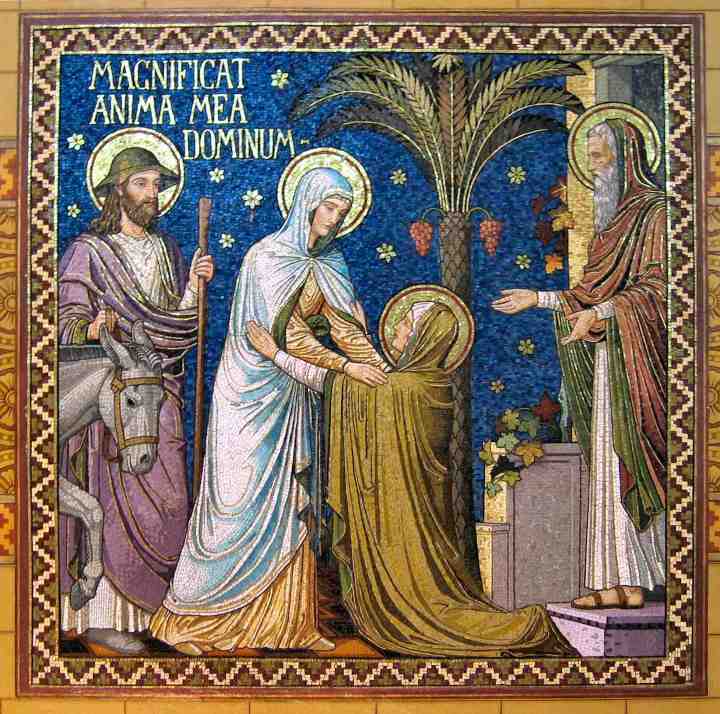
In this morning’s Gospel Mary does not tell Elizabeth that she is pregnant. By the power of the Holy Spirit, John the Baptist, the last of the prophets, announces the coming of the Saviour by leaping for joy in his mother’s womb. It’s important. There’s no time to waste: Mary arose and went with haste to see her cousin Elizabeth and tell her the Good News. Time is of the essence for us too: not for the frantic fulfilment of consumerism and the world around us: last-minute presents, or enough food to satisfy even the most gluttonous. No, we have to prepare our hearts, our minds, and our lives, so that Christ may be born again in US, so that we may live His life and proclaim his truth to the world.

Through the prompting of her son and the gift of the Holy Spirit, Elizabeth can cry ‘Blessèd are you among women, and blessèd is the fruit of your womb!’ Elizabeth recognises that Mary’s obedience, her humble ‘Yes’ to God undoes the sinfulness of Eve. That she who knew no sin might give birth to Him who would save us and all humanity from our sin. It is through the love and obedience of Mary that God’s love and obedience in Christ can be shown to the world, demonstrated in absolute perfection, when for love of us he opens his arms to embrace the world with the healing love of God on the Cross. He will be the good Shepherd, laying down his life for his flock that we may dwell secure. We prepare to celebrate Christmas because it points us to the Cross and beyond, in showing us once and for all that God loves us.

We honour Mary because in all things she points to her Son, Jesus. It’s not about her, it’s all about Him. We honour the Mother of God; we worship the Son of God. We worship Him who died for love of us, who gave himself, as the Lamb of God, that takes away the sins of the world, to die so that we might live. The process of salvation starts with a young woman being greeted by an angel, and saying, ‘Yes’ to God. Her cousin Elisabeth recognises this. Elizabeth’s son, John the Baptist, leaps in her womb. While not yet born, he recognises the presence of a Saviour, and proclaims Him. Our salvation is very close indeed. We can feel it. We know that God keeps His promises. We can prepare to celebrate the festival with JOY, because we know what is about to happen: a baby will be born who will save humanity from their sins, whom John the Baptist will recognise as the Lamb of God, who takes away the sins of the world.This is the Good news we share with the world around us: that God loves us, was born for us, and dies for us. Everything, all that Jesus is and says and does, from His taking flesh in the womb of His mother, His Birth, His life, Death and Resurrection proclaim God’s love to us:

Behold, the days are coming, declares the Lord, when I will fulfil the promise I made to the house of Israel and the house of Judah. In those days and at that time I will cause a righteous Branch to spring up for David, and he shall execute justice and righteousness in the land. In those days Judah will be saved, and Jerusalem will dwell securely. And this is the name by which it will be called: ‘The Lord is our righteousness.’” (Jeremiah 33:14-16 ESV)

For I know the plans I have for you, declares the Lord, plans for welfare and not for evil, to give you a future and a hope. Then you will call upon me and come and pray to me, and I will hear you. You will seek me and find me, when you seek me with all your heart.’ (Jeremiah 29:11-13 ESV)

So my dear brothers and sisters let us prepare to meet Him, living out our faith in our lives, and encourage others so to do. So that that the world may come to believe and give glory to God the Father, God the Son, and God the Holy Spirit, to whom be ascribed as is most right and just, all might, majesty, glory, dominion, and power, now and forever.

BVM-Visitation-web

Saturday, 10 March 2018

Lent IV – Mothering Sunday

Lent is a time of preparation. We prepare to celebrate the Death and Resurrection of Jesus by forty days of praying, fasting, and almsgiving. We recognise how we fall short of how God wants us to live our lives and we try, with God’s help, to repent, to turn away from sin , and to turn back to God. It is hard work, and so it is nice to have a chance to relax our disciples and emphasise joy and celebration. Today is such a day. We recognise this by wearing rose rather than purple, a lighter, more joyful colour. We have flowers, and we rejoice in the warmth of spring. Traditionally it was a chance to go back to your mother church, the church in which you were baptised, and thus to spend time with your family. Because of this it is often conflated with Mother’s Day, a celebration which began in America, and is of an entirely secular character.

The church, however, is used to adapting, and it is good to celebrate. We all have mothers, whether they are still with us, or not. They give birth to us, and hopefully show us love. Likewise, the Church is mother to us all: we find new life in her, through our baptism, and we become part of a greater family, where we are all brothers and sisters in Christ, where we are all part of one family. This identity is in fact the most important one we have, it is how God knows us. Like any relationship it can have its problems, but it is through our common baptism that we enter the church, and come to new life in Jesus Christ. So we give thanks for our mothers, who gave us life, and for the church which gives us new life.

In our Old Testament Reading this morning we see the birth of Samuel, the prophet, who would anoint David as King of Israel. His mother, Hannah, had longed for children, and promised that any children she had would be dedicated to the service of God. He does lead the people of Israel to worship God. He is a true prophet. Just like Sarah, the mother of Isaac, Rebekah, the mother of Jacob, Rachel, the mother of Joseph and Benjamin and Samson’s mother, we see women who long for children, women who trust God.

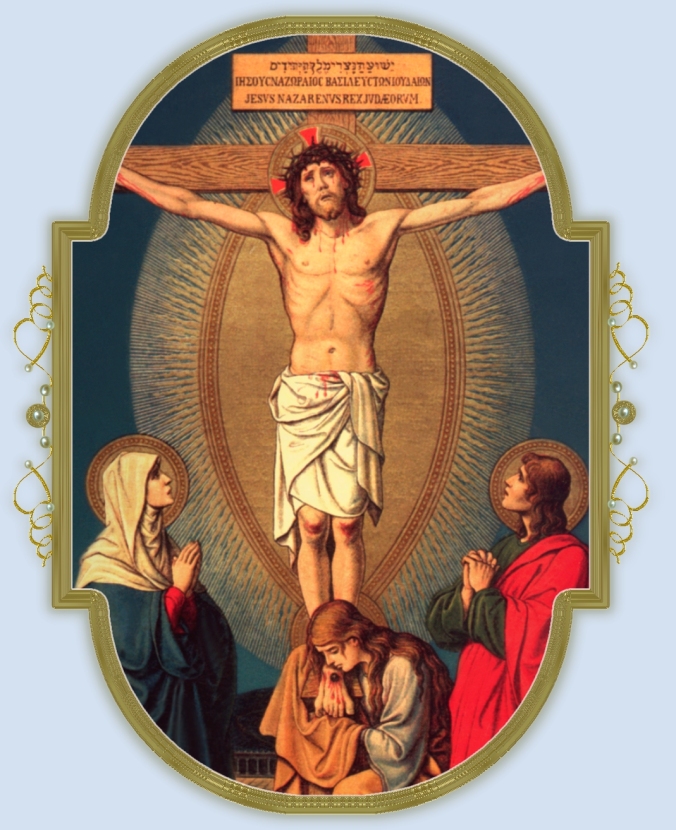
Likewise in the Gospel we see Mary at the foot of the Cross. As she watches her Son put to death , He entrusts her to a new family, with John, the Evangelist and Beloved Disciple as her Son. We honour her as the Mother of God, and as an example of Christian love in action. She lives a life which is obedient to God, regardless of the cost. She is a model for us to follow in trusting God, just like Hannah before her. As she watches her Son die, she knows the cost of love. Such is God’s love for us, and this is what we are preparing to celebrate – God’s love for us. Our human love helps us to understand this. Mary becomes a mother to John, the Evangelist, hers is a life characterised by love and care. It is a model for how the church SHOULD be ; a place of care, of love and support – we may fail in this, but we need to remember that the God whom we serve is one of love and forgiveness, He forgives us our sins, so that we might become more like Him.

In this morning’s Epistle we hear St Paul writing to the Church at Colossae. He encourages them to live Christ-like lives, living out their faith in their lives, so that other people may know who and what we are. We do this together, as a family, a Christian community, sharing the common task of bearing witness to the faith of our baptism. It takes effort on our part: we have to try to do it, but we are not alone in our efforts. God gives us the Church, so that we can do it together. We can meet together to pray, to read the Bible, and most importantly to celebrate the Eucharist together, so that we can be faithful to Our Lord Jesus Christ, who told us to DO THIS in memory of Him, so that we can be fed with the Body and Blood of Christ, fed BY Christ, and fed WITH Christ, so that We can become what He is. We can share in His life, and be transformed more and more into His likeness. This is our soul’s true food, the greatest medicine we could ever receive, the Bread of Eternal Life, and the Chalice of Everlasting Salvation. Christ dies for us, to show us what true love is, so that we can share in that love, and share that love with others. This is why we died in baptism and were raised to new life in Christ, to share in His Body and Blood, and to live that life out in the world, growing more and more into His likeness, to be prepared for Heaven where we might enjoy His love forever.

So let us come to Him, to be fed by Him, and with Him, to live lives of love, and encourage others so to do, so that all may give glory to the Father, the Son, and the Holy Spirit, to whom be ascribed as is most right and just, all might, majesty, glory, dominion, and power, now and forever…

sorrow5

Friday, 23 December 2016

A thought for the day from Fulton Sheen

Our own fiat

It makes no difference what you do here on earth; what matters is the love with which you do it. The street cleaner who accepts in God’s name a cross arising from his state of life, such a person is the scorn of his peers; the mother who pronounces her fiat to the Divine Will as she raises a family for the kingdom of God; the afflicted in hospitals who say fiat to their cross of suffering are the uncanonised saints, for what is sanctity but fixation in goodness by abandonment to God’s Holy Will?

Seven words of Jesus and Mary


Sunday, 18 December 2016

A thought for the day from Fulton Sheen

Abandonment to God

We always make the fatal mistake of thinking that it is what we do that matters, when really what matters is what we let God do to us. God sent the angel to Mary, not to ask her to do something, but to let something be done. Since God is a better artisan than you, the more you abandon yourself to him, the happier he can make you.

Seven Words of Jesus and Mary

bvm-visitation-web


Sunday, 21 December 2014

Advent IV Year B - Veni Emmanuel

We always make the fatal mistake of thinking that it is what we do that matters, when really what matters is what we let God do to us. God sent the angel to Mary, not to ask her to do something, but to let something be done. Since God is a better artisan than you, the more you abandon yourself to him, the happier he can make you.
Fulton J. Sheen Seven Words of Jesus & Mary
 
This morning, let me begin by asking you a question. How would you feel if one day a complete stranger turned up on your doorstep and told you something strange and unexpected? Surprised? Confused? Afraid? The fact that you are a teenage girl might well intensify these feelings. When you add to this the fact that the girl will conceive a child outside marriage something for which she could be stoned to death, according to the Law of Moses, the Gospel passage which we have just heard should strike us as odd, and unsettling – this isn’t how God is supposed to work, it isn’t supposed to be like this.
        It reminds us that biblical accounts of the interaction between God and humanity show us that ours is a God who takes risks. Mary could refuse, she could say no, and human history would be profoundly different. But instead, she says “Behold, I am the handmaid of the Lord; let it be to me according to your word.” It is through Mary saying yes to God, through her acceptance and obedience, that her son, our Lord Jesus Christ, the Saviour of the world, will be born.
As we come towards the end of our Advent journey, it is good to go back to where it all started, back to the account of the Annunciation to remind ourselves what we are celebrating at Christmas – the birth of a child, but not just any child, but rather Jesus Christ, the Son of God. He is born not in a royal palace, but in a stable, with straw for a bed, surrounded by livestock. While this scene is familiar, it should still strike us as something strange. It confounds our expectations; it isn’t what we think God would do. The greatest news in human history is a teenage pregnancy – something shameful, disgraceful even, is how God saves us.
In this morning’s Old Testament Reading we see King David concerned that he is living in a house built of fragrant cedar wood while the ark of God stays in a tent. Yet while Israel journeyed to the Promised Land, the ark, God’s presence among His people was in a tabernacle, without a permanent home. It reminds us both of a verse in the Prologue of John’s Gospel: (Jn 1:14) ‘And the Word became flesh and dwelt among us’ the word translated ‘dwelt’ actually means ‘pitched a tent’ which sees the New Covenant prefigured in the Old. God pitches his tent in the womb of a young girl, so that He might come and save us. He continues to dwell with us in tabernacles and aumbries in our churches, where His Body and Blood, under the outward forms of bread and wine, feed His pilgrim people, like manna in the desert, food for our journey of faith, so that we might become what he is, so that we might have a foretaste of heaven – this is what it is all about.
The key to it all, as St Paul reminds the Church in Rome is ‘the obedience of faith’ (Rom 16:26) – Mary listens to God, she says ‘yes’, she trusts, she has faith, and through this faith and trust our salvation is brought about.

So, as we prepare to remember the story of God's love for humanity, may we continue to be struck by its strangeness, and in the confusion may we remember that it is brought about by Mary's acceptance, and her trust in God. May we like Mary say yes to God, welcome him into our hearts, and show forth his love to the world. 

Sunday, 2 February 2014

Homily for Candlemas

Today the Church celebrates the Presentation of Christ in the Temple, also known as the Purification of the Blessed Virgin Mary and commonly called Candlemas. We are not quite so used to ideas of ritual purity inherent in the Thanksgiving for a woman after Childbirth, which used to be described as the Churching of Women. The Holy Family go to the Temple to give thanks to God and to comply with the Law: they demonstrate obedience, they listen to what God says and do it – as such they are a model for all Christian families to follow.
            When they go to the Temple the Holy Family encounter Simeon, a man of faith and holiness, devoted to God, and looking for the consolation of Israel, he knows that he will not die until he sees the Messiah, the Lord’s Anointed, and the Saviour of the World. As he takes the child Jesus in his arms he prays ‘Lord, now lettest thou thy servant depart in peace : according to thy word. For mine eyes have seen : thy salvation, Which thou hast prepared : before the face of all people; To be a light to lighten the Gentiles : and to be the glory of thy people Israel.’ The promise made to him by, revealed through His Holy Spirit has been fulfilled in the six-week-old infant in his arms. As Christ was made manifest to the Gentiles at Epiphany, so now His saving message is proclaimed, so that the world may know that its salvation has come in the person of Jesus Christ. Simeon speaks to Our Lord’s Mother of her Son’s future, and the pain she will endure. Before he dies Simeon is looking to the Cross, the means by which our salvation is wrought, the Cross at which Mary will stand to see humanity freed from its sin through the love and mercy of God, through grace, the free gift of God in Christ. So as Candlemas concludes our Celebration of Christmas, of the mystery of the Incarnation, so to it points to that which gives it its true meaning: the Death and Resurrection of Jesus Christ.
            That is why we are here this morning, to be fed by Christ, to be fed with Christ, truly present in His Body and Blood, Soul and Divinity – God whom we can touch and taste. A God who shares His Divine Life with us, so that we can be transformed by Him, built up as living stones as a temple to His Glory, given a foretaste of Heaven here on Earth. This is our soul’s true food, the bread for the journey of faith, a re-presentation of the sacrifice which sets us free to live for Him, to live with Him, through Him and in Him.
            The significance of what is happening is not just recognised by Simeon, but also by Anna, a holy woman, a woman of prayer, a woman who is close to God – she to recognises what God is doing in Christ, and she proclaims it, so that God’s redemption of His people may be known. Let us be like her, and let all of our lives, everything which we say, or think, or do, proclaim the saving truth of God’s love to the world. Let us burn, like the candles which God has blessed to give light and warmth to the world, so that it may believe and give glory to God the Father, God the Son, and God the Holy Spirit, to whom be ascribed as is most right and just all might, majesty, glory, dominion, and power, now and forever.


Saturday, 30 November 2013

Something to ponder in Advent

“If you have never before prayed [with] Mary, do so now. Can you not see that if Christ himself willed to be physically formed in her for nine months and then spiritually formed by her for thirty years, it is to her that we must go to learn how to have Christ formed in us?”
Fulton Sheen, Seven Words of Jesus and Mary,Garden City NY 1953

Saturday, 3 August 2013

Homily for the Eighteenth Sunday of Year C: A Sermon about Stuff


The poor in spirit are those who are so detached from wealth, from social position, and from earthly knowledge that, at the moment the Kingdom of God demands a sacrifice, they are prepared to surrender all.
Fulton J Sheen The Cross and the Beatitudes, 1937: 54
There is a profound difference in quality between the possessions that we need and use, and actually enjoy, and the accumulation of useless things that we accumulate out of vanity or greed or the desire to surpass others
Fulton J Sheen Way to Happiness, 1954: 45

The world around us tells us constantly that if you want to be happy, to be yourself fully and most really then what you need is more stuff: a new car, a mobile phone. It’s the latest model – it’s been improved, you can’t do without it! The world tells us this and we listen, we take it in and we do what it says. We all of us do this, I’ve done it myself. It says you can have what you want TODAY, we’ll even lend you the money for it and charge you an interest rate which is usurious and wrong. It will make you and your family happy, in a way that nothing else can.
Nothing could, in fact, be further from the truth. Salvation by stuff has never and will never work. It leaves us empty, craving more and more, never satisfied. Hence Our Lord’s teaching in this morning’s Gospel: ‘Take care, and be on your guard against all covetousness, for one’s life does not consist in the abundance of possessions.’ (Lk 12:15) Wanting more stuff is never a good idea; Our Lord tells us this and warns us against it, and we do not listen.
So He tells us a parable – there’s a man who’s got loads of stuff, he’s well-off in worldly terms, he has done well. All he’s interested in is keeping his stuff, building bigger barns into which to put stuff, so that he can sit back, and relax and take life easy.
Then he dies, quite suddenly, and learns that important lesson: you can’t take it with you when you go – you can’t put pockets in your shroud, and when you are dead then stuff doesn’t really help you. It may buy you a swankier funeral, a more expensive coffin, a more expensive hearse to transport your dead body, but basically you are dead, and even if you spend thousands of pounds having your head frozen in liquid nitrogen, you are still dead. Money and stuff can’t help you with that. It has never been able to, nor will it. So Our Lord encourages us to be rich towards God, and to turn away from the world and its vanity.
In St Paul’s letter to the Colossians, just after this morning’s second reading finishes we read this:
 Put on then, as God's chosen ones, holy and beloved, compassionate hearts, kindness, humility, meekness, and patience, bearing with one another and, if one has a complaint against another, forgiving each other; as the Lord has forgiven you, so you also must forgive. And above all these put on love, which binds everything together in perfect harmony. And let the peace of Christ rule in your hearts, to which indeed you were called in one body. And be thankful. Let the word of Christ dwell in you richly, teaching and admonishing one another in all wisdom, singing psalms and hymns and spiritual songs, with thankfulness in your hearts to God. And whatever you do, in word or deed, do everything in the name of the Lord Jesus, giving thanks to God the Father through him.’ (Col 3:12–17)
This is the life which stores up treasure in heaven, when we have ‘Set our minds on things that are above, not on things that are on earth’ (Col 3:2) This is what a Christian life really looks like, when lived out in the world. This is the sort of radically different life which can and does both change and transform the world: offering it a way that is different to the way of stuff. It is the way of love and forgiveness, of knowing that as Christians that we are loved and forgiven, no matter who we are or what we’ve done. That we can be a community which lives out this radical love and forgiveness in the world to offer it a new way of being, which turns the ways and values of the world on its head. It is that radical, that revolutionary, and that revolution has to start right here and today. We are listening to Our Lord speaking to us through His Scriptures; he calls us to live this life for our own good and the glory of the God who made us, the God who loves us, and the God who saves us: to be free from the tyranny of stuff and sin, and to live for him.
This then is what the Church is meant to look like, and be, and live out in the world, like a lamp set upon a lamp stand or a city upon a hill, shining, attractive, a light amidst the darkness of this world, a radical alternative, life in all its fullness. So let’s live it, together.
That is why we have come here, today, to be fed in word and sacrament, to be fed by God, to be fed with God, with His Body and Blood and His Word, so that it may nourish us and prepare us for heaven, so that it can transform our human nature and fill us with the Divine life of love and forgiveness, which we can start living out here and now and change all the world, so that it may believe and be transformed to sing the praise of God the Father, God the Son, and God the Holy Spirit, to whom be ascribed as is most right and just all might, majesty, glory, dominion, and power, now and forever.