Showing posts with label Confession. Show all posts

Sunday, 25 August 2019

Twenty first Sunday of Year C

There are times when Jesus’ words in the Gospel make us feel uncomfortable and uneasy. But this isn’t necessarily a bad thing. Our faith should challenge us. Challenge us to follow Christ. Challenge us to live out our faith in our lives. This isn’t easy. Quite the opposite. It is hard work, but then anything worthwhile usually is. It takes effort. And yet the effort on our part is as nothing compared to that of God, who sent His Son to be born for us, and to show us how to live. Jesus demonstrates the Love of God in action, to show us how to live lives of radical generosity.

The prophet Isaiah has a vision of a future which sees a God who knows us and loves us. He gathers the people of the world together, so that they may see God’s glory. As Christians, we believe that this points forward to Jesus Christ, who is the Word made flesh, the true demonstration of God’s glory in the world. He will show that glory most fully on the Cross, when He suffers and dies for humanity, to take away our sin. This is the sign God sets among us, so that the Church may declare God’s glory among the nations. 

Declaring God’s glory is the prophetic aspect of the church — sharing the Good News. With it comes a commitment to holiness of life, so that our words and actions are in tune with each other. We cannot succeed in this by our own strength or efforts. Instead we must rely upon God’s grace. We should humbly acknowledge our need for God. Only God can transform us. Only God can forgive our sins, our failures and shortcomings. Through grace God can transform us, more and more into His likeness. 

This recognition of our limitations and failings opens up a space where God can be at work in our lives, transforming us to live the Divine life of Love. This is the narrow door of this morning’s gospel: narrow because if we have a sense of our own self-importance or our worth which is too large then we cannot enter –- our sense of who and what we are gets in the way. It’s not enough to have eaten and drunk in God’s presence, to have been around when he taught in our streets.–It is a question of engagement. We are challenged to ask ourselves, ‘Am I a bystander or have I been fed by God? By the grace of the sacrament am I living out the love of God in my life? Have I been there when the Gospel has been taught? Have I both listened to it and lived it out in my life?’

These are not simple things to do. It is easier to coast along and take the easy options. That is why we meet together to encourage and support each other. That’s after all what the Church is for. We are a collection of sinners trying to live in response to the love of God which has been poured out on each of us. It is something which we need to do together — loving each other, loving our enemies, living out forgiveness as we have been forgiven and loved by God. This is a radically different way of life to that which the world encourages us to practise. It can be really difficult, and we will fail at it, but that’s alright! The point is not that we fail and give up, but that we keep trying, loving and forgiving, together, and become built up as the body of Christ, humble enough to let God be at work in us. He, by His Grace will transform our nature and make us the people of God, able to live out His out his love in our communities.

We have come here today to be fed by Word and Sacrament, to be nourished by God, and with God. In order to ‘recline at table’ as the Gospel puts it, we need to have false ideas of who and what we are stripped away. We need to recognise our dependence upon God, and each other, to help us to live out our faith –- to grow in holiness together as the people of God, loved, healed, and restored by Him. This is the only way that we can transform the world that it reflects more fully the great glory of God. The Gospel really is this radical, it’s not nice, or comfortable, it’s challenging and difficult, and utterly wonderful. It is Good News which releases people from the slavery of this world and all its false ideas, to live in the freedom and love of God.

We just have to look to Jesus and to His Cross to see God’s love for us. What is shameful in the eyes of the world, we can see as glorious — true love which gives regardless of the cost,, which heals and restores broken sinful humanity, which gives us the hope of new life in heaven. This is grace, the free gift of God, who shared our humanity so that we might share His divinity, and be strengthened by Word and Sacrament to live out our faith.

Living out our faith will be hard: the world will mock us and our feeble attempts to follow God. Yet, we believe in a God who loves us, and who would never belittle our feeble efforts to follow Him. So may the fire of God’s love be kindled in our hearts and lives, that we may be ablaze for Him, aflame with love for God and neighbour, love our enemies and our friends, and lets us change the world, not just this village, or this county, but all of God’s creation, all of humanity, that they may know God’s love and that it may rule in their hearts and lives.

So let us hasten to enter through the narrow gate, so that God may continue to transform our human nature, that His saving love and power may be at work in our hearts and our lives, so that we may be transformed with all the world, so that it may believe and sing the praise of God the Father, God the Son, and God the Holy Spirit, to whom be ascribed as is most right and just all might, majesty, glory, dominion, and power, now and forever. Amen. 

cropped-velazquezcrucifxion.jpg

Twenty first Sunday of Year C

There are times when Jesus’ words in the Gospel make us feel uncomfortable and uneasy. But this isn’t necessarily a bad thing. Our faith should challenge us. Challenge us to follow Christ. Challenge us to live out our faith in our lives. This isn’t easy. Quite the opposite. It is hard work, but then anything worthwhile usually is. It takes effort. And yet the effort on our part is as nothing compared to that of God, who sent His Son to be born for us, and to show us how to live. Jesus demonstrates the Love of God in action, to show us how to live lives of radical generosity.

The prophet Isaiah has a vision of a future which sees a God who knows us and loves us. He gathers the people of the world together, so that they may see God’s glory. As Christians, we believe that this points forward to Jesus Christ, who is the Word made flesh, the true demonstration of God’s glory in the world. He will show that glory most fully on the Cross, when He suffers and dies for humanity, to take away our sin. This is the sign God sets among us, so that the Church may declare God’s glory among the nations. 

Declaring God’s glory is the prophetic aspect of the church — sharing the Good News. With it comes a commitment to holiness of life, so that our words and actions are in tune with each other. We cannot succeed in this by our own strength or efforts. Instead we must rely upon God’s grace. We should humbly acknowledge our need for God. Only God can transform us. Only God can forgive our sins, our failures and shortcomings. Through grace God can transform us, more and more into His likeness. 

This recognition of our limitations and failings opens up a space where God can be at work in our lives, transforming us to live the Divine life of Love. This is the narrow door of this morning’s gospel: narrow because if we have a sense of our own self-importance or our worth which is too large then we cannot enter –- our sense of who and what we are gets in the way. It’s not enough to have eaten and drunk in God’s presence, to have been around when he taught in our streets.–It is a question of engagement. We are challenged to ask ourselves, ‘Am I a bystander or have I been fed by God? By the grace of the sacrament am I living out the love of God in my life? Have I been there when the Gospel has been taught? Have I both listened to it and lived it out in my life?’

These are not simple things to do. It is easier to coast along and take the easy options. That is why we meet together to encourage and support each other. That’s after all what the Church is for. We are a collection of sinners trying to live in response to the love of God which has been poured out on each of us. It is something which we need to do together — loving each other, loving our enemies, living out forgiveness as we have been forgiven and loved by God. This is a radically different way of life to that which the world encourages us to practise. It can be really difficult, and we will fail at it, but that’s alright! The point is not that we fail and give up, but that we keep trying, loving and forgiving, together, and become built up as the body of Christ, humble enough to let God be at work in us. He, by His Grace will transform our nature and make us the people of God, able to live out His out his love in our communities.

We have come here today to be fed by Word and Sacrament, to be nourished by God, and with God. In order to ‘recline at table’ as the Gospel puts it, we need to have false ideas of who and what we are stripped away. We need to recognise our dependence upon God, and each other, to help us to live out our faith –- to grow in holiness together as the people of God, loved, healed, and restored by Him. This is the only way that we can transform the world that it reflects more fully the great glory of God. The Gospel really is this radical, it’s not nice, or comfortable, it’s challenging and difficult, and utterly wonderful. It is Good News which releases people from the slavery of this world and all its false ideas, to live in the freedom and love of God.

We just have to look to Jesus and to His Cross to see God’s love for us. What is shameful in the eyes of the world, we can see as glorious — true love which gives regardless of the cost,, which heals and restores broken sinful humanity, which gives us the hope of new life in heaven. This is grace, the free gift of God, who shared our humanity so that we might share His divinity, and be strengthened by Word and Sacrament to live out our faith.

Living out our faith will be hard: the world will mock us and our feeble attempts to follow God. Yet, we believe in a God who loves us, and who would never belittle our feeble efforts to follow Him. So may the fire of God’s love be kindled in our hearts and lives, that we may be ablaze for Him, aflame with love for God and neighbour, love our enemies and our friends, and lets us change the world, not just this village, or this county, but all of God’s creation, all of humanity, that they may know God’s love and that it may rule in their hearts and lives.

So let us hasten to enter through the narrow gate, so that God may continue to transform our human nature, that His saving love and power may be at work in our hearts and our lives, so that we may be transformed with all the world, so that it may believe and sing the praise of God the Father, God the Son, and God the Holy Spirit, to whom be ascribed as is most right and just all might, majesty, glory, dominion, and power, now and forever. Amen. 

cropped-velazquezcrucifxion.jpg

Saturday, 27 April 2019

Easter II [Acts 5:27-32, Revelation 1:4-8, Jn 20:19-31]

In this morning’s first reading Saint Peter and the apostles are told by the authorities not to preach in the name of Jesus. Naturally, it is impossible for them to do this; they simply have to tell the world about Him and His Resurrection. They do this so that the gospel may be proclaimed: the gospel of repentance and forgiveness of sins through Christ. To be a Christian is to turn away from the ways of sin, the ways of the world — we are obedient to God, we hear what he is said in Christ and we obey him. The Church, then, must always be on its guard lest it ceases to be obedient to God and turns instead to the ways of the world, the ways of humanity. As St Paul says in his Letter to the Romans ‘be not conformed to this world’. It is a difficult thing to do. It is hard. It takes strength of character and confidence, and it will not be popular. But just as the apostles rejoiced that they were counted worthy to suffer dishonour for the name, and did not cease teaching and preaching Jesus Christ, so the Church is always called to do the same: to risk persecution, and to speak the uncomfortable truth which the world does not want to hear. This is our calling. 

When the disciples are sat in a locked room, afraid of persecution Christ comes among them and says, ‘Tangnefedd i chwi’ ‘Peace be with you’. Christ comes to give them peace. He gives them a peace which the world cannot give, because it is not of this world. The peace Christ which comes to give us is the peace won on the Cross, which has reconciled God and humanity. This wonderful relationship leads to the disciples being sent, as Christ was, to proclaim the Good News of the Kingdom, and of new life in Christ. Christ empowers His Apostles with the Holy Spirit, to forgive sins, and carry on Christ’s work of reconciliation. The church exists to do just this, to proclaim and reconcile, to carry on Christ’s work in the world in the power of the Holy Spirit.

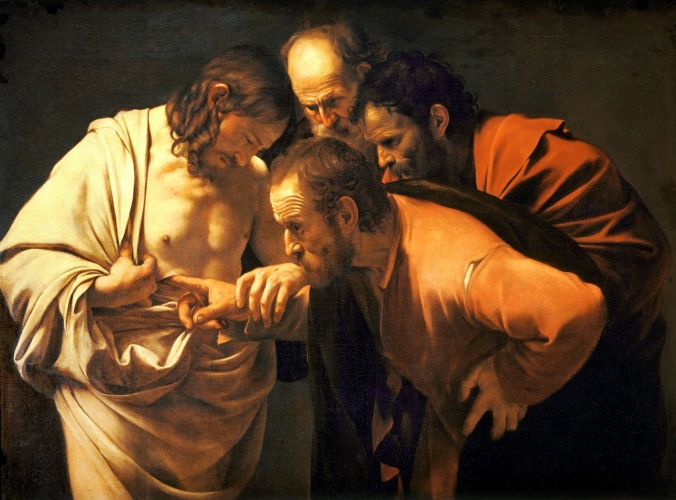
All of us can, I think, understand Thomas’ frustration at not being there. It isn’t that he doubts, he wants to believe, and to experience the reality of his Risen Lord, and not to be left out. It’s a very human reaction. So when Jesus is with them again on Sunday, He greets them with Peace, and offers his hands and side to Thomas. He gives Thomas what he wants, proof that it is really Jesus, that he has truly risen from the dead. When faced with the reality of the Risen Jesus, Thomas can only say, ‘My Lord and My God’. Thomas confesses that Jesus is Lord and God, the sole supreme authority, above anything of this world. He worships God in Christ. We do the same, and we are blessed because we have not seen and yet believe. We believe because of the witness of Thomas, and others, down through the centuries, who have proclaimed the Good News of Jesus Christ, even at great personal cost. As St Peter and the apostles said, ‘We must obey God rather than men’ (Acts 5:29 ESV) Christians around the world follow their lead, and to this day face imprisonment, torture, and death, for their belief in Christ. They do so gladly, because of who Christ is, and what He has done. We may not face suicide bombers in our churches, thank God. But we are no less resolved to bear witness to Christ. We may be ignored by the world around us, but we carry on bearing witness to the love and reconciliation which Christ brings, and which nothing else can. We continue, ‘so that you may believe that Jesus is the Christ, the Son of God, and that by believing you may have life in his name’ (John 20:31 ESV) Christ comes to bring us life, in His Incarnation, in His Life and Preaching, and in His Death and Resurrection. He gives us His Life, through our Baptism, and through the Eucharist. We are united with Christ, and transformed by Him, to live His life in the world, filled with His Holy Spirit. This is good news, which we long to share with others, so that they may come to know Christ, and experience His Love. The Church exists to deal with the mess we make as human beings, through what Jesus has done for us, in the power of His Holy Spirit. The Church is to be a community of reconciliation, where we are forgiven and we, in turn, forgive. It is to be a place where we are freed from sin, its power and its effects.

The disciples go from being scared and stuck in an upper room to missionaries, evangelists, spreading the Good News around the world, regardless of the cost, even of sacrificing their own lives to bear witness to the fact that Jesus Christ is the Son of God, that he died for our sins, and that he rose again, on this day for us, that God loves us and tells us to love Him and to love one another. It is a simple and effective message which people still want to hear — we need to tell it to them, in our thoughts, our words and our actions.

The heart of our faith and the Gospel is forgiveness — no matter how many times we mess things up, we are forgiven. It is this reckless generosity of spirit which people find hard to believe that they too can be forgiven, by a loving God, and by their fellow Christians. That we can, despite our manifold shortcomings be a people of love, and forgiveness, and reconciliation. That God’s Grace will in the end not abolish our nature, but perfect it, that being fed by Christ, with Christ: so that we too may become what He is. That faced with the sad emptiness of the world, and its selfishness, its greed, we can be filled with joy, and life, and hope. That like the first apostles we too can spread the Gospel: that the world may believe.

So let us be filled with the joy of the Resurrection this Easter, let us share that joy with others, may it fill our lives and those of whom we meet with the joy and love of God, who has triumphed and who offers us all new life in Him, that all that we do, all that we are, all that we say or think may give glory to God the Father, God the Son, and God the Holy Spirit, to whom be ascribed as is most right and just, all might, majesty, dominion and power, now and forever.

7ec0d-the_incredulity_of_saint_thomas-caravaggio_1601-2

Saturday, 7 April 2018

Easter II

I have something of a confession to make: I’m a bit of a fan of St Thomas the Apostle, probably because it is my middle name, but I’ve always felt something of an affinity towards him. He is somewhat hard done by, and on the basis of this morning’s Gospel reading he is generally known as ‘Doubting Thomas’ which is something of a misnomer. If anything he should really be understood as ‘Believing Thomas’ but more about that in a minute.

None of us likes to feel left out, it crushes the soul. We’ve all experienced it at some point in our lives, and it is painful. Imagine the joy the disciples felt when Jesus appears to them on that first Easter Day. He gives them peace, and commissions them, sends them out, to be apostles, to proclaim the Good News to the world. When Jesus begins his public ministry He calls on people to repent from their sins, to turn away from them. Now that He has died for us and been raised from the dead, He commissions his apostles to forgive or retain sin. The Church exists to deal with the mess we make as human beings, through what Jesus has done for us, in the power of His Holy Spirit.

Thomas feels somewhat left out of it all. He wants to believe, but he needs to see with his own eyes, he doesn’t yet have Faith. So, a week later Jesus comes again and shows Thomas His hands and His side, the wounds of love, which take away our sin. He commands ‘Do not doubt, but believe’ and Thomas does. He says, ‘My Lord and my God!’ He confesses his belief in Jesus as Lord and God. He makes a radical statement of belief in WHO and WHAT Jesus is. He is our Lord and our God, our allegiance to Him is more important than anything else. It was this fact which caused the death of thousands of Christians over the next few hundred years. We are all used to seeing pictures of Queen Elizabeth, in homes, schools, and public buildings. Imagine for a second that had to kneel down in front of them and worship the Head of State as a god, offering prayer and incense. To us as Christians it is unthinkable — worship is something we give to God alone ‘I am the Lord your God, who brought you up out of the land of Egypt, out of the house of bondage. You shall have no other gods beside me.’ (Exodus 20:1-2). We worship Jesus because He is God. Like St Thomas we kneel before him, and confess that He is Our Lord and our God, our Saviour, who LOVES us. The world around us may find this strange, that we make such a declaration, and we are not going to compromise over it.

The Cross had asked the questions; the Resurrection had answered them…. The Cross had asked ‘Why does God permit evil and sin to nail Justice to a tree?’ The Resurrection answered: ‘That sin, having done its worst, might exhaust itself and thus be overcome by Love that is stronger than either sin or death.’

Thus there emerges the Easter lesson that the power of evil and the chaos of the moment can be defied and conquered, for the basis of our hope is not in any construct of human power but in the power of God, who has given to the evil of this earth its one mortal wound—an open tomb, a gaping sepulchre, an empty grave.

Fulton J. Sheen Cross-Ways

This morning as we rejoice in the joy of the Risen Lord, as we are filled with joy, with hope and with love, we can reflect on what the Resurrection does: when Jesus comes and stands among the disciples he says ‘Peace be with you’ Christ’s gift to the world in His Death and Resurrection is Peace, the Peace ‘which passes all understanding’. He shows the disciples His hands and side so that they can see the wounds of love, through which God’s Mercy is poured out on the world to heal it and restore it. In this peace Christ can say to them ‘As the Father sent me, so I send you’ as the baptised people of God, filled with the Holy Spirit, the Church is to be a missionary community — one sent to proclaim the Good News of Jesus Christ to the world, that it may share the joy and life of the Risen Lord.

As well as giving the Apostles the Holy Spirit, ordaining them as the first bishops of the Church, we see that the power of the Cross to bring peace to the world is also the power to absolve sins — priests and bishops can absolve the people of God in God’s name, and by God’s power — this is what the Cross achieves — reconciling us to God and each other. The Church, then, is to be a community of reconciliation, where we are forgiven and we, in turn, forgive, where we are freed from sin, its power and its effects.

When Christ breathes on the disciples and says ‘Receive the Holy Spirit’ it is this gift of God’s Holy Spirit which transforms them from frightened people sat in a locked room in fear into the confident, joyous proclaimers of the Gospel, such as Peter in his sermon to the people of Jerusalem. In Peter’s sermon we see that all that Christ is and does is confirmed by Scripture — it is the fulfilment of prophesy, such as we find in Isaiah 25:6-9:

On this mountain the Lord of hosts will make for all peoples a feast of rich food, a feast of well-aged wine, of rich food full of marrow, of aged wine well refined. And he will swallow up on this mountain the covering that is cast over all peoples, the veil that is spread over all nations. He will swallow up death for ever; and the Lord God will wipe away tears from all faces, and the reproach of his people he will take away from all the earth, for the Lord has spoken. It will be said on that day, ‘Behold, this is our God; we have waited for him, that he might save us. This is the Lord; we have waited for him; let us be glad and rejoice in his salvation.’

As the Church we know that Jesus is the Messiah, the one who gives freedom to Israel, a freedom from sin — a bringing to completion of what God started in the Exodus, in the crossing of the Red Sea — we too are free, freed by the waters of baptism, sharing in Christ’s Death and Resurrection.

Thomas was not present with the disciples, he cannot believe in the reality of Jesus’ Resurrection unless he sees with his own eyes, and feels with his own hands — such is his grief, such is his love for Jesus. Our Lord says to him, ‘Doubt no longer but believe’ which leads to his confession, ‘My Lord and my God’. Blessed are we who have not seen and yet have come to believe, and through this belief we have live in Christ’s name, we have the hope of eternal life and joy with him forever.

The disciples go from being scared and stuck in an upper room to missionaries, evangelists, spreading the Good News around the world, regardless of the cost, even of sacrificing their own lives to bear witness to the fact that Jesus Christ is the Son of God, that he died for our sins, and that he rose again, on this day for us, that God loves us and tells us to love Him and to love one another. It is a simple and effective message which people still want to hear — we need to tell it to them, in our thoughts, our words and our actions.

The heart of our faith and the Gospel is forgiveness — no matter how many times we mess things up, we are forgiven. It is this reckless generosity of spirit which people find hard to believe that they too can be forgiven, by a loving God, and by their fellow Christians. That we can, despite our manifold shortcomings be a people of love, and forgiveness, and reconciliation. That God’s Grace will in the end not abolish our nature, but perfect it, that being fed by Christ, with Christ: so that we too may become what He is. That faced with the sad emptiness of the world, and its selfishness, its greed, we can be filled with joy, and life, and hope. That like the first apostles we too can spread the Gospel: that the world may believe.

It’s a tall order, perhaps, but one which God promises us. That is what the reality of the Resurrection is all about, it’s either nothing, in which case we are the most pitiable of deluded fools — idiots who are more to be pitied than blamed, or it is the single most important thing in the world. It should affect all of us, every part of our life, every minute of every day, all that we do, all that we say, all that we are. This may not fit in with a reserved British mentality, we think we’re supposed to be polite and not force our views on others. But this simply will not do. We are, after all, dealing with people’s souls, their eternal salvation, it’s a serious matter. And what we offer people is entirely free, can change their lives for the better, and make life worth living.

So let us be filled with the joy of the Resurrection this Easter, let us share that joy with others, may it fill our lives and those of whom we meet with the joy and love of God, who has triumphed and who offers us all new life in Him, that all that we do, all that we are, all that we say or think may give glory to God the Father, God the Son, and God the Holy Spirit, to whom be ascribed as is most right and just, all might, majesty, dominion and power, now and forever.

7ec0d-the_incredulity_of_saint_thomas-caravaggio_1601-2

Sunday, 4 March 2018

Lent III – The Cleansing of the Temple

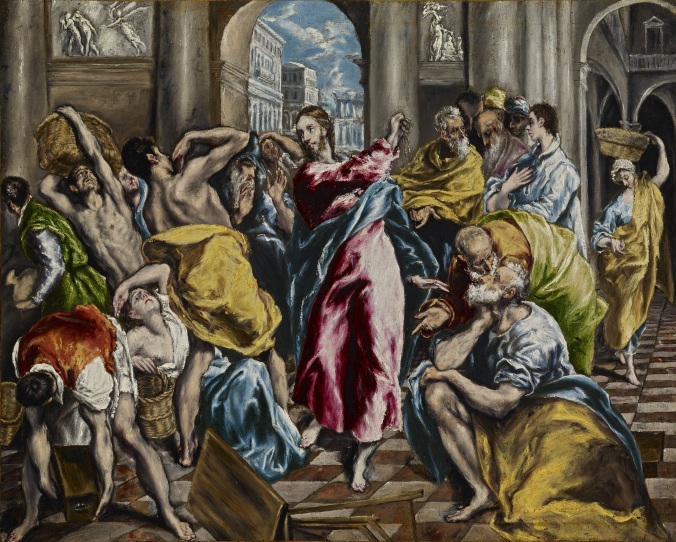
It is hard for us to imagine, but for Jews in Jesus’ day, the Temple was the most important building in the world. It was the religious centre of Israel, a busy place, where devout Jews and others came to pray, to be near God. In this morning’s Gospel we see Jesus in quite an uncompromising mood: this is no ‘Gentle Jesus, meek and mild’ but rather here is the righteous anger of the prophets, a sign that all is not well in the world. Sin separates us from God and each other, it isn’t how we’re supposed to be.

When Moses receives the Ten Commandments from God on Mt Sinai the first is, ‘I am the Lord your God, who brought you out of the land of Egypt, out of the house of slavery; you shall have no other gods before me.’ Could it be that the temple traders, in their desire to profit from people’s religious observance, have broken this first and most important commandment? Has their desire for making money, for profit got in the way of what the Temple is supposed to be about: namely, worshipping God? It’s become a racket, a money-making scheme to fleece pilgrims who have come from far away and who do not have the right money or the correct sacrificial animals with them. This is no way to worship God, a God who loves us, and who showed that love by delivering Israel from slavery in Egypt.

The temptation to have power, to be concerned above all else with worldly things: money, power, success, and influence, are still a huge temptation for the Church and the world. We may not mean to, but we do, and while we think of God as loving and merciful, we forget about righteous anger, and our need to repent, to turn away from our sins — the desire to control others and to be so caught up on the ways of the world that we lose sight of who and what we are, and what we are supposed to do and be. This is why we have the season of Lent to prepare ourselves, and to repent.

The Jews demand a sign, and Christ prophesies that if they destroy this temple then he will raise it up in three days: He looks to His death and resurrection to show them where true worship lies — in the person of Jesus Christ. Christians should be concerned with a relationship, our relationship with God, and with each other. Likewise Christians can all too easily forget that Jesus said, ‘I have come not to abolish the law and the prophets but to fulfil them’. The Ten Commandments are not abolished by Christ, or set aside, but rather His proclamation of the Kingdom and Repentance show us that we still need to live the Law of Moses out in our lives: to show that we honour God and live our lives accordingly. In His cleansing of the Temple, Christ looks to the Cross and to the Resurrection, He shows how God will restore our relationship. The Cross is a stumbling-block to Jews, who are obsessed with the worship of the Temple, and it is foolishness to Gentiles who cannot believe that God could display such weakness, such powerlessness. Instead the Cross, the supreme demonstration of God’s love for us, shocking and scandalous though it is, is a demonstration of the utter, complete, self-giving love of God, for the sake of you and me — miserable sinners who deserve condemnation, but who instead are offered love and mercy to heal us and restore us.

When we are confronted with this we should be shocked — that God loves us enough to do this, to suffer dreadfully and die for us, to save us from our sins, and from the punishment that is rightly ours. We do not deserve it, and that’s the point. But we are offered it in Christ so that we might become something other and greater than we are, putting away the ways of the world, of power and money, selfishness and sin, to have new life in and through Him.

‘In a higher world it is otherwise, but here below to live is to change, and to be perfect is to have changed often.’ [J.H. Newman, An Essay on the Development of Christian Doctrine (1845) Ch.1, §1 Part 7] If we are changing into Jesus Christ, then we’re on the right track. If we listen to His word in Scripture; if we talk to him in prayer and let him talk to us; if we’re fed by Him and with Him in the Eucharist, by Christ who is both priest and victim, so that we might become what He is – God. If we’re forgiven by Him, through making confession of our sins, not only do we come to understand Jesus, we become like him, we come to share in his divine nature, you, me, all of humanity ideally. We, the People of God, the new humanity, enter into the divine fullness of life, we have a foretaste of the heavenly banquet — we are prepared to enter the new life of the Kingdom, and to live it.

Lent should be something of a spiritual spring clean, asking God to drive out all that should not be there, preparing for the joy of Easter, to live the Risen Life, filled with God’s grace. In our baptism we died with Christ and were raised to new life in the Spirit. Let us prepare to live that life, holding fast to Our Lord and Saviour, clinging to the teachings of his body, the Church. Let us turn away from the folly of this world, the hot air, and focus on the true and everlasting joy of heaven, which awaits us, who are bought by his blood, washed in it, fed with it. Let us proclaim it in our lives so that others may believe so that all may praise the Father, the Son and the Holy Spirit, to whom be ascribed as is most right and just, all might, majesty, glory, dominion, and power, now and forever…

el_greco_-_the_purification_of_the_temple_-_wga10541

Sunday, 10 December 2017

Advent II Mark 1:1-8

If you ask children and young people today what they want to be when they grow up most will now answer that they want to be famous, they want to be a celebrity, not famous for being something, just famous. Such isthe power of the modern idea of celebrity, people famous for being famous. Such is the world in which we live: shallow, skin-deep, concerned with self above all else, selfish, self-absorbed, and sinful.

In the beginning of Mark’s Gospel we see Jesus’ cousin, John the Baptist, someone who has clearly got something of a reputation: people are coming from all over Judaea to hear him preach. John does not use this as an opportunity for his own glorification, but rather points to the one who is to come after him, the Messiah, Jesus Christ. Unlike celebrities who point to themselves John the Baptist points to another – it’s all about Him, not me. This is humility in action – being firmly rooted and knowing your need for God.

Advent is a season of penitence and preparation, saying sorry and getting ready. Recognising that we fall short of what God expects of us, and yet also remembering that He is a God of love and mercy. This is shown clearly in the opening of this morning’s first reading from the prophet Isaiah. God speaks through the prophet saying, ‘Comfort my people’ a God who longs for healing and restoration, and who will bring it about in the person of His Son, Jesus Christ, the Messiah. The prophets look for the coming of one who will ‘feed his flock like a shepherd’ who will ‘gather the lambs in his arms, and carry them in his bosom, and gently lead the mother sheep.’ (Isa 40:11). Jesus is the Good Shepherd, and John the Baptist is the one who will say to the people of Judah ‘Behold your God’ (Isa 40:9). In the church we prepare to do exactly the same thing, to say to the world, ‘Here is your God’.

At the heart of it all lies the proclamation of the Gospel, St Mark’s Gospel, which we begin this morning. At the start of a new liturgical year we can proclaim a new beginning, just like John the Baptist. It is a change to start off with a clean, fresh page. The Good News of Jesus Christ is a proclamation, like that in the prophet Isaiah which says, ‘Behold your God’. That is who and what Jesus IS. The Messiah, the Son of God, the one who fulfils, scripture, in this case Malachi (3:1) Moses (Exod 23:20) and Isaiah (40:3). John the Baptist, the last of the prophets, proclaims a baptism of repentance for the forgiveness of sins. He calls the people of Israel to turn away from what separates them from God and each other, and to seek God’s forgiveness. It sounds simple enough, but facing up to the wrong that we say, think, and do, is no easy thing at all. Recognising that we have fallen short of what God expects of us is the first step to turning back. It’s hard to face up to the truth, but we have to if we want God to do something about it. We need to remember that God loves us and is merciful. This is the reason why He sends us His Son, to be born for us, to live for us, to die for us, to rise again for us, to send us His Holy Spirit, and to come again to judge us. Our God is not a tyrant in the sky, but a loving Father.

It probably does us all some good to think like this from time to time, not so that we feel wretched and depressed, but so that we recognise our need for God, that we turn to him again, that this time of Advent is part of our ongoing spiritual journey – turning away from sin and towards Christ. The Christian faith is the work of a lifetime, and of a community: it is something we all have to do together.

In the Gospel the people of Israel recognise the proclamation of John the Baptist; they come to him and confess their sins and are baptised. His message is a simple one, Repent for the Kingdom of God is at hand. He calls people to turn back to a God of love, and he points forward to the one who is to come, he points to Jesus, who will baptise with the Holy Spirit.

The Church exists to carry on the same proclamation, the same message, to point to the same Saviour. At one level, the idea of judgement worries me deeply, as I suspect if I were all up to me and my efforts, and were I simply to be judged on my own life I would not get to heaven – I cannot earn my way there. I, like all of you, and indeed all of humanity, are simply miserable sinners in need of God’s grace, his love and his mercy. We need Christ to be born, we need Him to die for our sins, and to rise again to give us the hope of eternal life with Him.

Thankfully, we as Christians know that he will come to be our judge is our redeemer, who bore our sins upon the cross, he is loving and merciful. Just as the arms of the prodigal son’s father are wide open to embrace him, so too Christ’s arms are flung wide upon the cross to embrace the world, our judge will come bearing wounds in his hands, his feet, and his side, because they are the wounds of love. We can have hope and confidence in this.

John the Baptist’s message is uncomfortable and yet it is GOOD NEWS – our prayers are answered- that for which we hope, for which our soul deeply longs is truly ours. It may not be what people want to hear, but it is, however, what people NEED to hear. Thus people flock to him, they are aware of their sin, aware of their need of God, of His love, mercy, and forgiveness. His message is one of repentance, of turning away from sin, from the ways of the world, a world which seeks to change our celebration of our Lord’s nativity into an orgy of consumerist excess. His is the birth, his is the way by which we can find true peace, we can turn to Christ, we can be like Him.

How then do we respond? We respond by living lives of godliness and holiness, by striving to be found by him at peace, a peace which prepares for His coming. We are patient, we wait in expectant hope, living out our faith, and encouraging others so to do so that all the world may be saved and give glory to God the Father, God the Son, and God the Holy Spirit, to whom be ascribed as is most right and just, all might, majesty, glory, dominion, and power, now and to the ages of ages.

Season_of_Advent.jpg


Sunday, 12 March 2017

Jesus and Nicodemus Lent II

The sight of a crucifix has a continuity with Golgotha; at times its vision is embarrassing. We can keep a statue of Buddha in a room, tickle his tummy for good luck, but it is never mortifying. The crucifix somehow or other makes us feel involved. It is much more than a picture of Marie Antoinette and the death-dealing guillotine. No matter how much we thrust it away, it makes its plaguing reappearance like an unpaid bill.

Fulton J. Sheen Those Mysterious Priests 1974: 101—102


Our Baptism is a wonderful thing, and it is why each and every one of us is here today. It is how we enter the Church, how we become part of the body of Christ,  it is how our souls are infused with the virtues of Faith, Hope, and Charity, it is how we are regenerate, born again, sharing in His death, and His resurrection. It is something for which people have traditionally prepared during this season of Lent, for Baptism and Confirmation at Easter, so that they can die with Christ and be raised to new life with Him. We enter into the mystery of Christ’s saving work so that we may conformed to it and transformed by it, by Love, by believing and trusting in Christ, publicly declaring our faith in Him, and praying for His Holy Spirit, so that our lives may be transformed – living for Him, living in Him, and being transformed more and more into the likeness of Christ.

To be drawn into His likeness means coming closer to His Cross and Passion: just as Moses lifted up the serpent in the wilderness, so must the Son of Man be lifted up (Jn 3:14). Just as the serpent in the desert brought salvation to the people of Israel, so now the Cross is our only hope – the sacrifice of God for humanity, not something we can give God, but something he gives us – a free gift of infinite value. God gives it to us and to all the world for one simple reason – love, for love of us – weak, poor, sinful humanity, so that we might be more lovely, more like Him. God sends His Son into the world not to condemn it, but so that the world might be saved through Him – an unselfish act of generosity, of grace, so that we might be saved from sin and death, from ourselves, so that we can share new life in Him.

For God so loved the world, that he gave his only Son, that whoever believes in him should not perish but have eternal life. For God did not send his Son into the world to condemn the world, but in order that the world might be saved through him.’ John 3:16-17 (ESV) These few words spoken by Jesus to Nicodemus in John’s Gospel encapsulate what we believe as Christians, and why we believe it, may we live them, strengthened through prayer, our study of the Bible, nourished by Our Lord’s Body and Blood, forgiven and forgiving, preparing to be caught up forever in the love of God.

It is that same sacrifice which we see here this morning, which we can taste and touch, which we can eat and drink, so that our lives and our souls can be transformed to live Christ’s risen life. It is something which we treat with the uttermost reverence because it is God, given for us, because it can transform us to live as children of the Holy Spirit, freed from the shackles of this world, free to live for Him, to live as He wants us to, His new creation, of water and the Spirit. This is what the Church has done on a hundred thousand successive Sundays, in memory of Him, to make the holy people of God. To make us holy: so that everything which we say, or think, or do, may be for His praise and glory, living out the faith which we believe in our hearts, as a sign to the world that the ways of selfishness and sin are as nothing compared with the generous love of God.

So great is this gift, that we prepare to celebrate it with this solemn season of prayer, and fasting, and abstinence, to focus our minds and our lives on the God who loves us and who saves us. We prepare our hearts and minds and lives to celebrate the mystery of our redemption, so that our lives may reflect His glory, so that we may live for Him, fed by Him, fed with Him, with our lives and souls transformed by Him. We are transformed so that we can transform the world so that it may live for Him, living life in all its fullness: living for others, living as God wants us to live. Living the selfless love which saves us and all the world, living out our faith, and encouraging others so to do, can and will conform us to Christ, so that we may be like Him, and become ever more like Him, prepared for eternal life with Him, so that we all may sing the praises of God the Father, God the Son, and God the Holy Spirit, to whom be ascribed, as is most right and just, all might, majesty, glory, dominion, and power, now and forever.

3-agosto-crijn_hendricksz-550x400_c


Sunday, 12 February 2017

The Sixth Sunday of Year A

Septuagesima is the Sunday roughly seventy days before Easter, or three weeks before the start of Lent.It reminds us that in the Church names and time are important things: they are used to divide and to mark, to draw our attention to things. Historically, the countdown to Lent is a chance to change our focus, with Candlemas our celebration of Christmas drew to a close, and we began to look to the Cross, to Our Lord and Saviour’s Passion. So we begin the countdown to our Lenten observance of prayer and fasting, we begin to get ready to prepare for the most solemn part of the Christian Year: Holy Week and Easter. It’s the Church’s equivalent of an advanced warning – we need to be on the lookout, we need to be prepared, if you like it is the spiritual equivalent of dealing with the current spate of bad weather and power cuts.

We have a choice. That’s what free will is, we are not compelled. We are not forced, we can choose what we want to do. We can follow the ways of the world, ways which will lead to spiritual death, or we can follow Christ, who came not to abolish the Law but to fulfil it, to show us the new Covenant in the Old, to show us that our is God of Love, of Healing, and of Reconciliation. And the Good news is that this loving God calls people to be in a covenant relationship with Him, a covenant cut on the Cross, bought with the Blood of His Son, which leads to the Resurrection, to New Life in and through Him.

What we do and how we do it are important things, and they matter – there are times when we make the sign of the Cross, when the names of the Trinity, the Father, The Son, and the Holy Spirit are mentioned, we bow our heads at the name of Jesus, and we bow or genuflect to altars and aumbries, from which we are fed with the Body and Blood of Christ to honour the God who loves us and who saves us. Many of us may receive flowers or other tokens of affection this week – they demonstrate in a physical way the feelings which we have inside. The church’s ritual is just like this – it enacts what it represents and allows us to make a physical demonstration of the faith which we have inside us. The gestures are not empty; rather they are full of meaning, and full of faith, they help us to express it and live it out in our lives.

What we say, and what we do matter. For a start being a Christian isn’t something we just do for an hour on a Sunday morning, without any connection to the other 167 hours in a week. We enter the Church through baptism, and through prayer and the sacraments, being fed with the Word of God and His Body and Blood, we can be transformed to be like the one who saves us, and who loves us. It doesn’t cost us any money, it’s free, it’s all gift – the grace of God, poured out on us, on you and me, to heal us and to restore us. You’d be a fool to turn this down, wouldn’t you?

It is free, but with it there comes a commitment: a commitment to Christ and His Church, to living our lives in a way which is recognisably Christ-like. This morning’s Gospel tells us that we need to be careful – even the words which we use and the thoughts which we have matter. They matter because they form who and what we are. To be a part of the Christian community has as its basis and starting point reconciliation: reconciliation to God and each other – we need to confess our sins, our faults, and our failings to God, and using the ministry of a priest. It isn’t something which we should leave to the secular courts, or the law of the land, because what is at stake is the state of our souls and our relationship with Christ and with His Body, the Church.

All of our life matters, even the smallest thing, even a thought or a glance. It matters because we are what we do, and what we do helps to form our moral character – we get used to it, it becomes normal and instinctive, it is how we put our faith into practice in our lives. It’s not easy, it’s difficult, and I’m certainly not standing here as a moral super-hero telling people off, but rather as a sinner redeemed by God’s love and mercy, who knows that it’s something which we cannot do alone, we need God, and we need each other – it’s a community effort, and through God’s mercy, and our prayer and support we can be built as living stones as a temple to God’s glory. We can do it together, we are doing it, but we need to keep on trying, together – living simple, transparent lives, letting our ‘Yes’ be ‘Yes’ and our ‘No’ be ‘No’, so that the whole of our lives together proclaims the faith of our hearts, that we are set free to live the life of the Kingdom here and now, that we are prepared to keep renewing our commitment to God and each other, so that the world around us may believe and give glory to God the Father, God the Son, and God the Holy Spirit, to whom be ascribed, as is most right and just, all might, majesty, glory, dominion, and power, now and forever.


Sunday, 12 April 2015

Easter II

The Cross had asked the questions; the Resurrection had answered them…. The Cross had asked ‘Why does God permit evil and sin to nail Justice to a tree?’ The Resurrection answered: ‘That sin, having done its worst, might exhaust itself and thus be overcome by Love that is stronger than either sin or death.’
        Thus there emerges the Easter lesson that the power of evil and the chaos of the moment can be defied and conquered, for the basis of our hope is not in any construct of human power but in the power of God, who has given to the evil of this earth its one mortal wound—an open tomb, a gaping sepulchre, an empty grave.
Fulton J. Sheen Cross-Ways

This morning as we rejoice in the joy of the Risen Lord, as we are filled with joy, with hope and with love, we can reflect on what the Resurrection does: when Jesus comes and stands among the disciples he says ‘Peace be with you’ Christ’s gift to the world in His Death and Resurrection is Peace, the Peace ‘which passes all understanding’. He shows the disciples his hands and side so that they can see the wounds of love, through which God’s Mercy is poured out on the world to heal it and restore it. In this peace Christ can say to them ‘As the Father sent me, so I send you’ as the baptised people of God the Church is to be a missionary community – one sent to proclaim the Good News of Jesus Christ to the world, that it may share the joy and life of the Risen Lord.
       As well as giving the Apostles the Holy Spirit, ordaining them as the first bishops of the Church, we see that the power of the Cross to bring peace to the world is also the power to absolve sins – priests and bishops can absolve the people of God in God’s name, and by God’s power – this is what the Cross achieves – reconciling us to God and each other. The Church, then, is to be a community of reconciliation, where we are forgiven and we, in turn, forgive, where we are freed from sin, its power and its effects.
       When Christ breathes on the disciples and says ‘Receive the Holy Spirit’ it is this gift of God’s Holy Spirit which transforms them from frightened people sat in a locked room in fear into the confident, joyous proclaimers of the Gospel, such as Peter in his sermon to the people of Jerusalem. In Peter’s sermon we see that all that Christ is and does is confirmed by Scripture – it is the fulfilment of prophesy, such as we find in Isaiah 25:6—9:

On this mountain the Lord of hosts will make for all peoples a feast of rich food, a feast of well-aged wine, of rich food full of marrow, of aged wine well refined. And he will swallow up on this mountain the covering that is cast over all peoples, the veil that is spread over all nations. He will swallow up death for ever; and the Lord God will wipe away tears from all faces, and the reproach of his people he will take away from all the earth, for the Lord has spoken. It will be said on that day, “Behold, this is our God; we have waited for him, that he might save us. This is the Lord; we have waited for him; let us be glad and rejoice in his salvation.”

       As the Church we know that Jesus is the Messiah, the one who gives freedom to Israel, a freedom from sin – a bringing to completion of what God started in the Exodus, in the crossing of the Red Sea – we too are free, freed by the waters of baptism, sharing in Christ’s Death and Resurrection.
       Thomas was not present with the disciples, he cannot believe in the reality of Jesus’ Resurrection unless he sees with his own eyes, and feels with his own hands – such is his grief, such is his love for Jesus. Our Lord says to him ‘Doubt no longer but believe’ which leads to his confession ‘My Lord and my God’. Blessed are we who have not seen and yet have come to believe, and through this belief we have live in Christ’s name, we have the hope of eternal life and joy with him forever.
       The disciples go from being scared and stuck in an upper room to missionaries, evangelists, spreading the Good News around the world, regardless of the cost, even of sacrificing their own lives to bear witness to the fact that Jesus Christ is the Son of God, that he died for our sins, and that he rose again, on this day for us, that God loves us and tells us to love Him and to love one another. It is a simple and effective message which people still want to hear – we need to tell it to them, in our thoughts, our words and our actions.
       The heart of our faith and the Gospel is forgiveness – no matter how many times we mess things up, we are forgiven. It is this reckless generosity of spirit which people find hard – to believe that they too can be forgiven, by a loving God, and by their fellow Christians. That we can, despite our manifold shortcomings be a people of love, and forgiveness, and reconciliation. That God’s Grace will in the end not abolish our nature, but perfect it, that being fed by Christ, with Christ: so that we too may become what He is. That faced with the sad emptiness of the world, and its selfishness, its greed, we can be filled with joy, and life, and hope. That like the first apostles we too can spread the Gospel: that the world may believe.
It’s a tall order, perhaps, but one which God promises us. That is what the reality of the Resurrection is all about, it’s either nothing, in which case we are the most pitiable of deluded fools – idiots who are more to be pitied than blamed, or it is the single most important thing in the world. It should affect all of us, every part of our life, every minute of every day, all that we do, all that we say, all that we are. This may not fit in with a reserved British mentality, we think we’re supposed to be polite and not force our views on others. But this simply will not do. We are, after all, dealing with people’s souls, their eternal salvation, it’s a serious matter. And what we offer people is entirely free, can change their lives for the better, and make life worth living.


So let us be filled with the joy of the Resurrection this Easter, let us share that joy with others, may it fill our lives and those of whom we meet with the joy and love of God, who has triumphed and who offers us all new life in Him, that all that we do, all that we are, all that we say or think may give glory to God the Father, God the Son, and God the Holy Spirit, to whom be ascribed as is most right and just, all might, majesty, dominion and power, now and forever.

Sunday, 7 September 2014

A Choice

Humans are social animals, we live together and as creatures of habit we become that which we do habitually – our thoughts and actions form our moral character and thus the society in which we live. It is why the Church is concerned with such things, not to take on the role of a policeman, but rather to help us to flourish as human beings, to live as God wants us to live, so that we may have life, and have it to the full – this is the proclamation of the Good News of the Kingdom, a proclamation anticipated by the prophets who look to a future in Christ, a proclamation and a kingdom inaugurated by Jesus, which continues to be the work of his body, the  Church. The message and the choice offered is a simple one.

The prophet Ezekiel is at pains to point out the need for Israel to turn away from its sins, to turn back to God. Sin can separate us from God and each other, it is divisive, it wounds, whereas the kingdom of God is a place of healing. As Christians we believe that Our Lord and Saviour died upon the Cross bearing the weight of our transgressions: he is the Lamb of God who takes away the sins of the world, who once and for all deals with the problem – human sinfulness and its effects upon us and the world. It is why at the beginning of his public ministry he proclaims the same message as John the Baptist: ‘Repent, for the Kingdom of God is at hand’. To repent is to turn away from sin, to turn towards God, to be healed and restored by him. It is why our acts of worship as Christians often start with the recognition that we have fallen short; that we need constantly to turn to God, and ask for forgiveness, for the strength to live the kind of lives which lead to human flourishing. It affects each and every one of us, you and me, and we need help – we simply cannot manage on our own, we’re not strong enough. One can and should point out where someone is going wrong, but unless there is a conscious recognition of having fallen short, it is as though the grace of God can be resisted. Such stubbornness is part of the human condition, and it is why for two thousand years the Church has proclaimed the Love and Forgiveness of God, and its message can always be lived out better in our lives. The Church exists to continue to call people to repentance, to carry on the healing and reconciling work of Jesus, here and now.

Two thousand years ago the Christians living in Rome, to whom St Paul wrote his longest letter were prone to the kinds of behaviour which we can still see around us today, and which we, all of us, still indulge in. The Cross is the supreme demonstration of the fact that God loves us. ‘For God so loved the world, that he gave his only Son, that whoever believes in him should not perish but have eternal life. For God did not send his Son into the world to condemn the world, but in order that the world might be saved through him.’ [John 3:16-17]. We can recognise the problem and its effects but also be assured of a solution in the person of Jesus Christ, whose forgiveness is for all, who gives us baptism so that we might have new life in Him, and gives himself under the outward forms of bread and wine, so that we might feed on His Body and Blood to be healed and restored by Him.

This is not cosy or comfortable, but rather a radical transformative message, one which has the potential to change not just us, and who and what we are, but the entire world. Here in the Eucharist we are in the presence of the God who loves us, and who saves us, who heals and restores us. We have a foretaste of heaven; we can come far closer to God than Moses did on Mt Sinai. We have the medicine for which our souls cry out. So let us come to Him and let His Grace transform our lives.

At the end of this morning’s Gospel we see a promise made by Jesus firstly that prayer will be answered and of his presence among us. Part of repentance, the turning away from the ways of the world, is the turning towards God in prayer, listening to Him, being open to his transforming love in our lives, so that God’s grace can perfect our human nature, and prepare us for heaven here and now – so let us live the life of the Kingdom, having turned away from all that separates us from God and each other, with tears of repentance and a resolve not to sin, and with tears of joy that God gives himself to suffer and die for love us. We cannot be lukewarm about this: for it is either of no importance or interest to us whatsoever, or the most wonderful news which should affect who we are and what we do.


There can be no complacency, no simply going through the motions, turning up to be seen, to provide a veneer of social respectability. It is a matter of life and death, whose repercussions are eternal. We have a choice to make.

Friday, 5 September 2014

Metropolitan Anthony of Sourozh on Forgiveness

Judgement would hold nothing but terror for us if we had no sure hope of forgiveness. And the gift of forgiveness itself is implicit in God's and people's love. Yet it is not enough to be granted forgiveness, we must be prepared to accept it. We must consent to be forgiven by an act of daring faith and generous hope, welcome the gift humbly, as a miracle which love alone, love human and divine, can work, and forever be grateful for its gratuity, its restoring, healing, reintegrating power. We must never confuse forgiving with forgetting, or imagine that these  two things go together. Not only do they not belong together, they are mutually exclusive. To wipe out the past has little to do with constructive, imaginative, fruitful forgiveness; the only thing that must go, be erased from the past, is its venom; the bitterness, the resentment, the estrangement; but not the memory. 

Sunday, 27 April 2014

Easter II Year A

The Cross had asked the questions; the Resurrection had answered them…. The Cross had asked ‘Why does God permit evil and sin to nail Justice to a tree?’ The Resurrection answered: ‘That sin, having done its worst, might exhaust itself and thus be overcome by Love that is stronger than either sin or death.’
          Thus there emerges the Easter lesson that the power of evil and the chaos of the moment can be defied and conquered, for the basis of our hope is not in any construct of human power but in the power of God, who has given to the evil of this earth its one mortal wound—an open tomb, a gaping sepulchre, an empty grave.
Fulton J. Sheen Cross-Ways

This morning as we rejoice in the joy of the Risen Lord, as we are filled with joy, with hope and with love, we can reflect on what the Resurrection does: when Jesus comes and stands among the disciples he says ‘Peace be with you’ Christ’s gift to the world in His Death and Resurrection is Peace, the Peace ‘which passes all understanding’. He shows the disciples his hands and side so that they can see the wounds of love, through which God’s Mercy is poured out on the world to heal it and restore it. In this peace Christ can say to them ‘As the Father sent me, so I send you’ as the baptised people of God the Church is to be a missionary community – one sent to proclaim the Good News of Jesus Christ to the world, that it may share the joy and life of the Risen Lord.
          As well as giving the Apostles the Holy Spirit, ordaining them as the first bishops of the Church, we see that the power of the Cross to bring peace to the world is also the power to absolve sins – priests and bishops can absolve the people of God in God’s name, and by God’s power – this is what the Cross achieves – reconciling us to God and each other. The Church, then, is to be a community of reconciliation, where we are forgiven and we, in turn, forgive, where we are freed from sin, its power and its effects.
          When Christ breathes on the disciples and says ‘Receive the Holy Spirit’ it is this gift of God’s Holy Spirit which transforms them from frightened people sat in a locked room in fear into the confident, joyous proclaimers of the Gospel, such as Peter in his sermon to the people of Jerusalem. In Peter’s sermon we see that all that Christ is and does is confirmed by Scripture – it is the fulfilment of prophesy, such as we find in Isaiah 25:6—9:

On this mountain the Lord of hosts will make for all peoples a feast of rich food, a feast of well-aged wine, of rich food full of marrow, of aged wine well refined. And he will swallow up on this mountain the covering that is cast over all peoples, the veil that is spread over all nations. He will swallow up death for ever; and the Lord God will wipe away tears from all faces, and the reproach of his people he will take away from all the earth, for the Lord has spoken. It will be said on that day, “Behold, this is our God; we have waited for him, that he might save us. This is the Lord; we have waited for him; let us be glad and rejoice in his salvation.”

          As the Church we know that Jesus is the Messiah, the one who gives freedom to Israel, a freedom from sin – a bringing to completion of what God started in the Exodus, in the crossing of the Red Sea – we too are free, freed by the waters of baptism, sharing in Christ’s Death and Resurrection.
          Thomas was not present with the disciples, he cannot believe in the reality of Jesus’ Resurrection unless he sees with his own eyes, and feels with his own hands – such is his grief, such is his love for Jesus. Our Lord says to him ‘Doubt no longer but believe’ which leads to his confession ‘My Lord and my God’. Blessed are we who have not seen and yet have come to believe, and through this belief we have live in Christ’s name, we have the hope of eternal life and joy with him forever.
          The disciples go from being scared and stuck in an upper room to missionaries, evangelists, spreading the Good News around the world, regardless of the cost, even of sacrificing their own lives to bear witness to the fact that Jesus Christ is the Son of God, that he died for our sins, and that he rose again, on this day for us, that God loves us and tells us to love Him and to love one another. It is a simple and effective message which people still want to hear – we need to tell it to them, in our thoughts, our words and our actions.
          The heart of our faith and the Gospel is forgiveness – no matter how many times we mess things up, we are forgiven. It is this reckless generosity of spirit which people find hard – to believe that they too can be forgiven, by a loving God, and by their fellow Christians. That we can, despite our manifold shortcomings be a people of love, and forgiveness, and reconciliation. That God’s Grace will in the end not abolish our nature, but perfect it, that being fed by Christ, with Christ: so that we too may become what He is. That faced with the sad emptiness of the world, and its selfishness, its greed, we can be filled with joy, and life, and hope. That like the first apostles we too can spread the Gospel: that the world may believe.
It’s a tall order, perhaps, but one which God promises us. That is what the reality of the Resurrection is all about, it’s either nothing, in which case we are the most pitiable of deluded fools – idiots who are more to be pitied than blamed, or it is the single most important thing in the world. It should affect all of us, every part of our life, every minute of every day, all that we do, all that we say, all that we are. This may not fit in with a reserved British mentality, we think we’re supposed to be polite and not force our views on others. But this simply will not do. We are, after all, dealing with people’s souls, their eternal salvation, it’s a serious matter. And what we offer people is entirely free, can change their lives for the better, and make life worth living.

So let us be filled with the joy of the Resurrection this Easter, let us share that joy with others, may it fill our lives and those of whom we meet with the joy and love of God, who has triumphed and who offers us all new life in Him, that all that we do, all that we are, all that we say or think may give glory to God the Father, God the Son, and God the Holy Spirit, to whom be ascribed as is most right and just, all might, majesty, dominion and power, now and forever.

Sunday, 16 February 2014

Homily for the Sixth Sunday of Year A (Septuagesima)


Septuagesima, roughly seventy days before Easter, or three weeks before the start of Lent, reminds us that in the Church names and time are important things: they are used to divide and to mark, to draw our attention to things. Historically, the countdown to Lent is a chance to change our focus, with Candlemas our celebration of Christmas drew to a close, and we began to look to the Cross, to Our Lord and Saviour’s Passion. So we begin the countdown to our Lenten observance of prayer and fasting, we begin to get ready to prepare for the most solemn part of the Christian Year: Holy Week and Easter. It’s the Church’s equivalent of an advanced warning – we need to be on the lookout, we need to be prepared, rather like dealing with the current spate of bad weather and power cuts.
What we do and how we do it are important things, and they matter – there are times when we make the sign of the Cross, when the names of the Trinity, the Father, The Son, and the Holy Spirit are mentioned, we bow our heads at the name of Jesus, and we bow or genuflect to altars and aumbries, from which we are fed with the Body and Blood of Christ to honour the God who loves us and who saves us. Many of us may have received flowers or other tokens of affection this week – they demonstrate in a physical way the feelings which we have inside. The church’s ritual is just like this – it enacts what it represents and allows us to make a physical demonstration of the faith which we have inside us. The gestures are not empty; rather they are full of meaning, and full of faith.
What we say, and what we do matter. For a start being a Christian isn’t something we just do for an hour on a Sunday morning, without any connection to the other 167 hours in a week. We enter the Church through baptism, and through prayer and the sacraments, being fed with the Word of God and His Body and Blood, we can be transformed to be like the one who saves us, and who loves us. It doesn’t cost us any money, it’s free, it’s all gift – the grace of God, poured out on us, on you and me, to heal us and to restore us. You’d be a fool to turn this down, wouldn’t you?
It is free, but with it there comes a commitment: a commitment to Christ and His Church, to living our lives in a way which is recognisably Christ-like. This morning’s Gospel tells us that we need to be careful – even the words which we use matter. To be a part of the Christian community has as its basis and starting point reconciliation: reconciliation to God and each other – we need to confess our sins, our faults, and our failings to God, and using the ministry of a priest. It isn’t something which we should leave to the secular courts, or the law of the land, because what is at stake is the state of our souls and our relationship with Christ and with His Body, the Church.
All of our life matters, even the smallest thing, even a glance. It matters because we are what we do, and what we do helps to form our moral character – we get used to it, it becomes normal and instinctive, it is how we put our faith into practice in our lives. It’s not easy, it’s difficult, and I’m not standing here as a moral super-hero telling people off, but rather as a sinner redeemed by God’s love and mercy, who knows that it’s something which we cannot do alone, we need God, and we need each other – it’s a community effort, and through God’s mercy, and our prayer and support we can be built as living stones as a temple to God’s glory. We can do it together, we are doing it, but we need to keep on trying, together – living simple, transparent lives, letting our ‘Yes’ be ‘Yes’ and our ‘No’ be ‘No’, so that the whole of our lives together proclaims the faith of our hearts, that we are set free to live the life of the Kingdom here and now, that we are prepared to keep renewing our commitment to God and each other, so that the world around us may believe and give glory to God the Father, God the Son, and God the Holy Spirit, to whom be ascribed, as is most right and just, all might, majesty, glory, dominion, and power, now and forever.