Showing posts with label The Kingdom. Show all posts

Saturday, 25 September 2021

Trinity XVII

The Book of Numbers tells the story of the journey of the people of Israel through the desert of Sinai towards the Promised Land. In Chapter 11, the people are complaining about their lack of food which leads God to send first manna, and then quail, to feed the people. While this is happening, God promises Moses that He will share his Spirit with seventy others. This is so that Moses may have some helpers to aid with leadership, to deal with complaints, and to settle disputes.

Seventy men go to the Tent of Meeting, and two men stay behind in the camp: Eldad and Medad. They are both filled with the Holy Spirit and begin to prophesy. Moses is told about this, at which point something of a dispute arises:

‘And Joshua the son of Nun, the assistant of Moses from his youth, said, “My lord Moses, stop them.” But Moses said to him, “Are you jealous for my sake? Would that all the Lord’s people were prophets, that the Lord would put his Spirit on them!”’ (Numbers 11:28-29)

Moses is not as concerned as Joshua about observing proprieties, and he recognises that there is a freedom to the Spirit: it blows where it wills (cf. Jn 3:8). God is free to work through whomsoever He chooses. Moses wishes are granted on the Day of Pentecost, when the Apostles were filled with the Holy Spirit. We too, as Christians, are dwelling-places of the Holy Spirit, which works in us and through us. 

Just as Moses is able to see the bigger picture, likewise in today’s Gospel reading we see Jesus being rather generous. The disciples have noticed some exorcisms taking place, which have not been sanctioned. However, Jesus does not want His disciples put a stop to this, so He tells them:

“Do not stop him, for no one who does a mighty work in my name will be able soon afterwards to speak evil of me. For the one who is not against us is for us. For truly, I say to you, whoever gives you a cup of water to drink because you belong to Christ will by no means lose his reward” (Mk 9:39-41)

If the point of exorcism is to heal people, then as the Kingdom is a place of healing, the more the better. Evil spirits are cast out in Jesus’ Name, because it is powerful. The point is that faith is not just a matter of belief, but rather of belief put into practice, an act of loving generosity. Putting faith into practice helps to make the Kingdom a reality in our and other people’s lives. It is easy to be exclusive, and small-minded, but thankfully God is more generous than that, and we should try to be like Him.

Then Jesus’ teaching turns to matters of wrongdoing, moral failures, and how they are viewed. It is important to state in the strongest possible terms that Jesus is not encouraging Christians to drown people, or mutilate themselves, but rather teaching His disciples about the serious nature of sin.

Jesus begins by explaining that whoever puts a stumbling block in the path of another has hindered their discipleship. This is a serious charge.

“Whoever causes one of these little ones who believe in me to sin, it would be better for him if a great millstone were hung round his neck and he were thrown into the sea.” (Mk 9:42)

In this passage Jesus is engaging in hyperbole, exaggeration for rhetorical effect, to underline the point that our actions affect others. Using exaggeration, Jesus is pointing out that living a Christian life is a serious business: His followers are called to perfection. People who are new to the Christian faith, who are learning the Way, are particularly vulnerable. If they are led astray by the wrong kind of example, by the wrong sort of teaching, then it is a serious thing. Those of us who are Christians have a great responsibility to nurture others in their faith. The disciples, however, have been petty and small-minded. They have been concerned more with their own power and prestige rather than judging the actions of those helping otherscorrectly, and seeing the situation for what it really is. 

There follows a difficult passage, which, if we were to take it literally, would see all of us blind, lame, and without hands. Clearly this cannot be God’s plan of salvation for humanity. So if we are not supposed to take Jesus literally we have to interpret His words allegorically.This means uncovering the spiritual meaning of Christ’s words. Jesus may be referring to sins committed by hand, foot, or eye, i.e., what we do, where we go, and what we look at. The cutting off may be metaphorical, referring to excommunication. This means temporarily excluding people to give them an opportunity to repent and ask for God’s forgiveness. Our sins lead to estrangement from God, characterised by Hell and unquenchable fire. This is what rejecting God means. By doing so, we confine ourselves to darkness and misery. Jesus has come to save humanity from the Hell we create. He will die to give us life. 

Only Jesus can do this for us, and we have to let Him. We need to follow Him. Only then can we be salt, flavouring and preserving the world around us. Only then can we truly be at peace with one another, and understand things properly, and act accordingly. 

Living as a Christian community means owning up to our shortcomings, and being humble enough to let God transform us, bit by bit, day by day, more and more into His likeness. We learn by carrying our Cross, a burden much lighter than our sin, a burden which can and will transform us. Pride, that great human sin, makes us think that we are important. The disciples think they are important, and lose sight of the fact that what really matters is who Jesus Christ is. We must focus on what He has done for us, dying on the Cross, and rising to new life, so that we can live in Him. This is why we come together on the first day of the week, the day Jesus rose from the dead, so that we can share His risen life, and be nourished by Him.

Today’s other text, the Letter of James has some strong words for the wealthy, and in particular those who acquire their wealth by defrauding others. Christianity is a religion of generosity, given to us by a generous God, who expects us to be generous in turn. Just like the moral shortcomings outlined in the Gospel, here we see that we are called to live in a just and loving way. As Christians we are to stand for fairness and justice for all. The temptation is always there to seek to be important, to pursue power and prestige. What matters is that we glorify God, that we advance His kingdom. This is a kingdom of love, and forgiveness and healing, where people come to know who they truly are in Christ. If we listen to what Jesus tells us, and try to live like Him, then we can help to bring about the day when God will be all in all. Then everyone will sing the praise of God the Father, God the Son, and God the Holy Spirit. To whom be ascribed, as is most right and just, all might, majesty, glory, dominion and power, now and forever. Amen.

James Tissot – Jesus teaches his disciples

Saturday, 8 August 2020

The Nineteenth Sunday of Year A (Mt 14:22-33)

God has an amazing ability to surprise us, and confound our expectations. It is a manifestation of God’s love for us, a love which sees us change and grow. We see this clearly in our first reading this morning. Elijah the prophet has been experiencing a crisis of faith. He is being persecuted by Jezebel, the wicked idol-worshipping Queen of Israel, and filled with despair, it all seems pointless and hopeless. Then God comes to him not in the wind, nor the earthquake, but in a still, small voice. Quietly, God promises that He will be faithful to those who have not worshipped idols. No matter how bleak the situation may appear, there is a fundamental trust that God is in control, and that all will be well. Elijah has faith in God, and in the power of that faith he brings Israel back to worship God. But he needs to learn the lesson that God is the God of love and mercy, and not just zeal: Elijah has been a fierce defender of God, he has put the prophets of Baal to death on Mt Carmel, but he now must see God’s gentleness in the still small voice, not in the fire or the whirlwind . It is an important lesson of the spiritual life. The gentleness of God is shown to us first and foremost in the Incarnation, where God is born among us in the quiet of Bethlehem. Such lessons are hard to learn. The world values noise and activity, yet God works in ways which defy our expectations and surprise us. 

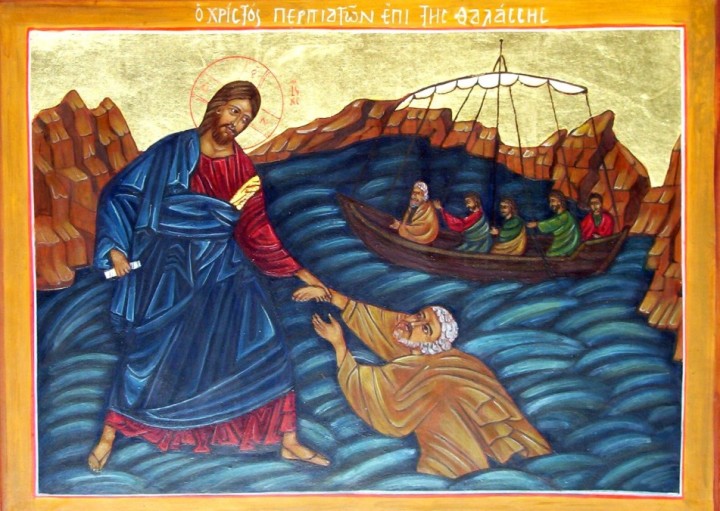
Immediately he made the disciples get into the boat and go on ahead to the other side, while he dismissed the crowds.

This morning’s Gospel carries straight on from the miraculous feeding which we heard last week, as Jesus goes to send the crowds back home, he sends disciples ahead so that they might be ready for Him.

And after he had dismissed the crowds, he went up the mountain by himself to pray.

Prayer is important, it is as important as the food we eat, the air we breathe, because it is about our relationship with God. Throughout the Gospels Jesus spends time alone, spends time close to the Father as this relationship is crucial. Where Jesus leads we should follow his example, and stay close to God in prayer. We tell God our hopes and fears and listen for Him to speak to us. Prayer precedes both the Multiplication of the Loaves and Fishes and the Walking on Water. When we start with prayer, we can let God do wonderful things.

When evening came, he was there alone, but by this time the boat, battered by the waves, was far from the land, for the wind was against them. 

It’s getting dark, and the disciples are out in the middle of the lake, in deep water; will the boat sink, what can they do? The Sea of Galilee can be a treacherous place, and they are afraid. Then something happens. 

And early in the morning he came walking towards them on the lake. But when the disciples saw him walking on the lake, they were terrified, saying, ‘It is a ghost!’ And they cried out in fear. 

But immediately Jesus spoke to them and said, ‘Take heart, it is I; do not be afraid.’

The disciples cannot believe that they are seeing Jesus, they think that it is a ghost, not a human being. But it is Jesus, and He encourages them, His presence can give them confidence. Once again, Jesus tells the disciples, and He tells us, ‘Paid ag ofni’ not to be afraid, not to fear the world, but to trust in Him. 

Peter answered him, ‘Lord, if it is you, command me to come to you on the water.’ He said, ‘Come.’

As usual, Peter is the first to react, he takes the lead. Jesus speaks a single word to him, ‘Come’. He speaks it to each and every one of us as Christians, to come, to follow Him. We are called to be close to Jesus, and to live out our faith in our lives strengthened by prayer. Will we trust Jesus enough to follow Him? This is the challenge of the Christian life, our challenge to accept Jesus’ invitation and walk with Him.

“So Peter got out of the boat, started walking on the water, and came towards Jesus. But when he noticed the strong wind, he became frightened, and beginning to sink, he cried out, ‘Lord, save me!’ Jesus immediately reached out his hand and caught him, saying to him, ‘You of little faith, why did you doubt?’ When they got into the boat, the wind ceased. And those in the boat worshipped him, saying, Truly you are the Son of God.’

Peter listens to what Jesus says, and obeys Him. Peter does something miraculous, something extraordinary: he walks on water, until he is distracted by the world around him, and becomes frightened. Likewise, in the power of God, we can do wonderful things, if we are not distracted by the cares of the world around us. If we listen to what Jesus tells us and do it.

But Peter becomes frightened; he starts to sink, as do we all when the cares of this world overwhelm us. His reaction is to cry ‘Lord, save me’ which Jesus does. Indeed, through Christ’s offering of himself upon the Cross Jesus saves each and every one of us, taking the sin of the world upon Himself so that we might be freed from sin, fear, and death. That same sacrifice will be made present, so that we the people of God, can be fed by God, to be strengthened to have life in Him, to be close to Him. 

Peter is rebuked for lacking faith, he still has to learn to trust Jesus. We too need to trust God, to have faith in Him, so that He can be at work in us and through us.

Once the wind has died down, the disciples bow down and worship Jesus, saying, ‘Truly you are the Son of God.’ Our fulfilment is worship. This is what we are made for as humans and as Christians. We are to worship God, in our love and our prayer, so that our whole lives are an act of worship, drawing us ever closer to the source of life and love. So that all we say or think or do may proclaim God’s love and truth to the world, so that they may believe and give glory to God the Father, God the Son, and God the Holy Spirit, to who whom be ascribed as is most right and just, all might, majesty, glory, dominion and power, now and forever. Amen. 
christusundpetrus1-2010-k

The Nineteenth Sunday of Year A (Mt 14:22-33)

God has an amazing ability to surprise us, and confound our expectations. It is a manifestation of God’s love for us, a love which sees us change and grow. We see this clearly in our first reading this morning. Elijah the prophet has been experiencing a crisis of faith. He is being persecuted by Jezebel, the wicked idol-worshipping Queen of Israel, and filled with despair, it all seems pointless and hopeless. Then God comes to him not in the wind, nor the earthquake, but in a still, small voice. Quietly, God promises that He will be faithful to those who have not worshipped idols. No matter how bleak the situation may appear, there is a fundamental trust that God is in control, and that all will be well. Elijah has faith in God, and in the power of that faith he brings Israel back to worship God. But he needs to learn the lesson that God is the God of love and mercy, and not just zeal: Elijah has been a fierce defender of God, he has put the prophets of Baal to death on Mt Carmel, but he now must see God’s gentleness in the still small voice, not in the fire or the whirlwind . It is an important lesson of the spiritual life. The gentleness of God is shown to us first and foremost in the Incarnation, where God is born among us in the quiet of Bethlehem. Such lessons are hard to learn. The world values noise and activity, yet God works in ways which defy our expectations and surprise us. 

Immediately he made the disciples get into the boat and go on ahead to the other side, while he dismissed the crowds.

This morning’s Gospel carries straight on from the miraculous feeding which we heard last week, as Jesus goes to send the crowds back home, he sends disciples ahead so that they might be ready for Him.

And after he had dismissed the crowds, he went up the mountain by himself to pray.

Prayer is important, it is as important as the food we eat, the air we breathe, because it is about our relationship with God. Throughout the Gospels Jesus spends time alone, spends time close to the Father as this relationship is crucial. Where Jesus leads we should follow his example, and stay close to God in prayer. We tell God our hopes and fears and listen for Him to speak to us. Prayer precedes both the Multiplication of the Loaves and Fishes and the Walking on Water. When we start with prayer, we can let God do wonderful things.

When evening came, he was there alone, but by this time the boat, battered by the waves, was far from the land, for the wind was against them. 

It’s getting dark, and the disciples are out in the middle of the lake, in deep water; will the boat sink, what can they do? The Sea of Galilee can be a treacherous place, and they are afraid. Then something happens. 

And early in the morning he came walking towards them on the lake. But when the disciples saw him walking on the lake, they were terrified, saying, ‘It is a ghost!’ And they cried out in fear. 

But immediately Jesus spoke to them and said, ‘Take heart, it is I; do not be afraid.’

The disciples cannot believe that they are seeing Jesus, they think that it is a ghost, not a human being. But it is Jesus, and He encourages them, His presence can give them confidence. Once again, Jesus tells the disciples, and He tells us, ‘Paid ag ofni’ not to be afraid, not to fear the world, but to trust in Him. 

Peter answered him, ‘Lord, if it is you, command me to come to you on the water.’ He said, ‘Come.’

As usual, Peter is the first to react, he takes the lead. Jesus speaks a single word to him, ‘Come’. He speaks it to each and every one of us as Christians, to come, to follow Him. We are called to be close to Jesus, and to live out our faith in our lives strengthened by prayer. Will we trust Jesus enough to follow Him? This is the challenge of the Christian life, our challenge to accept Jesus’ invitation and walk with Him.

“So Peter got out of the boat, started walking on the water, and came towards Jesus. But when he noticed the strong wind, he became frightened, and beginning to sink, he cried out, ‘Lord, save me!’ Jesus immediately reached out his hand and caught him, saying to him, ‘You of little faith, why did you doubt?’ When they got into the boat, the wind ceased. And those in the boat worshipped him, saying, Truly you are the Son of God.’

Peter listens to what Jesus says, and obeys Him. Peter does something miraculous, something extraordinary: he walks on water, until he is distracted by the world around him, and becomes frightened. Likewise, in the power of God, we can do wonderful things, if we are not distracted by the cares of the world around us. If we listen to what Jesus tells us and do it.

But Peter becomes frightened; he starts to sink, as do we all when the cares of this world overwhelm us. His reaction is to cry ‘Lord, save me’ which Jesus does. Indeed, through Christ’s offering of himself upon the Cross Jesus saves each and every one of us, taking the sin of the world upon Himself so that we might be freed from sin, fear, and death. That same sacrifice will be made present, so that we the people of God, can be fed by God, to be strengthened to have life in Him, to be close to Him. 

Peter is rebuked for lacking faith, he still has to learn to trust Jesus. We too need to trust God, to have faith in Him, so that He can be at work in us and through us.

Once the wind has died down, the disciples bow down and worship Jesus, saying, ‘Truly you are the Son of God.’ Our fulfilment is worship. This is what we are made for as humans and as Christians. We are to worship God, in our love and our prayer, so that our whole lives are an act of worship, drawing us ever closer to the source of life and love. So that all we say or think or do may proclaim God’s love and truth to the world, so that they may believe and give glory to God the Father, God the Son, and God the Holy Spirit, to who whom be ascribed as is most right and just, all might, majesty, glory, dominion and power, now and forever. Amen. 

christusundpetrus1-2010-k

Sunday, 2 August 2020

The Eighteenth Sunday of Year A (Mt 14:13-21) The Feeding of the Five Thousand

I must admit that our readings this morning have unsettled me somewhat. The joyful character of both Isaiah and the account of the Feeding of the Five Thousand in Matthew’s Gospel seem far removed from how life is here and now for many people. The feelings of hope, joy, celebration, and social interaction, are far removed from the fear and concern which have been characterising our daily lives. And yet, despite our fears, there remains in Scripture a promise of hope for the future, as God says in the words of the prophet Isaiah, ‘Paid ag ofni, Fear not, for I have redeemed you; I have called you by name, you are mine.’ (Isa 43:1). We respond in trust, not that things are fine now, but that they will be. God is someone whom we can trust, who will never disappoint us. As the Psalmist says, ‘our hope and strength, a very present help in trouble’ (Ps 46:1) if we cast our burden upon Him, He will sustain us (cf. Ps 55:22). 

In our first reading this morning we hear God’s generous promise to His people. In the manner of a market trader God offers nourishment and refreshment, but not for profit! It is free! God offers water, wine, milk, and bread, food to nourish us, and drink to refresh us. It is a foretaste of the banquet of the Kingdom, in the Eucharist, where we are nourished and fed by God. The passage speaks of God’s covenant with His people, a relationship of love, that we can trust. God, who knows our needs, freely gives to his people love and grace, so that they may have life in all in all its fullness. These promises are fulfilled in Christ, who makes an everlasting covenant with us through His Body and His Blood. 

God’s generosity is freely offered, but it can be rejected. We see this in our second reading from Paul’s Letter to the Romans. Unlike the joy and optimism of the previous chapter which we heard last week, here are Israelites who reject Christ and cause St Paul great sorrow and anguish. The rejection of God’s generosity is painful, but it is the price of freedom. We cannot be compelled to accept what God offers, that would not be generous. Instead, we are free to accept or reject what God holds out for us. 

Picture the scene: Jesus has just been told that his cousin, John the Baptist, has been put in prison and killed. Jesus has lately been to Nazareth, where he was rejected, by the very people who should have accepted him. It is not for nothing that this morning’s Gospel passage begins with Jesus withdrawing to the desert: to be alone, to pray, to be close to God.

When the people hear where Jesus has gone they follow him, they walk out from the towns into the desert, wanting to see Jesus, and to hear him teach them. When Jesus gets out of the boat he sees a great mass of people and has compassion on them. He is moved by the sight of them, and their need. Jesus heals the sick to show that the Kingdom of God is a place of healing, where humanity can be restored through an encounter with the divine. Jesus’ actions and words proclaim the power of God to heal and restore humanity.

It is getting late, the sun is fast moving towards the West, and the disciples tell him to send the crowds away so that they can buy food. Instead Jesus says that the people do not need to go away, and tells the disciples to give them something to eat. The disciples obey Him, but cannot see how five loaves and two fish can possibly feed the thousands of people who have come to be close to Jesus.

The five loaves represent the five books of Moses, the Pentateuch: Genesis, Exodus, Leviticus, Numbers, Deuteronomy. The Books of the Law, the Torah, which show Israel how to live, and how to love God. The two fish represent the Law and the Prophets, so that, ‘Man shall not live by bread alone, but by every word that proceeds from the mouth of God.’ (Mt 4:4) The law and the Prophets point to Jesus, the Word made flesh: they find their fulfilment and true meaning in Him. The hopes of Israel, for the future, for a Messiah, are fulfilled in Him. Just like Israel after crossing the Red Sea here the People of God are fed by God in the desert. There is so much food left over at the end that there is enough to fill twelve baskets, one for each of the disciples, and for each tribe of Israel. In human terms, five loaves and two fish is not enough to feed everyone, but it is more than sufficient in divine terms. Just like at the Wedding feast in Cana, here we see that the Kingdom of God is a place of joy and abundance, of generosity, which isn’t concerned with scrimping or with the ‘good enough’,rather it is a place of lavish excess. This is what the church is supposed to be like: this is meant to be the model for our lives as Christians.

The multiplication of the loaves is not some conjuring trick, meant to amaze us, or to show us how powerful God is. It is a sign of God’s generous love for humanity. This is what God does for us, so that we can respond in a profound and radical way, and thereby change the world. Jesus has been rejected by the people of Nazareth and He responds by feeding people until they are satisfied, until they have had enough, and there is still plenty left over. Likewise, God’s love and mercy are inexhaustible, and are shown and poured out upon the world in Jesus Christ and in his death upon the Cross for our salvation.

Jesus takes the bread and fish, He blesses them, He breaks them and He gives them, actions which look forward to the Last Supper on the night before He died. Jesus told His disciples to carry on doing this in remembrance of Him, so that the Church could continue to be fed by Him and with Him, as a sign of His love for us, so that we might have life and forgiveness in Him.

Let us today be fed with the living bread, the bread which came down from heaven, so that it may feed our souls, so that we may be healed and restored by him. Let us be moved by the lavish generosity of God, and encouraged to live it out in our lives, in our thoughts, our words, and our actions, so that all that we are, all that we say or think or do, will proclaim the truth of God’s saving love to the world, so that we too can enter into the joy of the Lord and come to the banquet of the Kingdom, where all are welcomed, and healed.

Filled with God’s grace, may we live generously and encourage others to share in the generosity of the Kingdom, so that all come to believe believe and give glory to God the Father, God the Son, and God the Holy Spirit, to who whom be ascribed as is most right and just, all might, majesty, glory, dominion and power, now and forever. Amen. 

Brooklyn_Museum_-_The_Miracle_of_the_Loaves_and_Fishes_(La_multiplication_des_pains)_by_James_Tissot.jpg

The Eighteenth Sunday of Year A (Mt 14:13-21) The Feeding of the Five Thousand

I must admit that our readings this morning have unsettled me somewhat. The joyful character of both Isaiah and the account of the Feeding of the Five Thousand in Matthew’s Gospel seem far removed from how life is here and now for many people. The feelings of hope, joy, celebration, and social interaction, are far removed from the fear and concern which have been characterising our daily lives. And yet, despite our fears, there remains in Scripture a promise of hope for the future, as God says in the words of the prophet Isaiah, ‘Paid ag ofni, Fear not, for I have redeemed you; I have called you by name, you are mine.’ (Isa 43:1). We respond in trust, not that things are fine now, but that they will be. God is someone whom we can trust, who will never disappoint us. As the Psalmist says, ‘our hope and strength, a very present help in trouble’ (Ps 46:1) if we cast our burden upon Him, He will sustain us (cf. Ps 55:22). 

In our first reading this morning we hear God’s generous promise to His people. In the manner of a market trader God offers nourishment and refreshment, but not for profit! It is free! God offers water, wine, milk, and bread, food to nourish us, and drink to refresh us. It is a foretaste of the banquet of the Kingdom, in the Eucharist, where we are nourished and fed by God. The passage speaks of God’s covenant with His people, a relationship of love, that we can trust. God, who knows our needs, freely gives to his people love and grace, so that they may have life in all in all its fullness. These promises are fulfilled in Christ, who makes an everlasting covenant with us through His Body and His Blood. 

God’s generosity is freely offered, but it can be rejected. We see this in our second reading from Paul’s Letter to the Romans. Unlike the joy and optimism of the previous chapter which we heard last week, here are Israelites who reject Christ and cause St Paul great sorrow and anguish. The rejection of God’s generosity is painful, but it is the price of freedom. We cannot be compelled to accept what God offers, that would not be generous. Instead, we are free to accept or reject what God holds out for us. 

Picture the scene: Jesus has just been told that his cousin, John the Baptist, has been put in prison and killed. Jesus has lately been to Nazareth, where he was rejected, by the very people who should have accepted him. It is not for nothing that this morning’s Gospel passage begins with Jesus withdrawing to the desert: to be alone, to pray, to be close to God.

When the people hear where Jesus has gone they follow him, they walk out from the towns into the desert, wanting to see Jesus, and to hear him teach them. When Jesus gets out of the boat he sees a great mass of people and has compassion on them. He is moved by the sight of them, and their need. Jesus heals the sick to show that the Kingdom of God is a place of healing, where humanity can be restored through an encounter with the divine. Jesus’ actions and words proclaim the power of God to heal and restore humanity.

It is getting late, the sun is fast moving towards the West, and the disciples tell him to send the crowds away so that they can buy food. Instead Jesus says that the people do not need to go away, and tells the disciples to give them something to eat. The disciples obey Him, but cannot see how five loaves and two fish can possibly feed the thousands of people who have come to be close to Jesus.

The five loaves represent the five books of Moses, the Pentateuch: Genesis, Exodus, Leviticus, Numbers, Deuteronomy. The Books of the Law, the Torah, which show Israel how to live, and how to love God. The two fish represent the Law and the Prophets, so that, ‘Man shall not live by bread alone, but by every word that proceeds from the mouth of God.’ (Mt 4:4) The law and the Prophets point to Jesus, the Word made flesh: they find their fulfilment and true meaning in Him. The hopes of Israel, for the future, for a Messiah, are fulfilled in Him. Just like Israel after crossing the Red Sea here the People of God are fed by God in the desert. There is so much food left over at the end that there is enough to fill twelve baskets, one for each of the disciples, and for each tribe of Israel. In human terms, five loaves and two fish is not enough to feed everyone, but it is more than sufficient in divine terms. Just like at the Wedding feast in Cana, here we see that the Kingdom of God is a place of joy and abundance, of generosity, which isn’t concerned with scrimping or with the ‘good enough’,rather it is a place of lavish excess. This is what the church is supposed to be like: this is meant to be the model for our lives as Christians.

The multiplication of the loaves is not some conjuring trick, meant to amaze us, or to show us how powerful God is. It is a sign of God’s generous love for humanity. This is what God does for us, so that we can respond in a profound and radical way, and thereby change the world. Jesus has been rejected by the people of Nazareth and He responds by feeding people until they are satisfied, until they have had enough, and there is still plenty left over. Likewise, God’s love and mercy are inexhaustible, and are shown and poured out upon the world in Jesus Christ and in his death upon the Cross for our salvation.

Jesus takes the bread and fish, He blesses them, He breaks them and He gives them, actions which look forward to the Last Supper on the night before He died. Jesus told His disciples to carry on doing this in remembrance of Him, so that the Church could continue to be fed by Him and with Him, as a sign of His love for us, so that we might have life and forgiveness in Him.

Let us today be fed with the living bread, the bread which came down from heaven, so that it may feed our souls, so that we may be healed and restored by him. Let us be moved by the lavish generosity of God, and encouraged to live it out in our lives, in our thoughts, our words, and our actions, so that all that we are, all that we say or think or do, will proclaim the truth of God’s saving love to the world, so that we too can enter into the joy of the Lord and come to the banquet of the Kingdom, where all are welcomed, and healed.

Filled with God’s grace, may we live generously and encourage others to share in the generosity of the Kingdom, so that all come to believe believe and give glory to God the Father, God the Son, and God the Holy Spirit, to who whom be ascribed as is most right and just, all might, majesty, glory, dominion and power, now and forever. Amen. 

Brooklyn_Museum_-_The_Miracle_of_the_Loaves_and_Fishes_(La_multiplication_des_pains)_by_James_Tissot.jpg

Saturday, 29 February 2020

The Church has entered the season of Lent, and she goes, with her Lord, into the desert for forty days, to pray, to turn away from sin, to turn back to God, to fast, to be generous in almsgiving. We do this to prepare to celebrate Jesus’ passion, Death and Resurrection in Holy Week and Easter. We get ready to celebrate the holiest week of the Church’s year by having something of a spiritual spring clean. This is a very good thing indeed. We need to do it, so that we can be reminded where we need to put some work in.

Our first reading this morning take us right back to the start of the problem of human sin: Adam & Eve in the Garden of Eden. They are tempted by the serpent to do what God has told them not to do. Thinking that you know better than God, and choosing to do what you want to do is where the sin of pride comes from. Adam and Eve prefer to trust the serpent, who promises that they will become like God. They are disobedient: they do not listen to what God says, and act in accordance with it. But rather than knowing good and evil, all they know is that they are naked, and cover their nakedness. The serpent makes empty promises, and they are taken in by them. Such is the power of lies. 

But while we have heard how sin and death came into the world, we also hear in our second reading from Paul’s Letter to the Romans how disobedience is countered by the obedience of Jesus Christ. It is obedience which will see Our Lord die on the Cross for us. Christ will bear the burden of our sin, to pay the debt which we cannot. This is what we are preparing to celebrate: one act of righteousness which ‘leads to justification and life for all men’ (Rom 5:18 ESV). To be justified is to be declared righteous in the sight of God. We are guilty, yet God declares us innocent. We deserve punishment, and yet are rewarded. It is remarkable. Such is God’s love for us that our slate is wiped clean. Each and every one of us deserves to be cast aside, for our sins, like those of Adam & Eve separate us from God and each other. Yet God did not leave us in slavery to sin, but sent His Son, so that we might have life in and through Him. This is the Good News of the Gospel. 

In the Gospel this morning we see Jesus at a crucial point, between His Baptism and the calling of the first disciples: Peter and Andrew, James and John. Christ goes into the desert for forty days, to be alone, to pray and to fast, and the church keen to imitate our Saviour likewise goes into the desert so that we may grow closer to God, that we may be purged and prepared to celebrate the mystery of the Lord’s Passion, Death, and Resurrection. 

Jesus is led by the Holy Spirit into the wilderness, a place traditionally associated with the prophets and with encounter with God. After fasting for forty days and forty nights He is hungry. This is no surprise at all. He has been fasting for forty days, Our Lord is starving – he is fully human not some superhero who is immune to human feelings and needs. So the devil tempts Him by saying, ‘If you are the Son of God, command these stones to become loaves of bread.’ (Mt 4:3 ESV). The temptation works on several levels. By doubting that Jesus is God and asking Him to prove it the devil is continuing to mock the God he refuses to serve. It is a temptation to be relevant: Jesus is hungry and needs to eat, but is being tempted to use the creative power of God simply to serve an appetite. The world tempts us to be relevant, and to conform ourselves to it, rather than let the world be conformed to the will of God. Jesus’ reply to the devil, that man does not live by bread alone but by every word which proceeds from the mouth of God, reminds us that as Christians we are fed by Word and Sacrament, nourished by God so that we may grow in faith, and hope, and love. 

Christ is taken to the pinnacle of the Temple in Jerusalem and told to throw Himself down. This is the temptation to be spectacular, to do something for show, again something which the contemporary church seems rather keen on. But nothing should be done for show; we are called to follow Christ simply and humbly, trusting in Him. The devil wants to put God to the test, it is an act of disobedience, contrary to the humble obedience which sees us live trusting in God, relying upon Him, formed by Him.

Christ is finally tempted to turn away from God the Father, to worship a false god. He is offered much in material terms –- all the world and its splendour -– wealth and power –- a huge temptation for humanity, and one into which many people give. The Church too has given in, and continues so to do. We have to be weak, powerless and vulnerable, utterly reliant upon God so that God can be at work in us, as we humbly worship and serve Him. It may look foolish in worldly terms, but that is the point –- we are not meant to be conformed to the world, but as we seek to grow in faith, in humility, and obedience, we allow God to be at work in us –- taking us and transforming us into His likeness.

The temptation to worship a false God: money, power, or success is always there, and many in the church give in to feelings of ambition, and if they are not ‘successful’ end up bitter, cynical, and miserable. But success is itself empty, popular favour can disappear like a puff of smoke. It is fleeting, it does not last. Whereas in Christ we are offered something that will last: eternal life with God in heaven. 

So as we undertake to follow Christ in our Lenten pilgrimage we do so in our weakness, so that we may rely upon God, and Him alone. We do so joyfully, knowing that Christ’s victory which we will celebrate at Easter is total and complete – it is justification and life for all.

Let us pray that we may receive grace to follow Christ so that we may prepare to celebrate His Death and Resurrection and sing the praises of God the Father, God the Son, and God the Holy Spirit, to whom be ascribed as is most right and just, all might, majesty, glory, dominion, and power, now and forever. Amen.
00.159.51

The Church has entered the season of Lent, and she goes, with her Lord, into the desert for forty days, to pray, to turn away from sin, to turn back to God, to fast, to be generous in almsgiving. We do this to prepare to celebrate Jesus’ passion, Death and Resurrection in Holy Week and Easter. We get ready to celebrate the holiest week of the Church’s year by having something of a spiritual spring clean. This is a very good thing indeed. We need to do it, so that we can be reminded where we need to put some work in.

Our first reading this morning take us right back to the start of the problem of human sin: Adam & Eve in the Garden of Eden. They are tempted by the serpent to do what God has told them not to do. Thinking that you know better than God, and choosing to do what you want to do is where the sin of pride comes from. Adam and Eve prefer to trust the serpent, who promises that they will become like God. They are disobedient: they do not listen to what God says, and act in accordance with it. But rather than knowing good and evil, all they know is that they are naked, and cover their nakedness. The serpent makes empty promises, and they are taken in by them. Such is the power of lies. 

But while we have heard how sin and death came into the world, we also hear in our second reading from Paul’s Letter to the Romans how disobedience is countered by the obedience of Jesus Christ. It is obedience which will see Our Lord die on the Cross for us. Christ will bear the burden of our sin, to pay the debt which we cannot. This is what we are preparing to celebrate: one act of righteousness which ‘leads to justification and life for all men’ (Rom 5:18 ESV). To be justified is to be declared righteous in the sight of God. We are guilty, yet God declares us innocent. We deserve punishment, and yet are rewarded. It is remarkable. Such is God’s love for us that our slate is wiped clean. Each and every one of us deserves to be cast aside, for our sins, like those of Adam & Eve separate us from God and each other. Yet God did not leave us in slavery to sin, but sent His Son, so that we might have life in and through Him. This is the Good News of the Gospel. 

In the Gospel this morning we see Jesus at a crucial point, between His Baptism and the calling of the first disciples: Peter and Andrew, James and John. Christ goes into the desert for forty days, to be alone, to pray and to fast, and the church keen to imitate our Saviour likewise goes into the desert so that we may grow closer to God, that we may be purged and prepared to celebrate the mystery of the Lord’s Passion, Death, and Resurrection. 

Jesus is led by the Holy Spirit into the wilderness, a place traditionally associated with the prophets and with encounter with God. After fasting for forty days and forty nights He is hungry. This is no surprise at all. He has been fasting for forty days, Our Lord is starving – he is fully human not some superhero who is immune to human feelings and needs. So the devil tempts Him by saying, ‘If you are the Son of God, command these stones to become loaves of bread.’ (Mt 4:3 ESV). The temptation works on several levels. By doubting that Jesus is God and asking Him to prove it the devil is continuing to mock the God he refuses to serve. It is a temptation to be relevant: Jesus is hungry and needs to eat, but is being tempted to use the creative power of God simply to serve an appetite. The world tempts us to be relevant, and to conform ourselves to it, rather than let the world be conformed to the will of God. Jesus’ reply to the devil, that man does not live by bread alone but by every word which proceeds from the mouth of God, reminds us that as Christians we are fed by Word and Sacrament, nourished by God so that we may grow in faith, and hope, and love. 

Christ is taken to the pinnacle of the Temple in Jerusalem and told to throw Himself down. This is the temptation to be spectacular, to do something for show, again something which the contemporary church seems rather keen on. But nothing should be done for show; we are called to follow Christ simply and humbly, trusting in Him. The devil wants to put God to the test, it is an act of disobedience, contrary to the humble obedience which sees us live trusting in God, relying upon Him, formed by Him.

Christ is finally tempted to turn away from God the Father, to worship a false god. He is offered much in material terms –- all the world and its splendour -– wealth and power –- a huge temptation for humanity, and one into which many people give. The Church too has given in, and continues so to do. We have to be weak, powerless and vulnerable, utterly reliant upon God so that God can be at work in us, as we humbly worship and serve Him. It may look foolish in worldly terms, but that is the point –- we are not meant to be conformed to the world, but as we seek to grow in faith, in humility, and obedience, we allow God to be at work in us –- taking us and transforming us into His likeness.

The temptation to worship a false God: money, power, or success is always there, and many in the church give in to feelings of ambition, and if they are not ‘successful’ end up bitter, cynical, and miserable. But success is itself empty, popular favour can disappear like a puff of smoke. It is fleeting, it does not last. Whereas in Christ we are offered something that will last: eternal life with God in heaven. 

So as we undertake to follow Christ in our Lenten pilgrimage we do so in our weakness, so that we may rely upon God, and Him alone. We do so joyfully, knowing that Christ’s victory which we will celebrate at Easter is total and complete – it is justification and life for all.

Let us pray that we may receive grace to follow Christ so that we may prepare to celebrate His Death and Resurrection and sing the praises of God the Father, God the Son, and God the Holy Spirit, to whom be ascribed as is most right and just, all might, majesty, glory, dominion, and power, now and forever. Amen.

00.159.51

Tuesday, 24 December 2019

Some prophetic words for the Church …

‘We tend to manage life more than just live it. We are all overstimulated and drowning in options. We are trained to be managers, to organize life, to make things happen. This is what built our culture. It is not all bad, but if you transfer that to the spiritual life, it is pure heresy. It is wrong it doesn’t work. It is not gospel.’


from Richard Rohr, Preparing for Christmas – Daily Meditations for Advent, Cincinatti, 2008, p. 31

Some prophetic words for the Church …

‘We tend to manage life more than just live it. We are all overstimulated and drowning in options. We are trained to be managers, to organize life, to make things happen. This is what built our culture. It is not all bad, but if you transfer that to the spiritual life, it is pure heresy. It is wrong it doesn’t work. It is not gospel.’


from Richard Rohr, Preparing for Christmas – Daily Meditations for Advent, Cincinatti, 2008, p. 31

Saturday, 14 December 2019

Advent III – He that will come

The prophet Isaiah provides our first readings during Advent this year, and he is particular strong on the idea that the Messiah will come to deliver Israel. As Christians we use the period of Advent to reflect upon the fact that Christ is coming, He is coming as a baby born in Bethlehem, He is coming to us here today in the Eucharist, and He is coming with vengeance to judge the world. Should we be afraid? On the contrary, as the prophet says, ‘Strengthen the weak hands, and make firm the feeble knees. Say to those who have an anxious heart,“Be strong; fear not! Behold, your God will come with vengeance, with the recompense of God. He will come and save you’ (Isa 35:3-4 ESV). 

Isaiah has a vision where the desert, a dry wilderness is carpeted with flowers, a sign of new life, of hope. This is the flourishing which the Messiah will bring, ‘the glory of the Lord, the majesty of our God’ (Isa 35:2 ESV). As Christ Himself says ‘I came that they may have life and have it abundantly’ (Jn 10:10 ESV) This is good news, a reason to rejoice and be glad, and to mark this the Church instead of penitential purple wears rose today, to mark the joyful character of this day, and to remind us that Christ is coming. As Isaiah says, ‘the ransomed of the Lord shall return and come to Zion with singing; everlasting joy shall be upon their heads; they shall obtain gladness and joy, and sorrow and sighing shall flee away’ (Isa 35:10 ESV).

The time is both now, and not yet. As St James writes, ‘You also, be patient. Establish your hearts, for the coming of the Lord is at hand’ (Jas 5:8 ESV). Patience is a hard thing to master. We are naturally impatient, we don’t want to wait, but we have to. The question is how we wait: in joyful expectation, preparing ourselves for what is to come? 

John the Baptist has been waiting for the Messiah, and while he leapt in his mother’s womb at the Visitation, in this morning’s Gospel he appears to be having doubts. He is expecting a Messiah of judgement, and he is isn’t sure what is going on. John has been imprisoned for criticising Herod’s marriage to his brother’s wife. He is hoping for a messiah to sweep away an unjust and corrupt regime, hence his doubts about Jesus, who doesn’t seem to be a political messiah. Jesus tells John’s disciples, ‘Go and tell John what you hear and see:  the blind receive their sight and the lame walk, lepers are cleansed and the deaf hear, and the dead are raised up, and the poor have good news preached to them’ (Mt 11:4-5 ESV). 

The vision of a messianic future envisaged by Isaiah in this morning’s first reading has become a reality: prophecy has been fulfilled, God keeps his promises. The Kingdom of God is a place of healing, and Christ is the great physician, who has come to heal our souls. Jesus is the one who is to come, He has come, and will come again. The establishment of God’s kingdom can look strange in human terms: going to those on the margins, the sick, the poor, and the oppressed and marginalised is not a grand gesture. That is the point! The greatest grand gesture Jesus will make will be in handing Himself over to be crucified and die the death of a common criminal. This is how the messiah will reign as the true King of Israel. 

It defies human expectations, which is the point: God’s ways are not our ways, nor His thoughts ours. That’s the core message of this morning’s Gospel, if we expect God’s rule to look like human kingship, then we will be disappointed. God has something else in store, something far more wonderful than we could ever imagine, and at its heart is the transformation of humanity by love. God heals His people, because God is a God of love. God loves us not because we are loveable, we are sinners, who don’t deserve to be loved, and cannot earn that love. But rather than what we are, God loves us for WHO we are, His sons and daughters, created in His image. 

This is grace: loving sinful humanity so that we may be transformed by love. Hence the focus on healing, something which only God can do, to heal our souls with His love. This is the cause of our joy, what the prophet Isaiah hoped for has been fulfilled, and continues to be fulfilled. The Church exists to carry on God’s healing in the world, to take humanity, and heal it with God’s love. This is what we are about to celebrate in the Eucharist where we thank God for loving us, and prepare to experience that healing love, so that it may transform us. We do so with reverence, because we are not simply consuming human food and drink, but the very Body and Blood of Christ, given for us, to heal us. The greatest medicine our souls could ever wish for. Soon we ‘shall see the glory of the Lord, the majesty of our God’ (Isa 35:2 ESV) God’s glory and majesty is to die on a Cross for us, and to feed us with Himself. Come to the banquet my brothers and sisters, and experience the love of God, and let it heal and transform you, so that you and all creation may sing the praises of God the Father, God the Son, and God the Holy Spirit, to whom be ascribed as is most right and just all might, majesty, glory, dominion, and power, now and forever. Amen.

Raphael_-_Madonna_in_the_Meadow_-_Google_Art_Project.jpg

Advent III – He that will come

The prophet Isaiah provides our first readings during Advent this year, and he is particular strong on the idea that the Messiah will come to deliver Israel. As Christians we use the period of Advent to reflect upon the fact that Christ is coming, He is coming as a baby born in Bethlehem, He is coming to us here today in the Eucharist, and He is coming with vengeance to judge the world. Should we be afraid? On the contrary, as the prophet says, ‘Strengthen the weak hands, and make firm the feeble knees. Say to those who have an anxious heart,“Be strong; fear not! Behold, your God will come with vengeance, with the recompense of God. He will come and save you’ (Isa 35:3-4 ESV). 

Isaiah has a vision where the desert, a dry wilderness is carpeted with flowers, a sign of new life, of hope. This is the flourishing which the Messiah will bring, ‘the glory of the Lord, the majesty of our God’ (Isa 35:2 ESV). As Christ Himself says ‘I came that they may have life and have it abundantly’ (Jn 10:10 ESV) This is good news, a reason to rejoice and be glad, and to mark this the Church instead of penitential purple wears rose today, to mark the joyful character of this day, and to remind us that Christ is coming. As Isaiah says, ‘the ransomed of the Lord shall return and come to Zion with singing; everlasting joy shall be upon their heads; they shall obtain gladness and joy, and sorrow and sighing shall flee away’ (Isa 35:10 ESV).

The time is both now, and not yet. As St James writes, ‘You also, be patient. Establish your hearts, for the coming of the Lord is at hand’ (Jas 5:8 ESV). Patience is a hard thing to master. We are naturally impatient, we don’t want to wait, but we have to. The question is how we wait: in joyful expectation, preparing ourselves for what is to come? 

John the Baptist has been waiting for the Messiah, and while he leapt in his mother’s womb at the Visitation, in this morning’s Gospel he appears to be having doubts. He is expecting a Messiah of judgement, and he is isn’t sure what is going on. John has been imprisoned for criticising Herod’s marriage to his brother’s wife. He is hoping for a messiah to sweep away an unjust and corrupt regime, hence his doubts about Jesus, who doesn’t seem to be a political messiah. Jesus tells John’s disciples, ‘Go and tell John what you hear and see:  the blind receive their sight and the lame walk, lepers are cleansed and the deaf hear, and the dead are raised up, and the poor have good news preached to them’ (Mt 11:4-5 ESV). 

The vision of a messianic future envisaged by Isaiah in this morning’s first reading has become a reality: prophecy has been fulfilled, God keeps his promises. The Kingdom of God is a place of healing, and Christ is the great physician, who has come to heal our souls. Jesus is the one who is to come, He has come, and will come again. The establishment of God’s kingdom can look strange in human terms: going to those on the margins, the sick, the poor, and the oppressed and marginalised is not a grand gesture. That is the point! The greatest grand gesture Jesus will make will be in handing Himself over to be crucified and die the death of a common criminal. This is how the messiah will reign as the true King of Israel. 

It defies human expectations, which is the point: God’s ways are not our ways, nor His thoughts ours. That’s the core message of this morning’s Gospel, if we expect God’s rule to look like human kingship, then we will be disappointed. God has something else in store, something far more wonderful than we could ever imagine, and at its heart is the transformation of humanity by love. God heals His people, because God is a God of love. God loves us not because we are loveable, we are sinners, who don’t deserve to be loved, and cannot earn that love. But rather than what we are, God loves us for WHO we are, His sons and daughters, created in His image. 

This is grace: loving sinful humanity so that we may be transformed by love. Hence the focus on healing, something which only God can do, to heal our souls with His love. This is the cause of our joy, what the prophet Isaiah hoped for has been fulfilled, and continues to be fulfilled. The Church exists to carry on God’s healing in the world, to take humanity, and heal it with God’s love. This is what we are about to celebrate in the Eucharist where we thank God for loving us, and prepare to experience that healing love, so that it may transform us. We do so with reverence, because we are not simply consuming human food and drink, but the very Body and Blood of Christ, given for us, to heal us. The greatest medicine our souls could ever wish for. Soon we ‘shall see the glory of the Lord, the majesty of our God’ (Isa 35:2 ESV) God’s glory and majesty is to die on a Cross for us, and to feed us with Himself. Come to the banquet my brothers and sisters, and experience the love of God, and let it heal and transform you, so that you and all creation may sing the praises of God the Father, God the Son, and God the Holy Spirit, to whom be ascribed as is most right and just all might, majesty, glory, dominion, and power, now and forever. Amen.

Raphael_-_Madonna_in_the_Meadow_-_Google_Art_Project.jpg

Sunday, 17 November 2019

Trinity XXII

As Christians are we simply satisfied with the world, with the way things are? No. Do we want things to be different? I hope so, yes. That’s good, as the prophet Malachi in our first reading this morning has a vision of the future, when the arrogant and evil doers will be like stubble in a furnace, ‘But for you who fear my name, the sun of righteousness shall rise with healing in its wings. You shall go out leaping like calves from the stall.’ (Malachi 4:2). This is a vision of a future where God is in control, and things will be put right, and at one level He already has. Christ is risen from the dead, the one who heals God’s people has risen. The time is both not yet, and now, a work in progress, and a reality. 

We have a part to play in it. We cannot just sit back and wait for God to sort everything out, we need to co-operate with God, and help to make the Kingdom a reality. Hence S. Paul’s advice to the Thessalonians, ‘As for you, brothers, do not grow weary in doing good’ (2Thess 3:13). We’ve been trying and failing for nearly two thousand years. That’s what a work in progress is. It isn’t easy, and no one can fail to notice that the world around us is often rather hostile to who we are, and what we stand for. It is not easy to be a Christian, nor has it ever been, for that matter. 

We will be hated by all people for Christ’s name’s sake (Lk 21:17). Hate is a strong word, but as we are directly opposed to many in this world, it is not surprising. With hatred comes persecution, and we only have to look to China, North Korea, the Middle East, India, and Pakistan, to see it. Christians are being killed for believing in God who loves us, who died to save from our sins. To follow Christ is to walk the way of the Cross, to risk imprisonment, torture and death, for the love of His name. But ‘there is salvation in no one else, for there is no other name under heaven given among men by which we must be saved’ (Acts 4:12). Only Jesus can save us, we cannot save ourselves. We are called to bear witness to Him. 

Jews in the first century AD loved the Temple, it was the centre of their world, it was where they could be close to God, it was where sacrifices happened which took away their sins. But less than forty years after Jesus spoke this prophecy a Roman Army destroyed it. But as Christians we know that Jesus Christ is the new Temple, the place to meet God, the place of sacrifice. Destroy it in three days, and I will raise it up. Christ speaks of His body, and that is us: we are the Body of Christ. Churches are not buildings, they are groups of people who love Jesus, and each other. Jesus speaks of false Christs, who will lead people astray, and warns ‘ do not go after them’ (Lk 21:8). It is a temptation, especially when times are hard, when there are war and natural disasters. 

But we know that Our Lord Jesus Christ is victorious, he is the true worship of God. In Him we can have confidence. He gives us Himself, His Body and Blood, to nourish us and to heal us, and give us strength to prepare us for the trials we will face. Here in Britain it is more likely to be indifference than anything else. Indifference speaks of a hardness of heart, being deaf to the Good News of the Kingdom. At its root is Sin, our separation from God by our following our will, and not God’s. We think we know better, and do what we want to do, rather than letting God work through us. The human condition hasn’t actually changed since the Garden of Eden. We continue to make the same mistakes over and over again. There is, however, a way out of this. God in Christ deals with the problem of our sin on the Cross, where He offers himself as a sacrificial victim to atone for all the sins of humanity. It’s what Christ was born for, as the angel says to Joseph, ‘She will bear a son, and you are to name him Jesus, for he will save his people from their sins.’ (Mt 1:21) The name Jesus (Hebrew Yeshua) means ‘God saves’ and He does. This is what we believe as Christians, where we put our trust, our hope, in a God who loves us and saves us, the same God who inspired the prophecies of Malachi, which look forward to Christ. 

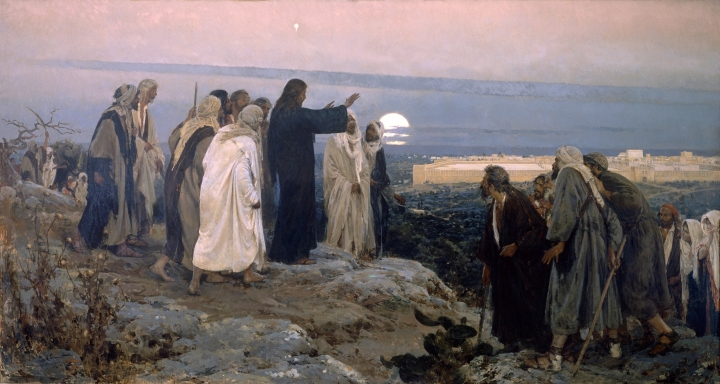
That same Christ who heals us and sustains us will be with us in our trials, and whereas our family and friends may prove false to us, we can have confidence that Christ will never let us down. He’s been through this. Through the gift of the Holy Spirit we are strengthened to bear witness to Him. For the same Christ who died for us, and rose again, who ascended into heaven, will come again to judge us and all the world. It sounds scary and intimidating, and at one level it is, and it should be. It matters; hence our urgency in proclaiming the Kingdom of God. But the one who will judge us, is the same one who died to set us free, the God who loves us, who heals us, and restores us. A God of love and mercy, risen with healing in his wings. Let us come to Him, be healed by Him, nourished with His Body and Blood and strengthened to proclaim Him in word and deed, so that the world may come to believe and sing the praises of God the Father, God the Son, and God the Holy Spirit, to whom be ascribed as is most right and just all might, majesty, glory, dominion, and power, now and forever. Amen.Enrique_Simonet_-_Flevit_super_illam_-_1892-1.jpg

Trinity XXII

As Christians are we simply satisfied with the world, with the way things are? No. Do we want things to be different? I hope so, yes. That’s good, as the prophet Malachi in our first reading this morning has a vision of the future, when the arrogant and evil doers will be like stubble in a furnace, ‘But for you who fear my name, the sun of righteousness shall rise with healing in its wings. You shall go out leaping like calves from the stall.’ (Malachi 4:2). This is a vision of a future where God is in control, and things will be put right, and at one level He already has. Christ is risen from the dead, the one who heals God’s people has risen. The time is both not yet, and now, a work in progress, and a reality. 

We have a part to play in it. We cannot just sit back and wait for God to sort everything out, we need to co-operate with God, and help to make the Kingdom a reality. Hence S. Paul’s advice to the Thessalonians, ‘As for you, brothers, do not grow weary in doing good’ (2Thess 3:13). We’ve been trying and failing for nearly two thousand years. That’s what a work in progress is. It isn’t easy, and no one can fail to notice that the world around us is often rather hostile to who we are, and what we stand for. It is not easy to be a Christian, nor has it ever been, for that matter. 

We will be hated by all people for Christ’s name’s sake (Lk 21:17). Hate is a strong word, but as we are directly opposed to many in this world, it is not surprising. With hatred comes persecution, and we only have to look to China, North Korea, the Middle East, India, and Pakistan, to see it. Christians are being killed for believing in God who loves us, who died to save from our sins. To follow Christ is to walk the way of the Cross, to risk imprisonment, torture and death, for the love of His name. But ‘there is salvation in no one else, for there is no other name under heaven given among men by which we must be saved’ (Acts 4:12). Only Jesus can save us, we cannot save ourselves. We are called to bear witness to Him. 

Jews in the first century AD loved the Temple, it was the centre of their world, it was where they could be close to God, it was where sacrifices happened which took away their sins. But less than forty years after Jesus spoke this prophecy a Roman Army destroyed it. But as Christians we know that Jesus Christ is the new Temple, the place to meet God, the place of sacrifice. Destroy it in three days, and I will raise it up. Christ speaks of His body, and that is us: we are the Body of Christ. Churches are not buildings, they are groups of people who love Jesus, and each other. Jesus speaks of false Christs, who will lead people astray, and warns ‘ do not go after them’ (Lk 21:8). It is a temptation, especially when times are hard, when there are war and natural disasters. 

But we know that Our Lord Jesus Christ is victorious, he is the true worship of God. In Him we can have confidence. He gives us Himself, His Body and Blood, to nourish us and to heal us, and give us strength to prepare us for the trials we will face. Here in Britain it is more likely to be indifference than anything else. Indifference speaks of a hardness of heart, being deaf to the Good News of the Kingdom. At its root is Sin, our separation from God by our following our will, and not God’s. We think we know better, and do what we want to do, rather than letting God work through us. The human condition hasn’t actually changed since the Garden of Eden. We continue to make the same mistakes over and over again. There is, however, a way out of this. God in Christ deals with the problem of our sin on the Cross, where He offers himself as a sacrificial victim to atone for all the sins of humanity. It’s what Christ was born for, as the angel says to Joseph, ‘She will bear a son, and you are to name him Jesus, for he will save his people from their sins.’ (Mt 1:21) The name Jesus (Hebrew Yeshua) means ‘God saves’ and He does. This is what we believe as Christians, where we put our trust, our hope, in a God who loves us and saves us, the same God who inspired the prophecies of Malachi, which look forward to Christ. 

That same Christ who heals us and sustains us will be with us in our trials, and whereas our family and friends may prove false to us, we can have confidence that Christ will never let us down. He’s been through this. Through the gift of the Holy Spirit we are strengthened to bear witness to Him. For the same Christ who died for us, and rose again, who ascended into heaven, will come again to judge us and all the world. It sounds scary and intimidating, and at one level it is, and it should be. It matters; hence our urgency in proclaiming the Kingdom of God. But the one who will judge us, is the same one who died to set us free, the God who loves us, who heals us, and restores us. A God of love and mercy, risen with healing in his wings. Let us come to Him, be healed by Him, nourished with His Body and Blood and strengthened to proclaim Him in word and deed, so that the world may come to believe and sing the praises of God the Father, God the Son, and God the Holy Spirit, to whom be ascribed as is most right and just all might, majesty, glory, dominion, and power, now and forever. Amen.Enrique_Simonet_-_Flevit_super_illam_-_1892-1.jpg

Saturday, 28 September 2019

Homily for Trinity XV

At its very heart the Christian Faith is all about generosity: God’s generosity towards us, and our generous response in return. It is shown most fully in the life, death, and resurrection of Jesus Christ. We know this, it is our faith, but it should also lead us to action. We are called to be generous in return, generous towards others, and ourselves. Our response shows that we are living out our faith, that we haven’t simply accepted the tenets of our faith, but are putting them into action, to transform the world. 

Our readings this morning begin with a troubling word from the prophet Amos. The prophet warns those who are comfortable, those who feel secure, and he is speaking to us. Should we be worried? Yes we should, because we should be learning to be generous, sharing what we have, because it is the right and proper thing to do, it is how we flourish. Today is amongst other things the Word Day of Migrants and Refugees, which the Church has celebrated for over a hundred years. In a world like ours, where people are marginalised, persecuted, forced to flee, who long to live in peace and prosperity, how do we react? Do we want to build walls and set up borders to keep people out? They’re not like us! They don’t belong here! We don’t like them! Or do we want to do something else? To welcome people in, and share what we have with them? So that the world may reflect the values of the Kingdom of God. The choice is a clear one.

This morning’s Gospel presents us with a stark contrast. Our Lord is speaking to the Pharisees, the Jewish religious leaders, people who are sure of their position in society. There is a beggar, Lazarus, a man who has nothing, a man who is hungry and who longs to eat the scraps from the rich man’s table. He has sores, which make him unclean in Jewish eyes. He is licked by dogs, which were seen as unclean, so he’s lying there destitute, shown love only by dogs, and not by humans. He’s the lowest of the low. And yet, when he dies, he is taken to heaven. The rich man by contrast dies and goes to Hell where he endures its torments. Why? Because the rich man could have been generous, but instead he was selfish. He could have look after Lazarus, but he did nothing. It’s doubtful that his five brothers would take any notice of Lazarus, even if raised from the dead. They don’t listen to the Law and the Prophets which command them to ‘love your neighbour as yourself’ (Leviticus 9:18), ‘He has told you, O man, what is good; and what does the Lord require of you but to do justice, and to love kindness, and to walk humbly with your God?’ (Micah 6:8). Faith then is something which needs to be put into action, we show our love by loving, caring, and sharing.

It is exactly what St Paul advises Timothy in this morning’s second reading: ‘As for the rich in this present age, charge them not to be haughty, nor to set their hopes on the uncertainty of riches, but on God, who richly provides us with everything to enjoy. They are to do good, to be rich in good works, to be generous and ready to share, thus storing up treasure for themselves as a good foundation for the future, so that they may take hold of that which is truly life.’ (1Tim 6:17-19) The point of wealth is to be generous with it. If we’re honest with ourselves, don’t we long for a world like this? A world where peace, love, and generosity are lived out in a real way, to make the world better, the kind of world God wants, so that we may flourish as human beings. 

It isn’t that simple, because human beings are sinful and selfish. We’re not always generous, but we do not have to be this way. So at a time when we give thanks to God for all the good things of creation which have been harvested, and especially when we are mindful of migrants and refugees, we have to ask ourselves the question: Can we be generous? If we cannot then all we have to look forward to in the future are the eternal torments of Hell. It’s a stark uncompromising message, and a simple choice. It’s the truth of our faith. It doesn’t make us feel warm and cosy. That’s cheap grace. The idea that God doesn’t demand anything more from us than a vague superficial niceness. It will not do! The church cannot stand idly by while people consign their souls to hell because they cannot be bothered. 

We are generous because God was generous first. He gives His only Son to be born for us, and to die on the Cross for us. God is tortured and suffers for us, to bear the burden of our sins. To take what should condemn us to Hell upon Himself, to save us from it. It’s why we are here this morning to celebrate the Eucharist, the sign of God’s generosity to the world made real to us under the forms of bread and wine. We touch and taste God’s generous love for us, to that it may transform us, strengthening us to live the life of the Kingdom of God here and now. 

We are fed and sent out to live lives of radical generosity where we care for people, where we look after the migrants and refugees, welcoming them into our communities, as we are all brothers and sisters in Christ. We belong to each other, and are called to live lives of love in community. It sounds idealistic, and so it should. It reminds us that we are called to be generous, even to the point of being reckless, sitting lightly to the things of this world, and holding no store by wealth, or position, or influence, but instead giving it away, sharing it with others. If we cannot serve God and money, then as Christians we are to serve God. We serve him by being generous, and looking after those on the margins, practising the same generosity which God poured out on us, shedding His Blood to take away our sins. Let us transform the world so that it may turn away from the ways of greed and selfishness and put its trust in the true riches of the Kingdom. 

It is this generous God who comes to us today in Word and Sacrament, to heal us and restore us, to give us life in him. He entrusts to us the true riches of the Kingdom so that we may share them recklessly, generously with the world so that it may believe and sing the praises of God the Father, God the Son, and God the Holy Spirit, to whom be ascribed as is most right and just all might, majesty, glory, dominion, and power, now and forever.

Lazarus-Dives