Showing posts with label Grace. Show all posts

Saturday, 14 November 2020

The 33rd Sunday of Year A (Prov 31:10-13, 19-20, 30-31, 1 Thess 5:1-11, Mt 25:14-30)

In the ancient world, as in today’s world, the domestic life of women was difficult. Without modern labour-saving devices, household chores were even more laborious and time-consuming. A wife would be expected to run a household, and it was hard and difficult work. Such a demanding role means that paragons in the domestic sphere were to be praised and prized. And, in the Book of Proverbs, we see such an example of industry, of hard work. Throughout Ancient Wisdom Literature, wisdom and industry go hand in hand, they are beautiful and good, as they come from the source of all beauty and goodness, namely God. An excellent wife is more valuable than jewels, because while precious stones possess beauty and value, they are not capable of doing good. 

The heart of her husband trusts in her, and he will have no lack of gain. (Proverbs 31:11)

As a result of the relationship between a loving husband and wife, their mutual prosperity is assured. This then leads to generosity:

She opens her hand to the poor and reaches out her hands to the needy. (Proverbs 31:20)

The point of wealth is not for it to be acquired for its own sake, but so that it may be a blessing to others. God wants humanity to flourish by being loving and generous. This theme runs through all our readings this morning.

St Paul’s First Letter to the Thessalonians is written to a community that is afraid of two things: death and the return of Jesus in Judgement. These are understandable emotions. However, while death and judgement are inescapable, they do not need to be feared. They are compared with the labour pains of a pregnant woman, which are often sudden and sharp. But if we live lives characterised by love, and we have faith in Jesus Christ who died and rose again for us, we have the hope of salvation. This is good news, and leads St Paul to write:

For God has not destined us for wrath, but to obtain salvation through our Lord Jesus Christ (1Thess 5:9)

Paul’s letter is written to encourage his fellow Christians, to allay their fears and to build up their faith, hope, and love, as a community:

Therefore encourage one another and build one another up, just as you are doing (1Thess 5:11)

We all of us need encouragement, especially when times are difficult, and when we are as afraid or unsure, as we are at the moment. It is good to be reminded that, in trying to lift each others spirits, we are behaving as a Christian community should.

In today’s Gospel, Jesus continues to talk about the future using parables. Just as with the Parable of the Wise and Foolish Virgins, Jesus begins by showing that he is talking about a future reality: how things WILL BE, not how they are now. This future reality is Christ’s return. Christians believe that Jesus will come again to judge the world. The theme of today’s parable, the Parable of the Talents is judgement. These days, we are not comfortable with ideas of judgement. Many of us remember preachers using ideas of hell-fire and damnation to fill people with fear. But the heart of the Gospel is love not fear, and perfect love casts out fear. 

In the parable the master goes on a journey and entrusts his property to his servants. He puts his possessions into their care because he trusts them to look after it. The servants who are assigned five and two talents are both praised for being ‘good and faithful’. They have acted morally and demonstrated their faith, and they will be rewarded. The problem is with the servant who was given just one talent and hid it in the ground. He explains his actions, saying:

‘Master, I knew you to be a hard man, reaping where you did not sow, and gathering where you scattered no seed, so I was afraid, and I went and hid your talent in the ground. Here you have what is yours.’ (Mt 25:24-25)

This servant does not love his master, he fears him. He does not take care of what has been entrusted to him, because he simply sees it as a possession, a thing. The servant loves neither his master nor what was entrusted to him. By hiding the talent in the ground, he squanders the opportunity his master has given him, because he is jealous and resentful. As all gardeners know, seeds produce different results, just as in the Parable of the Sower, but they all need to be sown in the first place. What we learn here is that bitterness and resentment have no place in the Kingdom, they are not compatible with a Gospel of Love. The tragedy is that the fearful servant condemns himself to being outside the Kingdom, by failing to recognise both generosity, and the value of a relationship. 

The Parable of the Talents, just like the Parable of the Wise and Foolish Virgins, is a commentary on the life of the Kingdom. These are stories of servants who are prepared and continue to work, until their master returns. They are parables which teach us how to be a Church of loving generous service, not one of fear.

It may sound pedestrian, or even humdrum, but living the Christian life, living the life of the Kingdom, is, at a day to day level, boring, difficult and repetitive. It is about ‘keeping on keeping on’ — loving, forgiving, praying –- nourished by the Body and Blood of Christ, fed by Him, and with Him, freed from the fear which is the antithesis of the Kingdom, rejoicing in the gifts which God gives us, being thankful for them, and using them for God’s glory. None of us fully deserve the gift of God’s love and forgiveness in Jesus Christ: we have not earned it. It is not a reward, but rather the gift of a loving God. It is a gift which we are called to receive, and it transforms our lives. The God who will come to judge us, and all humanity, is a God of love and mercy, whose hands bear the mark of nails, wounded for love of us. Judgement and mercy go hand in hand, and if we love God and love our neighbour, we are living the life of the Kingdom, here and now, free from fear. 

So let us live out that life together, encouraging one another, so that we may all be built up in faith, hope, and love, and together share in the joy of the Kingdom, so that all may know and love God the Father, God the Son, and God the Holy Spirit, to whom be ascribed, as is most right and just, all might, majesty, glory, dominion, and power, now and forever. Amen. 

Rembrandt The Parable of the Talents

The 33rd Sunday of Year A (Prov 31:10-13, 19-20, 30-31, 1 Thess 5:1-11, Mt 25:14-30)

In the ancient world, as in today’s world, the domestic life of women was difficult. Without modern labour-saving devices, household chores were even more laborious and time-consuming. A wife would be expected to run a household, and it was hard and difficult work. Such a demanding role means that paragons in the domestic sphere were to be praised and prized. And, in the Book of Proverbs, we see such an example of industry, of hard work. Throughout Ancient Wisdom Literature, wisdom and industry go hand in hand, they are beautiful and good, as they come from the source of all beauty and goodness, namely God. An excellent wife is more valuable than jewels, because while precious stones possess beauty and value, they are not capable of doing good. 

The heart of her husband trusts in her, and he will have no lack of gain. (Proverbs 31:11)

As a result of the relationship between a loving husband and wife, their mutual prosperity is assured. This then leads to generosity:

She opens her hand to the poor and reaches out her hands to the needy. (Proverbs 31:20)

The point of wealth is not for it to be acquired for its own sake, but so that it may be a blessing to others. God wants humanity to flourish by being loving and generous. This theme runs through all our readings this morning.

St Paul’s First Letter to the Thessalonians is written to a community that is afraid of two things: death and the return of Jesus in Judgement. These are understandable emotions. However, while death and judgement are inescapable, they do not need to be feared. They are compared with the labour pains of a pregnant woman, which are often sudden and sharp. But if we live lives characterised by love, and we have faith in Jesus Christ who died and rose again for us, we have the hope of salvation. This is good news, and leads St Paul to write:

For God has not destined us for wrath, but to obtain salvation through our Lord Jesus Christ (1Thess 5:9)

Paul’s letter is written to encourage his fellow Christians, to allay their fears and to build up their faith, hope, and love, as a community:

Therefore encourage one another and build one another up, just as you are doing (1Thess 5:11)

We all of us need encouragement, especially when times are difficult, and when we are as afraid or unsure, as we are at the moment. It is good to be reminded that, in trying to lift each others spirits, we are behaving as a Christian community should.

In today’s Gospel, Jesus continues to talk about the future using parables. Just as with the Parable of the Wise and Foolish Virgins, Jesus begins by showing that he is talking about a future reality: how things WILL BE, not how they are now. This future reality is Christ’s return. Christians believe that Jesus will come again to judge the world. The theme of today’s parable, the Parable of the Talents is judgement. These days, we are not comfortable with ideas of judgement. Many of us remember preachers using ideas of hell-fire and damnation to fill people with fear. But the heart of the Gospel is love not fear, and perfect love casts out fear. 

In the parable the master goes on a journey and entrusts his property to his servants. He puts his possessions into their care because he trusts them to look after it. The servants who are assigned five and two talents are both praised for being ‘good and faithful’. They have acted morally and demonstrated their faith, and they will be rewarded. The problem is with the servant who was given just one talent and hid it in the ground. He explains his actions, saying:

‘Master, I knew you to be a hard man, reaping where you did not sow, and gathering where you scattered no seed, so I was afraid, and I went and hid your talent in the ground. Here you have what is yours.’ (Mt 25:24-25)

This servant does not love his master, he fears him. He does not take care of what has been entrusted to him, because he simply sees it as a possession, a thing. The servant loves neither his master nor what was entrusted to him. By hiding the talent in the ground, he squanders the opportunity his master has given him, because he is jealous and resentful. As all gardeners know, seeds produce different results, just as in the Parable of the Sower, but they all need to be sown in the first place. What we learn here is that bitterness and resentment have no place in the Kingdom, they are not compatible with a Gospel of Love. The tragedy is that the fearful servant condemns himself to being outside the Kingdom, by failing to recognise both generosity, and the value of a relationship. 

The Parable of the Talents, just like the Parable of the Wise and Foolish Virgins, is a commentary on the life of the Kingdom. These are stories of servants who are prepared and continue to work, until their master returns. They are parables which teach us how to be a Church of loving generous service, not one of fear.

It may sound pedestrian, or even humdrum, but living the Christian life, living the life of the Kingdom, is, at a day to day level, boring, difficult and repetitive. It is about ‘keeping on keeping on’ — loving, forgiving, praying –- nourished by the Body and Blood of Christ, fed by Him, and with Him, freed from the fear which is the antithesis of the Kingdom, rejoicing in the gifts which God gives us, being thankful for them, and using them for God’s glory. None of us fully deserve the gift of God’s love and forgiveness in Jesus Christ: we have not earned it. It is not a reward, but rather the gift of a loving God. It is a gift which we are called to receive, and it transforms our lives. The God who will come to judge us, and all humanity, is a God of love and mercy, whose hands bear the mark of nails, wounded for love of us. Judgement and mercy go hand in hand, and if we love God and love our neighbour, we are living the life of the Kingdom, here and now, free from fear. 

So let us live out that life together, encouraging one another, so that we may all be built up in faith, hope, and love, and together share in the joy of the Kingdom, so that all may know and love God the Father, God the Son, and God the Holy Spirit, to whom be ascribed, as is most right and just, all might, majesty, glory, dominion, and power, now and forever. Amen. 

Rembrandt The Parable of the Talents

Saturday, 23 May 2020

Easter VII (The Sunday after Ascension) Acts 1:12-14, 1Peter 4:13-14, John 17:1-11

So that they may be one, as we are one

The ten days between Ascension and Pentecost is something of a strange time, a time of waiting, of anticipation, which speaks very powerfully to our present predicament. It is a time to wait and pray, which feels particularly apposite at this moment in time. Likewise the advice of the First Letter of Peter speaks powerfully when it says, ‘But rejoice insofar as you share Christ’s sufferings, … because the Spirit of glory and of God rests upon you’ (1Peter 4:13-14 ESV) We receive the Spirit in Baptism and Confirmation. He lives in us, and we can unite our sufferings with those of Christ, and be drawn ever closer to Him.

The Gospel this morning has taken us back to the Garden of Gethsemane, where in the seventeenth Chapter of John’s Gospel , after celebrating the Last Supper with His disciples, Jesus goes out to spend time in prayer. It can seem strange to suddenly look back to Maundy Thursday seven weeks after we have celebrated Jesus’ resurrection, but there is a very good reason to do such a thing. The prayer we have just heard is a conversation between God the Son and God the Father. It is a moment of intimacy, a private moment which shows us their relationship, something extraordinary, something wonderful, we don’t often think of prayer in these terms, but currently there is a world-wide initiative, called ‘Thy Kingdom Come’ which calls upon Christians everywhere to do something wonderful together. Between the Ascension and Pentecost we are asked to be like the Apostles in the first chapter of the Book of the Acts of the Apostles, and pray for the gift of the Holy Spirit, just like they did, and for us all to do this together, to pray for unity and the gift of the Holy Spirit. 

Prayer is a funny old thing, and most people probably think of it as asking God for things: please watch over my parents as they travel, please help me pass this examination, hopefully in our language of prayer we can also find time to say thank you for all the good things of this life, and to say sorry for when we’ve not been good enough, and also time to say, ‘I love you’ the prayer of adoration that we may be drawn closer to God. It’s a powerful thing, and a wonderful thing. It is ordinary, yet able to do amazing things:

It can be all to easy in life to think that what God wants is something big and difficult, when actually the opposite is what is required. The key to it all is humility: knowing our need of God. Those who are poor in Spirit, those who are humble can be filled with God’s Spirit, because they rely upon Him, they know their need of him. They know that God can do what we cannot, and they trust Him.

There it is plain and simple: prayer, it can change the world, and for the last two thousand years it has been changing the church and the world, one soul at a time, the wonderful revolution of God’s love at work in the world. In His prayer before his Passion, Jesus prays that we may be one, as He and the Father are one. He prays for unity, it is Jesus’ will for the church, and it is clear that the first apostles did what Jesus wanted them to do, as we can see form the Acts of the Apostles. They listened to Jesus, and did what He told them to do. We have to do the same.

‘And when they had entered, they went up to the upper room, where they were staying, Peter and John and James and Andrew, Philip and Thomas, Bartholomew and Matthew, James the son of Alphaeus and Simon the Zealot and Judas the son of James. All these with one accord were devoting themselves to prayer, together with the women and Mary the mother of Jesus, and his brothers.’ (Acts 1:13-14 ESV)

Here is unity, unity of will and purpose, and we hope to share that here and now. They are devoted to prayer, and we can be too. While the church is not as united as we would like it to be, or as God would like it to be, we can at least say that we are trying to do God’s will. It is something that we can all try and do together. So let us do it. Let us pray for unity, and the outpouring of God’s Holy Spirit, to fill the Church with love, with grace, with forgiveness, with reconciliation, that we can heal the wounds of the past, and be drawn into unity and love, by the power of the Holy Spirit, knowing our need of God, and our reliance upon Him. If we ask, God will both hear our request, and grant it (if it is His will). 

So as we stay put, and wait and pray with the Apostles for the gift of the Holy Spirit let us pray that God may be at work in us, that He will fill us with his love, and transform our lives, building us up, and giving us strength to live His life and to proclaim His truth, to offer the world that which it most earnestly desires, a peace, a joy and a freedom which pass human understanding, and the gift of eternal life in Christ. Let us pray that we are strengthened so that we can proclaim in word and deed what wonderful things God has done through his Son, Our Saviour Jesus Christ. That all that we are and do may confess that Jesus Christ is Lord to the glory of the Father, and that the world may be filled with his love so that all may come to believe and give glory to God the Father, God the Son, and God the Holy Spirit, to whom be ascribed as is most right and just, all might, majesty, glory, dominion, and power, now and forever. Amen. 

3a8ed5baf8ee2d2d1cfd265911689e5b

Easter VII (The Sunday after Ascension) Acts 1:12-14, 1Peter 4:13-14, John 17:1-11

So that they may be one, as we are one

The ten days between Ascension and Pentecost is something of a strange time, a time of waiting, of anticipation, which speaks very powerfully to our present predicament. It is a time to wait and pray, which feels particularly apposite at this moment in time. Likewise the advice of the First Letter of Peter speaks powerfully when it says, ‘But rejoice insofar as you share Christ’s sufferings, … because the Spirit of glory and of God rests upon you’ (1Peter 4:13-14 ESV) We receive the Spirit in Baptism and Confirmation. He lives in us, and we can unite our sufferings with those of Christ, and be drawn ever closer to Him.

The Gospel this morning has taken us back to the Garden of Gethsemane, where in the seventeenth Chapter of John’s Gospel , after celebrating the Last Supper with His disciples, Jesus goes out to spend time in prayer. It can seem strange to suddenly look back to Maundy Thursday seven weeks after we have celebrated Jesus’ resurrection, but there is a very good reason to do such a thing. The prayer we have just heard is a conversation between God the Son and God the Father. It is a moment of intimacy, a private moment which shows us their relationship, something extraordinary, something wonderful, we don’t often think of prayer in these terms, but currently there is a world-wide initiative, called ‘Thy Kingdom Come’ which calls upon Christians everywhere to do something wonderful together. Between the Ascension and Pentecost we are asked to be like the Apostles in the first chapter of the Book of the Acts of the Apostles, and pray for the gift of the Holy Spirit, just like they did, and for us all to do this together, to pray for unity and the gift of the Holy Spirit. 

Prayer is a funny old thing, and most people probably think of it as asking God for things: please watch over my parents as they travel, please help me pass this examination, hopefully in our language of prayer we can also find time to say thank you for all the good things of this life, and to say sorry for when we’ve not been good enough, and also time to say, ‘I love you’ the prayer of adoration that we may be drawn closer to God. It’s a powerful thing, and a wonderful thing. It is ordinary, yet able to do amazing things:

It can be all to easy in life to think that what God wants is something big and difficult, when actually the opposite is what is required. The key to it all is humility: knowing our need of God. Those who are poor in Spirit, those who are humble can be filled with God’s Spirit, because they rely upon Him, they know their need of him. They know that God can do what we cannot, and they trust Him.

There it is plain and simple: prayer, it can change the world, and for the last two thousand years it has been changing the church and the world, one soul at a time, the wonderful revolution of God’s love at work in the world. In His prayer before his Passion, Jesus prays that we may be one, as He and the Father are one. He prays for unity, it is Jesus’ will for the church, and it is clear that the first apostles did what Jesus wanted them to do, as we can see form the Acts of the Apostles. They listened to Jesus, and did what He told them to do. We have to do the same.

‘And when they had entered, they went up to the upper room, where they were staying, Peter and John and James and Andrew, Philip and Thomas, Bartholomew and Matthew, James the son of Alphaeus and Simon the Zealot and Judas the son of James. All these with one accord were devoting themselves to prayer, together with the women and Mary the mother of Jesus, and his brothers.’ (Acts 1:13-14 ESV)

Here is unity, unity of will and purpose, and we hope to share that here and now. They are devoted to prayer, and we can be too. While the church is not as united as we would like it to be, or as God would like it to be, we can at least say that we are trying to do God’s will. It is something that we can all try and do together. So let us do it. Let us pray for unity, and the outpouring of God’s Holy Spirit, to fill the Church with love, with grace, with forgiveness, with reconciliation, that we can heal the wounds of the past, and be drawn into unity and love, by the power of the Holy Spirit, knowing our need of God, and our reliance upon Him. If we ask, God will both hear our request, and grant it (if it is His will). 

So as we stay put, and wait and pray with the Apostles for the gift of the Holy Spirit let us pray that God may be at work in us, that He will fill us with his love, and transform our lives, building us up, and giving us strength to live His life and to proclaim His truth, to offer the world that which it most earnestly desires, a peace, a joy and a freedom which pass human understanding, and the gift of eternal life in Christ. Let us pray that we are strengthened so that we can proclaim in word and deed what wonderful things God has done through his Son, Our Saviour Jesus Christ. That all that we are and do may confess that Jesus Christ is Lord to the glory of the Father, and that the world may be filled with his love so that all may come to believe and give glory to God the Father, God the Son, and God the Holy Spirit, to whom be ascribed as is most right and just, all might, majesty, glory, dominion, and power, now and forever. Amen. 
3a8ed5baf8ee2d2d1cfd265911689e5b

Saturday, 19 October 2019

Trinity 18

What’s the point of it all? It’s a question people ask, and thankfully the church has an answer. Humanity exists to love God and serve him in this life, and to enjoy Him in the next. We are made for worship. Nothing else matters: work, family, friends. They’re not bad in themselves, but compared to our relationship with God, they are secondary. Worshipping God is a way of saying that God is the most important thing in our lives. We love God more than our family, our friends, even ourselves. It’s radical and counter-cultural, because it says that our immortal soul matters more than wealth, or power, or prestige. What we are doing is the most important thing we can ever do. It’s what we are made for. To worship God.

In the first reading this morning from Exodus we see what prayer can achieve. Our life is a battle, just like that fought between Israel and the Amalekites. And we can conquer in spiritual matters by keeping our arms raised in prayer, and helping others by supporting them. The church is a community where we help each other, where we bear each other’s burdens. We pray for ourselves and others, and we are prayed for, so that all around the world, every moment of every day, we are surrounded and upheld by Christians praying for us, not to change God’s mind, but to change us.

It is something which Paul’s Second Letter to Timothy shows us is something we need to learn, to believe, and to continue doing. Prayer isn’t grand, it’s a bit of a slog, it takes a lifetime. It has to be taught, it is what preaching is for. Teaching the faith, and telling people who Jesus is (the Son of God, born of the Virgin Mary) and what He does (preaches repentance, the forgiveness of sins, dies on the Cross, and rises again). It is easy to pervert this into a message which makes few demands upon us, that says, “yes, you’re all fine, you don’t need to do anything”. Christianity makes demands of us. We have to do certain things, which we might prefer not to do, and not do things we might rather like to do. We all need to reminded about this regularly, to help us stay on track. This also helps us to pray well together. 

In this morning’s Gospel Jesus teaches us ‘to pray and not lose heart’ (Lk 18:1) It is important advice. Especially when times are difficult. He teaches us with a parable. There is an unjust judge. He’s corrupt, and he’s fed up, so he gives in, for a quiet life, with the result that the widow receives what is right. God can indeed use many things The point is that the widow is persistent: she keeps on, so that he has to listen to her in the end. So likewise Christian prayer should be unceasing. The widow’s prayers turn wickedness and injustice into mercy and justice. Likewise our prayers do not change God, but instead they change us. That’s the point of prayer not to change God’s mind, but to change us, into what God wants us to be. Persistent prayer can, and will change us. It is how saints are made: through prayer. It takes WORK, but it is wonderful, and worth it. 

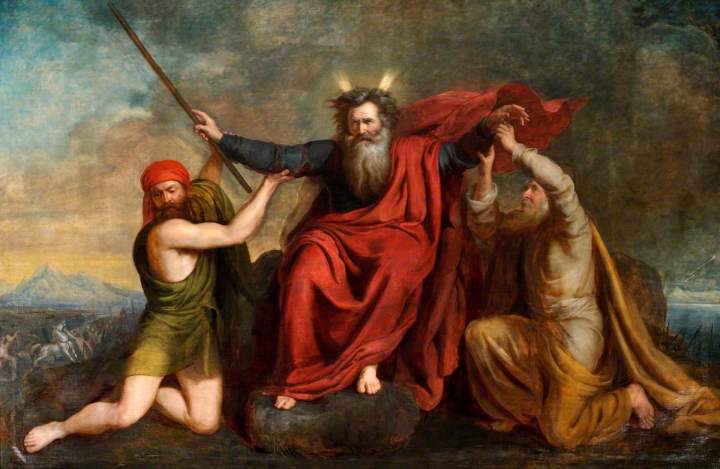
The parable reminds us that God hears prayer. He may not always answer it in a way we might like. Sometimes God says no, or not yet, which we might not want to hear. It teaches us patience and wisdom, and even if we suffer, we grow through it. Our growth in holiness can be painful and difficult. In the first reading from Exodus, Moses is clearly tired, he has to be held up by Aaron and Hur. In Paul’s letter to Timothy, he is not advising something popular, but something unpopular, that people will not want to hear. 

The Gospel ends with the question (v. 8): ‘Nevertheless, when the Son of Man comes, will he find faith on earth?’ It’s an important question. If we look at statistics, then people in this country are becoming less religious. Fewer people have faith. There are many reasons for this, and this is not the place to explore them. Solutions are likewise not simple, or straightforward. We can do many things, but we need to make sure that our own faith is strong and attractive, and be prepared to bear witness to it, regardless of the cost. Our faith can only be attractive when it is REAL. This is what will encourage people to follow our example, and come to know and love Jesus Christ. Only in this way can real living faith be transferred so then when Christ comes, as He surely will, He will find faith on earth. So let us trust Christ, knowing that His promises are true, that He feeds us with His Body and Blood in the Eucharist to give us life in Him. Let us love the one who loves us, who gave His life for us, to take away our sins, to heal us and restore us. And healed and restored by Him, let us bear witness to Him, so that the world may come to believe and give glory to God the Father, God the Son, and God the Holy Spirit, to whom be ascribed as is most right and just all might, majesty, glory, dominion, and power, now and forever. Amen.

NWM_AU_OP2.jpg

Trinity 18

What’s the point of it all? It’s a question people ask, and thankfully the church has an answer. Humanity exists to love God and serve him in this life, and to enjoy Him in the next. We are made for worship. Nothing else matters: work, family, friends. They’re not bad in themselves, but compared to our relationship with God, they are secondary. Worshipping God is a way of saying that God is the most important thing in our lives. We love God more than our family, our friends, even ourselves. It’s radical and counter-cultural, because it says that our immortal soul matters more than wealth, or power, or prestige. What we are doing is the most important thing we can ever do. It’s what we are made for. To worship God.

In the first reading this morning from Exodus we see what prayer can achieve. Our life is a battle, just like that fought between Israel and the Amalekites. And we can conquer in spiritual matters by keeping our arms raised in prayer, and helping others by supporting them. The church is a community where we help each other, where we bear each other’s burdens. We pray for ourselves and others, and we are prayed for, so that all around the world, every moment of every day, we are surrounded and upheld by Christians praying for us, not to change God’s mind, but to change us.

It is something which Paul’s Second Letter to Timothy shows us is something we need to learn, to believe, and to continue doing. Prayer isn’t grand, it’s a bit of a slog, it takes a lifetime. It has to be taught, it is what preaching is for. Teaching the faith, and telling people who Jesus is (the Son of God, born of the Virgin Mary) and what He does (preaches repentance, the forgiveness of sins, dies on the Cross, and rises again). It is easy to pervert this into a message which makes few demands upon us, that says, “yes, you’re all fine, you don’t need to do anything”. Christianity makes demands of us. We have to do certain things, which we might prefer not to do, and not do things we might rather like to do. We all need to reminded about this regularly, to help us stay on track. This also helps us to pray well together. 

In this morning’s Gospel Jesus teaches us ‘to pray and not lose heart’ (Lk 18:1) It is important advice. Especially when times are difficult. He teaches us with a parable. There is an unjust judge. He’s corrupt, and he’s fed up, so he gives in, for a quiet life, with the result that the widow receives what is right. God can indeed use many things The point is that the widow is persistent: she keeps on, so that he has to listen to her in the end. So likewise Christian prayer should be unceasing. The widow’s prayers turn wickedness and injustice into mercy and justice. Likewise our prayers do not change God, but instead they change us. That’s the point of prayer not to change God’s mind, but to change us, into what God wants us to be. Persistent prayer can, and will change us. It is how saints are made: through prayer. It takes WORK, but it is wonderful, and worth it. 

The parable reminds us that God hears prayer. He may not always answer it in a way we might like. Sometimes God says no, or not yet, which we might not want to hear. It teaches us patience and wisdom, and even if we suffer, we grow through it. Our growth in holiness can be painful and difficult. In the first reading from Exodus, Moses is clearly tired, he has to be held up by Aaron and Hur. In Paul’s letter to Timothy, he is not advising something popular, but something unpopular, that people will not want to hear. 

The Gospel ends with the question (v. 8): ‘Nevertheless, when the Son of Man comes, will he find faith on earth?’ It’s an important question. If we look at statistics, then people in this country are becoming less religious. Fewer people have faith. There are many reasons for this, and this is not the place to explore them. Solutions are likewise not simple, or straightforward. We can do many things, but we need to make sure that our own faith is strong and attractive, and be prepared to bear witness to it, regardless of the cost. Our faith can only be attractive when it is REAL. This is what will encourage people to follow our example, and come to know and love Jesus Christ. Only in this way can real living faith be transferred so then when Christ comes, as He surely will, He will find faith on earth. So let us trust Christ, knowing that His promises are true, that He feeds us with His Body and Blood in the Eucharist to give us life in Him. Let us love the one who loves us, who gave His life for us, to take away our sins, to heal us and restore us. And healed and restored by Him, let us bear witness to Him, so that the world may come to believe and give glory to God the Father, God the Son, and God the Holy Spirit, to whom be ascribed as is most right and just all might, majesty, glory, dominion, and power, now and forever. Amen.

NWM_AU_OP2.jpg

Sunday, 25 August 2019

Twenty first Sunday of Year C

There are times when Jesus’ words in the Gospel make us feel uncomfortable and uneasy. But this isn’t necessarily a bad thing. Our faith should challenge us. Challenge us to follow Christ. Challenge us to live out our faith in our lives. This isn’t easy. Quite the opposite. It is hard work, but then anything worthwhile usually is. It takes effort. And yet the effort on our part is as nothing compared to that of God, who sent His Son to be born for us, and to show us how to live. Jesus demonstrates the Love of God in action, to show us how to live lives of radical generosity.

The prophet Isaiah has a vision of a future which sees a God who knows us and loves us. He gathers the people of the world together, so that they may see God’s glory. As Christians, we believe that this points forward to Jesus Christ, who is the Word made flesh, the true demonstration of God’s glory in the world. He will show that glory most fully on the Cross, when He suffers and dies for humanity, to take away our sin. This is the sign God sets among us, so that the Church may declare God’s glory among the nations. 

Declaring God’s glory is the prophetic aspect of the church — sharing the Good News. With it comes a commitment to holiness of life, so that our words and actions are in tune with each other. We cannot succeed in this by our own strength or efforts. Instead we must rely upon God’s grace. We should humbly acknowledge our need for God. Only God can transform us. Only God can forgive our sins, our failures and shortcomings. Through grace God can transform us, more and more into His likeness. 

This recognition of our limitations and failings opens up a space where God can be at work in our lives, transforming us to live the Divine life of Love. This is the narrow door of this morning’s gospel: narrow because if we have a sense of our own self-importance or our worth which is too large then we cannot enter –- our sense of who and what we are gets in the way. It’s not enough to have eaten and drunk in God’s presence, to have been around when he taught in our streets.–It is a question of engagement. We are challenged to ask ourselves, ‘Am I a bystander or have I been fed by God? By the grace of the sacrament am I living out the love of God in my life? Have I been there when the Gospel has been taught? Have I both listened to it and lived it out in my life?’

These are not simple things to do. It is easier to coast along and take the easy options. That is why we meet together to encourage and support each other. That’s after all what the Church is for. We are a collection of sinners trying to live in response to the love of God which has been poured out on each of us. It is something which we need to do together — loving each other, loving our enemies, living out forgiveness as we have been forgiven and loved by God. This is a radically different way of life to that which the world encourages us to practise. It can be really difficult, and we will fail at it, but that’s alright! The point is not that we fail and give up, but that we keep trying, loving and forgiving, together, and become built up as the body of Christ, humble enough to let God be at work in us. He, by His Grace will transform our nature and make us the people of God, able to live out His out his love in our communities.

We have come here today to be fed by Word and Sacrament, to be nourished by God, and with God. In order to ‘recline at table’ as the Gospel puts it, we need to have false ideas of who and what we are stripped away. We need to recognise our dependence upon God, and each other, to help us to live out our faith –- to grow in holiness together as the people of God, loved, healed, and restored by Him. This is the only way that we can transform the world that it reflects more fully the great glory of God. The Gospel really is this radical, it’s not nice, or comfortable, it’s challenging and difficult, and utterly wonderful. It is Good News which releases people from the slavery of this world and all its false ideas, to live in the freedom and love of God.

We just have to look to Jesus and to His Cross to see God’s love for us. What is shameful in the eyes of the world, we can see as glorious — true love which gives regardless of the cost,, which heals and restores broken sinful humanity, which gives us the hope of new life in heaven. This is grace, the free gift of God, who shared our humanity so that we might share His divinity, and be strengthened by Word and Sacrament to live out our faith.

Living out our faith will be hard: the world will mock us and our feeble attempts to follow God. Yet, we believe in a God who loves us, and who would never belittle our feeble efforts to follow Him. So may the fire of God’s love be kindled in our hearts and lives, that we may be ablaze for Him, aflame with love for God and neighbour, love our enemies and our friends, and lets us change the world, not just this village, or this county, but all of God’s creation, all of humanity, that they may know God’s love and that it may rule in their hearts and lives.

So let us hasten to enter through the narrow gate, so that God may continue to transform our human nature, that His saving love and power may be at work in our hearts and our lives, so that we may be transformed with all the world, so that it may believe and sing the praise of God the Father, God the Son, and God the Holy Spirit, to whom be ascribed as is most right and just all might, majesty, glory, dominion, and power, now and forever. Amen. 
cropped-velazquezcrucifxion.jpg

Twenty first Sunday of Year C

There are times when Jesus’ words in the Gospel make us feel uncomfortable and uneasy. But this isn’t necessarily a bad thing. Our faith should challenge us. Challenge us to follow Christ. Challenge us to live out our faith in our lives. This isn’t easy. Quite the opposite. It is hard work, but then anything worthwhile usually is. It takes effort. And yet the effort on our part is as nothing compared to that of God, who sent His Son to be born for us, and to show us how to live. Jesus demonstrates the Love of God in action, to show us how to live lives of radical generosity.

The prophet Isaiah has a vision of a future which sees a God who knows us and loves us. He gathers the people of the world together, so that they may see God’s glory. As Christians, we believe that this points forward to Jesus Christ, who is the Word made flesh, the true demonstration of God’s glory in the world. He will show that glory most fully on the Cross, when He suffers and dies for humanity, to take away our sin. This is the sign God sets among us, so that the Church may declare God’s glory among the nations. 

Declaring God’s glory is the prophetic aspect of the church — sharing the Good News. With it comes a commitment to holiness of life, so that our words and actions are in tune with each other. We cannot succeed in this by our own strength or efforts. Instead we must rely upon God’s grace. We should humbly acknowledge our need for God. Only God can transform us. Only God can forgive our sins, our failures and shortcomings. Through grace God can transform us, more and more into His likeness. 

This recognition of our limitations and failings opens up a space where God can be at work in our lives, transforming us to live the Divine life of Love. This is the narrow door of this morning’s gospel: narrow because if we have a sense of our own self-importance or our worth which is too large then we cannot enter –- our sense of who and what we are gets in the way. It’s not enough to have eaten and drunk in God’s presence, to have been around when he taught in our streets.–It is a question of engagement. We are challenged to ask ourselves, ‘Am I a bystander or have I been fed by God? By the grace of the sacrament am I living out the love of God in my life? Have I been there when the Gospel has been taught? Have I both listened to it and lived it out in my life?’

These are not simple things to do. It is easier to coast along and take the easy options. That is why we meet together to encourage and support each other. That’s after all what the Church is for. We are a collection of sinners trying to live in response to the love of God which has been poured out on each of us. It is something which we need to do together — loving each other, loving our enemies, living out forgiveness as we have been forgiven and loved by God. This is a radically different way of life to that which the world encourages us to practise. It can be really difficult, and we will fail at it, but that’s alright! The point is not that we fail and give up, but that we keep trying, loving and forgiving, together, and become built up as the body of Christ, humble enough to let God be at work in us. He, by His Grace will transform our nature and make us the people of God, able to live out His out his love in our communities.

We have come here today to be fed by Word and Sacrament, to be nourished by God, and with God. In order to ‘recline at table’ as the Gospel puts it, we need to have false ideas of who and what we are stripped away. We need to recognise our dependence upon God, and each other, to help us to live out our faith –- to grow in holiness together as the people of God, loved, healed, and restored by Him. This is the only way that we can transform the world that it reflects more fully the great glory of God. The Gospel really is this radical, it’s not nice, or comfortable, it’s challenging and difficult, and utterly wonderful. It is Good News which releases people from the slavery of this world and all its false ideas, to live in the freedom and love of God.

We just have to look to Jesus and to His Cross to see God’s love for us. What is shameful in the eyes of the world, we can see as glorious — true love which gives regardless of the cost,, which heals and restores broken sinful humanity, which gives us the hope of new life in heaven. This is grace, the free gift of God, who shared our humanity so that we might share His divinity, and be strengthened by Word and Sacrament to live out our faith.

Living out our faith will be hard: the world will mock us and our feeble attempts to follow God. Yet, we believe in a God who loves us, and who would never belittle our feeble efforts to follow Him. So may the fire of God’s love be kindled in our hearts and lives, that we may be ablaze for Him, aflame with love for God and neighbour, love our enemies and our friends, and lets us change the world, not just this village, or this county, but all of God’s creation, all of humanity, that they may know God’s love and that it may rule in their hearts and lives.

So let us hasten to enter through the narrow gate, so that God may continue to transform our human nature, that His saving love and power may be at work in our hearts and our lives, so that we may be transformed with all the world, so that it may believe and sing the praise of God the Father, God the Son, and God the Holy Spirit, to whom be ascribed as is most right and just all might, majesty, glory, dominion, and power, now and forever. Amen. 

cropped-velazquezcrucifxion.jpg

Friday, 19 April 2019

Good Friday

Today something amazing happens: Christ dies for us. He who became incarnate in the womb of the Virgin Mary, suffers and dies for us. We come to contemplate the Word made Flesh, God incarnate, suffer and die for us. In this we may truly know God, and His Love for us, who took flesh for our sake, and now dies that we might live. 

In today’s first reading from the prophet Isaiah we see all of Christ’s suffering and death foretold, and interpreted:

 He was despised and rejected by men; a man of sorrows, and acquainted with grief; and as one from whom men hide their faces he was despised, and we esteemed him not. Surely he has borne our griefs and carried our sorrows; yet we esteemed him stricken, smitten by God, and afflicted. But he was wounded for our transgressions; he was crushed for our iniquities; upon him was the chastisement that brought us peace, and with his stripes we are healed.’ (Isa 53:3-5 ESV) 

Because of what happens today we are healed. The wounds of sin, which cry out for healing, can be healed in Christ. Such is God’s love for us. What sin has destroyed, love restores. This is the heart of our faith as Christians: God loves us so much that His Son becomes incarnate and suffers and dies for love of us. Words cannot fully express the mystery of God’s love. Instead, we come to gaze upon our Crucified Lord, to behold His love for us and prepare to eat His Body, broken for us.

Christ is our great High Priest, who as both priest and victim offers Himself upon the altar of the Cross to bleed and die for us, to bear our sins, and to reconcile us with God the Father. He dies that we might live. People find this idea difficult, they are not comfortable with it. That’s the point. Christ’s death should make us feel uncomfortable because it reminds us that OUR sins have put Him there. He bears our burden, and that of all humanity, past, present, and future, and through His wounds we are healed. 

Sin is a serious business. It is the human refusal to listen to God, and to cooperate with the Divine will for our flourishing. We are made in the image of God, but sin marrs that image in us. It is a serious problem, and one which we cannot put right ourselves. We cannot earn our way to heaven, through faith or good works. That is why Christ dies for us. Instead we have to rely upon grace, the unmerited love and mercy of God. We have to accept it, so that we can be transformed by it. God saves us because of His love and mercy. Today we see that love and mercy enacted in Our Lord’s Passion and Death. 

At the heart of our faith is the idea that God became what we are, so that we might become what He is. It’s the truth of the Incarnation, and it underpins what happens today. Christ dies for us, so  that we might share His Risen life. But, before we can, Christ experiences the physical torture caused by our sins. He experiences the desolated of being forsaken by God, the effect of sin, and cries out the opening words of Psalm 22: ‘My God my God why hast thou forsaken me: and art so far from my cry and from the words of my distress?’ And yet in the midst of this we, as Christians, can have hope and even joy. What the world sees as disaster and failure, we recognise as a triumph. Christ is executed for sedition and blasphemy, for claiming to be the King of the Jews and the Messiah, the Son of God. What in the eyes of the world is shameful: dying alone, naked and vulnerable, is in fact the greatest demonstration of God’s love. Love freely given, from His Incarnation, to His Death and beyond, this is the Good News, the proclamation of the Christian Faith: ‘we preach Christ crucified, a stumbling block to Jews and folly to Gentiles,’ (1Cor1:23 ESV). A stumbling block to Jews because following Deuteronomy 21:22-23 (ESV) ‘And if a man has committed a crime punishable by death and he is put to death, and you hang him on a tree, his body shall not remain all night on the tree, but you shall bury him the same day, for a hanged man is cursed by God. ’ The messiah cannot be crucified, but He is. Greeks love wisdom, logic, and Philosophy. The idea that God would die for humanity doesn’t make sense. Gods are vengeful or indifferent at best. The idea that God loves us enough to die for us is crazy. And so it is, and we rejoice in the absurdity of it. God reconciles humanity through degradation, torture, and suffering, to show us the reconciling power of His Love, stronger than death, or sin. What looks like failure is in fact VICTORY. Today, Christ conquers sin and death, all that separates God and humanity, and by His stripes we are healed. 

We don’t deserve it and we haven’t earned it, that’s the point, that’s what grace is, unmerited kindness, reckless generosity. It is there to help us become the people God wants us to be: to be strengthened, fed, healed, and restored by him: to die to sin and be raised to new life, and to share that life and love with others, that the world might believe and be saved through him. Christ pays the debt which we cannot to reconcile humanity to His loving and merciful Father. Christ shows us the meaning of true love: that we might live it out in our lives, forgiving one another, bearing our own cross, and living lives of love for love of Him who died for love of us.

We should glory in the Cross of our Lord Jesus Christ, for he is our salvation, our life, and our resurrection, through him we are saved and made free. Amen.

cropped-velazquezcrucifxion.jpg

Good Friday

Today something amazing happens: Christ dies for us. He who became incarnate in the womb of the Virgin Mary, suffers and dies for us. We come to contemplate the Word made Flesh, God incarnate, suffer and die for us. In this we may truly know God, and His Love for us, who took flesh for our sake, and now dies that we might live. 

In today’s first reading from the prophet Isaiah we see all of Christ’s suffering and death foretold, and interpreted:

 He was despised and rejected by men; a man of sorrows, and acquainted with grief; and as one from whom men hide their faces he was despised, and we esteemed him not. Surely he has borne our griefs and carried our sorrows; yet we esteemed him stricken, smitten by God, and afflicted. But he was wounded for our transgressions; he was crushed for our iniquities; upon him was the chastisement that brought us peace, and with his stripes we are healed.’ (Isa 53:3-5 ESV) 

Because of what happens today we are healed. The wounds of sin, which cry out for healing, can be healed in Christ. Such is God’s love for us. What sin has destroyed, love restores. This is the heart of our faith as Christians: God loves us so much that His Son becomes incarnate and suffers and dies for love of us. Words cannot fully express the mystery of God’s love. Instead, we come to gaze upon our Crucified Lord, to behold His love for us and prepare to eat His Body, broken for us.

Christ is our great High Priest, who as both priest and victim offers Himself upon the altar of the Cross to bleed and die for us, to bear our sins, and to reconcile us with God the Father. He dies that we might live. People find this idea difficult, they are not comfortable with it. That’s the point. Christ’s death should make us feel uncomfortable because it reminds us that OUR sins have put Him there. He bears our burden, and that of all humanity, past, present, and future, and through His wounds we are healed. 

Sin is a serious business. It is the human refusal to listen to God, and to cooperate with the Divine will for our flourishing. We are made in the image of God, but sin marrs that image in us. It is a serious problem, and one which we cannot put right ourselves. We cannot earn our way to heaven, through faith or good works. That is why Christ dies for us. Instead we have to rely upon grace, the unmerited love and mercy of God. We have to accept it, so that we can be transformed by it. God saves us because of His love and mercy. Today we see that love and mercy enacted in Our Lord’s Passion and Death. 

At the heart of our faith is the idea that God became what we are, so that we might become what He is. It’s the truth of the Incarnation, and it underpins what happens today. Christ dies for us, so  that we might share His Risen life. But, before we can, Christ experiences the physical torture caused by our sins. He experiences the desolated of being forsaken by God, the effect of sin, and cries out the opening words of Psalm 22: ‘My God my God why hast thou forsaken me: and art so far from my cry and from the words of my distress?’ And yet in the midst of this we, as Christians, can have hope and even joy. What the world sees as disaster and failure, we recognise as a triumph. Christ is executed for sedition and blasphemy, for claiming to be the King of the Jews and the Messiah, the Son of God. What in the eyes of the world is shameful: dying alone, naked and vulnerable, is in fact the greatest demonstration of God’s love. Love freely given, from His Incarnation, to His Death and beyond, this is the Good News, the proclamation of the Christian Faith: ‘we preach Christ crucified, a stumbling block to Jews and folly to Gentiles,’ (1Cor1:23 ESV). A stumbling block to Jews because following Deuteronomy 21:22-23 (ESV) ‘And if a man has committed a crime punishable by death and he is put to death, and you hang him on a tree, his body shall not remain all night on the tree, but you shall bury him the same day, for a hanged man is cursed by God. ’ The messiah cannot be crucified, but He is. Greeks love wisdom, logic, and Philosophy. The idea that God would die for humanity doesn’t make sense. Gods are vengeful or indifferent at best. The idea that God loves us enough to die for us is crazy. And so it is, and we rejoice in the absurdity of it. God reconciles humanity through degradation, torture, and suffering, to show us the reconciling power of His Love, stronger than death, or sin. What looks like failure is in fact VICTORY. Today, Christ conquers sin and death, all that separates God and humanity, and by His stripes we are healed. 

We don’t deserve it and we haven’t earned it, that’s the point, that’s what grace is, unmerited kindness, reckless generosity. It is there to help us become the people God wants us to be: to be strengthened, fed, healed, and restored by him: to die to sin and be raised to new life, and to share that life and love with others, that the world might believe and be saved through him. Christ pays the debt which we cannot to reconcile humanity to His loving and merciful Father. Christ shows us the meaning of true love: that we might live it out in our lives, forgiving one another, bearing our own cross, and living lives of love for love of Him who died for love of us.

We should glory in the Cross of our Lord Jesus Christ, for he is our salvation, our life, and our resurrection, through him we are saved and made free. Amen.

cropped-velazquezcrucifxion.jpg

Saturday, 16 February 2019

Sixth Sunday of Year C (Lk 6:17-26)

The world around us has many clever and subtle ways of going after false gods. One of the most prevalent in our modern world is consumerism. Feeling a bit down? Shopping will cheer you up! You don’t even have to leave the comfort of your own home, just click a button and what you want will be sent to you. But it is a transitory pleasure, it doesn’t last. As Christians we know that our source of true happiness and joy is to be found in God alone. This is something which our readings this morning make very clear.

The prophet Jeremiah shows the difference between trusting in humanity, and trusting in God. Where we put our trust matters, because it shapes who and what we are. Against a model which stresses human self-sufficiency, we see that reliance upon God leads to human flourishing, having life in all its fulness.

Our death is something which we all need to face. Each and every one of us will die, it is inescapable. But because of who Christ is, and what He has done, we do not need to be afraid. The heart of our faith is that Christ died for us, to take away our sins, and was raised from the dead, to give us the hope of eternal life in Him. If it is not true, then the church is a sham, we’ve been fed lies for two thousand years. It would be the greatest deception of humanity ever, we would be truly pitiable. But it is true, and Christ’s Death and Resurrection have in fact changed everything. We have the hope that those who are in Christ share in His Death and Resurrection through their baptism. For us life is changed and not ended, and we have the hope of being united with God in Heaven, which we prepare for here on earth.

This is what lies behind the account in Luke’s Gospel. People come from all over the place, from far and wide, to be healed by Jesus. This is what God is all about, the healing of humanity, taking away our fears, our troubles, and giving us the peace ‘which passeth all understanding’. God’s love is made manifest in the healing miracles of Jesus Christ because it represents life in all its fulness. We are loved, healed and reconciled by God, so that we can live in a new way — living the life of the Kingdom, the life of Heaven, here and now.

To be poor in the world’s eyes is to lack money, possessions, power, and influence. All these worldly things don’t matter in the grand scheme of things. We have God, and are filled with his love, and that’s what really matters. God satisfies our hunger, or as St Augustine put it, ‘You have made us for yourself, and our hearts are restless until they find their rest in You.’ (Confessions 1.1.8) We have the source of everlasting Joy in God. But being a Christian won’t make us popular in the eyes of the world, quite the opposite. We will be seen as strange, dismissed as hypocrites, because we don’t buy into the emptiness of the world around us. 

At its heart Christianity looks dangerous and suspect to the world around us, and so it should. We are not conformed to the ways of the world, but rather to the will of God. We don’t just go along with things, because that’s what everyone does, instead we follow a higher authority. We cannot be bought off with baubles and trinkets, with wealth or power, things of this world, because we acknowledge something, someone greater, namely God. We live as God wants us to live, acknowledging Him before all things. There’s something strange and different about us, because we are not like other people. 

It’s not easy being like this, in fact it’s difficult, very difficult, and it’s why we, as Christians need to support each other in living out our faith together, as a community of faith. Christians face persecution around the world, people are forbidden to convert to Christianity, they are not free to meet and worship, and risk beatings torture, imprisonment, and even death for doing so. It’s real and it is happening around the world as we speak. 

Here in this country we are more likely to face indifference, someone might say, ‘Why do you believe in all that claptrap? Christians are just a bunch of hypocrites’. Our faith is not nonsense, but rather profound, meaningful, and wonderful. We do, however, need to live it out in our lives. It needs to make a difference to who and what we are, so that others might see the truth of the Gospel lived out in our lives. What we do here in church prepares and nourishes us to love our neighbour. We hear God’s word, and are nourished by it. We pray together for the Church and the World, and those in need. 

Above all, we are nourished by Christ, with Christ, with His Body and Blood, so that He may transform us more and more into His likeness. The Eucharist makes the Church, it is the source and summit of our life together. Through it we are united with each other and with Christ in this, the sacred banquet of the Kingdom of God. This is the medicine for which our souls cry out, so that they may be healed by Christ and prepared to live out our faith in Christ’s Death and Resurrection in the world, putting our trust in God, so that He might be at work in and through us, sharing His love with a world which longs for it. 

So let us prepare to rely upon God, filled with His Joy and Love, sharing it with others so that they may come to believe and give glory to God the Father, God the Son, and God the Holy Spirit, to whom be ascribed as is most right and just, all might, majesty, glory dominion and power, now and forever. Amen. 

5481471361948_XXL

Sixth Sunday of Year C (Lk 6:17-26)

The world around us has many clever and subtle ways of going after false gods. One of the most prevalent in our modern world is consumerism. Feeling a bit down? Shopping will cheer you up! You don’t even have to leave the comfort of your own home, just click a button and what you want will be sent to you. But it is a transitory pleasure, it doesn’t last. As Christians we know that our source of true happiness and joy is to be found in God alone. This is something which our readings this morning make very clear.

The prophet Jeremiah shows the difference between trusting in humanity, and trusting in God. Where we put our trust matters, because it shapes who and what we are. Against a model which stresses human self-sufficiency, we see that reliance upon God leads to human flourishing, having life in all its fulness.

Our death is something which we all need to face. Each and every one of us will die, it is inescapable. But because of who Christ is, and what He has done, we do not need to be afraid. The heart of our faith is that Christ died for us, to take away our sins, and was raised from the dead, to give us the hope of eternal life in Him. If it is not true, then the church is a sham, we’ve been fed lies for two thousand years. It would be the greatest deception of humanity ever, we would be truly pitiable. But it is true, and Christ’s Death and Resurrection have in fact changed everything. We have the hope that those who are in Christ share in His Death and Resurrection through their baptism. For us life is changed and not ended, and we have the hope of being united with God in Heaven, which we prepare for here on earth.

This is what lies behind the account in Luke’s Gospel. People come from all over the place, from far and wide, to be healed by Jesus. This is what God is all about, the healing of humanity, taking away our fears, our troubles, and giving us the peace ‘which passeth all understanding’. God’s love is made manifest in the healing miracles of Jesus Christ because it represents life in all its fulness. We are loved, healed and reconciled by God, so that we can live in a new way — living the life of the Kingdom, the life of Heaven, here and now.

To be poor in the world’s eyes is to lack money, possessions, power, and influence. All these worldly things don’t matter in the grand scheme of things. We have God, and are filled with his love, and that’s what really matters. God satisfies our hunger, or as St Augustine put it, ‘You have made us for yourself, and our hearts are restless until they find their rest in You.’ (Confessions 1.1.8) We have the source of everlasting Joy in God. But being a Christian won’t make us popular in the eyes of the world, quite the opposite. We will be seen as strange, dismissed as hypocrites, because we don’t buy into the emptiness of the world around us. 

At its heart Christianity looks dangerous and suspect to the world around us, and so it should. We are not conformed to the ways of the world, but rather to the will of God. We don’t just go along with things, because that’s what everyone does, instead we follow a higher authority. We cannot be bought off with baubles and trinkets, with wealth or power, things of this world, because we acknowledge something, someone greater, namely God. We live as God wants us to live, acknowledging Him before all things. There’s something strange and different about us, because we are not like other people. 

It’s not easy being like this, in fact it’s difficult, very difficult, and it’s why we, as Christians need to support each other in living out our faith together, as a community of faith. Christians face persecution around the world, people are forbidden to convert to Christianity, they are not free to meet and worship, and risk beatings torture, imprisonment, and even death for doing so. It’s real and it is happening around the world as we speak. 

Here in this country we are more likely to face indifference, someone might say, ‘Why do you believe in all that claptrap? Christians are just a bunch of hypocrites’. Our faith is not nonsense, but rather profound, meaningful, and wonderful. We do, however, need to live it out in our lives. It needs to make a difference to who and what we are, so that others might see the truth of the Gospel lived out in our lives. What we do here in church prepares and nourishes us to love our neighbour. We hear God’s word, and are nourished by it. We pray together for the Church and the World, and those in need. 

Above all, we are nourished by Christ, with Christ, with His Body and Blood, so that He may transform us more and more into His likeness. The Eucharist makes the Church, it is the source and summit of our life together. Through it we are united with each other and with Christ in this, the sacred banquet of the Kingdom of God. This is the medicine for which our souls cry out, so that they may be healed by Christ and prepared to live out our faith in Christ’s Death and Resurrection in the world, putting our trust in God, so that He might be at work in and through us, sharing His love with a world which longs for it. 

So let us prepare to rely upon God, filled with His Joy and Love, sharing it with others so that they may come to believe and give glory to God the Father, God the Son, and God the Holy Spirit, to whom be ascribed as is most right and just, all might, majesty, glory dominion and power, now and forever. Amen. 

5481471361948_XXL

Thursday, 31 May 2018

Augustine Sermon 272: on the Nature of the Sacrament of the Eucharist

What you see on God’s altar, you’ve already observed during the night that has now ended. But you’ve heard nothing about just what it might be, or what it might mean, or what great thing it might be said to symbolize. For what you see is simply bread and a cup – this is the information your eyes report. But your faith demands far subtler insight: the bread is Christ’s body, the cup is Christ’s blood. Faith can grasp the fundamentals quickly, succinctly, yet it hungers for a fuller account of the matter. As the prophet says, “Unless you believe, you will not understand.” [Is. 7.9; Septuagint] So you can say to me, “You urged us to believe; now explain, so we can understand.” Inside each of you, thoughts like these are rising: “Our Lord Jesus Christ, we know the source of his flesh; he took it from the virgin Mary. Like any infant, he was nursed and nourished; he grew; became a youngster; suffered persecution from his own people. To the wood he was nailed; on the wood he died; from the wood, his body was taken down and buried. On the third day (as he willed) he rose; he ascended bodily into heaven whence he will come to judge the living and the dead. There he dwells even now, seated at God’s right. So how can bread be his body? And what about the cup? How can it (or what it contains) be his blood?” My friends, these realities are called sacraments because in them one thing is seen, while another is grasped. What is seen is a mere physical likeness; what is grasped bears spiritual fruit. So now, if you want to understand the body of Christ, listen to the Apostle Paul speaking to the faithful: “You are the body of Christ, member for member.” [1 Cor. 12.27] If you, therefore, are Christ’s body and members, it is your own mystery that is placed on the Lord’s table! It is your own mystery that you are receiving! You are saying “Amen” to what you are: your response is a personal signature, affirming your faith. When you hear “The body of Christ”, you reply “Amen.” Be a member of Christ’s body, then, so that your “Amen” may ring true! But what role does the bread play? We have no theory of our own to propose here; listen, instead, to what Paul says about this sacrament: “The bread is one, and we, though many, are one body.” [1 Cor. 10.17] Understand and rejoice: unity, truth, faithfulness, love. “One bread,” he says. What is this one bread? Is it not the “one body,” formed from many? Remember: bread doesn’t come from a single grain, but from many. When you received exorcism, you were “ground.” When you were baptized, you were “leavened.” When you received the fire of the Holy Spirit, you were “baked.” Be what you see; receive what you are. This is what Paul is saying about the bread. So too, what we are to understand about the cup is similar and requires little explanation. In the visible object of bread, many grains are gathered into one just as the faithful (so Scripture says) form “a single heart and mind in God” [Acts 4.32]. And thus it is with the wine. Remember, friends, how wine is made. Individual grapes hang together in a bunch, but the juice from them all is mingled to become a single brew. This is the image chosen by Christ our Lord to show how, at his own table, the mystery of our unity and peace is solemnly consecrated. All who fail to keep the bond of peace after entering this mystery receive not a sacrament that benefits them, but an indictment that condemns them. So let us give God our sincere and deepest gratitude, and, as far as human weakness will permit, let us turn to the Lord with pure hearts. With all our strength, let us seek God’s singular mercy, for then the Divine Goodness will surely hear our prayers. God’s power will drive the Evil One from our acts and thoughts; it will deepen our faith, govern our minds, grant us holy thoughts, and lead us, finally, to share the divine happiness through God’s own son Jesus Christ. Amen!

Saturday, 7 April 2018

Easter II

I have something of a confession to make: I’m a bit of a fan of St Thomas the Apostle, probably because it is my middle name, but I’ve always felt something of an affinity towards him. He is somewhat hard done by, and on the basis of this morning’s Gospel reading he is generally known as ‘Doubting Thomas’ which is something of a misnomer. If anything he should really be understood as ‘Believing Thomas’ but more about that in a minute.

None of us likes to feel left out, it crushes the soul. We’ve all experienced it at some point in our lives, and it is painful. Imagine the joy the disciples felt when Jesus appears to them on that first Easter Day. He gives them peace, and commissions them, sends them out, to be apostles, to proclaim the Good News to the world. When Jesus begins his public ministry He calls on people to repent from their sins, to turn away from them. Now that He has died for us and been raised from the dead, He commissions his apostles to forgive or retain sin. The Church exists to deal with the mess we make as human beings, through what Jesus has done for us, in the power of His Holy Spirit.

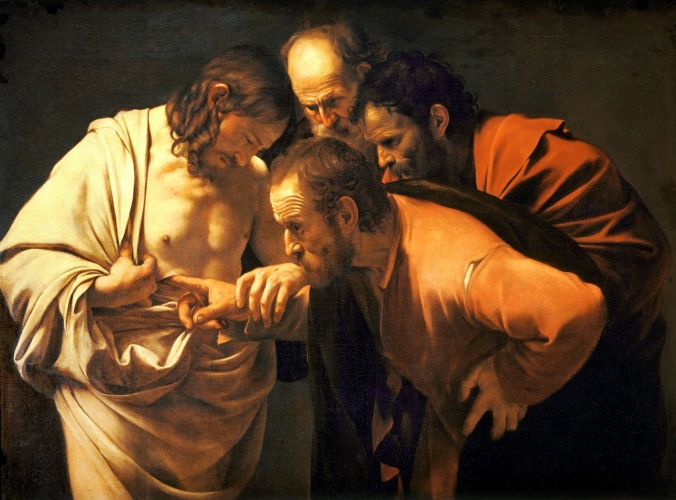
Thomas feels somewhat left out of it all. He wants to believe, but he needs to see with his own eyes, he doesn’t yet have Faith. So, a week later Jesus comes again and shows Thomas His hands and His side, the wounds of love, which take away our sin. He commands ‘Do not doubt, but believe’ and Thomas does. He says, ‘My Lord and my God!’ He confesses his belief in Jesus as Lord and God. He makes a radical statement of belief in WHO and WHAT Jesus is. He is our Lord and our God, our allegiance to Him is more important than anything else. It was this fact which caused the death of thousands of Christians over the next few hundred years. We are all used to seeing pictures of Queen Elizabeth, in homes, schools, and public buildings. Imagine for a second that had to kneel down in front of them and worship the Head of State as a god, offering prayer and incense. To us as Christians it is unthinkable — worship is something we give to God alone ‘I am the Lord your God, who brought you up out of the land of Egypt, out of the house of bondage. You shall have no other gods beside me.’ (Exodus 20:1-2). We worship Jesus because He is God. Like St Thomas we kneel before him, and confess that He is Our Lord and our God, our Saviour, who LOVES us. The world around us may find this strange, that we make such a declaration, and we are not going to compromise over it.

The Cross had asked the questions; the Resurrection had answered them…. The Cross had asked ‘Why does God permit evil and sin to nail Justice to a tree?’ The Resurrection answered: ‘That sin, having done its worst, might exhaust itself and thus be overcome by Love that is stronger than either sin or death.’

Thus there emerges the Easter lesson that the power of evil and the chaos of the moment can be defied and conquered, for the basis of our hope is not in any construct of human power but in the power of God, who has given to the evil of this earth its one mortal wound—an open tomb, a gaping sepulchre, an empty grave.

Fulton J. Sheen Cross-Ways

This morning as we rejoice in the joy of the Risen Lord, as we are filled with joy, with hope and with love, we can reflect on what the Resurrection does: when Jesus comes and stands among the disciples he says ‘Peace be with you’ Christ’s gift to the world in His Death and Resurrection is Peace, the Peace ‘which passes all understanding’. He shows the disciples His hands and side so that they can see the wounds of love, through which God’s Mercy is poured out on the world to heal it and restore it. In this peace Christ can say to them ‘As the Father sent me, so I send you’ as the baptised people of God, filled with the Holy Spirit, the Church is to be a missionary community — one sent to proclaim the Good News of Jesus Christ to the world, that it may share the joy and life of the Risen Lord.

As well as giving the Apostles the Holy Spirit, ordaining them as the first bishops of the Church, we see that the power of the Cross to bring peace to the world is also the power to absolve sins — priests and bishops can absolve the people of God in God’s name, and by God’s power — this is what the Cross achieves — reconciling us to God and each other. The Church, then, is to be a community of reconciliation, where we are forgiven and we, in turn, forgive, where we are freed from sin, its power and its effects.

When Christ breathes on the disciples and says ‘Receive the Holy Spirit’ it is this gift of God’s Holy Spirit which transforms them from frightened people sat in a locked room in fear into the confident, joyous proclaimers of the Gospel, such as Peter in his sermon to the people of Jerusalem. In Peter’s sermon we see that all that Christ is and does is confirmed by Scripture — it is the fulfilment of prophesy, such as we find in Isaiah 25:6-9:

On this mountain the Lord of hosts will make for all peoples a feast of rich food, a feast of well-aged wine, of rich food full of marrow, of aged wine well refined. And he will swallow up on this mountain the covering that is cast over all peoples, the veil that is spread over all nations. He will swallow up death for ever; and the Lord God will wipe away tears from all faces, and the reproach of his people he will take away from all the earth, for the Lord has spoken. It will be said on that day, ‘Behold, this is our God; we have waited for him, that he might save us. This is the Lord; we have waited for him; let us be glad and rejoice in his salvation.’

As the Church we know that Jesus is the Messiah, the one who gives freedom to Israel, a freedom from sin — a bringing to completion of what God started in the Exodus, in the crossing of the Red Sea — we too are free, freed by the waters of baptism, sharing in Christ’s Death and Resurrection.

Thomas was not present with the disciples, he cannot believe in the reality of Jesus’ Resurrection unless he sees with his own eyes, and feels with his own hands — such is his grief, such is his love for Jesus. Our Lord says to him, ‘Doubt no longer but believe’ which leads to his confession, ‘My Lord and my God’. Blessed are we who have not seen and yet have come to believe, and through this belief we have live in Christ’s name, we have the hope of eternal life and joy with him forever.

The disciples go from being scared and stuck in an upper room to missionaries, evangelists, spreading the Good News around the world, regardless of the cost, even of sacrificing their own lives to bear witness to the fact that Jesus Christ is the Son of God, that he died for our sins, and that he rose again, on this day for us, that God loves us and tells us to love Him and to love one another. It is a simple and effective message which people still want to hear — we need to tell it to them, in our thoughts, our words and our actions.

The heart of our faith and the Gospel is forgiveness — no matter how many times we mess things up, we are forgiven. It is this reckless generosity of spirit which people find hard to believe that they too can be forgiven, by a loving God, and by their fellow Christians. That we can, despite our manifold shortcomings be a people of love, and forgiveness, and reconciliation. That God’s Grace will in the end not abolish our nature, but perfect it, that being fed by Christ, with Christ: so that we too may become what He is. That faced with the sad emptiness of the world, and its selfishness, its greed, we can be filled with joy, and life, and hope. That like the first apostles we too can spread the Gospel: that the world may believe.

It’s a tall order, perhaps, but one which God promises us. That is what the reality of the Resurrection is all about, it’s either nothing, in which case we are the most pitiable of deluded fools — idiots who are more to be pitied than blamed, or it is the single most important thing in the world. It should affect all of us, every part of our life, every minute of every day, all that we do, all that we say, all that we are. This may not fit in with a reserved British mentality, we think we’re supposed to be polite and not force our views on others. But this simply will not do. We are, after all, dealing with people’s souls, their eternal salvation, it’s a serious matter. And what we offer people is entirely free, can change their lives for the better, and make life worth living.

So let us be filled with the joy of the Resurrection this Easter, let us share that joy with others, may it fill our lives and those of whom we meet with the joy and love of God, who has triumphed and who offers us all new life in Him, that all that we do, all that we are, all that we say or think may give glory to God the Father, God the Son, and God the Holy Spirit, to whom be ascribed as is most right and just, all might, majesty, dominion and power, now and forever.

7ec0d-the_incredulity_of_saint_thomas-caravaggio_1601-2