Showing posts with label Peace. Show all posts

Sunday, 12 April 2020

Easter 2020 [John 20:1-9]

Easter is for Christians a time of celebration, a feast which we continue to celebrate for fifty days until Pentecost. We do this because it is the most important day of the year for us, because Jesus Christ not only died for us on the Cross, but rose again from the dead. For Christians Death does not have the last word, it is not the end, quite the opposite, it is the start of New Life.

We are used to hearing the proclamation of the Easter message, to the point that we can run the risk of becoming immune to the strangeness of what we are celebrating. Easter is odd: bodies don’t usually rise from tombs. In today’s Gospel, Mary of Magdala simply cannot understand what is going on. St Peter goes into the tomb and sees the cloths lying there, but only the other disciple, St John, both sees and believes, because he looks with the eyes of faith. John has listened to what Jesus has said, and understands what has happened, and how it has been foretold in the Hebrew Scriptures. He sees and understands because he LOVES.

This Easter we are not able to worship together, as we usually do. Instead, for our own safety and the safety of others, we have to worship on our own. But this does not mean that our worship ceases, not at all. This is a hard and a painful time for all of us, because as Christians we are a family, we worship TOGETHER. But while we are not able to do this together physically, we can still be united spiritually. So what can we do? We can read scripture, and we can pray: for the church, for the world, for each other, for all dealing with the current pandemic, for the sick and suffering, and for the dead and dying. We do this because God hears our prayers, and because prayer changes us. It makes us more loving, more generous, more forgiving, and more keen to seek forgiveness. 

This is how we grow in faith, and we can do it whether we are together, or we are apart. It is difficult in this current isolation, but it is by no means impossible. We are an Easter people, and ‘Alleluia’ is our song. We are called to rejoice, regardless of what is happening, regardless of what we may face in this life, because the source of our joy is God, as the prophet Nehemiah says, ‘Go on your way. Eat the fat and drink sweet wine and send portions to anyone who has nothing ready, for this day is holy to our Lord. And do not be grieved, for the joy of the Lord is your strength.’ (Nehemiah 8:10 ESV) God does not disappoint us, and Christ’s resurrection is as true today as it ever was. Christ has conquered sin and death, and risen victorious from the grave, breaking down the bars of Hell and leading souls to Heaven, so we rejoice. As St Paul writes to the Church in Rome: ‘Who shall separate us from the love of Christ? Shall tribulation, or distress, or persecution, or famine, or nakedness, or danger, or sword? As it is written, “For your sake we are being killed all the day long; we are regarded as sheep to be slaughtered.” No, in all these things we are more than conquerors through him who loved us. For I am sure that neither death nor life, nor angels nor rulers, nor things present nor things to come, nor powers, nor height nor depth, nor anything else in all creation, will be able to separate us from the love of God in Christ Jesus our Lord.’ (Romans 8:35-39 ESV) So, my brothers and sisters in Christ, ‘Pasg hapus i chi gyd!’ ‘A Happy Easter to you all!’ May the joy and peace of the Risen Lord fill your hearts and lives, both now and always. Amen. 

If you wish to, you can make a Spiritual Communion: the means of grace by which someone, prevented from sharing in a celebration of the Eucharist, nonetheless shares in the communion of Jesus Christ. Please pray the prayer below:

My Jesus, I believe that You are present in the Most Holy Sacrament. I love You above all things, and I desire to receive You into my soul. Since I cannot at this moment receive You sacramentally, come at least spiritually into my heart. I embrace You as if You were already there and unite myself wholly to You. Never permit me to be separated from You. Amen.

7a55c-anastasischora

Easter 2020 [John 20:1-9]

Easter is for Christians a time of celebration, a feast which we continue to celebrate for fifty days until Pentecost. We do this because it is the most important day of the year for us, because Jesus Christ not only died for us on the Cross, but rose again from the dead. For Christians Death does not have the last word, it is not the end, quite the opposite, it is the start of New Life.

We are used to hearing the proclamation of the Easter message, to the point that we can run the risk of becoming immune to the strangeness of what we are celebrating. Easter is odd: bodies don’t usually rise from tombs. In today’s Gospel, Mary of Magdala simply cannot understand what is going on. St Peter goes into the tomb and sees the cloths lying there, but only the other disciple, St John, both sees and believes, because he looks with the eyes of faith. John has listened to what Jesus has said, and understands what has happened, and how it has been foretold in the Hebrew Scriptures. He sees and understands because he LOVES.

This Easter we are not able to worship together, as we usually do. Instead, for our own safety and the safety of others, we have to worship on our own. But this does not mean that our worship ceases, not at all. This is a hard and a painful time for all of us, because as Christians we are a family, we worship TOGETHER. But while we are not able to do this together physically, we can still be united spiritually. So what can we do? We can read scripture, and we can pray: for the church, for the world, for each other, for all dealing with the current pandemic, for the sick and suffering, and for the dead and dying. We do this because God hears our prayers, and because prayer changes us. It makes us more loving, more generous, more forgiving, and more keen to seek forgiveness. 

This is how we grow in faith, and we can do it whether we are together, or we are apart. It is difficult in this current isolation, but it is by no means impossible. We are an Easter people, and ‘Alleluia’ is our song. We are called to rejoice, regardless of what is happening, regardless of what we may face in this life, because the source of our joy is God, as the prophet Nehemiah says, ‘Go on your way. Eat the fat and drink sweet wine and send portions to anyone who has nothing ready, for this day is holy to our Lord. And do not be grieved, for the joy of the Lord is your strength.’ (Nehemiah 8:10 ESV) God does not disappoint us, and Christ’s resurrection is as true today as it ever was. Christ has conquered sin and death, and risen victorious from the grave, breaking down the bars of Hell and leading souls to Heaven, so we rejoice. As St Paul writes to the Church in Rome: ‘Who shall separate us from the love of Christ? Shall tribulation, or distress, or persecution, or famine, or nakedness, or danger, or sword? As it is written, “For your sake we are being killed all the day long; we are regarded as sheep to be slaughtered.” No, in all these things we are more than conquerors through him who loved us. For I am sure that neither death nor life, nor angels nor rulers, nor things present nor things to come, nor powers, nor height nor depth, nor anything else in all creation, will be able to separate us from the love of God in Christ Jesus our Lord.’ (Romans 8:35-39 ESV) So, my brothers and sisters in Christ, ‘Pasg hapus i chi gyd!’ ‘A Happy Easter to you all!’ May the joy and peace of the Risen Lord fill your hearts and lives, both now and always. Amen. 

If you wish to, you can make a Spiritual Communion: the means of grace by which someone, prevented from sharing in a celebration of the Eucharist, nonetheless shares in the communion of Jesus Christ. Please pray the prayer below:

My Jesus, I believe that You are present in the Most Holy Sacrament. I love You above all things, and I desire to receive You into my soul. Since I cannot at this moment receive You sacramentally, come at least spiritually into my heart. I embrace You as if You were already there and unite myself wholly to You. Never permit me to be separated from You. Amen.

7a55c-anastasischora

Sunday, 19 January 2020

2nd Sunday of Year A – ‘Behold the Lamb of God!’

John the Baptist looked at Jesus as he walked by and said, ‘Behold the Lamb of God!’ Lambs were a central part of the Jewish festival of Passover. In order to avert the tenth plague in Egypt, the people of Israel were instructed to take a young lamb without any blemish and slaughter it. They were then to anoint the doorposts of their house with it, so that their firstborn would be saved, not killed by the Angel of Death. The lamb was to be roasted over the fire and eaten standing up whilst dressed for a journey. This festival of Passover is the high point of the Jewish religious calendar, and marks the start of their journey from slavery in Egypt to the Promised Land of Israel. It is also the time of Jesus’ Passion, Death, and Resurrection.

In order to meet the needs the large number of people celebrating the passover festival in the early 1st century AD, there needed to be a lot of shepherds raising flocks of animals for slaughter. In the Christmas story we see that the first visitors to the Holy Family in Bethlehem were shepherds. As Bethlehem is only six miles from Jerusalem, these shepherds were raising the lambs that would be consumed at Passover in nearby Jerusalem in their thousands. Jesus, like these lambs was also without blemish and would be killed at Passover. So from the very moment of Christ’s birth, His Death is foreshadowed. 

Traditionally Jesus’ death is understood to have happened at the ninth hour, 3pm, which is the same time that the passover lambs began to be slaughtered in the Temple in Jerusalem for the feast of Passover. This is not mere coincidence, but rather signal proof that Christ’s death is sacrificial, and represents the new Passover, and the freedom of the people of God. In this morning’s Gospel Jesus’s cousin, John the Baptist, greets Him, saying, ‘Behold the Lamb of God, who takes away the sins of the world’. John understands that Jesus is the passover Lamb.

The image of a lamb brings to mind a passage in the prophet Isaiah, where the Suffering Servant is compared to, ‘a lamb that is led to the slaughter, and like a sheep that before its shearers is dumb’ (Isa 53:7). This prophecy will be fulfilled in Holy Week on Good Friday. Here, at the start of John’s Gospel, just after the Baptism of Jesus in the Jordan, when John the Baptist saw the Spirit descend on Him, (before the first sign of turning water into wine at the marriage of Cana), John’s description of Jesus is a prophetic utterance which points forward to Jesus’ death on the Cross. So then, from the very start of Our lord’s life, as with the gift of myrrh at Bethlehem, the beginning points to the end: to Calvary (and beyond). 

In Genesis, we read of Abraham’s sacrifice of Isaac, who is saved when at the last moment a ram appears in a thorn bush. Isaac carrying wood for the sacrificial fire, prefigures Christ carrying the wood of the Cross. The ram in the thorns foreshadows Christ, the Lamb of God, crowned with thorns. Mt Moriah, where these events take place, is the mountain on which Jerusalem was built, and whose highest point is Golgotha, which is where Our Lord was crucified. The old foretells the new, and is completed by it.Prophecy is fulfilled. In Christ, God is glorified, and of Him the prophet Isaiah says, ‘I will make you as a light for the nations, that my salvation may reach to the end of the earth’ (Isa 49:5 ESV). 

In the Eucharist, just before we receive Communion I will repeat the words of John the Baptist, ‘Behold the Lamb of God…’ so that we may recognise Christ in our midst; we respond with the words of the Centurion, in Luke 7:6-7, ’Lord I am not worthy…’ It is this sense of unworthiness which keeps us both humble and reliant upon God to transform us. We hear John the Baptist’s words so that we may join in his confession that this is the Son of God. Christ is truly present in the Eucharist in a way which we cannot understand, which words and language cannot express, because that is how God is. As a result of the Word becoming flesh and dwelling amongst us, God incarnate makes himself known so that we might worship God, and that God might be at work in us. Unlike the sacrifices of Passover and the Day of Atonement which needed to be repeated annually, the Sacrifice of Christ on the Cross happens once, to deal with all sin, past, present, and future, to reconcile humanity to God and to each other. It is this reality which we celebrate today: we have been set free. 

This is the Good News of the Kingdom. We are loved by God, who flings His arms wide on the Cross to embrace the world with love. A God who embraces the shame of a slave’s death, the most brutal demonstration of Roman power, the most degrading way to die, to show the world love. It isn’t what you’d expect, and that’s the point. God does not want to compel us to love Him or worship Him, but rather makes a relationship possible, so that we might come to know Him, and love Him. As we approach the altar, this is what we are to receive, the Body and Blood of Christ, the self same body and blood which were nailed to the Cross for our sins and the sins of the whole world. Our hands will hold and our lips will touch him who created the entire universe. How can we not fail to be shocked by the generosity of a God who gives himself to us in such a personal way, in a way that we do not deserve? Yet, we can never deserve such a gift, that is why God takes the initiative and gives himself to us, freely and gladly. Like the Father of the Prodigal Son, God rushes to meet us, to embrace us and to celebrate with us, to show his love for us. God became a human being at Christmas so that we might become divine, through our baptism and our participation at the altar, in the feast of the Lamb.

The Eucharist is the sacrament of unity, uniting heaven and earth through the sacrifice of Calvary, allowing all humanity to share the body and blood of Our Saviour Jesus Christ, feeding on him so that we may become what he is; enabling us to share eternity with him, and to live lives of faith and hope, and love. So then, let us join the Wedding Banquet of the Lamb and enter into the mystery of God’s self-giving love, so that we may believe and give glory to God the Father, God the Son, and God the Holy Spirit, to whom be ascribed as is most right and just, all might, majesty, glory dominion and power, now, and forever.

img_0215

2nd Sunday of Year A – ‘Behold the Lamb of God!’

John the Baptist looked at Jesus as he walked by and said, ‘Behold the Lamb of God!’ Lambs were a central part of the Jewish festival of Passover. In order to avert the tenth plague in Egypt, the people of Israel were instructed to take a young lamb without any blemish and slaughter it. They were then to anoint the doorposts of their house with it, so that their firstborn would be saved, not killed by the Angel of Death. The lamb was to be roasted over the fire and eaten standing up whilst dressed for a journey. This festival of Passover is the high point of the Jewish religious calendar, and marks the start of their journey from slavery in Egypt to the Promised Land of Israel. It is also the time of Jesus’ Passion, Death, and Resurrection.

In order to meet the needs the large number of people celebrating the passover festival in the early 1st century AD, there needed to be a lot of shepherds raising flocks of animals for slaughter. In the Christmas story we see that the first visitors to the Holy Family in Bethlehem were shepherds. As Bethlehem is only six miles from Jerusalem, these shepherds were raising the lambs that would be consumed at Passover in nearby Jerusalem in their thousands. Jesus, like these lambs was also without blemish and would be killed at Passover. So from the very moment of Christ’s birth, His Death is foreshadowed. 

Traditionally Jesus’ death is understood to have happened at the ninth hour, 3pm, which is the same time that the passover lambs began to be slaughtered in the Temple in Jerusalem for the feast of Passover. This is not mere coincidence, but rather signal proof that Christ’s death is sacrificial, and represents the new Passover, and the freedom of the people of God. In this morning’s Gospel Jesus’s cousin, John the Baptist, greets Him, saying, ‘Behold the Lamb of God, who takes away the sins of the world’. John understands that Jesus is the passover Lamb.

The image of a lamb brings to mind a passage in the prophet Isaiah, where the Suffering Servant is compared to, ‘a lamb that is led to the slaughter, and like a sheep that before its shearers is dumb’ (Isa 53:7). This prophecy will be fulfilled in Holy Week on Good Friday. Here, at the start of John’s Gospel, just after the Baptism of Jesus in the Jordan, when John the Baptist saw the Spirit descend on Him, (before the first sign of turning water into wine at the marriage of Cana), John’s description of Jesus is a prophetic utterance which points forward to Jesus’ death on the Cross. So then, from the very start of Our lord’s life, as with the gift of myrrh at Bethlehem, the beginning points to the end: to Calvary (and beyond). 

In Genesis, we read of Abraham’s sacrifice of Isaac, who is saved when at the last moment a ram appears in a thorn bush. Isaac carrying wood for the sacrificial fire, prefigures Christ carrying the wood of the Cross. The ram in the thorns foreshadows Christ, the Lamb of God, crowned with thorns. Mt Moriah, where these events take place, is the mountain on which Jerusalem was built, and whose highest point is Golgotha, which is where Our Lord was crucified. The old foretells the new, and is completed by it.Prophecy is fulfilled. In Christ, God is glorified, and of Him the prophet Isaiah says, ‘I will make you as a light for the nations, that my salvation may reach to the end of the earth’ (Isa 49:5 ESV). 

In the Eucharist, just before we receive Communion I will repeat the words of John the Baptist, ‘Behold the Lamb of God…’ so that we may recognise Christ in our midst; we respond with the words of the Centurion, in Luke 7:6-7, ’Lord I am not worthy…’ It is this sense of unworthiness which keeps us both humble and reliant upon God to transform us. We hear John the Baptist’s words so that we may join in his confession that this is the Son of God. Christ is truly present in the Eucharist in a way which we cannot understand, which words and language cannot express, because that is how God is. As a result of the Word becoming flesh and dwelling amongst us, God incarnate makes himself known so that we might worship God, and that God might be at work in us. Unlike the sacrifices of Passover and the Day of Atonement which needed to be repeated annually, the Sacrifice of Christ on the Cross happens once, to deal with all sin, past, present, and future, to reconcile humanity to God and to each other. It is this reality which we celebrate today: we have been set free. 

This is the Good News of the Kingdom. We are loved by God, who flings His arms wide on the Cross to embrace the world with love. A God who embraces the shame of a slave’s death, the most brutal demonstration of Roman power, the most degrading way to die, to show the world love. It isn’t what you’d expect, and that’s the point. God does not want to compel us to love Him or worship Him, but rather makes a relationship possible, so that we might come to know Him, and love Him. As we approach the altar, this is what we are to receive, the Body and Blood of Christ, the self same body and blood which were nailed to the Cross for our sins and the sins of the whole world. Our hands will hold and our lips will touch him who created the entire universe. How can we not fail to be shocked by the generosity of a God who gives himself to us in such a personal way, in a way that we do not deserve? Yet, we can never deserve such a gift, that is why God takes the initiative and gives himself to us, freely and gladly. Like the Father of the Prodigal Son, God rushes to meet us, to embrace us and to celebrate with us, to show his love for us. God became a human being at Christmas so that we might become divine, through our baptism and our participation at the altar, in the feast of the Lamb.

The Eucharist is the sacrament of unity, uniting heaven and earth through the sacrifice of Calvary, allowing all humanity to share the body and blood of Our Saviour Jesus Christ, feeding on him so that we may become what he is; enabling us to share eternity with him, and to live lives of faith and hope, and love. So then, let us join the Wedding Banquet of the Lamb and enter into the mystery of God’s self-giving love, so that we may believe and give glory to God the Father, God the Son, and God the Holy Spirit, to whom be ascribed as is most right and just, all might, majesty, glory dominion and power, now, and forever.

img_0215

Sunday, 10 November 2019

Remembrance 2019

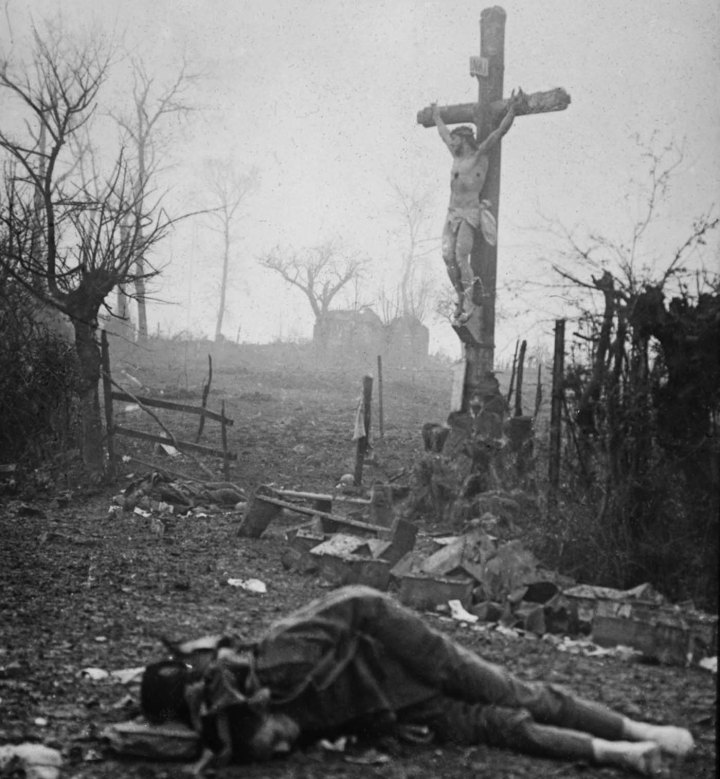
We are gathered here on this special day to do a number of things together. First and foremost we give thanks for the safe deliverance of these islands from the World Wars of the previous century. These were wars on a scale never before seen. The first was supposed to be the ‘war to end all wars’, yet within twenty years a greater conflict began which brought even more death and suffering to millions across the world. Hardly a day has gone by in the past century when there has not been a conflict somewhere in our world. 

It is now one hundred years since we first marked the anniversary of the Armistice by stopping in silence for two minutes, and praying: in remembrance of all those who gave their lives for our country, and for all who suffer as a result of war. For one hundred years we have engaged in a public act of remembrance. 

In 1919 the Prime Minister, David Lloyd George, commissioned a cenotaph (which means empty tomb) to stand in Whitehall, London, as a focus for an act of remembrance, when most of the war dead lay buried overseas. The original wood and plaster structure, designed by Sir Edward Lutyens, was only intended to stand for one week, but it proved so popular that a permanent one was created in Portland Stone ready for the 1920 Armistice Day.

Since 1919, the Cenotaph has become the central focus for national commemoration especially during the National Service of Remembrance held on Remembrance Sunday, the Sunday nearest to 11th November. Its meaning has developed and the Cenotaph now memorialises those who have given their lives in all conflicts since the First World War.

Throughout the country, local memorials were erected to remember the dead of the First and then the Second World War. Like the Cenotaph in London, these became the focus for local Remembrance ceremonies and we keep this tradition here in Maenclochog today, starting our Remembrance Service outside at our Village War Memorial. 

Our act of remembrance is not simply to recall a past event, or to bring the dead to mind, but something more. By remembering today, the sacrifice of countless men and women, we continue to show our thanks for the peace and prosperity which we now enjoy. 

We give thanks for to all those who have served, and continue to serve this country, both at home and abroad, and for the continuing work of the Royal British Legion in supporting veterans and their families. As a country we have asked much of our sons and daughters, and we continue so to do. ‘Cariad mwy na hwn nid oes gan neb; sef, bod i un roi ei einioes dros ei gyfeillion.’ ‘Greater love has no one than this, that someone lay down his life for his friends’ (Jn 15:13). They died that we might live. 

Their sacrifice calls to mind another sacrifice, made on a hill outside Jerusalem, ‘ble bu farw ein Harglwydd Iesu Grist drosom ni’. We remember this sacrifice too, as Jesus died for us. It is the heart of the Christian Faith, and the greatest demonstration possible of the saving power of love.

Love is at the heart of remembrance. Our human love comes from God, the source of all love. This love has the power to heal wounds, to comfort grief and loss. One hundred years on from the end of the First World War, the world still needs healing. This is beyond our capabilities as human beings. We need God’s help. Our God loves us, and longs to heal our wounds. He gave His Son to die for us, on the Cross, a painful death at the hands of enemy soldiers. Three days later, Jesus rose from the dead. His tomb was empty, and just as with the empty Cenotaph in London we are reminded that death is not the end. The Christian belief in the Resurrection of the dead and the life to come gives us all hope.

On the first Remembrance Day, one hundred years ago, two minutes silence was introduced. At 11 o’clock, as well as remembering the fallen, we take time to pray for peace. There are two words for peace in Welsh, ‘heddwch’, and ‘tangnefedd’. The first, ‘heddwch’ means an end to hostilities, the Armistice ceasefire which we celebrate today. But ‘tangnefedd’, the other kind of peace, is something far deeper and richer. It is the peace of God, the shalom of the Hebrew Old Testament. This is the gift of God, a feeling of wholeness, which brings about healing. So when Jesus says, ‘Blessed are the peacemakers, for they shall be called sons of God.’ ‘Gwyn eu byd y tangnefeddwyr: canys hwy a elwir yn blant i Dduw’ (Mt 5:9) He is envisaging something both radical and world-changing: something which heals, which forgives, and which loves. Today we commit ourselves to making peace a reality: here and now — in our community, in our families, in our relationships, in what we are, in what we say, and in what we do. We can never be too busy to do this. When we take the path of peace we honour the memory of those who gave their lives so that we might live. 

So let us therefore commit ourselves to help create the peace which Christ came to bring, for the glory of God, and the good of all human kind. Our Lord Jesus Christ has shown us another way to live — the way of love and gentleness. In memory of what Christ did here on earth, and continues to do, we can experience the peace of the Kingdom of God, where wounds are healed and divisions are reconciled. Today we give our thanks for those who sacrificed themselves for us, and we honour their memory by treasuring the peace won at so great a cost. 

Almighty God, hear our prayers and thanksgivings for all whom we remember this day. In the name of the Father, and of the Son, and of the Holy Spirit, Amen. 

Walter Kleinfeldt’s album showing the aftermath of a skirmish during the Battle of Somme, 1916 (7).jpg

Remembrance 2019

We are gathered here on this special day to do a number of things together. First and foremost we give thanks for the safe deliverance of these islands from the World Wars of the previous century. These were wars on a scale never before seen. The first was supposed to be the ‘war to end all wars’, yet within twenty years a greater conflict began which brought even more death and suffering to millions across the world. Hardly a day has gone by in the past century when there has not been a conflict somewhere in our world. 

It is now one hundred years since we first marked the anniversary of the Armistice by stopping in silence for two minutes, and praying: in remembrance of all those who gave their lives for our country, and for all who suffer as a result of war. For one hundred years we have engaged in a public act of remembrance. 

In 1919 the Prime Minister, David Lloyd George, commissioned a cenotaph (which means empty tomb) to stand in Whitehall, London, as a focus for an act of remembrance, when most of the war dead lay buried overseas. The original wood and plaster structure, designed by Sir Edward Lutyens, was only intended to stand for one week, but it proved so popular that a permanent one was created in Portland Stone ready for the 1920 Armistice Day.

Since 1919, the Cenotaph has become the central focus for national commemoration especially during the National Service of Remembrance held on Remembrance Sunday, the Sunday nearest to 11th November. Its meaning has developed and the Cenotaph now memorialises those who have given their lives in all conflicts since the First World War.

Throughout the country, local memorials were erected to remember the dead of the First and then the Second World War. Like the Cenotaph in London, these became the focus for local Remembrance ceremonies and we keep this tradition here in Maenclochog today, starting our Remembrance Service outside at our Village War Memorial. 

Our act of remembrance is not simply to recall a past event, or to bring the dead to mind, but something more. By remembering today, the sacrifice of countless men and women, we continue to show our thanks for the peace and prosperity which we now enjoy. 

We give thanks for to all those who have served, and continue to serve this country, both at home and abroad, and for the continuing work of the Royal British Legion in supporting veterans and their families. As a country we have asked much of our sons and daughters, and we continue so to do. ‘Cariad mwy na hwn nid oes gan neb; sef, bod i un roi ei einioes dros ei gyfeillion.’ ‘Greater love has no one than this, that someone lay down his life for his friends’ (Jn 15:13). They died that we might live. 

Their sacrifice calls to mind another sacrifice, made on a hill outside Jerusalem, ‘ble bu farw ein Harglwydd Iesu Grist drosom ni’. We remember this sacrifice too, as Jesus died for us. It is the heart of the Christian Faith, and the greatest demonstration possible of the saving power of love.

Love is at the heart of remembrance. Our human love comes from God, the source of all love. This love has the power to heal wounds, to comfort grief and loss. One hundred years on from the end of the First World War, the world still needs healing. This is beyond our capabilities as human beings. We need God’s help. Our God loves us, and longs to heal our wounds. He gave His Son to die for us, on the Cross, a painful death at the hands of enemy soldiers. Three days later, Jesus rose from the dead. His tomb was empty, and just as with the empty Cenotaph in London we are reminded that death is not the end. The Christian belief in the Resurrection of the dead and the life to come gives us all hope.

On the first Remembrance Day, one hundred years ago, two minutes silence was introduced. At 11 o’clock, as well as remembering the fallen, we take time to pray for peace. There are two words for peace in Welsh, ‘heddwch’, and ‘tangnefedd’. The first, ‘heddwch’ means an end to hostilities, the Armistice ceasefire which we celebrate today. But ‘tangnefedd’, the other kind of peace, is something far deeper and richer. It is the peace of God, the shalom of the Hebrew Old Testament. This is the gift of God, a feeling of wholeness, which brings about healing. So when Jesus says, ‘Blessed are the peacemakers, for they shall be called sons of God.’ ‘Gwyn eu byd y tangnefeddwyr: canys hwy a elwir yn blant i Dduw’ (Mt 5:9) He is envisaging something both radical and world-changing: something which heals, which forgives, and which loves. Today we commit ourselves to making peace a reality: here and now — in our community, in our families, in our relationships, in what we are, in what we say, and in what we do. We can never be too busy to do this. When we take the path of peace we honour the memory of those who gave their lives so that we might live. 

So let us therefore commit ourselves to help create the peace which Christ came to bring, for the glory of God, and the good of all human kind. Our Lord Jesus Christ has shown us another way to live — the way of love and gentleness. In memory of what Christ did here on earth, and continues to do, we can experience the peace of the Kingdom of God, where wounds are healed and divisions are reconciled. Today we give our thanks for those who sacrificed themselves for us, and we honour their memory by treasuring the peace won at so great a cost. 

Almighty God, hear our prayers and thanksgivings for all whom we remember this day. In the name of the Father, and of the Son, and of the Holy Spirit, Amen. 

Walter Kleinfeldt’s album showing the aftermath of a skirmish during the Battle of Somme, 1916 (7).jpg

Saturday, 27 April 2019

Easter II [Acts 5:27-32, Revelation 1:4-8, Jn 20:19-31]

In this morning’s first reading Saint Peter and the apostles are told by the authorities not to preach in the name of Jesus. Naturally, it is impossible for them to do this; they simply have to tell the world about Him and His Resurrection. They do this so that the gospel may be proclaimed: the gospel of repentance and forgiveness of sins through Christ. To be a Christian is to turn away from the ways of sin, the ways of the world — we are obedient to God, we hear what he is said in Christ and we obey him. The Church, then, must always be on its guard lest it ceases to be obedient to God and turns instead to the ways of the world, the ways of humanity. As St Paul says in his Letter to the Romans ‘be not conformed to this world’. It is a difficult thing to do. It is hard. It takes strength of character and confidence, and it will not be popular. But just as the apostles rejoiced that they were counted worthy to suffer dishonour for the name, and did not cease teaching and preaching Jesus Christ, so the Church is always called to do the same: to risk persecution, and to speak the uncomfortable truth which the world does not want to hear. This is our calling. 

When the disciples are sat in a locked room, afraid of persecution Christ comes among them and says, ‘Tangnefedd i chwi’ ‘Peace be with you’. Christ comes to give them peace. He gives them a peace which the world cannot give, because it is not of this world. The peace Christ which comes to give us is the peace won on the Cross, which has reconciled God and humanity. This wonderful relationship leads to the disciples being sent, as Christ was, to proclaim the Good News of the Kingdom, and of new life in Christ. Christ empowers His Apostles with the Holy Spirit, to forgive sins, and carry on Christ’s work of reconciliation. The church exists to do just this, to proclaim and reconcile, to carry on Christ’s work in the world in the power of the Holy Spirit.

All of us can, I think, understand Thomas’ frustration at not being there. It isn’t that he doubts, he wants to believe, and to experience the reality of his Risen Lord, and not to be left out. It’s a very human reaction. So when Jesus is with them again on Sunday, He greets them with Peace, and offers his hands and side to Thomas. He gives Thomas what he wants, proof that it is really Jesus, that he has truly risen from the dead. When faced with the reality of the Risen Jesus, Thomas can only say, ‘My Lord and My God’. Thomas confesses that Jesus is Lord and God, the sole supreme authority, above anything of this world. He worships God in Christ. We do the same, and we are blessed because we have not seen and yet believe. We believe because of the witness of Thomas, and others, down through the centuries, who have proclaimed the Good News of Jesus Christ, even at great personal cost. As St Peter and the apostles said, ‘We must obey God rather than men’ (Acts 5:29 ESV) Christians around the world follow their lead, and to this day face imprisonment, torture, and death, for their belief in Christ. They do so gladly, because of who Christ is, and what He has done. We may not face suicide bombers in our churches, thank God. But we are no less resolved to bear witness to Christ. We may be ignored by the world around us, but we carry on bearing witness to the love and reconciliation which Christ brings, and which nothing else can. We continue, ‘so that you may believe that Jesus is the Christ, the Son of God, and that by believing you may have life in his name’ (John 20:31 ESV) Christ comes to bring us life, in His Incarnation, in His Life and Preaching, and in His Death and Resurrection. He gives us His Life, through our Baptism, and through the Eucharist. We are united with Christ, and transformed by Him, to live His life in the world, filled with His Holy Spirit. This is good news, which we long to share with others, so that they may come to know Christ, and experience His Love. The Church exists to deal with the mess we make as human beings, through what Jesus has done for us, in the power of His Holy Spirit. The Church is to be a community of reconciliation, where we are forgiven and we, in turn, forgive. It is to be a place where we are freed from sin, its power and its effects.

The disciples go from being scared and stuck in an upper room to missionaries, evangelists, spreading the Good News around the world, regardless of the cost, even of sacrificing their own lives to bear witness to the fact that Jesus Christ is the Son of God, that he died for our sins, and that he rose again, on this day for us, that God loves us and tells us to love Him and to love one another. It is a simple and effective message which people still want to hear — we need to tell it to them, in our thoughts, our words and our actions.

The heart of our faith and the Gospel is forgiveness — no matter how many times we mess things up, we are forgiven. It is this reckless generosity of spirit which people find hard to believe that they too can be forgiven, by a loving God, and by their fellow Christians. That we can, despite our manifold shortcomings be a people of love, and forgiveness, and reconciliation. That God’s Grace will in the end not abolish our nature, but perfect it, that being fed by Christ, with Christ: so that we too may become what He is. That faced with the sad emptiness of the world, and its selfishness, its greed, we can be filled with joy, and life, and hope. That like the first apostles we too can spread the Gospel: that the world may believe.

So let us be filled with the joy of the Resurrection this Easter, let us share that joy with others, may it fill our lives and those of whom we meet with the joy and love of God, who has triumphed and who offers us all new life in Him, that all that we do, all that we are, all that we say or think may give glory to God the Father, God the Son, and God the Holy Spirit, to whom be ascribed as is most right and just, all might, majesty, dominion and power, now and forever.

7ec0d-the_incredulity_of_saint_thomas-caravaggio_1601-2

Saturday, 5 January 2019

Epiphany 2019

There are lots of people nowadays who want to deny Jesus’ birth, or at least cast doubt upon it: where and when and why it was. They prefer to argue that Christians have just made it all up. Why? Because they feel threatened by it. They want to ignore Jesus, who and what he is, what he does, and the claims he makes. They are threatened because He is the King of Israel, the Universal King. He is our Saviour and our God. He brings life, and asks us to follow Him. He’s dangerous and revolutionary. Far better to tame Him, or ignore Him. But that won’t do!

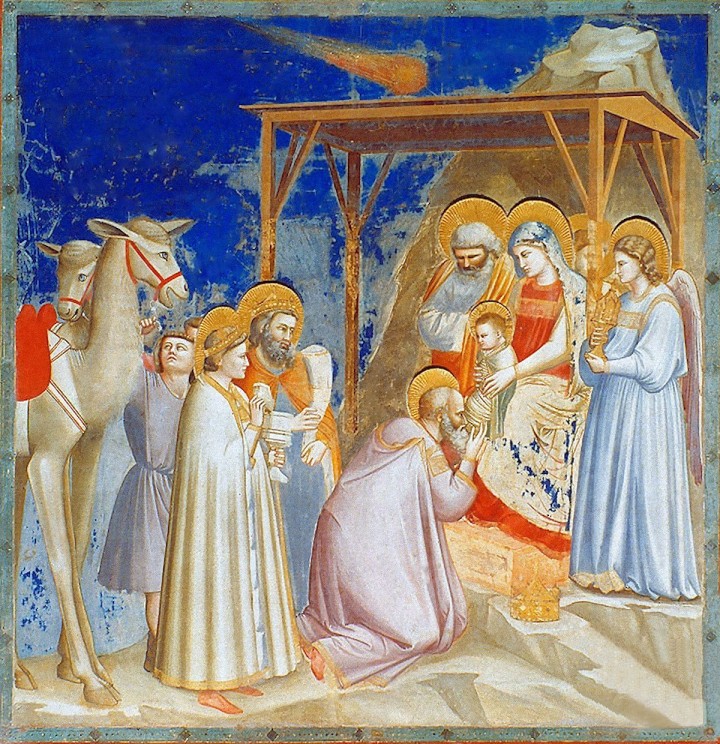
The opening words of Isaiah 61, ‘Arise, shine, for your light has come, and the glory of the Lord has risen upon you’ (Isa 61:1 ESV) foretells the star which leads the Wise Men to Jesus. It shines as a light in the darkness, and points to Him who is the light of the World, a light which the world cannot understand or overcome. He is the Light of the World, in Him our salvation has arisen, a light which can never be put out. The nations shall come to His light, Christ is made manifest to the gentiles, made clear, and obvious. Kings come to the brightness of His rising, and they bring gold, and frankincense, and myrrh. They come to honour Christ, who is priest, prophet, and King. They come to worship God made man; they come to pay their homage to the Saviour born among them. They come with camels and bringing gold and frankincense to worship their king and their God. They come to Bethlehem, and not to a royal palace, or a throne. This is what true kingship is, true love, that of God and not of humanity.

The wise men bring Jesus gifts: gold, frankincense, and myrrh. These are and always have been expensive, costly, and precious things. Gold, is a precious metal, which does not tarnish, which is pure. It is a gift for a King: its purity points to a life of perfect obedience, the pattern of how life should be lived. Incense, from Arabia, was offered to God in the Temple in Jerusalem, as the sweet-smelling smoke rose, it looked like our prayers rising to God. It is a sign of worship, a sign of honour, and how humanity should respond to God. Myrrh, often used in the ointment was part of embalming, it speaks of death. Even in Christ’s birth, and appearance to the Gentiles, we see Christ’s kingly power, and his obedience to the will of the Father. We see His role in worship as our great High Priest, which leads Him to Death and Burial

Everything points to the Cross, where Christ will shed his blood for love of us, where he will die to reconcile us to God. It is an act of pure, self-giving love, which we as Christians celebrate. It’s why we come to the Eucharist, to share in Christ’s body and blood, to be fed by him, with him, and to become what he is.

The Wise Men in the East saw a conjunction of the planets Jupiter, Saturn and Mars in the constellation Pisces, which was believed to represent the Jews , which coincided with a comet moving in the sky. So, on the basis of their observations they travelled hundred of miles to Israel, the land of the Jews, and go to the royal palace in Jerusalem, to find out what is going on. Creation announces, through the movement of the stars and planets that something wonderful is happening. 

The incarnation of the Son of God is the pivotal event in earth’s history: through it salvation has dawned, and humanity is offered freedom and new life in this little child. He is proclaimed to all the world as the King of the Jews and the Saviour of the World, the Messiah. Herod’s reaction was fear of being overthrown which leads him to murder the newborn children in Bethlehem in order to safeguard his position. The world’s reaction is more complex. Mostly it’s indifference, nowadays. At its root is pessimism for the future: things will just get worse. But in Christ a new hope has dawned. We have hope because Christ is born and made manifest to the world. When the Wise Men saw the star they rejoiced exceedingly with great joy, and they came, and they fell down, knelt and worshipped him, because he was God become man in the womb of a Virgin. Our salvation is made manifest to the world, the whole of creation rejoices that God is with us. It is a great reason for joy, and the joy of the Lord is our strength (cf. Nehemiah 8:10) 

So let us rejoice like the Wise Men, let us come like them to kneel before the Lord, born in our midst.  The Wise Men come and kneel and they worship and adore the Lord of creation and the Word of God Incarnate. The King of all is not in a Palace but in a simple house in Bethlehem, and He meets us here today under the outward forms of Bread and Wine, to heal us, to restore us, and to give us life in Him. Let us come before Him, offer Him the gifts of our life, and our love, and our service so that we may see His Kingdom grow.

As we celebrate the Epiphany we also look forward to Our Lord’s Baptism in the River Jordan and his first miracle at the Wedding at Cana. He who is without sin shows humanity how to be freed from sin and to have new life in Him. In turning water into wine we see that the kingdom of God is a place of generous love, a place of joy, and of life in all its fullness.

So let us be filled with joy and love, may we live lives of joy, and love, and service of God and one another, which proclaim in word and deed the love of God to the world, that it may believe: so that all creation may resound with the praise of God the Father, God the Son, and God the Holy Spirit, to whom be ascribed as is most right and just, all might, majesty, glory, dominion, and power, now and forever. Amen

01-giotto-di-bondone-the-adoration-of-the-magi-cappella-scrovegni-a-padova-padova-italy-13051.jpgAdoration_of_the_Magi_Tapestry.png

Saturday, 11 November 2017

Remembrance 2017

‘Greater love has no man than this, that a man lay down his life for his friends.’  Cariad mwy na hwn nid oes gan neb; sef, bod i un roi ei einioes dros ei gyfeillion. Jn 15:13

We come here today to remember, to remember and give thanks for a sacrifice. As Christians, we remember and give thanks for the sacrifice of Jesus Christ, which reconciles us with God and gives us the hope of everlasting life in him. Fel Cristnogion ry’n cofio ac yn diolch am aberth Iesu Grist, sy’n ein cyfiawnhau รข Duw ac yn rhoi gobaith i ni fywyd tragwyddol ynddo. As we meet him week by week and day by day in Word and Sacrament, for He is truly present in Scripture and in his Body and Blood, what we are doing is not simply recalling the events of the past, but experiencing those events and their effects here in the present. The sacrifice and its effects are a reality in our lives.

Likewise when we recall the sacrifice made by people from this village, this country and all over the world, our remembrance must likewise be an active one which has an effect in our lives. We recall the generosity of those who have tried to ensure that we can live lives free from warfare and suffering, a generosity which must leave a mark on our lives, and help us to learn from the mistakes of the past and not repeat them in the future.

No-one has not been touched by the events of the past one hundred years. Many people, members of our own families, gladly offered, and still continue to offer themselves for the safety and security of humanity. An act of remembrance has a deeper significance when we know that members of Her Majesty’s Armed Forces are on active service overseas, working for peace and stability, for a safer, fairer, world, where people can live in peace and plenty. We remember too all the victims of warfare, the countless millions who have lost their lives in a century characterised by conflict. Our reaction will, I suspect, of necessity, be a complex one: a mixture of sadness and thankfulness, gratitude and grief. While we are grateful to live in comparative peace after a period of wholesale slaughter, we cannot fail to be moved by the cost of military and civilian lives, which continues to this day.

It is important to see the sacrificial self-giving love of God in Christ’s passion as the pattern of our own lives. We as Christians are called in our baptism to share in Jesus’ life, death, and resurrection, and this can be lived out in any number of ways. We can remember, too, the vision of peace which characterises the understanding of the Messiah in the prophets. It is a time when the lion will lay with the lamb, and when swords will be beaten into ploughshares. So it seems as though we’re not there yet and in many ways this characterises much of the two thousand years following Christ’s birth. Humanity it seems, while it deeply wants the vision of messianic peace finds itself engaged in warfare of one sort or another, mostly for political ends, with the cost being borne by ordinary men, women and children.

So is there a way out of this endless cycle? In short, Yes. In the sacrifice of Jesus Christ upon the cross, who gave himself and suffered for our sins and the sins of all humanity: past, present and future. The slaughter of millions of people which characterised the wars of the last century is an act of brutality which nails Jesus to the cross. And yet he goes to his death gladly, for love of us. It is this act of total self-giving which shows us what true love is, and how we too need to fashion our lives after this pattern of love. We must always remember that Jesus’ loving self-giving is done for the healing of sin and division – for the reconciliation of humanity with God. While we are conscious of our failings and shortcomings and need for God, we must always remember that we are a people who are forgiven, who are loved by God in a way which has the power to transform our lives. Our lives can be transformed when and if we learn to love not only our friends and family, but our enemies, only then can swords be beaten into ploughshares and spears into pruning-hooks. Only then can the peace for which people fought, struggled and died become a reality in our world. By our trusting in the superabundance of God’s mercy and the power of the cross in our lives can we realise our hopes and dreams for peace. But we need to co-operate with a merciful and loving God, by living out lives which are informed by and filled with our faith, to bring about the peace for which we long, and which is the will of Almighty God.


Sunday, 15 November 2015

Homily for the Twenty Fourth Sunday after Trinity

When faced with an example of evil, of horror, human sinfulness on a grand scale it can be hard to know exactly what to say and do, as terror has the ability to paralyse us. It may not seem much but we can pray and trust God, and in His love and mercy. Compared to this all the sin and hate and bitterness of the world melts away. 
When Jesus talks to his disciples on the Mount of Olives, he speaks of a future which is uncertain and unpleasant, a future which we inhabit. And yet in this uncertain future we can be absolutely certain of one thing: namely that we are loved by God, as this is demonstrated by Our Lord and Saviour Jesus Christ on the Cross, where he carries the burden of our sins, past present and future, each and every act of murderous terrorism, all the sin which separates us from each other and from God. It is this confidence which inspires the author of the Letter to the Hebrews - he knows and trusts in the love of God shown to the world in Christ Jesus, to heal and restore humanity. There may be times when we don’t feel this to be true, when faced with an unrelenting torrent of human misery that we fall into despair. We want God to act, to sort things out, and yet, he already has, that is the point of Calvary, it is the place where human sin and Divine Love and Forgiveness meet, and where death is swallowed up in the victory of the Resurrection. We get upset if God doesn’t act in the manner or time of our choosing, while forgetting that He already has, once and for all.
We can rest assured that in the end Love will win, it has fewer guns and bombs, but more friends, and as Christians we know that Divine Love has a human face, a human heart, who says of those crucifying Him ‘Father. forgive them, for they know not what they do.’ Even as he dies, in pain and agony, in naked humiliation, his thoughts are for those whom he loves, whom he came to save. This is something to cling to, someone in whom we can put our trust. This is why, day by day day and week by week, for nearly two thousand years the church does this in memory of Him, so that we are mindful of the fact the Christ as both priest and victim offers himself upon the altar of the Cross to take away our sins, and we come to be fed by Christ and with Christ, with His Body and His Blood, so that we may be healed and restored, given a taste here on earth of the glory which awaits those who truly love and follow him.
This why we are here today, because we know that death, and sin, and hatred, and fear could not overcome Divine Love: Our Lord rose on the first day of the week, victorious over sin and death. We are an Easter people and ‘Alleluia’ is our song. WE know that nothing, not even death itself can separate us from the love of God in Christ Jesus, and we can put our trust in Him. We can be fed by Him, and with Him, so that we can share in that life of divine love here and now, so that He may transform our human nature, giving us a pledge of immortality here and now to strengthen us, to restore us, to heal our wounds, and fill us with His Love.
His victory is complete and total, its effects extend through time, it is eternal, the Love of God can change our lives, if we let it. So, let us come to Him to be transformed, and filled with His Love, strengthen to proclaim the Good News of the Kingdom so that all may repent and believe, and give Glory to the Father, and the Son, and the Holy Spirit, to whom be ascribed as is most right and just, all might, majesty, glory, dominion and power, now and forever. 

Wednesday, 1 April 2015

Good Friday 2015


Love has three and only three intimacies: speech, vision, and touch. These three intimacies God has chosen to make his love intelligible to our poor hearts. God has spoken: he told us that he loves us: that is revelation. God has been seen: that is the incarnation. God has touched us by his grace: that is redemption. Well indeed, therefore, may he say: ‘What more could I do for my vineyard than I have done? What other proof could I give my love than to exhaust myself in the intimacies of love? What else could I do to show that my own Sacred Heart is not less generous than your own?’
          If we answer these questions aright, then we will begin to repay love with love .... then we will return speech with speech which will be our prayer; vision with vision which will be our faith; touch with touch which will be our communion.
Fulton J Sheen The Eternal Galilean

The prophets of Israel spoke the word of the Lord to the people of their day – there is a lot in the prophet Isaiah which relates directly to the exile of Israel in Babylon – but this is not the only way that such scripture can be read. As well as talking to the present, they speak to the future and tell of things to come. They like all of the Hebrew Scriptures find their fullest meaning in Jesus Christ, the Word of God made flesh. He is the fulfilment of Scripture – it finds its truest and fullest meaning in Him: the Scriptures point to something beyond themselves, to our Lord and Saviour, and it is thus understandable that there have been times when Isaiah has been called the fifth Gospel, because of his prophesies especially concerning Our Lord’s Birth, Suffering and Death.
This is not a new phenomenon; in the 8th Chapter of the Acts of the Apostles we see the meeting of Philip and an Ethiopian eunuch, who is reading this very passage which we have just heard – the Suffering Servant. Philip asks him if he can understand what he is reading. He replies that he cannot, unless someone shows him the way. ‘Then Philip opened his mouth, and beginning with this Scripture he told him the good news about Jesus.’ (Acts 8:35 ESV). Isaiah’s prophesy is fulfilled in Jesus and this is the proclamation of the Church: we proclaim Jesus Christ and him crucified.
We read scripture so that we can understand it, and see in its words how it discloses the truth of the Word made flesh, who suffered and died for our sake. Isaiah prophesies Our Lord’s Passion and Death, and thus it makes sense, it can be understood, and the more we come to understand, the more we come to know just how much God loves us.
       Today Christ is both priest and victim, and upon the altar of the Cross he offers himself as a sacrifice for sin, for the salvation of humanity. A new covenant is made in his blood which restores the relationship between God and humanity, we are shown in the most graphic way possible how much God loves us, and thus how much we are to love God and to love each other, with that costly self-sacrificial love embodied by Our Lord in his Passion and Death.
After scourging him the soldiers put a purple robe around our Lord, they crown him with thorns, and give him a reed for a sceptre. They think they’re being clever and funny: they’re having a laugh, mocking a man about to be executed, but this is God showing the world what true kingship is: it is not pomp, or power, the ability to have one’s own way, but the Silent Way of suffering love. It shows us what God’s glory is really like: it turns our human values on their head and inaugurates a new age, according to new values, and restores a relationship broken by human sin.
          In being raised upon the Cross, our Lord is not dying the death of a common criminal, but rather reigning in glory – the glory of God’s free love given to restore humanity, to have new life in him. His hands and feet and side are pierced, as wounds of love, to pour out God’s healing life upon the world. In his obedience to the Father’s will, he puts to an end the disobedience of humanity's ๏ฌrst parent. Here mankind who fell because of a tree are raised to new life in Christ through his hanging on the tree.  Christ is a willing victim, the Lamb of God who takes away the sins of the world, the Silent lamb led to his slaughter, the Good Shepherd who lays down his life for his sheep that have gone astray. At the time when the Passover lambs are slaughtered in the temple, upon the Altar of the Cross, Christ as both priest and victim offers himself as the true lamb to take away the sins of the whole world, offers his death so that we may have life, new life in Him.
          Death and hell, the reward of sin, have no power over us: for in dying, and being laid in a stranger’s tomb, Christ will go down to Hell, to break down its doors, to lead souls to heaven, to alter the nature of the afterlife, once and for all. Just when the devil thinks he’s won, then in his weakness and in his silence Christ overcomes the world, the ๏ฌ‚esh, and the devil. The burden of sin which separates humanity from God is carried on the wood of the Cross.
On the way to Calvary our Lord falls three times such is the way, such was the burden, so we too as Christians, despite being reconciled to God by the Cross, will fall on our road too. We will continue to sin, but also we will continue to ask God for his love and mercy. But those arms which were opened on the cross will always continue to embrace the world with God’s love.
We don’t deserve it and we haven’t earned it, that’s the point, but it is there to help us become the people God wants us to be: to be strengthened, fed, healed, and restored by him: to die to sin and be raised to new life, and to share that life and love with others, that the world might believe and be saved through him. Christ pays the debt which we cannot to reconcile humanity to his loving and merciful Father. He shows us the meaning of true love: that we might live it out in our lives, forgiving one another, bearing our own cross, and living lives of love for love of him who died for love of us.
          We should glory in the Cross of our Lord Jesus Christ, for he is our salvation, our life, and our resurrection, through him we are saved and made free.

Saturday, 17 January 2015

A Thought for the Day from S. Anthony the Great


The brethren came to the Abba Anthony and said to him, 'Speak a word; how are we to be saved?' The old man said to them, 'You have heard the Scriptures. That should teach you how.' But they said, 'We want to hear it from you too, Father.' Then the old man said to them, 'The Gospel says,"if anyone strikes you on the one cheek, turn to him the other also."' (Mt 5:39) They said, 'We cannot do that.' The old man said, 'If you cannot offer the other cheek, at least allow one cheek to be struck.' 'We cannot do that either,' they said. So he said, 'If you are not able to do that, do not return evil for evil,' and they said, 'We cannot do that either.' Then the old man said to his disciple, 'Prepare a little brew of corn for these invalids. If you cannot do this, or that, what can I do for you? What you need is prayers.'

It was revealed to Abba Anthony in his desert that there was one who was his equal in the city. He was a doctor by profession and whatever he had beyond his needs he gave to the poor, and every day he sang the Sanctus with the angels.

He also said, 'Our life and our death is with our neighbour. If we gain our brother, we have gained God, but if we scandalise our brother, we have sinned against Christ.'

Sunday, 7 December 2014

Advent II Year B 'Repent the Kingdom is close at hand'

As Christians we are called to live in between Our Lord’s Resurrection and his coming as our Saviour and our Judge. We know that our redemption has been brought about: by Jesus’ birth and by His Death and Resurrection. This is the greatest news of all human history, and, as Christians, we should be glad, we should live lives full of joy. And yet somehow we don’t – we are tired of waiting, or perhaps we are not convinced of the truth of the message, or perhaps too distracted by the cares and worries of daily life.
I wish that I could say that this doesn’t apply to me, but I’m afraid that it does, I’m not a better Christian, though I long so to be. Thankfully, Advent is a time of preparation, of waiting, and hopefully of putting our own spiritual house in order, to greet our Lord when he comes, as the baby born in Bethlehem and as the Judge of all mankind.
       At one level, the idea of judgement worries me deeply, as I suspect if I were all up to me and my efforts, and were I simply to be judged on my own life I would not get to heaven – I cannot earn my way there. I, like all of you, and indeed all of humanity, are simply miserable sinners in need of God’s grace, his love and his mercy. We need Christ to be born, we need Him to die for our sins, and to rise again to give us the hope of eternal life with Him.
It probably does us all some good to think like this from time to time, not so that we feel wretched and depressed, but so that we recognise our need for God, that we turn to him again, that this time of Advent is part of our ongoing spiritual journey – turning away from sin and towards Christ. The Christian faith is the work of a lifetime, and of a community: it is something we all have to do together.
Thankfully, we as Christians know that he will come to be our judge is our redeemer, who bore our sins upon the cross, he is loving and merciful. Just as the arms of the prodigal son's father are wide open to embrace him, so too Christ's arms are flung wide upon the cross to embrace the world, our judge will come bearing wounds in his hands, his feet, and his side, because they are the wounds of love. We can have hope and confidence in this.
       John the Baptist, the last of the prophets is the voice crying in the wilderness of which the prophet Isaiah spoke. He has an uncomfortable and uncompromising message: Repent for the Kingdom of God is close at hand. It may not be what people want to hear, but it is, however, what people NEED to hear. Thus people flock to him, they are aware of their sin, aware of their need of God, of His love, mercy, and forgiveness. His message is one of repentance, of turning away from sin, from the ways of the world, a world which seeks to change our celebration of our Lord’s nativity into an orgy of consumerist excess. His is the birth, his is the way by which we can find true peace, we can turn to Christ, we can be like Him.
       John the Baptist’s message is uncomfortable and yet it is GOOD NEWS – our prayers are answered- that for which we hope, for which our soul deeply longs is ours.
 Regardless of what we might think or feel, from a divine perspective things look very different. A thousand years are like a day, just as the Psalmist says. Ours is a God of patience and mercy, who wants all to come to repentance, a God who loves Creation, and who created us in His image – He’s interested in the long game – a God of love and patience.

How then  do we respond? We respond by living lives of godliness and holiness, by striving to be found by him at peace, a peace which prepares for His coming. We are patient, we wait in expectant hope, living out our faith, and encouraging others so to do so that all the world may be saved and give glory to God the Father, God the Son, and God the Holy Spirit, to whom be ascribed as is most right and just, all might, majesty, glory, dominion, and power, now and to the ages of ages.

Tuesday, 2 September 2014

A thought for the day from St John of the Cross

Wait upon God with loving and pure attentiveness, working no violence on yourself lest you disturb the soul's peace and tranquility. God will feed your soul with heavenly food since you put no obstacle in his way. The soul in this state must remember that if it is not conscious of making progress, it is making much more than when it is walking on foot, because God himself is bearing it in his arms. Although outwardly it is doing nothing, it is in reality doing more than if it were working, since God is doing the work within it. And it is not remarkable that the soul does not see this, for our senses cannot perceive that which God works in the soul. Let the soul then leave itself in the hands of God and have confidence in him. Let it not trust itself to the hands and works of others, for if it stays in God's care it will certainly make progress. 

Friday, 30 May 2014

A thought for the day from Br Roger

There is no love of one's neighbour without the cross. The cross alone makes known the unfathomable depths of love.

The Rule of Taizรฉ

Friday, 28 February 2014

A thought for the day from Mother Mary Clare SLG


You are dedicated to love and reconciliation. Your life is directed to that end, and you must learn to stand at the Cross. It is a long learning, a long road, but a sure road if it is up the hill to Calvary.

It is a road on which you, by being stripped of all self, may mediate to the world the dawning knowledge of the glory that descends.

Sunday, 26 January 2014

Homily for Epiphany III Matthew 4:12-23


Epiphany III Mt 4:12-23
If you go to S. Paul’s Cathedral in London or the Chapel of Keble College, Oxford, you can see one of the most popular and reproduced works of Religious Art: Holman Hunt’s painting, The Light of the World. It shows our Lord and Saviour Jesus Christ standing at a door with a lantern. The door has no handle; it needs to be opened from the inside: Jesus may be the Light of the World, but he does not force himself upon us, we have to welcome Him into our hearts and our lives. His coming into the world which we celebrate at Christmas, which was made manifest to the world at Epiphany, was not the entry of a tyrant, forcing himself upon the world, but as a vulnerable and loving baby, entirely dependent upon the love and care of others, God comes among us. His coming is foretold by the prophet Isaiah, He is the light of the nations, and a cause of great joy: to be a Christian, to follow Christ is not be filled with the joy and love which comes from God, we can be serious, but should never be miserable, our vocation is to live out our faith, in love, and hope, and joy.

There is nothing worse than to see strife and division amongst Christians, as S. Paul found in Corinth: it has no place in the church, it isn’t what God intended for us, it’s not how things should be; it has to be resisted, wounds have to be healed, transgressions forgiven. It’s part of how we live out our faith in our lives. If we turn to the words of this morning’s Gospel we see Jesus saying, “Repent, for the kingdom of heaven is at hand.” To repent is to turn away from what separates us from God and each other, it is to turn to God in Christ, to be close to Him in Word and Sacrament, to be fed by Him, to be fed with Him, with His Body and Blood, so that we might share His divine nature, so that we might be given a foretaste of heaven, so that we may be strengthened to live out our faith in our lives, so that the world may believe – the Kingdom is close at hand, and Christ calls us, the baptised people of God, to share in the work of His kingdom. He asks that we follow Him, that we go where He goes, that we do what He does – it sounds easy enough, but it’s not, it’s something which we need to do together, and while I can help you to do it, I cannot without your help, your prayers, your love, and your support. As Christians we are inter-dependent, we rely upon each other.

We need to be like those first disciples who heard what Jesus said, who listened, and did what He told them, who were close to Jesus, so that our faith is a reality in our lives, strengthened and fed by Him who is the greatest medicine for our souls, who comes to us here, this morning in His Body and Blood, to heal us, to restore us and strengthen us to follow him, so that the world may believe and and sing the praise of God the Father, God the Son, and God the Holy Spirit, to whom be ascribed as is most right and just all might, majesty, glory, dominion, and power, now and forever.