Saturday, 18 July 2020

16th Sunday of Yr A (Mt 13: 24-43)

One of the interesting things of the last few months is that people have developed an interest in baking and bread-making. It never ceases to amaze me that such a small amount of yeast is able to leaven such a large quantity of flour, making the bread light, fluffy, and much more pleasant to eat. It is an image used by Jesus in this morning’s Gospel to describe the kingdom of heaven. Christians are to be like yeast, something small which can have a great effect, something remarkable, something good. It’s a challenge, and that is the point. The conditions need to be right for the yeast to work, but the effect is tremendous. Likewise a mustard seed, while only the size of the head of a pin can, in the Middle East, grow into a six-foot shrub in a year. The growth is remarkable. Such an illustration should give us hope, that God always has good things in store for us, if we trust in Him.

The main parable Jesus uses to teach about the Kingdom is that of the Wheat and the Tares, the Good and the Bad. Rather than getting rid of the weeds and damaging the crop, both are left until the harvest. 

It is very tempting to want God to act immediately, and especially when WE want God to act. Thankfully God’s plan is a bit more long-term. We need to wait. Waiting isn’t much fun. The world around us tells that we can have what we want when we want it. Thankfully, our experiences over the last few months have shown us that this is not always the case, and that is a good thing. In the parable we see that God is patient and compassionate. God loves us, and His ways are not our ways, nor His thoughts like ours. Rather than making God be more like us, we have to try to be more like God: loving and patient. As humans we will make mistakes, which call us to seek forgiveness and reconciliation, so that we can continue to grow in holiness. It takes time. There isn’t a magic wand which can be waved to make instant holy Christians. By God’s grace it is the work of a lifetime. I know that I’m not there yet. I’m still very much a work in progress. And that is ok. The message of the parable is that God is patient, and that we need to be so as well. It is difficult, but if nothing else our experience of the last few months has taught us that patience is a good thing, and that we will need to continue to be patient, with each other and ourselves, as we try to live our lives and to continue to make the kingdom a reality here and now.

We help to make it a reality by proclaiming that Jesus comes to save us from Sin, Death, and Hell. He does this first by proclaiming the Good News of the Kingdom and secondly by dying for us on the Cross, bearing the burden of our sins, and overcoming the power of death and Hell, and rising again to New Life. The Church preaches Christ Crucified, and offers salvation in and through Christ alone. Sins can be forgiven, and new life offered to all.

Let us pause for a moment to consider something important. In the Gospel, the time for the separation of wheat and weeds is not yet. There is still time, time for repentance, time to turn away from Sin, and to turn to Christ. The proclamation of the Kingdom is one which calls people to repent, and to believe. It calls us to have a change of heart, and to turn away from the ways of the world, the ways of selfishness, which alienate us from God and each other. It is not merely an event, but rather a process, a continual turning towards Christ, and reliance upon His love and mercy, a turning to Him in prayer, being nourished and transformed by our reading of the Bible, and being nourished with the Sacrament of His Body and Blood.

The good news is that we are not simply condemned, and we, all of us, have time to make sure that we are wheat and not weeds. Ours is a generous and a loving God, who longs to see His people reconciled, healed, and redeemed. The fact that the wheat and the weeds can grow together until the harvest is done for the sake of the wheat, lest it be pulled up by accident. Ours then is a patient God, who provides us with the opportunity for repentance, time to turn our lives around and follow him. And the Church, just like the world is made up of people good and bad. We are on various stages of a journey, and we are given all the chances possible to rely on God’s transforming grace in our lives.

It is a hopeful message, a message of healing and reconciliation, that God does not simply give up on us, but rather does all he can to make sure that we are wheat and not weeds. It is the wonder of the Cross, that God sends his Son out of love for humanity, of you and me, to suffer and die for us, to show us the depth of God’s love, That He rises from the tomb so show us that death is not the end, to give us hope. It is the best news there is. And we are told about it now, so that we can do something about it, and we can tell other people too. We can share the message so that others can hear, and repent, and believe, and live new lives in Christ, freed from slavery to sin. So that all the world may believe and give glory to God the Father, God the Son, and God the Holy Spirit, to whom be ascribed as is most right and just, all might, majesty, glory, dominion, and power, now and forever. Amen.

bruegel

Saturday, 23 May 2020

Easter VII (The Sunday after Ascension) Acts 1:12-14, 1Peter 4:13-14, John 17:1-11

So that they may be one, as we are one

The ten days between Ascension and Pentecost is something of a strange time, a time of waiting, of anticipation, which speaks very powerfully to our present predicament. It is a time to wait and pray, which feels particularly apposite at this moment in time. Likewise the advice of the First Letter of Peter speaks powerfully when it says, ‘But rejoice insofar as you share Christ’s sufferings, … because the Spirit of glory and of God rests upon you’ (1Peter 4:13-14 ESV) We receive the Spirit in Baptism and Confirmation. He lives in us, and we can unite our sufferings with those of Christ, and be drawn ever closer to Him.

The Gospel this morning has taken us back to the Garden of Gethsemane, where in the seventeenth Chapter of John’s Gospel , after celebrating the Last Supper with His disciples, Jesus goes out to spend time in prayer. It can seem strange to suddenly look back to Maundy Thursday seven weeks after we have celebrated Jesus’ resurrection, but there is a very good reason to do such a thing. The prayer we have just heard is a conversation between God the Son and God the Father. It is a moment of intimacy, a private moment which shows us their relationship, something extraordinary, something wonderful, we don’t often think of prayer in these terms, but currently there is a world-wide initiative, called ‘Thy Kingdom Come’ which calls upon Christians everywhere to do something wonderful together. Between the Ascension and Pentecost we are asked to be like the Apostles in the first chapter of the Book of the Acts of the Apostles, and pray for the gift of the Holy Spirit, just like they did, and for us all to do this together, to pray for unity and the gift of the Holy Spirit. 

Prayer is a funny old thing, and most people probably think of it as asking God for things: please watch over my parents as they travel, please help me pass this examination, hopefully in our language of prayer we can also find time to say thank you for all the good things of this life, and to say sorry for when we’ve not been good enough, and also time to say, ‘I love you’ the prayer of adoration that we may be drawn closer to God. It’s a powerful thing, and a wonderful thing. It is ordinary, yet able to do amazing things:

It can be all to easy in life to think that what God wants is something big and difficult, when actually the opposite is what is required. The key to it all is humility: knowing our need of God. Those who are poor in Spirit, those who are humble can be filled with God’s Spirit, because they rely upon Him, they know their need of him. They know that God can do what we cannot, and they trust Him.

There it is plain and simple: prayer, it can change the world, and for the last two thousand years it has been changing the church and the world, one soul at a time, the wonderful revolution of God’s love at work in the world. In His prayer before his Passion, Jesus prays that we may be one, as He and the Father are one. He prays for unity, it is Jesus’ will for the church, and it is clear that the first apostles did what Jesus wanted them to do, as we can see form the Acts of the Apostles. They listened to Jesus, and did what He told them to do. We have to do the same.

‘And when they had entered, they went up to the upper room, where they were staying, Peter and John and James and Andrew, Philip and Thomas, Bartholomew and Matthew, James the son of Alphaeus and Simon the Zealot and Judas the son of James. All these with one accord were devoting themselves to prayer, together with the women and Mary the mother of Jesus, and his brothers.’ (Acts 1:13-14 ESV)

Here is unity, unity of will and purpose, and we hope to share that here and now. They are devoted to prayer, and we can be too. While the church is not as united as we would like it to be, or as God would like it to be, we can at least say that we are trying to do God’s will. It is something that we can all try and do together. So let us do it. Let us pray for unity, and the outpouring of God’s Holy Spirit, to fill the Church with love, with grace, with forgiveness, with reconciliation, that we can heal the wounds of the past, and be drawn into unity and love, by the power of the Holy Spirit, knowing our need of God, and our reliance upon Him. If we ask, God will both hear our request, and grant it (if it is His will). 

So as we stay put, and wait and pray with the Apostles for the gift of the Holy Spirit let us pray that God may be at work in us, that He will fill us with his love, and transform our lives, building us up, and giving us strength to live His life and to proclaim His truth, to offer the world that which it most earnestly desires, a peace, a joy and a freedom which pass human understanding, and the gift of eternal life in Christ. Let us pray that we are strengthened so that we can proclaim in word and deed what wonderful things God has done through his Son, Our Saviour Jesus Christ. That all that we are and do may confess that Jesus Christ is Lord to the glory of the Father, and that the world may be filled with his love so that all may come to believe and give glory to God the Father, God the Son, and God the Holy Spirit, to whom be ascribed as is most right and just, all might, majesty, glory, dominion, and power, now and forever. Amen. 
3a8ed5baf8ee2d2d1cfd265911689e5b

Easter VII (The Sunday after Ascension) Acts 1:12-14, 1Peter 4:13-14, John 17:1-11

So that they may be one, as we are one

The ten days between Ascension and Pentecost is something of a strange time, a time of waiting, of anticipation, which speaks very powerfully to our present predicament. It is a time to wait and pray, which feels particularly apposite at this moment in time. Likewise the advice of the First Letter of Peter speaks powerfully when it says, ‘But rejoice insofar as you share Christ’s sufferings, … because the Spirit of glory and of God rests upon you’ (1Peter 4:13-14 ESV) We receive the Spirit in Baptism and Confirmation. He lives in us, and we can unite our sufferings with those of Christ, and be drawn ever closer to Him.

The Gospel this morning has taken us back to the Garden of Gethsemane, where in the seventeenth Chapter of John’s Gospel , after celebrating the Last Supper with His disciples, Jesus goes out to spend time in prayer. It can seem strange to suddenly look back to Maundy Thursday seven weeks after we have celebrated Jesus’ resurrection, but there is a very good reason to do such a thing. The prayer we have just heard is a conversation between God the Son and God the Father. It is a moment of intimacy, a private moment which shows us their relationship, something extraordinary, something wonderful, we don’t often think of prayer in these terms, but currently there is a world-wide initiative, called ‘Thy Kingdom Come’ which calls upon Christians everywhere to do something wonderful together. Between the Ascension and Pentecost we are asked to be like the Apostles in the first chapter of the Book of the Acts of the Apostles, and pray for the gift of the Holy Spirit, just like they did, and for us all to do this together, to pray for unity and the gift of the Holy Spirit. 

Prayer is a funny old thing, and most people probably think of it as asking God for things: please watch over my parents as they travel, please help me pass this examination, hopefully in our language of prayer we can also find time to say thank you for all the good things of this life, and to say sorry for when we’ve not been good enough, and also time to say, ‘I love you’ the prayer of adoration that we may be drawn closer to God. It’s a powerful thing, and a wonderful thing. It is ordinary, yet able to do amazing things:

It can be all to easy in life to think that what God wants is something big and difficult, when actually the opposite is what is required. The key to it all is humility: knowing our need of God. Those who are poor in Spirit, those who are humble can be filled with God’s Spirit, because they rely upon Him, they know their need of him. They know that God can do what we cannot, and they trust Him.

There it is plain and simple: prayer, it can change the world, and for the last two thousand years it has been changing the church and the world, one soul at a time, the wonderful revolution of God’s love at work in the world. In His prayer before his Passion, Jesus prays that we may be one, as He and the Father are one. He prays for unity, it is Jesus’ will for the church, and it is clear that the first apostles did what Jesus wanted them to do, as we can see form the Acts of the Apostles. They listened to Jesus, and did what He told them to do. We have to do the same.

‘And when they had entered, they went up to the upper room, where they were staying, Peter and John and James and Andrew, Philip and Thomas, Bartholomew and Matthew, James the son of Alphaeus and Simon the Zealot and Judas the son of James. All these with one accord were devoting themselves to prayer, together with the women and Mary the mother of Jesus, and his brothers.’ (Acts 1:13-14 ESV)

Here is unity, unity of will and purpose, and we hope to share that here and now. They are devoted to prayer, and we can be too. While the church is not as united as we would like it to be, or as God would like it to be, we can at least say that we are trying to do God’s will. It is something that we can all try and do together. So let us do it. Let us pray for unity, and the outpouring of God’s Holy Spirit, to fill the Church with love, with grace, with forgiveness, with reconciliation, that we can heal the wounds of the past, and be drawn into unity and love, by the power of the Holy Spirit, knowing our need of God, and our reliance upon Him. If we ask, God will both hear our request, and grant it (if it is His will). 

So as we stay put, and wait and pray with the Apostles for the gift of the Holy Spirit let us pray that God may be at work in us, that He will fill us with his love, and transform our lives, building us up, and giving us strength to live His life and to proclaim His truth, to offer the world that which it most earnestly desires, a peace, a joy and a freedom which pass human understanding, and the gift of eternal life in Christ. Let us pray that we are strengthened so that we can proclaim in word and deed what wonderful things God has done through his Son, Our Saviour Jesus Christ. That all that we are and do may confess that Jesus Christ is Lord to the glory of the Father, and that the world may be filled with his love so that all may come to believe and give glory to God the Father, God the Son, and God the Holy Spirit, to whom be ascribed as is most right and just, all might, majesty, glory, dominion, and power, now and forever. Amen. 

3a8ed5baf8ee2d2d1cfd265911689e5b

Thursday, 21 May 2020

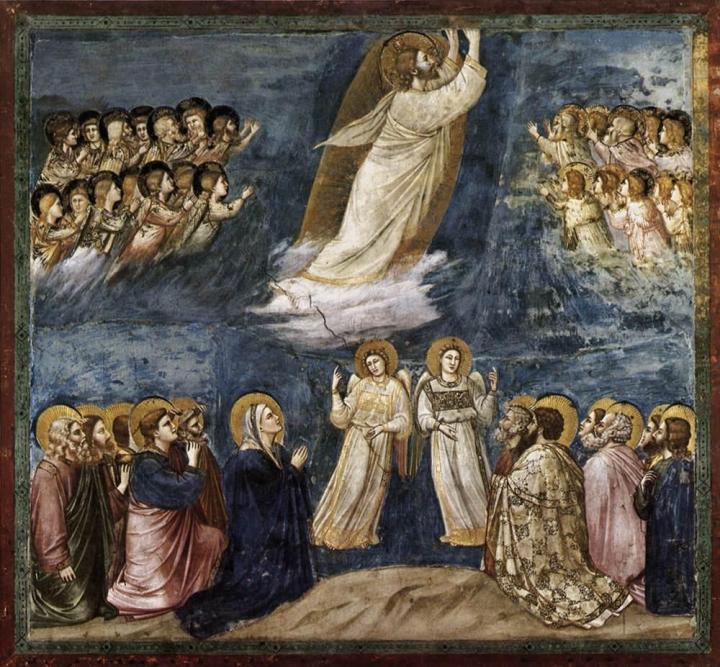
Homily for the Ascension (Acts 1:1-11 Eph 1:17-23 Mt 28:16-20)

Today can often feel a somewhat strange day, a day of slightly mixed emotions, and this year more than most, when we are not able to be together to pray, to worship Almighty God, and be nourished with Holy Communion. We are not celebrating Jesus’ departure from the earth, but His return to God the Father, Christ’s abiding presence with us, and what He asks of us, and promises to us. It is a day of celebration and expectation, looking forward to the future in love and hope. 

The disciples have had six weeks to used to the fact that Jesus has risen from the dead, having carried the burden of our sins and experienced the pain and estrangement which separates God and humanity. That wound has been healed by His glorious wounds. Before Jesus returns to the Father, He makes the apostles a promise: they will be baptized with the Holy Spirit (Acts 1:4), receive power, and be Christ’s witnesses to the ends of the earth (Acts 1:8). Christ is looking forward to Pentecost, to the church’s future, in which we live now.

In Matthew’s Gospel, before Jesus leaves the apostles, He gives them a commission, they are sent out to do something together. Jesus begins (Mt 28:18) by stating that all authority in heaven and earth has been given to Him. He is God, God is sovereign, and rules over everything, and it reminds us of the moment during Christ’s temptation by the devil, before the start of His public ministry, which we read on the First Sunday of Lent. The devil offers the world to Jesus, but it is not his to give, it belongs to God, who created it. Our worship is rooted in the fact that we have a relationship with a God who made us, redeemed us, and loves us. 

Jesus tells the apostles (28:19) to go and make disciples of all nations, baptizing them in the name of the Father, and of the Son, and of the Holy Spirit. The church exists to be sent out to make disciples. Baptism is what makes us Christians. In it we share in Christ’s life, death, and Resurrection, and through it God gives us the virtues of Faith, Hope, and Love. Through our faith in God: Father, Son, and Holy Spirit, filled with the hope of heaven, our supernatural end, to enjoy the vision of God, who is love. Loving God and our neighbour, this is the very heart of the proclamation of the Good News of the Kingdom, along with the call of Jesus and John the Baptist that we should ‘Repent and believe the Gospel, and be baptised’. For two thousand years our message has been the same. 

Jesus tells the apostles to teach us all that He has commanded them (28:20). The Church is called to hand on what has been delivered to it, this is tradition, and it stops us from making mistakes, by deviating from what Christ teaches us through the Church. Our religion makes demands of us, and calls us to be faithful to the apostles’ teaching, and to live it out in our lives, putting theory into practice and becoming living witnesses of the Kingdom. This is difficult, and it is where Christians fall down most often. But the Good News is that in Christ we have forgiveness of sin. We can repent, and turn away from our mistakes, and turn back to a God who loves us. We are not abandoned or cast aside, but embraced in love. 

Finally Jesus says to the apostles, ‘Behold I am with you always, to the end of the age.’ (28:20) Christ is with us. How? In four ways: first in Scripture, the Word of God, which speaks of Christ, and finds its fulfilment in Him. It is true, and the source of truth. He is with us in the Sacraments, outward visible signs of the inward spiritual grace God pours out upon us, to fill us with His love. He is with us in the Holy Spirit which he pours out upon us, to strengthen us, and fill us with love. And finally He is with us in the Church, which is His Body, where we are united with Christ, in a relationship with Him, and each other. 

Jesus makes promises which are true. We can trust Him, and like the apostles we can prepare for the Coming of the Holy Spirit at Pentecost in prayer, and joyful expectation, knowing that we will never be abandoned, but that we are always united to, and loved by God the Father, God the Son, and God the Holy Spirit, to whom be ascribed as it most right and just, all might, majesty, glory, dominion, and power, now and forever. Amen

giotto_di_bondone_-_no._38_scenes_from_the_life_of_christ_-_22._ascension_-_wga09226

Saturday, 2 May 2020

Easter IV (The Good Shepherd)

We mark time: day and night, weeks, months, years, and seasons. The Church’s Liturgical Year is a very good thing indeed. It divides up time and it focusses our attention on certain things: allowing us the time to contemplate the mysteries of the Christian Faith. The Resurrection of Jesus Christ from the dead is an event which requires serious contemplation. We need time to let it sink in, and to explore what it means for us and our faith. It is the defining moment of our faith, one which gives Christians the hope that our death is not the end, that this life is not all that there is, and that because of who Christ is, namely God, and what He has done: died for us to take away our sin, and rise again to give us the hope of eternal life in Him.

In John’s Gospel, Jesus says of himself, ‘I am the Good Shepherd’ It discloses something important about Who and What He is — Jesus is one who tends, who looks after His sheep. The Jews in the Temple for the celebration of Hanukkah in the Gospel don’t seem to have been listening. Jesus has told them clearly and they do not believe that He is the Messiah. What Christ does in the Gospels testifies to Who and What He is: the Word made flesh, God with us.

Those of us who are in the Church, through our Baptism belong to Christ, we are His. So we are to listen to what Jesus tells us, in the words of Scripture and through prayer. Jesus knows us and we know him — in word and sacrament, through the outpouring of His grace, and so we follow Christ, we do what He tells us to do: to love, to forgive each other. We are humble, we don’t think of ourselves as better than we are, we know our need of, and our dependance upon God. We put our faith into practice in our lives, so that it becomes a reality in the world.

Christ offers us eternal life, as we share in His death, so we too share in His Resurrection, and are assured of eternal life with Him, something wonderful and freely given, and a reason why we, as the Church, celebrate Easter in an extravagant and exuberant way, because it is a sign that God loves us, and saves us. We are sharing in that Eternal Life here and now, as we are nourished by Him, in Word and Sacrament, strengthened by Him, to live His risen life, here and now. 

In Revelation, as St John experiences heavenly worship he states, ‘For the Lamb in the midst of the throne will be their shepherd, and he will guide them to springs of living water, and God will wipe away every tear from their eyes.’ (Revelation 7:17 ESV). The Lamb will be our shepherd: Christ will care for us, and keep us safe. A Good Shepherd lays down His life for the sheep as Christ has done through His Death and Resurrection. To drink living water is to experience the fulness of life in God, filled with the Holy Spirit. Christ guides us to that in our baptism, when we are filled with the Spirit and made part of the Church. 

So we listen to Christ’s voice, in the Bible. We hear Him speak to us, and through this we listen to Him, and obey Him. That is how we know Christ and follow Him. It affects who we are and how we live, as people of love, loved by God. We are prepared here on earth for the life of heaven, for worship, and closeness to God. We have a foretaste of that closeness in Holy Communion where Christ feeds us with His Body and Blood, so that we may be transformed by it, more and more into His likeness. It changes us, so that we, by the grace of God, in the power of His Holy Spirit, may become what we are: made in the image of God. That image is restored in us by Christ’s death and resurrection. Through it we come to share in the intimacy of the divine life. As Christ says, ‘I and the Father are one.’ (John 10:30 ESV)  As Michael Ramsay said, ‘God is Christlike, and in him is no un-Christlikeness at all’ [God, Christ & the World: A Study in Contemporary Theology, London 1969, 98] When we see Jesus, we see God, when we hear Him speak, we hear the voice of God. We can know who God is, the creator and redeemer of the universe, through His Son, Jesus Christ. God is no longer distant, or an angry man on a cloud, but a loving Father, as in the Parable of the Prodigal Son, and a Son who loves us so much that He suffers and dies for us, to give us life in Him. This is God who goes after lost sheep, who longs to love and heal and reconcile, who can heal our wounds if we let Him.

God loves us; we can say this with the utmost confidence because of the life, death, and resurrection of Jesus Christ, it all proclaims the same truth: God loves us, not because we’re worthy of it, but so that we might become what God is. It is what we celebrate at Easter, it lies at the heart, the very core of our faith as Christians. It’s why we are what we are, and why we do what we do, to proclaim this simple truth to the world.

We can have peace through our relationship with the Trinity, the source of our peace, and joy, and love. Grounded in this relationship we need not be afraid or troubled – we are free to live lives which proclaim God’s love and victory so that the world may believe. Through God loving us, we can truly love him and each other. We experience this most clearly at the Eucharist when Christ feeds us with His Body and Blood, which He as both priest and victim offers on the Altar of the Cross. That self same sacrifice which heals the world through the outpouring of God’s love feeds us here and now. We are fed so that we may be nourished and share in the divine life and the joy of heaven. We receive the free gift of God’s grace so that it may perfect our human nature, so that we may go where Our Lord is going, and share in the joy, and love, and peace of the Triune God, Father, Son, and Holy Spirit, to whom be ascribed, as is most right and just, all might, majesty, glory, dominion, and power, now and forever. Amen. 

06f84c08-66cf-4481-baf0-09d3f1849f7e

Sunday, 12 April 2020

Easter 2020 [John 20:1-9]

Easter is for Christians a time of celebration, a feast which we continue to celebrate for fifty days until Pentecost. We do this because it is the most important day of the year for us, because Jesus Christ not only died for us on the Cross, but rose again from the dead. For Christians Death does not have the last word, it is not the end, quite the opposite, it is the start of New Life.

We are used to hearing the proclamation of the Easter message, to the point that we can run the risk of becoming immune to the strangeness of what we are celebrating. Easter is odd: bodies don’t usually rise from tombs. In today’s Gospel, Mary of Magdala simply cannot understand what is going on. St Peter goes into the tomb and sees the cloths lying there, but only the other disciple, St John, both sees and believes, because he looks with the eyes of faith. John has listened to what Jesus has said, and understands what has happened, and how it has been foretold in the Hebrew Scriptures. He sees and understands because he LOVES.

This Easter we are not able to worship together, as we usually do. Instead, for our own safety and the safety of others, we have to worship on our own. But this does not mean that our worship ceases, not at all. This is a hard and a painful time for all of us, because as Christians we are a family, we worship TOGETHER. But while we are not able to do this together physically, we can still be united spiritually. So what can we do? We can read scripture, and we can pray: for the church, for the world, for each other, for all dealing with the current pandemic, for the sick and suffering, and for the dead and dying. We do this because God hears our prayers, and because prayer changes us. It makes us more loving, more generous, more forgiving, and more keen to seek forgiveness. 

This is how we grow in faith, and we can do it whether we are together, or we are apart. It is difficult in this current isolation, but it is by no means impossible. We are an Easter people, and ‘Alleluia’ is our song. We are called to rejoice, regardless of what is happening, regardless of what we may face in this life, because the source of our joy is God, as the prophet Nehemiah says, ‘Go on your way. Eat the fat and drink sweet wine and send portions to anyone who has nothing ready, for this day is holy to our Lord. And do not be grieved, for the joy of the Lord is your strength.’ (Nehemiah 8:10 ESV) God does not disappoint us, and Christ’s resurrection is as true today as it ever was. Christ has conquered sin and death, and risen victorious from the grave, breaking down the bars of Hell and leading souls to Heaven, so we rejoice. As St Paul writes to the Church in Rome: ‘Who shall separate us from the love of Christ? Shall tribulation, or distress, or persecution, or famine, or nakedness, or danger, or sword? As it is written, “For your sake we are being killed all the day long; we are regarded as sheep to be slaughtered.” No, in all these things we are more than conquerors through him who loved us. For I am sure that neither death nor life, nor angels nor rulers, nor things present nor things to come, nor powers, nor height nor depth, nor anything else in all creation, will be able to separate us from the love of God in Christ Jesus our Lord.’ (Romans 8:35-39 ESV) So, my brothers and sisters in Christ, ‘Pasg hapus i chi gyd!’ ‘A Happy Easter to you all!’ May the joy and peace of the Risen Lord fill your hearts and lives, both now and always. Amen. 

If you wish to, you can make a Spiritual Communion: the means of grace by which someone, prevented from sharing in a celebration of the Eucharist, nonetheless shares in the communion of Jesus Christ. Please pray the prayer below:

My Jesus, I believe that You are present in the Most Holy Sacrament. I love You above all things, and I desire to receive You into my soul. Since I cannot at this moment receive You sacramentally, come at least spiritually into my heart. I embrace You as if You were already there and unite myself wholly to You. Never permit me to be separated from You. Amen.

7a55c-anastasischora

Saturday, 29 February 2020

The Church has entered the season of Lent, and she goes, with her Lord, into the desert for forty days, to pray, to turn away from sin, to turn back to God, to fast, to be generous in almsgiving. We do this to prepare to celebrate Jesus’ passion, Death and Resurrection in Holy Week and Easter. We get ready to celebrate the holiest week of the Church’s year by having something of a spiritual spring clean. This is a very good thing indeed. We need to do it, so that we can be reminded where we need to put some work in.

Our first reading this morning take us right back to the start of the problem of human sin: Adam & Eve in the Garden of Eden. They are tempted by the serpent to do what God has told them not to do. Thinking that you know better than God, and choosing to do what you want to do is where the sin of pride comes from. Adam and Eve prefer to trust the serpent, who promises that they will become like God. They are disobedient: they do not listen to what God says, and act in accordance with it. But rather than knowing good and evil, all they know is that they are naked, and cover their nakedness. The serpent makes empty promises, and they are taken in by them. Such is the power of lies. 

But while we have heard how sin and death came into the world, we also hear in our second reading from Paul’s Letter to the Romans how disobedience is countered by the obedience of Jesus Christ. It is obedience which will see Our Lord die on the Cross for us. Christ will bear the burden of our sin, to pay the debt which we cannot. This is what we are preparing to celebrate: one act of righteousness which ‘leads to justification and life for all men’ (Rom 5:18 ESV). To be justified is to be declared righteous in the sight of God. We are guilty, yet God declares us innocent. We deserve punishment, and yet are rewarded. It is remarkable. Such is God’s love for us that our slate is wiped clean. Each and every one of us deserves to be cast aside, for our sins, like those of Adam & Eve separate us from God and each other. Yet God did not leave us in slavery to sin, but sent His Son, so that we might have life in and through Him. This is the Good News of the Gospel. 

In the Gospel this morning we see Jesus at a crucial point, between His Baptism and the calling of the first disciples: Peter and Andrew, James and John. Christ goes into the desert for forty days, to be alone, to pray and to fast, and the church keen to imitate our Saviour likewise goes into the desert so that we may grow closer to God, that we may be purged and prepared to celebrate the mystery of the Lord’s Passion, Death, and Resurrection. 

Jesus is led by the Holy Spirit into the wilderness, a place traditionally associated with the prophets and with encounter with God. After fasting for forty days and forty nights He is hungry. This is no surprise at all. He has been fasting for forty days, Our Lord is starving – he is fully human not some superhero who is immune to human feelings and needs. So the devil tempts Him by saying, ‘If you are the Son of God, command these stones to become loaves of bread.’ (Mt 4:3 ESV). The temptation works on several levels. By doubting that Jesus is God and asking Him to prove it the devil is continuing to mock the God he refuses to serve. It is a temptation to be relevant: Jesus is hungry and needs to eat, but is being tempted to use the creative power of God simply to serve an appetite. The world tempts us to be relevant, and to conform ourselves to it, rather than let the world be conformed to the will of God. Jesus’ reply to the devil, that man does not live by bread alone but by every word which proceeds from the mouth of God, reminds us that as Christians we are fed by Word and Sacrament, nourished by God so that we may grow in faith, and hope, and love. 

Christ is taken to the pinnacle of the Temple in Jerusalem and told to throw Himself down. This is the temptation to be spectacular, to do something for show, again something which the contemporary church seems rather keen on. But nothing should be done for show; we are called to follow Christ simply and humbly, trusting in Him. The devil wants to put God to the test, it is an act of disobedience, contrary to the humble obedience which sees us live trusting in God, relying upon Him, formed by Him.

Christ is finally tempted to turn away from God the Father, to worship a false god. He is offered much in material terms –- all the world and its splendour -– wealth and power –- a huge temptation for humanity, and one into which many people give. The Church too has given in, and continues so to do. We have to be weak, powerless and vulnerable, utterly reliant upon God so that God can be at work in us, as we humbly worship and serve Him. It may look foolish in worldly terms, but that is the point –- we are not meant to be conformed to the world, but as we seek to grow in faith, in humility, and obedience, we allow God to be at work in us –- taking us and transforming us into His likeness.

The temptation to worship a false God: money, power, or success is always there, and many in the church give in to feelings of ambition, and if they are not ‘successful’ end up bitter, cynical, and miserable. But success is itself empty, popular favour can disappear like a puff of smoke. It is fleeting, it does not last. Whereas in Christ we are offered something that will last: eternal life with God in heaven. 

So as we undertake to follow Christ in our Lenten pilgrimage we do so in our weakness, so that we may rely upon God, and Him alone. We do so joyfully, knowing that Christ’s victory which we will celebrate at Easter is total and complete – it is justification and life for all.

Let us pray that we may receive grace to follow Christ so that we may prepare to celebrate His Death and Resurrection and sing the praises of God the Father, God the Son, and God the Holy Spirit, to whom be ascribed as is most right and just, all might, majesty, glory, dominion, and power, now and forever. Amen.

00.159.51

Saturday, 8 February 2020

Septuagesima (5th Sunday of Yr A)

The traditional name for this Sunday, Septuagesima, means seventieth, approximately seventy days before Easter, and it marked the beginning of a three-week period which looks forward to the beginning of Lent. It had a penitential character: purple or violet vestments were worn, and in the Eucharist and the Daily Office the church fasted from hymns of praise, to prepare for the Great Fast. It reminds us that what we Do affects who we ARE. Such discipline helps to form us as more loving and generous people.

Such concerns lie at the heart of our first reading this morning from the prophet Isaiah. In verse 6 the prophet cries, ‘Is not this the fast that I choose: to loose the bonds of wickedness, to undo the straps of the yoke, to let the oppressed go free, and to break every yoke?’ What God desires is to say sorry for the wrongs we have done that we show that contrition by doing the right thing: being loving and generous, the way God wants us to be. 

Thus, the prophet advises us to share our bread with the hungry, to give shelter to the homeless in our own homes, to clothe the naked. We also need to take away the yoke which is a burden to others, the pointing finger of accusation, and speaking wickedness: being harsh, not telling the truth, or telling it in a way that is designed to cause pain. We all need to hear this, and be reminded of how we can, each and every one of us, fall short. I know I do, and I ask for your forgiveness. 

The point is that we can ask the forgiveness, of a God who loves, which is why St Paul simply proclaims, ‘Jesus Christ and him crucified’. On the Cross Christ bears the yoke, the burden of our sins, and demonstrates the LOVE God has for us: real costly love, which sees Him die for us. This is love put into practice to heal and to restore the world, a simple act, seen by many as the execution of a common criminal, dying a slave’s death. Yet THIS brings about the greatest freedom humanity has ever known.

In the Gospel this morning Jesus begins by using metaphors to describe His disciples, They are salt. Nowadays we are used to salt as a bad thing, something of which we eat too much. Salt helps to give food flavour, it preserves food, keeping it edible, and without it we would die. Salt was expensive, a luxury, but if it is no longer good needs to be thrown out. You cannot use it. Jesus’ disciples need to be salty, there should be something about how we live out and proclaim the Gospel in word and deed that makes people go, ‘Mmm!’ Otherwise there is not much point. 

As well as being salt the disciples are light. Light illuminates, it scatters darkness, it helps us to see and keeps us safe. None of us would drive a car at night without the lights on, obviously. It would cause an accident, it might get us killed. Lampposts are high up in the air, so that they can illuminate the street below. We have lights which hang from our ceilings for the same reason. A covered light does not give out light, a light on the floor cannot light up a room. Our Lord encourages His disciples to ‘let your light shine before others, so that they may see your good works and give glory to your Father who is in heaven.’ Our faith then is not simply something that we believe, but rather it is something that we DO. Our actions and our words proclaim the truth of the Gospel to the world around us.

Just as a city on a hill cannot be hidden, so it is with Christians. We are visible, and for our many failings people will call us hypocrites, and while they have a point, our failings should always lead us to ask forgiveness, and repent. Because of what Christ has done for us on the Cross we have access to God’s forgiveness. The point is that while we fail, we repent and keep on trying to live out our faith in our lives. It is simple and clear, like St Paul’s proclamation to the church in Corinth. Our faith does not ‘rest in the wisdom of men but in the power of God.’ It looks foolish and weak, and so it should, in worldly terms. God’s weakness is greater than human strength, that is its power. 

Christ shows us how to live in the Beatitudes, and encourages us to put it into practice in our lives, and to follow His example of going to the Cross to proclaim the fact that God loves us, a God who is Love. Love forgives, so that it can transform us. We that transformation in Isaiah, put into practice to help transform the world. Paul is transformed from a persecutor of the Church into its greatest evangelist, who spends the rest of his life telling people about Jesus, and how He has transformed lives, and continues to do so. For two thousand years the Church has lived the truth of this transformation, and continues to do so, and invites men and women to come and have their lives transformed by the God who loves them.

So we begin to prepare for Lent, the great season of repentance, when we acknowledge our sins, and turn back to God, and prepare to celebrate the Passion, Death, and Resurrection of Jesus Christ. 

As we look towards the Cross, our only hope, our only salvation, may we live generous and loving lives. May we be salt and light in the world, giving it taste and illumination, offering it the chance for conversion, to turn back to the Lord who loves them, who shows them that love on the Cross, that they may have life in and through Him, that they may give glory to God the Father, God the Son, and God the Holy Spirit, to whom be ascribed as is most right and just, all might, majesty, glory, dominion, and power, now, and forever. Amen.

Fra_Angelico_-_Die_Bergpredigt.jpeg