Sunday, 29 March 2015

Monday of Holy Week Reflection

Gospel
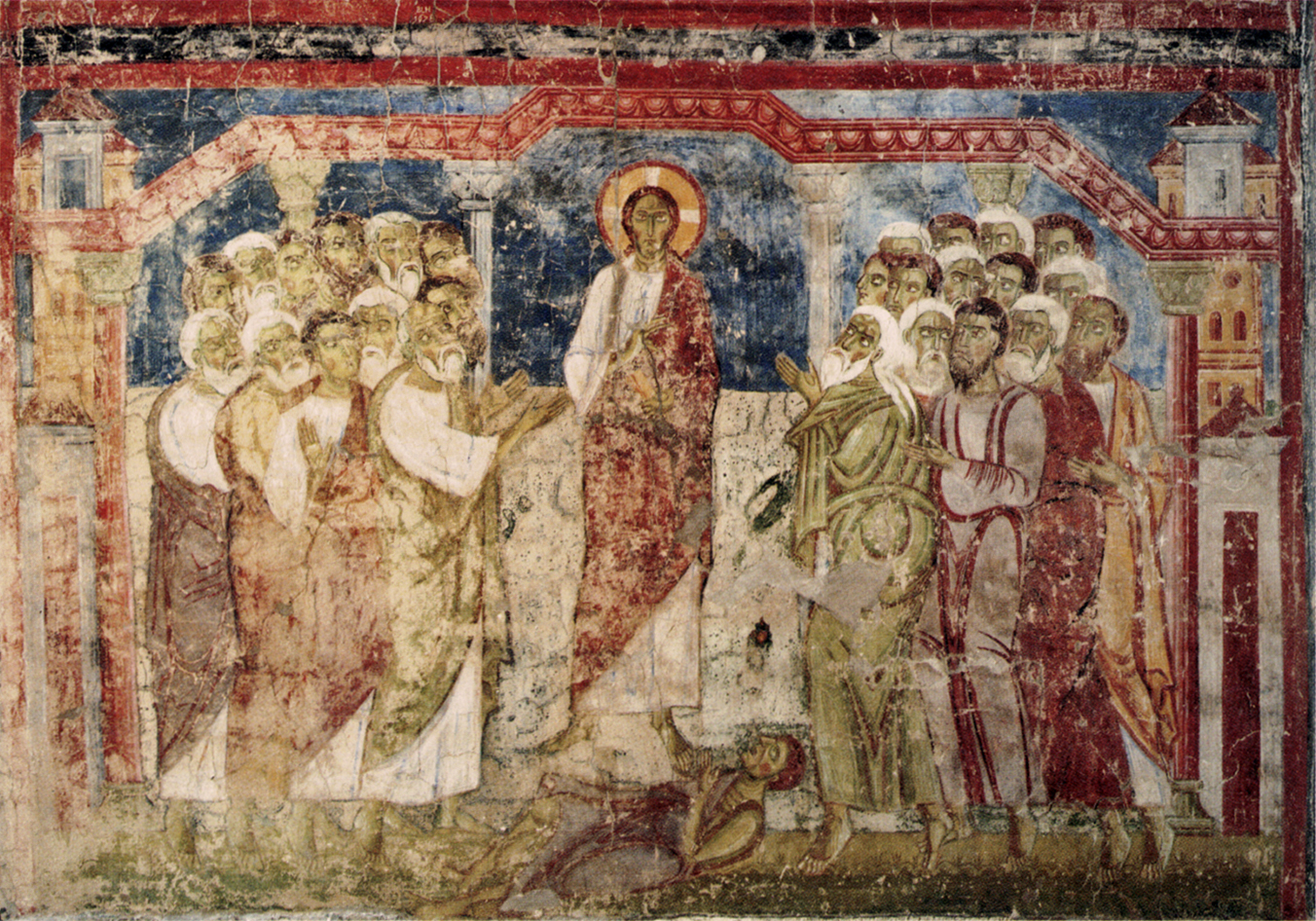
John 12:1-11

Judas really cannot understand why the myrrh is being lavished on Jesus. He doesn't care for the poor, he's looking for a chance to embezzle from the common fund. He's thinking about himself and about worldly things. Jesus enjoys the things of this world: he's having dinner with friends, he hangs around with all sorts and is accused of being a drunkard. He doesn't care a jot for social convention, for keeping up appearances. It's what on the inside that counts. He knows that Mary is acting out of love. As a costly extravagant act it points to his own death on the cross for love of us, wretches that we are. There is something wonderful and exuberant about divine generosity: it's over the top, it is lavish and excess - such is the love of God, who spared not his own son for love of us. That's how much God loves us. Can our response to that love be exuberant, or will we be like Judas: miserly, thinking of ourselves.

The Jews don't get it either. They can see an event: Jesus is news and so is Lazarus: celebrity culture is not a new thing. The Religious Authorities think it's all about power and influence: they don't get it either. They can only see a zero-sum game. They are concerned with things of this world and are unable to the Kingdom of God in their midst. It's always troubling when the church starts to look like the Pharisees: concerned with the things of this world, power, influence, courting popular opinion or popularity with politicians. Jesus has always had the ability to unsettle the powerful. They feel threatened by the freedom of the Kingdom, a freedom which sees Christ lay down his life freely. Such things can truly change the world. And they do. The Cross will show God's power in weakness, his love in rejection and humiliation. It's scandalous insofar as it turns the values of the world on their head. It announces and inaugurates the Kingdom of Christ: let us stay close to him, follow in his footsteps, and live his life by his rules, spurning the ways of the world to have life in all its fullness in Him.

Palm Sunday 2015


If anyone asks you why you are untying it [the ass the disciples were sent to find], this must be your answer, ‘The Lord has need of it’ (Lk 19:31). Perhaps no greater paradox was ever written than this – on the one hand the sovereignty of the Lord, and on the other hand his ‘need’. His combination of Divinity and dependence, of possession and poverty was a consequence of the Word becoming flesh. Truly, he who was rich became poor for our sakes, that we might become rich. Our Lord borrowed a boat from a fisherman from which to preach; he borrowed barley loaves and fishes from a boy to feed a multitude; he borrowed a grave from which he would rise; and now he borrows an ass on which to enter Jerusalem. Sometimes God pre-empts and requisitions the things of man, as if to remind him that everything is a gift from him.
Fulton J. Sheen Life of Christ

Pomp and ceremony seem to have been at the top of the agenda of late: in a week which saw the re-burial of the mortal remains of King Richard III, this is hardly surprising. As triumphant entries go, the one we see in the Gospel this morning is a bit strange: generally speaking, we are used to kings riding on horses, looking like powerful military leaders. Here we see something different, something which defies our expectations and which stops us seeing things in purely human terms.
          There are people who would ask, why all this fuss? Would Jesus have wanted it, would he want us to be carry on with it? If it were something which would not want us to do he would have said so. He did it because it was important, because it fulfilled prophesy and because liturgy is an important thing in and of itself: it marks out various things as special and helps us understand both who and what we are and what we do – it forms both habit and indeed our moral character.
          The crowd cry out “Hosanna to the Son of David! Blessed is he who comes in the name of the Lord! Hosanna in the highest!” (Mt 21:9 ESV) They cry out for God to save them, and that is exactly what he will do in a few days time, upon the Cross. This is a God who keeps his promises and defies our expectations. The crowd are expecting a king of the Davidic line, which would be seen as a challenge to the ruling elite, the status quo, but in Christ God gives Israel a King of the line of David forever. Those with power are threatened by him: he is awkward, an inconvenience. Jesus does not want their power, as he has come to be and do something completely different: what is taken as a political coup is a renewal of religion, the fulfilment of prophesy, and a new hope for Israel. 
In riding into Jerusalem Jesus is fulfilling the prophesies of Zechariah (9:9) and Isaiah (62:11).  The King of Israel comes riding on a donkey: a humble beast of burden, which carried his Mother to Bethlehem for his birth. It is an act of humble leadership which fulfils what was foreseen by the prophets. It shows us that Jesus Christ is truly the one who fulfils the hopes of Israel. The Hebrew Scriptures look forward to the deliverance of Israel, which is enacted in front of their very eyes.

Today and in the coming week we will see what God’s Love and Glory are really like: it is not what people expect, it is power shown in humility, strength in weakness. As we continue our Lenten journey in the triumph of this day and looking towards the Cross and beyond to the new life of Easter, let us trust in the Lord, let us be like him, and may he transform our hearts, our minds and our lives, so that they may have live and life in all its fullness. We are fed by the word of God and by the sacrament of His Body and Blood to be strengthened, to share in His divine life, to fit us for Heaven, and to transform all of creation that it may resound his praise and share in his life of the Resurrection, washed in His Blood and the saving waters of Baptism: forgiven and forgiving so that all that we say, or think, or do, all that we are may be for the praise of God the Father, God the Son, and God the Holy Spirit, to whom be ascribed as is most right and just, all might, majesty, glory dominion and power, now and forever…

Saturday, 21 March 2015

Homily for Lent V

During the Sermon on the Mount, Jesus reflects upon who and what he is and what he has come to do (Mt 5:17) “Do not think that I have come to abolish the Law or the Prophets; I have not come to abolish them but to fulfil them.” Christ comes to fulfil the law rather than to abolish it, and to inaugurate a new covenant in his blood which will flow from Calvary. This has been pointed to in Scripture: in the first reading this morning the prophet Jeremiah looks forward to a future covenant that will bring faithless sinful Isræl back to the Lord their God. They broke the covenant, they were unfaithful, and though they were married to the Lord their God, here we see not divorce but covenant faithfulness – it’s how God is, this is God’s love in action: self-giving, sacrificial, and costly. Christ fulfils Scripture – it finds its fullness and its true meaning in and through him, the Word of God made Flesh for our sake. God in Christ restores and heals that which was broken through human sinfulness: ‘But this is the covenant that I will make with the house of Isræl after those days, says the LORD: I will put my law within them, and I will write it on their hearts; and I will be their God, and they shall be my people’ Ours is a God who forgives our iniquities and forgives our sins through the New Covenant in Jesus’ blood.
       Jesus Christ is our great high priest: priests offer sacrifice for sin, as on Yom Kippur, the Jewish Day of Atonement where once the people were sprinkled with blood each and every year, whereas under the New Covenant, the covenant of grace rather than law, Christ the mediator of the new covenant sheds his own blood as both priest and victim to reconcile us with God. He is a priest after the order of Melchizedek, whose name means King of Righteousness, the King of Salem, better known as Jerusalem, brings out bread and wine, which point to the Eucharist, he is a priest of God Most High, before the priesthood of Aaron, the Levitical priesthood, so this is the true worship of Almighty God which points to Christ and finds its fulfilment in and through Him, who suffered for our sins.
In this morning’s Gospel some Greeks go up to Philip and say ‘Sir, we want to see Jesus’. They approach a disciple with a Greek name, and though they are not Jews themselves, they try to follow the law and to worship God. They are good people with an innate sense of the religious and they have a simple request: they want to see Jesus. Nearly 2000 years later there are people who will ask exactly the same question. What can be said to them? If they come to Mass on a Sunday morning, they will meet the Lord in Word and Sacrament. But will they also see Jesus in us Christians who are the body of Christ? We too are to be His presence in the world. Everything that we say, or think, or do, can proclaim Christ and his saving love to the world. It is our duty as Christians to try at all times and in every way to model our lives upon Christ’s, and by our sharing in his passion, death, and resurrection, to form our lives so that they may reflect his glory so that the world may believe. Each and every careless word and thoughtless action speaks to the world and says that we are hypocrites, who do not practice what we preach. We are perhaps judged more harshly nowadays than at any time before – ours is a world which does not know or understand forgiveness; but we should nonetheless try with all the strength we can muster to live Christ's life in the world.
       ‘Now the hour has come for the son of man to be glorified’ Jesus Christ is looking towards his passion and death. God shows the world the fullness of glory, the most profound expression of self-giving love in the events of his passion and death. This is why we celebrate it: week by week and year by year. We prepare ourselves during Lent to walk with Christ to Calvary and beyond. We see how much God loves us, how much God gives himself for us: totally, completely, utterly. If we serve Jesus we must follow him, and where we are he will be too. In the midst of the troubles which beset the church, Christ is with us. When we are afraid or troubled, Christ is with us, he has felt the same feelings as us, and was given the strength to carry on. When the church is written off as an irrelevance, Christ is with us.
       When secularism appears strong, we should remember our Lord’s words: ‘now sentence is being passed on this world; now the prince of this world is to be overthrown’. The World and the Devil are overcome in Christ’s self giving love, when on the cross he pays the debt which we cannot, he offers us a new way of living a life filled with love, a love so strong as to overcome death, a love which offers us eternal life.
       So then as we continue our journey through Lent our journey to the cross and beyond to the empty tomb of Easter, let us lose our lives in love and service of him who died for us, who bore our sins, who shows us how to live most fully, to be close to God, and filled with his love. Let us encourage one another, strengthen one another, and help each other to live lives which proclaim the truth of God’s saving love. All of us through our baptism share in Christ's death and resurrection and we should proclaim this truth to the world. This truth, this way, this life, overcomes the world, and turns its selfish values on their head. Together we can love and strengthen and encourage one another to do this together: to be Christ’s body in our love and service of one another, in our proclamation to the world that God loves all humanity and longs, like the father of the Prodigal Son, to embrace us, to welcome us back. And as we do this, growing in love and fellowship we will fulfil the will of God the Father, God the Son and God the Holy Spirit to whom be ascribed as is most right and just, all might, majesty, glory, dominion and power, now and forever... 

Sunday, 15 March 2015

Lent IV - Looking to the Cross

‘For God sent his Son into the world not to condemn the world, but that through him the world might be saved.’

It is far too easy nowadays to see the church in a negative way –  it’s the fashionable thing to do – as the church we’re corrupt, we’re filling people’s heads with nonsense. We can be characterised as strange, quaint, and out of touch. It suits people to see us entirely in negative terms: as opposed to certain things. We are prescriptive: we limit people's freedom, and in failing to practice what we preach, we can be written off as hypocrites, with no right to proclaim objective truth, to offer the world a moral framework, within which to live its life; to offer the world an alternative paradigm, a new way of living and of being through which to have life, and have life in all its fullness. It’s less a valid criticism and more of an excuse for people not to bother. It’s an easy way out, which saves people from the more difficult task of living Christ-like lives of love and self-sacrifice. The church does not claim to be perfect, but rather a collection of sinners justified by the grace of God, through faith in Christ.
          The simple truth is that people like to moan and grumble – we all do, and I’m as guilty of it as anyone, but there is a fundamental difference between being dissatisfied with the way things are and longing for change, and hopefully bringing about good change, change in a god-ward direction, and the corrosive moaning rooted in selfishness, which betrays a lack of trust in God. The Israelites in the desert represent this negative moaning, they are unable or unwilling to trust God to lead them on a journey towards the Promised Land, and while they realise their mistake their poisonous moaning has disastrous consequences for them. And yet even in this they are not abandoned by God, they gaze on the bronze serpent, they look to that which prefigures the Cross, through which God heals his people, taking their sins upon himself. That’s why it appears in stained-glass windows in churches, because it points to the Cross, it’s why when talking about the Cross Jesus mentions it, so that people might understand how and why God loves them and how it might affect their lives.
St Paul in his letter to the Ephesians can state with confidence, ‘For by grace you have been saved through faith, and this is not your own doing; it is the gift of God – not the result of works, so that no one may boast’ (Eph 2:8-9). It’s not about what we can do, but about what God can do for us. Our relationship with God is the result of a gift, which we can receive and which can transform our lives, if we only let go, and let God…
          This morning’s gospel reminds us of the fundamental truth that God loves us – it is the heart of the Good News – the Gospel, what we preach and what we live as Christians. There are few words as comforting as ‘For God so loved the world that he gave his only Son, so that everyone who believes in him may not perish but may have eternal life. ‘Indeed, God did not send the Son into the world to condemn the world, but in order that the world might be saved through him’ (Jn 3:16-17). They may be familiar to us, they certainly should be, but we must not let our familiarity with them cloud the significance of simply stating that God loves us, does not condemn us, but saves us, in and through Jesus Christ. That’s why we are Christians, it’s why we’re here, and recognising God’s love for us will have a transforming effect upon our lives.
In the Incarnation Jesus comes among us as a poor helpless baby, laid to rest in the rough wood of an animals’ feeding trough. He is cared for through the love of his mother, the Blessed Virgin Mary, who in her love, her service, and obedience, stands as the model for all Christians to follow. She is the first Christian, the greatest, a pattern for us to imitate, of loving trust and obedience, of care and costly love, and a foreshadowing of our great mother the church, through which we are saved by grace through faith.
          Upon the rough wood of the cross, Jesus will suffer and die for us – such is the cost of human sin. His mother, Mary, stands by and watches and weeps. As the church we too should watch and weep for the wounds of human sin and division which still scar Christ's body. We feel helpless. What can we do? We should do all that we can to live God's life of sacrificial self giving love: living lives of light, which shine in the darkness. It isn’t easy, but if we try and do it together then all things are possible, through him who loves us.
          The salvation and eternal life which Christ offers freely to all, comes through the church, which we enter in baptism, where we are nourished in word and are sacrament, where we are nourished, given food for the journey, strengthened and taught, to live his risen life, to share in the joys of Easter.
          God cares so much about the world and its people that he takes flesh, and lives a life of love, amidst the messiness of humanity, to show us how to live lives filled with love, life in all its fullness. God in Christ comes among us not to condemn the world but to offer it a way of being, of being truly alive in Him. God has made us for himself, and our hearts are restless until they find their rest in him. The spiritual needs and searching which characterise people in the world around us can be satisfied in God and in God alone, through the church. We can rejoice, and relax our Lenten discipline for a little while to give thanks for the wonderful gift of God's love in our lives, in the church, and for the world.
          But we also need to trust God, to listen to what he says through Scripture, to be fed by him, and to live lives in accordance with his will and purpose, together, as a family, as a community of love, cared for and supported by our mother, the church. And in so doing we look to Our Lady as Mother of Our Lord and Mother of the Church, as a pattern for love and obedience, as a model for all mothers: loving and tender, putting the needs of others before self, self-giving, sacrificial, and open to both joy and pain, trusting in God.

This, as any mother can tell you, is not easy, it's difficult, really hard, but its rewards are likewise great. So let us, as we continue our Lenten journey towards the cross, where God shows his love for us most fully and completely, giving his body to be broken and his blood be shed for us, a sacrifice which will be made present here today under the outward forms of bread and wine, to strengthen us to live the risen life of Easter, to offer the world an alternative to selfishness, to self-centredness, to the sin which continues to separate us from God, an alternative shown to us in a self-giving love of mothers, and of our mother the church. So that we may join the Angels in our song of love and praise to the Trinity: Father, Son, and Holy Spirit, to whom..

Tuesday, 10 March 2015

A Thought for the Day from St Benedict

If we do not venture to approach men who are in power, except with humility and reverence, when we wish to ask a favor, how much must we beseech the Lord God of all things with all humility and purity of devotion? And let us be assured that it is not in many words, but in the purity of heart and tears of compunction that we are heard. For this reason prayer ought to be short and pure, unless, perhaps it is lengthened by the inspiration of divine grace. At the community exercises, however, let the prayer always be short, and the sign having been given by the Superior, let all rise together.

Sunday, 8 March 2015

Lent III Year B


Lent can feel something like a spiritual spring clean, and that’s no bad thing. We, all of us, need opportunities for repentance, to turn away from sin, and to return to the Lord Our God. In this morning’s Gospel we see Jesus in quite an uncompromising mood: this is no ‘Gentle Jesus, meek and mild’ but rather here is the righteous anger of the prophets, a sign that all is not well in the world.
            When Moses receives the Ten Commandments from God on Mt Sinai the first is ‘I am the Lord your God, who brought you out of the land of Egypt, out of the house of slavery; you shall have no other gods before me.’ Could it be that the temple traders in their desire to profit from people’s religious observance have broken this first commandment? The temptation to have power, to be concerned above all else with worldly things: money, power, success, and influence, are still a huge temptation for the Church and the world. We may not mean to, but we do, and while we think of God as loving and merciful, we forget about righteous anger, and our need to repent, to turn away from our sins – the desire to control others and to be so caught up on the ways of the world that we lose sight of who and what we are, and what we are supposed to do and be.
            The Jews demand a sign, and Christ prophesies that if they destroy this temple then he will raise it up in three days: he looks to his death and resurrection to show them where true worship lies – in the person of Jesus Christ. Christians should be concerned with a relationship, our relationship with God, and with each other. Likewise Christians can all too easily forget that Jesus said ‘I have come not to abolish the law and the prophets but to fulfill them’. The Ten Commandments are not abolished by Christ, or set aside, but rather his proclamation of the Kingdom and Repentance show us that we still need to live these out in our lives, to show that we honour God and live our lives accordingly. In his cleansing of the Temple Christ looks to the Cross and to the Resurrection, a stumbling-block to Jews, obsessed with the worship of the Temple, and foolishness to Gentiles who cannot believe that God could display such weakness, such powerlessness. Instead this supreme demonstration of God’s love for us, shocking and scandalous though it is, is a demonstration of the utter, complete, self-giving love of God, for the sake of you and me – miserable sinners who deserve condemnation, but who instead are offered love and mercy to heal us and restore us.
            When we are confronted with this we should be shocked – that God loves us enough to do this, to suffer and die for us, to save us from our sins, and from the punishment that is rightly ours. We do not deserve it, that’s the point. But we are offered it in Christ so that we might become something other than we are, putting away the ways of the world, of power and money, selfishness and sin, to have new life in and through Him.
            To live is to change and to be perfect is to have changed often. If we are changing into Jesus Christ, then we’re on the right track. If we listen to his word in Scripture; if we talk to him in prayer and let him talk to us; if we’re fed by Him and with Him in the Eucharist, by Christ who is both priest and victim, so that we might become what He is – God; if we’re forgiven by Him, through making confession of our sins, not only do we come to understand Jesus, we become like him, we come to share in his divine nature, you, me, all of humanity ideally. We, the People of God, the new humanity, enter into the divine fullness of life, we have a foretaste of the heavenly banquet – we are prepared to enter the new life of the Kingdom, and to live it.

            Lent should be something of a spiritual spring clean, asking God to drive out all that should not be there, preparing for the joy of Easter, to live the Risen Life, filled with God’s grace. In our baptism we died with Christ and were raised to new life in the Spirit. Let us prepare to live that life, holding fast to Our Lord and Saviour, clinging to the teachings of his body, the Church. Let us turn away from the folly of this world, the hot air, and focus on the true and everlasting joy of heaven, which awaits us, who are bought by his blood, washed in it, fed with it. Let us proclaim it in our lives so that others may believe so that all may praise the Father, the Son and the Holy Spirit, to whom be ascribed as is most right and just, all might, majesty, glory, dominion, and power, now and forever...

Saturday, 28 February 2015

A thought for the day from Colossians 3

12 Put on then, as God's chosen ones, holy and beloved, compassionate hearts,kindness, humility, meekness, and patience,13 bearing with one another and, if one has a complaint against another, forgiving each other; as the Lord has forgiven you, so you also must forgive. 14 And above all these put on love, which binds everything together inperfect harmony. 15 And let the peace of Christ rule in your hearts, to which indeed you were called in one body. And be thankful. 16 Let the word of Christ dwell in you richly, teaching and admonishing one another in all wisdom, singing psalms and hymns and spiritual songs, with thankfulness in your hearts to God. 17 And whatever you do, in word or deed, do everything in the name of the Lord Jesus,giving thanks to God the Father through him.

Sunday, 22 February 2015

Homily for Lent I

It is all too easy to see the forty days of Lent, the season of preparation for our celebration of Our Lord’s Passion, Death and Resurrection as a time of sadness and misery. Too often it is seen in entirely negative terms: we focus on what we are giving up. Now the practice of abstaining from bodily pleasures is a good and ancient one, not in and of itself, it is not some sort of holy diet, but rather we turn away from something we enjoy so that we may focus upon something else. The other practices of Lent: prayer and almsgiving are there to focus our minds upon God and other people, so that we may enter the desert of repentance with joy, thinking of the needs of others and growing closer to the God who loves us and longs for our healing, our repentance.
       In this morning’s first reading we see a covenant between God and humanity, a sign of God’s love for us, and a promise of reconciliation between God and the world which underlies what Jesus does for us, it allows us to have hope, to see things in an entirely positive way, and to see behind what we do, that it is a means, a means to an end, namely our sanctification, rather than an end in itself. In our second reading from the first letter of Peter, he draws the link between Noah’s ark, which saves people through water, and baptism, which is prefigured in it. Lent is a season of preparation for baptism, so that we can die with Christ and be raised like him and with him to new life in him. For those of us who have been baptised it is good to have a chance to spend the time in Lent praying, drawing closer to the God who loves us, and living out our faith in our lives – we can all do better, especially when we try, and try together, supporting each other, so that we might grow in holiness as the people of God.

When St Antony was praying in his cell, a voice spoke to him, saying ‘Antony, you have not yet come to the measure of the tanner who is in Alexandria.’ When he heard this, the old man arose and took his stick and hurried to the city. When he had found the tanner .... he said to him, ‘Tell me about your work, for today I have left the desert and come here to see you.’
He replied, ‘I am not aware that I have done anything good. When I get up in the morning, before I sit down to work, I say that the whole of the city, small and great, will go into the Kingdom of God because of their good deeds while I will go into eternal punishment because of my evil deeds. Every evening I repeat the same words and believe them in my heart.’
When St Antony heard this he said, ‘My son, you sit in your own house and work well, and you have the peace of the Kingdom of God; but I spend all my time in solitude with no distractions, and I have not come near to the measure of such words.’
It is a very human failure, for far too often we make things far too complicated when all we need to do is to keep things simple. In the story from the Desert Fathers, which we have just heard, St Antony, the founder of monasticism, a great and a holy man, is put to shame by a man who spends his days treating animal skins. The key to it all is the tanner’s humility, his complete absence of pride, and his complete and utter trust in God – his reliance upon him alone.
In this morning’s Gospel we see the beginning of Our Lord’s public ministry – he is baptised by John in the River Jordan before immediately  going into the desert for forty days. He goes to be alone with God, to pray and to fast, to prepare himself for the public ministry of the Proclamation of the Good News, the Gospel.
During this he is tempted by the devil: he faces temptation just like every human being, but unlike us, he resists. The devil tempts him to turn stones into bread. It is understandable – he is hungry, but it is a temptation to be relevant, which the church seems to have given into completely: unless we what we are and what we do and say is relevant to people, they will ignore us.
There is the temptation to have power, symbolised by worshipping the devil. It leads to the misuse of power. The church stands condemned for the mistakes of the past, but in recognising this there is the possibility of a more humble church in the future – a church reliant upon God and not on the exercise of power.
There is the temptation to put God to the test – to be spectacular and self-seeking. Whenever we say ‘look at me’ we’re not saying ‘look at God’.
Jesus resists these temptations because he is humble, because he has faith, and because he trusts in God. It certainly isn’t easy, but it is possible. It’s far easier when we do this together, as a community, which is why Lent matters for all of us. It’s a chance to become more obedient, and through that obedience to discover true freedom in God. It’s an obedience which is made manifest on the Cross – in laying down his life Jesus can give new life to the whole world. He isn’t spectacular – he dies like a common criminal. He has no power, he does not try to be relevant, he is loving and obedient and that is good enough.

It was enough for him, and it should be for us. As Christians we have Scripture and the teaching of the Church, filled with his Spirit, to guide us. We can use this time of prayer and fasting to deepen our faith, our trust, our understanding, and our obedience, to become more like Jesus, fed by his word and sacraments – to become more humble, more loving, living lives of service of God and each other.  It leads to Jesus’ proclamation of the kingdom: ‘The time is fulfilled, and the kingdom of God has come near; repent, and believe in the good news.’ Words as true now as then, which the world still longs to hear, and which we need to live out in our lives, so that the world may believe and give glory to God the Father, God the Son, and God the Holy Spirit, to whom be ascribed as is most right and just, all might, majesty, glory dominion and power, now and forever

Saturday, 14 February 2015

A Thought for the Day from the Desert

The fear of the Lord is our cross. Just as someone who is crucified no longer has the power of moving or turning his limbs in any direction as he pleases, so we also ought to fasten our wishes and desires, not in accordance with what is pleasant and delightful to us now, but in accordance with the law of the Lord, where it hems us in. Being fastened to the wood of the cross means: no longer considering things present; not thinking about one's preferences; not being disturbed by anxiety and care for the future; not being aroused by any desire to possess, nor inflamed by any pride or strife or rivalry; not grieving at present injuries, and not calling past injuries to mind; and while still breathing and in the present body, considering oneself dead to all earthly things, and sending the thoughts of one's heart on ahead to that place where, one does not doubt, one will soon arrive
John Cassian, Institutes, Book IV ch.35

Sunday, 8 February 2015

Sexagesima Year B


About 1700 years ago the passage from the Book of Proverbs which is the Old Testament Reading which we have just heard was at the centre of a theological controversy which threatened the nature and existence of Christianity as we know it. Arius, a priest of Alexandria used the passage ‘The Lord created me at the beginning of his work, the first of his acts of long ago. Ages ago I was set up, at the first, before the beginning of the earth. When there were no depths I was brought forth, when there were no springs abounding with water. Before the mountains had been shaped, before the hills, I was brought forth’ to prove that Wisdom, which was understood as the Logos, the Word of God, the Creative Intelligence was not pre-existent, that it was a creation, and that ‘there was a time when he was not’. He may have been attempting to uphold what he understood as monotheism and the supremacy of God the Father, but in so doing he threatened the very nature of Christianity itself: denying the eternal nature of the Son of God, seeing Him as a creature, something created, something less than God.
        His position caused something of a fightback, and the church began to define the nature of God the Father, and God the Son with greater clarity, and while the orthodox position sometimes found favour with Imperial power, and sometimes did not, in the end political power could not enforce heresy. The views of Arius while condemned by the church and seemingly dead and buried once again found widespread fame with the arrival in 2003 of Dan Brown’s novel, The Da Vinci Code, with which you are no doubt familiar. I’ve read it, it is a rip-roaring page-turner of a book, but it is not based on the truth, it is a work of fiction, which may be plausible, which may be fun to read, but which is not true.  The idea that the church and state colluded to airbrush out the truth and replace it with an official version is simply not borne out by the facts. After Constantine, his son Constantius II reversed the policy of his father and was sympathetic to the Arians. This is hardly the practice of a cover-up, indeed the facts do not support the hypothesis – it’s fanciful but basically no more than a conspiracy theory.
        The Church formulated its beliefs in creedal statements first at Nicæa and later revised at Constantinople just over 50 years later, these are the words which we are about to say to express what the Church believes about God – we say them because they are true and because they help us to worship God.
        The second reading this morning from St Paul’s Letter to the Colossians is a statement of belief, an early creedal statement which focuses on who and what Jesus Christ is and what he does, written only some thirty years after his Crucifixion. Christ is the first-born in whom all creation has its existence. Creation exists because God was pleased to dwell in him in all his fullness and through him to reconcile all things whether in heaven or on earth. Christ’s great work is to reconcile all things in heaven and earth, making peace by the blood of his Cross. Our Lord’s Passion, Death, and Resurrection alter the created order in a fundamental way and are the outpouring of God’s love on the world, to heal it and restore it. This encapsulates what we believe as Christians and why we are here today to pray, to be nourished by Word and Sacrament, so that through our participation in the Eucharist, in Holy Communion, we may partake of His Divine nature, and be given a foretaste of heaven.
        Christ became human so that we might become divine. This profound and radical statement lies at the heart of the Prologue to John’s Gospel, a passage which we cannot hear too often, simply because it is wonderful and it manages in a few verses to cover the entirety of salvation history from the Creation of all that is to the Incarnation, when the Word became flesh and lived among us and we beheld his glory full of grace and truth. God became a human being, for love of us, to show us how to live, and to give us the hope of heaven, or as John’s Gospel later puts it ‘For God so loved the world, that he gave his only Son, that whoever believes in him should not perish but have eternal life. For God did not send his Son into the world to condemn the world, but in order that the world might be saved through him.’ (Jn 3:16-17) The Christian life therefore is one characterised by joy, by hope, by love, and forgiveness, it is to be freed from the way of this world given that we celebrate a Divine authority which is before and over all things. At the heart of our faith as Christians is a wonderful message of freedom, knowing that this life is not all that there is, that we are called to have life in him and life in all its fullness, and to live for and through him. This is our faith: it is what we believe and what we are to live, here and now, for the glory of Almighty God and the furthering of his kingdom.

        So let us live it, supporting each other in love, in prayer, and forgiveness – helping each other to proclaim by word and deed the Good News of Jesus Christ to a world which longs to hear it, which longs to be freed from selfishness and sin, to come to new life in the living waters of baptism and to live out that life in the Church, the Body of Christ, loved by Him, fed by Him, fed with Him, restored and healed by Him, set free from the ways of selfishness and sin to have life in all its fullness, even eternal life in Him.

Sunday, 1 February 2015

Jesus at the Synagogue in Capernaum


The beginning of Jesus’ public ministry is centred around Galilee: he’s on home territory. Having called the first disciples to help Him in the proclamation of the Good News of the Kingdom, Jesus goes to Capernaum with his disciples to teach on the Sabbath in the synagogue there. He teaches them, he explains the Jewish Scriptures, the Word made flesh, the Living Word, is among them. Their reaction is one of astonishment – amazement that he teaches them, not as the scribes but as one having authority. Rather than explaining human teaching in a human way, people are drawn closer to God, by one whose power and authority are derived from God, because that is who he is. Jesus can explain the Scriptures because he is the Way, the Truth, and the Life – He is the fulfilment of Scripture, and it finds its meaning in and through Him.
            There is a man in the synagogue who is not well. The Gospel uses the language of possession by an unclean spirit, whereas nowadays we would probably use the language mental illness. The man in his brokenness can recognise who and what Jesus is – the Holy One of God. The point of the Kingdom which Jesus proclaims, which he explains in his teaching, is that it is a place of healing. Ours is a God who can heal our wounds, who can take broken humanity and restore it in love. This is why Jesus’ teaching and the healing have to go together; they are both part of a larger whole, the coming Kingdom of God. Jesus proclaims our need to love God and each other, and puts it into practice, making the healing power of God’s love a reality in the world.
            From the very beginning, Jesus looks to the Cross, not as a place of torture, of humiliation, or defeat, but as a place of victory, and healing, as the supreme demonstration of God’s love for humanity – this is how much God loves us, this is why he sends his Son to heal our wounds, to restore us, and to give us the hope of Heaven. This healing love is what we have come to experience here this morning, where under the outward forms of bread and wine we are fed with the Body and Blood of Christ, so that their Divine nature might transform our human nature, might give us a foretaste of heaven, healing our wounds, taking away our sins, cancelling the debt which we cannot pay, so that we might have life in Him, in this world and the next.
            The possessed man asks ‘Have you come to destroy us?’ We know that Jesus has come not to destroy but to heal, so that we may have life and have it to the full – this is the Good News of the Kingdom, which is still a reality here and now – we in our brokenness can come to the source of healing, to the God who loves us and gives himself for us so that we can be healed and restored by Him. He can take our lives and heal us in His love. So let us come to Him, let us be healed by Him, that our lives too may be transformed, and let us proclaim to a world which longs for healing and wholeness the love of God in Christ. 

Sunday, 18 January 2015

Sermon for Evensong (2nd Sunday after Epiphany)

Our two lessons this evening provide us with contrasting pictures of people in their relationship with God and each other, understood in sexual terms. Now it is an accusation often levelled at the Church that it is all we are concerned with, though that is in fact far from the case, and whereas the Victorians pretended that sex did not exist, modern humanity especially since the 1960s has acted as though nothing else does.
       In our first lesson the Prophet Isaiah is looking forward to a future when Israel, having returned to God and been purified, is understood as a land wedded to God. It looks forward to a Messianic future, one which we as Christians see as brought to fulfilment in Jesus Christ, who is the righteousness and the salvation of Israel, who gives himself for love of us, that we may be pure and holy and through Him. The image of married love and intimacy is profound: it speaks of mutual love and generosity, it is what God wills for our human flourishing, it is the place for children to be born and brought up, in love.
       Whereas the Church in Corinth is in a really bad way: as well as taking each other to court, Christians would appear to be behaving in a way which falls short of Christian morality. They appear to have understood freedom from the law as though it were freedom from any law: extreme antinomianism – that anything goes; that they can just do as they please. This is, however, not the case. How we live our lives, and what we do with our bodies matters. For those of us who have been washed, sanctified, and justified in the name of the Lord Jesus Christ and by the Holy Spirit, we are called to be in Christ, clothed with him, and living a new life, conformed to him and not to the ways of the world.
       There are some in the Church in Corinth who have been arguing that all things are lawful, to which Paul has to counter that while something may be lawful, it may not be advantageous, as Christians like others in the ancient world would generally subscribe to an idea of virtue ethics, put simply ‘you are what you do’ or in greater depth, our actions help form our moral character – we become what we do habitually, and thus the more we do the right thing, the more we are disposed to do such things, and thus to progress in virtue.
       While they claim the freedom from being made subject to anyone, they would appear to be subject to base appetites, to lust and gluttony, neither of which help in our relationship with Jesus Christ. Thus the proper place for sexual activity remains holy matrimony, where a man and woman are joined; they become one flesh, in a life-long exclusive union where children may be born.
       Christians are to love their bodies, as ours is not a spiritual religion, which despises the flesh, but which rather wishes to see it used for the glory of God and for our mutual flourishing. We receive the Holy Spirit and the grace of God, and the theological virtues of faith, hope, and charity in our baptism, where we are regenerate, born anew in Christ, we are not our own in that we now live for God, and we glorify him in our bodies by how we live our lives.

       The messianic hope expressed in this evening’s first lesson finds its fulfilment in Christ and in the Church which is his body, we were bought at a price, not thirty pieces of silver, but life of God’s only-begotten Son, who suffered and died for us, for you and for me, and for the sins of the whole world, past, present, and future. How else can we begin to try and repay such love and such generosity than by living the life that God wills for our human flourishing – gentle, generous, and exhibiting the same costly love which Christ showed to us.  This glorifies God and shows due respect to the wonders of creation and salvation, it helps to form our moral character and to live out true faith and charity in our lives, supporting one another, praying for each other, forgiving one another when we fail, and being built up in love, as living stones, a temple to God’s glory. And by living out our faith in our lives we will proclaim the truth and the freedom of the Gospel – others will come and see and enter into the joy of the Lord and give glory to God the Father, God the Son, and God the Holy Spirit, to whom be ascribed, as is most right and just, all might, majesty, glory, dominion, and power, now and forever.

Epiphany II: John 1:43-51

In John’s Gospel we have seen Jesus baptised by John the Baptist, we have heard John declare ‘Behold the Lamb of God, who takes away the sins of the world’, we have seen Jesus call Andrew and Simon Peter, disciples of John, to follow him. Now Jesus decides to go from Bethany to Galilee, to go back home. He begins by saying to Philip ‘Follow me’ a simple invitation, which he accepts. Coming from Bethsaida, the same city as Andrew and Peter it is certain that Philip knows them, and is well-disposed to join in with them, and to answer Jesus’ invitation. He then finds Nathanael and testifies that Jesus is he who is spoken of in the Law of Moses and the prophets, the Messiah, the saviour of Israel. Nathanael’s reply, ‘Can anything good come out of Nazareth?’ looks like a proverbial saying – it reminds us of Jesus’ ordinary earthly existence, growing up in a backwater town. Nathanael’s initial scorn will be transformed; such is the power of God. Philip counters by saying ‘Come and see’, Jesus’ answer to John’s disciples who want to know where he is staying. This invitation to come and see for oneself lies at the heart of the proclamation of the Good News, it remains as key now as it did nearly two thousand years ago.
       Jesus sees Nathanael coming towards him and says ‘Here is an Israelite in whom there is no guile’ he’s plain-speaking, honest, there’s no flannel here. Nathanael is amazed before long has acclaimed Jesus as a teacher, the Son of God and King of Israel. Clearly something good can come out of Nazareth, good enough to save the world. For the kingdom to grow we cannot simply expect to open our doors and see people flood in, we have to invite people in, to say to them ‘Come and see’ and make sure that they see Jesus in Word, Sacrament, and in the lives of those around them. Having been called, they can respond to that call. This is what the church is for – to call people to be in a relationship with Jesus, to be nourished by him. We need to continue to repeat the simple invitation of Jesus ‘Come and see’, to come and see the one who is shown in the Law and the Prophets as the Messiah, the Anointed Saviour, so that people can become close to Him.
       This openness, this willingness to be changed by an encounter with Christ, encourages us to look outwards and share our faith with others – to live lives of joy, in the knowledge that God loves us and saves us. Our faith as Christians is not something which we keep to ourselves, but rather something which we share, and which affects all of who and what we are, and think, and say, and do. Ours is a radical faith which has at its aim to change the world. It may sound strange or overambitious, but if we acknowledge Jesus Christ as the King of Heaven and Earth, who came to save humanity, we have to call the world to follow him. Our faith then is not a private matter, or something which we just do on a Sunday morning for an hour or so, but rather something which changes our lives, and affects every part of who we are and what we do. What we see starting in this morning’s Gospel is something which we can bear fruit in our lives, if we accept the invitation to ‘Come and see’ and encourage others so to do.

       The Gospel is the Good News of Jesus Christ, good news that God loves humanity, that He saves us, that He gives Himself to save us from our sins, and nourishes us with His Word and His Sacraments, so that we can have life in Him, and life in all its fullness. What starts with the Incarnation is still bearing fruit here and now, still encouraging people to come and see, to meet Jesus, to be nourished and changed by Him, let us accept His invitation, and offer it to others that they too may enter into the joy of the Lord and give glory to God the Father, God the Son, and God the Holy Spirit, to whom be ascribed, as is most right and just, all might, majesty, glory, dominion, and power, now and forever.

Saturday, 17 January 2015

A Thought for the Day from S. Anthony the Great


The brethren came to the Abba Anthony and said to him, 'Speak a word; how are we to be saved?' The old man said to them, 'You have heard the Scriptures. That should teach you how.' But they said, 'We want to hear it from you too, Father.' Then the old man said to them, 'The Gospel says,"if anyone strikes you on the one cheek, turn to him the other also."' (Mt 5:39) They said, 'We cannot do that.' The old man said, 'If you cannot offer the other cheek, at least allow one cheek to be struck.' 'We cannot do that either,' they said. So he said, 'If you are not able to do that, do not return evil for evil,' and they said, 'We cannot do that either.' Then the old man said to his disciple, 'Prepare a little brew of corn for these invalids. If you cannot do this, or that, what can I do for you? What you need is prayers.'

It was revealed to Abba Anthony in his desert that there was one who was his equal in the city. He was a doctor by profession and whatever he had beyond his needs he gave to the poor, and every day he sang the Sanctus with the angels.

He also said, 'Our life and our death is with our neighbour. If we gain our brother, we have gained God, but if we scandalise our brother, we have sinned against Christ.'

Monday, 12 January 2015

A thought for the day from St Athanasius

Like many people I have found the images in CharlieHebdo which mock religion, and in particular Christianity, somewhat difficult and troubling. The following words of St Athanasius are, however, both a help and a comfort:

Come now, blessed one and true lover of Christ, let us, with the faith of our religion relate things concerning the Incarnation of the Word and expound his divine manifestation to us which the Jews slander and the Greeks mock, but which we ourselves venerate, so that all the more from his apparent degradation, you may have even greater and fuller piety towards him, for the more he is mocked by unbelievers by so much he provides a greater witness of his divinity, because what human beings cannot understand as impossible, these he shows to be possible (cf. Mt 19:26), and what human beings mock as unseemly, these he renders fitting by his own goodness,  and what human beings through sophistry laugh at as merely human,  these by his power he shows to be divine, overturning the illusion of idols by his own apparent degradation through the cross,  invisibly persuading those who mock and disbelieve to recognise his divinity and his power.

Athanasius de Incarnatione Dei Verbi 1
tr. J. Behr (St Vladimir's Seminary Press : 2011)

Sunday, 4 January 2015

Christmas II

We live in a world which is obsessed by time. The pace of modern life is quite different to that of a generation or two ago. Despite the advent of labour-saving devices and technology we seem if anything busier than ever as other things come along to fill our time – we can feel pressured, worried, and anxious. This isn’t good; we can’t help feeling that this isn’t how it is supposed to be. Thankfully God doesn’t work like this. The people of Israel have been waiting for a Messiah, for a Saviour to be born, who will save Israel from their sins, but it isn’t a case of birth on demand. As St Paul writes to the church in Galatia (Gal 4:4-5) ‘But when the fullness of time had come, God sent forth his Son, born of woman, born under the Law, to redeem those who were under the Law, so that we might receive adoption as sons.’ God’s time is not our time, and the Incarnation happens not at a convenient time, but in the fullness of time – after the message has been proclaimed by the prophets, who prepare the way for the Saviour; after Mary has said ‘yes’ to God, a ‘yes’ which can undo the ‘no’ of Adam and Eve.
            This is why, at the start of his Gospel, St John, the beloved disciple, can begin right at the start of salvation history, indeed with Creation itself: his opening words ‘In the beginning’ point us straight back to the opening words of Genesis, in Hebrew Beresith ‘In the beginning’. This is where it all starts, where everything that is starts,  and the Word through which God speaks creation into existence, this creative power of God is what will take human flesh and be born of the Virgin Mary. The enormity of this situation should not be lost on us, we cannot think about it too much, the helpless infant born in a stable is God, who created all that is, or has been, or will be, and who comes among us weak, helpless and vulnerable, dependent upon the love and support of father and mother for everything. Christ shares our human existence from birth to death, so that we may know that ours is a God who comes among us, who comes alongside us, who is not remote, but involved, a God of love.
            St John take us back to the beginning so that we can see what we are dealing with, and how it fits into the bigger picture. What we are celebrating at Christmas is something which extends through time, both in its nature and its effects. It is why we as Christians make such a big deal of Christmas – it isn’t just something to do in the middle of winter, but along with Our Lord’s Passion, Death, and Resurrection , the most wonderful and important moment of history, which affects us here and now. What was made known to the shepherds we now proclaim to the world, what symbolically is shown in the Solemn Feast of the Epiphany, which we prepare to celebrate, where the Wise Men point to the manifestation of Christ’s Divinity to the whole world.
            ‘And the Word was made flesh and dwelt among us, and we have seen his glory, the glory as of a father’s only son, full of grace and truth.’ The reality of the Incarnation, of God with us, Emmanuel, that God lives with us, sharing our human life, shows us the glory of God, that from which Moses hid his face in the Exodus is now made plain, and displayed for all to see, a proclamation of the glory, the love, and the goodness of God, shown in our adoption as children of God, given an inheritance – eternal life and a relationship with God – a humanity restored and healed. This is the light which shines in the darkness of our world, which it cannot overcome. John the Baptist testifies to this, the Wise Men kneel in adoration before Him, bringing gold for a King, Incense for the worship of God, and myrrh which points to His Death on the Cross for our salvation. Their gifts show that they understand and value who and what Christ is, and what He does.
            Are we to be like the world, which though it was created through Him does not know him? Or like his own people, who did not accept Him? Or do we receive Him, and believe in His Name, which is above every name? Do we accept the invitation to become children of God, and do we respond to it? Do we accept the challenge to live as the family of God, loving and forgiving, as those who are loved and forgiven by God, so that our lives, yours and mine, proclaim the glory and truth of God, and the message of salvation for all the world to hear? If we accept our inheritance, the fact that there is now a familial relationship between us and God, we need to understand that with that relationship comes duty and responsibility.

            And yet we do not see this as something imposed upon us, but rather as the truth which sets us free: a relationship with a God whose service is perfect freedom. So let us walk in His light, dwell in His love, and know the fullness of His joy, let us be glad that as a pledge of His love He gives Himself, under the outward forms of bread and wine, to feed us with His Body and His Blood, a sign that His promise is true, that we can have a foretaste of Heaven, food for our journey of faith here on earth, so that we may know his love, and touch it and taste it, so that we can be strengthen to live that faith and to proclaim it by word and deed, so that all the world may enter into His joy, and live His life. 

Wednesday, 24 December 2014

Homily for Christmas 'And the Word became flesh and dwelt among us'

Αὐτὸς γὰρ ἐνηνθρώπησεν, ἵνα ἡμεῖς θεοποιηθῶμεν·
Athanasius De Incarnatione Dei Verbi 54.3
‘He became human so that we might become divine’

I
T may well surprise you to know that I have, on occasion, had recourse to the services of a turf accountant, I perhaps ought to explain the situation a little further. At the time I happened to have a friend whose Uncle was a world-famous Horse-Racing Trainer; he would, from time to time, mention a horse and a race and a date to me and I would pop down to the betting shop and put a few pounds on the horse to win, which it invariably did. It was, though without my parents’ knowledge or approval, a way of increasing my pocket money, which was welcome. Yet, due to the quality of the knowledge and information I had received, I was, unlike the rest of the people in the betting shop, not really taking much of a risk.
       Thankfully, God isn’t like this. The mystery of the Incarnation, of the Word made Flesh, which we celebrate tonight, tells us above else that God takes risks. In sending the Angel Gabriel to a young unmarried Jewish girl to tell her that she is going to bear God as a human baby, God is taking a risk. Mary could have said ‘No’ instead of which she says ‘Behold the handmaid of the Lord, be it unto me according to thy word.’ It is this ‘yes’ which undoes the ‘No’ of Adam and Eve to God; but there was no guarantee that God’s offer would be taken up. Mary risked being shunned by her fiancé and by society in general: as a woman bearing a child ‘conceived out of wedlock’. The Incarnation was a source of shame: it was a scandal which put Mary, her unborn child and the Holy Family beyond the pale, outside the conventions of polite society, it broke the rules. It was scandalous, risky, and beyond our expectation or understanding, but it worked.
       Likewise, the place where the King of all the Nations was born was not a palace, nor even a private house – people could not or would not give them a place for Mary to give birth to her son.  Instead, in a stable, surrounded by animals, with no bed other than a feeding trough filled with straw, our salvation was wrought – though hardly the site one would expect. The first people to whom the birth was announced were shepherds – people on the margins of society, ritually unclean – unable to worship in the Temple, beyond the pale. Yet, as the prophets had envisaged God as the shepherd of His people Israel, caring for them and guarding them, so these simple shepherds, filled with simple faith, obeying the message of the angel, went, as they were – tired and dirty to worship the Messiah, the Saviour of the world. They like Mary said ‘Yes’ to God – they came as they were and they worshipped. The kingdom of God, as instituted by the birth of Jesus Christ, welcomes the outcast, the sinner – it defies our human expectation, it turns our world around.
       People had expected a Messiah from the family of David – it had been foretold by the prophets, Herod was afraid at the thought of being deposed, so afraid in fact that he arranged a mass murder in Bethlehem to try to safeguard his position. The zealous expected a great warrior leader to drive the Romans and Greeks out of Israel. But what God gives his world is something completely different – a weak, tender and vulnerable infant, who needs the love, care, and protection of a human family, to show us what love, simple faith and a trust in the intrinsic goodness of humanity can be. Rather than bringing war, the King of Peace was born, in Bethlehem, the House of Bread, a King who continues to feed us with his life-giving bread – his own Body and Blood, a scandal and yet a great gift, upon which we will feed this Christmas night.
‘And the Word was made flesh and dwelt among us’ God, the Creator of the Universe, becomes a human being, so that we, all of us, might become divine – a profoundly strange and surprising turn of events. But just as the people of Israel had put a tent around the Ark of the Covenant and carried it around until the building of the Temple in Jerusalem, so now God would be with his pilgrim people on earth – sharing all of human life, from birth to death, so that we might, through him, share the Divine Life of Love, that of God the Holy Trinity: a relational God who invites humanity to share that relationship, who offers it freely, and to all. The sheer exuberance of such an offer, is almost profligate: it is generous in a way which defies our human expectation and our human understanding. Yet the person of Christ is a gift to the world, a gift which cuts through all our human conventions; a person who can be born, live and die and rise again and reign in a way which is scandalous – so scandalous in fact that people then and now prefer to deny the truth of God and cling to a neater human picture. Better to deny His divinity or His humanity than accept a mysterious reality.
All that God asks of us is that like Our Lady and the Shepherds, we say ‘Yes’ to him, that we accept the mystery, and let the birth of this little child change our lives and our world. For to be a Christian is to accept the risk and invitation of a vulnerable God, and to live out our lives in the light of this relationship, to live our lives in the knowledge of the reality and truth of the love of God. We need to let the light of the world shine through us, that the world may believe. We need to bear witness to Jesus, the Way, the Truth and the Life. In the face of a world wearied by cynicism, which finds it easy to mock, we need to let our hearts, our homes and our lives be filled with the love which Jesus came to share. Amen


Sunday, 21 December 2014

Advent IV Year B - Veni Emmanuel

We always make the fatal mistake of thinking that it is what we do that matters, when really what matters is what we let God do to us. God sent the angel to Mary, not to ask her to do something, but to let something be done. Since God is a better artisan than you, the more you abandon yourself to him, the happier he can make you.
Fulton J. Sheen Seven Words of Jesus & Mary
 
This morning, let me begin by asking you a question. How would you feel if one day a complete stranger turned up on your doorstep and told you something strange and unexpected? Surprised? Confused? Afraid? The fact that you are a teenage girl might well intensify these feelings. When you add to this the fact that the girl will conceive a child outside marriage something for which she could be stoned to death, according to the Law of Moses, the Gospel passage which we have just heard should strike us as odd, and unsettling – this isn’t how God is supposed to work, it isn’t supposed to be like this.
        It reminds us that biblical accounts of the interaction between God and humanity show us that ours is a God who takes risks. Mary could refuse, she could say no, and human history would be profoundly different. But instead, she says “Behold, I am the handmaid of the Lord; let it be to me according to your word.” It is through Mary saying yes to God, through her acceptance and obedience, that her son, our Lord Jesus Christ, the Saviour of the world, will be born.
As we come towards the end of our Advent journey, it is good to go back to where it all started, back to the account of the Annunciation to remind ourselves what we are celebrating at Christmas – the birth of a child, but not just any child, but rather Jesus Christ, the Son of God. He is born not in a royal palace, but in a stable, with straw for a bed, surrounded by livestock. While this scene is familiar, it should still strike us as something strange. It confounds our expectations; it isn’t what we think God would do. The greatest news in human history is a teenage pregnancy – something shameful, disgraceful even, is how God saves us.
In this morning’s Old Testament Reading we see King David concerned that he is living in a house built of fragrant cedar wood while the ark of God stays in a tent. Yet while Israel journeyed to the Promised Land, the ark, God’s presence among His people was in a tabernacle, without a permanent home. It reminds us both of a verse in the Prologue of John’s Gospel: (Jn 1:14) ‘And the Word became flesh and dwelt among us’ the word translated ‘dwelt’ actually means ‘pitched a tent’ which sees the New Covenant prefigured in the Old. God pitches his tent in the womb of a young girl, so that He might come and save us. He continues to dwell with us in tabernacles and aumbries in our churches, where His Body and Blood, under the outward forms of bread and wine, feed His pilgrim people, like manna in the desert, food for our journey of faith, so that we might become what he is, so that we might have a foretaste of heaven – this is what it is all about.
The key to it all, as St Paul reminds the Church in Rome is ‘the obedience of faith’ (Rom 16:26) – Mary listens to God, she says ‘yes’, she trusts, she has faith, and through this faith and trust our salvation is brought about.

So, as we prepare to remember the story of God's love for humanity, may we continue to be struck by its strangeness, and in the confusion may we remember that it is brought about by Mary's acceptance, and her trust in God. May we like Mary say yes to God, welcome him into our hearts, and show forth his love to the world. 

Monday, 15 December 2014

A thought for the day from William of St Thierry

Truly you alone are the Lord. Your dominion is our salvation, for to serve you is nothing else but to be saved by you!
  O Lord, salvation is your gift and your blessing is upon your people; what else is your salvation but receiving from you the gift of loving you or being loved by you?
  That, Lord, is why you willed that the Son at your right hand, the man whom you made strong for yourself, should be called Jesus, that is to say, Saviour, for he will save his people from their sins, and there is no other in whom there is salvation. He taught us to love him by first loving us, even to death on the cross. By loving us and holding us so dear, he stirred us to love him who had first loved us to the end.
  And this is clearly the reason: you first loved us so that we might love you – not because you needed our love, but because we could not be what you created us to be, except by loving you.

Sunday, 14 December 2014

Advent III - Rejoice

Lightness of spirit is related to Redemption, for it lifts us out of precarious situations. As soon as a priest goes in for revolutionary tactics in politics he becomes boringly serious. This world is all there is, and therefore he takes political involvements without a grain of salt. One rarely sees a Commisar smile. Only those who are ‘in the world, not of it’ can see events seriously and lightly. Joy is born by straddling two worlds — one the world of politics, the other of grace.
Fulton J. Sheen Those Mysterious Priests 238

As Christians our vocation is a simple one: joy. This is not, however, worldly joy, the fruit of consumerist excess, a joy of stuff – what we have, what we can buy, or own, or sell but something far deeper and far richer. We rejoice that our yearly memorial of Our Lord’s nativity is drawing near – a birth which changes everything, which brings about the salvation of humanity, which is the most wonderful news that the world could ever hear.
In this morning’s Gospel John the Baptist has been preaching a baptism of repentance, a turning away from sin towards the arms of a loving God. He has been stark and uncompromising and the people to whom he has been preaching find themselves in an awkward situation, and yet they are drawn to the Good News. They can’t quite understand what’s going on: Is John the Messiah? If he isn’t, who then is he? He calls people to the baptism of repentance in the knowledge that Christ’s gift of His Spirit is coming.
 The world, the state, the church all seem to be in a mess. The peace which the Messiah came to bring it seems as elusive as ever, whereas the human capacity to create misery in the most dreadful ways makes us realise that we still have some considerable distance to travel. One possible answer is the need for repentance: to change our hearts and minds and to follow Christ.
       Our readings this morning speak of the kingdom of God, a kingdom of love and freedom: good news to the oppressed which binds up the broken-hearted, a kingdom of healing and of renewal. In all our sadness and sin, we look forward to our yearly remembrance of our Lord’s incarnation. We prepare our hearts, our minds, and our lives, to go to Bethlehem, to see God come into the world naked, vulnerable, and homeless, utterly reliant on Mary and Joseph. We also prepare to meet him as he will come again, as our saviour and our judge, daunting though this may be, in the knowledge and trusts that he saves us, that by his wounds on the cross we are healed, our sins are forgiven.
       We are to rejoice, strange though it might seem, just like the people of Israel in captivity, in a God who loves us, who heals and restores us, who gives us real hope for the future. In the midst of our sorrow we are to place all our hope and trust in God who loves us, and who saves us.
       We are to rejoice, as S. Paul reminds the Thessalonians, a joy which leads to prayer, to a relationship with God, giving thanks to God for what Christ has achieved and will achieve. It encourages us to hold fast to what is good and abhor what is evil. In living out our faith we are drawn ever closer to the God who loves us and saves us.
       We are to share this joy with others, to share the good news of Jesus Christ to all people, and not just in our words but our deeds. If we share what we have, if we are generous, if we work for justice and are clothed with humility, showing our joy in mutual love, God’s kingdom will be advanced. We, here, now, know that Jesus will come and will judge us by the standard of love which he set for us to follow. Let us trust God and share that trust in prayer, that his will may be done, and that he may quieten us with his love.
       The world around us is full of pain and anguish, and the only way for it to be healed is in Christ, who was bruised for our transgressions and wounded for our iniquities. He still bears those wounds as the wounds of love. As he flung out his arms on the cross, so he longs to embrace the world and fill it with his peace and love. He will not force us; he is no tyrant in the sky. It is the world which must turn to him in love and in trust, and turn away from sin. Our task is always only all things to be joyful in the Lord, and to live out our faith to help the world turn to him.

It isn’t an easy thing to do, and after 2000 years of trying we may seem as far away as when John proclaimed the coming of God’s kingdom. We can just give up, or we can try, and keep trying, no matter how many times we fail, secure in the knowledge that God loves us and forgives us, and that we are to do the same to each other.